The Words David Spoke That Bound His Whole Dynasty
Fifteen hundred cubits down, David's spade hit a potsherd. The shard said it was holding the deep shut. He moved it anyway.
Table of Contents
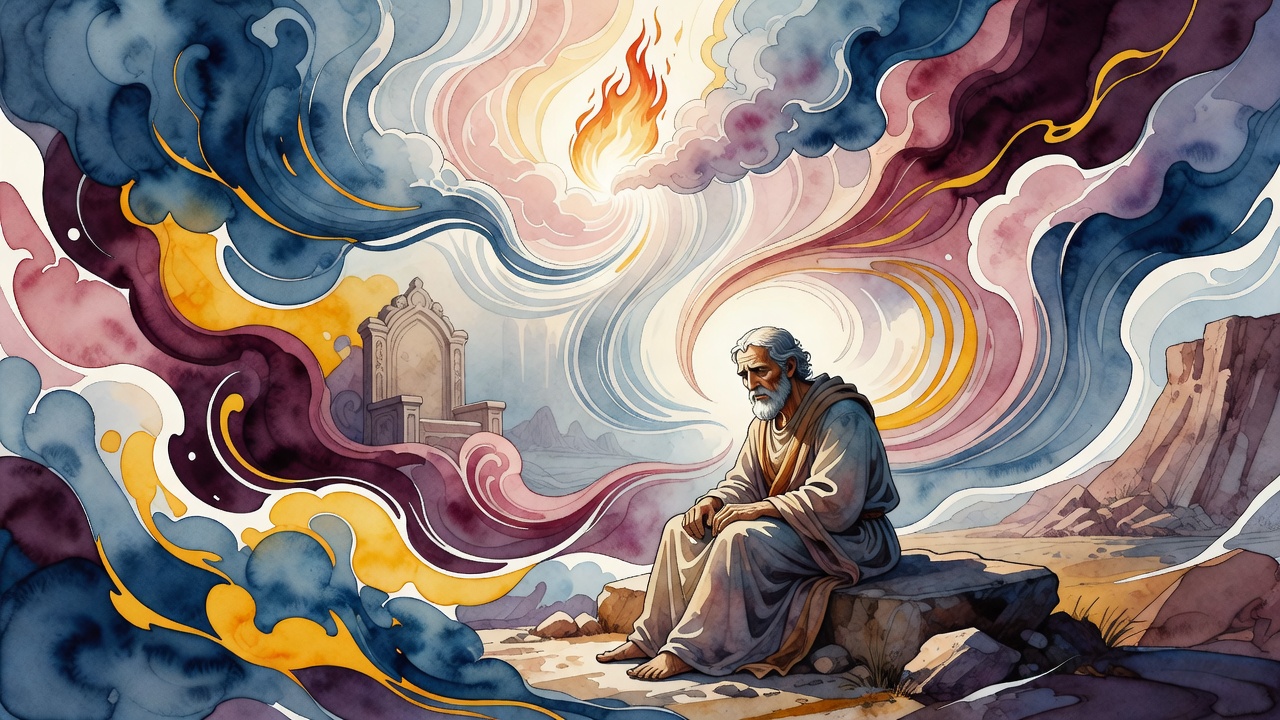
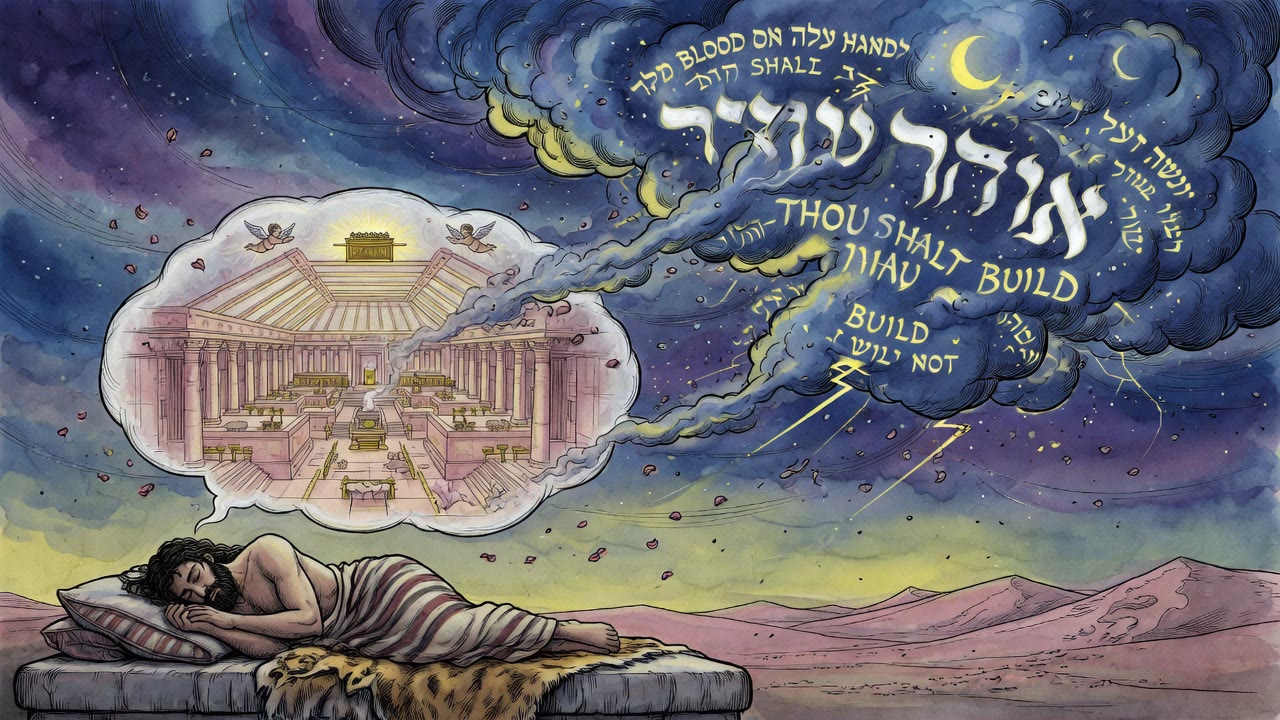
David was not allowed to build the House. He could dig for it. He took a spade into the soil of Jerusalem and went looking for earth no hand had ever turned.
 Click for full size
The Shard That Capped the Deep
He dug fifteen hundred cubits down. Virgin ground, he thought. Then the blade hit clay.
A single potsherd.
He stopped. All that labor, and a broken piece of pottery at the bottom. "All this," he said, "and now this?"
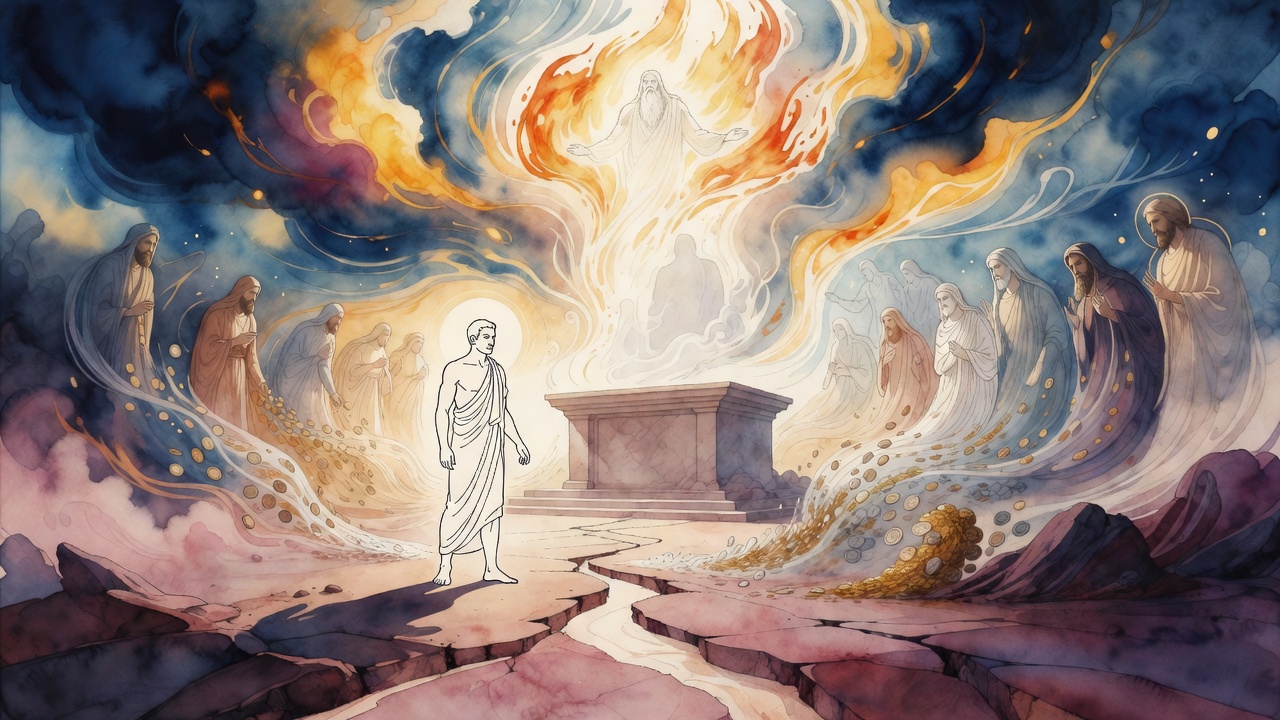
The Holy One gave the shard a mouth. "This is not my place," it said. "When the earth split open at creation, I was sent down to cap the abyss. Beneath me the deep waits. If you move me, you release what I am holding."
David stood over it with the spade still in his hands. Fifteen hundred cubits of untouched earth, and this one shard doing a job older than kings. He moved it anyway.
Ahithophel Spoke One Word
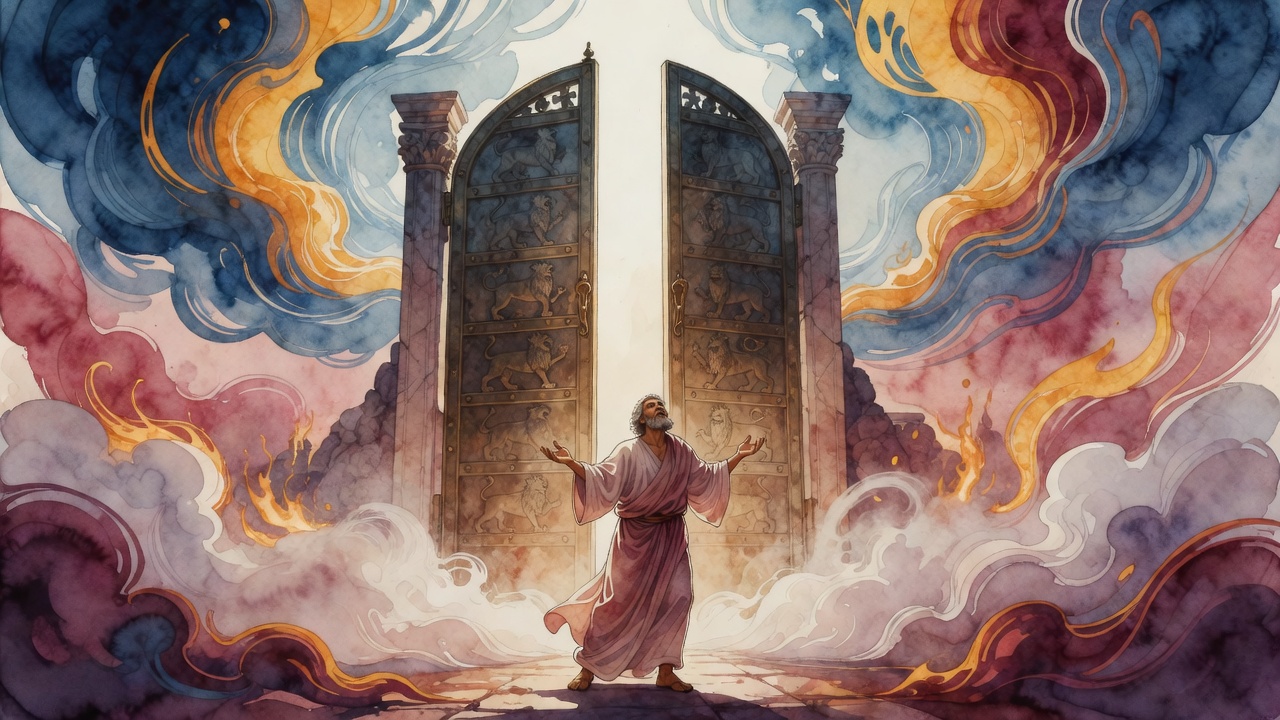
The deep rose at once. Water shoved up through the hole he had made. Jerusalem was an instant from drowning.
David stood over the mouth. Anyone who knew a word that could hold the water, and kept it back, would choke. Ahithophel was there. He said the word. The waters dropped. The city did not drown.
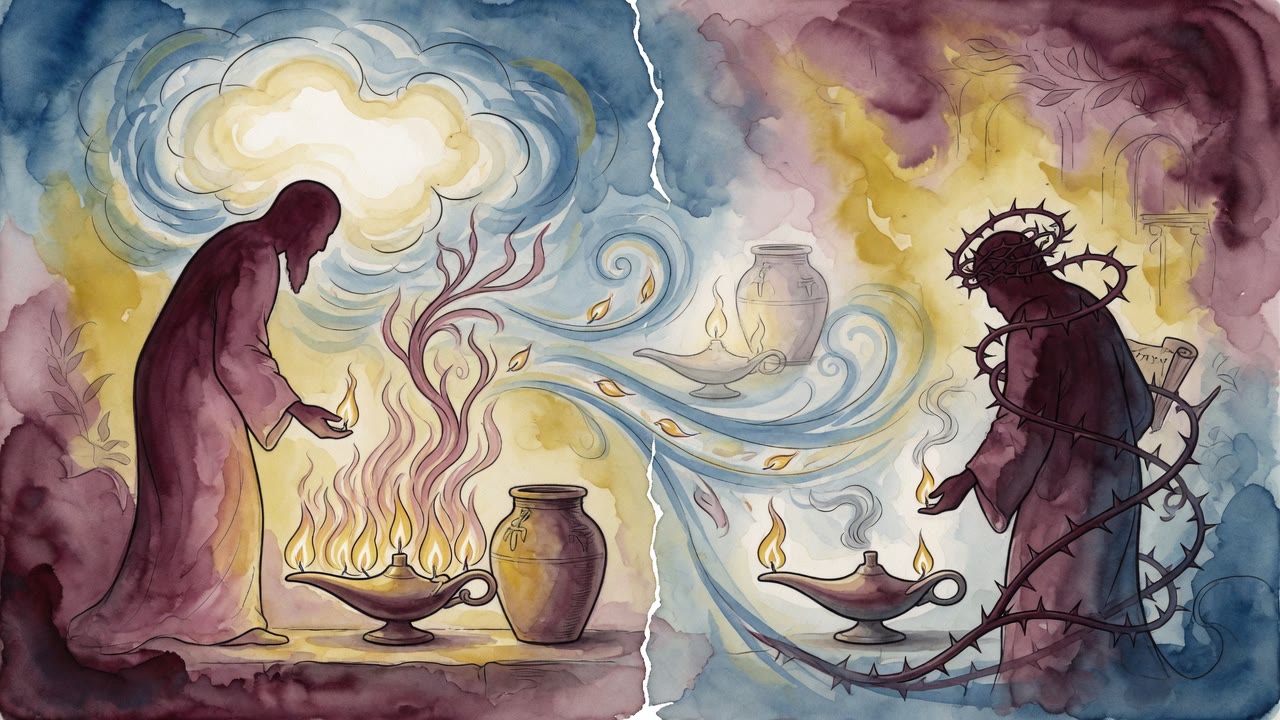
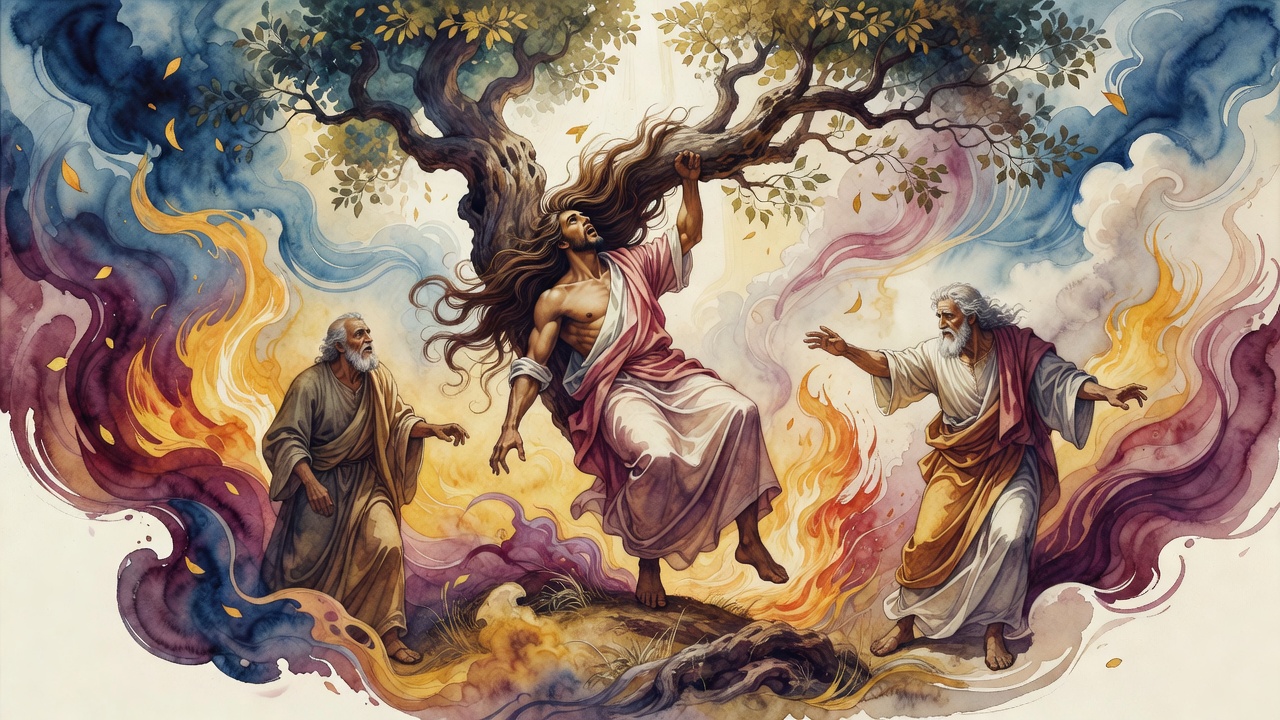
He still hanged. Later, when his counsel was thrown out, he set his house in order and put a rope around his neck (2 Samuel 17:23). A word can hold the deep and still not save the man who spoke it. Speech loosed in the world keeps working on a clock no speaker owns.
Five Curses Left His Mouth
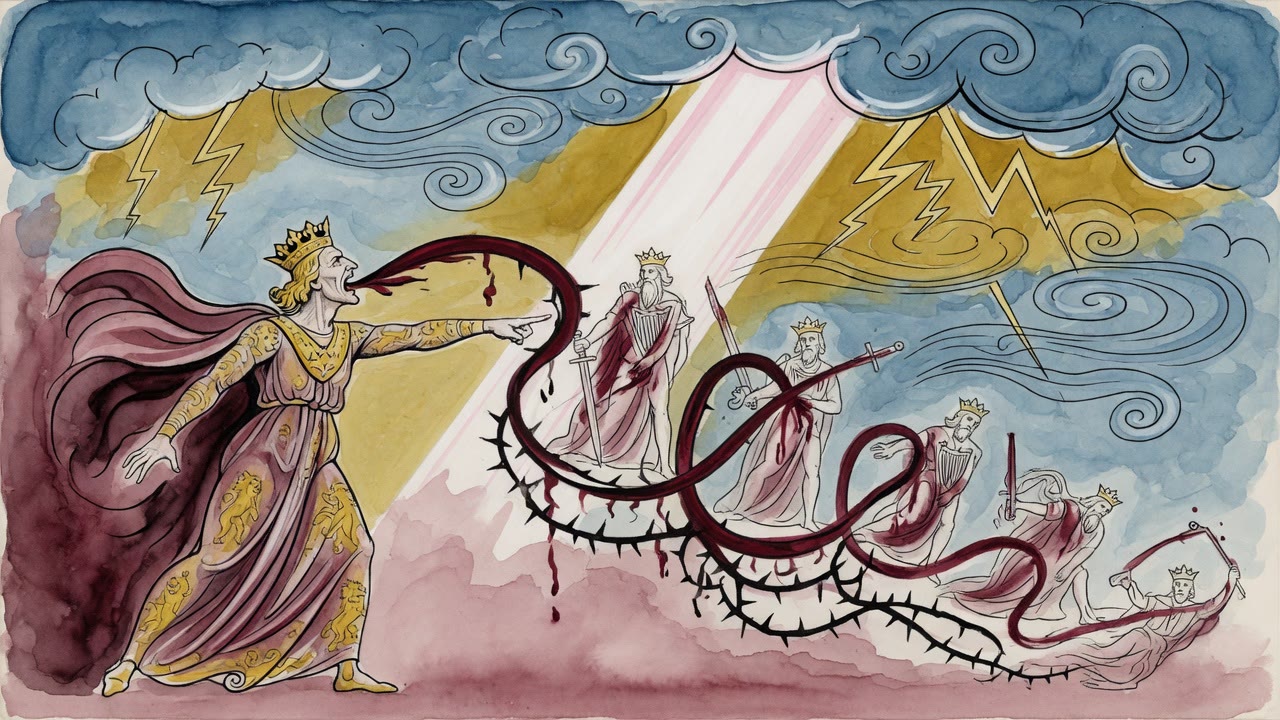
Joab was a killer. David had known it since the day his general murdered Abner in the gate of Hebron. David stood over the body and said five things that turned in the air and kept turning long after the funeral.
A discharge. Leprosy. One who holds a spindle. One fallen by the sword. One lacking bread. He could not punish Joab while Joab was strong. The army still needed him. The words had to do the work.
They did. Not only on Joab. The discharge showed in Rehoboam. The leprosy in Uzziah. The spindle in Joash. The sword in Josiah, three hundred arrows, until the body was a sieve. The want of bread in Jehoiachin, eating his ration from a captor's table. The king who could not control his general could not control his curse. It ran downstream and came home to his own house.
Joab Seized the Horns
When Solomon's throne was rising, Joab fled to the Tent of Meeting and seized the altar's horns. The one place a man was supposed to be safe. Solomon sent to him: accept the measure of judgment. Joab answered that David's five decrees were already on him. Accept those, and I will accept mine.
The altar in Jerusalem did not take him in. Only the six cities of refuge do that work. Joab had grabbed the wrong horns. Benaiah came and struck him down there, still holding on. He had killed Abner and Amasa, each of them worth the whole of Israel, and the altar could not balance that debt.
He died clutching the place he thought would save him. The curses had already walked past him into David's line. The horn gave him up.
The Chair in the Courtyard
David did one other thing with his mouth. The kings of his house would sit in the Temple courtyard. No one else sat there. Priests stood. Levites stood. Israelites stood. Kings sat, because they bore the dignity of the anointing. It was not a favor granted and forgotten. It was sworn, locked, a declaration that does not undo itself.
He could not always act. He could not always punish. He could not always build. What he said stood. His curses outlived him. His blessings outlived him. Kings who had never held a spade sat in that courtyard because a man who was not allowed to raise the House had said they would.
← All myths