Pharaoh Stole the Name of God, So God Lent It to Moses
A king of flesh and blood would kill a man for sitting in his chair. God set a runaway shepherd in the doorway with the Name Pharaoh had claimed.
Table of Contents
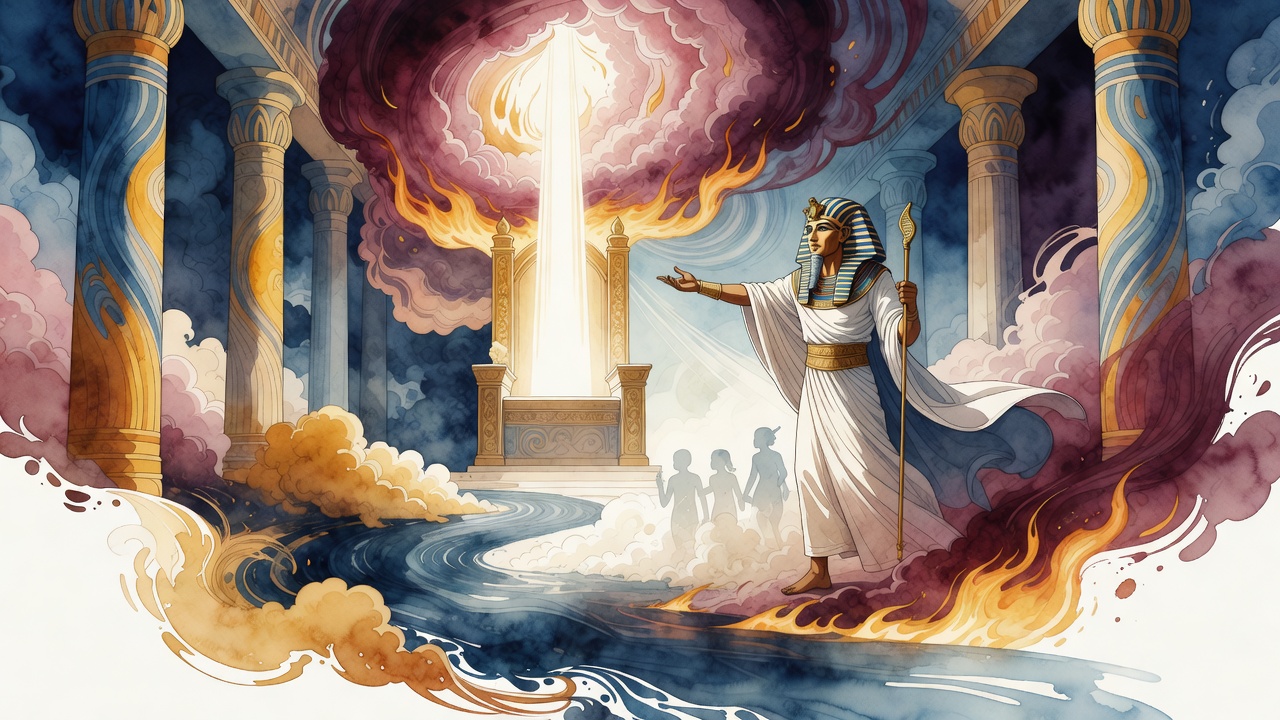
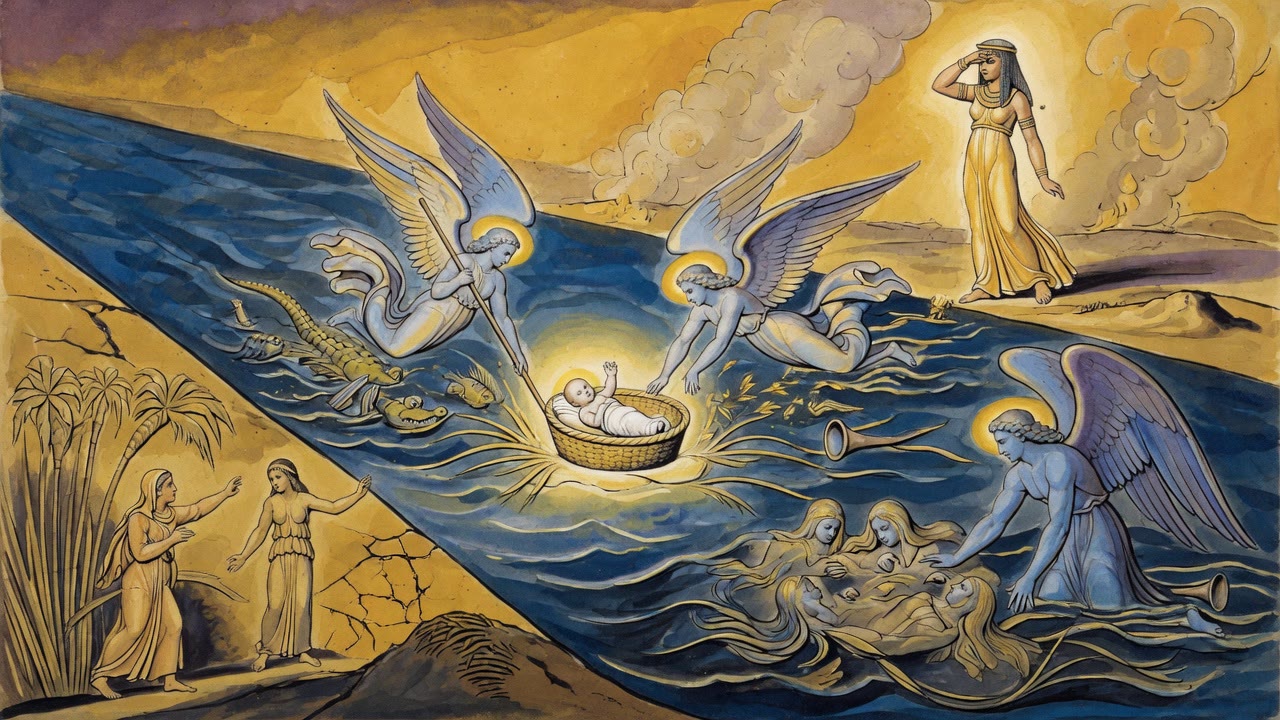
Pharaoh stood at the Nile and claimed the water as a thing he had built.
 Click for full size
"My Nile is my own," he said. "I made myself."
Not the gods. Not his fathers. He looked at the river feeding his kingdom and called himself its maker. A king of flesh and blood would kill a man for sitting in his chair, for riding his horse, for lifting his scepter or wearing his crown. Pharaoh reached past all of that. He stole the last title left: the Name of God.
Four Mouths That Called Themselves Gods
He was not the first. Hiram of Tyre said, "I am a god, I sit in the seat of gods." Nebuchadnezzar of Babylon said he would climb above the clouds and make himself like the Most High. Joash, a king in Israel, let his princes bow to him as a god and did not stop them. Four mouths. One fall waiting.
Nebuchadnezzar's came first in the telling, because it was the ugliest. God drove him from the palace while the crown still sat on his head. He ate grass like an ox. Beasts used him as one of their own. The man who wanted the height of the clouds spent his nights lowing in a field.
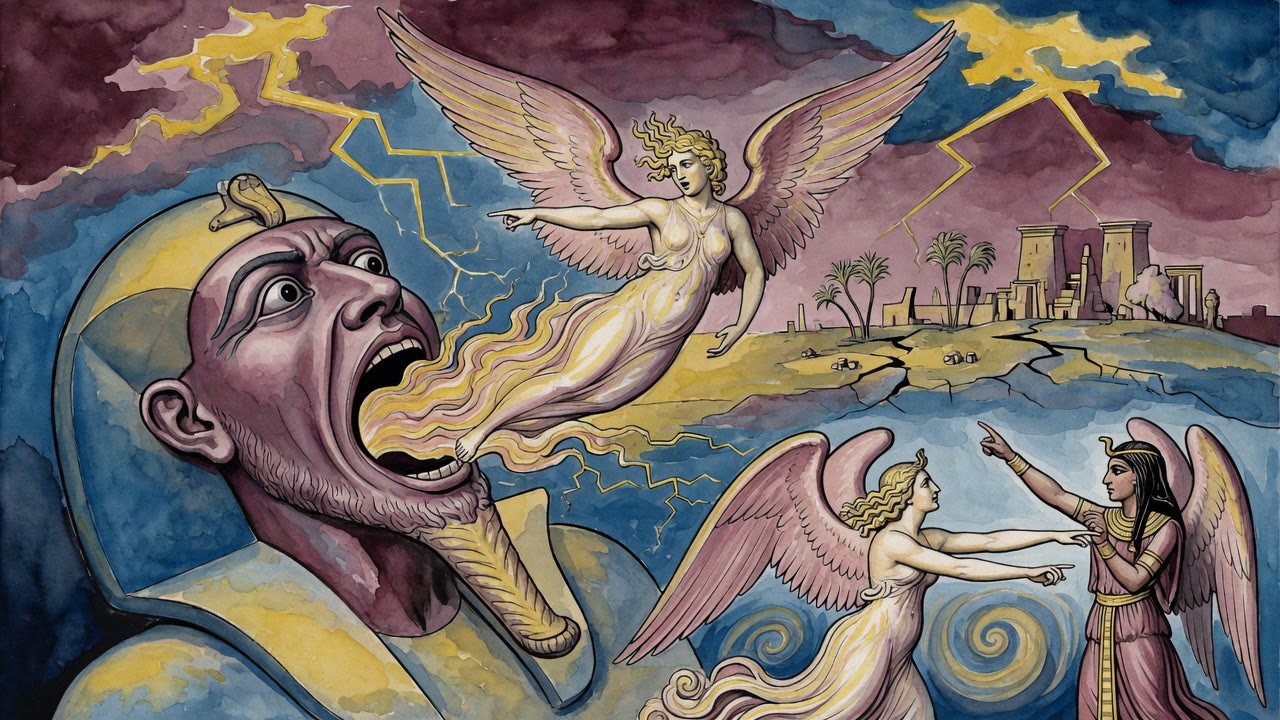
Pharaoh's turn came with a new name. The prophets called him Hophra, the uncovered one, because the king who swore he had made himself was stripped and shown from behind, no maker at all. "Egypt shall be like frightened women," the word went out against him. "He beholds everything high," Job says of God, "and He is king over all the children of pride." He filled the field where Nebuchadnezzar grazed. He filled the chamber where Pharaoh hid his shame. "If a man hides in secret places, shall I not see him? Do I not fill heaven and earth?"
The Chair God Handed Away
The strangeness was this. The King who could crush any usurper guarded none of His treasures. He gave them away.
He set Solomon on His own seat. The record does not say Solomon sat on a throne like the Lord's. It says "Solomon sat upon the throne of the LORD." The chair no subject could touch, He handed to David's son.
He lent Elijah His horse. The horse of God is the whirlwind and the storm. "The LORD, His way is in the whirlwind," and one day the whirlwind dropped down and carried Elijah up alive, a mortal riding the King's own mount into the sky.
He set crowns on the head of the Messiah, the king still to come, and He dressed Israel in His own garment, the robe called strength. "Awake, awake, put on strength, O arm of the LORD," and then, "The LORD will give strength to His people." The power He wore, He draped over a nation of former slaves. Throne, horse, crown, robe. Every treasure an earthly king kills to protect, this King lent to the people who feared Him.
A Shepherd Given the Stolen Title
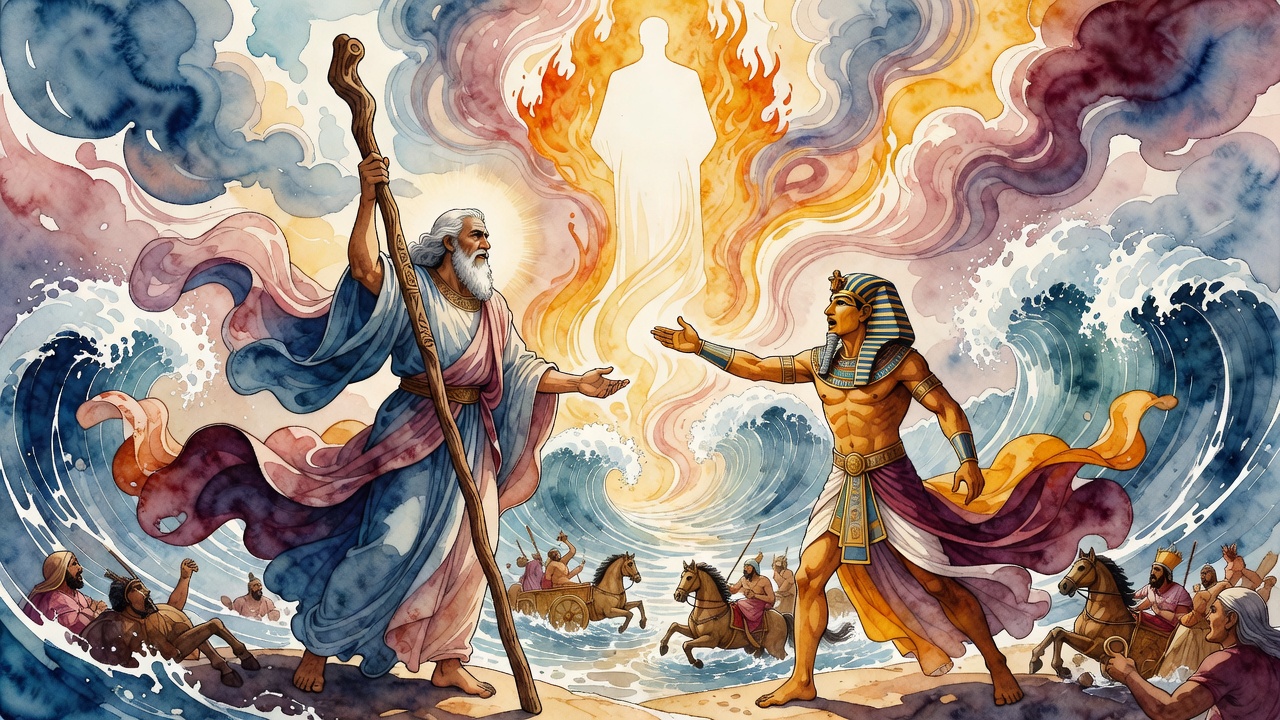
Moses had run from Pharaoh's sword and spent forty years minding another man's flock. God met him at a burning bush and sent him back to the palace of the man who called himself a maker.
Moses did not want the door. The last time he had stood in Egypt, a corpse had been in the sand and a warrant had been on his name. God did not offer him a smaller errand.
"See, I have made you a god to Pharaoh."
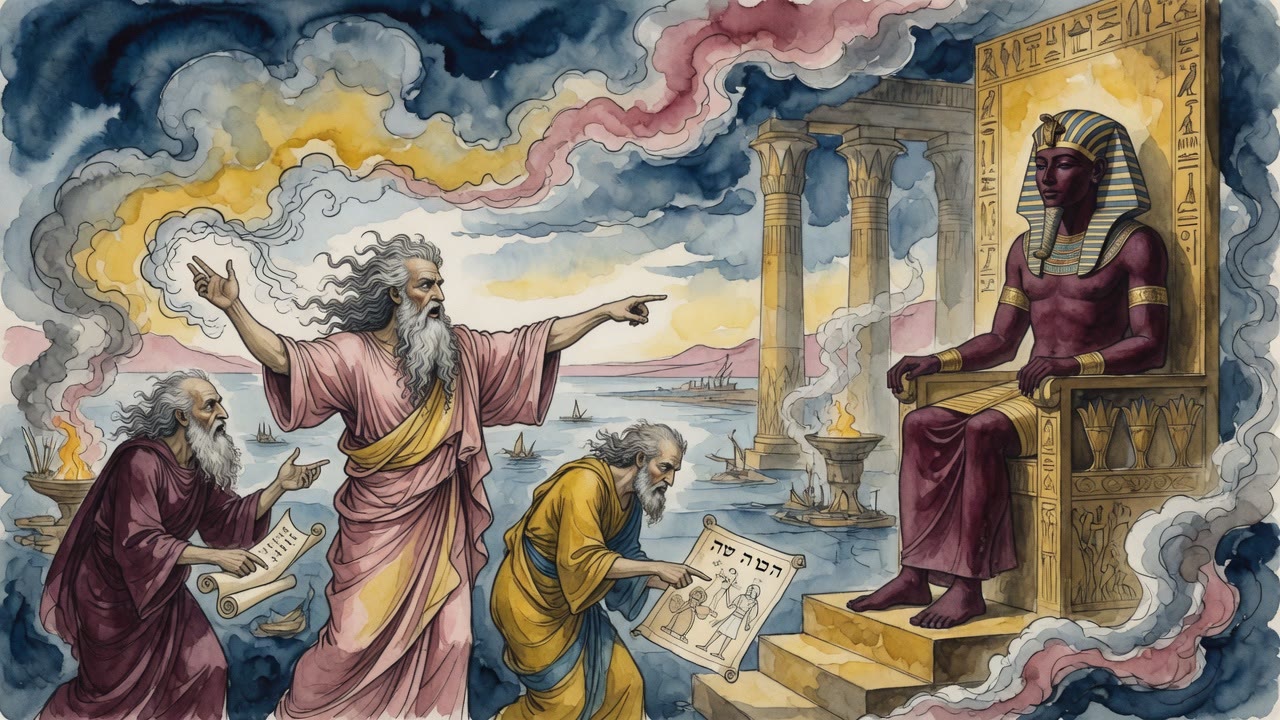
The title that costs a commoner his life to borrow, the name Pharaoh had stolen and paid for with his dignity, God pressed into the hand of a fugitive shepherd. "I have made you like Myself," He said. Because the king had made himself a god, the shepherd would be made a god over him. The man who lifted himself would be shown as an abomination. The man who once fled in fear would carry the Name into his court.
The Sapphire Rod in the Doorway
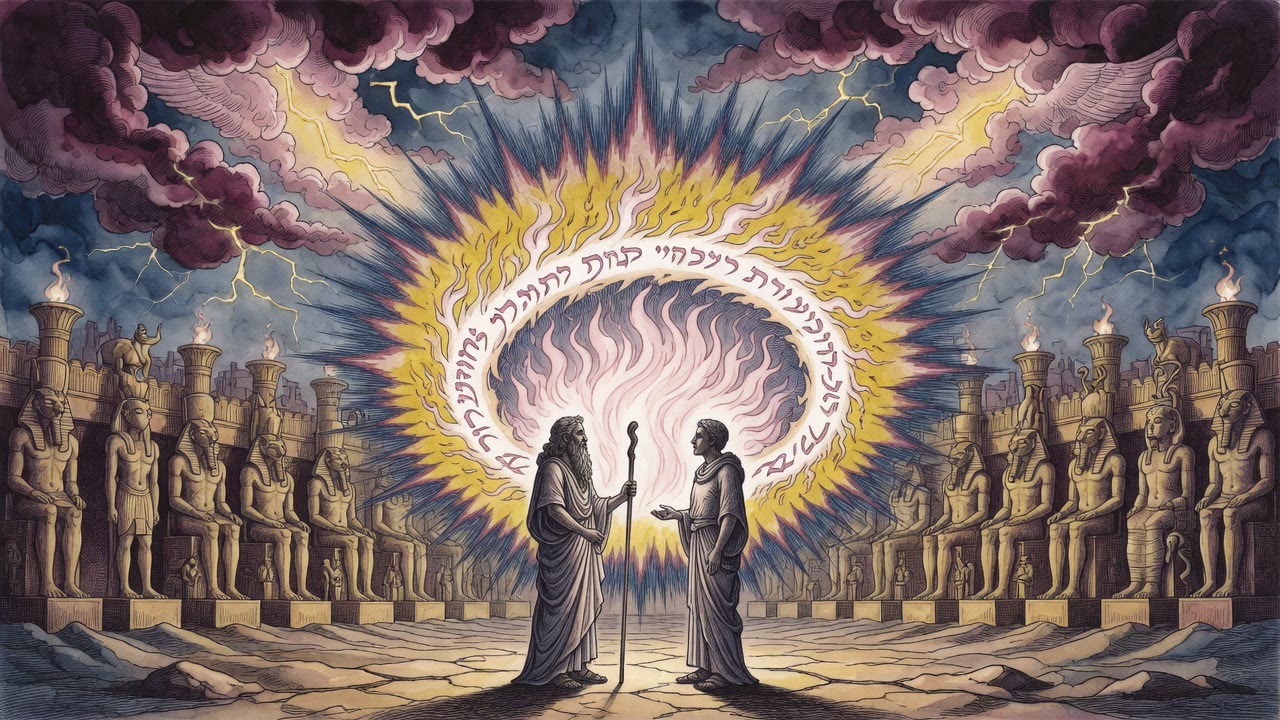
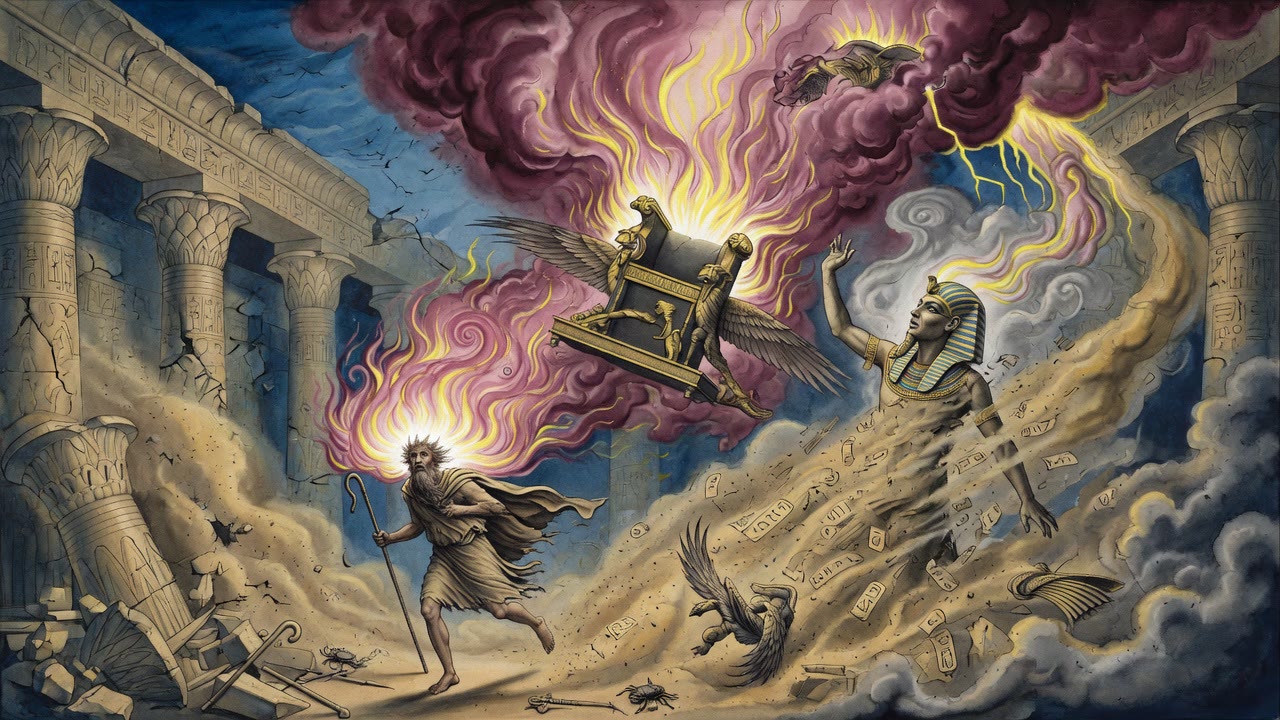
God armed him for it. "Take this rod in your hand." The rod was sapphire, heavy as forty measures of grain, and along its length the ten plagues already stood carved in shorthand, waiting. DeTzaKh. ADaSh. BeAHaB. Moses walked into Egypt gripping a length of God's own scepter, the Name of God upon him and the sentence of Egypt written in stone.
Pharaoh sat on his guarded throne, behind his guarded name, certain he had made himself. In the doorway stood a shepherd who had been given everything the king believed could only be seized.
"Who is this King of glory?" the psalm asks. The answer stood in that doorway. Not the king who walls his glory off. The King who lends it to a man who still smelled of sheep.
← All myths