The Kings of Canaan Marched to Wipe Out the House of Jacob
Their own advisors told the kings to remember what two of Jacob's sons did to Shechem. They marched anyway, and old Jacob killed twelve thousand.
Table of Contents
 Click for full size
The Kings Counted the Tents and Grew Afraid
The kings of Canaan watched the household of Jacob spread across the land, tent after tent, herd after herd, and they did not like the arithmetic. Strike now, they told one another, before these Hebrews root themselves too deep to pull up. They summoned their advisors and their war-captains to bless the plan.
The advisors came in and were afraid. A dread none of them could name sat down on their chests, and in place of counsel they gave a warning. "Are you silly?" they said to their kings. "Is there no understanding in you, that you propose to fight with the Hebrews? Why do you take delight in your own destruction this day?" Then they reminded the kings of a thing everyone in Canaan still whispered about. "Two of them came to the city of Shechem without fear or terror, and they put all the inhabitants to the sword, and no man stood against them. How will you fight them all?" They meant Simeon and Levi, and the morning the men of Shechem lay dead in their own gates.
The kings heard the fear in their wise men and armed anyway.
Jacob Sent His Sons to Wash Before He Sent Them to War
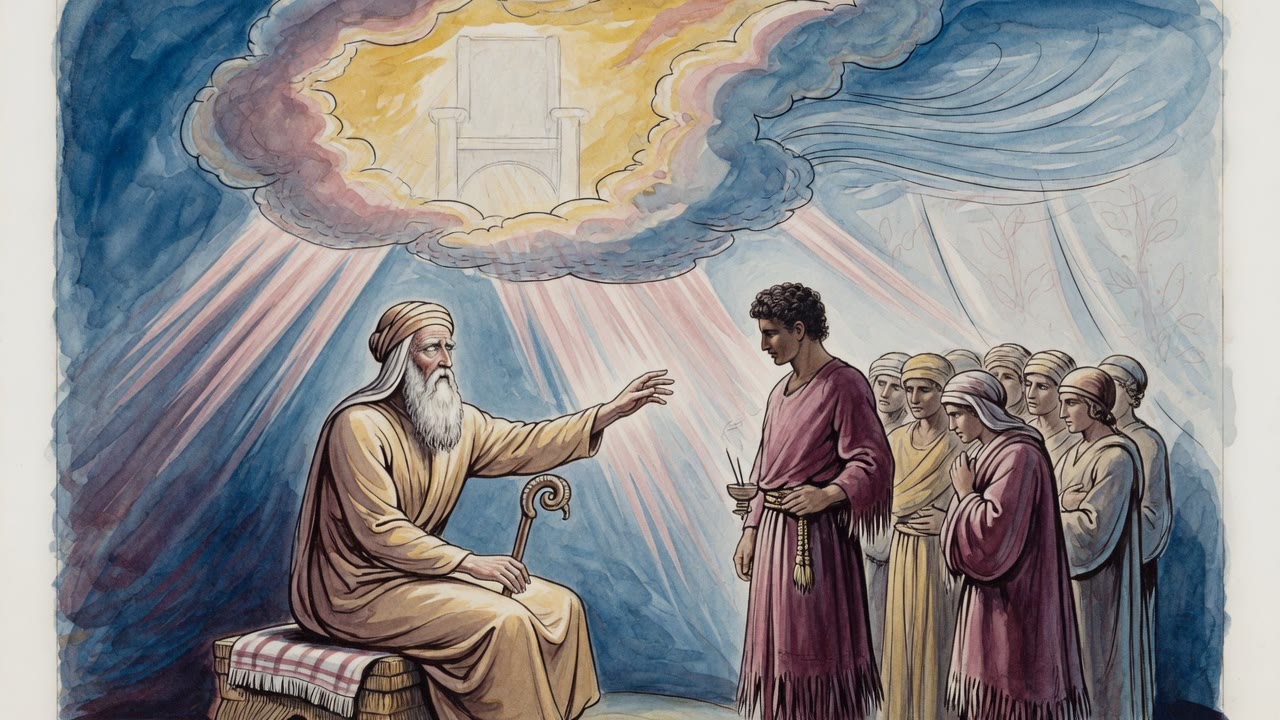
Word reached Jacob that the armies were on the roads. He did not put swords in his sons' hands first. He gathered them and spoke of purity before he spoke of blood. "Fear not," he told them. "God will be your helper, and He will fight for you against your enemies. Only put away the strange gods that are among you, and purify yourselves, and wash your garments clean." So the sons of Jacob buried what did not belong to them, washed, and only then took up iron.
Then the battle came, and Jacob did not wait behind his sons. Girded with his sword, the old man charged into the front of the enemy and cut down twelve thousand of them in the first press. Judah saw his father's chest heaving. "Father, you are tired and worn," he said. "Let me fight them alone." Jacob looked at him and blessed him. "Judah, my son, I know your strength and your courage. None in the world is your equal."
Judah went in with a face like a lion's, inflamed. He killed warriors by the myriad, hardened men who had come to kill him, and still he was not spent. Levi ran to his side, and where Judah struck by the thousand, Levi cut the enemy down like grain falling under the scythe of the reaper. Between the two of them the host of Nineveh broke.
The Army That Would Not Stay Beaten
But this enemy did not know how to stay beaten. The next morning the trumpets sounded again, and the army was back on the field, hungry for the revenge it had failed to take the day before. Jacob told his sons to hold the line, and set the rest of them in reserve to spell the tired. Issachar and Gad stepped forward to lead.
The two of them alone put forty-eight thousand men in the dust and drove twelve myriads more into the mouth of a cave. Issachar and Gad dragged trees from the woods, heaped them at the cave, and lit them. Smoke rolled into the dark. The trapped men choked and shouted, "Why should we sit here and die? Better to go out and fight, and maybe live." They burst from the cave on every side at once and closed a ring around the two brothers.
Dan and Naphtali saw them swallowed and did not stop to think. They cut a road through the enemy with their swords until they reached their brothers, and the four of them stood back to back, one wall of men against the whole ring.
Judah Went Over the Wall of Hazor Alone
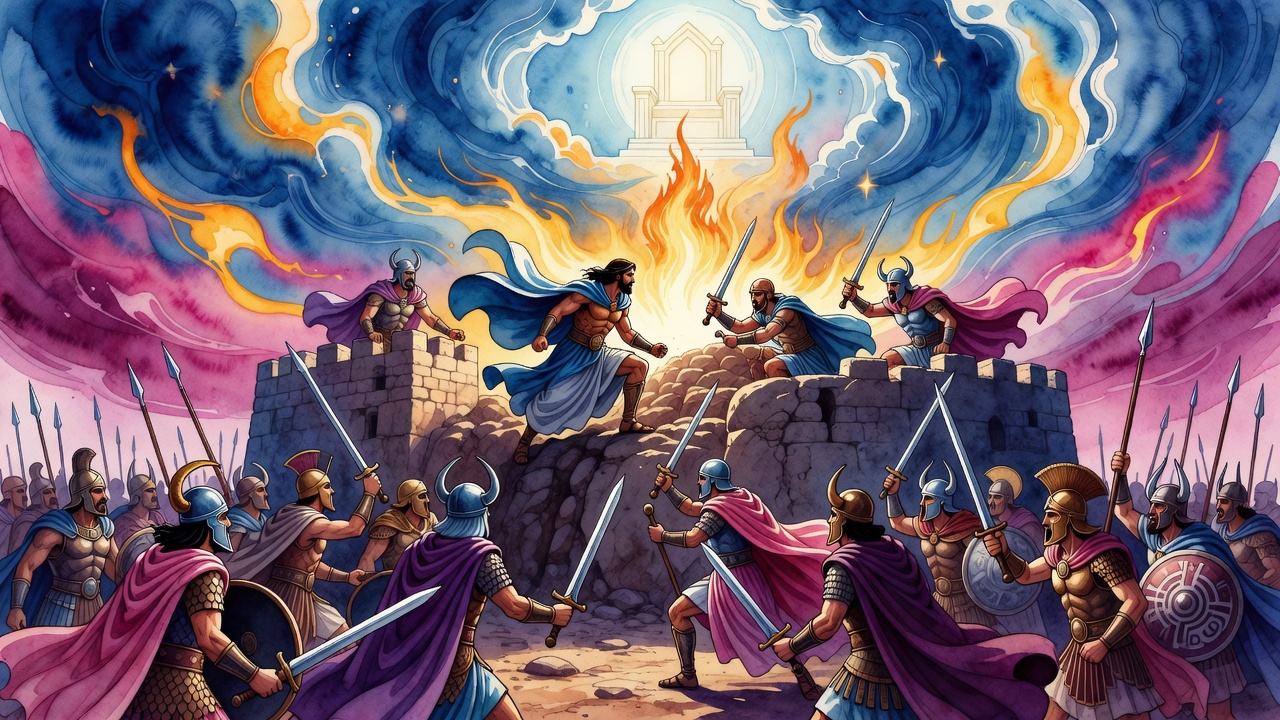
Then came Hazor, and Judah did not wait for a ladder-line or a plan. He set his hands to the wall and climbed. He had not even cleared the top when four warriors came down at him along the rampart, four against a man with one hand still gripping stone. He killed all four before Naphtali could reach him.
Naphtali came up behind him. They planted themselves on the wall, Judah on the right, Naphtali on the left, and dealt out death to every man who ran at them. Seeing the two brothers hold the height, the rest surged up after them, over the wall like a tide, until they had made an end of the host of Hazor. They took the city, let no one slip away, and stripped it bare.
The Fortress on the High Hill
The next city was Sartan, and Sartan sat on high ground with a high hill before it, so that men said none could come near it, and its citadel walls climbed so far up that the defenders laughed down at anyone who tried. The sons of Jacob took it anyway, and not by throwing bodies at the gate. They divided the wall between them. Judah went up first on the east. Gad took the west. Simeon and Levi took the north. Reuben and Dan took the south. And while the brothers climbed, Naphtali and Issachar knelt at the gate and set fire to the hinges, until the great doors sagged and dropped off the wall that was built to keep every enemy out.
By the end, the kings who had gathered to pull the Hebrews up by the roots had learned the thing their own advisors felt in the council chamber. They had come to destroy the house of Jacob. They stayed to fear it.
← All myths