Parshat Vayeshev5 min read

The Crewless Ship Sank Until Jacob Whistled It Up

Jacob's family boarded a crewless ship in a shared dream, Joseph seized both rudders in jealousy, and only the patriarch's whistle raised the wreck.

Curated by Arthur · Told by Maggid ·
Table of Contents
  1. A Ship Without Sailors
  2. Scattered Brothers and a Whistle Over Water
  3. A Prince of Egypt Recruits the Handmaids' Sons
  4. Mercy Measured Like Running Water
  5. From Mast Name to Open Hands
The Crewless Ship Sank Until Jacob Whistled It Up Click for full size

A Ship Without Sailors

On a shore that existed first in vision, Jacob stood with his sons and pointed at the water. A ship rode the middle of the sea with neither sailors nor crew. "Do you see what I see?" the father asked. They did. He stripped and sprang into the waves. They sprang after him. Levi and Judah scaled the side first. Jacob cried for them to read the mast. Every ship, he said, bears its owner's name there. They read, "This ship and all the treasures therein belong unto the son of Barachel." Jacob thanked God for blessing him on land and sea, then ordered each son to seize what he could claim.
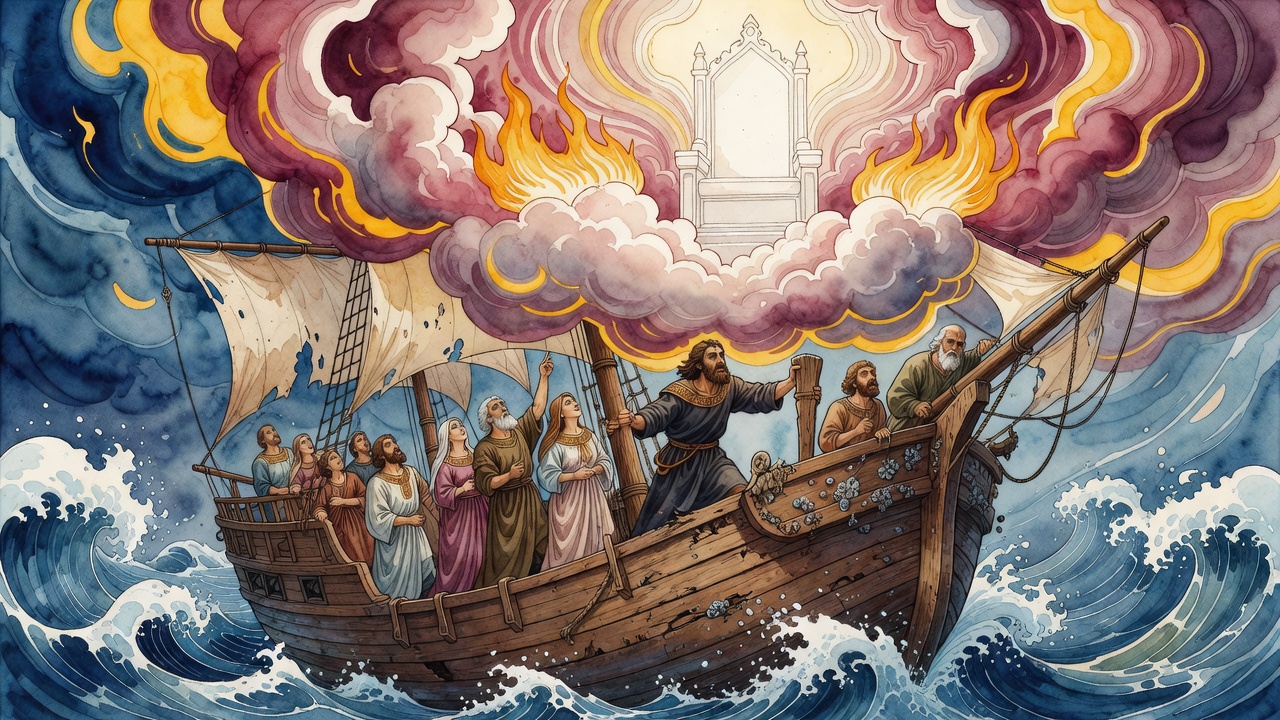
Levi took the big mast. Judah took the second. The others took oars, all except Joseph. Jacob seized both rudders to guide the vessel, then bid Joseph take an oar. Joseph refused. Jacob gave him one rudder instead. After the father taught each man his post, he vanished. Joseph took the second rudder as well. For a time Judah and Joseph worked in harmony, Judah naming the course, Joseph steering. Then quarrel split the deck. Joseph would not guide as his father had commanded. Judah tried to correct him. The ship wrecked on a rock. Rank on the mast and skill at the helm could not save a crew that would not share one heading.

Scattered Brothers and a Whistle Over Water

Levi and Judah left the masts. The rest escaped to shore. Jacob appeared and found them scattered. They blamed Joseph. Jealousy of Judah and Levi, they said, had run the vessel aground. Jacob asked for the spot. Only masts showed above the water. He whistled, summoning them, swam out, and raised the ship as before. Turning to Joseph he said, "My son, never do that again, never permit jealousy of thy brethren to master thee. Nearly it happened that all thy brethren perished because of thee."

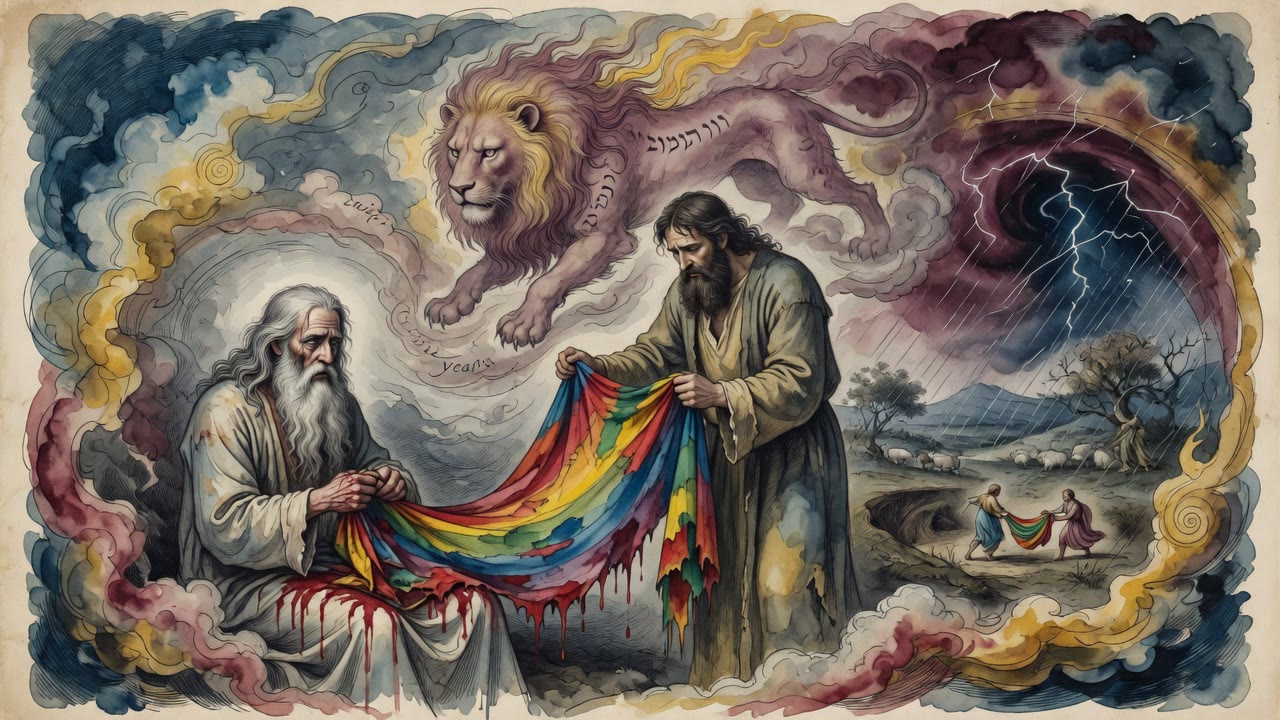
The dream did not invent the danger. It named a future already bending toward Egypt, toward a coat, a pit, and a throne. Two rudders in one pair of hands looked like power. The wreck showed what power without shared course becomes. A whistle from a father did what twelve arguments could not. The vessel rose. The warning stayed.

A Prince of Egypt Recruits the Handmaids' Sons

Years later, when Joseph ruled and the brothers had come down, the son of Pharaoh still hunted a way to break the family. He had failed with Simon and Levi. He turned to the sons of Bilhah and Zilpah. He claimed to have overheard Joseph tell Pharaoh that he waited only for Jacob's death to destroy the sons of the handmaids, since they had sold him. Wrath did the rest. The plan ran two tracks. The prince would kill his own father, Joseph's friend. The brothers of the handmaids would fall on Joseph. Six hundred warriors and fifty spearmen stood ready.

The palace guard blocked even the heir from Pharaoh's bedchamber. Murder of the king failed. The conspiracy stalled at the threshold of power. Joseph lived. The poison of the rumor still worked in blood that remembered old rankings of mothers and tents. Foreign ambition needed only a story about favoritism to hire Hebrew hands against a Hebrew brother. The crewless ship had already shown how fast jealousy finds a rock.

Mercy Measured Like Running Water

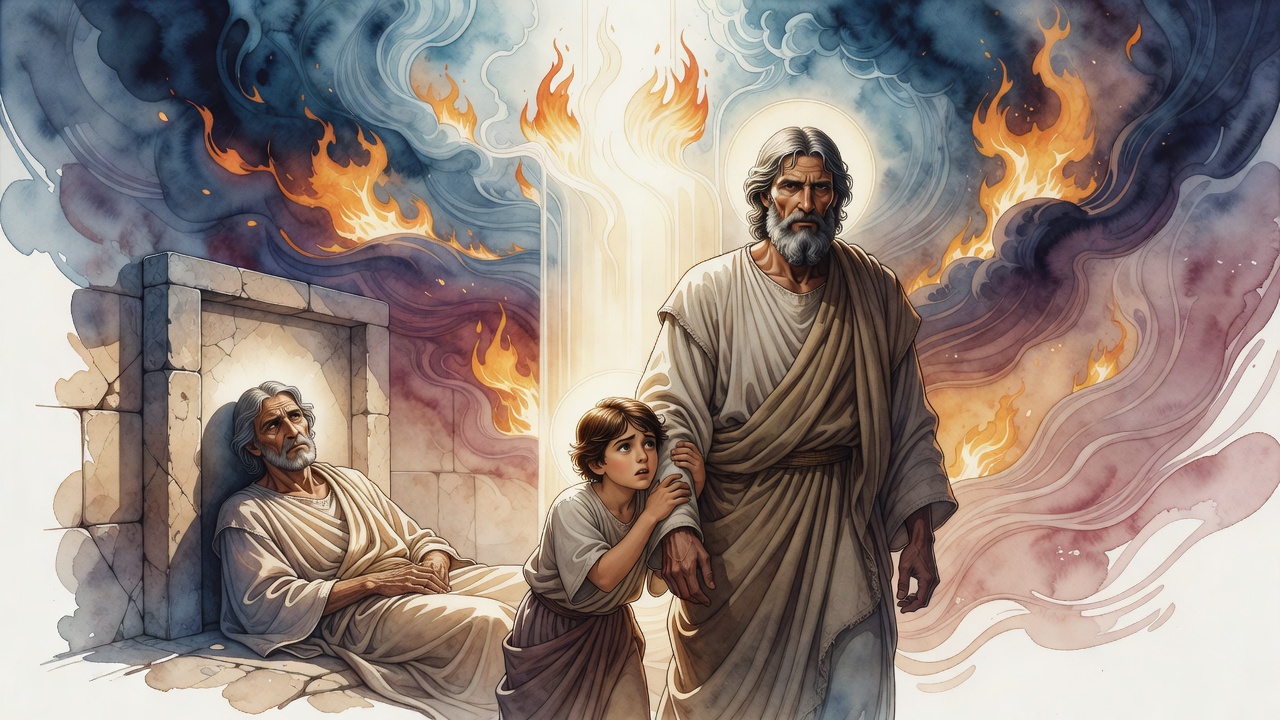
When Joseph later spoke of Egypt to the next generation, revenge was not his counsel. "Have pity and compassion on all men, that the Lord may have pity and compassion on you, for in the measure in which man has mercy with his fellow-men, God has mercy with him." He named his own restraint. When the brothers came down, he did not visit upon them the wrong he had suffered. Remember a wrong, he warned, and unity splits, kinship tears, the soul loses quiet.

He pointed to water. Undivided, a current carries stone, wood, and sand. Split into many channels, the earth drinks it and force dies. Separate from one another, and the brothers would be divided waters. Creation itself, he said, gives two shoulders, two hands, two feet, but one head. Two rudders without one mind had already wrecked a dream-ship. Two camps without one mercy would wreck a people in a land of grain and graves.

From Mast Name to Open Hands

The mast had named the owner. The whistle had raised the wreck. The palace plot had failed. The open hands of a viceroy who refused payback finished the arc the dream began. Jealousy almost drowned twelve men on a crewless deck. Compassion kept twelve tribes from becoming twelve thin streams in Egyptian sand.

Jacob's warning in the vision was not soft talk for sleepers. It was a rule for courts and tents. Never let jealousy master the helm. Pharaoh's son proved how eager foreign power is to hire family envy. Joseph proved that a man who once seized both rudders can learn to steer by mercy instead. The sea of the dream goes quiet only when the brothers stop measuring masts against one another and start measuring mercy the way God measures it back. Ownership written on a mast means little if the crew would rather sink than share the wheel.


← All myths

From the tradition

Sources

3 sources

The texts behind this telling. Some cards carry a translation of the source; others are our own retelling of it, and each card says which. Every card links out to the original.

Legends of the Jews 2:64Legends of the Jews

Retold in our words. Read the original at the link below.The Legends of the Jews by Louis Ginzberg (1909) · Public Domain

The sons of Jacob sure did. And one of those dreams, a vision shared by the whole family, becomes a powerful lesson in unity, jealousy, and divine blessing.

The story, found within Legends of the Jews (Ginzberg), tells of a shared dream. Imagine this: Jacob and his sons are all together on a shore. Suddenly, a ship appears out of nowhere, sailing without a crew. Jacob, their father, points it out and asks, "Do you see what I see?"

Of course they do. So, Jacob does something unexpected: he strips off his clothes and plunges into the sea, beckoning his sons to follow. Without hesitation, they all jump in after him.

Levi and Judah, ever the eager ones, are the first to reach the ship. Jacob calls out to them, instructing them to read the inscription on the mast. Because, in this dream-world, every ship bears the name of its owner right there for all to see. What do Levi and Judah find? "This ship and all the treasures therein belong unto the son of Barachel." Barachel is another name for Jacob, so it's understood that the ship belongs to him!

Overjoyed at this sign of divine favor – a blessing not just on land but now at sea! – Jacob tells his sons to grab whatever they can. Whatever each son seizes, it shall be his. Levi grabs the main mast, Judah the second. The other brothers, except for Joseph, take the oars. Jacob himself takes hold of the two rudders to steer the vessel. He offers Joseph an oar, but Joseph refuses, so Jacob gives him one of the rudders, too.

For a while, everything goes swimmingly (pun intended!). As long as Judah and Joseph work together, with Judah guiding Joseph on which direction to steer, the ship sails smoothly. But then, a quarrel erupts. Joseph, perhaps out of spite or jealousy, ignores his father's instructions and begins steering the ship his own way. Judah tries to correct him, but it's no use. The inevitable happens: the ship crashes upon a rock.

Everyone scrambles to safety, abandoning the wrecked vessel. When Jacob reappears, he finds his sons scattered and distraught. They explain that Joseph’s stubbornness and jealousy caused the shipwreck. Jacob asks them to point out the location of the wreck, where only the masts are visible above the water. Then, with a whistle that gathers them all, Jacob swims out and, miraculously, raises the ship from the depths as if nothing had happened.

Turning to Joseph, Jacob delivers a stern but loving rebuke: "My son, never do that again, never permit jealousy of thy brethren to master thee. Nearly it happened that all thy brethren perished because of thee."

What's the takeaway here? This vision, so richly symbolic, speaks to the importance of unity and the dangers of jealousy. Joseph's refusal to cooperate, driven by envy towards Judah and Levi, nearly led to disaster for the entire family. The ship itself can be seen as a metaphor for the family, its success dependent on everyone working together harmoniously. And Jacob's ability to raise the ship from the depths? A evidence of the power of reconciliation and forgiveness.

The Legends of the Jews often weaves together multiple sources, drawing from Midrash (rabbinic interpretations of scripture) and other traditional Jewish texts. This particular story, while seemingly simple, resonates with deeper themes found throughout Jewish thought: the importance of family, the destructive nature of jealousy (sinat chinam, causeless hatred), and the ever-present need for harmony and cooperation. It's a reminder that our actions, driven by either unity or division, can have profound consequences on ourselves and those around us. What "ship" in your life needs to be steered with less jealousy and more cooperation?

Full source
Legends of the Jews 1:481Legends of the Jews

Retold in our words. Read the original at the link below.The Legends of the Jews by Louis Ginzberg (1909) · Public Domain

Someone was ready to stoke those embers.

The son of Pharaoh, consumed by his own wicked ambitions, wasn't about to let things lie. He'd already failed to turn Simon and Levi against Joseph. But he had another card to play: the sons of Bilhah and Zilpah, the handmaids of Rachel and Leah. He figured, maybe these brothers would be more susceptible to manipulation.

In Ginzberg's retelling in, Legends of the Jews, the Pharaoh's son called them in and spun a tale. He claimed he'd overheard a conversation between Joseph and Pharaoh himself. In this twisted version, Joseph was supposedly waiting for news of his father Jacob's death so he could eliminate the sons of the handmaids, blaming them for selling him into slavery all those years ago.

They already carried the weight of that past. This accusation, true or not, was enough to push them over the edge. They agreed to the Pharaoh's son's plan. It was a dark pact: He would kill Pharaoh, Joseph's friend, and they, in turn, would murder their own brother.

Talk about sibling rivalry taken to a whole new level!

They were even provided with muscle – six hundred warriors and fifty spearmen, ready to carry out this horrific plan.

But here's where things took a turn. The first part of the plan, the murder of Pharaoh, completely fell apart. The palace guard, ever vigilant, wouldn't even allow the heir to the throne to enter his father's bedchamber. He had to slink away, his murderous intent thwarted.

So, what happens next? Does the plan change? Do they find another way? Well, that’s a story for another time.

Full source
Legends of the Jews 2:49Legends of the Jews

Retold in our words. Read the original at the link below.The Legends of the Jews by Louis Ginzberg (1909) · Public Domain

Joseph, the one they sold into slavery years before, is now a powerful figure. He could have sought revenge. He had every reason to. But, as our text from Legends of the Jews points out, he didn’t. And that's a big deal.

The message here, supposedly words spoken to his children, is simple, yet profound: "Have pity and compassion on all men, that the Lord may have pity and compassion on you, for in the measure in which man has mercy with his fellow-men, God has mercy with him." It's a beautiful, almost poetic way of saying that what goes around comes around. It’s about actively choosing compassion.

Joseph becomes a model, a blueprint for how to act. Don’t dwell on past wrongs, Because what happens when we hold onto those hurts? "Unity is rent asunder, and the bonds of kinship are torn, and the soul is disquieted." It’s like a warning about the corrosive effect of bitterness, not just on relationships, but on our very souls.

Then comes this striking image: Water. A river flowing strong, carrying everything before it – "stone, wood, and sand." But divide that river, split it into separate channels, and what happens? The earth drinks it up, and its power is lost. "If you separate, one from the other, you will be like divided waters."

It's a powerful metaphor for community, for family, for any group of people trying to work together. When we're united, we're strong. When we're fractured by resentment and grudges, we become weak and ineffective.

And the final thought? "Be not cleft into two heads, for all that the Lord hath made has but one head." Think about the human body – two shoulders, two hands, two feet, but all directed by a single head. A single unifying purpose. It all works together.

This isn't just a nice sentiment. It's a call to action. Holding onto anger and resentment might feel good in the short term, but in the long run, it weakens us all. Choosing compassion, choosing unity, that's where true strength lies.

Can we really let go of those hurts, those grudges? Can we strive for that unity, even when it feels impossible? It’s a challenge, no doubt. But maybe, just maybe, it's the most important challenge we face. Because if we can learn to forgive, to have compassion, to work together, there's no limit to what we can achieve. And, according to this ancient wisdom, there's no limit to the compassion we might receive in return.

Full source