Jacob Suspected Judah of Killing Joseph for Twenty-Two Years
Judah stood in the tent with a goat-stained coat. Jacob named an evil beast, then looked at the son he would later bless as a lion.
Table of Contents
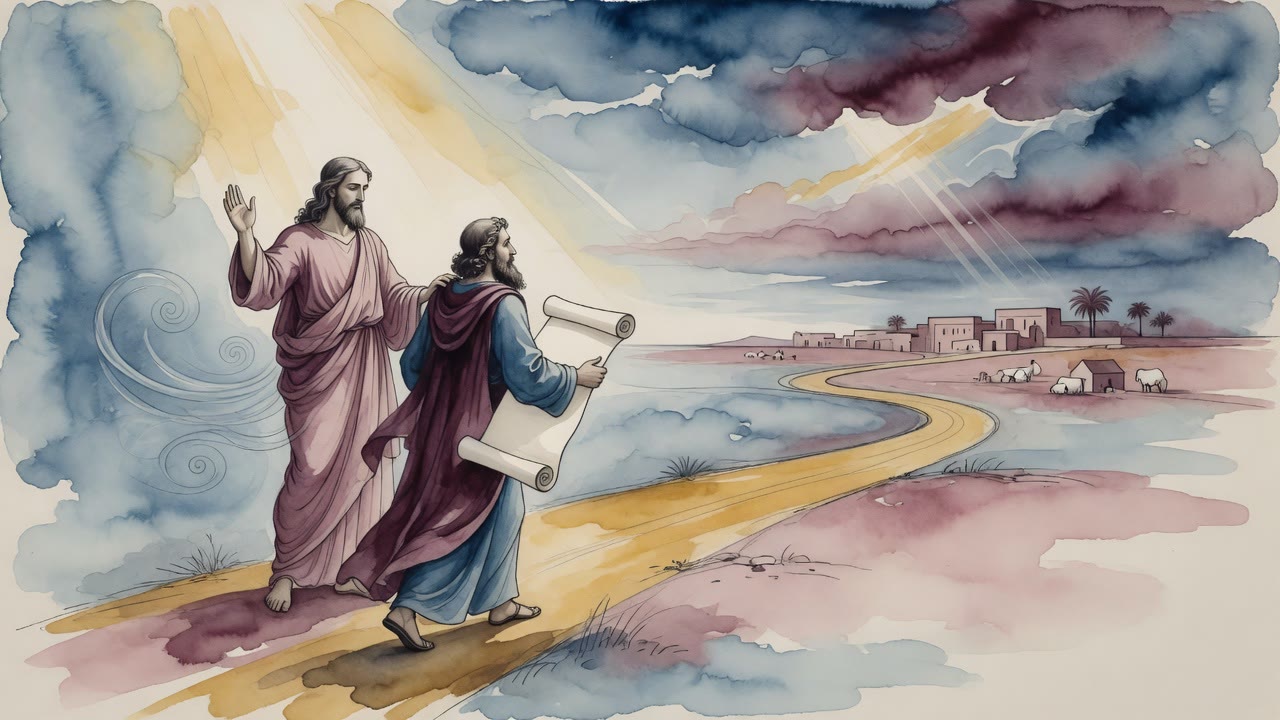
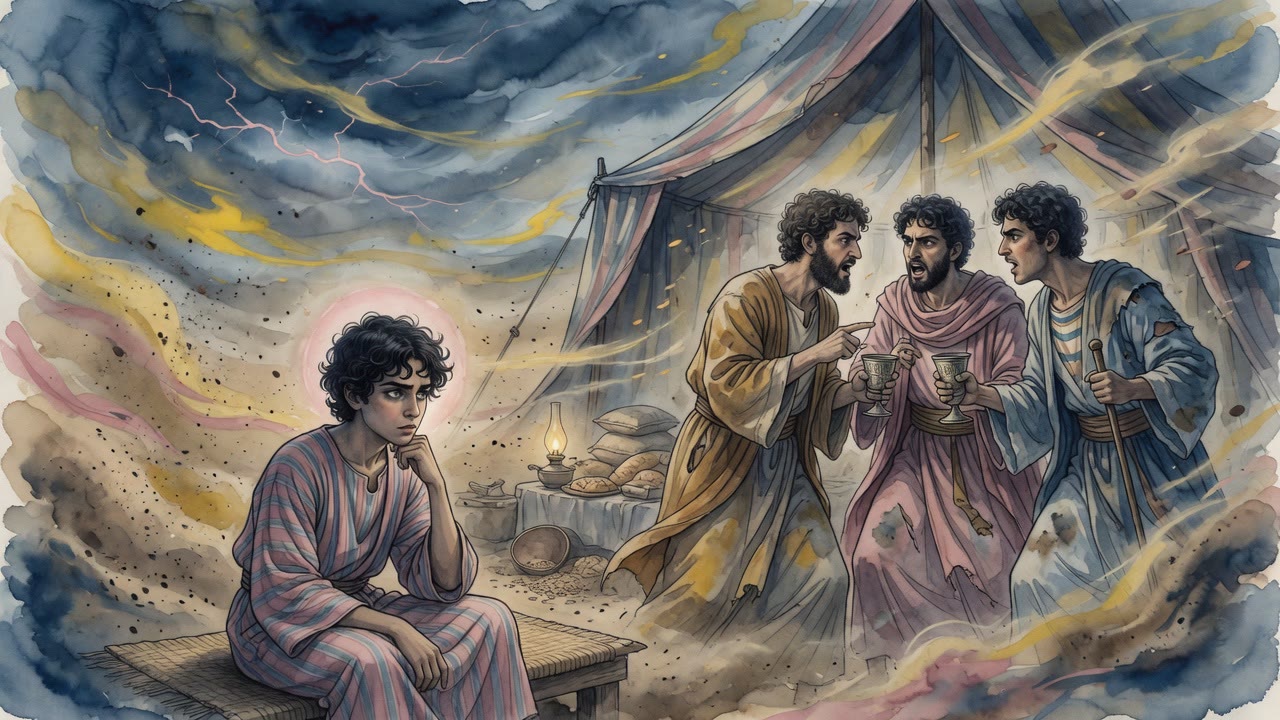
The coat came first. Then the face. Joseph came down the slope toward Dothan in the long-sleeved tunic his father had cut for him, and the ten men watching the flocks stopped working.
 Click for full size
"Here comes that master of dreams," one of them said. "Come now, let us kill him and throw him into one of the pits, and we will say an evil beast has devoured him."
The sentence did not stop there. A mouth that was not in the field finished it.
"And we shall see what will become of his dreams."
A Voice Finished Their Sentence
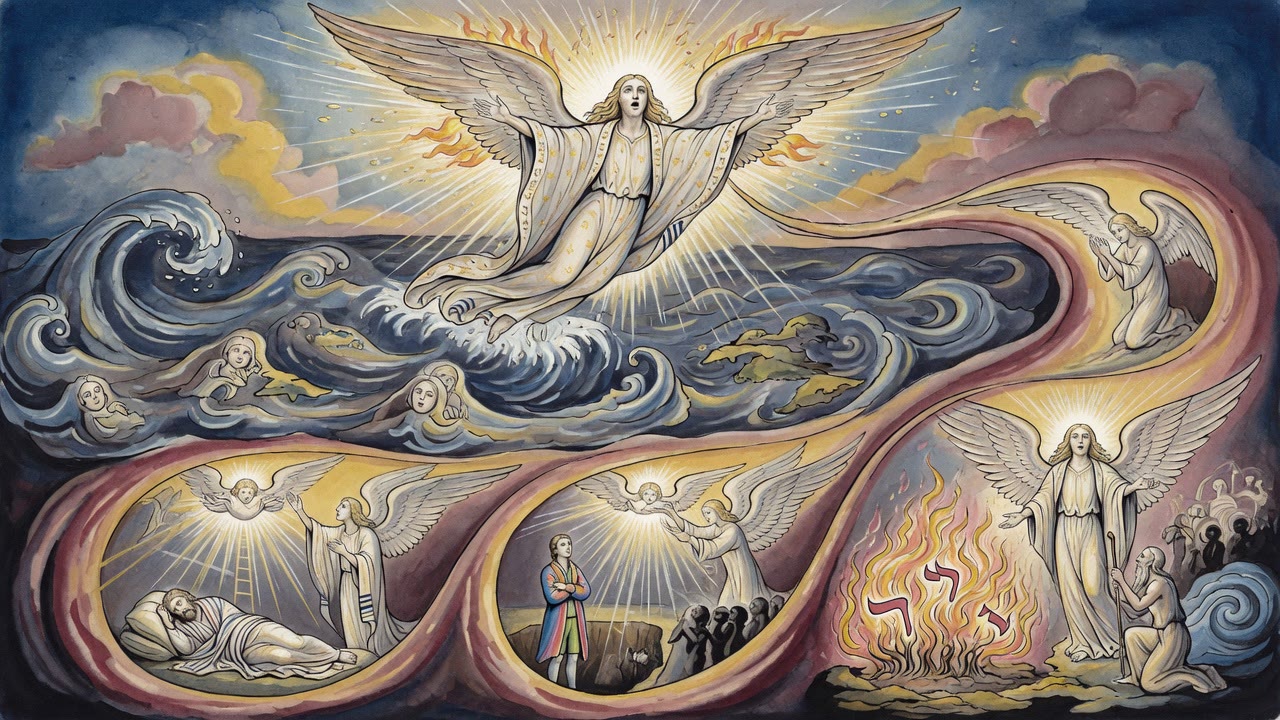
It came from above them, the Ruach ha-Kodesh (רוח הקודש), the Holy Spirit, and it was not agreeing with them. It picked up the boy's dream and set it down in front of them like a wager being covered.
"Behold, your sheaves gathered round about and bowed down," the voice said. "And we shall see whose stands. Yours or mine."
Not one of the ten looked up. Reuben talked them into a dry pit instead. A caravan came up the road from Gilead smelling of gum and balm. By evening Joseph had been sold for twenty pieces of silver and was walking south between camels.
That left the coat.
Judah Carried the Coat Home
They cut the throat of a goat kid and worked its blood into the wool until the stripes disappeared. Ten men stood in a field with a ruined garment and a father waiting in Hebron. Someone had to hand it over.
Judah took it.
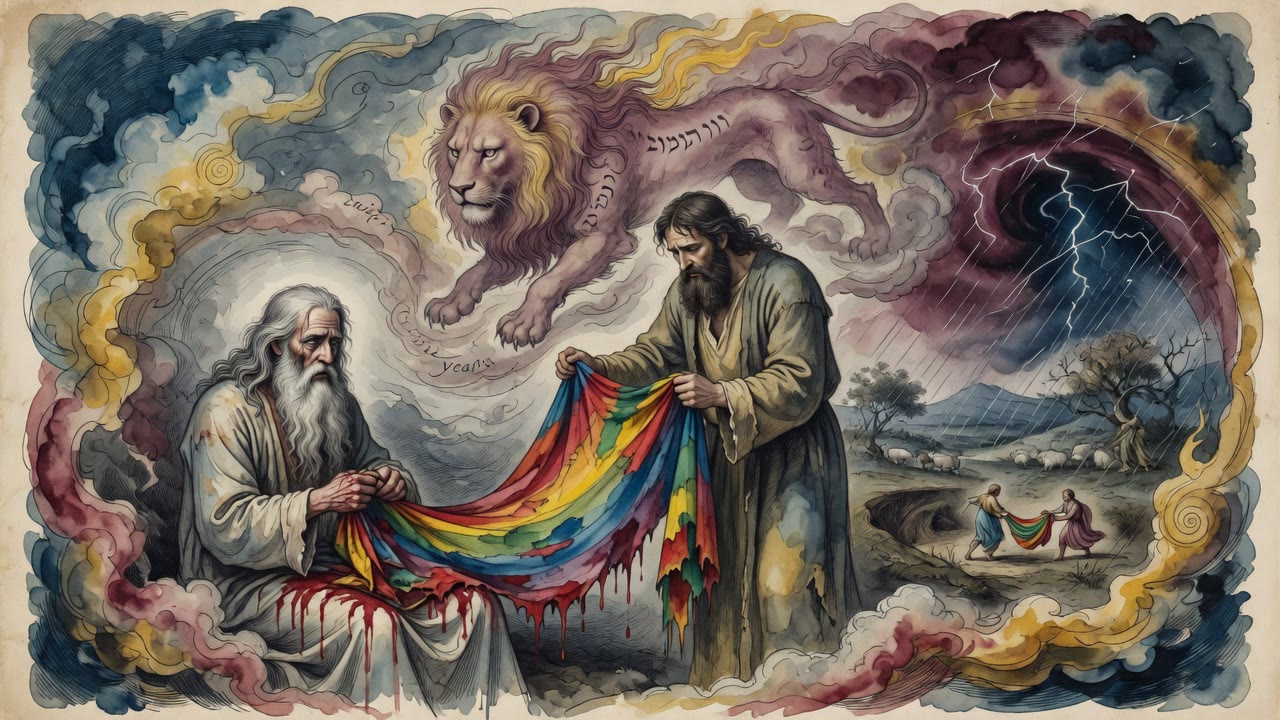
He carried it the whole way. He walked into his father's tent, held it out at arm's length, and said the words they had agreed on. "Haker na. Recognize, please. Is this your son's tunic or not?"
Jacob Named the Lion
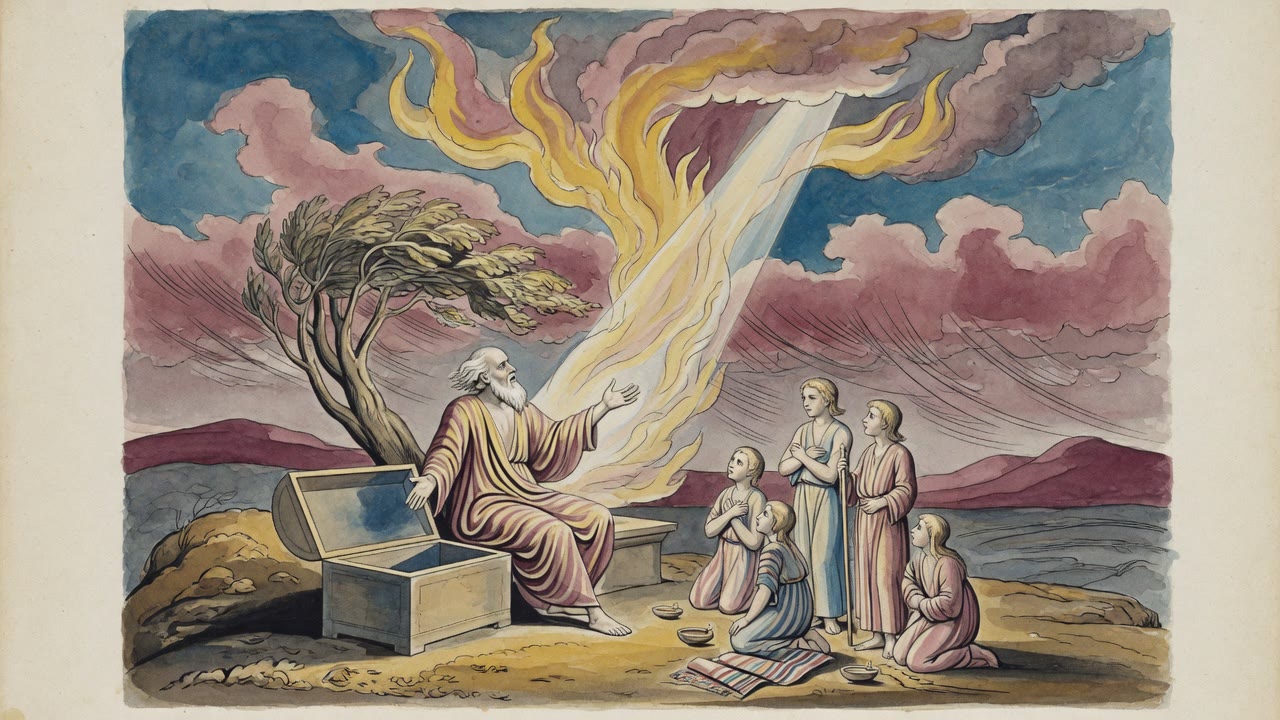
Jacob took the cloth in both hands. He turned it. The blood had dried stiff in the weave, and the stripes his own needle had made were gone under it. He did not ask where they found it. He did not look at the other nine. He looked at Judah.
"My son's tunic," he said. "An evil beast has devoured him. Joseph is torn to pieces."
There is one beast a man of Canaan means when he says evil beast. A lion. Jacob raised his eyes off the wool to the son holding it out to him, the fourth of his sons, the one he would live long enough to bless as a lion's whelp that no man dares rouse. Judah said nothing. Jacob tore his own clothes from the neck down and tied sackcloth on his hips.
"You tore him," Jacob said. "You tore him out of jealousy. And you are going to tear his brother too."
Twenty-Two Years of the Same Verdict
The mourning never closed. His sons and his daughters rose to comfort him and he refused to be comforted, and after a while they stopped trying. The accusation he kept for Judah. He said it more than once, across harvests and burials, in the flat voice of a judgment already entered.
Twenty-two years of that. Judah buried a wife in that stretch of time, and two grown sons. He stood in a road near Timnah handing his seal and cord and staff to a veiled woman he did not recognize. None of it reached the tent in Hebron.
When the famine came and Egypt started selling grain and the men needed Benjamin with them to buy again, Jacob would not let the boy go. Every son in that household knew whose hand he was refusing. Judah finally put himself up as the guarantee. His father signed the boy over the way a man signs away what he has decided he will lose.
Joseph was alive. The wagons came up loaded out of Egypt. The household broke camp. At Beersheba Jacob killed sacrifices to the God of his father and went down with his sons and his sons' sons and everything he owned. Somewhere on that road he had to name the son who would ride ahead of the caravan, find Goshen, and stand before the viceroy of Egypt first.
He sent Judah.
No apology rode out with him. Jacob never took the accusation back. He did not explain himself, and he never said the word jealousy out loud again. He handed the road to the son he had been calling a lion for twenty-two years, and the thing sitting between them since the tunic came home stood up and left.
Ten Could Not Hold One
Seventeen years later Jacob died in Egypt, and his sons went cold.
They had watched Joseph fall on their necks and weep, settle them in the best of the land, feed them through the famine, and none of it had convinced them. They knew what they had done. They knew he knew it. They sent a message ahead claiming a dying instruction from their father. Then they came in person and fell down in front of the throne.
"Behold, we are your servants," they said.
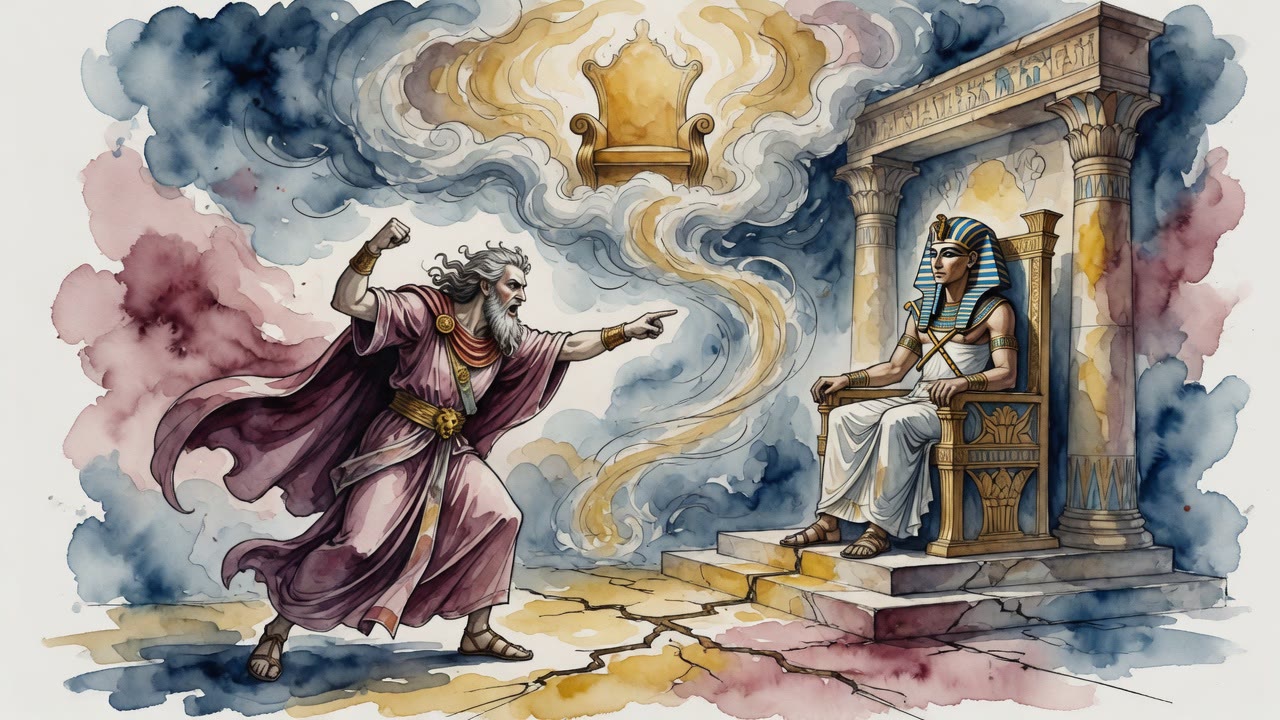
Joseph wept when he heard it. Then he did something stranger than pardon. He did arithmetic.
"You were ten," he said, "and you were not able to prevail against me. I am one. Shall I be able to prevail against ten?"
That was the entire answer. No oath, no terms, no ceremony over the grave. He spoke to their hearts and he fed them and their little ones, and nobody in that room said one word about a field near Dothan, or a coat, or whose sheaves had stood.
← All myths