The Angels Who Said We Destroyed Sodom Climbed Home
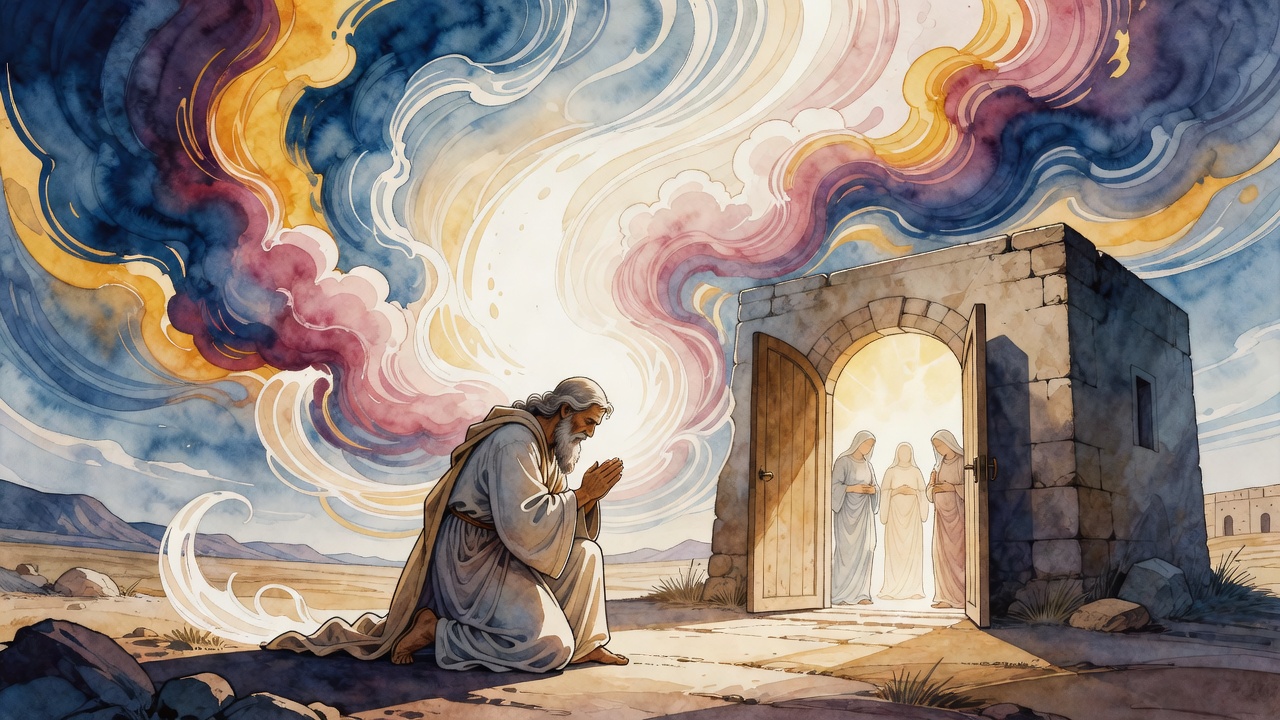
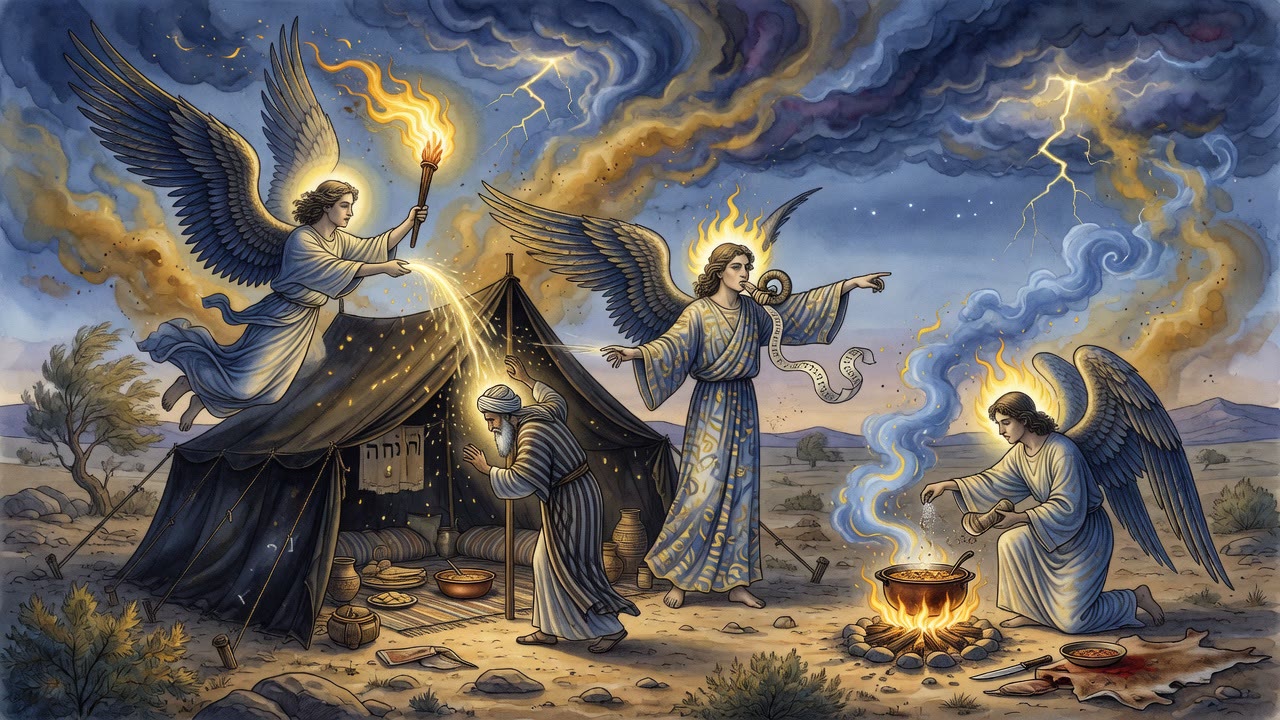
The men of Sodom had Lot's door in their hands. At dawn, inside the house, a guest said we are destroying this place.
Table of Contents
The men of Sodom had Lot's door in their hands. Young and old, the whole town of them, they had come for the two strangers eating at his table. Lot stood on the step and offered them anything else he owned. They told him to get out of the way. They said he had come as a foreigner and now wanted to judge them. Then they turned on him and started to break the wood.
 Click for full size
The Door That Would Not Hold
A hand came out of the house, caught Lot by the shirt, and pulled him inside. The two guests shut the door. Then they struck the crowd blind, every man of them. The men of Sodom groped along the wall in the dark, still hunting for the latch, and could not find it.
Inside, the guests told Lot to gather whoever belonged to him and get them out. The city had hours left. The outcry had already gone up. The order had already been sealed in heaven, and they were the ones sent to carry it.
We Are Destroying This Place
Then one of them said the sentence that would cost both messengers more than they knew.
"For we are destroying this place."
The plan had been given to them the way a courier is given a sealed letter. They opened their mouths over a stranger's floor and spread it. The fire was not theirs. The decision was not theirs. They were the hand, and the hand had just called itself the king.
God had made the first man out of two worlds at once, out of the creatures above who do not die and the creatures below who do, so that the man would live if he kept his place and die if he did not. The two at Lot's door were made only of the world above. Nothing in them was built to fall. They fell anyway, and they fell over a single word.
Harps and Flutes in a Doomed City
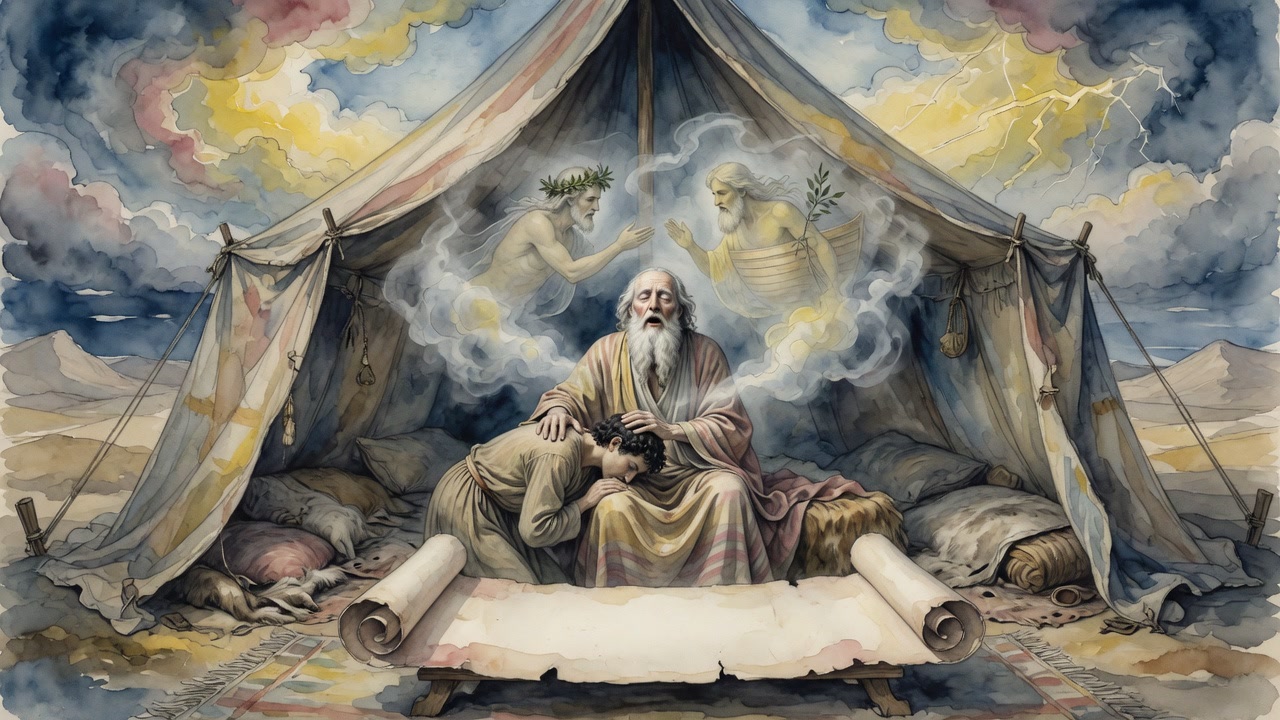
Lot had four daughters. Two were already married and two were promised, and the four men attached to them were asleep somewhere in a city with hours left. He went out into the streets before dawn to find them.
He shook them awake. Get up, he told them. Get out of this place. The Lord is destroying the city.
They laughed at him. Not cruelly, at first. They laughed the way people laugh at a man who has clearly had a strange night.
"Harps and flutes are in the province," they said, "and the province is about to be overturned?"
The music was still going somewhere behind them. That was the whole of their argument. Lot went back to the house without them. When the sun came up over the plain, the two guests took him and his wife and the two daughters still under his roof by the hands and hauled them out through the gate. The fire came down on the harps and the flutes and the four men who had gone back to sleep.
A Hundred and Thirty-Eight Years Outside
The sentence on the messengers came down as soon as the ash cooled. They were pushed out of their own enclosure and barred from the place where they had stood among the hosts. The gate they had come through closed on them. They were left on the earth they had just burned, with nothing to carry and no one to carry it to.
They waited a hundred and thirty-eight years.
They watched Abraham bury Sarah. They watched Isaac take a wife from a caravan out of Haran. They watched two boys grow up in one tent and stop speaking to each other. Nowhere in any of it was there a door back home. The world above went on without them. They walked the dust of a plain they had destroyed, couriers with no letter left to deliver.
The Ladder at Beth El
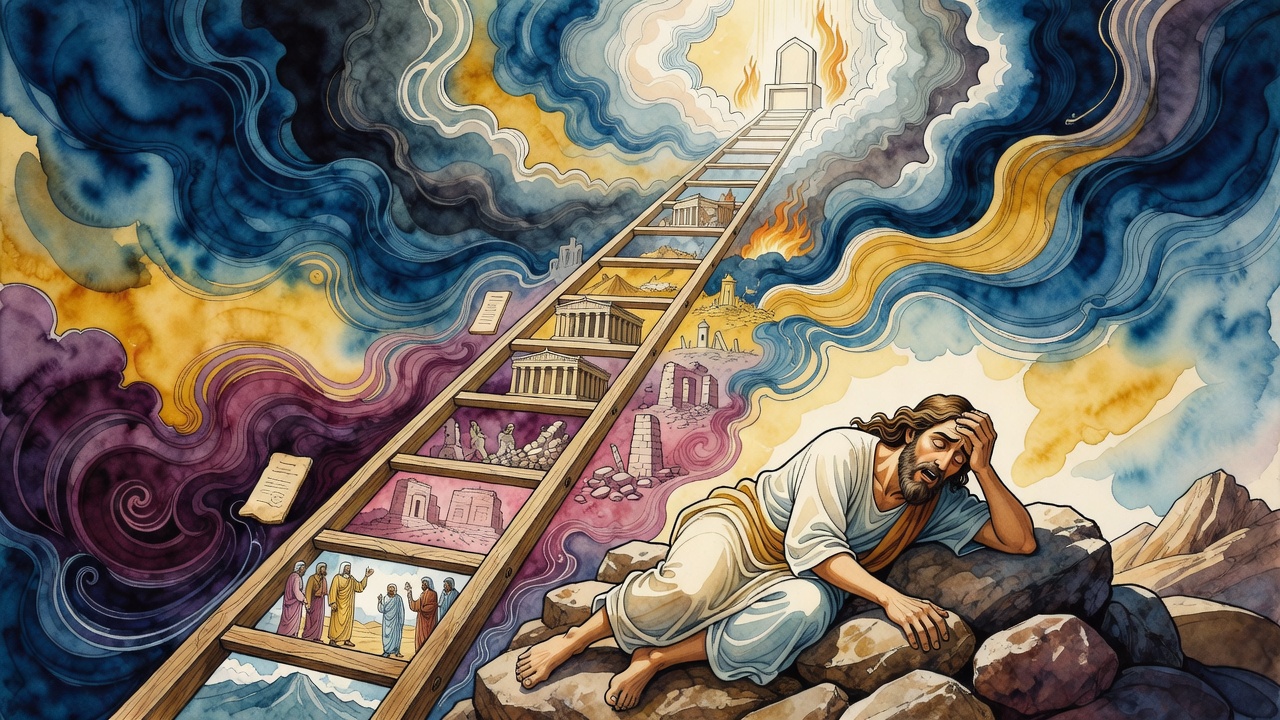
Jacob left Beer Sheva alone, with his brother behind him swearing to kill him and his father's blessing still warm on his head. He walked until the sun went down, took a stone from the ground, put it under his cheek, and slept.
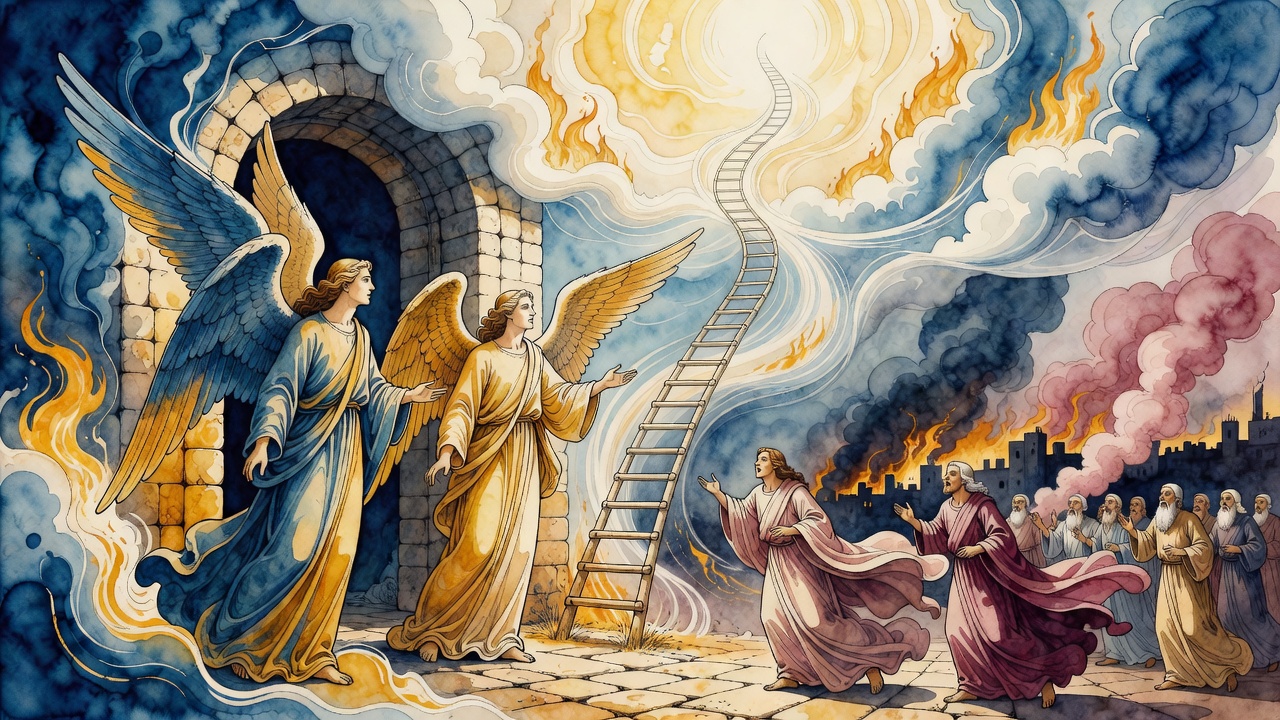
A ladder stood on the earth with its top in the sky. Its foot was planted in Beer Sheva, where Jacob had started, and its slope came down over the mountain where the Temple would stand. On it the messengers of God were climbing.
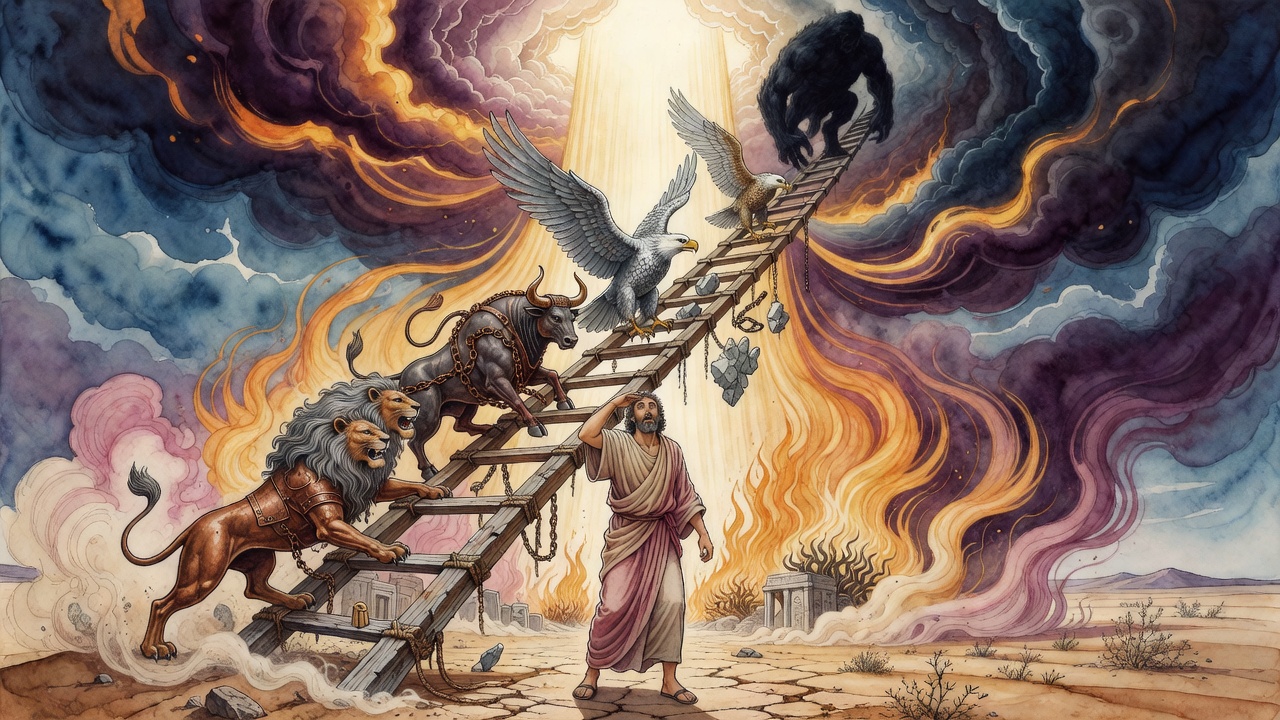
Not a crowd. Not the ordinary traffic of heaven. The two angels who had said we at Lot's door climbed that ladder in front of a sleeping man who had no idea he was watching a sentence end. The upper house hung only eighteen mil over the lower one, close enough that a man asleep on a stone was nearly touching it.
Jacob woke and said the Lord was in this place and he had not known it. He was afraid. He said the place was terrible. He called it the house of God and the gate of heaven. God showed him the house standing, and the house burned, and the house standing again. Jacob poured oil on the stone and went on walking toward Haran.
Behind him the ladder stayed a while longer, with two figures on it going up, and no one at Beth El to see them arrive.
← All myths