6 min read

Solomon Bound the Lecherous Spirit of a Dead Giant to Temple Labor

Summoned before Solomon's seal, a restless demon confesses it is what became of the Nephilim, and the wise king binds it to labor on his Temple.

Curated by Arthur · Told by Maggid ·
Table of Contents
  1. The Seal That Dragged Demons to the Throne
  2. A Shape That Wore the Dead
  3. The Question Every Demon Feared
  4. Bound to the House of God

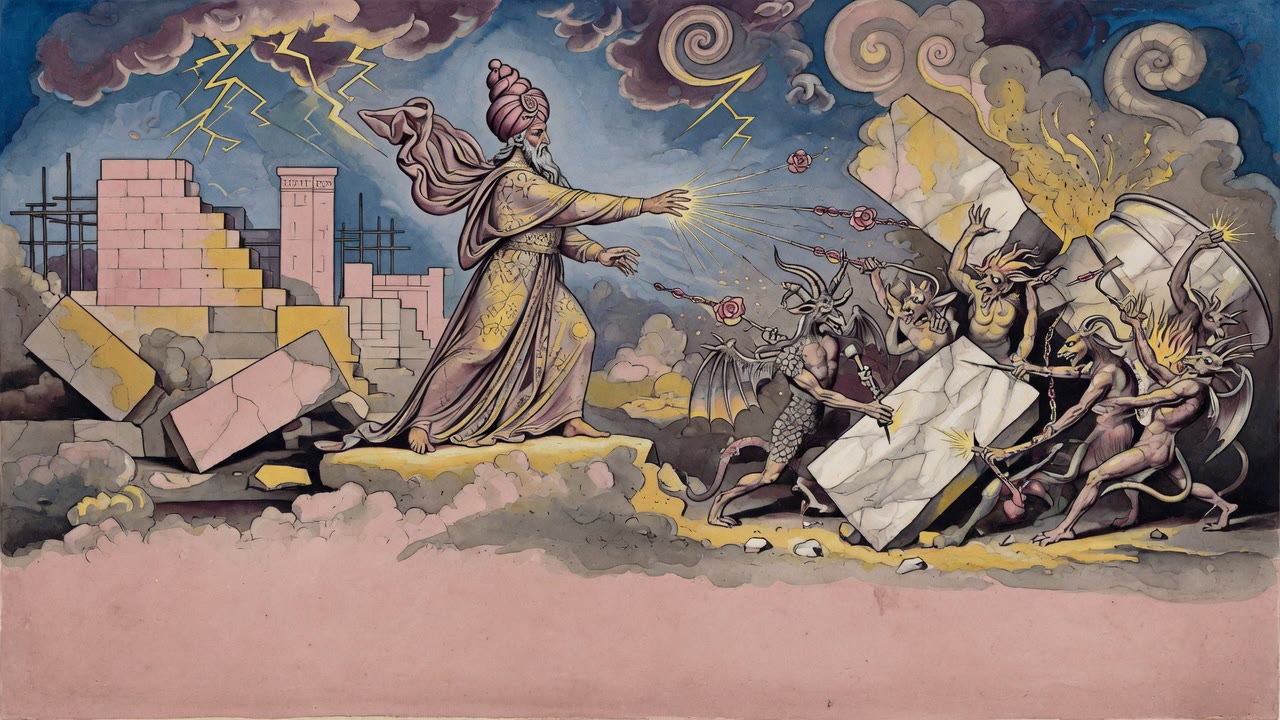
Before the flood, when the sons of God came down to the daughters of men, their children were the Nephilim, giants whose shoulders blotted out the sun. They filled the earth with violence until the earth could no longer hold them, and in the massacre that ended their age they died, every last one, their vast bodies rotting into the hills. Death took the flesh. It did not take the hunger. Out of one enormous corpse a lust rose up that had nothing left to feed, and it went walking.
Solomon Bound the Lecherous Spirit of a Dead Giant to Temple Labor Click for full size

The Seal That Dragged Demons to the Throne

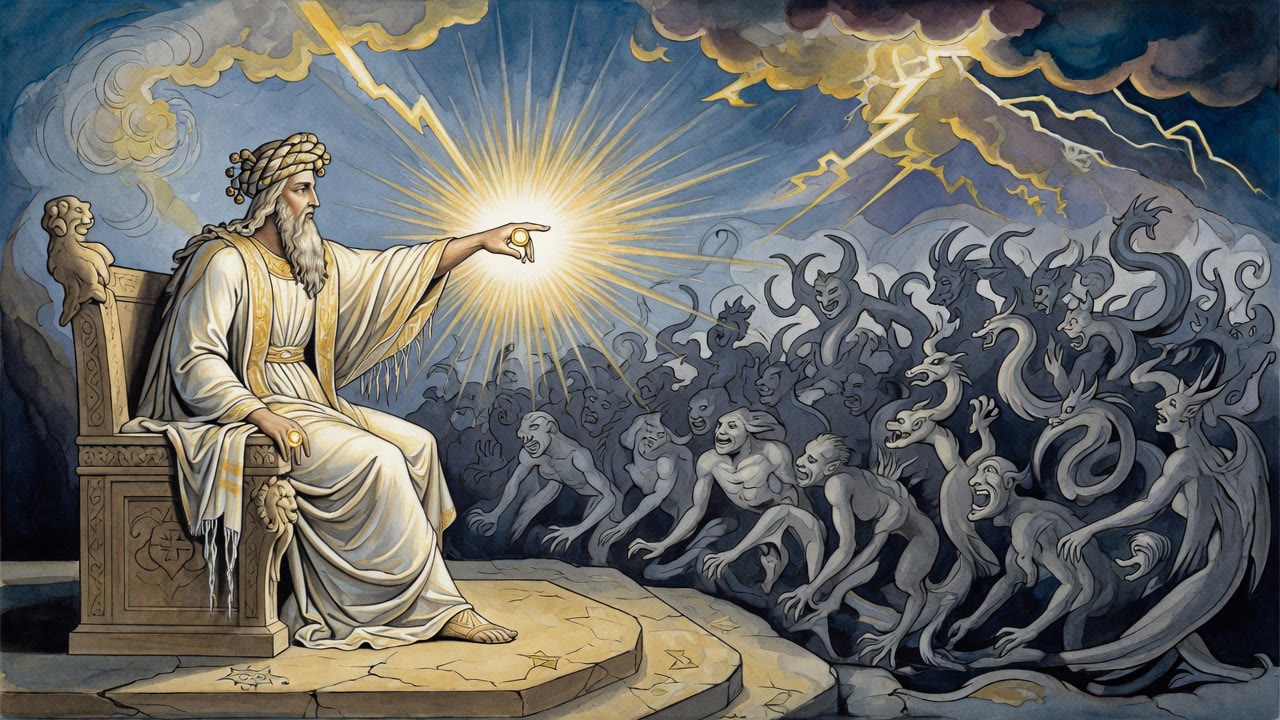
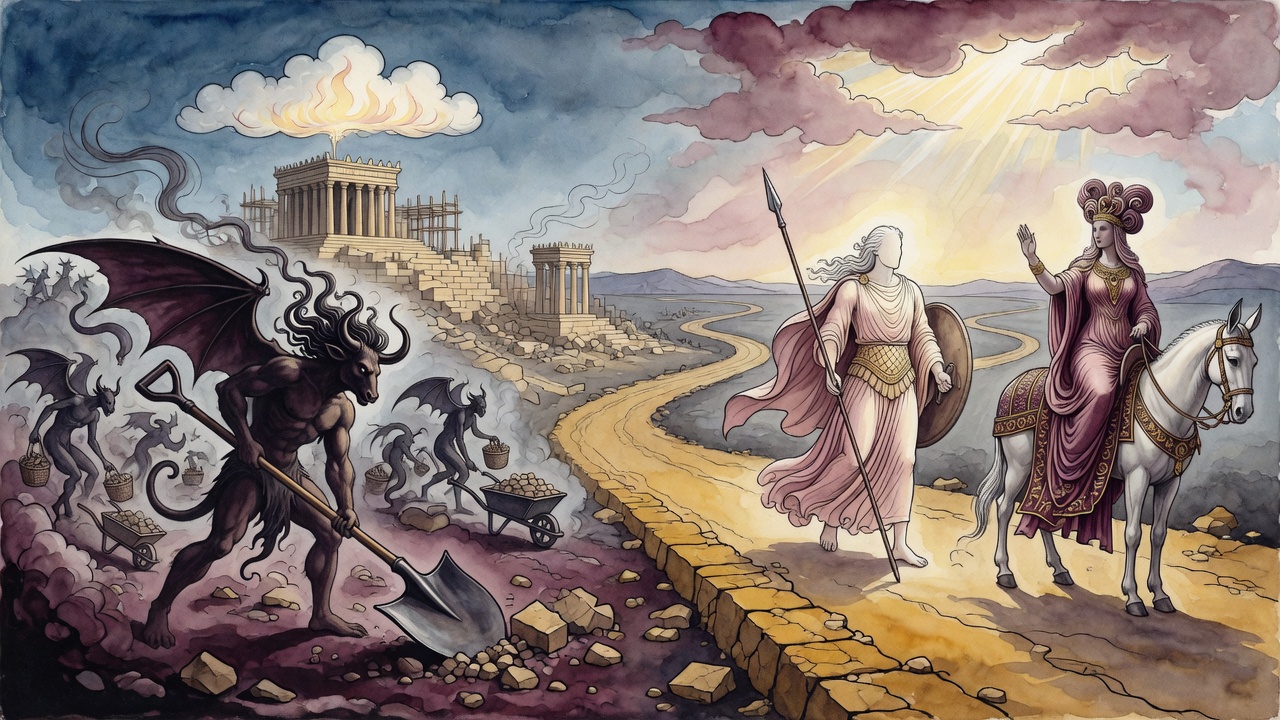
By the time it came before the throne, Solomon already held dominion over the dark. The archangel Michael had come down into the Temple courtyard and pressed a small ring into his hand, engraved with a seal, the sign of God's rule over every spirit that breathed. "With it you shall bind every demon on earth," Michael had told him, "and with their forced labor you shall build Jerusalem."

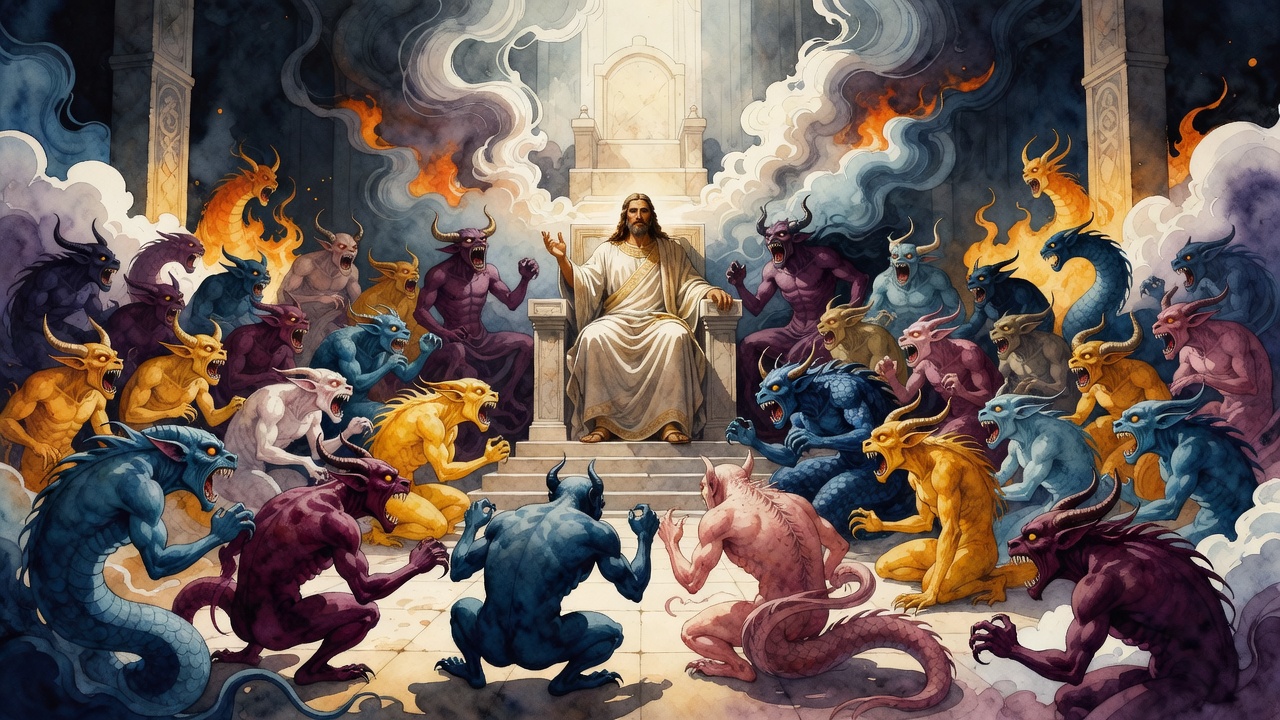
So the king had caught them one at a time. Ornias, who strangled men consumed by desire, now cut blocks of stone hauled from the shores of the Sea of Arabia. Onoskelis, a demoness with a fair face and the legs of a mule, stood day and night twisting hemp into rope for the scaffolds. The prince of the demons himself sawed marble in chains. And each evening the boy who once served the master craftsman brought another captive, dragged by the seal toward the throne, howling and offering all the gold of the earth to anyone who would set it free.

A Shape That Wore the Dead

They brought this one at midnight, because midnight was the hour it knew. It shuffled into the lamplight shuddering, a shadow with eyes that gleamed like coals in a cold grate, and it carried the smell of the grave.

"Who are you?" Solomon demanded.

The voice that answered remembered being enormous. "I am a lecherous spirit of a giant," it said, "one who died in the massacre in the age of the giants."

The king did not move from his throne. He had heard confessions fouler than this from things bound at his feet.

"Where do you make your bed?"

"In places no living foot can reach," it said. "I sit beside the dead in their tombs. At midnight I put on the shape of the dead, and when a man crosses my path I press myself into him, and a demon takes him for its own." It described the sleepers it climbed, the fever it stirred in them until they woke soaked and shaking, never knowing what had lain against them in the dark.

Then it offered him gold. They all offered gold. It swore it could lead him to hoards buried under the drowned cities, treasure its brothers had dragged down into the dark before the waters closed over the age of giants, if only the king would lift the seal and let it back to its tombs. Solomon let it finish. Then he asked the next question.

The Question Every Demon Feared

Then Solomon asked the question he asked all of them, the one that made the seal burn hottest against a demon's chest. "By what are you undone? What scatters you back into the dark?"

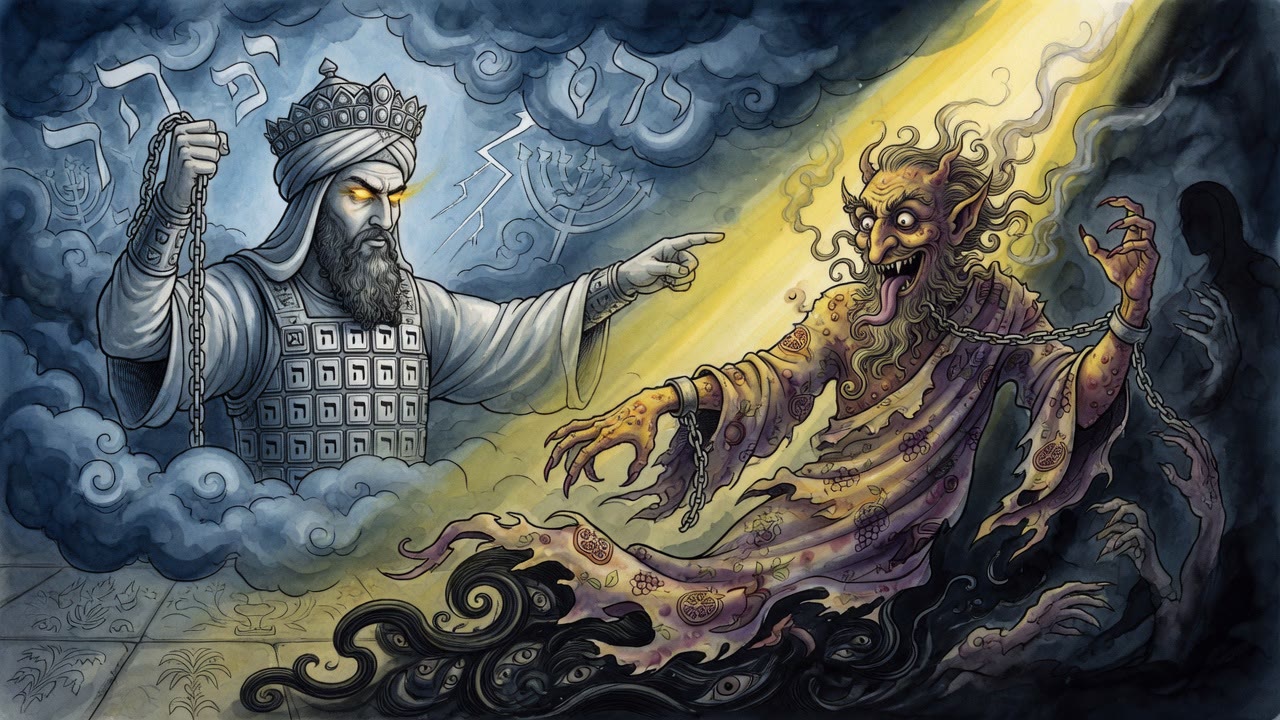
When the king had pressed Ornias, the demon had named the archangel Uriel, and Uriel had descended from heaven to break him. Every captive dragged before this throne had been forced to confess the one power that unmade it. But the giant's spirit hissed, and its answer was no angel's name at all. It named the sign. The holy Name, cut into stone or written on a brow, drove it out. Wherever those letters were set against it, it said, it could not hold its place. It came apart like smoke pulled open by wind.

Solomon lifted the ring, and the seal caught the flame of the lamps.

Bound to the House of God

He did not banish it. He did not throw it into the sealed pits he kept for spirits too foul to use. He put it to work.

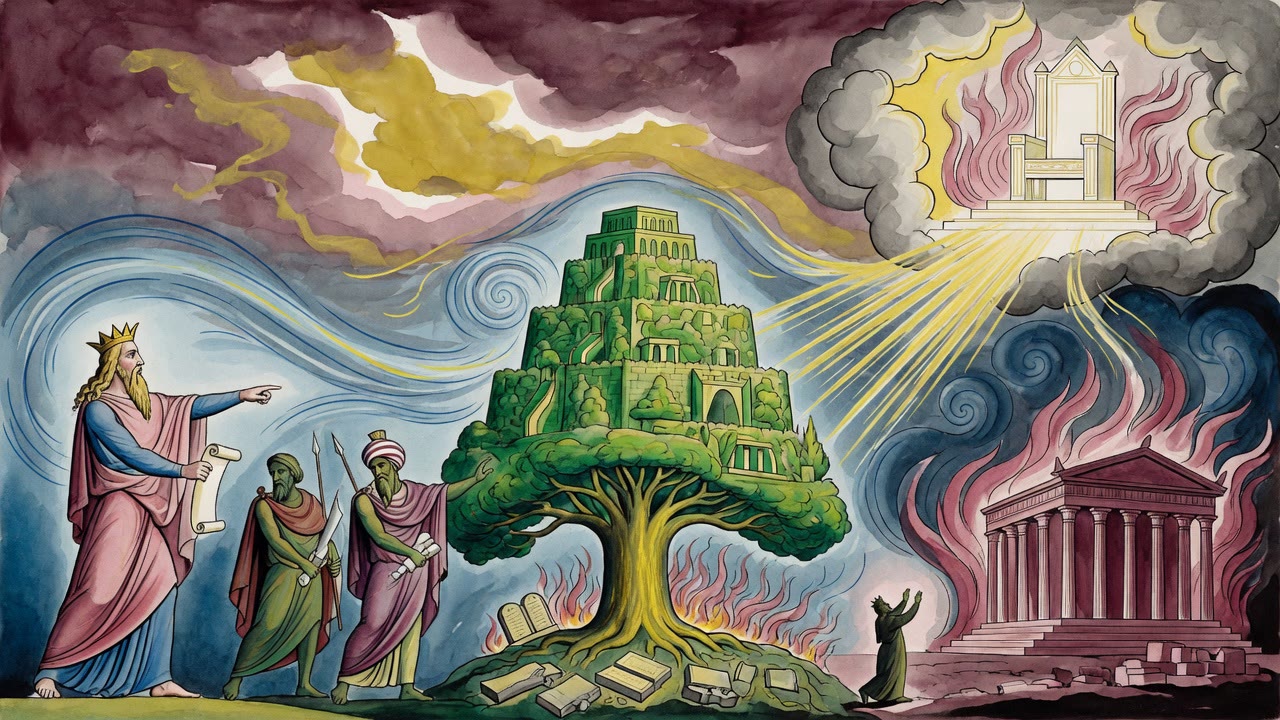
The thing that had lain in tombs wearing the faces of the dead was set to haul water for the Temple and to feed the fires where gold and silver ran molten into vessels. It labored beside its own kind, under masons who no longer feared the night. Near it, the wind demon Ephippas heaved up the cornerstone that no man and no spirit had been able to lift, and carried it to the pinnacle of the house. The lecherous giant passed below with its buckets, hour upon hour, its endless appetite yoked to the one labor it could never corrupt.

And over Jerusalem there settled a peace so deep it frightened the kings who came to see it. They arrived from the ends of the earth to watch the Temple rise, its pillars of pure gold, its lamps flashing emerald and sapphire, the demons toiling silent in the courtyard while artisans slept unharmed. Out in the hills a tomb stood empty at midnight. The shape that had haunted it did not come back, because it was busy carrying water, dragged at last into the light, in the house of the living God.


← All myths
From the tradition

Sources

4 sources

The texts behind this telling. Some cards carry a translation of the source; others are our own retelling of it, and each card says which. Every card links out to the original.

The Testament of Solomon 17Testament of Solomon

Retold in our words. Read the original at the link below.F. C. Conybeare public-domain English translation (1898) · Public Domain

"The Nefilim were in the earth in those days. And also afterward, when the sons of God went to the daughters of humans and had children by them. They were the heroes of old, men of renown." (Genesis 6:4)

Well, let me tell you about one… or, rather, what became of one. It’s a strange and unsettling tale from The Testament of Solomon, a really fascinating, if somewhat spooky, kind of demonic bestiary.

The story goes that King Solomon, known for his wisdom and, in this case, his magical abilities, captured a demon named Omasis (as we also see in the story of "The Vampire Demon"). By forcing Omasis to reveal the names of other spirits, Solomon was able to summon and interrogate them, one by one.

The scene: Solomon, in all his royal splendor, calling forth beings from the shadows. One particular spirit emerged, a shadowy figure with eyes that gleamed in the darkness.

"Who are you?" Solomon demanded.

And the spirit replied, "I am a lecherous spirit of a giant who died in a massacre in the age of giants."

A lecherous spirit! This wasn’t just any old ghost; this was the lingering essence of a giant, one of the Nefilim, corrupted and twisted into something… else.

Solomon, unflinching, pressed on. "Where do you dwell?" he asked.

The spirit’s answer is chilling: "I live in inaccessible places. I seat myself near the dead in their tombs, and at midnight I assume the form of the dead. If I encounter anyone, I cause him to be possessed by a demon." This spirit, a remnant of a bygone age of giants (as explored further in "The Giants of Old," and in the story of "The Giant Og"), haunts tombs, mimicking the deceased, and preying on the living. It's a truly terrifying image.

Hearing this confession, King Solomon, as he did with all the other demons he summoned (The Testament of Solomon 17), imprisoned this lecherous spirit. Locked away, hopefully never to torment the living again.

What became of all those giants of old? Were they all reduced to malevolent spirits, lurking in the shadows, waiting to corrupt and possess? The story leaves us with a sense of unease, a glimpse into a dark corner of Jewish folklore where the echoes of a forgotten age still linger, reminding us of the monstrous potential that can arise from even the most legendary of beings.

Is this just a scary story? Or a cautionary tale about the dangers of unchecked power and the corruption of the soul?

Full source
Testament of Solomon 1-7Testament of Solomon

Retold in our words. Read the original at the link below.F. C. Conybeare public-domain English translation (1898) · Public Domain

A demon was feeding on a child. Every evening, after the workers building the Temple in Jerusalem finished their labor, a spirit called Ornias descended upon the boy who served the master craftsman. The demon stole half his wages. Half his food. And then it sucked the thumb of his right hand, draining his life force night after night until the child wasted away to skin and bone.

King Solomon loved this boy more than all the other artisans. He noticed the child growing thinner by the day and summoned him. "Do I not pay you double wages?" he asked. "Do I not give you double portions of food? Why do you grow weaker with each passing hour?"

The boy fell to his knees. "O king, after we are released from our work on the Temple of God, a demon comes to me at sunset. He takes half my pay and half my food. Then he seizes my right hand and sucks my thumb. My soul is crushed, and my body wastes away."

Solomon entered the Temple and prayed with all his soul, night and day, begging the Almighty for authority over the demon. And his prayer was answered.

The archangel Michael descended from heaven bearing a gift from the Lord of Hosts. A small ring. On it was engraved a seal, a pentagram, the sign of God's dominion over all spirits. Michael spoke: "Take this, O Solomon, son of David. The Lord God, the Most High, has sent you this gift. With it you shall bind every demon on earth, male and female. And with their forced labor, you shall build Jerusalem."

Solomon took the ring and gave it to the boy the next morning. "When the demon comes tonight," he said, "throw this ring at his chest and say: In the name of God, King Solomon calls you. Then run to me. Do not be afraid of anything you hear."

That evening, at the customary hour, Ornias came like a burning fire to steal from the child. But this time the boy hurled the ring at the demon's chest and shouted the words. The seal struck Ornias and bound him. The demon shrieked: "Child, what have you done to me? Take this ring off and I will give you all the gold of the earth! Only do not lead me to Solomon!"

But the boy ran. He ran straight to the king, rejoicing. And behind him, bound by the seal of the living God, the demon Ornias followed, howling, begging, dragging himself toward the throne of the wisest king who ever lived (1 Kings 6:1).

This was the beginning. The first demon had been caught. And through that single ring, Solomon would enslave every dark spirit under heaven and force them to build the house of God.

Full source
Testament of Solomon 8-18Testament of Solomon

Retold in our words. Read the original at the link below.F. C. Conybeare public-domain English translation (1898) · Public Domain

The boy dragged the demon Ornias to the palace gates. The spirit stood there shuddering, trembling, crying out and offering silver and gold to anyone who would free him. But no one dared touch the seal of God.

Solomon rose from his throne and walked out to the vestibule. There, in the fading light, he saw the demon quaking before him. "Who are you?" the king demanded.

"I am called Ornias," the spirit whispered.

"Tell me, demon, to what zodiacal sign are you subject?"

"To Aquarius. I strangle those consumed with desire. I change into three forms, sometimes a beautiful woman who seduces men in their sleep, sometimes a winged creature who flies to the heavenly regions, and sometimes a lion. I am commanded by all the demons. And I am the offspring of the archangel Uriel."

When Solomon heard the name of the archangel, he prayed and glorified God. Then he sealed the demon and set him to work cutting stones for the Temple, massive blocks brought from the shores of the Sea of Arabia. Ornias, terrified of the iron tools, begged for freedom. "Let me go and I will bring you all the demons!" he cried. But Solomon was not moved. He prayed to Uriel, and the archangel descended from heaven to subdue the spirit completely.

Then Solomon gave Ornias the ring and a command: "Go. Bring me the prince of all demons."

Ornias took the seal and flew to Beelzeboul, the king of the demons. "Solomon calls you," he said. Beelzeboul laughed. "Who is this Solomon?" But Ornias hurled the ring at his chest. The seal struck, and Beelzeboul screamed, a sound like the roar of a furnace. And a great column of fire erupted from him. He had no choice. Bound by God's seal, the prince of demons followed Ornias back to Jerusalem.

Solomon saw the lord of all dark spirits standing before him and glorified the Almighty. "Who are you?" he asked.

"I am Beelzeboul, the ruler of the demons. All the demons sit close to me. I am the one who reveals the apparition of each spirit." He promised to deliver every unclean spirit in chains. Solomon accepted. And immediately demanded to see the female demons.

Beelzeboul vanished and returned at high speed with Onoskelis, a spirit with the fair skin and pretty face of a woman, but the legs of a mule. She tossed her head defiantly.

"Who are you?" Solomon asked.

"I am Onoskelis. I lurk upon the earth. I have a golden cave, but my dwelling place shifts constantly. I strangle men with nooses. I haunt precipices, caves, and ravines. I appear to men in the form of a beautiful woman and seduce them. Those who worship my star, they do not know they are feeding my appetite for destruction."

"How were you born?" the king pressed.

"I was born of an echo, a voice untimely, like the bat kol, the daughter of a voice that the sages speak of."

Solomon sealed Onoskelis with the ring and condemned her to spin hemp for the ropes of the Temple, night and day, until the building was finished. The demon who once haunted ravines and seduced men was now a slave, spinning rope in the house of God.

Full source
Testament of Solomon 106-130Testament of Solomon

Retold in our words. Read the original at the link below.F. C. Conybeare public-domain English translation (1898) · Public Domain

The thirty-sixth and final zodiac demon, Bianakith, confessed: "I lay waste houses and cause flesh to decay. But if a man writes certain holy names on the front door of his home, I flee from that place."

Solomon glorified the God of heaven and earth. He commanded the demons to fetch water for the Temple. Some he set to the heavy labor of construction. Others he locked in prisons. Others he ordered to work with fire, smelting gold and silver. He prepared sealed chambers for those yet to be captured.

Then, peace. Profound, extraordinary peace. Solomon's kingdom prospered. His army stood ready. Jerusalem rejoiced. The entire Temple of the Lord was built, and all the kings of the earth came from the ends of the world to behold it, bringing gold and silver, precious stones, bronze, iron, lead, and cedar wood that would never decay (1 Kings 6:1).

Among those who came was the Queen of the South. She entered the Temple and saw the altar of incense with its brazen supports, the gems of the lamps flashing in every color, emerald, sapphire, hyacinth, the vessels of gold and silver and bronze, the hangings dyed red with madder, the pillars made of pure gold. She saw the demons laboring in chains. She heard Solomon's wisdom and fell to the ground, glorifying the God of Israel.

During this time an old workman threw himself before Solomon, weeping. "My only son beats me. He insults me. He pulls out the hair of my head and threatens me with death." Solomon summoned the son, who denied everything. But before Solomon could render judgment, he noticed the demon Ornias laughing in the corner.

"Why do you laugh in my presence?" Solomon demanded.

"Not at you, O king. I laugh at this old man and his wretched son. In three days, the boy will die. The old man seeks to have him punished, not knowing his son's life is already forfeit."

Solomon sent father and son home and told the old man to return in three days. When he did, the old man wore black. His son was dead. Ornias had spoken true.

Solomon pressed the demon: "How did you know?" And Ornias revealed one of the great secrets of the demonic order: "We demons ascend into the firmament of heaven and fly among the stars. There we overhear the sentences pronounced upon the souls of men. Then we descend, by force, or fire, or sword, or accident. And carry out the destruction. If a man does not die by disaster or violence, we transform ourselves to appear human, so that men worship us in our disguise."

"How can you, being demons, ascend to heaven and mingle with the holy angels?" Solomon asked.

"Whatever is fulfilled in heaven is also mirrored on earth," Ornias said. "There are principalities and authorities. We demons fly in the air and hear the voices of the heavenly beings. But we have no firm ground to stand on. We lose our strength and fall, like leaves from trees. Men see us plummeting through the night sky and think the stars are falling. But it is only us, falling because we have nothing to hold on to. We crash like lightning through the darkness. And we set cities aflame and burn the fields."

Meanwhile, Adares, the King of Arabia, sent a letter pleading for help. A terrible wind demon blew from dawn until the third hour each day, killing men and beasts. Nothing could stop it. Solomon sent a servant with a leather flask and the ring of God. At dawn, the servant placed the flask before the demon's blast with the ring over its mouth. The demon blew straight into the flask. The servant sealed it instantly in the name of the Lord God of Hosts.

The flask was brought to Jerusalem, and the wind demon, Ephippas, was forced to lift the great foundation that no worker or demon had been able to move. He hoisted it up the Temple steps and laid it at the pinnacle, fulfilling the scripture: "The stone which the builders rejected has become the head of the corner" (Psalm 118:22).

Ephippas also brought up a demon from the depths of the Red Sea, Abezithibod, who revealed a stunning secret. "I was present when Moses stood before Pharaoh in Egypt. I am the one who hardened Pharaoh's heart. I am the one whom the magicians Jannes and Jambres invoked against Moses. When the children of Israel crossed the Red Sea and the waters returned, I was trapped, held under a pillar in the depths ever since" (Exodus 14:21-28).

Solomon adjured both Ephippas and Abezithibod, and they swore: "The Lord your God lives, we will hold up this pillar until the end of the world. On whatever day this stone falls, the world will end."

And then came the fall.

Solomon took wives from every nation, numberless women (1 Kings 11:1-4). Among them he desired a Shunammite woman, a Jebusite. Her priests demanded a price: worship our gods, Raphan and Moloch. Solomon refused. He knew the glory of God. But the priests told the woman not to lie with him until he complied.

Love did what no demon could. The woman brought Solomon five grasshoppers and told him to crush them in the name of Moloch. It seemed so small a thing. Five insects. A minor act. But Solomon did it. And in that instant, the Spirit of God departed from him. His wisdom dimmed. His words became foolish. He was compelled to build temples to Baal, to Raphan, to Moloch, and to other idols.

The man who had bound every demon under heaven was himself enslaved, not by a spirit, but by desire. The king who forced Asmodeus to tread clay and Beelzeboul to saw marble could not resist a single woman's demand. And so Solomon wrote this testament as a warning: "I, wretch that I am, followed her counsel, and the glory of God departed from me. My spirit was darkened, and I became the sport of idols and demons."

He wrote it all down for the children of Israel. So that those who read it might attend to the end, and not the beginning. So that they might find grace forever.

Full source