Parshat Chayei Sarah6 min read

The Lord of Hebron and the Coins That Could Not Exist

A tyrant of Hebron demands a ransom in coins all struck the same year, a debt built to be unpayable, until Abraham stirs in his grave to answer it.

Curated by Arthur · Told by Maggid ·
Table of Contents
  1. The Tax No Mint Could Fill
  2. A Fast in the Shadow of the Sword
  3. The Old Man Who Came in the Dream
  4. The Money at the Gate of the Court
  5. The Lord Counts and Cannot Argue
The Lord of Hebron and the Coins That Could Not Exist Click for full size

The Tax No Mint Could Fill

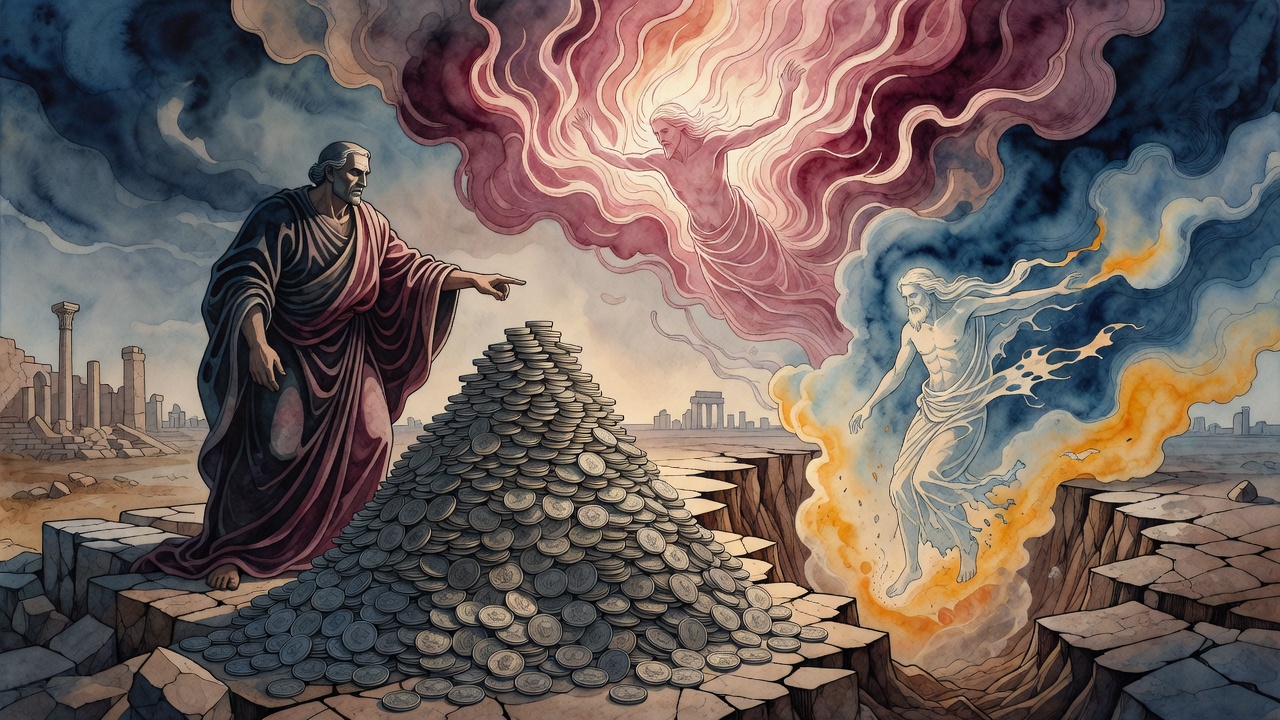
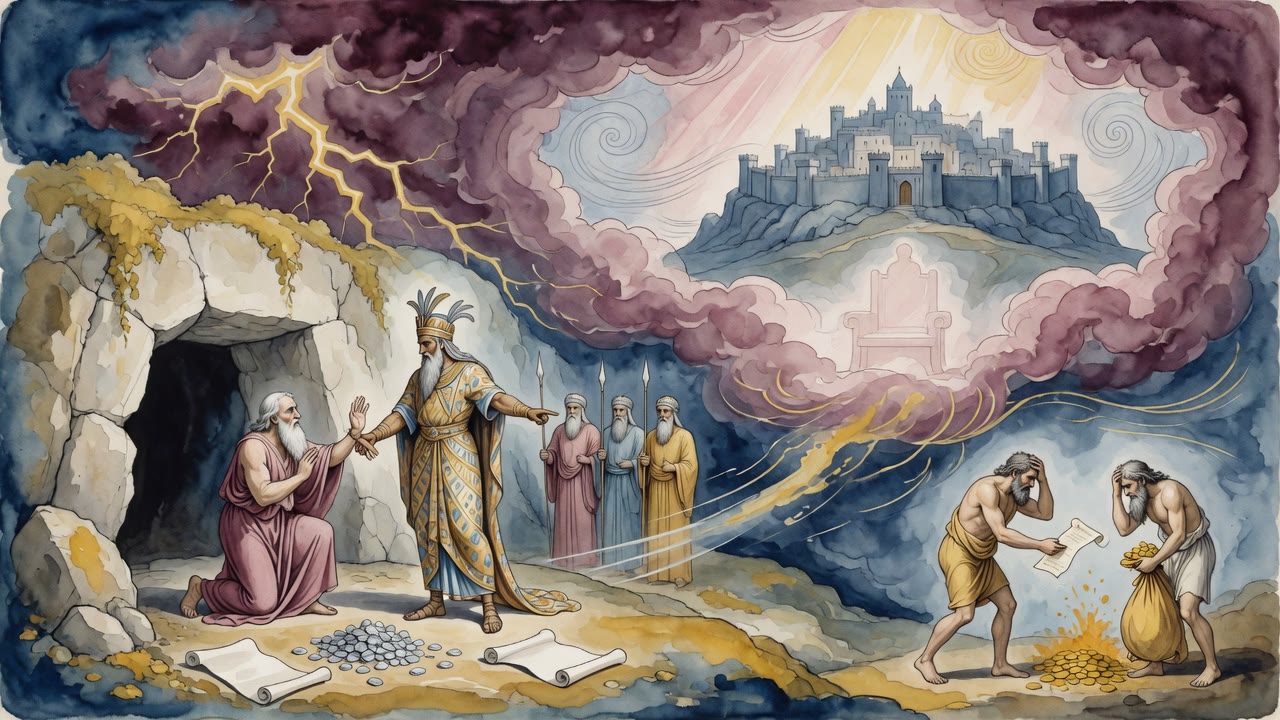
The lord's men came at midday and read the decree in the square, where the whole community of Hebron could hear it. A sum was named, so large that the elders went gray listening to it. Then came the second half of the demand, the half built to kill. Every coin had to be struck in the same year. Not old silver worn smooth by a hundred hands. Not the mixed money that passed through the city from Egypt and Damascus and the coast. One year's minting, and that year the lord's own choosing, counted out to the last piece.

They knew what the number meant. No treasury in Hebron held that many coins from a single year, and no honest trade could gather them before the deadline fell. The lord knew it too. He had ruled over them a long time, and he had learned that a tax dressed as law could do the work of a sword without staining his hands. When the Jews failed to pay, and they would fail, he would have his pretext, and the streets would run.

A Fast in the Shadow of the Sword

The elders did not send men to the money changers. There was no point in it. Instead they called the community to the synagogue and proclaimed a public fast, a ta'anit tzibbur, the whole city gathered to plead as one. They ate nothing. They stood through the day. Fathers who had bounced their children on their knees that morning now bowed their heads and begged God to lift the blade the lord had hung above them.

Hebron was a small community, but an old one, and a good one. Visitors who came to pray at the tombs of the fathers were fought over, each household desperate for the honor of feeding a stranger. Now those same households pressed together in the lamplight and wept, because piety and hospitality do not mint coins, and the year the lord had named would not come again.

Among them stood the shammash, the beadle who swept the synagogue and lit its lamps and locked its doors at night. He fasted with the rest. When the day closed and the people went home hollow with hunger and fear, he lay down and, worn out past thought, fell asleep.

The Old Man Who Came in the Dream

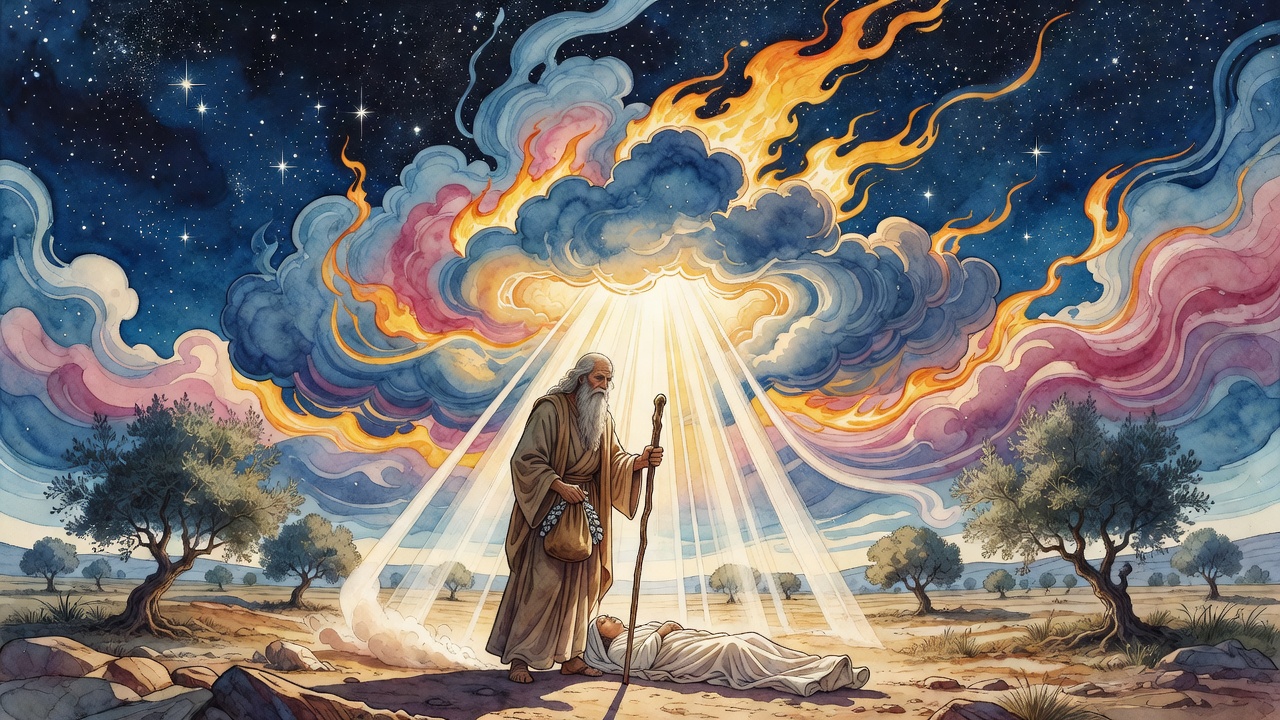
An old man stood over him in the dark. His face carried an authority that pressed the beadle flat against the ground, and when he spoke his voice filled the whole of the dream.

"Arise, and hasten," the old man said. "Go to the gate of the court. There you will find the money you need. I am your father Abraham. I have seen the affliction the Gentiles lay upon you, and God has heard your groaning."

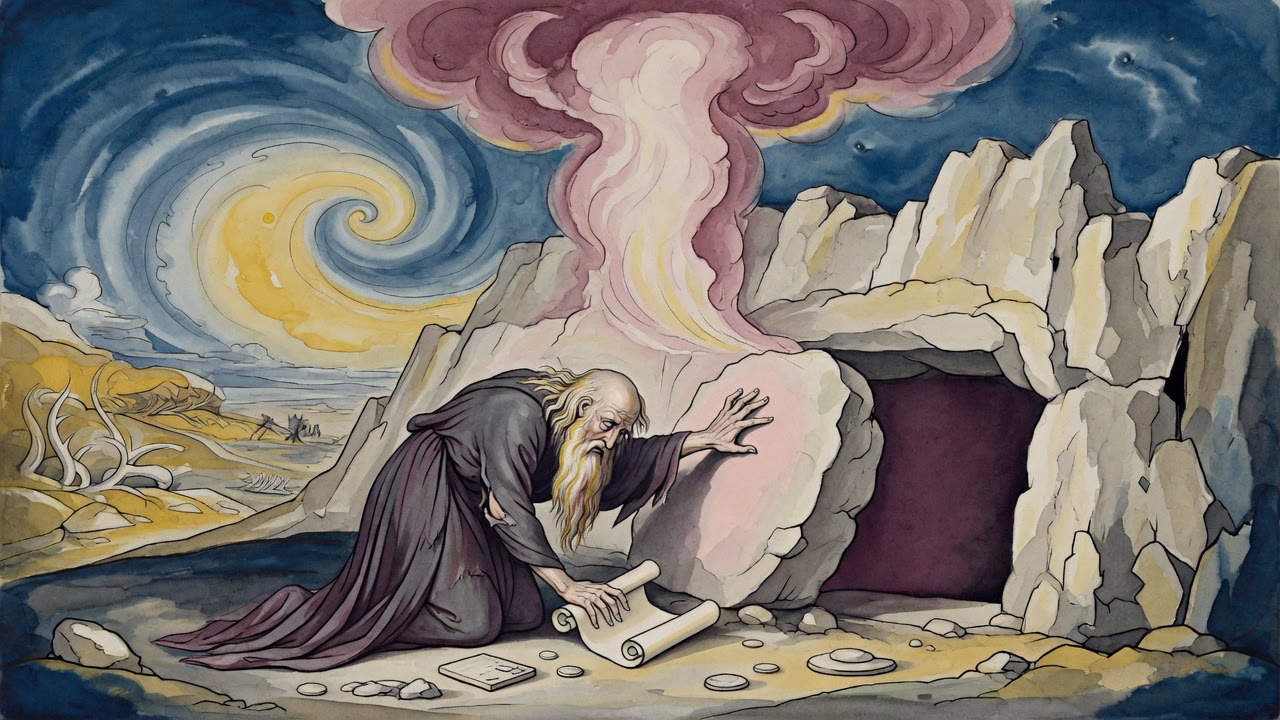
Then he was gone, and the beadle was awake in the black of his room, his heart slamming against his ribs. He knew the name. Everyone in Hebron knew it. Deep under the city lay the Cave of Machpelah, where Abraham had buried Sarah and been laid beside her, he and Isaac and Jacob, the fathers and mothers of the people, sleeping in the rock. And now the sleeper had risen to stand in a beadle's dream and send him out into the night.

The Money at the Gate of the Court

He did not wait for morning. He wrapped himself against the cold and went through the empty streets to the gate of the lord's own court, the place where the decree had been read aloud that day. And there, waiting in the dark, was money.

He gathered it up. He did not stop to count it in the street. He carried it back through the sleeping city to the elders, woke them, poured it out before them, and told them everything the old man had said, the gate where he must go and the name of the one who had sent him.

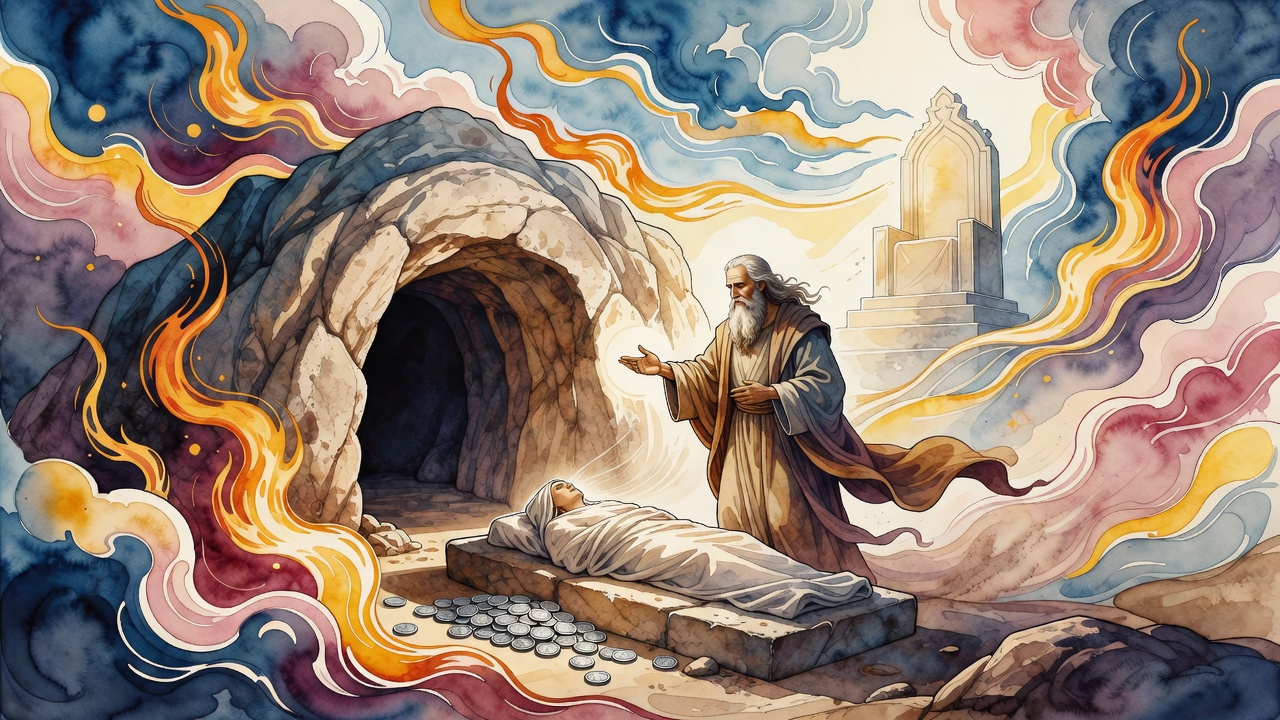
The community came together and counted the coins by lamplight, piece after piece. Each one they turned to the year. Each one had been struck in the year the lord had named, and in no other. When they reached the end of the counting they held the exact sum the decree demanded. Not one coin more. Not one coin less. The dead man had measured it out to the last piece.

The Lord Counts and Cannot Argue

They carried the money to the lord and set it before him. He had built his demand to be impossible, and here it lay on the table in front of him, the full sum, every coin from the single year he had chosen to ruin them. He counted it himself, and found no fault in it.

He had meant to prove that the God of these people could not save them. Instead he stood over a heap of coins that by his own reckoning could not exist, coins no living man could have gathered in the time he had allowed, and he knew that a hand he could not see had reached into his trap and filled it. "God is with them," he said. From that day the sword stayed in its sheath, and the Jews of Hebron found favor in his eyes.


← All myths

From the tradition

Sources

2 sources

The texts behind this telling. Some cards carry a translation of the source; others are our own retelling of it, and each card says which. Every card links out to the original.

Legends of the Jews, V. Abraham, The Patron Of HebronLegends of the Jews

Retold in our words. Read the original at the link below.Project Gutenberg eBook #1493, The Legends of the Jews, Volume 1 · Public Domain

Sometimes, the most incredible stories come from those moments. Like this one from Hebron, about how the patriarch Abraham himself stepped in to aid his descendants.

Hebron – Ḥevron in Hebrew – is a city steeped in history, a place where our ancestors walked. It’s home to the Cave of MachpelahMe’arat HaMachpelah – believed to be the burial place of Abraham, Sarah, Isaac, Rebecca, Jacob, and Leah. According to the Legends of the Jews, as retold by Louis Ginzberg, the Jewish community in Hebron, though small, was known for their piety, their goodness, and especially their incredible hospitality.

Imagine: whenever visitors came to pray at the Cave of Machpelah, the residents practically fought over the chance to host them! Winning that privilege was like striking gold. But one year, on the eve of Yom Kippur, the Day of Atonement, a problem arose. They were short one person for the minyan, the quorum of ten men needed for communal prayer. Disaster! The sun was sinking, and they were one man short.

Then, just as hope seemed lost, an old man appeared. Picture him: silver-white beard, a sack slung over his shoulder, clothes worn and tattered, feet swollen from a long journey. They rushed to greet him, brought him into a home, gave him food and drink, and provided fresh, white garments. He joined them for worship at the synagogue. When asked his name, he simply replied, "Abraham."

After the fast ended, the residents of Hebron drew lots to decide who would host their guest. The beadle, the synagogue caretaker, won! But on the way to his house, the old man vanished. Gone! A frantic search ensued, lasting all night, but to no avail. The stranger was nowhere to be found.

Exhausted and worried, the beadle finally fell asleep. And then, in a dream, the lost guest reappeared. But this time, he was radiant, his face shining like lightning, his clothes magnificent, studded with gems that shimmered like the sun. The beadle, stunned, couldn't speak. "I am Abraham the Hebrew," the stranger said, "your ancestor, who rests here in the Cave of Machpelah. I saw your distress at lacking a minyan, so I came to you. Fear not! Rejoice!"

But the story doesn't end there.

On another occasion, the Jews of Hebron faced a different kind of threat. The city's ruler, a cruel and oppressive man, demanded a massive sum of money, all in coins of the same year. An impossible task, designed to be a pretext for violence against the Jewish community. They proclaimed a fast and a day of prayer, begging God to avert the impending disaster.

That night, the beadle had another dream. An awe-inspiring old man appeared and said, "Arise quickly! Go to the gate of the court, where you will find the money you need. I am your father Abraham. I have seen your suffering at the hands of the Gentiles, and God has heard your cries."

Terrified but hopeful, the beadle went to the designated spot. And there it was: the exact amount of money the ruler demanded, no more, no less. The Jews presented the money to the ruler, who, upon seeing the impossible fulfilled, realized that God was indeed with them. From that day forward, the Jews found favor in his eyes.

These stories, found in the Legends of the Jews, remind us of a powerful connection to our past. They speak to the enduring legacy of Abraham, not just as a historical figure, but as a protector, a guardian, a constant presence in times of need.

What does it mean that Abraham, our ancestor, is said to have intervened not once, but twice? Perhaps it’s a reminder that we are never truly alone. That the bonds of family, of faith, of history, can reach across generations, offering comfort, guidance, and even miraculous assistance when we need it most. And maybe, just maybe, it suggests that the acts of kindness, piety, and community that the Jews of Hebron displayed were the very things that opened the door for Abraham’s intervention in the first place.

Full source
Legends of the Jews 5:316Legends of the Jews

Retold in our words. Read the original at the link below.The Legends of the Jews by Louis Ginzberg (1909) · Public Domain

The story goes that these Jews were living under the thumb of a particularly cruel ruler. This lord of Hebron, as Ginzberg tells us in Legends of the Jews, was a real piece of work, constantly oppressing them. One day, he decided to levy an impossible tax. He demanded a huge sum of money, and here’s the kicker: it all had to be in coins from the same year! A near-impossible task, and he knew it. This wasn't about the money, it was a thinly veiled excuse to wipe them out.

They understood the subtext. This wasn't just financial hardship; it was a death sentence hanging over their heads. So, what do you do when faced with the impossible? They did what they knew best: they turned to God.

They declared a fast day, a day of public prayer, a ta'anit tzibbur, where the entire community comes together to beseech God for mercy. They poured out their hearts, begging for deliverance from this impending doom. And that night, something incredible happened.

The shammash, the beadle or caretaker of the synagogue, had a dream. In this dream, he saw an awe-inspiring old man. Who was this figure? None other than Abraham, their patriarch! He spoke to the shammash, instructing him to go to the gate of the court. "Hasten," Abraham urged, "for there you will find the money you need. I am your father Abraham. I have beheld the affliction wherewith the Gentiles oppress you, but God has heard your groans."

Terror, awe, disbelief... all mixed into one. The shammash, shaken but resolute, followed the instructions. And there it was! Exactly where Abraham had indicated, he found the exact sum of money demanded by the lord.

He rushed back to the congregation, recounting his dream as he presented the money. The community, still reeling from fear, carefully counted the coins. And it was true! The precise amount, no more, no less.

They delivered the money to the lord of Hebron. He was stunned. He, who thought his demand was impossible to meet, was faced with irrefutable proof: God was with the Jews. And from that day forward, the Jews found favor in his eyes. The sword that had been hanging over them was lifted, all thanks to a dream, a prayer, and the enduring legacy of Abraham.

What does this story tell us? Perhaps it's about the power of prayer in the face of adversity. Maybe it's about the unwavering connection between a people and their ancestors. Or maybe, just maybe, it's a reminder that even when things seem utterly hopeless, there's always a chance for a miracle. And sometimes, that miracle comes in the form of a dream, and a little help from a very old friend.

Full source