6 min read

The Measure of God's Body and the Weeping Behind Sealed Doors

Mystics wrote down how far it is across God's little finger. Then they said He cries when one Jew is hurt, and hides it behind shut doors.

Curated by Arthur · Told by Maggid ·
Table of Contents
  1. The Parasangs No Hand Could Hold
  2. A Tongue From One End of the Universe to the Other
  3. The Same Body Bent Low
  4. The Weeping Sealed Behind the Inner Chambers
  5. The Voice Like a Dove and the Roar of the Lion
The Measure of God's Body and the Weeping Behind Sealed Doors Click for full size

The Parasangs No Hand Could Hold

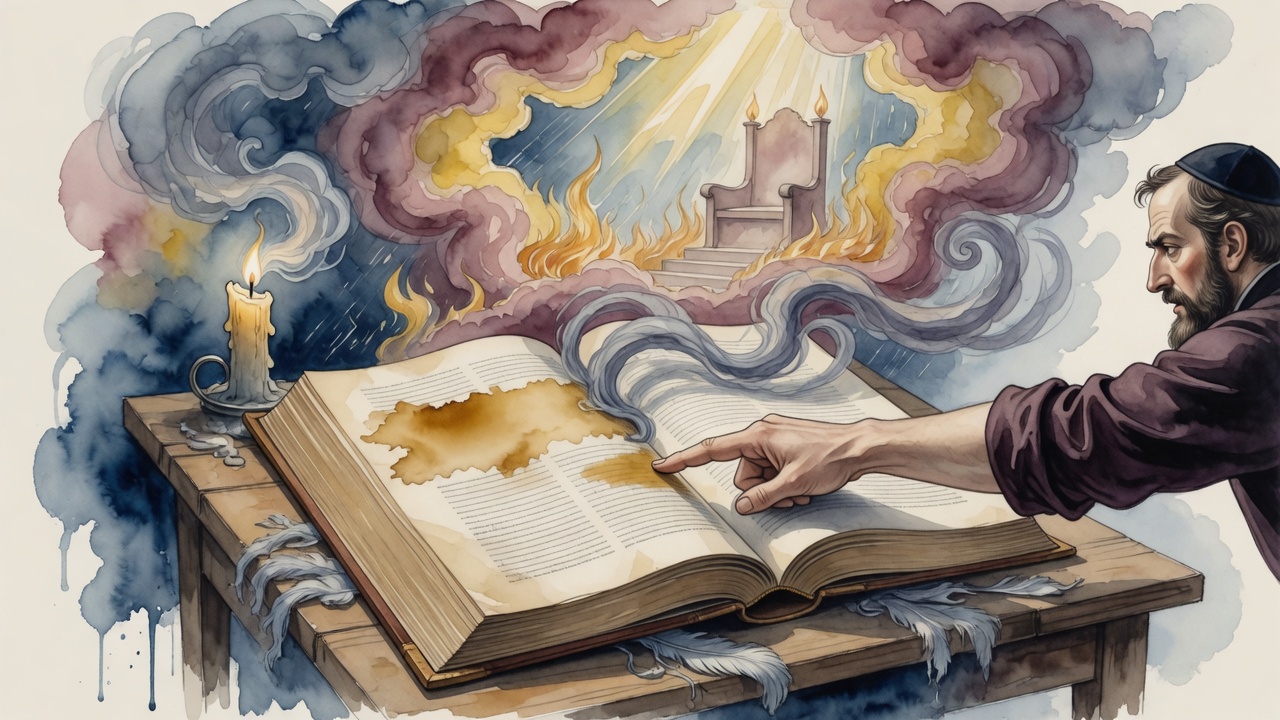
The measurers came with their cords and their numbers, and they laid them against a body that no cord could reach. They counted in parasangs, the unit for the distance a caravan walks in an hour, and the figures ran past the mind and kept running. The little finger alone stretched beyond the edge of thought. To reach the next joint would take a lifetime of walking, and past that joint the hand went on, and past the hand the arm, until the count itself gave out and only the awe was left standing.

They wrote the numbers down anyway. In Shi'ur Komah, the book of the Measure of the Body, they set figures for every limb of the Holy One, precise and enormous and impossible to picture. A man could read them and still see nothing, because the eye has no room for such a sum. The numbers were not meant to draw God small. They were meant to break the mind against His size, and in the breaking, to leave something true behind.

A Tongue From One End of the Universe to the Other

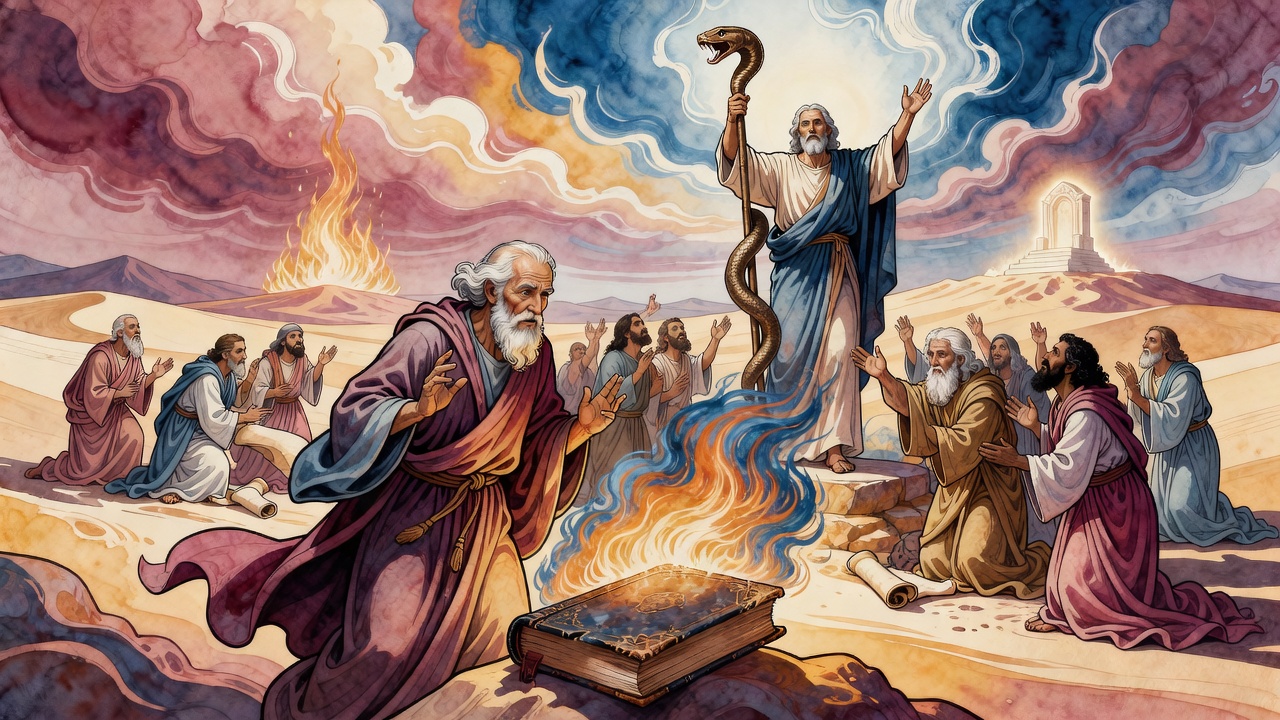
His tongue reached from one end of the universe to the other. Not as a turn of speech. The mystics meant the span itself, edge to edge of everything that is, filled by a single tongue that could shape a word. And His mouth was fire consuming fire, a blaze that fed on blaze and was never spent, burning without ash and without end.

Some said the one who learned these measurements truly, who carried the dimensions of the Creator in his heart, would be safe in this world and in the World to Come. He would live long. He would live well. The knowledge was a kind of armor, though what it armored against was harder to name. It may have been the terror of a God so vast that a soul could fall through Him forever and never strike a wall.

The Same Body Bent Low

Then the mystics said the thing that should not fit beside the measurements, and they said it without flinching. This Being, past all limit, past all edge, this fire that consumes fire, suffers. When a single Jew is afflicted, He is afflicted with him. Rabbi Isaac Luria taught it plainly. When a Jew is in pain, God feels that pain far more than the man himself does, because the man has a body that tires and numbs and at last goes still, and God has no limit at all. What has no limit can put no cap on its grief. His mourning has no floor.

The verse had said it long before. "In all their troubles He was troubled." One small line in Isaiah, easy to walk past. The mystics did not walk past it. They read it as a law of the upper world. Israel weeps below, and the immeasurable One weeps above, and His weeping is larger than the finger, larger than the tongue that spans the world, larger than any parasang the measurers ever set down.

The Weeping Sealed Behind the Inner Chambers

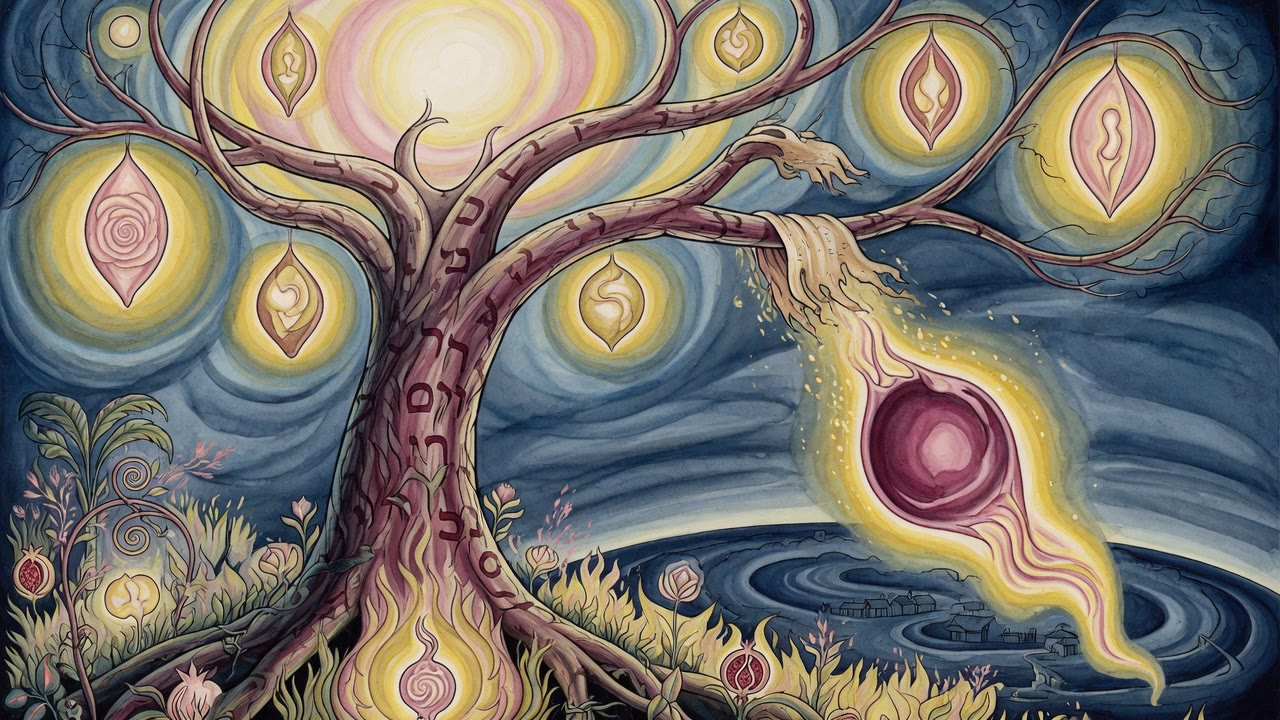
So the grief had to be hidden, or it would have ended everything. If the world ever truly heard God weep, if creation caught even one clear note of that sorrow, it would come apart at the seams. A single spark of the divine grief, loosed into the air, would be more than the sky and the sea and the dry land could bear. The stars would scatter. The ground would split. Mercy itself kept the sound sealed away.

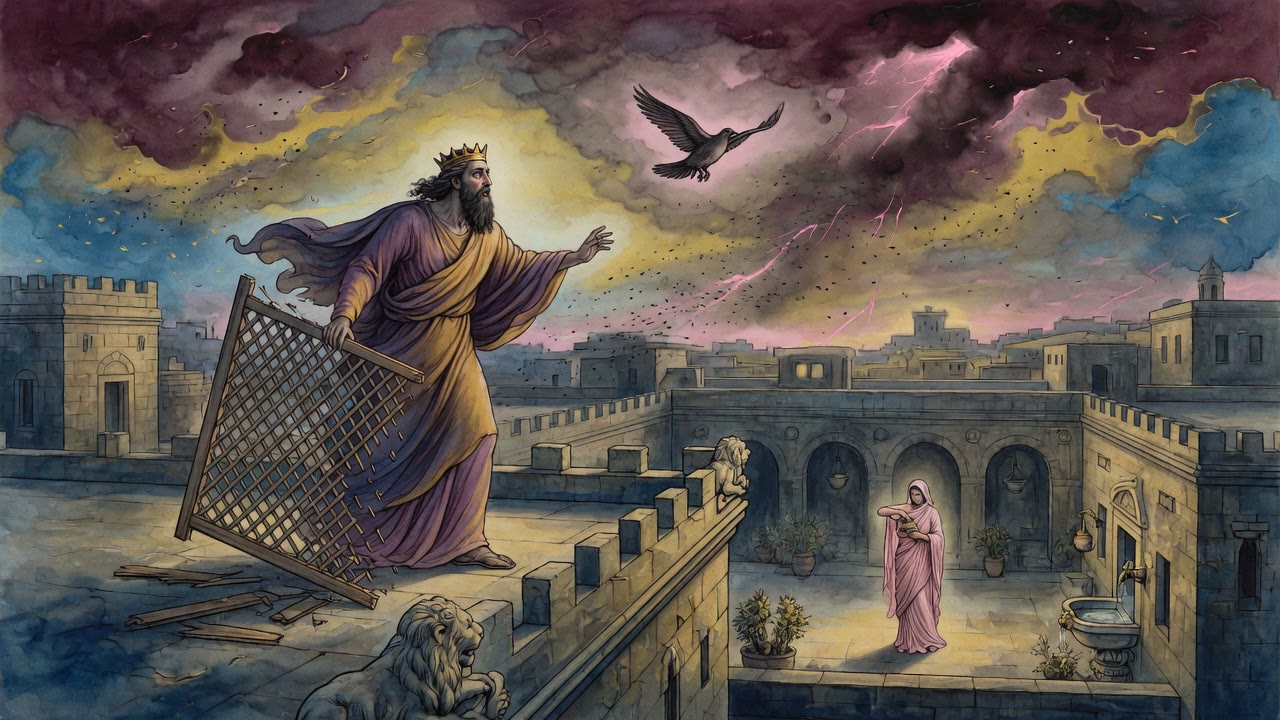
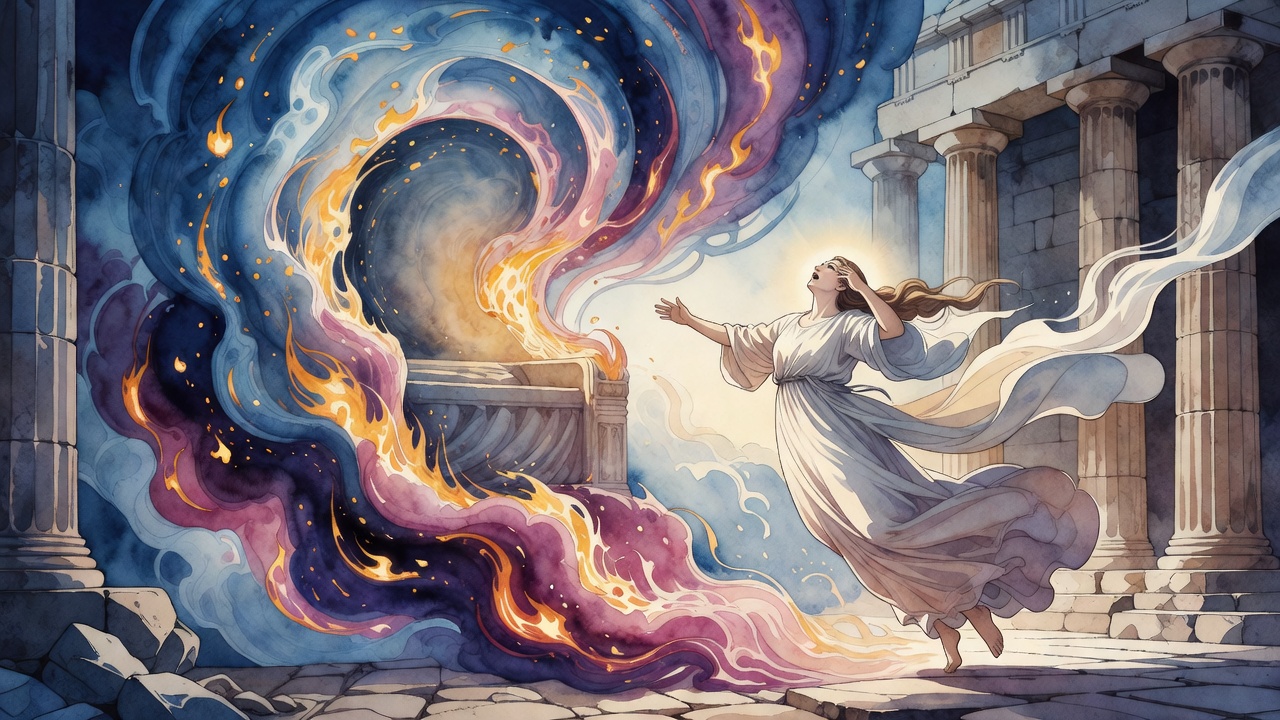
He withdrew to the inner chambers of heaven, the hidden rooms behind the hidden rooms, and He wept there, where no creature could be shattered by the hearing. One wound lay under the grief, deeper than the rest. The house in Jerusalem lay in ash. The Temple was burned, the altar cold, the people scattered among the nations like seed flung on stone. From the day it fell, no joy before God had been whole. Not once. Not until the city should rise again and the exiles come home.

The Voice Like a Dove and the Roar of the Lion

Three times each day a voice went out from the hidden place, soft and mourning, like a dove calling for its mate. "Woe to My children," it said. "For their sins I destroyed My house and burned My Temple and drove them out among the nations." The dove-voice carried the words, and folded, and carried them again, three times, every day, over the same unhealed loss.

In the night it was no dove. Three times in the dark, through the three watches into which the night is cut, God sat and roared. Not wept. Roared, like a lion over its ruined den, the same words torn now into a sound that shook the upper halls. Jeremiah had heard it and set it down. "He roars from on high," the prophet wrote, "and thunders from His holy dwelling." The measurers had charted a mouth of fire consuming fire. Out of that mouth, in the small hours, came the roar of a lion mourning its young.

The finger stretched past the edge of thought. The tongue filled the world. And the whole immeasurable body bent itself low, night after night, to grieve over a burned house and a scattered people, as though the smallest of them were worth the tears of the largest thing that is.


← All myths
From the tradition

Sources

2 sources

The texts behind this telling. Some cards carry a translation of the source; others are our own retelling of it, and each card says which. Every card links out to the original.

Zohar 1:1a-2aZohar

Retold in our words. Read the original at the link below.Sefaria-hosted English translation · CC-BY

Zohar turns to The Body Of God.

These aren't just pretty metaphors. The tradition explores the very measurements of God. His little finger, His tongue stretches from one end of the universe to the other, and His mouth is fire consuming fire. According to some, knowing the measurement of the Creator and the glory of God brings security in this world and the World to Come. You'll live long and well, they say.

Texts like Shi'ur Komah, a mystical work, go into sometimes shockingly detailed descriptions of God's body, even specifying the size of His… well, you get the idea. These measurements, given in units called parasangs, are, of course, gigantic. As noted, even His little finger is beyond comprehension.

What are we to make of all this? It can feel like a strange literalism, as if God simply shares the anatomy of a man, only on an unimaginable scale. But perhaps the point is precisely that: God's size is so large it defies imagination, even as these texts attempt to explicitly imagine it.

Were these measurements intended to be taken literally? Ah, that's where it gets interesting. Like much allegorical material in Kabbalistic texts, especially the Zohar, there's a deep ambivalence. On the one hand, Shi'ur Komah seems to take these precise measurements very seriously, expanding the myth of God's gigantic body. On the other hand, there's a clear awareness that these texts are also meant to be understood allegorically.

This tension represents what some call the anti-mythological impulses within Kabbalah. It's a constant dance between the literal and the symbolic, the concrete and the abstract. As we find in Midrash Rabbah, these descriptions aren't meant to box God in, but to give us a glimpse, however imperfect, into the Divine.

The central dialectic of Kabbalah, really, is focused on the debate between these two perspectives: the mythic and the allegorical. We see this echoed, for example, in Ginzberg's retelling in Legends of the Jews, where the descriptions are framed as ways to inspire awe and wonder, rather than literal anatomical facts.

It's okay to find the descriptions bizarre or even humorous. But remember also that these are attempts, however imperfect, to confront the ungraspable, to bring the infinite into our finite world. Maybe, just maybe, in the very act of trying to imagine God's body, we catch a glimpse of something truly divine.

Full source
Zohar 2:9aZohar

Retold in our words. Read the original at the link below.Sefaria-hosted English translation · CC-BY

Jewish tradition actually grapples quite intensely with the idea of a God who experiences suffering, even to an unimaginable degree.

How can an infinite being, beyond our comprehension, suffer? But the mystics insist. As Rabbi Isaac Luria teaches, when a Jew is afflicted, God suffers much more than the individual does. That idea is rooted in the verse from (Isaiah 63:9): "In all their troubles He was troubled." God is not subject to any limitation, as the text says. And therefore, His suffering is also boundless. It's impossible to even conceive of such a depth of grief. The immensity of it… well, it's almost too much to bear.

The idea is this: if the world ever truly heard God's weeping, if we realized the full extent of His grief, it would explode. Even a tiny spark of His suffering would be more than creation could withstand.

What is the source of this divine grief? It stems, in large part, from the destruction of the Temple in Jerusalem. From that day forward, there has been no complete joy before God. Not until Jerusalem is rebuilt and the people of Israel are regathered. That's a powerful statement about the connection between God's well-being and the fate of His people.

The tradition paints a vivid picture of God's mourning. Weeping in the inner chambers of heaven. Three times a day, according to tradition, a divine voice goes forth, like the cooing of a dove, saying, "Woe to My children. Because of their sins I destroyed My house and burnt My temple and exiled them among the nations."

And it doesn't stop there. Three times a night, during the three watches – these are the divisions of the night as described in the Talmud (Berakhot 3a), God sits and roars like a lion. A lion! Repeating the same words of grief. The prophet Jeremiah (25:30) captures this image, saying, "the LORD roars from on high, and thunders from His holy dwelling."

A roaring, weeping God. It challenges our comfortable notions of a distant, detached deity. It suggests a God who is intimately involved in our pain, who feels our losses as deeply as we do, perhaps even more so.

How should we respond to this image of a suffering God? Perhaps it calls us to greater empathy, to a deeper understanding of the suffering of others. Perhaps it inspires us to work towards a world where such grief is lessened, where Jerusalem is rebuilt, both physically and spiritually. Perhaps it simply reminds us that even in our darkest moments, we are not alone. The Divine is with us, feeling our pain, and longing for healing and wholeness, just as we are.

Full source