Parshat Vayeshev6 min read

The Midianite Traders Who Regretted Ever Buying Joseph

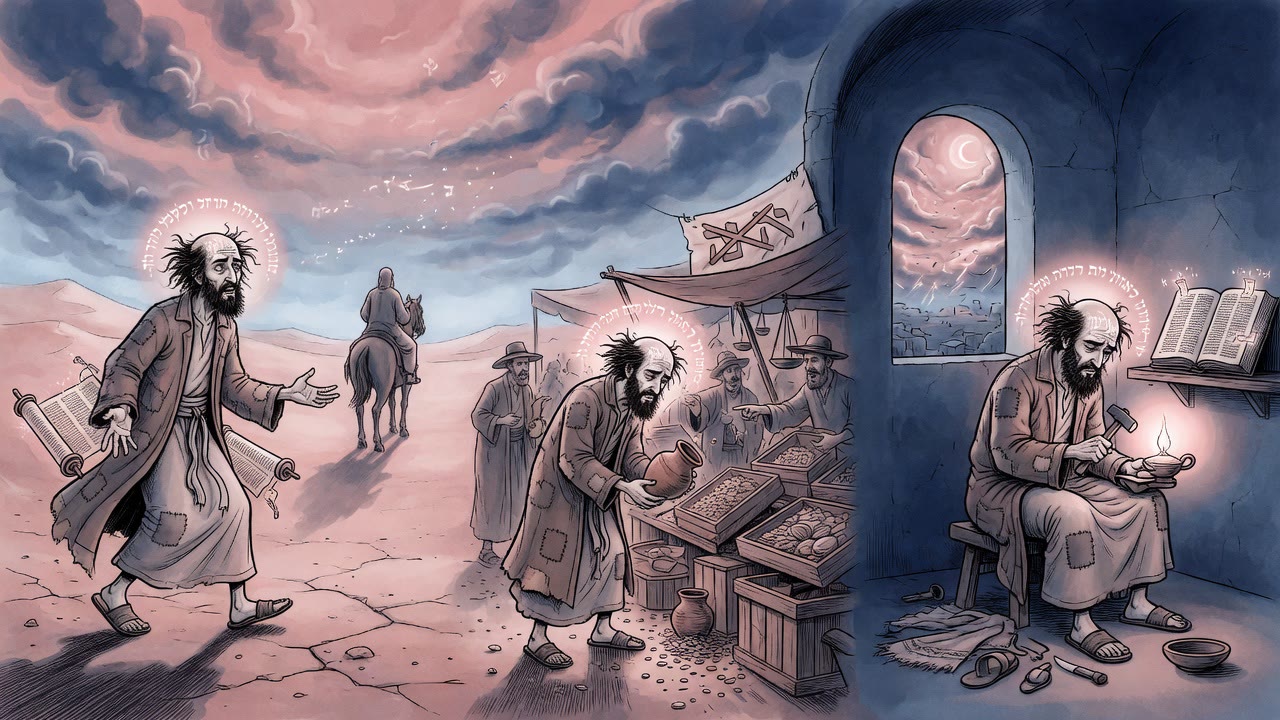
The Midianite traders thought they had bought easy money, until Simon roared and the ground shook, leaving them desperate to be rid of the boy.

Curated by Arthur · Told by Maggid ·
Table of Contents
  1. The Boy They Pulled From the Pit
  2. A Cry That Shook the Ground
  3. The Road to Gilead Turned to Dread
  4. The Caravan on the Horizon
The Midianite Traders Who Regretted Ever Buying Joseph Click for full size

The Boy They Pulled From the Pit

The traders smelled money before they saw the boy. A caravan of Midianites crossing toward the balm country, camels loaded with resin and spice, and off the trade road they came upon the sons of Jacob resting near a dry cistern, breaking bread. From the mouth of the pit a voice was crying. When they hauled him up, they found a boy who doubled his own price at a glance. Soft hands. No rope scars. No slave brand. The kind of merchandise a market fights over.

One of the brothers said the boy was rebellious, thrown in the pit for insubordination. Better still. The Midianites leaned in. "Didn't you say you threw this boy in the pit because he was rebellious? What will you do with such an insubordinate slave now? Sell him to us. We are ready to pay whatever you ask."

The brothers wanted him gone more than they wanted silver. They named a low price, took the coins, and went back to their bread as though nothing at all had passed. And something in the traders had wanted this boy from the moment they saw the dust of the camp, a hunger none of them could have named, set in them by a hand they never once suspected, so that Joseph would be carried far from brothers who might yet have killed him.

Easy money. They bound his wrists loose, out of habit, and turned the camels north.

A Cry That Shook the Ground

They did not turn fast enough.

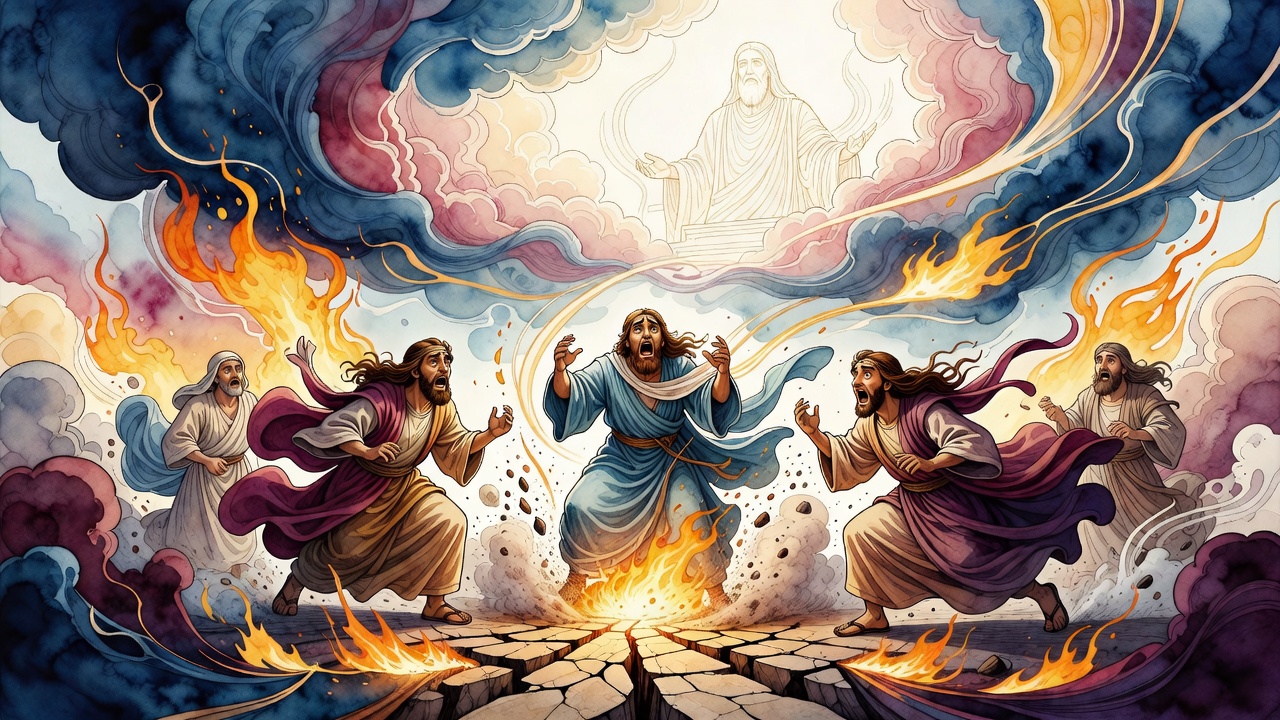
One of the brothers had not gone back to his bread. Simon. He came at them with his sword already drawn, and before a single trader could close a hand on a weapon he let out a cry so vast the ground moved under the camels. Hardened men, men who had buried caravan mates in the sand and never once flinched, went down where they stood. Blades slid out of open fingers. No one had told their knees to fold, and yet they were kneeling in the dirt, staring up.

Simon stood over them. "I am Simon, the son of the Hebrew Jacob," he said. He did not raise his voice now. He did not have to. "I destroyed the city of Shechem alone and unaided, and together with my brethren I destroyed the cities of the Amorites."

Then the oath, cold as a blade laid flat against the neck. "God do so to me and more also, if it be not true that all the Midianites, your brethren, united with all the Canaanite kings to fight with me, cannot hold out against me."

And the demand. "Now restore the boy you took from us, or I will give your flesh to the fowls of the air and to the beasts of the field."

The traders climbed to their feet slowly, hands open, and looked at the soft-handed boy they had just counted out good coin for. Whatever they had bought, it was no simple slave. They never learned how the quarrel among the brothers ended, because they were already whipping the camels toward the hills, the boy still bound among the packs, Simon's oath riding out of the valley behind them.

The Road to Gilead Turned to Dread

The balm hills of Gilead lay ahead, and the traders should have been counting profit. Instead they kept turning to watch the road behind. A boy that fine, sold that cheap, by brothers that dangerous. The arithmetic stopped adding up.

What if the boy had never been a slave at all. What if he was a free Hebrew, stolen from a great house, and they were the fools now hauling the evidence across the desert. Jacob's sons had the look of men who would steal a person and haggle him away over lunch. And the price. No one lets good merchandise go that cheap unless the merchandise is poison.

Every league north the boy sat quiet on the camel, and the traders grew louder inside their own skulls. They had a warlord's oath sworn against them and a slave who might be a lord's stolen son. They had bought a curse and paid to carry it.

The Caravan on the Horizon

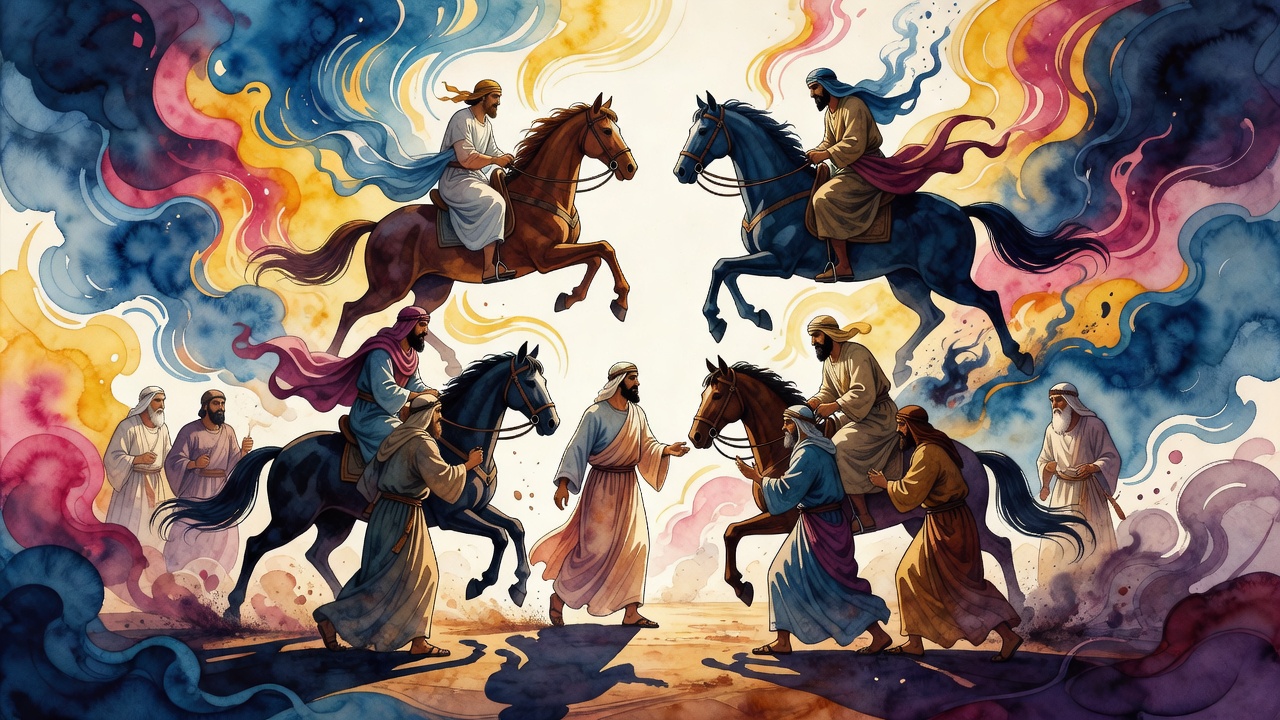
Then, dust on the ridgeline. A second caravan, Ishmaelites, the same men the sons of Jacob had marked earlier on the road. The Midianites had their door out.

Sell the boy on. Recover the coins, lose nothing, and hand the whole cursed business to someone else before Simon or Jacob or whatever unseen thing was steering this came looking for it. The deal was quick and nervous. The Ishmaelites paid exactly what the Midianites had paid, not one coin more, and for once in their trading lives the Midianites did not haggle. They took the silver, wheeled the camels, and would not look at the boy again.

Joseph went south with strangers, toward Egypt, toward the man all Egypt would one day bow to. Behind him the Midianite traders rode hard for Gilead, lighter by one slave, telling themselves they had come out even. They never learned that they had carried a ruler of nations across the desert and sold him off for the price of a single nervous afternoon.


← All myths
From the tradition

Sources

3 sources

The texts behind this telling. Some cards carry a translation of the source; others are our own retelling of it, and each card says which. Every card links out to the original.

Legends of the Jews 1:28Legends of the Jews

Retold in our words. Read the original at the link below.The Legends of the Jews by Louis Ginzberg (1909) · Public Domain

Take the story of Simon, son of Jacob. He wasn’t just some guy; he was a force of nature. the Midianites, hardened warriors, weapons drawn, ready for a fight. They were not messing around. They had kidnapped someone, likely Joseph, and were fully prepared to defend their prize.

Then Simon steps onto the scene.

They were "unafraid" as they prepared to enter into combat with the sons of Jacob. But that all changed when Simon sprang forward with his sword, letting out a cry so powerful it made the earth shake. I mean, can you imagine the sheer volume, the raw intensity of that moment?

The Midianites, suddenly gripped by consternation - a feeling of anxiety, of being absolutely overwhelmed - they fell down, paralyzed.

And then Simon speaks. Not politely, not with a measured tone, but with the full weight of his lineage and his past deeds behind him. "I am Simon, the son of the Hebrew Jacob," he declares, reminding them and perhaps himself of the strength that flows through his veins.

He reminds them, and us, of his past victories. "I destroyed the city of Shechem alone and unaided, and together with my brethren I destroyed the cities of the Amorites." He's not just boasting; he's establishing his credentials, laying bare the consequences of defying him.

Then comes the kicker, a terrifying oath that’s dripping with righteous fury. "God do so and more also, if it be not true that all the Midianites, your brethren, united with all the Canaanite kings to fight with me, cannot hold out against me." In other words, "Even if your entire army stood against me, you would still fall!"

And finally, the demand: "Now restore the boy you took from us, else will I give your flesh unto the fowls of the air and to the beasts of the field." A clear, stark choice: return what you stole, or face utter annihilation.

It's a brutal scene, no doubt. But it's also a glimpse into a world where strength, courage, and a fierce loyalty to family were paramount. What kind of faith fueled their actions? And what could we learn from their unwavering resolve, even in the face of overwhelming odds?

Full source
Legends of the Jews 1:29Legends of the Jews

Retold in our words. Read the original at the link below.The Legends of the Jews by Louis Ginzberg (1909) · Public Domain

The story of Joseph and his brothers is a perfect example, a tale brimming with jealousy, betrayal, and divine intervention.

The scene: the brothers, consumed by envy, have just cast young Joseph into a pit. They’re rid of him, or so they think. But then, who should appear but the Midianites. These weren’t just any passersby; their arrival was part of a larger plan, orchestrated by the hand of God.

In Legends of the Jews, the Midianites were afraid – terrified, even – of Simon, one of Joseph's brothers. Picture them, intimidated and speaking nervously, their words betraying their unease. "Didn't you say you threw this boy in the pit because he was rebellious? What will you do with such an insubordinate slave now? Sell him to us! We’re ready to pay whatever you ask."

This, Ginzberg tells us in Legends of the Jews, wasn't a random encounter. God, in His infinite wisdom, planted the desire for Joseph within the Midianites. He wanted to ensure that Joseph would be taken far away from his brothers, preventing them from carrying out a more permanent, deadly plan.

And so, as the brothers sat down to eat – oblivious, perhaps, to the gravity of their actions – they agreed to sell Joseph. Sold into slavery! The price? Their brother's freedom, his future, his very life. It's a chilling moment, a stark reminder of the depths of human cruelty.

But the story doesn't end there. The text suggests that God, witnessing this act of betrayal, declared a profound connection between this sale and future suffering. "Over a meal did ye sell your brother," He says, "and thus shall Ahasuerus sell your descendants to Haman over a meal." This is a direct reference to the story of Purim, where the Jewish people were threatened with annihilation, the decree sealed during a festive meal.

And furthermore, "Because ye have sold Joseph to be a slave, therefore shall ye say year after year, 'Slaves were we unto Pharaoh in Egypt.'" As we find in Midrash Rabbah, this verse connects the act of selling Joseph into slavery with the long and arduous enslavement of the Israelites in Egypt. Every year, during the Seder, the Passover meal, we retell the story of the Exodus, remembering our liberation from slavery. This tradition, this very act of remembrance, is rooted in the betrayal of Joseph.

The tale of Joseph's sale isn't just a historical event; it's a powerful reminder of the consequences of our actions and the enduring echoes of the past. It encourages us to consider how our choices, big and small, can shape not only our own lives, but the lives of generations to come. What will be the legacy of our actions today?

Full source
Legends of the Jews 1:34Legends of the Jews

Retold in our words. Read the original at the link below.The Legends of the Jews by Louis Ginzberg (1909) · Public Domain

Legends of the Jews turns to The Midianites Got Buyer's Remorse After Purchasing Joseph.

Let's rewind a bit. We know the story of Joseph. Sold into slavery by his jealous brothers. But who exactly did they sell him to? And what happened next? It's a bit more complicated than it first appears.

The Midianites, those traders who initially scooped up Joseph, were headed toward Gilead, a region known for its balm and medicinal resources. But a creeping unease began to settle in. They started second-guessing their purchase. Had they been duped?

they feared Joseph hadn't been a slave at all, but a free Hebrew man stolen from his family. And if Joseph’s powerful relatives found him in their possession… well, let's just say the Midianites weren't keen on facing the consequences. They figured Jacob’s sons seemed like the kind of guys who would steal someone. That, and the suspiciously low price they'd paid for Joseph.

Talk about a moral panic!

As they chewed on these anxieties, a familiar sight appeared on the horizon: the Ishmaelite caravan. Remember them? The ones the sons of Jacob had spotted earlier? An idea sparked – a way to salvage the situation.

The Midianites decided to cut their losses. They'd sell Joseph to the Ishmaelites. At least they wouldn't lose the money they'd already spent, and they’d escape the potential punishment for kidnapping. A win-win. (Or, at least, less of a lose-lose.)

And so, the deal went down. The Ishmaelites bought Joseph, paying the Midianites exactly what they had paid for him. A quick flip, a nervous exchange, and Joseph was on his way again.

This little detour in Joseph’s journey, a chain of transactions driven by fear and self-preservation. It makes the story that much richer, that much more real. What does it tell us about human nature? And about the unexpected twists and turns that shape our destinies?

Full source