5 min read

The Moon Chose the Night and Won an Escort of Stars

The moon takes the smaller realm of night and receives a glittering retinue, while great tailors fail to sew a coat for a light that will not hold still.

Curated by Arthur · Told by Maggid ·
Table of Contents
  1. The Steward Who Took the Smaller Post
  2. Yoktan Who Made Himself Small
  3. The World Spoken on a Breath
  4. Tailors at the Edge of Measure
  5. What the Night Still Pays
  6. Cold Light, Paid in Company

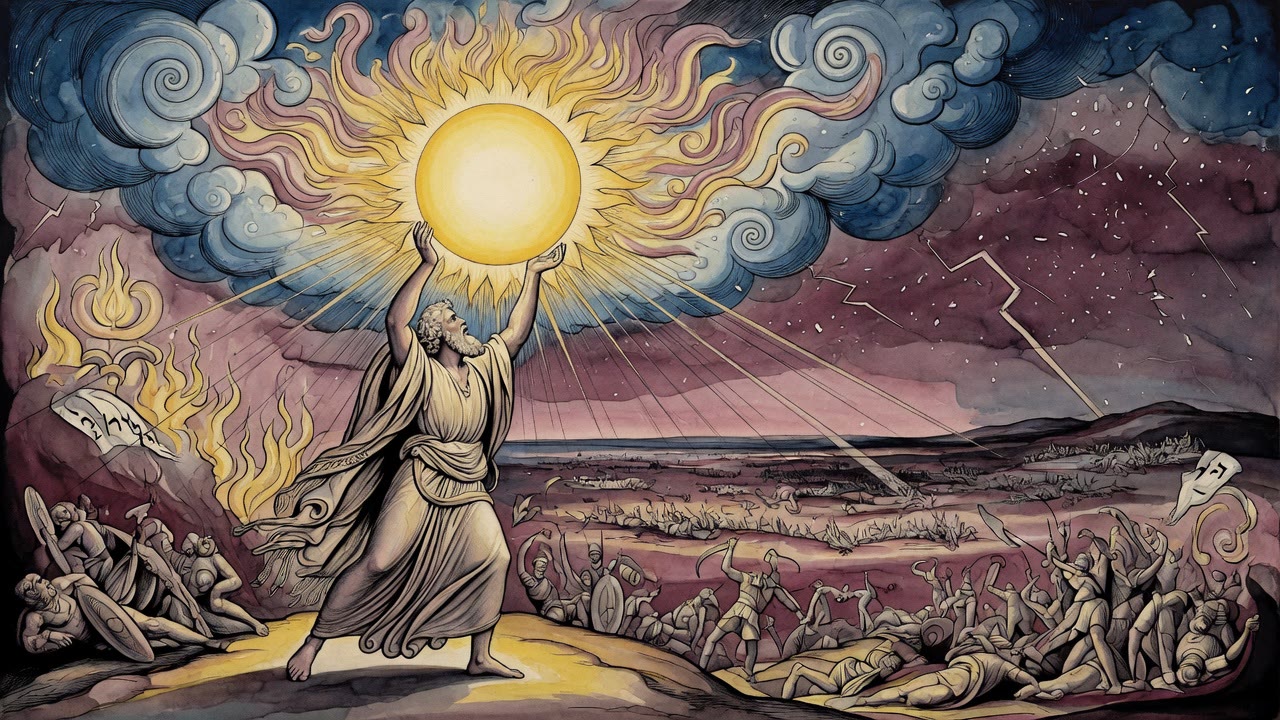
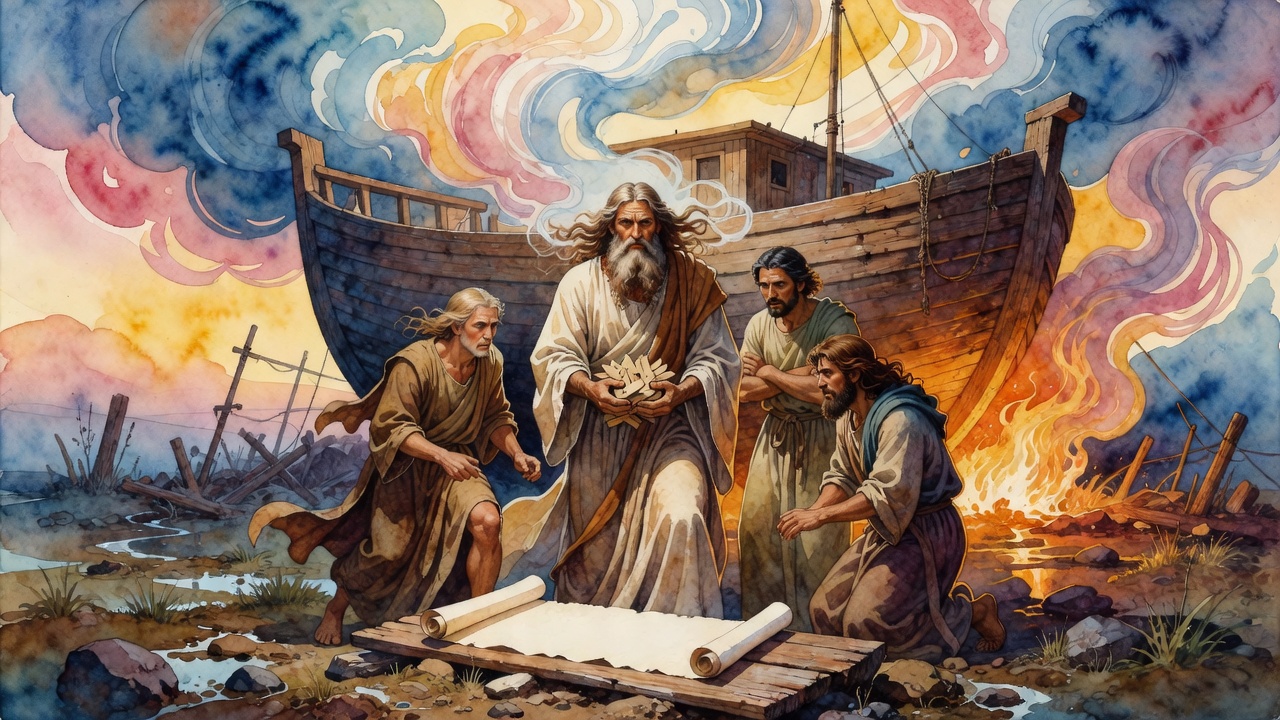
The moon complained to the sun. Day held the warmth. Night held the chill. Winter made the complaint sharper. So the sun, in Rabbi Nachman's fragment of a tale, offered a garment and summoned the great tailors to sew a coat for a light that lives by changing shape.
The Moon Chose the Night and Won an Escort of Stars Click for full size

The great ones stalled. How do you cut cloth for a body that is sometimes a sliver and sometimes a full coin of fire? The little tailors stepped forward. The great ones sneered. If we cannot, how could you? The story breaks off there, unfinished on purpose, like a coat pinned but never sewn.

The Steward Who Took the Smaller Post

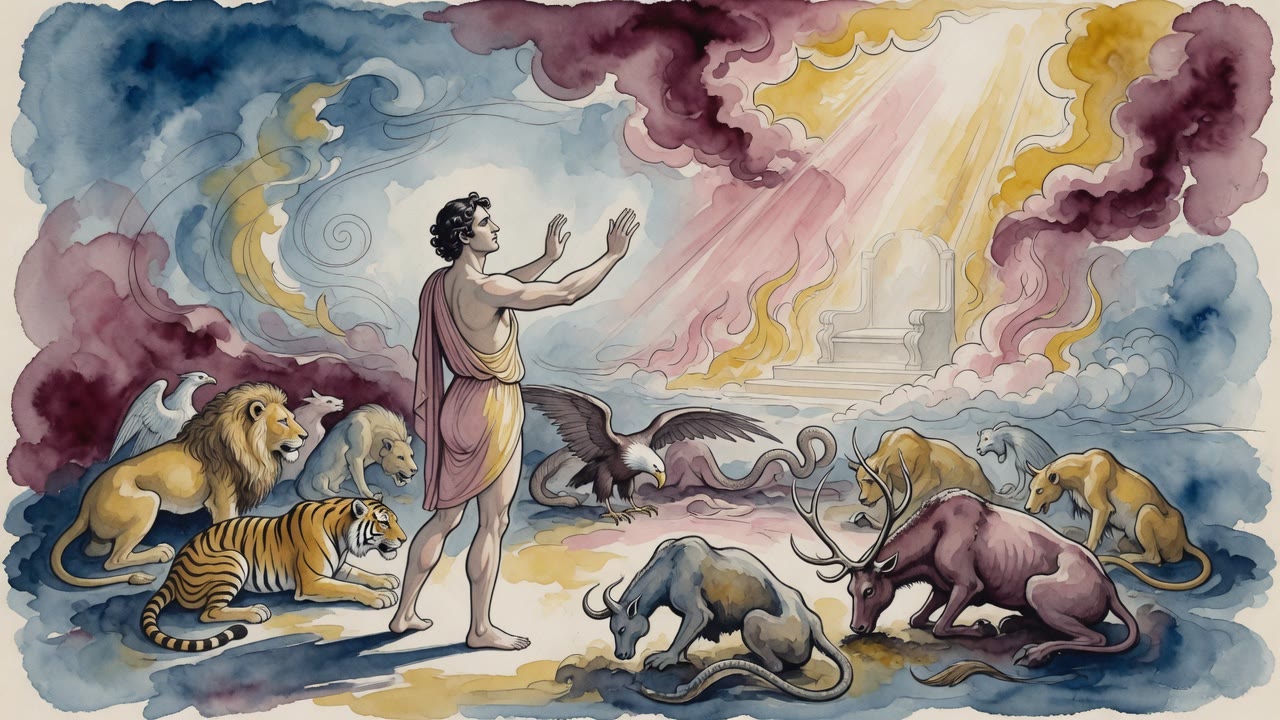
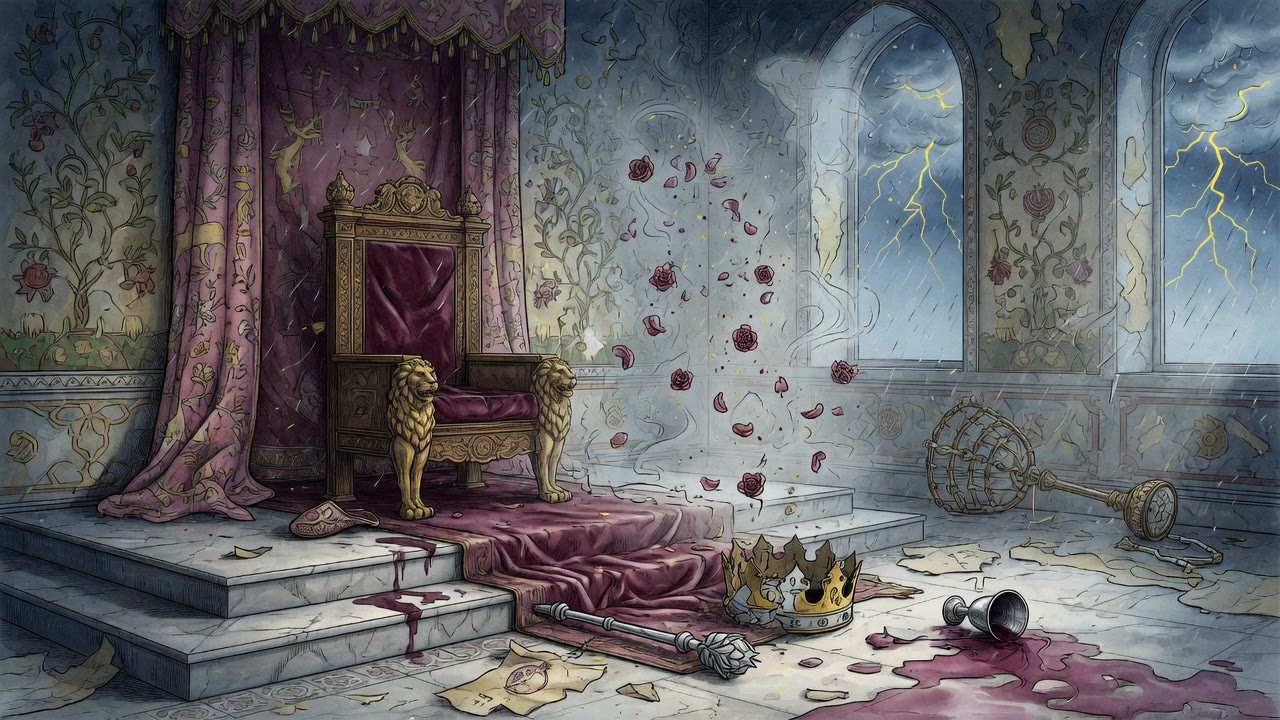
Long before Bratslav, the midrash cast the same humility in royal terms. A king had two stewards. One received a whole province. The other accepted only a city. Because the second diminished himself, the king decreed that crowds would go out with him and councils would enter with him.

So with the moon. Because it took the night, the smaller realm, the Holy One decreed that when it goes out the stars go out with it, and when it comes in the stars come in with it. The escort is wages for accepting the cold hours.

Yoktan Who Made Himself Small

The same midrash names a human twin. Yoktan, "he would minimize his affairs," fathered thirteen families. Humility multiplied him. If the one who lessened himself merited so much, the sages ask, what of those who lessen themselves when they already stand high? The moon's retinue and Yoktan's clans rhyme: reduction as the door to increase.

Creation's night sky becomes a parade for the steward who did not demand the day.

The World Spoken on a Breath

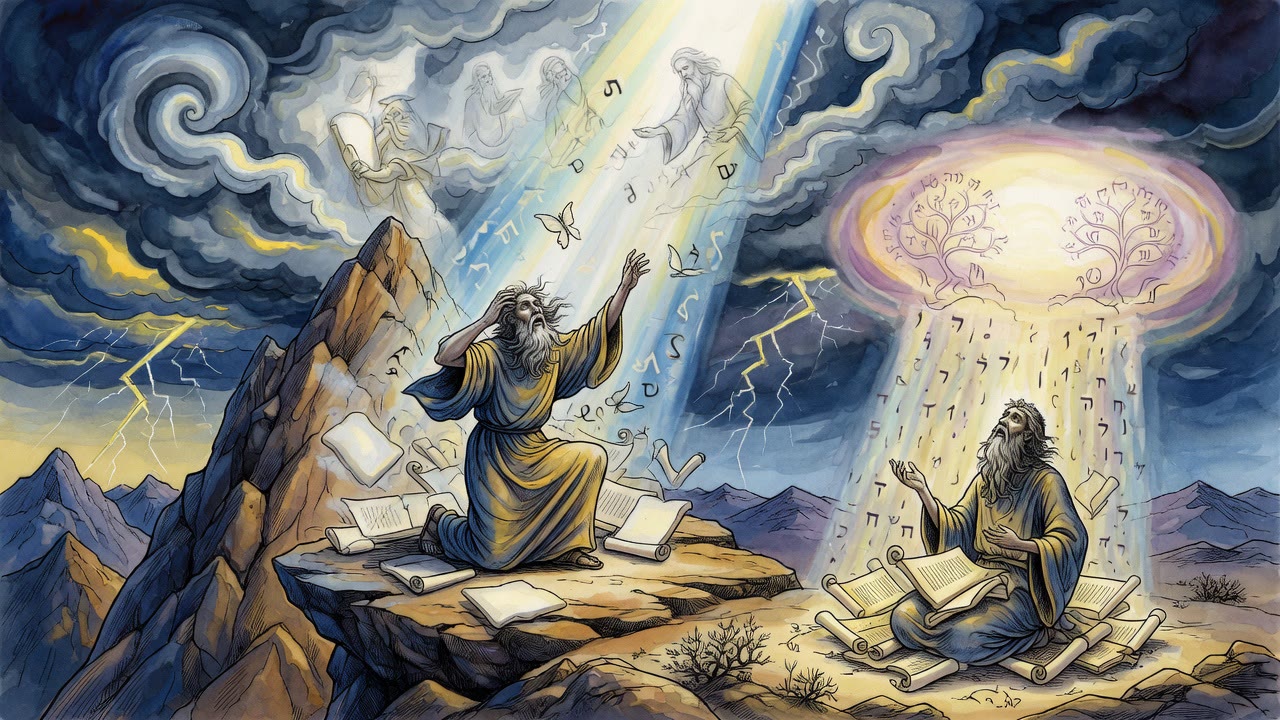
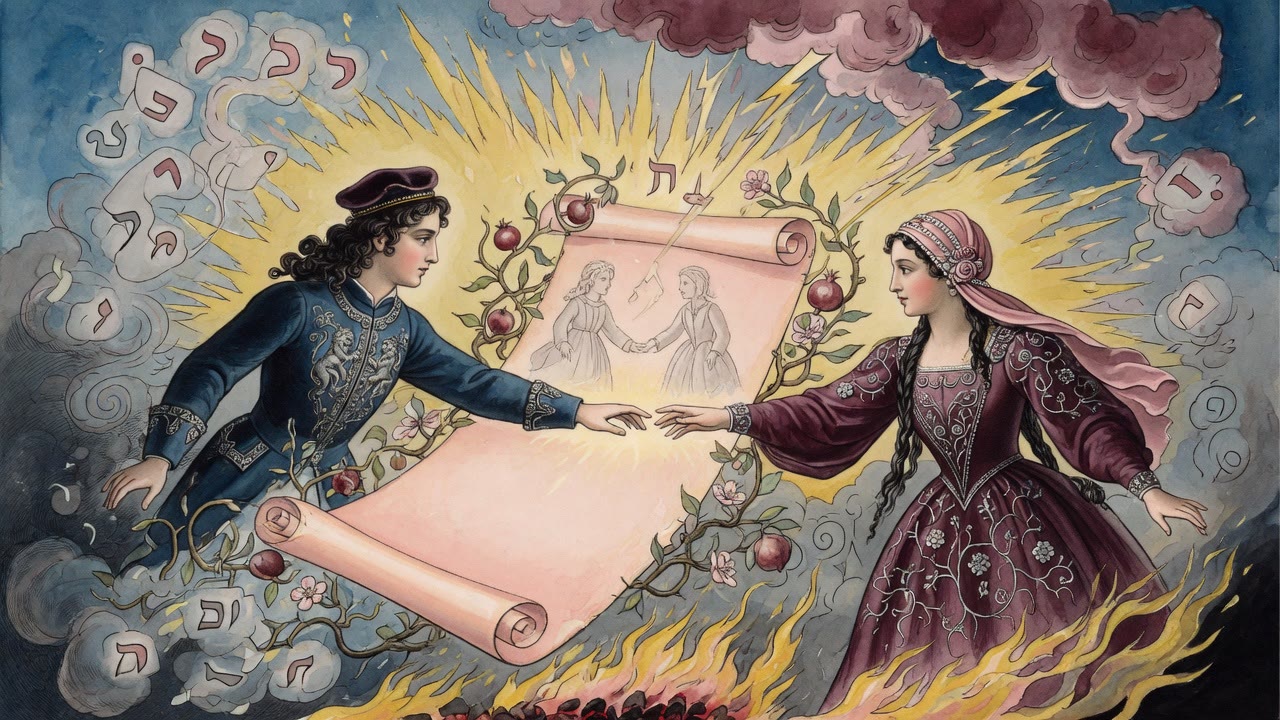
Another midrash opens the letters themselves. In "when they were created," behibbar'am, a small heh sits in the middle of the word (Genesis 2:4). Rabbi Abbahu in the name of Rabbi Yochanan said the world was made with that heh. Speak it. The mouth does not compress. No strain of lip or tongue. Only breath leaving an open throat.

"The Holy One created His world without toil." The proof stands in Isaiah: He neither grows weary nor toils (Isaiah 40:28). Galaxies as exhalation. Existence as a breath held in place. The moon that accepted less and the God who creates without sweat share a grammar of lightness. Power that does not need to shove.

Tailors at the Edge of Measure

Return to Nachman's unfinished joke. The great tailors fail because they need a fixed measurement, and the moon refuses to be fixed. The little tailors claim they can work without the pride of certainty. The sneer that stops them is the real coat: expertise that would rather leave the moon naked than admit another pair of hands.

Meanwhile the older midrash has already clothed the moon, not with wool, but with stars. The garment was never cloth. It was company.

What the Night Still Pays

Stand under a clear sky. The sun is absent by design. The moon moves through its thin and full faces, and the stars keep rank around it. Somewhere a Hasidic story still refuses to finish, because a finished coat would lie about change. Somewhere a genealogy still counts Yoktan's lines as proof that smallness is not extinction.

And behind both, a heh of breath: the world does not exist because God strained. It exists because God spoke lightly and kept speaking. The moon's chill is not a demotion without gift. It is a post with an escort, awarded to the light that took the night.

Cold Light, Paid in Company

The sun does not need an escort to be believed. Day argues for itself with heat and work and open markets. Night is when doubt grows and travelers watch the road. Into that harder shift the moon goes, thin or full, and the midrash insists the stars are not random glitter. They are retinue. Honor for accepting the post no one else wanted.

Nachman's tailors expose a different failure: the demand that mystery hold still for professional measurement. A moon that wanes will not fit a single pattern cut by prestige. The little tailors' courage is unfinished because pride interrupts it, and unfinished stories are how Bratslav keeps you from filing the matter under "resolved." You leave still asking who will sew for a light that changes.

The heh of creation answers from another angle. If the world itself is breath without strain, then the moon's smaller portion is not a cosmic accident to resent. It is part of a universe that does not need to shout to be real. Effortless making and humble accepting sit at one table. Yoktan's many lines prove the human version: make your affairs small, and your future may grow large in ways ambition cannot schedule.

On a winter night the complaint of Nachman's moon still makes sense. Cold is cold. But look up. The escort is already on duty. Cloth was never the point. Company was. The great tailors wanted a problem they could master. The older midrash offers a gift you can only receive by taking the night as your lot and walking out under it without demanding the day.


← All myths

From the tradition

Sources

3 sources

The texts behind this telling. Some cards carry a translation of the source; others are our own retelling of it, and each card says which. Every card links out to the original.

Sihot MoharanSichot HaRan (Rabbi Nachman)

Retold in our words. Read the original at the link below.Sefaria-hosted English translation · Public Domain

This brings us to a little story, a fragment really, told by the great Rabbi Nachman of Bratslav. You probably know him from his famous Sippurei Ma’asiyot, his collection of thirteen interwoven tales. But he also told many other smaller stories, glimpses of ideas, like sketches in a notebook. "A Garment for the Moon" is one of those.

It begins with the moon complaining to the sun. You see, the sun gets to shine during the warmth of the day, especially in summer. But the moon? The moon only gets to shine during the cool of night. And during the winter, well, the moon was really feeling the chill.

So, the sun, seeing the moon's unhappiness, offers a solution: a garment! A beautiful, warm coat to keep the moon cozy. He summons all the great tailors and commissions them to create this lunar covering.

The simpler, less renowned tailors also wanted to help. But they weren't invited, so they stayed away. The great tailors, after much deliberation, hit a snag. A seemingly insurmountable problem. How could they sew a garment that would fit the moon when the moon itself is constantly changing? Sometimes it's a sliver, a crescent; other times it's a full, radiant orb. What measurements could they possibly use?

And here’s where the little tailors come back into the picture. Hearing of the great tailors' dilemma, they declare, "If the big tailors won't do it, we will!" But the big tailors just scoff. "If we can't do it," they sneer, "how could you?"

And that's where the story abruptly ends.

A frustrating cliffhanger. It’s one of those unfinished tales that Rabbi Nachman's scribe, Rabbi Nathan of Nemirov, dutifully recorded. But the fact that the big tailors get the last word suggests it was unfinished, especially since Rabbi Nachman typically sided with the "little" people, the underdogs.

So, what can we make of this little fragment? Well, it resonates with older midrashic (rabbinic interpretive commentary) traditions, especially the story of "The Quarrel of the Sun and Moon," which is about their competition (as mentioned in Tree of Souls). There’s a similar dialogue in Pirkei de-Rabbi Eliezer, where the sun and moon argue about who’s bigger, leading God to diminish the moon to create peace.

In fact, there's a passage in Genesis Rabbah that adds another layer. Rabbi Levi, quoting Rabbi Jose ben Lai, suggests that “the great should count by the great, and the small by the small. Esau counts time by the sun, which is large, and Jacob by the moon, which is small.” Rabbi Nachman (another Rabbi Nachman!) chimes in, saying this means Esau (often seen as representing the material world) enjoys this world but has nothing in the World to Come, while Jacob (representing the spiritual) has a portion in both.

Could the moon's dependence on the sun echo the Talmudic myth (B. Hullin 60b) about the sun and moon’s rivalry? The one arising from the verse “God made the two great lights” (Genesis 1:16)? The moon essentially asks, "Is it possible for two kings to wear one crown?" And God's response is, "Go then and make yourself smaller." Ouch. The moon's "rebellion," if you can call it that, led to its decrease.

Perhaps, as some suggest, this tale is an allegory. Maybe Israel is the moon, God is the sun, and the garment is the Torah, protecting Israel during times of exile.

Ultimately, "A Garment for the Moon" remains a question mark. Did Rabbi Nachman have a specific ending in mind? We don't know. But it invites us to ponder themes of humility, ambition, divine justice, and the potential for even the smallest among us to accomplish great things. What would you have the little tailors sew for the moon?

Full source
Bereshit Rabbah 6:4Bereshit Rabbah

Retold in our words. Read the original at the link below.The Sefaria Midrash Rabbah, 2022 · CC-BY

When the moon graces the night sky, it's like a cosmic celebrity – surrounded by a dazzling entourage of stars. But have you ever stopped to ask why?

Our sages grappled with this too, and Bereshit Rabbah 6 offers a beautiful explanation, one filled with metaphors about kings, stewards, and the power of humility.

Rav Aḥa paints a picture: Imagine a king with two stewards. One is put in charge of the entire province, a huge responsibility. The other? He's just given the city to manage. The king, noticing the second steward's willingness to take on a "smaller" role, decides to honor him. "Since this one diminished himself to be ruler over the city," the king declares, "I decree concerning him that whenever he goes out, a large crowd should go out with him, and when he enters, the city council and the multitudes should enter with him."

See where this is going?

The Holy One, blessed be He, did something similar with the moon. "Since the moon diminished itself to rule at night," the text says, "I decree concerning it that when it goes out, the stars should go out with it, and when it goes in, the stars should go in with it." The moon's willingness to shine its gentle light in the darkness, to take on the "smaller" task of the night, earned it a spectacular reward: a constant, glittering accompaniment.

But the lesson doesn't stop there. Bereshit Rabbah uses another example to drive the point home: Yoktan. Remember him? "The name of his brother was Yoktan," from (Genesis 10:25). Rabbi Aḥa asks: Why Yoktan? The answer lies in the Hebrew: maktin, meaning "he would minimize his affairs." He was humble. And what did he merit? He became the progenitor of thirteen great families! "Now, if Yoktan received this because he minimized his affairs," the text reasons, "if an important man minimizes his affairs, all the more so."

The same principle applies to Ephraim. We all know the story of Jacob blessing his grandsons, Menasheh and Ephraim. But Rabbi Honya asks a crucial question: "Israel extended his right hand, and laid it on the head of Ephraim, who was the younger [tza'ir]." (Genesis 48:14). Do we really need to be told he was the younger? What does it add? Rabbi Honya suggests that the word tza'ir here also implies humility, from the related word matzir, "he would minimize his affairs." Because of his humility, Ephraim merited the birthright. Again, the text concludes: "Now, if the young one merited the birthright because he minimized his affairs, an older person who minimizes his affairs, all the more so."

The takeaway? Humility isn't weakness; it's a source of immense power. It's about recognizing the value in every role, no matter how "small" it may seem. It's about understanding that true greatness often comes from diminishing oneself, from putting others first.

The Bereshit Rabbah ends with a simple, yet profound statement: "This is astounding." Astounding, how great the power of humility truly is. It's a lesson worth remembering, whether you're gazing at the moon and stars, navigating family dynamics, or simply trying to live a more meaningful life. What if the key to unlocking blessings, to creating a ripple effect of goodness, lies in our willingness to embrace humility, to "minimize our affairs," and to shine our own light, however small, into the world?

Full source
Midrash Tanchuma Buber, Bereshit 16:1Midrash Tanchuma Buber, Bereshit

Retold in our words. Read the original at the link below.Midrash Tanhuma, S. Buber Recension, trans. John T. Townsend (1989) · CC-BY

(Genesis 2:4) says the heavens and the earth were created behibbar'am, "when they were created." But the Hebrew word is spelled with an unusual small letter heh (ה) in the middle. Midrash Tanchuma Buber, Bereshit 16:1 reads that single letter as the key to how creation actually worked.

R. Abbahu's phonetics lesson

R. Abbahu, citing R. Yochanan, offered a startling exegesis grounded in Hebrew pronunciation. "He created them with the letter heh."

What is special about the letter heh? Try saying it out loud. The sound is nothing more than exhaled air, a breath passing through the throat. Unlike most Hebrew letters, heh requires no compression of the lips, no closure of the tongue against the teeth, no effort of the vocal cords. It is the softest sound in the alphabet.

R. Abbahu's point: "When one brings all the letters out from his mouth, he compresses his mouth; but when one brings the letter heh out from his mouth, he does not compress his mouth."

Creation as exhalation

If God created the world with the letter heh, then creation was not labor. It was breath. The same effortless exhale that humans make a thousand times a day was the medium through which the universe came into being.

This is the theological payload. "The Holy One created His world without toil," R. Abbahu declared. The proof is (Isaiah 40:28): "He neither becomes weary nor does He toil."

The God of the Torah does not strain to make reality. The making of galaxies is, for Him, the exertion of breath through an open throat. The universe is a single divine exhalation held in place.

Why this reading matters

The midrash is combating two bad pictures of God. One picture imagines God as exhausted by creation, needing the seventh day as literal rest. Another pictures God as a kind of cosmic laborer, sweating through the six days of work. Both are wrong. The heh teaches that creation is the lightest possible act, a breath, nothing more.

If creation cost God nothing, then the universe's continued existence also costs Him nothing. Every galaxy, every species, every human heart is held in being by the same effortless exhale that brought it into being. To live is to be continuously breathed.

The letters of the divine name

Later Kabbalistic traditions would extend this teaching enormously. The divine name YHVH contains two hehs. The first heh, they taught, was the breath that made this world. The second heh is reserved for the world to come. The universe as we know it is the product of a single soft breath, with another held in reserve.

The takeaway: the universe did not cost God a drop of sweat. It cost Him a letter. The heh that exhales through your throat when you sigh is the same kind of sound that made the stars.

Full source