The Primordial Light Was Stored Where the Temple Would Stand
Rabbi Shmuel would only answer in a whisper. The first light, he said, came from a cloak. Another teacher named the stone in Jerusalem.
Table of Contents
 Click for full size
He Asked Where the First Light Came From
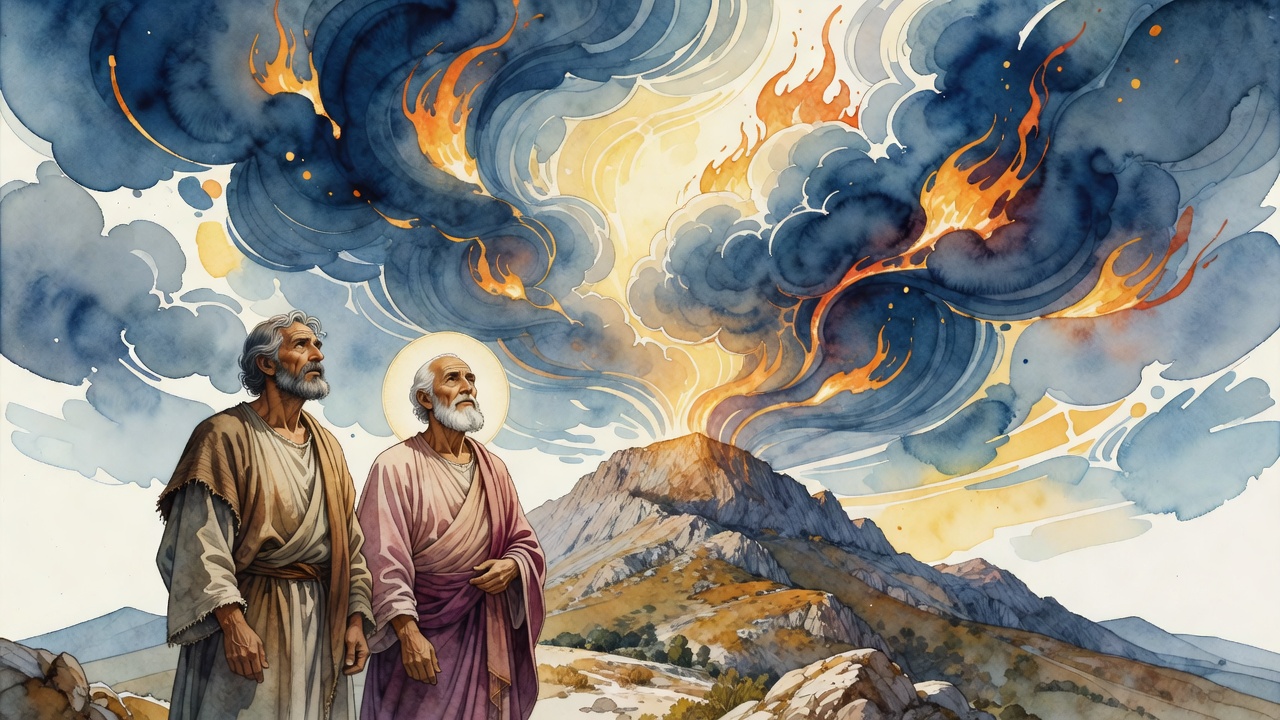
Rabbi Shimon ben Yehotzadak found Rabbi Shmuel bar Nahman and would not let him pass. He knew Shmuel as a master of aggadah, the story-teaching, and he wanted one answer before the man left the room.
"From where was the first light created?" he asked.
Shmuel looked at the doorway, then at Shimon, then he leaned in close. He did not raise his voice. God wrapped Himself in light like a garment, he said, and the radiance of that cloak shone from one end of the world to the other. That was the first morning. Not a lamp. Not a sun. A cloak God put on, and the world lit because of it.
Shimon pulled back. The source is sitting in Psalms. "You cover Yourself with light as with a garment" (Psalm 104:2). Any scroll in the house can say it. Why the whisper?
Shmuel kept his mouth near Shimon's ear. "I received this in a whisper," he said, "and so I pass it on the same way." Some truths refuse to be shouted. The volume of the telling is part of the telling. Even an open verse can shelter a teaching that wants hushed lips.
Another Teacher Named a Hill
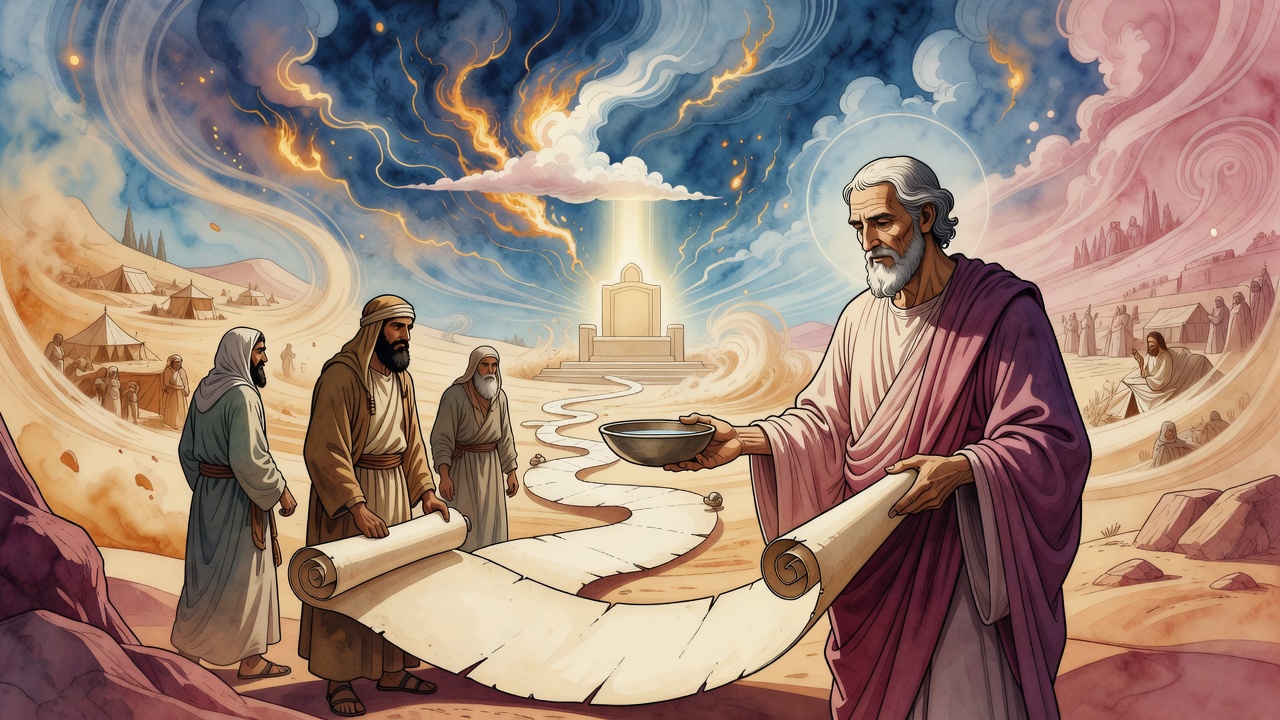
Then Rabbi Berekhya came in, and the room changed. He said that if Rabbi Yitzhak had not already taught this in public, no one would dare speak it openly. The teaching he had in mind was not about garments. It was about a place.
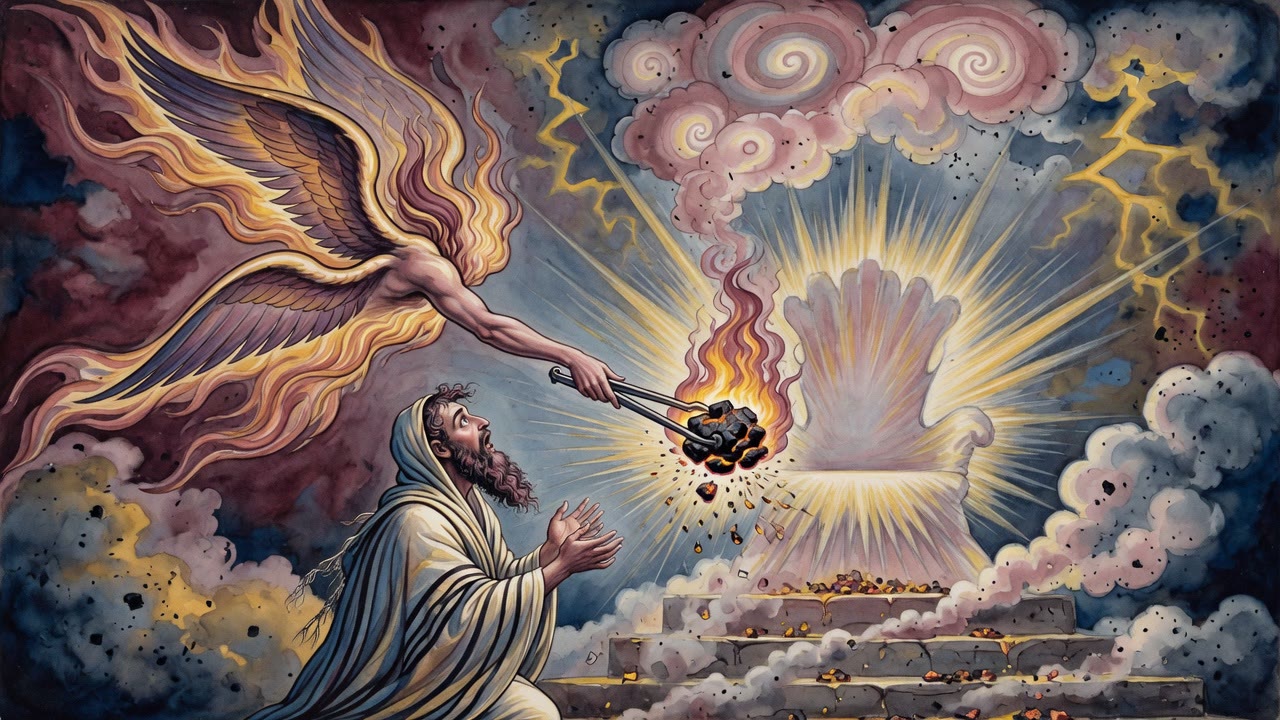
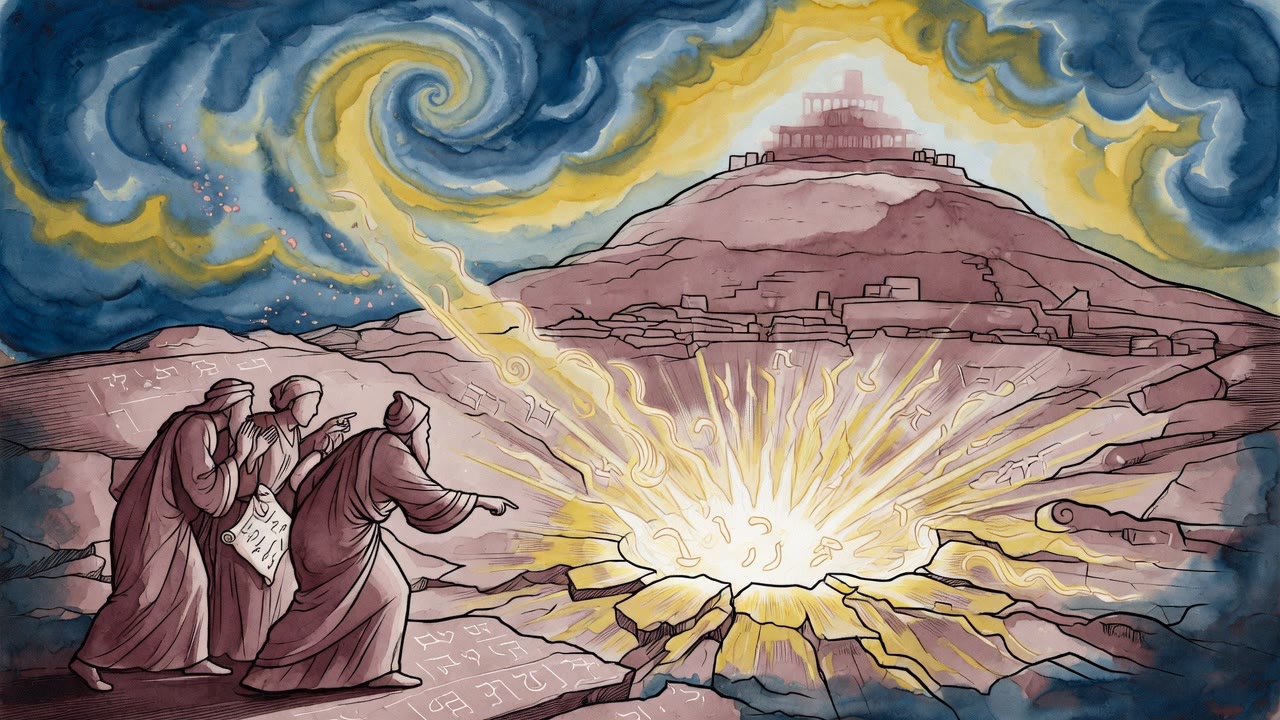
Rabbi Yitzhak said the first light was not a cloak at all. It was created from the site of the Temple. From one specific spot on earth, a spot whose stones were already chosen before the first morning. God reached into the ground that would one day hold the Holy of Holies, drew the primordial light out of it, and stored it as the light that filled everything.
The two answers sat in the same room and did not cancel each other. A cloak. A hill. Shmuel would only whisper. Yitzhak had already said the geography out loud. Berekhya named the risk. If Yitzhak had kept silent, the rest of them would have too.
Jacob Slept on That Stone
Long before those teachers sat down, a man lay down on a stone at Bethel and used it for a pillow.
Jacob was running from Esau. He had a staff and a fear and no house. He set his head on the rock and slept. In the night he saw a ladder set up on the earth, the top of it reaching heaven, and angels of God going up and down on it. He saw God standing at the top. He woke shaking.
"Surely God is in this place," he said, "and I did not know it."
He named the place the House of God. He named it the gate of heaven. He set the stone upright and poured oil over it. Then he promised that if God kept him safe on the road, this stone would be the foundation of God's house.
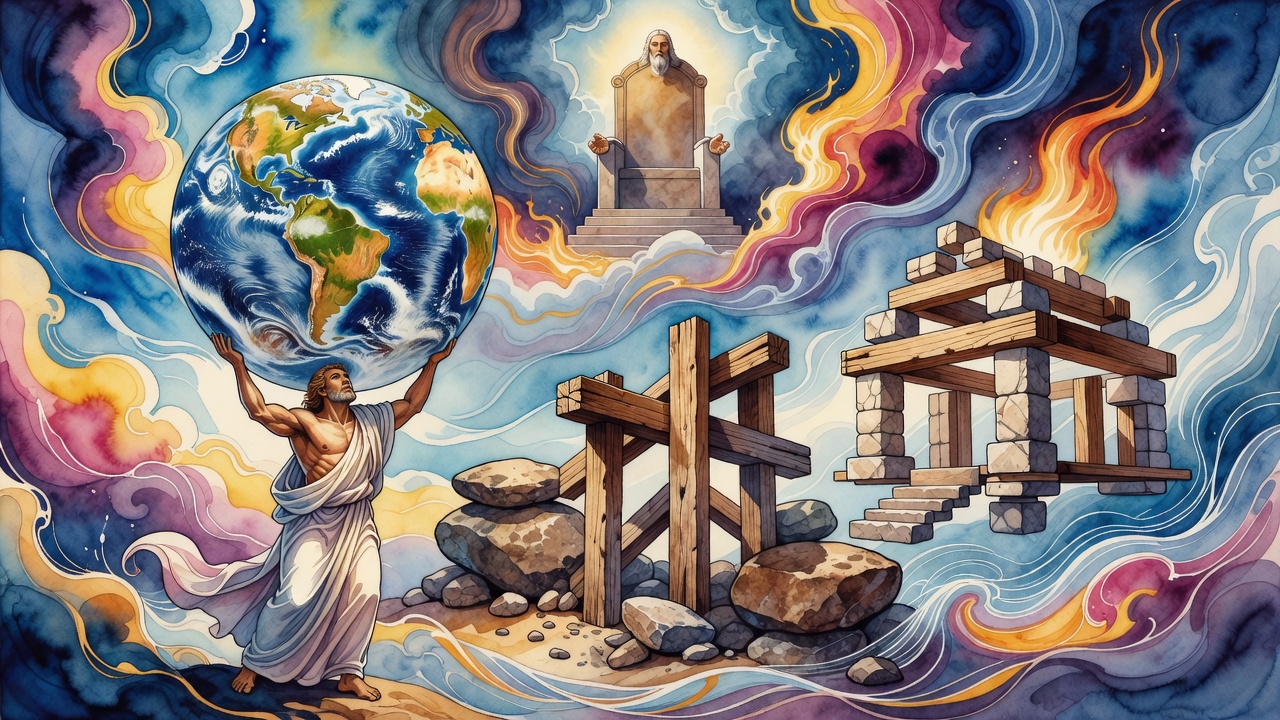
He had slept on the even shetiyah (אבן השתייה), the foundation stone, the first stone creation was anchored to, the same stone from which the first light had been drawn at the beginning. He did not know that when he lay down. He knew it, dimly, when he woke with oil on his hands and the rock still warm from his cheek.
He Poured Oil and Named the Place
Jacob did not build the Temple. He poured oil on a pillow of stone and walked on toward Haran. The hill waited. Centuries later men put walls around it. They were not inventing an address. They were finally putting rooms around the oldest one.
The first morning and the Holy of Holies share a ground. A fleeing man put his head on it without knowing. A teacher in a later room would only whisper how the light began. Another teacher named the hill out loud because someone had already dared to. Between the whisper and the oil and the walls, the place did not move.
Jacob left Bethel with a vow in his mouth and a stone standing behind him. The cloak of light had already been worn there. The Temple had not yet been raised. The pillow was already the house.
← All myths