The Rabbis Rebuilt the Temple Out of Torah
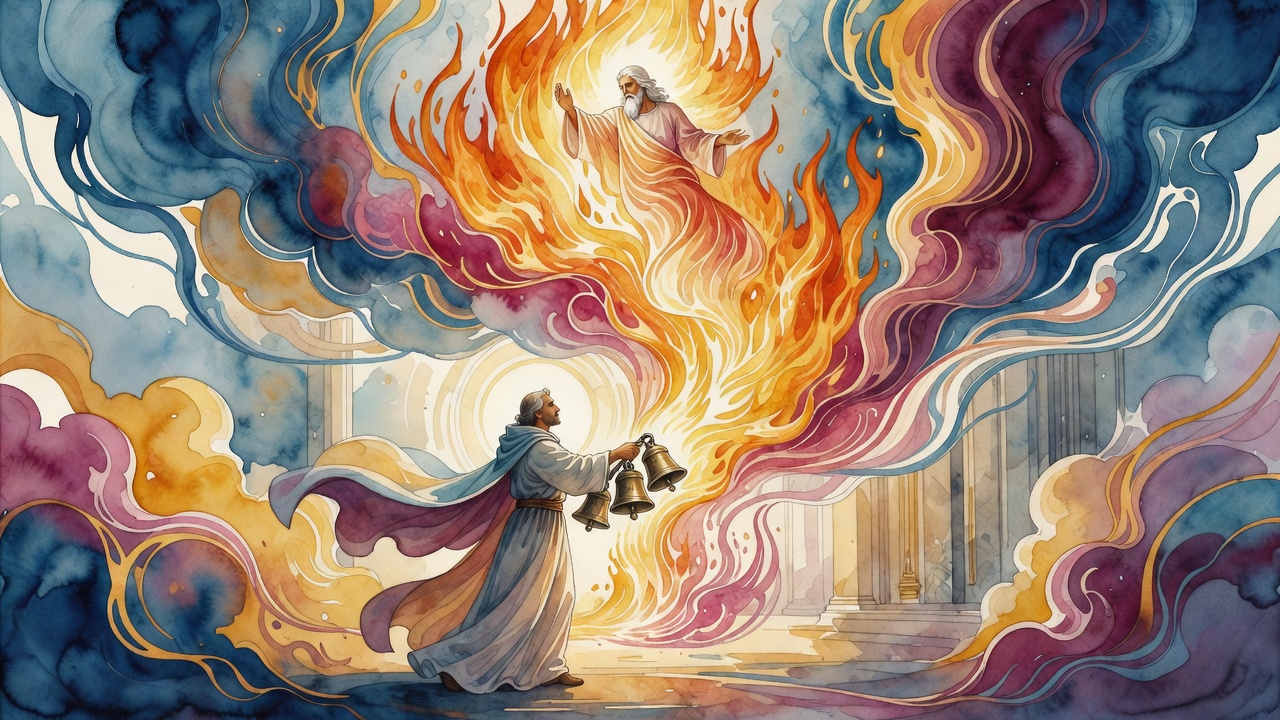
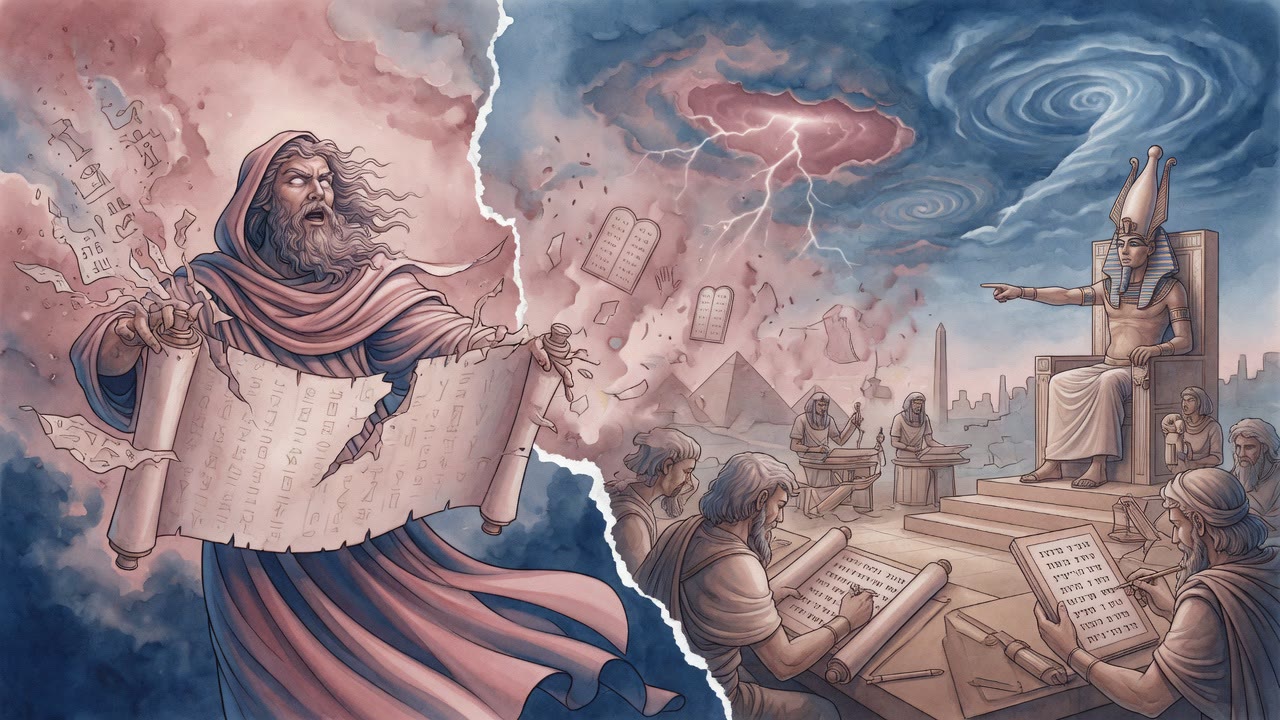
When Rome burned the sanctuary, the rabbis replaced altars with scrolls, tithes with scholarship, and the Temple platform with the page of Deuteronomy.
Table of Contents
 Click for full size
A Sanctuary That Learned to Walk
Deuteronomy 12 commands the Israelites to eat their tithes before the Lord their God but never names the address. Sifrei Devarim filled in the gap and in doing so told the story of a building that moved.
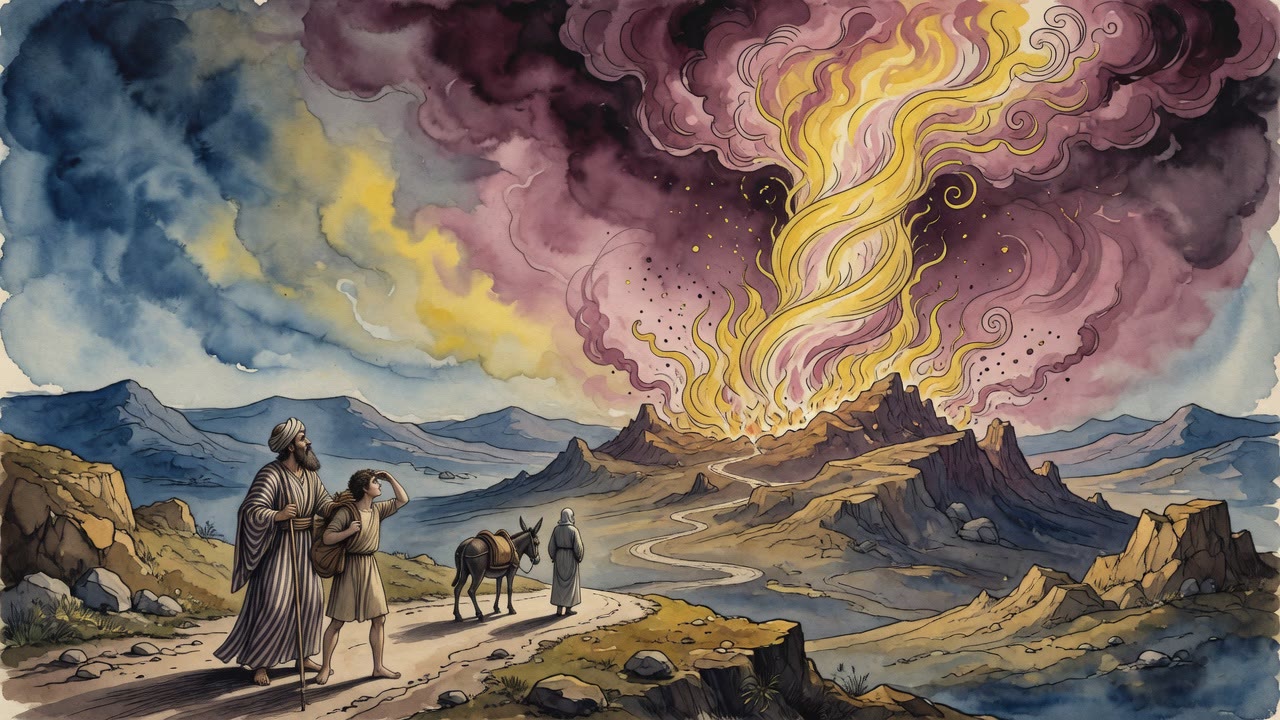
Before the Lord your God: that means Shiloh, the rough wooden sanctuary that housed the Ark for nearly four centuries before David brought it to Jerusalem. The place the Lord your God chooses: that means Jerusalem, the city David conquered and Solomon consecrated. One verse, two sanctuaries, and a timeline stretching from the wilderness to the monarchy. The rabbis compiling Sifrei Devarim in the third century had no Temple at all. They had a verse that described two, and they held both of them as real addresses, real places where the meeting happened and could happen again.
The sanctuary, in their reading, was not a fixed building. It was a principle that found different buildings in different ages. Shiloh was the principle housed in cedar planks. Jerusalem was the principle housed in Solomonic stone. Torah was the principle after both were gone.
Rabbi Akiva's Offering
Rabbi Akiva, teaching in the second century, asked his students what the first fruits offering meant. Not what the procedure was. What it meant. Why did the farmer carry a basket to the Temple and recite a formula about wandering Arameans and Egyptian slavery before handing over his figs and pomegranates (Deuteronomy 26:5-11)?
Because the formula was the offering. The basket of fruit was the visible form of a speech act. When the farmer stood before the priest and said a wandering Aramean was my father, he was not narrating history for the priest's benefit. He was locating himself inside the story. He was saying, I am the continuation of that wandering, and this basket is the evidence that the wandering ended in abundance. The Temple received the basket. What God received was the acknowledgment that the land, the fruit, and the farmer himself were not the farmer's own achievement.
After the Temple fell, there was no basket to carry and no priest to receive it. Akiva's students learned to carry the words instead. The recitation remained. The story of the wandering Aramean remained. Torah had absorbed the rite and was holding it, waiting for the basket and the address to return.
A Daughter of Wealth on the Ground
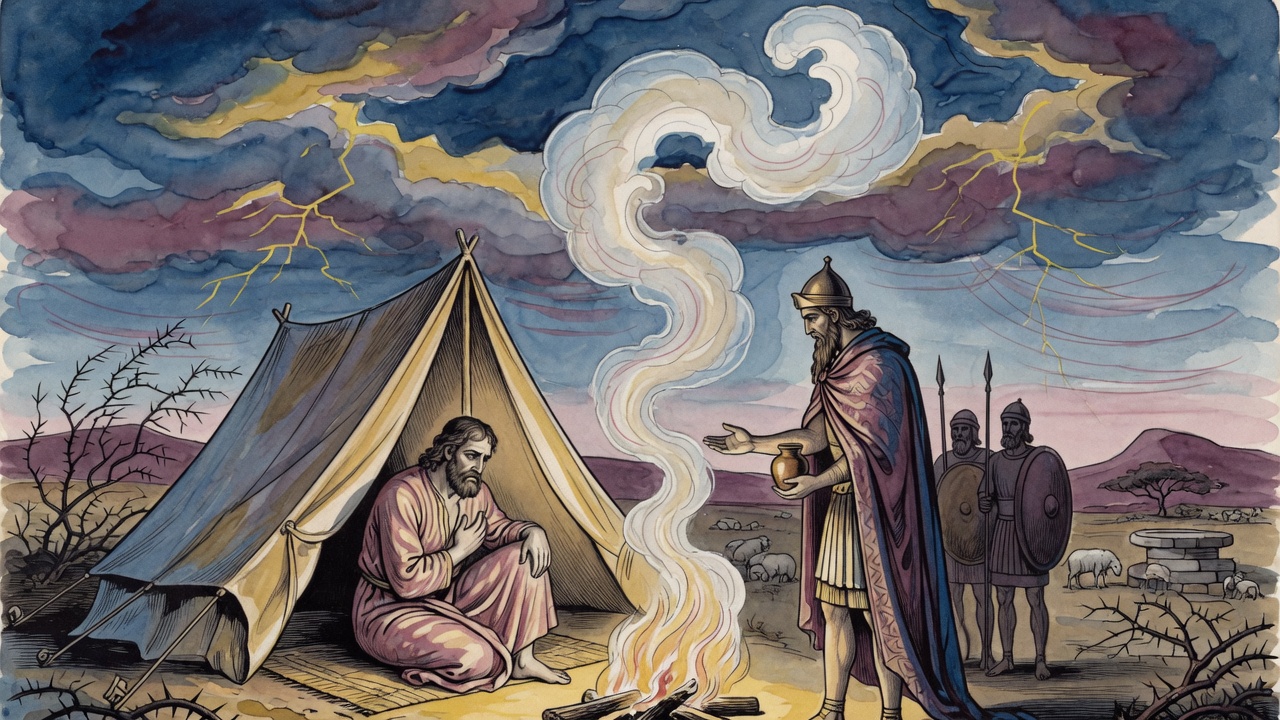
Rabbi Yochanan told a story about a woman of wealth who fell on hard times and went looking for barley among the poor gleanings left behind at harvest's edge. Someone saw her and recognized her. This is the daughter of so-and-so, a woman who had feasted at tables covered in silver. Now she is scavenging what the poor leave behind in the stubble.
The midrash meant Israel. The daughter of wealth is the nation that once ate tithes at the Temple in Jerusalem, at tables covered in abundance, in the presence of God. Now she gathers the scraps that fall from the scholarship of other communities. She is still eating. She is still alive. But the distance between the feast and the gleaning is the full length of the exile.
Rabbi Yochanan did not use this image to despair. He used it as a description of what Torah study was doing in the meantime. The woman on the ground is still the daughter of wealth. Her genealogy does not change because her circumstances changed. And she knows how to eat, because she was raised at a table where eating was the sign of presence, not possession.
Three Scrolls and a Single Letter
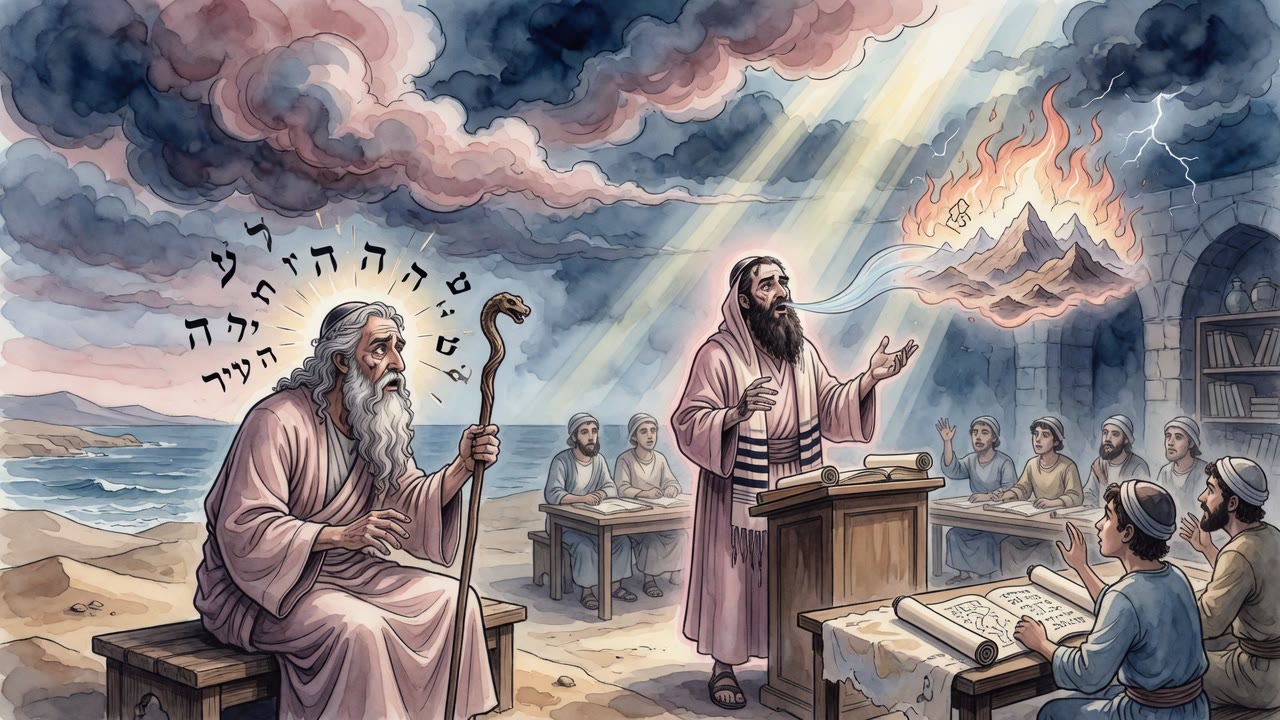
Sifrei Devarim records a story about three Torah scrolls found in the Temple courtyard with tiny variations in their texts. One read meone, another meoon, the third a slightly different spelling of the same word. The scribes who found them had to decide which was correct. They followed the majority: two scrolls agreed, so two scrolls determined the text.
This is the moment Torah fully became the Temple. The courtyard, the stone, the altar, the incense, all of these had a single authoritative form: either the ritual was performed correctly or it was not, either the smoke rose straight or it scattered sideways. The Torah scroll had three forms of one word, and the solution was to count the witnesses and follow the majority.
Legal procedure replaced sacrificial precision. The scroll became the sanctum. And the argument between three slightly different spellings of a single divine name became, in its own way, as holy as the pillar of smoke the Avtinas family had guarded for generations.
← All myths