5 min read

The Raised Dead Wept for Their Final Portion

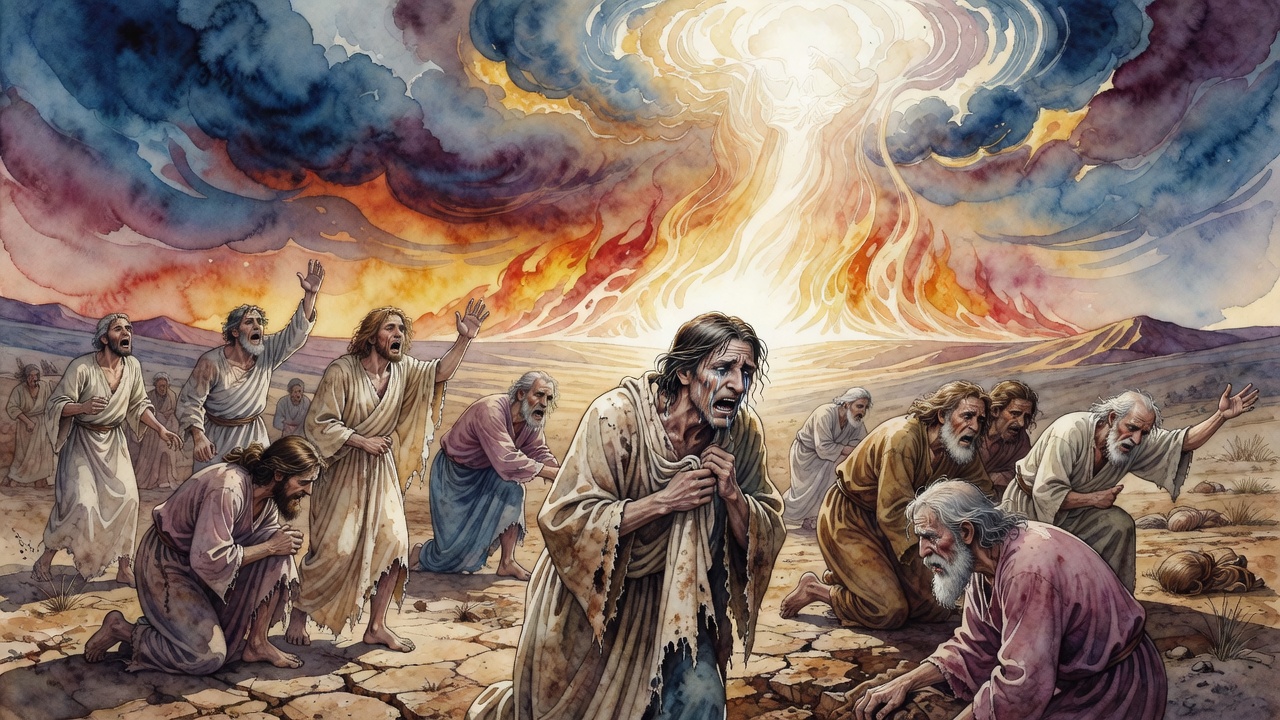
Men pulled back from death wept in open air, afraid the early gift had spent their share in the last rising of all Israel.

Curated by Arthur · Told by Maggid ·
Table of Contents
  1. Breath Returns and Tears Follow
  2. The First Body and the Sealed Grave
  3. When the Earth Thought the End Had Come
  4. A Gift That Looked Like Theft
  5. Dust That Answers Its Name
The Raised Dead Wept for Their Final Portion Click for full size

Breath Returns and Tears Follow

They stood up from the place death had claimed them, lungs burning with air that should have been finished, and they wept. Not for joy alone. The miracle had already happened. Flesh held. Eyes opened. And still the fear rose faster than gratitude. If Heaven had spent their resurrection now, what remained for the day when all Israel would rise together?

A prophet met their crying with a promise spoken in the name of God. Their portion in everything pledged to Israel would not shrink by a single measure. The early gift was not a theft from the final ledger. They could live again without bankrupting the world to come. The weeping slowed. The question did not fully leave their faces.

The First Body and the Sealed Grave

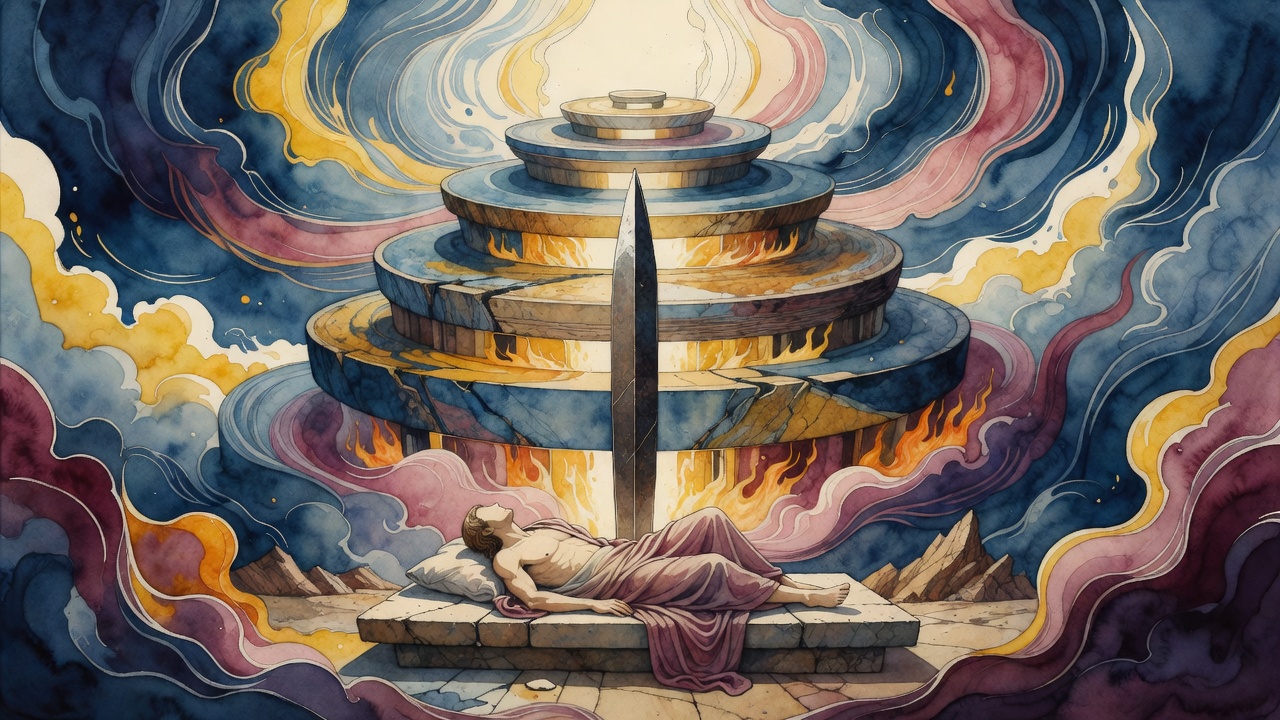
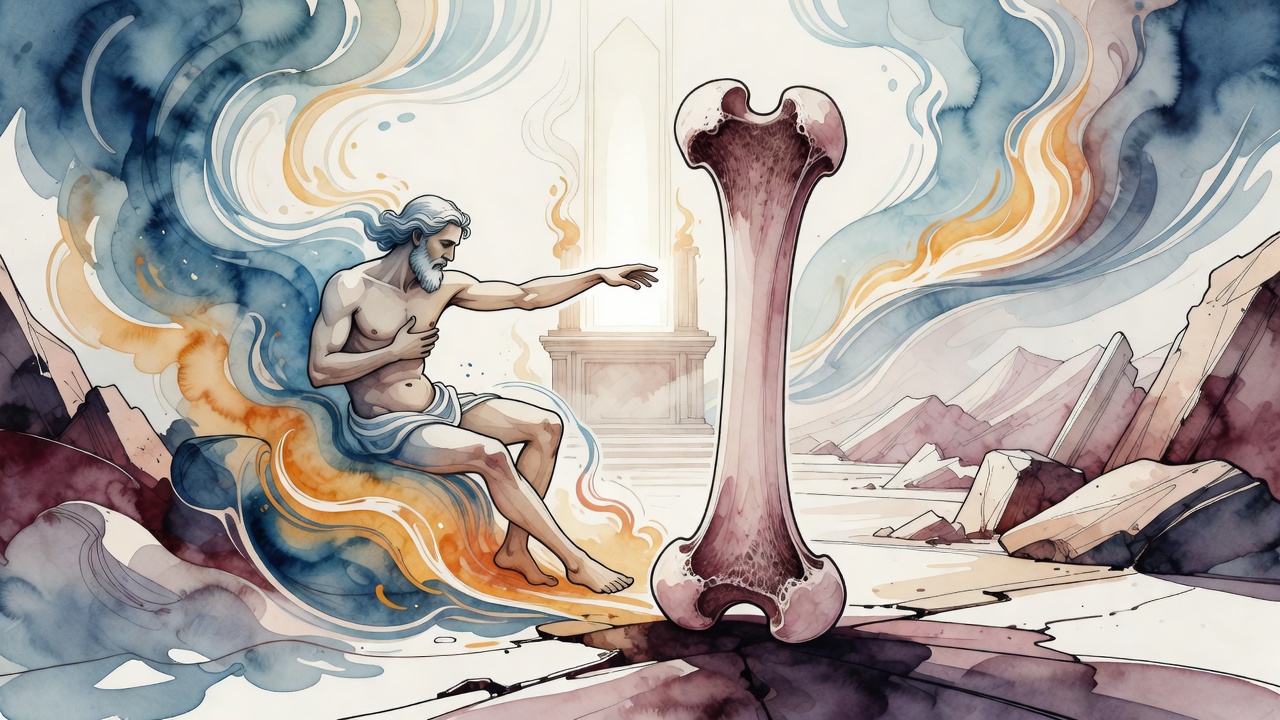
Long before those men rose, God stood over the body of Adam and called his name twice. "Adam! Adam!" The body answered, "Lord, here am I." Dust he was, and to dust he would return, yet God set a second word beside the first. Resurrection on the day of judgment. Every generation from Adam's loins would rise. Then God sealed the grave so no harm could reach the first man until Eve's rib returned to him at her own death.

Eve spent the interval weeping. She did not know where the body lay. Only Seth had stayed awake while the angel buried it. The first family learned early that death is not only an ending. It is a custody problem for earth and a promise problem for Heaven. The sealed grave held both.

When the Earth Thought the End Had Come

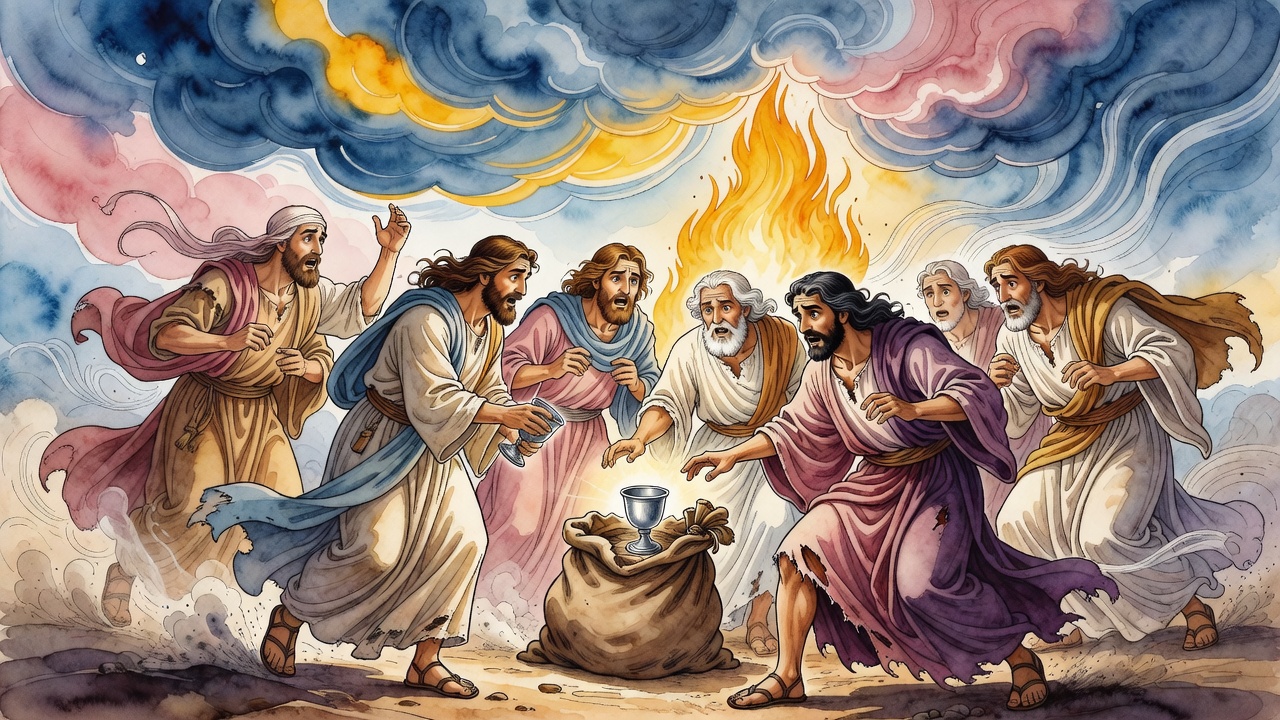
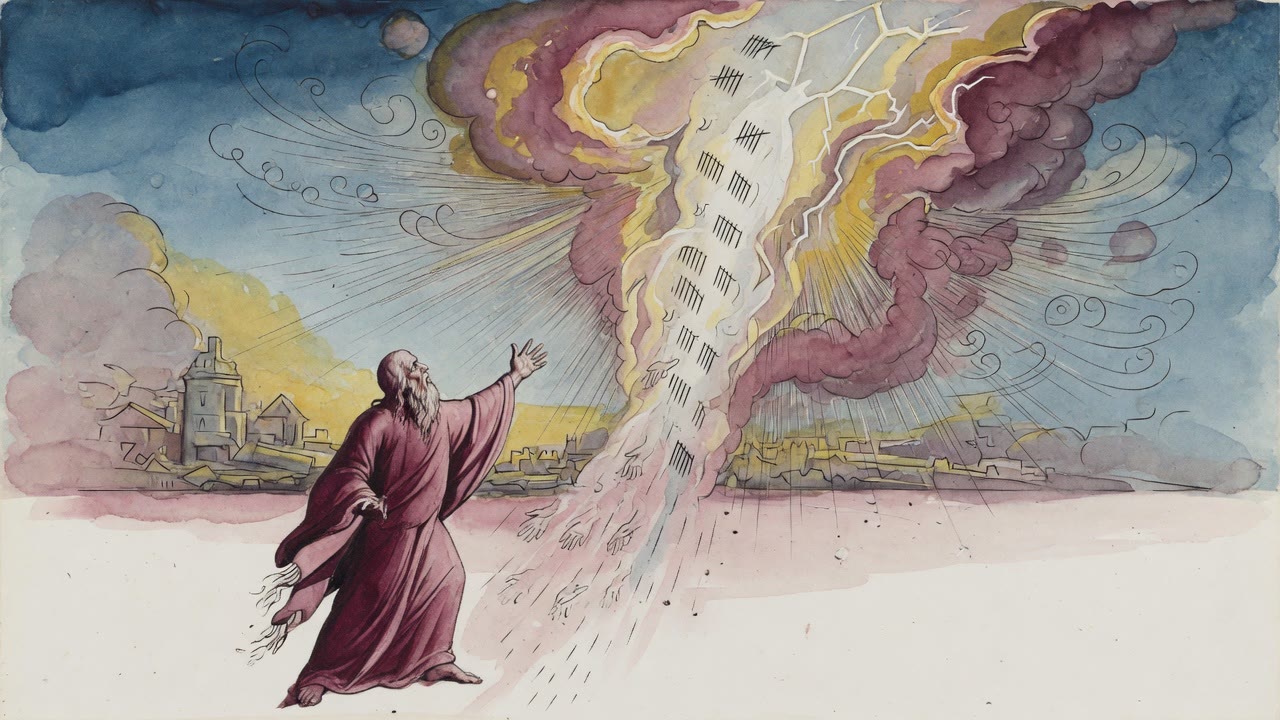
At Sinai the ground itself panicked. Thunder and fire made the earth believe the resurrection of the dead had begun. She would have to account for blood she had drunk and bodies she had covered. The earth did not calm until the first words of the Decalogue arrived and proved the hour was covenant, not final judgment. Living people on the mountain slept through the early signs. Moses had to wake them like a bridal party late for its own canopy.

That trembling belongs beside the raised men's tears. Creation knows resurrection as a debt coming due. When the schedule seems early, even soil flinches. When the schedule seems spent, newly living men flinch. Both fear the same ledger from opposite sides of the dirt.

A Gift That Looked Like Theft

The men restored to life had already tasted the stranger miracle, return before the general day. Their fear was precise. Share in the end of time. Share in the rising of the whole people. They did not want a private favor that canceled a public inheritance. The prophet's answer restored the math. Early life did not cancel final life. God can give twice without becoming a cheat.

Remarriage and household rebuild pressed on some of them as well, the ordinary complications of breath returned into a world that had already rearranged itself. Tears mixed legal dread with kitchen dread. Who belongs to whom when the dead walk home. The tradition keeps the cosmic fear in the foreground. Portion. Promise. Israel entire.

Dust That Answers Its Name

Adam's sealed grave and the spies of death who wept after rising bookend one stubborn claim. Dust answers when called. Dust also worries about the second call. Between the first burial and the last trumpet, earth holds blood and bones under a trembling contract. Sinai showed how fast the ground mistakes covenant noise for judgment day. The raised dead showed how fast a human heart mistakes mercy for subtraction.

The prophet's sentence still hangs over every early wonder. "Your portion is not diminished. Live. The final rising still has your name." Adam hears it as a sealed promise over a closed grave. The restored men hear it as permission to stop sobbing in the open air. The earth hears the Decalogue and stops shaking long enough for a people to receive law before they receive the end of days.

Cold left their joints. Light hurt. Somewhere a child who already said kaddish stares as if betrayal and wonder shared one face. The raised men cannot explain the math of Heaven while their own ribs still click with new air. They only know the fear of a double-entry book where early mercy looks like a withdrawal.

Adam's sealed grave answers them across ages. The first corpse was not abandoned to random dirt. God named him, promised him a waking, and locked the soil like a vault. If the first man waits for a public day, why should later men fear a private hour of return. The prophet's word lines up with that vault. Portion intact. Promise intact. Live now without canceling later.

Sinai's trembling earth is the third witness. Creation itself keeps resurrection accounts and panics when the schedule seems early. Humans restored too soon panic when the schedule seems spent. Between them stands the Decalogue and the prophet's assurance, two speeches that calm two kinds of ledger-fear. Dust will rise. Dust may also rise early. Neither rising empties the other.


← All myths

From the tradition

Sources

3 sources

The texts behind this telling. Some cards carry a translation of the source; others are our own retelling of it, and each card says which. Every card links out to the original.

Legends of the Jews 10:95Legends of the Jews

Retold in our words. Read the original at the link below.The Legends of the Jews by Louis Ginzberg (1909) · Public Domain

Sometimes, even the most extraordinary events can bring unexpected anxieties. Take the story of those brought back from the dead – a true gift. Yet, according to Legends of the Jews, they wept. Why? They feared that their premature return might somehow diminish their share in the ultimate resurrection, the grand reunion of all Israel at the end of days. Receiving a second chance at life, only to worry about its cosmic implications? Thankfully, a prophet reassured them, delivering a divine promise that their portion in the world to come would remain whole, untouched.

This wasn't just any ruler; he was the master of the known world, commanding respect even from wild beasts. Legends of the Jews paints a vivid picture: even a lion with a snake coiled around its neck was among his pets! But power, as we know, can corrupt. Nebuchadnezzar’s story is a cautionary tale, a dramatic fall from grace.

Initially, Nebuchadnezzar wasn’t even keen on attacking Jerusalem. The Legends say that the archangel Michael himself had to drag him, kicking and screaming metaphorically speaking, from his horse to the Kodesh Hakodashim, the Holy of Holies. Fear of God held him back, at first. But success bred arrogance. He began to see himself as divine, plotting to shroud himself in clouds, to live apart from humanity.

A heavenly voice thundered down, a potent rebuke: "O thou wicked man, son of a wicked man, and descendant of Nimrod the wicked, who incited the world to rebel against God! Behold, the days of the years of a man are threescore years and ten, or perhaps by reason of strength fourscore years. It takes five hundred years to traverse the distance of the earth from the first heaven, and as long a time to penetrate from the bottom to the top of the first heaven, and not less are the distances from one of the seven heavens to the next. How, then, canst thou speak of ascending like unto the Most High 'above the heights of the clouds'?" (Legends of the Jews).

The punishment? A descent into bestiality. For a time, Nebuchadnezzar lived as an animal, treated as one of them. Legends of the Jews describes him having the form of an ox down to his navel, and that of a lion below, eating grass and attacking onlookers. Forty days he lived this way.

But here’s where the story takes another turn. Daniel, ever faithful, interceded. He prayed fervently, begging for the seven years of Nebuchadnezzar's animalistic exile to be shortened to seven months. And his prayers were answered. According to the Legends, after forty days, reason returned to the king. The next forty days were spent in bitter repentance. And the remaining time was spent living as a beast again.

Nebuchadnezzar's tale, as retold in Legends of the Jews, is a potent reminder of the dangers of hubris, of forgetting our place in the grand scheme of things. It's a story of punishment, yes, but also of the possibility of redemption, of the enduring power of prayer and repentance, and the understanding that even the most powerful among us are ultimately subject to a higher power.

Full source
Legends of the Jews 2:123Legends of the Jews

Retold in our words. Read the original at the link below.The Legends of the Jews by Louis Ginzberg (1909) · Public Domain

When Adam lay dying, God called out to his body, "Adam! Adam!" And the body answers, "Lord, here am I!" It's a poignant exchange. God reminds Adam of his earthly origins: "Dust thou art, and unto dust shalt thou return." But then comes a promise, a beacon in the darkness. God assures Adam of resurrection, saying He will awaken him on the day of judgment, when all his descendants will rise from their graves. What a powerful image! Then, God sealed the grave, protecting Adam's remains until Eve joined him, her death restoring the rib that had been taken from him.

After Adam's death, Eve spent her days in deep mourning. The Legends of the Jews tells us of her particular distress: she didn't know where Adam's body lay. Only Seth, their son, had been awake when the angel buried him. As her own death approached, Eve made a heartfelt plea. She begged to be buried in the very same place as Adam.

Her prayer, as recounted in Legends of the Jews, is so moving. "Lord of all powers!" she cries out. "Remove not Thy maid-servant from the body of Adam, from which Thou didst take me, from whose limbs Thou didst form me." She acknowledges her unworthiness, her sin, and asks to enter his habitation. It's a plea for unity, a desire to be reunited with her partner in life, even in death. "As we were together in Paradise, neither separated from the other; as together we were tempted to transgress Thy law, neither separated from the other, so, O Lord, separate us not now."

Finally, with her eyes raised to heaven, she offers one last petition: "Lord of the world! Receive my spirit!" And with that, she gave up her soul to God.

What does this story tell us? Perhaps it's about the enduring power of connection, the yearning for wholeness even in the face of mortality. Adam and Eve's story, even after their expulsion from Paradise, reminds us of the profound bond between two souls, a bond so strong that it transcends even death itself. And it offers a glimpse of hope, a promise of resurrection and reunion in a future beyond our comprehension.

Full source
Legends of the Jews 2:43Legends of the Jews

Retold in our words. Read the original at the link below.The Legends of the Jews by Louis Ginzberg (1909) · Public Domain

Like you're being held accountable for. everything? That's what the Earth felt at the Revelation at Sinai. According to Legends of the Jews, the Earth itself was terrified, convinced that the resurrection of the dead was upon it. It thought it would have to answer for all the blood it had soaked up, for all the murdered bodies it had concealed.

What calmed it down? The first words of the Decalogue – the Ten Commandments. A powerful reminder that even cosmic anxiety can be soothed by divine law.

Picture the scene at Mount Sinai. The air crackling with anticipation, maybe a little fear. But even with all the extraordinary phenomena happening that morning, God didn't reveal Himself right away. Why? Well, as Legends of the Jews also tells us, it was summertime. And after those short summer nights, everyone was still asleep!

It fell to Moses to rouse the nation. He went through the camp, not with a booming decree, but with a gentle, almost romantic call. "Arise from your sleep," he called, "the bridegroom is at hand, and is waiting to lead his bride under the marriage-canopy." Isn't that beautiful? imagery for a second: God as the bridegroom, Israel as the bride, and the covenant – the Ten Commandments – as the marriage contract. It transforms the giving of the law into a moment of profound intimacy and commitment.

With Moses leading the way, the nation processed toward Sinai. Moses ascended the mountain alone, acting as the go-between, the best man, if you will. He turned to God and said, "Announce Thy words, Thy children are ready to obey them."

The text goes on to say that Moses' voice, when he repeated God's words to the people, had as much power as the Divine voice he heard. That’s a staggering thought. Moses, in that moment, became a conduit, a vessel for the divine. Not just a messenger, but a true reflection of God's power and intent.

What power do we have to amplify goodness, to echo truth, to awaken others to the presence of the divine in their own lives? Perhaps, like Moses on Sinai, we all have the potential to be more than just speakers of words, but carriers of a transformative message.

Full source