The Red Sea Refused to Split Until Someone Walked In
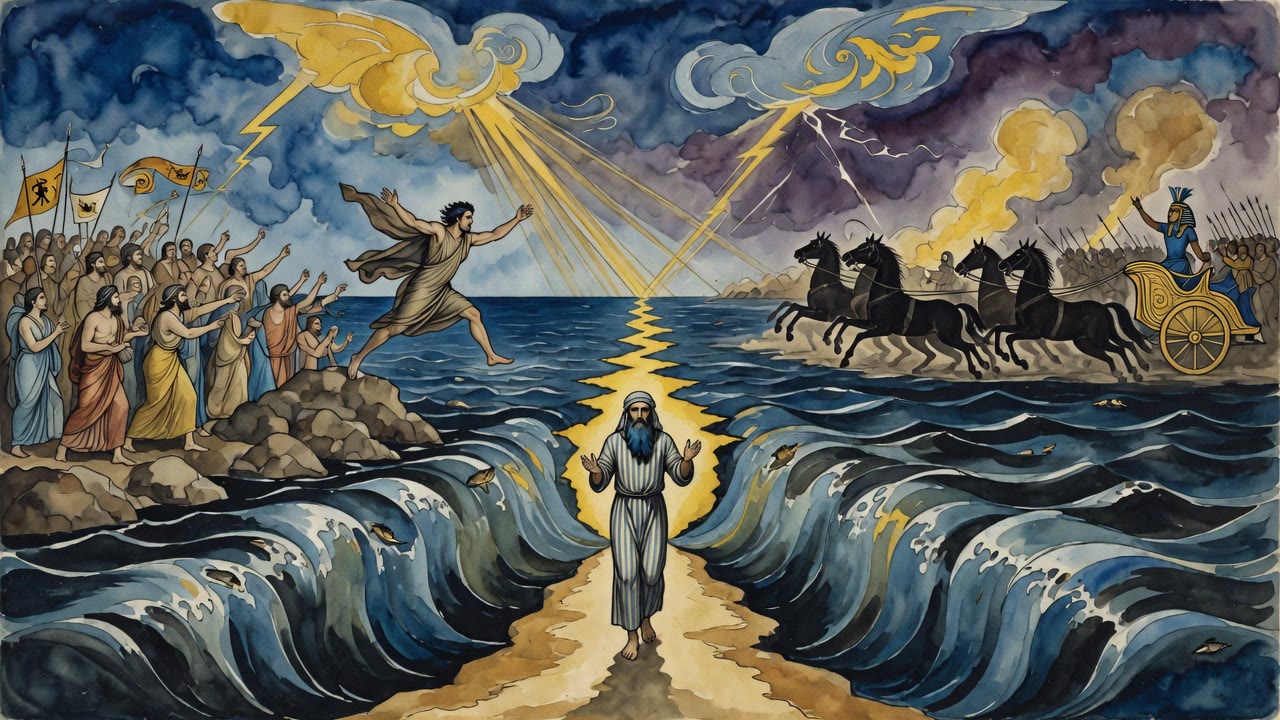
Moses raised the staff and the water held its shape. Nachshon walked in until the sea sat at his nostrils. Only then did the walls stand.
Table of Contents
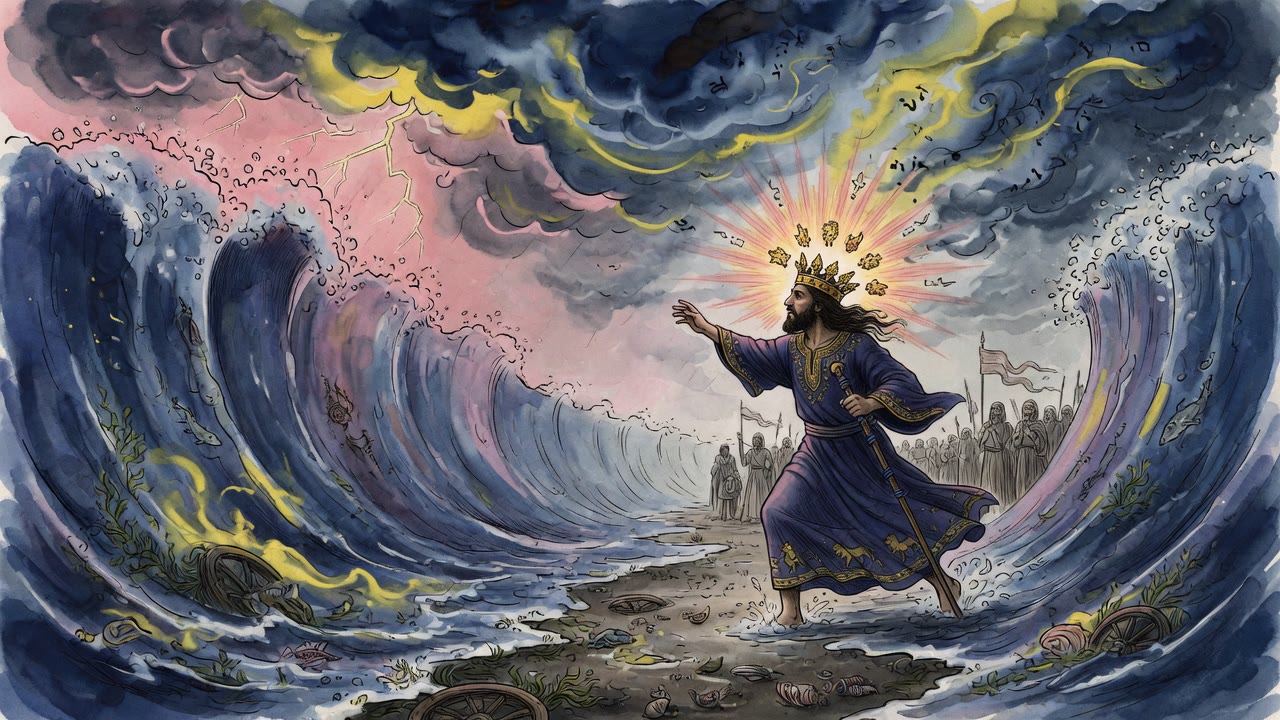
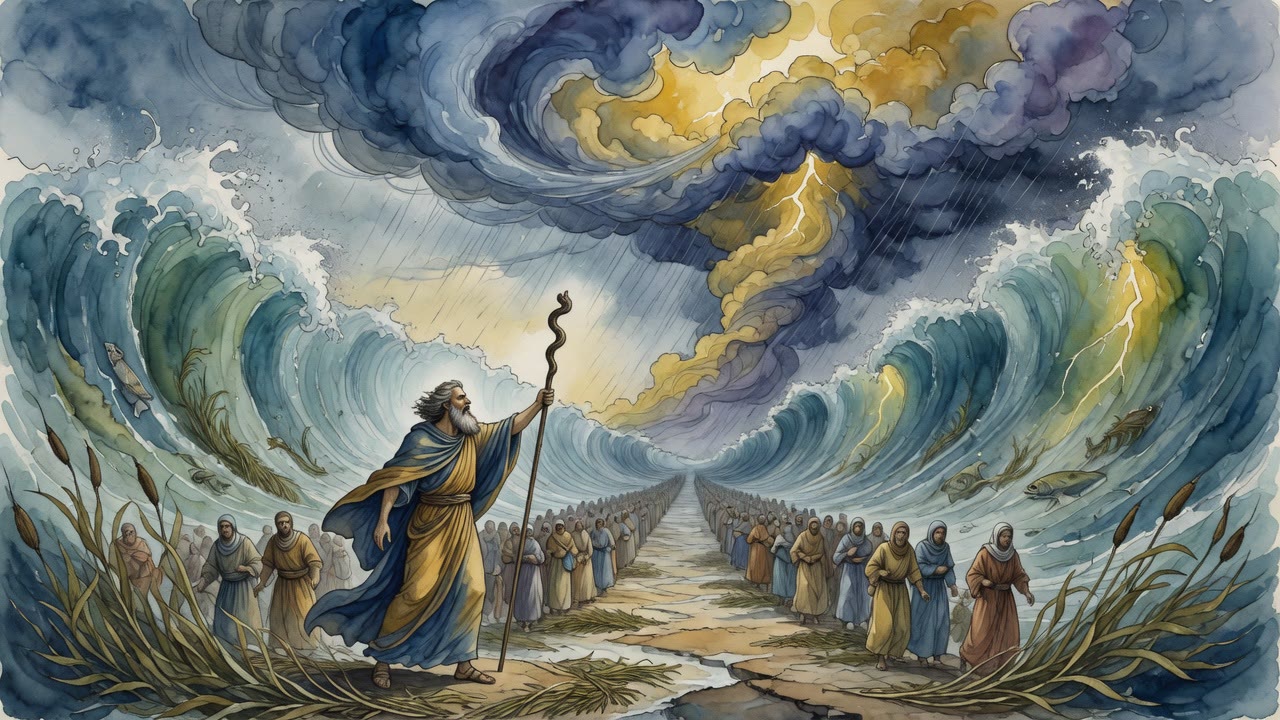
Moses stood at the edge of the Red Sea with his staff pointing at the water, and the water refused. He had done this before. The staff had turned the Nile to blood. The staff had produced frogs and brought locusts and called down fire from the sky. He commanded the waters to part, as God had instructed.
 Click for full size
The sea held its shape. "Why should I divide myself?" it asked.
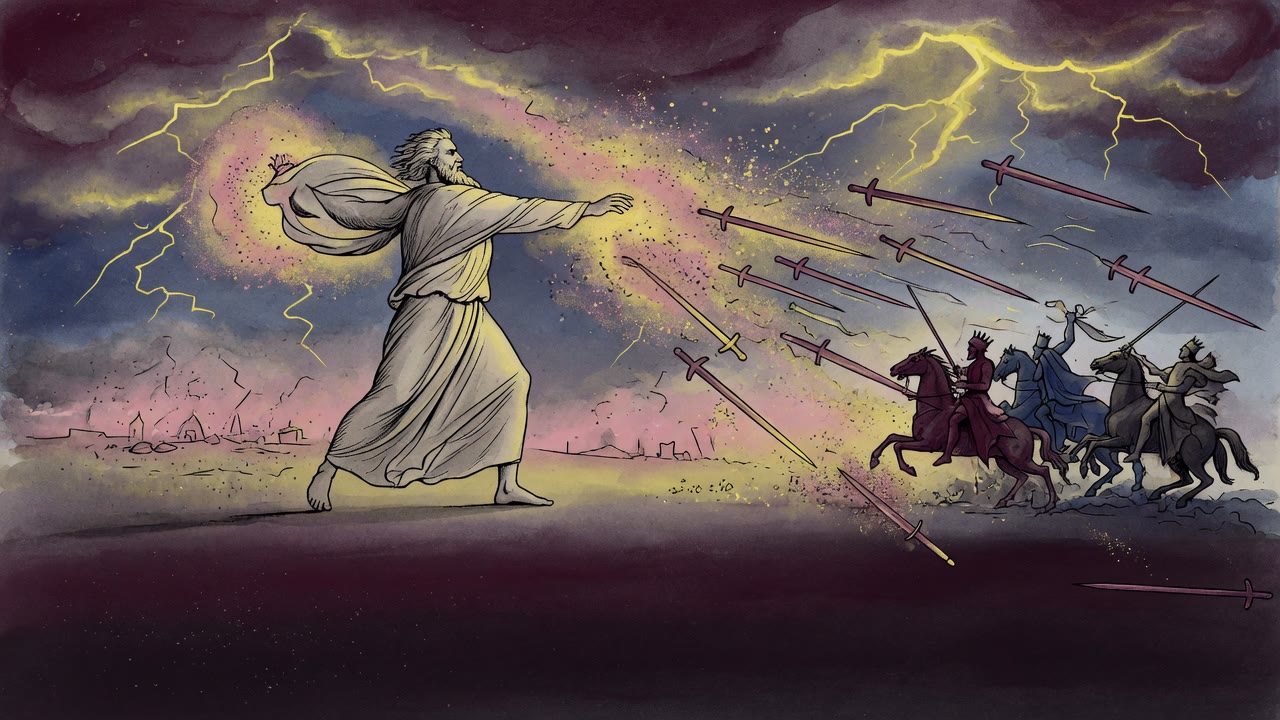
Moses answered that he was the messenger of God and had been sent to do this. The sea did not move. He tried again. "Behold the staff of God. Do what you have been commanded." Behind them, Pharaoh's army was coming. The ground trembled with hoofbeats.
God Told Them to Advance
Israel cried out, and God's answer cut across the noise. "Why are you crying out to me? Speak to the people and have them advance."
The sea was not stuck because the plan had changed. Prayer alone would not open it. The people had to move forward into the water, not stand on the sand calling for deliverance. Miracles waited for a body to go first.
The tribe that moved without being asked would take a firstborn's share of the crossing. Jacob had once given the rights of priority to Joseph's house. Someone still had to wet his feet.
Nachshon Walked In to His Nose
Nachshon ben Amminadav was prince of Judah. When Moses could not move the sea and the army was coming, Nachshon walked in.
He walked in past his ankles. Past his knees. Past his waist. He kept walking as the water rose. Past his chest. The sea sat at his nostrils before it moved.
The water did not split because Moses commanded it. It did not split because a promise had been spoken on the shore. It split when a man showed he would drown rather than turn back. The miracle had been waiting for someone to make it necessary.
Later, when the princes brought their offerings for the sanctuary, Nachshon's tribal gift carried extra letters in the words for his offering and his goats. The extra marks were counted as extra courage, the kind that had already gone into the water up to the nose.
The Sea Saw Joseph and Fled
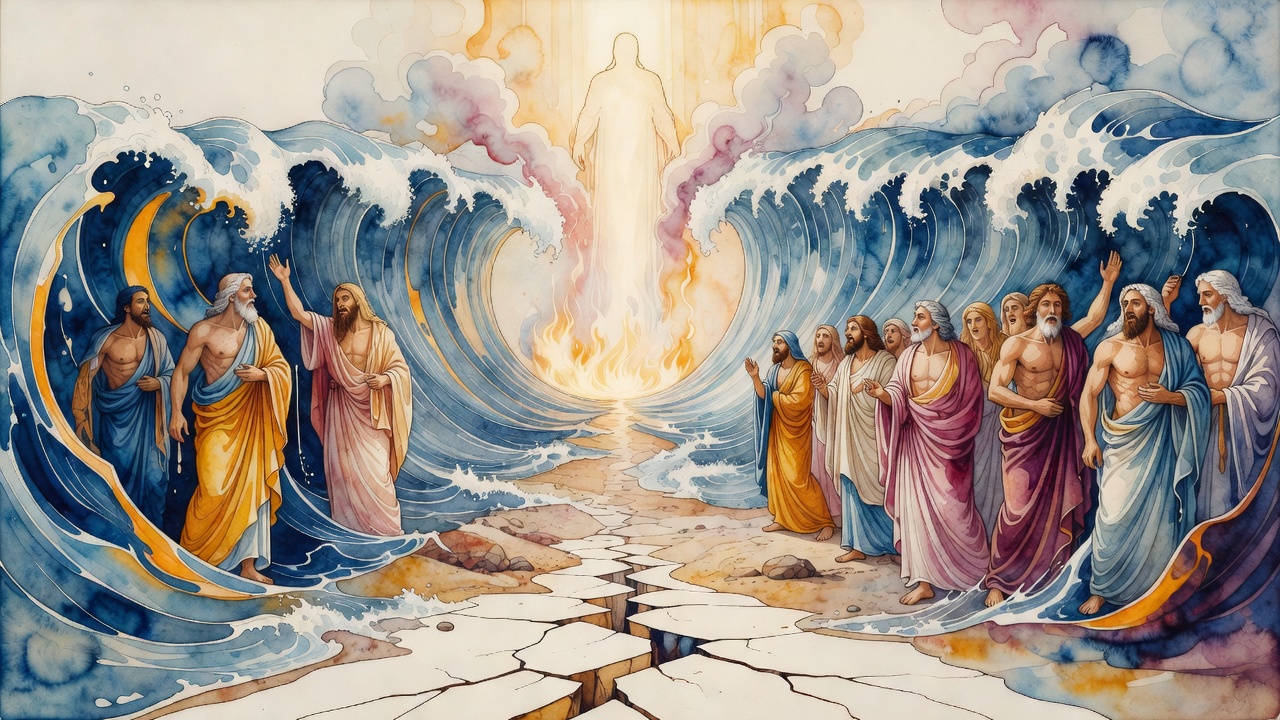
The walls did not rise for Moses alone. They rose for a coffin as well.
Joseph's bones were on that road. Jacob had endured Laban's years for Joseph's sake, and the blessing that came of that endurance still sat in the son's merit. The same waters had taken Joseph's silver cup when it was planted in Benjamin's sack. The same river had taken Joseph's coffin when the Egyptians sank it to keep Israel in Egypt. Those waters had been paid in advance.
The sea saw and fled (Psalm 114:3). It fled a face it already knew. Joseph had run from a house in Egypt and left his garment in a woman's hand. The sea ran the same way, leaving a path on the floor.
Gabriel Held the Walls Until Morning
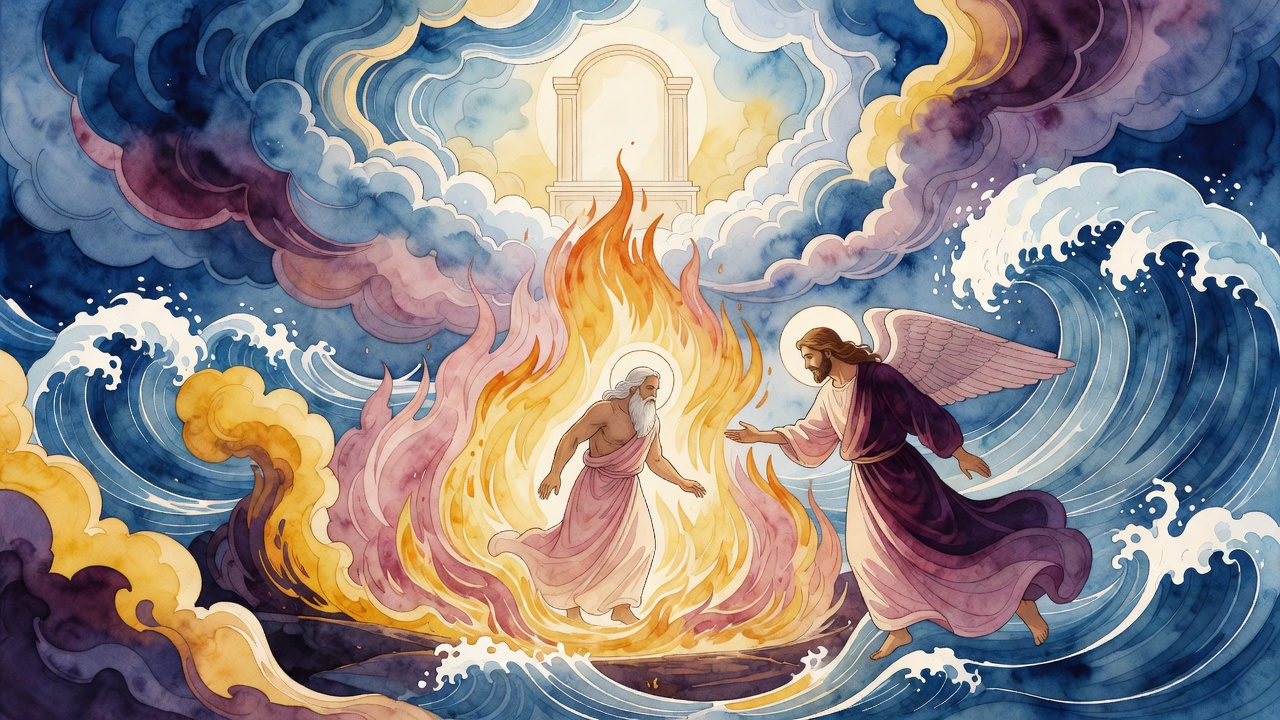
Once the walls stood, the angel Gabriel moved to drop them on the Egyptians while they were still in the middle. He wanted the drowning done at once. God slowed him down. Wait for the morning watch, the hour Abraham would have been preparing Isaac on the mountain. The punishment would happen, but in the order God had set, not in the order of Gabriel's impatience.
Gabriel spoke to the walls while he held them. To the water on the right: beware of Israel, who will receive the law from the right hand of the Lord. To the water on the left: beware of Israel, who will wind tefillin on the left arm. To the water behind: beware of Israel, who will let tzitzit fall down their backs. To the water in front: beware of Israel, who bear the sign of the covenant on their bodies.
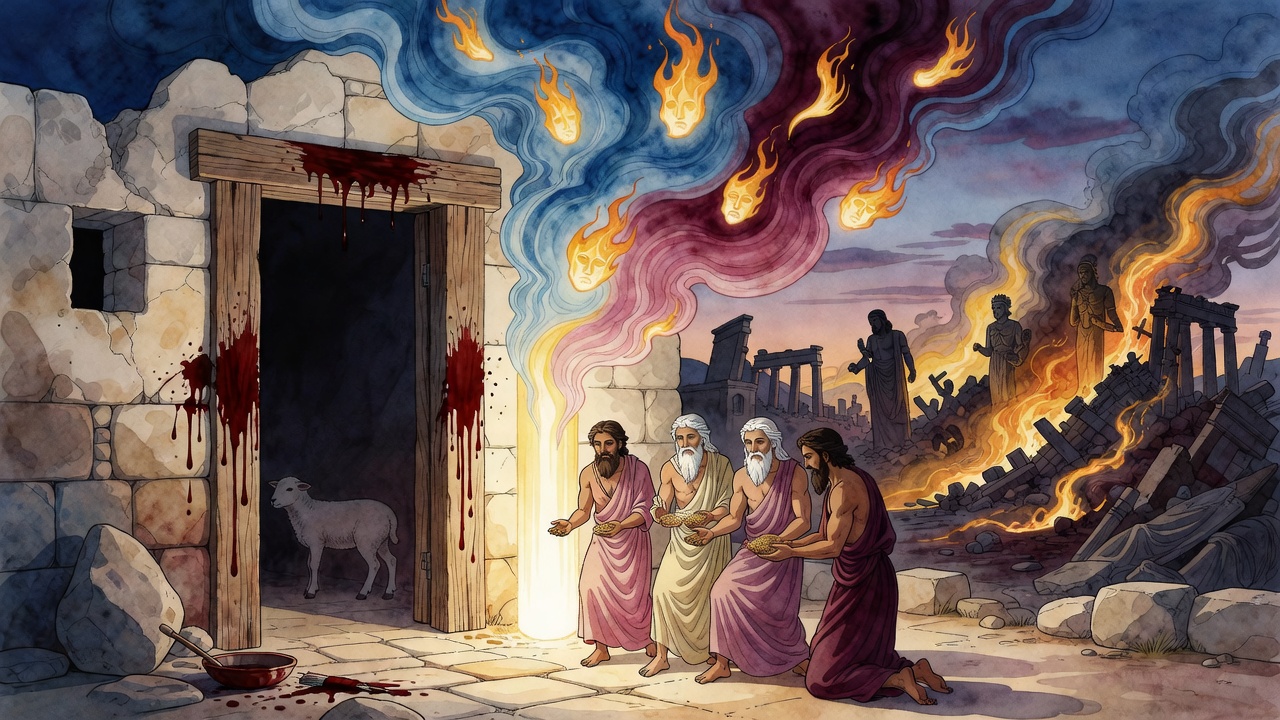
Pharaoh rode into the middle on his own certainty that he had not yet lost. Then the walls fell. The fire that had stood in the pillar between Israel and Egypt had already done its part, holding space for the crossing. The sea finished the work at the appointed hour and not before.
On the far bank, Nachshon's clothes were still wet to the collar. Moses' staff hung at his side. The water had not moved for either of them until a prince of Judah was in it up to his nose.
← All myths