6 min read

The Screen That Threw the Light Back and Made the World

When the last vessel refused the flood of light and threw it back, the rejected light turned, clothed what it fled, and became every container of the world.

Curated by Arthur · Told by Maggid ·
Table of Contents
  1. The Thread of Light Reached the Bottom of the Empty Space
  2. Malkhut Raised a Barrier Against the Flood
  3. The Light Struck and Rebounded Upward
  4. The Rejected Light Became a Body for What It Refused
  5. The Vessels Formed Only Below the Barrier
The Screen That Threw the Light Back and Made the World Click for full size

The Thread of Light Reached the Bottom of the Empty Space

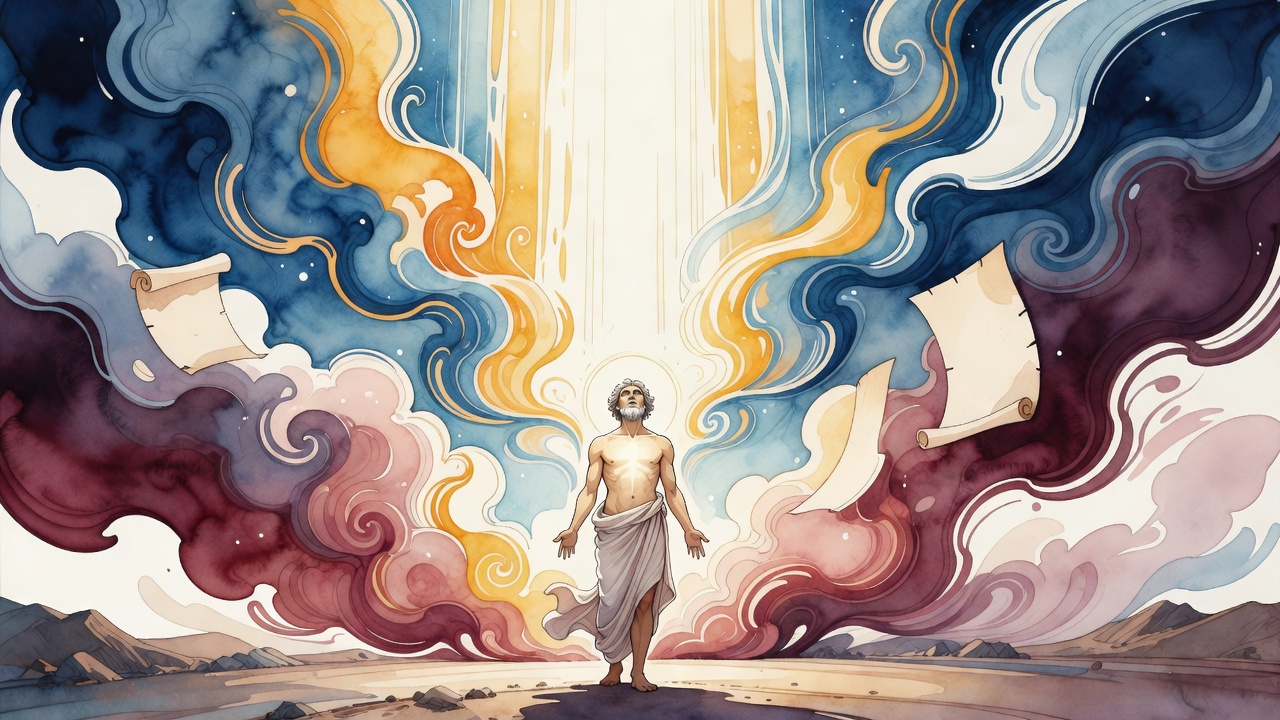
After the great contraction, after Ein Sof drew its endless light inward and left a round hollow where a world could stand, a single thread of light lowered itself into the dark. It came down straight and undiluted, pure giving with nothing held back, and it fell toward the lowest place, the floor of the empty space, where Malkhut waited.

Malkhut had nothing. She was the last of the ten, the end of the line, the Kingdom that owns only what is handed to her. The nine above her poured and shone and passed the brightness along. She could only take. And the light bearing down on her now was not a gift she could hold. It was the same substance as the Giver, boundless and formless, and it would have flooded straight through her and out the other side, and she would have been nothing more than a place the light passed on its way to nowhere.

Malkhut Raised a Barrier Against the Flood

So she did the one thing the last vessel could do. She refused.

Not the refusal of a sulking child. The refusal of a host. Somewhere in her the knowledge rose that to be filled straight through is not to receive at all, and she pushed back against the descending light and set a barrier across the floor of the world, a screen the Kabbalists call the masach. It stood between her and the thread of giving like a hand raised against a wave.

"I will not simply swallow it," she said into the dark. "I choose how I receive."

The light kept coming. It had no reason to stop. Giving was its whole nature, and it pressed down on the screen with the full weight of Ein Sof (the Endless) behind it.

The Light Struck and Rebounded Upward

Then came the collision.

The thread of direct light slammed into the masach and could go no lower. The screen, being opaque, being a true barrier and not a curtain, threw it back. Up the light went, back the way it had come, rebounding off the floor of the world and rising toward its source. This was the returning light, ohr chozer, light with a new direction and a new owner. It had left the Giver as a downpour. It came back up as an answer.

Nothing was destroyed in the crash. That was the strange mercy of it. The blow did not shatter the screen and did not scatter the light. It made something. The very act of being rebuffed gave the light a shape it never had while it was only falling. Where the two beams met and pushed against each other, the vacant hollow left by the contraction took on its first real edge.

The Rejected Light Became a Body for What It Refused

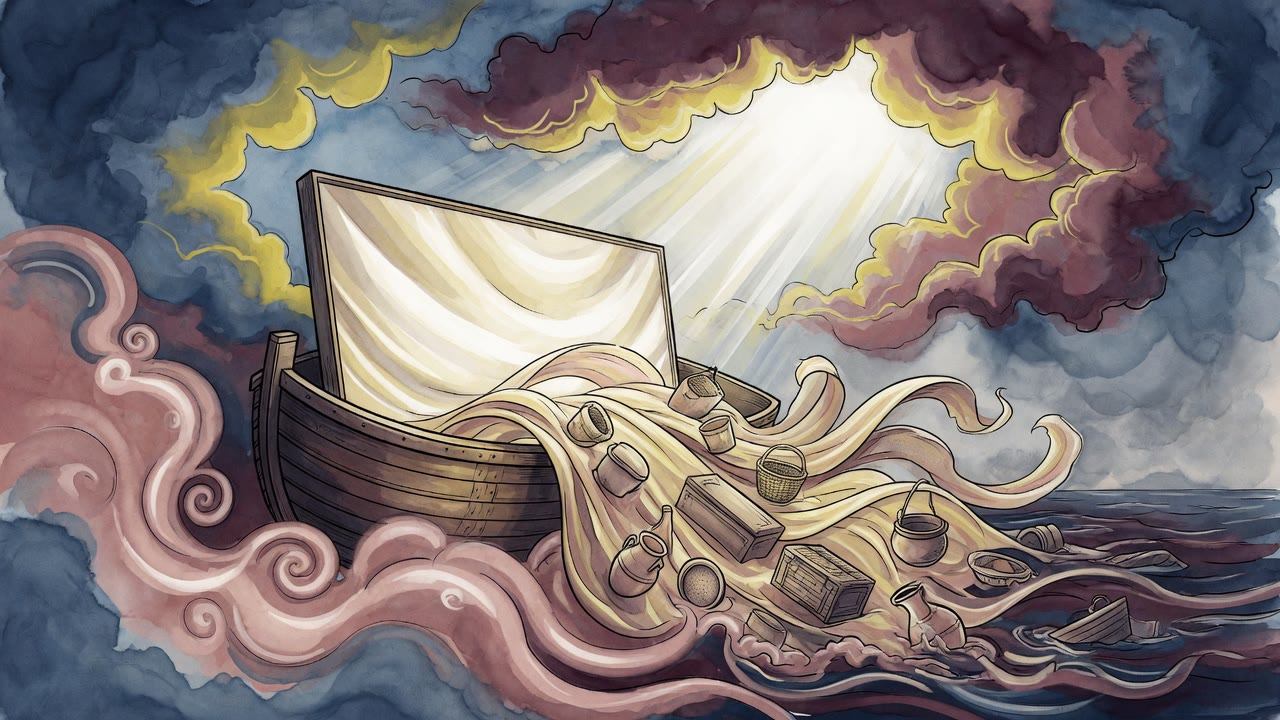
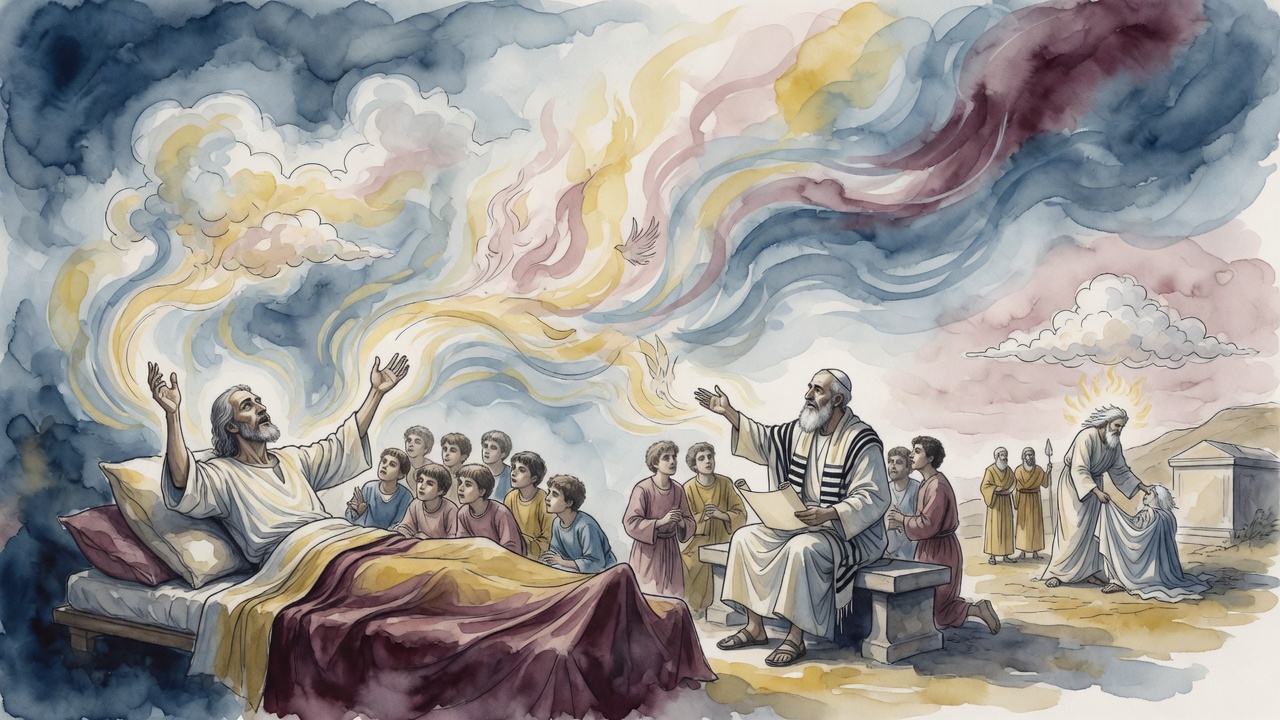
As it rose, the returning light wrapped itself around the direct light still descending, and it clothed it, sleeve over arm, vessel over flame. The light that had been thrown back became a container for the light that had never stopped giving.

This was the only way the thing could be done. The direct light could not be held in a vessel made of more direct light, because a gift cannot be caught in the hand of the giver. It has to be caught in the hand of the receiver. The returning light was light, yes, the same brightness, but it came off Malkhut, it carried her refusal inside it, it belonged to the one who takes. So it could hold what pure giving never could.

Before the contraction, the plan had been simpler. The last level was meant to be the vessel, an open mouth waiting under an open sky. After the contraction that mouth could no longer hold anything, and a new vessel had to be built, and it was built out of a No. Every container in the world, every rim that would ever hold a measure of light, was formed in that instant when the refused light turned and rose and dressed the light it had refused.

The more Malkhut threw back, the more she could hold. Her whole size, the reach of the Kingdom, grew exactly as large as the light she had the strength to reject.

The Vessels Formed Only Below the Barrier

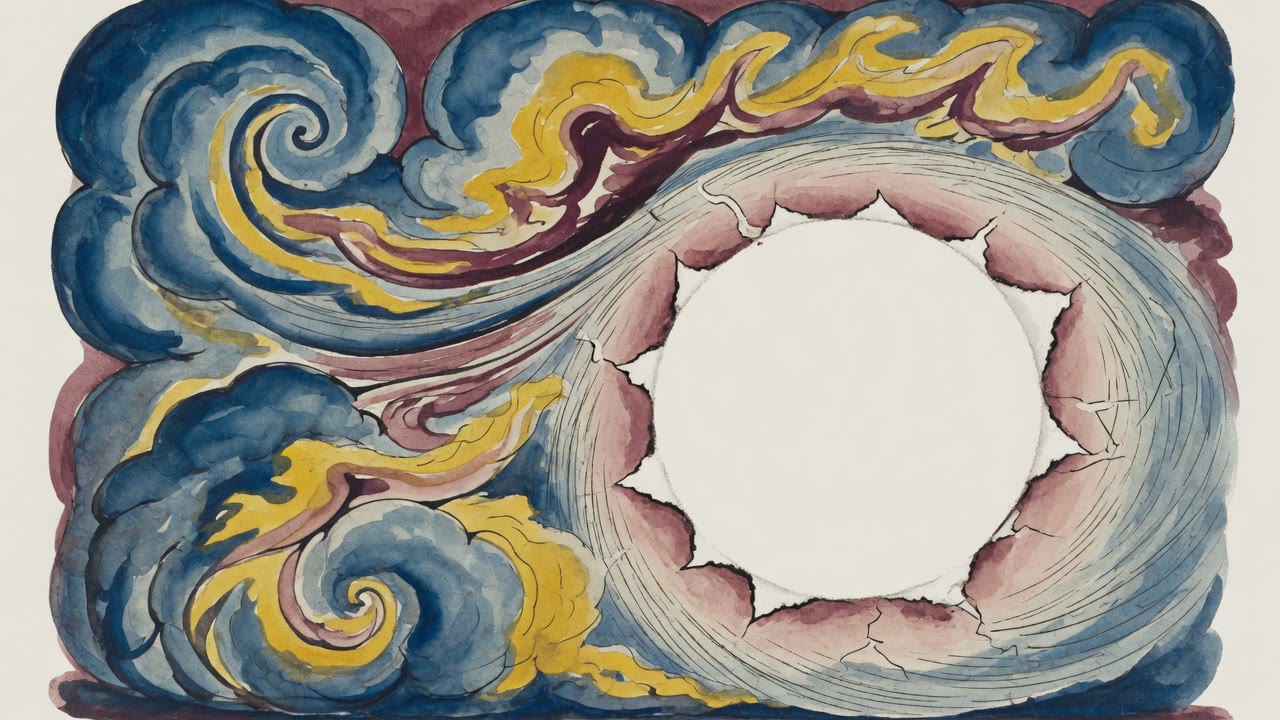
But the vessels could form in only one direction. They spread downward from the screen and no higher. Above the masach the light stayed as it was, direct and unclothed, because up there no screen stood over it to shape it. Only below, where the barrier hung above the rising light and pressed its opacity down like a mold pressed into water, did the returning light stiffen into true vessels. The screen was the mold. Its thickness, its refusal to let light pass, was what gave the formless brightness an edge, a wall, a shape it could keep.

So everything solid stands below a barrier. Every bounded thing, every rim that holds a measure without spilling, exists because a light was told no and turned that no into a body. The world is made of what came back.


← All myths
From the tradition

Sources

3 sources

The texts behind this telling. Some cards carry a translation of the source; others are our own retelling of it, and each card says which. Every card links out to the original.

Petichah LeChokhmat HaKabbalah 14:2Petichah LeChokhmat HaKabbalah

Retold in our words. Read the original at the link below.Sefaria-hosted English translation · CC-BY

Think of it this way: imagine a beam of supernal light, pure, undiluted divine energy, streaming downwards. Now, What happens? It's not simply absorbed, but rather, there's a kind of "collision," as Petichah LeChokhmat HaKabbalah describes it. This "collision" isn't destructive, but generative. It gives rise to what's called the returning light.

This returning light is crucial. Instead of the light simply flooding into the lower realms, it's "rebuffed" upwards, back towards its source. This might seem strange – why send the light back? Well, this "sending back" is precisely what allows the light to be received in a meaningful way. According to the Kabbalists, the final level, Malkhut (Kingship or Kingdom), can't directly receive the supernal light because they are fundamentally different. Malkhut needs a mediator, something to bridge the gap.

The partition, in a sense, represents Malkhut asserting its agency. It’s saying, "I won't just passively receive; I choose how I receive." This act of choosing, this initial rejection, is what transforms the act of receiving into a gift. Think of it like this: if someone does you a favor, you're not just passively benefiting; you're giving them the opportunity to be generous, to express their care for you.

The Zohar, that foundational text of Kabbalah, is filled with these kinds of layered metaphors. And this idea of "returning light" is key. It enclothes, or surrounds, the ten sefirot (divine emanations) of the supernal light. It becomes a vessel, a container, for that light.

Now, here's where it gets really interesting. This process is often described as "enclothing from below to above." The returning light originates from "below," at the level of the partition, and then ascends upward. After bouncing off the partition, as we read, it acts as a vessel to enclothe the supernal light. But the actual formation of complete vessels, the full realization of this enclothing, happens "above to below," as the supernal light descends to be enclothed.

As Petichah LeChokhmat HaKabbalah explains, this expansion of Malkhut is proportionate to the amount of returning light. The more light that's "rebuffed" and sent back, the greater the capacity of Malkhut to receive. It's a dynamic, ever-evolving relationship.

So, what does all this mean for us? Well, perhaps it suggests that true receiving isn't passive. It requires agency, discernment, and a willingness to sometimes "send back" in order to truly appreciate the gift. Maybe it's a reminder that the most profound connections are those where we actively participate in the dance of giving and receiving, creating vessels for the light to fill. Something to consider.

Full source
Introduction to Sulam Commentary 7:1Introduction to Sulam Commentary

Retold in our words. Read the original at the link below.The Sefaria Sulam, 2023 · CC-BY

It's a bit dense, but stick with me, because it unveils something profound about how we perceive and understand the world.

This point circles back to a concept we touched on earlier: why the returning light could only fully serve as vessels for the direct light below the Parsa, or partition, and not above it. Think of the Parsa as a veil, a threshold, a point of separation and connection.

The key here is that the ten Sefirot (the divine emanations) – those divine emanations, the building blocks of creation – of both the direct light and the returning light, had to spread from that very partition downward. Why? Because that was the exact moment when the ten Sefirot of the returning light became vessels capable of receiving and enclothing the ten Sefirot of the direct light. It's a cosmic dance of giving and receiving, a partnership between the divine and… well, everything else.

At this stage, the partition is already positioned above the ten Sefirot of the returning light. This is crucial. Because of this positioning, its opacity, its ability to filter and shape, controls the ten Sefirot of the returning light. And it's through this control that they are formed into vessels.

Think of it like this: Imagine pouring water into a mold. The mold – the partition – shapes the water into a specific form. Without the mold, the water would simply spread out, formless and undefined. The partition, in this analogy, is what gives the returning light its structure, its capacity to hold and contain the divine.

It suggests that limitation, structure, and even opacity are not necessarily negative things. They can be the very things that allow us to receive and understand the divine light. The Parsa, the partition, isn't just a barrier; it's a necessary component for creation and understanding. It's a reminder that sometimes, it's the constraints that give us form.

What perceived limitations might actually be shaping us, enabling us to receive and embody the light in unique ways?

Full source
Petichah LeChokhmat HaKabbalah 16:1Petichah LeChokhmat HaKabbalah

Retold in our words. Read the original at the link below.Sefaria-hosted English translation · CC-BY

In the world of Kabbalah, this idea of rejection as a catalyst for growth is actually central to understanding how we receive divine light. this way: Let's say you're hosting a dinner party. You’re practically begging your friend to come. You're offering them this wonderful meal, this connection. The Ohr Elyon, the supernal light, is like that generous host, eager to bestow its abundance. It wants to expand, to fill us.

What if your friend refuses? Maybe they're busy, maybe they're not feeling well. That refusal, that rejection.. According to the teachings of Petichah LeChokhmat HaKabbalah, that very act of rejection becomes the most important element in how your friend ultimately could receive the meal – more important, even, than their initial hunger or desire!

It's a bit of a mind-bender, so stick with me. Imagine the supernal light encountering a barrier, a partition – what Kabbalists call a Masach. This partition is what bounces the light back. This "bouncing back," this returning light, or Ohr Chozer, isn't just wasted energy. Instead, it becomes a brand new vessel for receiving the supernal light.

Think of that returning light as a transformation. It's the energy of refusal being channeled into a capacity to receive. This idea is tied to the concept of Tzimtzum, the initial constriction of God, which created space for the world. Before Tzimtzum, the fourth level (the place where we can receive) was meant to be the receiving vessel. But after, a new way of receiving emerged.

This is all illustrated in the parable above, which comes from an interpersonal relationship, so that we can understand the concept of fusion through collision and the returning light that rises by means of it. It becomes a new receiving vessel for the supernal light instead of the fourth level that was initially meant to serve as the receiving vessel.

The Zohar tells us that everything operates on this principle of giving and receiving.

How does this relate to our dinner party analogy? Well, the friend's refusal to accept the meal becomes a new way of relating – a receiving in order to give. They might refuse the meal itself, but offer to help with the dishes, or contribute to the next gathering. Their rejection becomes an act of giving in itself, transforming the entire dynamic.

Similarly, the rebuffing of the supernal light creates this returning light, which serves as a new vessel precisely because it incorporates the element of giving back. It's not just about passively receiving; it's about actively participating in the flow of abundance. Even though the returning light is light (like the supernal light), it is light that comes from the receiver (the created being) and can therefore serve as a vessel for the supernal light.

Maybe, just maybe, that refusal is paving the way for a deeper, more meaningful connection, a new way of receiving that you never even imagined. What new vessels are being created by your rejections?

Full source