The Seer Who Read Mercy in the Face of the Ancient One
Pulled past every world, a seer stands before the divine face and reads mercy in its skull, unsleeping eyes, patient breath, and thirteen-streamed beard.
Table of Contents
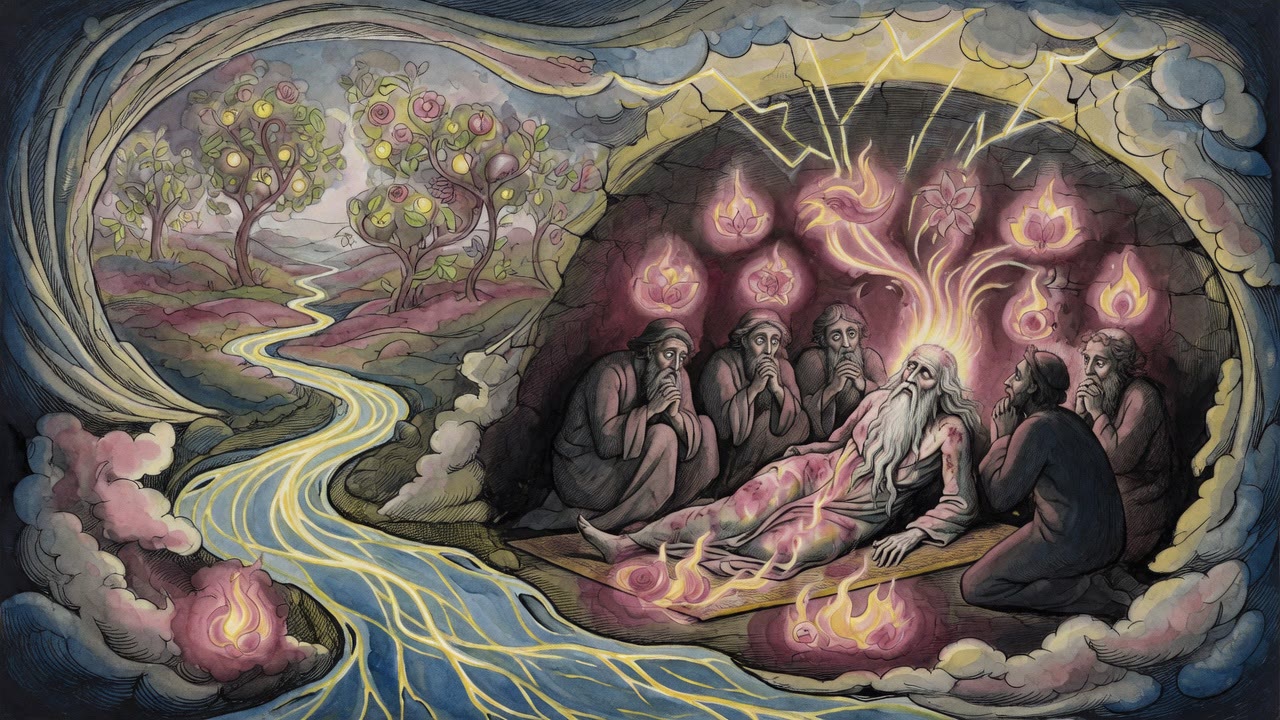
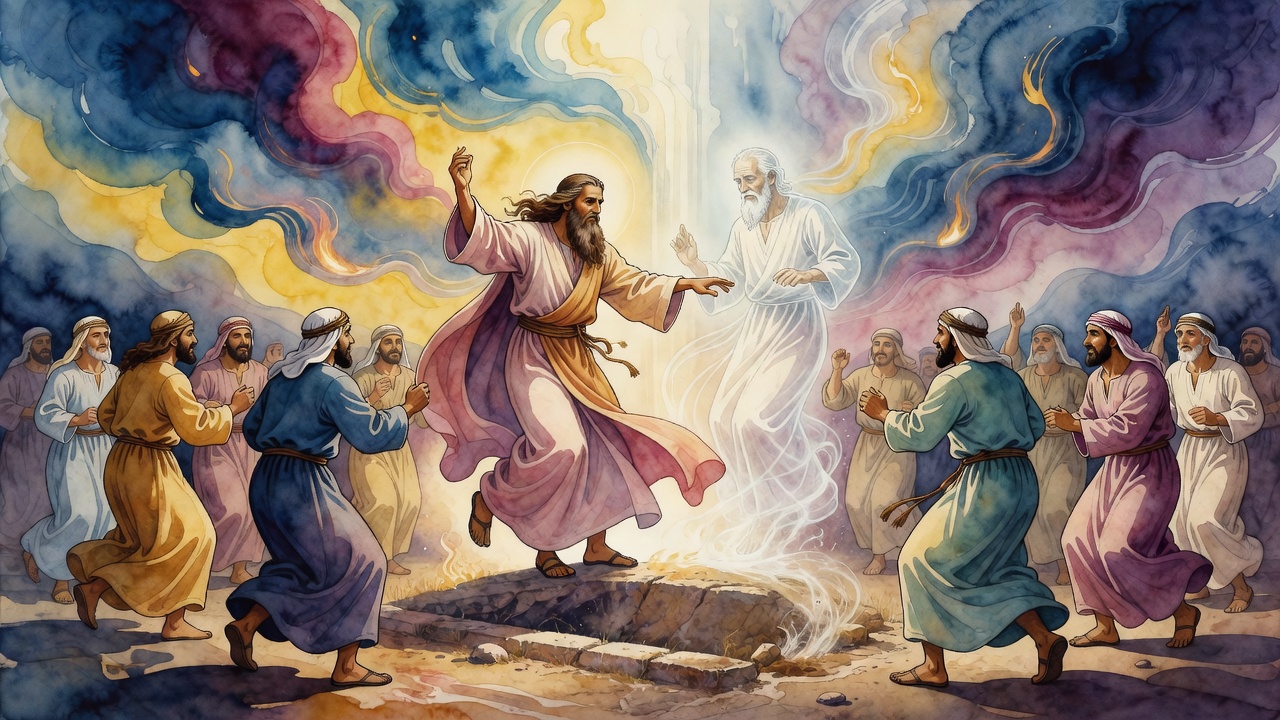
The companions leaned in close, and Rabbi Shimon bar Yochai was already rising. Not the body on the mat, which lay still and shallow of breath in a room that smelled of oil and dust. Something in him lifted past the roof, past the field of stars, past the world where angels carry the prayers of the living, up through worlds with no floor and no ceiling, until the climbing stopped because nothing remained above.
 Click for full size
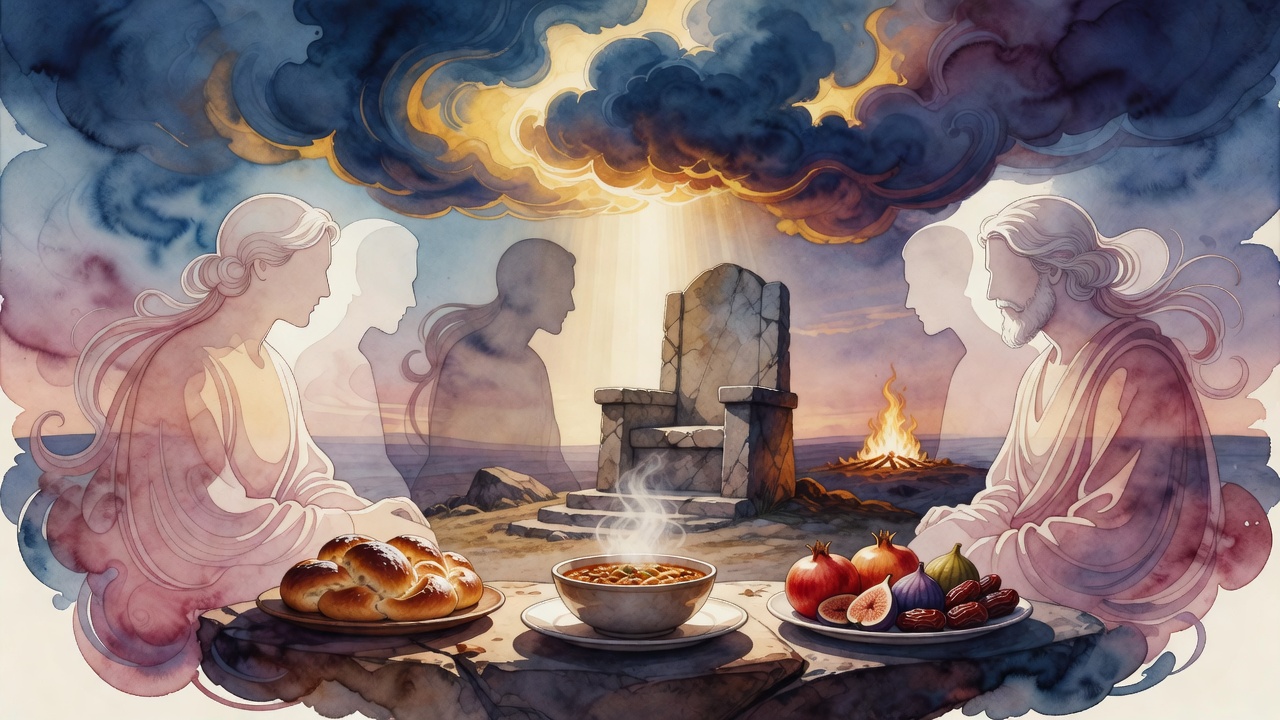
A face waited there, if a face can be as wide as forgetting. The old masters called it Arich Anpin, the Long Face, the Vast Countenance, and gave its innermost head the name Atika Kadisha, the Ancient Holy One. Shimon had spoken these names for fifty years. Now they turned toward him, and he knew he had been brought to read the face the way a man reads a verse, feature by feature, until its whole meaning breaks open. Every line of it bent one way, toward the same mercy, and he began at the top.
The Skull the Mind Can Only Call Nothingness
He looked first at the skull, and his mind refused it. It stood so near the unknowable head that thought slid off and found no hold. The masters had a word for this, ayin (אין), nothingness, not because the skull was empty but because no mind could carry it. Across its surface lay a dew so fine it had no weight, a moisture that would one day wake the dead, and it did not fall so much as rest, everywhere at once.
The hairs and the eyebrows on that skull did not grow from the skull. They rose from a brain concealed deeper still, and every strand came out smooth and soft, without a single knot of harshness. No judgment could catch here. It was one light of mercy, undivided, poured out without measure. Only the back of the head stayed turned away, hidden from him, because the nape is where judgment gathers, the place the prophet named when he cried that the people had shown God their back and not their face (Jeremiah 2:27).
The Forehead Where the Will of All Wills Rests
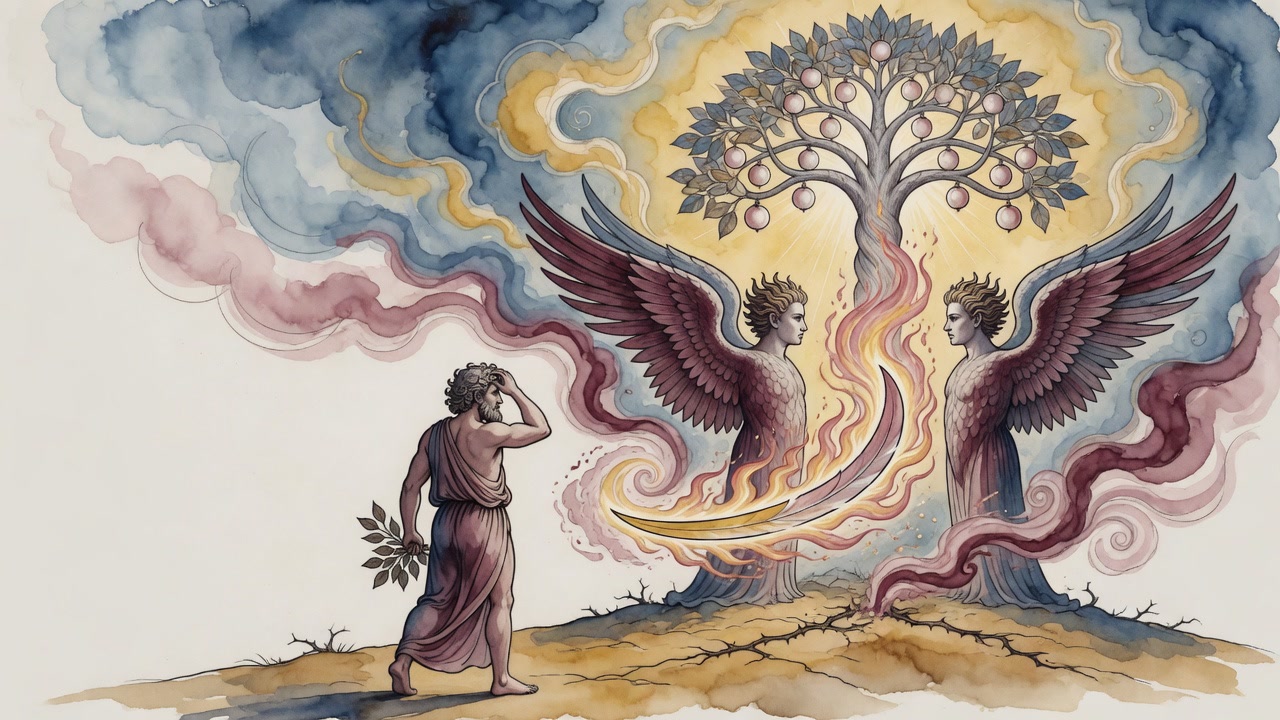
Below the skull the forehead opened, broad and calm, and Shimon knew it by the old name, the forehead of will. Here the highest and most hidden desire of all settled and became visible, a sweet and gracious sway that no force above it commanded. When this forehead is uncovered, no accusation can stand in the world below. The decision to accept, to favor, to let the guilty remain, was taken here and nowhere else.
The kindness pouring from this brow ran higher than wisdom itself. Wisdom can arrive cold, thinning as it drops toward the lower worlds until the harsh powers thicken around it and feed. This kindness did not thin. It came down as pure as it left, and the outer forces found no edge in it to hold.
The Eyes That Never Learned to Close
Then he met the eyes, and there were two of them that were somehow one, a single gaze with no seam. They had no eyebrows above them and no lids to draw across them, for they had no need of shade and no need of rest. Awake before the first morning and awake past the last, they watched without pause over Zeir Anpin, the Small Face, the near and active countenance through which the world is governed. He who keeps Israel does not slumber and does not sleep (Psalms 121:4), and here was the sleeplessness itself, unblinking.
Within that gaze a hidden wisdom had been engraved long ago, in a time the masters called immaturity, and now in its ripeness it shone out in three white lights, three shades of loving-kindness standing in three columns. One of the whites was like milk. It flowed across and washed the eyes of the Small Face clean, the way the beloved's eyes are washed with milk in the old song (Song of Songs 5:12), so that the near presence should look upon the world with a rinsed and gentle eye.
The Breath That Holds the Fire Back
Shimon came to the nose, and he braced for burning. He knew the teaching that anger rises through the nostrils, and that fire can leap from a mouth and devour (II Samuel 22:9). From the nose of the Long Face came no fire. It came a breath, and the breath was long. It went out slow and even and without end, the exhalation of one who is slow to anger because the nose itself is long, and in that length every judgment that might have flared was stretched thin and cooled and carried off before it could land.
The Beard of Thirteen Streams
Last he looked at the beard, and it fell from that face in white channels, thirteen of them, hanging down toward the worlds like thirteen rivers seeking low ground. Nothing about it had come quickly. It had formed over long seasons, drawn up out of a higher Mother and a hidden Father, a slow ripening the masters measured in symbolic years, until majesty and wisdom hung complete from the jaw of the Ancient One. Through those thirteen streams the mercy of the skull, the favor of the forehead, the washed sight of the eyes, and the long cooling breath all ran down together, gathered into thirteen mouths that emptied onto the guilty and the accused below.
The companions on the earth heard Shimon's voice grow faint and then stop. He had read the whole face. Every feature of it, from the dew that had no weight to the last white stream, bent the one way, downward, over a world that had done nothing to deserve the flood of gentleness now falling on it.
← All myths