6 min read

The Three Meals That Feed the Hidden Faces of God at Twilight

As Friday's light fails a second soul settles on every observer, the hidden faces turn toward each other, and three set meals feed them in turn.

Curated by Arthur · Told by Maggid ·
Table of Contents
  1. The Light Failed and a Second Soul Came Down
  2. Rabbi Shimon Set the Queen's Table
  3. The Hidden Faces Turned Toward One Another
  4. At Dawn the Ancient One Shone Through Father and Mother
  5. The Forehead Rose at the Mincha Hour
The Three Meals That Feed the Hidden Faces of God at Twilight Click for full size

The Light Failed and a Second Soul Came Down

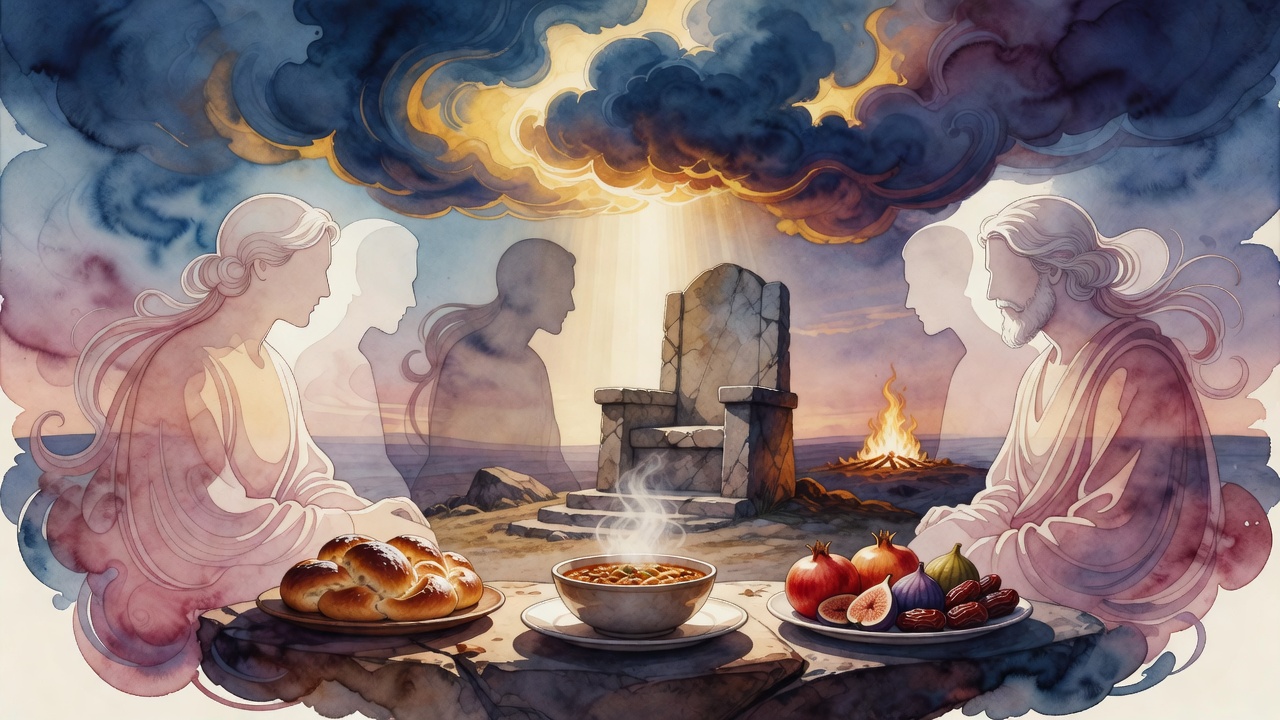
The sun slid low behind the hills, and the last of the gold drained out of the room where Rabbi Shimon sat among the companions who never left his side. No lamp had been lit. The week still clung to the walls, heavy with the labor and the reckoning of six days. Then the edge of the light thinned, the way a thread thins before it parts, and in that narrow seam of twilight between the week and the rest something arrived that had not been in the room a breath before. Each man felt it settle over him, a second self folding down onto the first, quiet as falling ash. Their shoulders loosened. The strain went out of their faces. Shabbat had entered, and with it the soul it always carries in, the guest of joy that comes only once the working light has died.

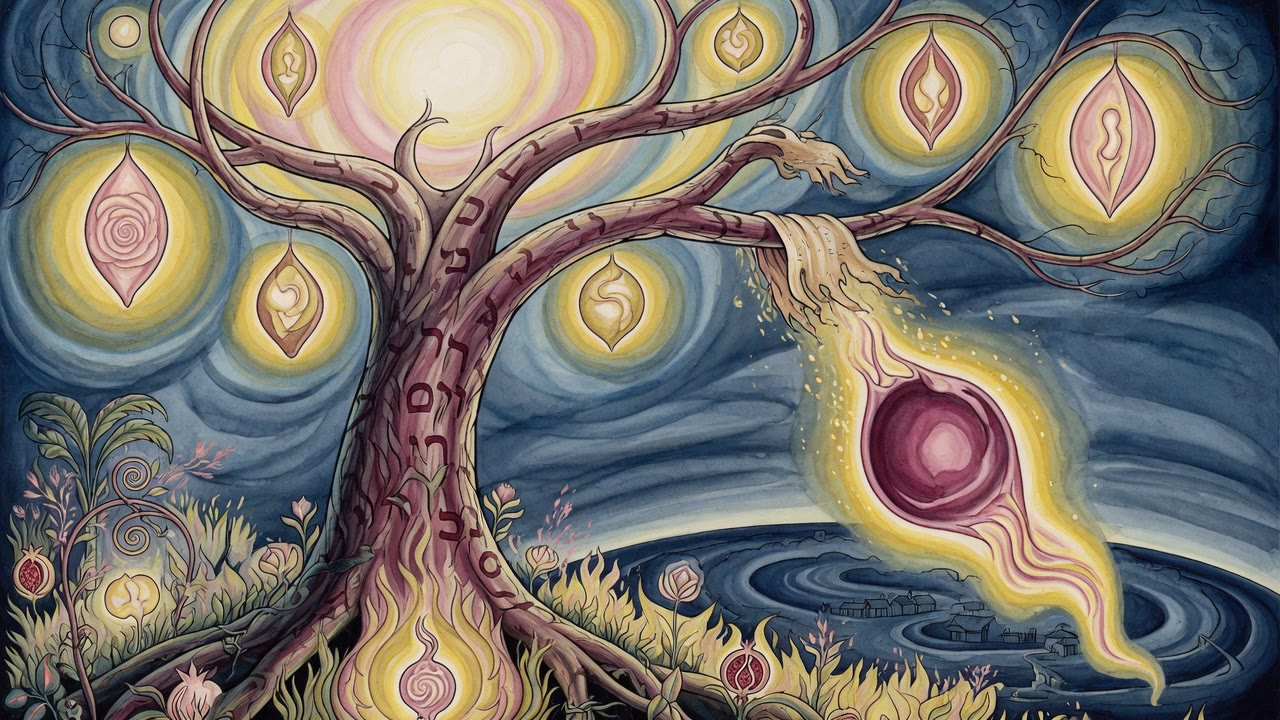
He had long taught the companions that delight is bounty poured like light into a vessel, and that the width of the vessel decides how much a soul can hold. On the other six days a man is a small cup, and the overflowing abundance that streams from the divine essence finds little room in him. At this hour a wider vessel had been set over each of them. What had been a narrow cup all week was now a deep goblet, and the light could rise in it to the very brim.

Rabbi Shimon Set the Queen's Table

He rose and laid the table himself, three settings of intention, three meals he called the meals of faith. The first belonged to the night. He named it the table of the Queen, for at this hour the Shekhinah reigns, the divine presence that the mystics count as Malchut, the Kingdom, ruling the dark. To welcome her was to welcome the whole of faith into the house, since faith entire, he said, is folded inside these three tables.

He looked around at the men gathered close and made them his witnesses. "I call all of you here to testify for me," he said, "that I have never once let these three meals pass me by, and for their sake I have never had to fast upon the Sabbath." His well-being, his long life, the very fact that he had never needed to deny himself on this day, all of it he laid at the feet of the three tables. Whoever attains them, he told the companions, is worthy of the whole of faith, in this world and in the world that is coming.

The Hidden Faces Turned Toward One Another

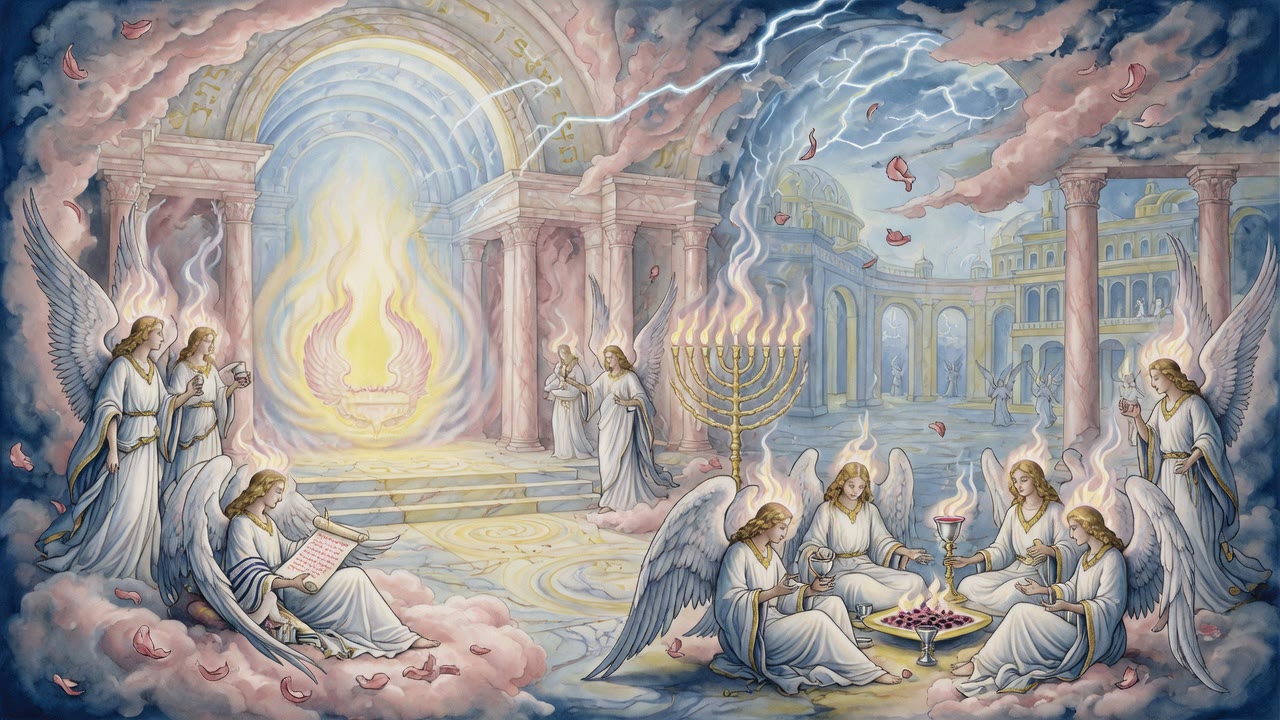
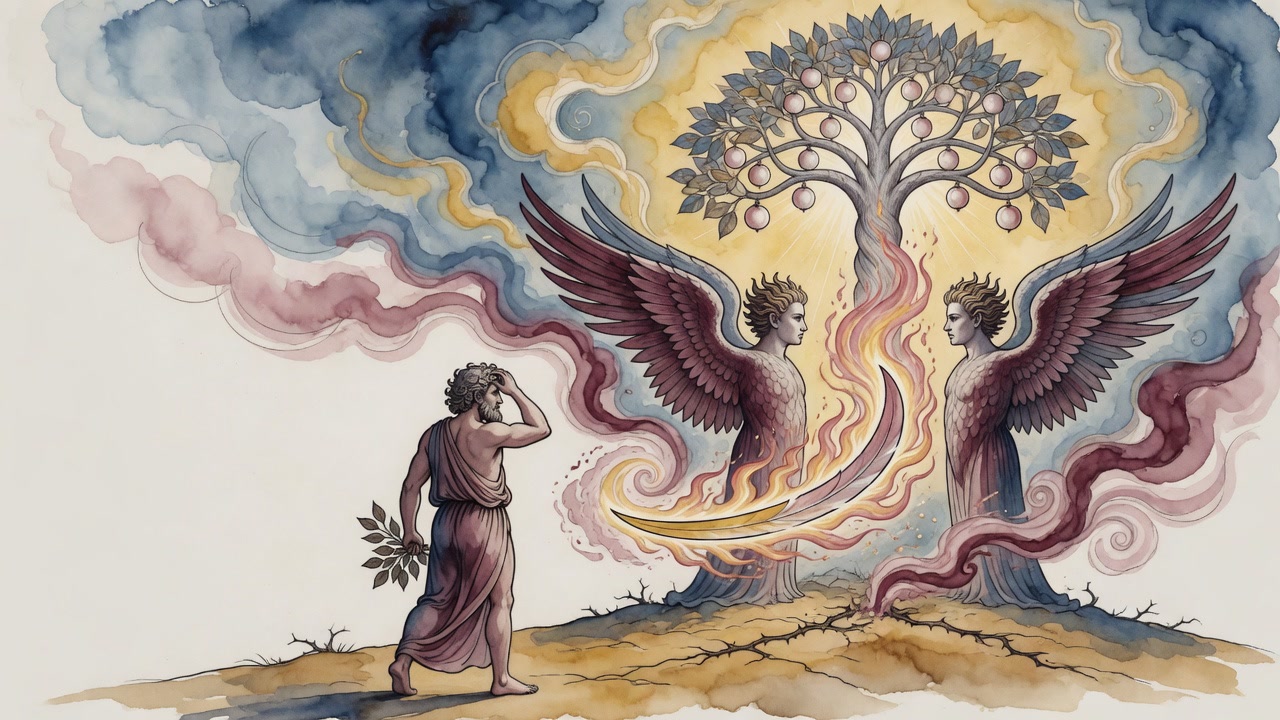
While they ate the Queen's meal, a change moved through the concealed heights that the eye cannot follow. The faces of God, held apart and turned away through all the working week, began to turn toward one another. The mercies that the mystics name the Hassidim, the loving-kindnesses, swelled and doubled where they stood. Portions of kindness rose upward into Chochmah, Wisdom, and portions of strength rose into Binah, Understanding, and what was shared between them climbed higher still. Two kings, the old teaching went, came at last to wear a single crown. What was sealed and withheld on every other night now flowed without measure, for the countenances had come into union, and mercy passed between them like breath.

At Dawn the Ancient One Shone Through Father and Mother

When the morning came they set the second table. This meal belonged to the most hidden face of all, Atika Kadisha, the Ancient Holy One, the oldest and most concealed root from which every other thing pours down. In the morning light the Ancient One shone through the highest Father and the highest Mother, and their radiance came to rest upon the King, so that he drank his illumination from the primordial source through them. The companions tasted their bread and did not see the halls above, yet the light that widened their vessels at dusk had climbed, by morning, all the way back to the wellspring from which it first fell.

The Forehead Rose at the Mincha Hour

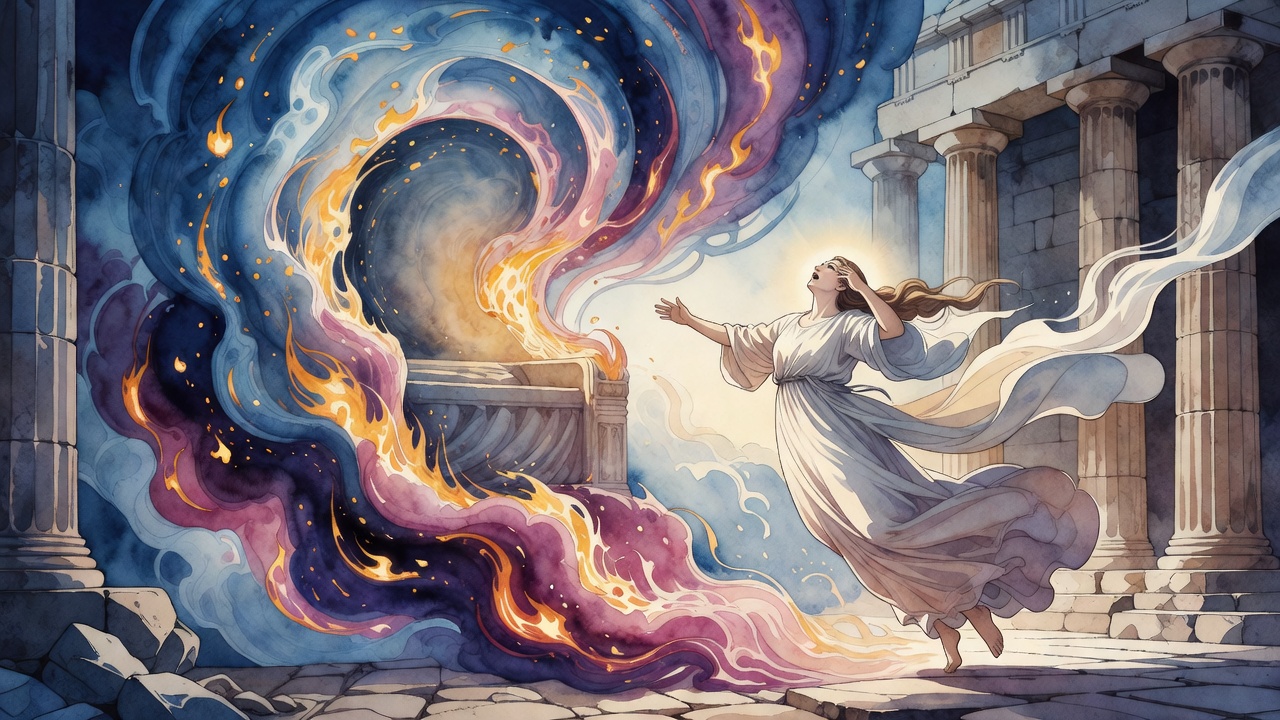
The hard hour was the afternoon. At the time of the Mincha prayer on any weekday the left side stirs, the side of severity, and Wisdom wakes on that side with a sharp edge, so that judgment gathers and the balance of the world tips toward strictness. It is the hour when wrath would ordinarily rise. Rabbi Shimon set the third table into the teeth of that hour. This meal belonged to the King, to Zeir Anpin, the lesser countenance, for at Mincha on the Sabbath the King himself ascends to the Ancient One and receives his light.

And as he rose, the forehead of Arich Anpin, the Vast Countenance, the most primordial face, was uncovered. Upon that forehead lies a single will, and when it is revealed it asks for one thing only, the flowing of loving-kindness through every world. Where the weekday would have answered the awakened severity with punishment, the uncovered will answered it with favor. Every judgment was subdued and hidden in its chains. The fires of Gehinnom (the place of punishment after death) sank low, and the wicked within them were given rest. No sentence was passed above or below. Even the sharpened edge of the afternoon, which any other week would have cut, was met and turned aside by mercy.

So the three tables stood, the Queen fed at night, the Ancient One at dawn, the King at the failing of the day, and over the men who kept them the second soul lay easy and unhurried. It would stay with them until the light returned and the week reached again for its walls, and only then would it lift away, leaving each of them a small cup once more until the next thinning of the thread.


← All myths
From the tradition

Sources

4 sources

The texts behind this telling. Some cards carry a translation of the source; others are our own retelling of it, and each card says which. Every card links out to the original.

Petichah LeChokhmat HaKabbalah 1:3Petichah LeChokhmat HaKabbalah

Retold in our words. Read the original at the link below.Sefaria-hosted English translation · CC-BY

Pure, unadulterated, boundless benefit. This generosity, may He be blessed and exalted, is the very foundation of creation.

How do you bestow goodness? You need someone to receive it! So, souls were imprinted with a powerful desire to receive God’s shefa (שֶׁפַע) – that divine bounty, that overflowing abundance.

Think of shefa as light pouring into a vessel. That "vessel," in Kabbalistic terms, is the will to receive. But here's the really cool part: the size of the vessel, the strength of our desire to receive, determines how much pleasure we can actually experience from the shefa. The greater the will to receive, the greater the capacity for joy. It's like having a tiny cup versus a massive goblet; the goblet can hold so much more!

This connection between the shefa and the will to receive is incredibly tight. So tight, in fact, that they’re almost indistinguishable! The only way we can tell them apart is by understanding what they're related to. Pleasure, delight, that’s all connected to the shefa. And the will to receive? That's connected to us, the created beings who are doing the receiving.

Now, here’s where things get a little deeper. Both the shefa and the will to receive ultimately come from the Creator. But there's a crucial difference in how they come. The shefa emanates from God's very essence. It's yesh miyesh (יֵשׁ מִיֵּשׁ) – existence from existence. It flows directly from Him.

But the will to receive… ah, that's something else entirely. The will to receive, which is incorporated into the shefa, is actually the root of all created beings. It's the root of any new creation, and is an emergence of existence ex nihilo (yesh me’ayin – יֵשׁ מֵאַיִן) – from nothingness. God’s essence doesn’t contain any trace of the will to receive. He doesn't need anything from anyone.

So, if the Creator doesn't have any aspect of receiving, how did this will to receive come to be? It couldn’t have emanated from His essence like the shefa did. Instead, it had to be created brand new, completely out of nothingness.

It’s a pretty radical idea. This notion that the very thing that allows us to experience God's goodness, that fundamental desire within us, isn't just a smaller version of something already within God, but a brand new spark, created from absolute nothingness. The potential for joy, the capacity for connection, the very essence of our being as receivers of divine grace… all of that originates in a moment of pure creation, separate from the divine essence itself. A generosity that extends beyond even our wildest comprehension.

Full source
Idra Zuta 1:25Idra Zuta

Retold in our words. Read the original at the link below.Idra Zuta, The Small Gathering, trans. Michal Ricardo · CC-BY

The tradition teaches us that on Shabbat (the Sabbath), we are not just meant to eat, but to partake in three specific meals, each a gateway to profound spiritual realms. Why three? Because, as the Idra Zuta tells us, "the whole faith, the entirety of faith, is present in it. That something so seemingly mundane can hold such immense significance.

We are instructed to set the table with intention, to savor these three meals of faith, and to truly enjoy them. It's more than just sustenance; it's an act of devotion, a ritual that anchors us to the divine.

Rabbi Shimon, a central figure in the Kabbalah, testified, "I am my own witness before all that are present here that I have never eschewed these three meals. For their sake I never had to fast on Shabbat." He attributed his well-being, his very ability to avoid fasting, to the observance of these meals. It's a powerful evidence of their importance. He goes on to say that whoever attains them is worthy of the whole faith.

Here's where it gets really interesting. Each meal isn't just a meal; it's associated with a different aspect of the divine. The first meal, on Shabbat eve, is called the Queen's meal, linked to Malchut (Kingdom). Malchut, in Kabbalistic terms, represents the divine feminine presence, the Shekhinah, which reigns at night. So, as we gather around the table Friday night, we are honoring the Shekhinah, welcoming her into our homes and our lives.

The second meal, the Mincha meal (afternoon service), is dedicated to the holy King, Zeir Anpin (Small Face). Now, Zeir Anpin represents the masculine principle, and during Mincha on Shabbat, he ascends to Atika Kadisha (Ancient Holy One). This is where it gets a bit complex, but bear with me. Atika Kadisha is the most concealed and ancient aspect of the divine. So, during this meal, we are acknowledging the connection between the masculine and the ultimate source, the hidden essence of God.

Finally, the morning meal is associated with Atika Kadisha itself. As we find in the Idra Zuta, during this time, Atika Kadisha shines through the highest Aba (Father) and Ima (Mother), and Zeir Anpin receives the illumination of Atika Kadisha from them. Ginzberg's Legends of the Jews and the Zohar expand greatly on the symbolic importance of these sefirot, the divine emanations. So the Shabbat morning meal is a celebration of the ultimate source, the primordial unity from which all things emerge.

The text emphasizes this point: During Mincha on Shabbat, Zeir Anpin himself ascends to Atika Kadisha and receives its illumination. Hence the meal is named after Zeir Anpin, while breakfast after Atika Kadisha. The Idra Zuta promises that in that world, one will attain these levels.

The text concludes with a rather cryptic statement: "When this will that is in the forehead appears, all judgments in their chains are subdued." It hints at a future revelation, a moment when divine will becomes manifest, and the harshness of judgment is softened. It points to the transformative power of Shabbat observance, the potential for inner and outer peace that comes from connecting with the divine through these sacred meals.

So, the next time you sit down to a Shabbat meal, remember it’s more than just food on a plate. It’s an opportunity to connect with the divine, to honor the Shekhinah, to acknowledge the interplay of masculine and feminine energies, and to bask in the light of the ultimate source. It's a chance to nourish not just your body, but your soul. And who knows? Maybe, just maybe, you'll catch a glimpse of that "will that is in the forehead," and experience a moment of profound peace and understanding.

Full source
Asarah Perakim LeRamchal 4:10Asarah Perakim LeRamchal

Retold in our words. Read the original at the link below.Sefaria-hosted English translation · CC-BY

"

Don’t worry if it sounds a bit like cosmic algebra at first. We'll break it down together.

The passage speaks of the HASSIDIM, often translated as "mercies" or "loving-kindnesses." In the Kabbalistic system, these are divine attributes flowing from HESSED (loving-kindness) and GUEVOURAH (strength/judgment). The Ramchal tells us that these HASSIDIM essentially expand, doubling in size.

Things get interesting. Each of these attributes, HESSED and GUEVOURAH, is divided into six "thirds." Think of them as six portions of energy. The text says that three of these "thirds" remain in place. But where do the others go? Two of the thirds from HESSED ascend to HOKHMAH (wisdom), and two from GUEVOURAH ascend to BINAH (understanding). And the remaining third, the one that's shared between them, goes to the right and left of DAAT (knowledge).

Why this movement? What's the significance? Well, in Kabbalah, these movements represent the dynamic interplay of the divine attributes. It's not a static system; it's a constant flow and exchange of energy. HESSED, pure giving, needs the grounding of GUEVOURAH, judgment and limitation. And both need to inform HOKHMAH and BINAH, the intellectual faculties, to create a balanced and harmonious divine expression.

But the journey doesn't stop there! The text then mentions TIFERET (beauty), another Sefirah (a divine emanation), or divine attribute. Two of its "thirds" also double, becoming four. Two remain in place, one ascends towards KETER (Crown, the highest of the ten sefirot) of NOUKVAH, and another towards "the one that is hidden." What’s this "hidden one?" Kabbalistic texts often refer to aspects of the divine that are beyond our immediate comprehension, veiled in mystery. This hidden aspect doubles in size, with one part remaining in place and the other ascending with it towards KETER, the crown.

"Thus, two kings use a single crown," the verse states. What a powerful image! This suggests a unification, a merging of different aspects into a single, higher purpose. ZA, short for Zeir Anpin, often referred to as the "Small Face" or the "Son," is perfected with its own.

Finally, the text gives us a timeline. The ascent of the HASSADIM into HABAD (HOKHMAH, BINAH, and DAAT) takes three years, plus one year for KETER, which positions itself above them. So, it takes a total of thirteen years and one day for this growth to occur.

Now, thirteen years and a day… why this specific time frame? Kabbalists often interpret numbers symbolically. Thirteen is the numerical value of the word Echad, meaning "one," signifying unity. Perhaps this timeline represents the gradual process of achieving divine unity, a process that takes time and dedication.

This passage from the Ramchal is dense, layered, and full of symbolism. It invites us to contemplate the intricate dance of the divine attributes, the constant flow of energy, and the ultimate goal of unity. It reminds us that even the most abstract concepts in Kabbalah are ultimately about relationship – the relationship between the different aspects of God, and our relationship with the divine.

It takes time, it takes dedication, and it involves a constant interplay of different forces. Maybe, just maybe, understanding these cosmic dynamics can help us better understand ourselves and our own journey towards wholeness.

Full source
Idra Zuta 1:23Idra Zuta

Retold in our words. Read the original at the link below.Idra Zuta, The Small Gathering, trans. Michal Ricardo · CC-BY

The Idra Zuta, a part of the Zohar, which is one of the central texts of Kabbalah, speaks about these moments in a truly fascinating way. It suggests that when the divine will is revealed in the “forehead” – and yes, Think of it like a cosmic signal boost. This isn't a physical forehead, of course, but a metaphor for a point of divine emanation.

What does that even mean? Well, according to Kabbalistic thought, the divine expresses itself through different attributes, or Sefirot. When this “forehead” is illuminated, it signifies a powerful connection to the source of all being. And when that happens, all prayers rising from below are accepted. Zeir Anpin, the "Small Face" which represents the active divine attributes, shines brightly, and everything is bathed in mercy. Even judgments, those stern forces that maintain cosmic balance, are subdued and hidden.

The Idra Zuta contrasts this with the time of Mincha prayer during the week. Mincha is the afternoon prayer service. The left column is traditionally associated with severity, so the awakening of Chochmah at this time brings a stronger sense of divine judgment.

Then comes Shabbat (the Sabbath). Ah, Shabbat, the day of rest. On Shabbat, the forehead of Arich Anpin, the "Long Face" or "Vast Countenance" which represents the most hidden and primordial aspect of the divine, is revealed. This revelation is a wish for the illumination of Chassadim, acts of loving-kindness. The result? All judgments are subdued, and mercy reigns supreme throughout all the worlds.

That’s why, according to this mystical tradition, there is no judgment on Shabbat, neither above nor below. Even the fires of Gehenna, the hellfire, abate, and the wicked find rest. The Midrash, a collection of rabbinic interpretations of the Hebrew Bible, offers many stories illustrating this concept.

This idea of Shabbat as a time of respite and divine grace might be familiar to you. But did you know that this is also the reason why we receive an additional soul, a neshama yeteira, of joy on Shabbat? It’s a gift, a tangible experience of this heightened state of mercy and divine presence.

So, the next time you’re experiencing a moment of grace, or find yourself immersed in the peace of Shabbat, remember the teachings of the Idra Zuta. Perhaps, just perhaps, you’re catching a glimpse of that divine “forehead” shining, and the “will of wills” flowing through all the realms. Maybe it's a reminder that even amidst judgment, mercy and loving-kindness are always accessible, waiting to be revealed.

Full source