The Silent Euphrates Names Four Empires of Exile
Rivers argue like rivals while the Euphrates stays quiet, and the four streams of Eden become four kingdoms of exile.
Table of Contents
 Click for full size
Two Rivers Speak, One Stays Quiet
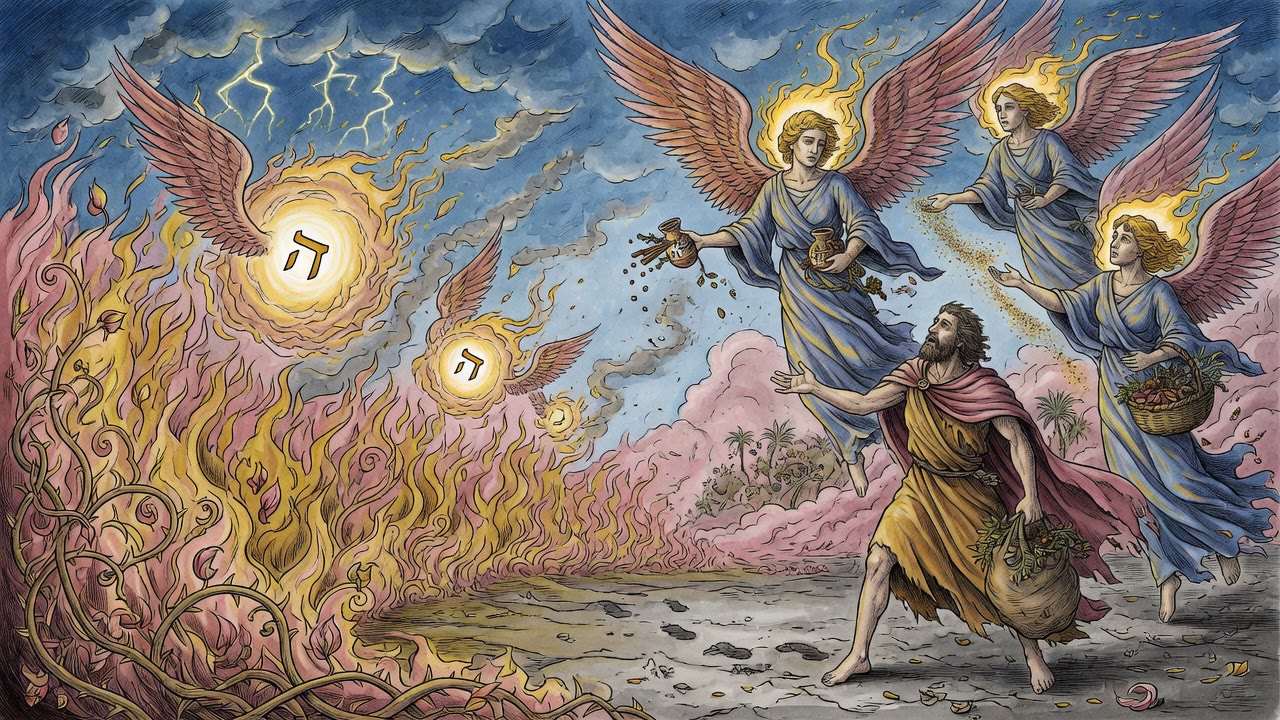
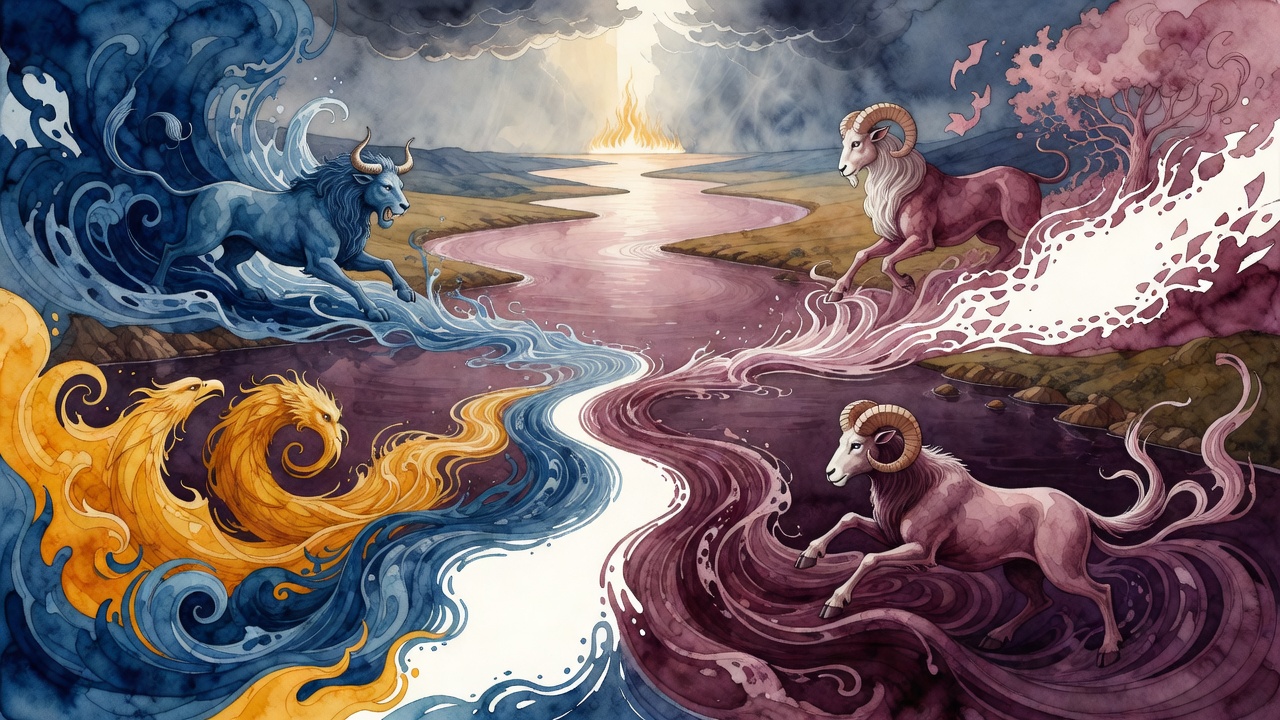
The Tigris roared through its banks as if volume were virtue. The Euphrates moved with a heavier silence, fat with silt, sure of itself without noise. When the rivers were imagined as speakers, someone asked the Euphrates why it did not shout like its neighbor. The answer came like a farmer's shrug. Its deeds spoke. A planting in its soil rose in thirty days. A sowing rose in three. Fruit does not need to rattle.
Rav Huna added the plain image of trees: fruit trees stand quiet because they are heavy with what they carry, while barren trees clap their empty branches in the wind. Power that produces does not always advertise. Power that produces nothing often does.
Eden Splits into Four Oppressors
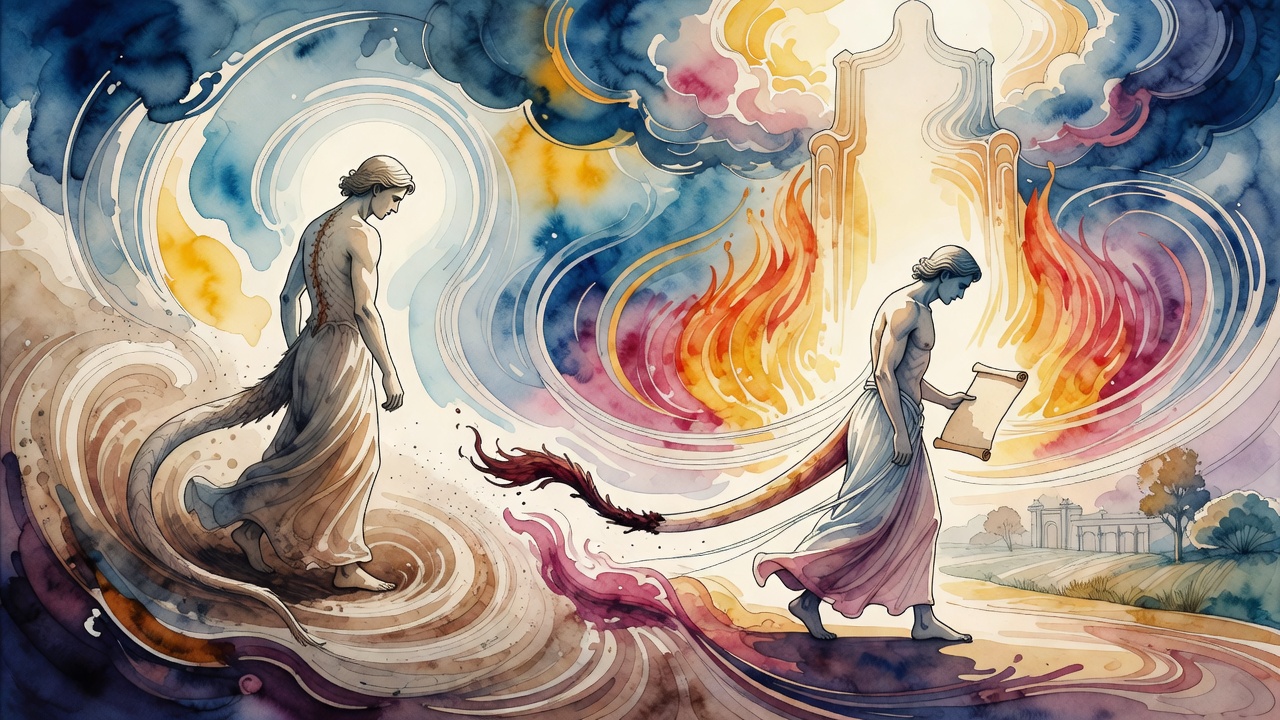
Rabbi Yehoshua ben Levi turned from agriculture to history. The single river of Eden that splits into four became, in his reading, the four empires that would press Israel under their weight. Pishon is Babylon, horsemen spreading like floodwater. Gihon is Media, where Haman crept with the posture of a serpent told to crawl on its belly. The sharp, swift Tigris is Greece, which tried to force Israel to write on an ox horn that they had no share in the God of Israel. The Perat, the Euphrates, is the final kingdom, Rome, crushing children and world alike.
The gold of the land of Havilah is read as Torah and wisdom of the Land of Israel, the treasure empires want and cannot fully own. Even the name Perat carries sentence. Perat, because the empire grew fat. Perat, because God will exact payment, treading it like a winepress (Isaiah 63:3). The quiet river of fertility becomes, in the long story, the quiet certainty of a bill that comes due.
Gold, Silver, Bronze, and the Missing Iron
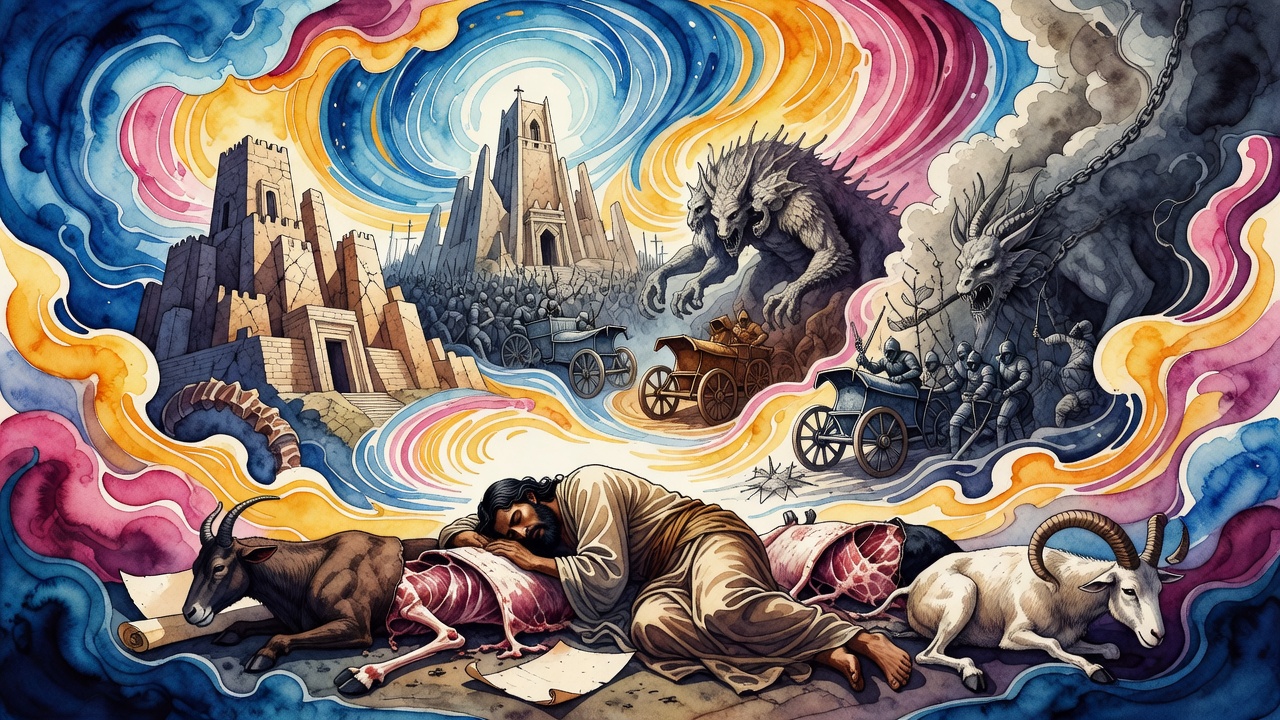
In the building of the Tabernacle, Israel was told to bring gold and silver and bronze (Exodus 25:3). Shemot Rabbah hears empires in the metals. Gold is Babylon, the head of Nebuchadnezzar's statue. Silver is Media. Bronze is Greece. Iron is missing from the sacred list. Iron is the fourth kingdom of Daniel's dream, strong enough to crush, and the sages link that iron to Edom, to Rome, the power that did not only conquer but cried for foundations to be razed to the root (Psalm 137:7).
Babylon burned a Temple and still left stones that could be named. Edom's appetite, in the midrash's memory, wanted erasure. So iron stays outside the holy craft. The house of meeting does not wear the metal of the last empire's hunger.
Craftsmen who melted gold for the menorah (the lampstand) did not think they were naming Nebuchadnezzar. They thought of purity and light. The midrash overlays their work with history so that later readers, sitting under iron empires, can look at a Torah that already refused to let the last metal into the sacred inventory. The Euphrates keeps flowing past barracks and markets. The missing iron keeps its absence like a hole shaped like a warning.
When Greece tried to force a confession of abandonment onto an ox horn, the midrash heard the Tigris in that sharpness. When Rome fattened on the world, the midrash heard Perat in that fat. Rivers and metals become a double code for the same long pressure. Israel learns to read water and ore as sentences about who will rule, and for how long, and at what cost.
Tribute at the End of the Road
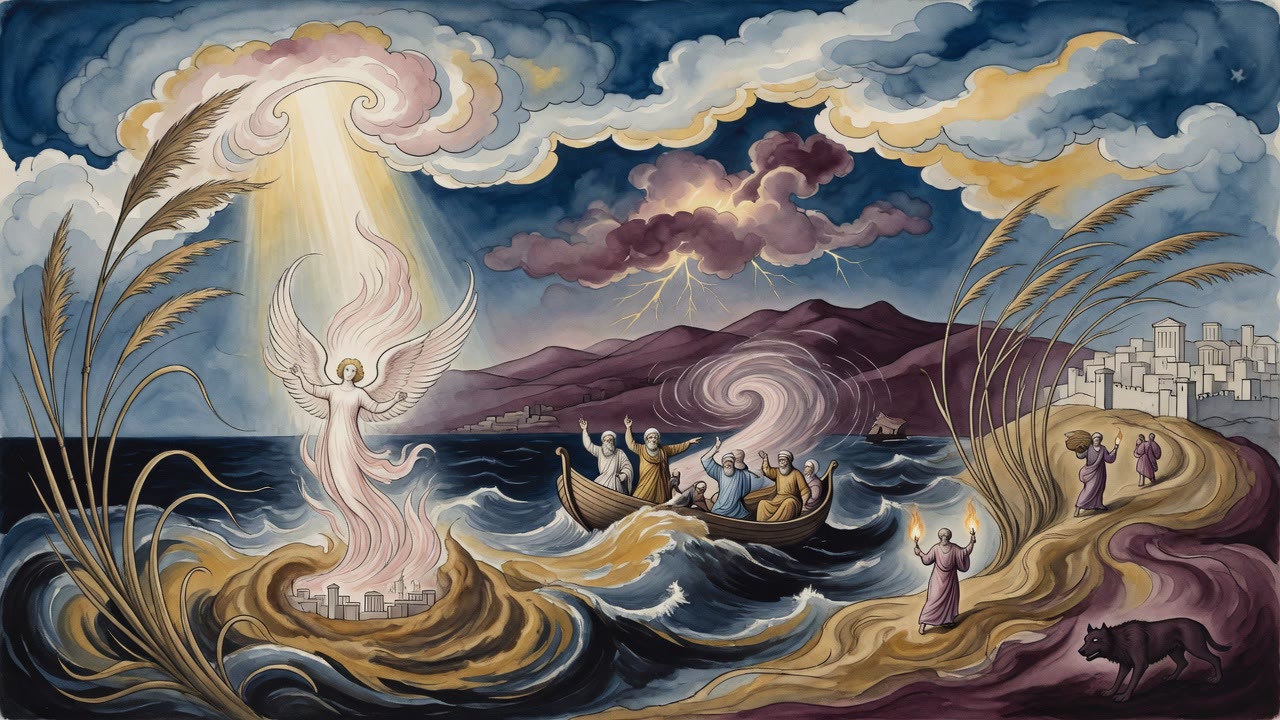
The same midrash looks past the crush to a future king who receives the nations. Egypt comes first with gifts, and the king hesitates until God reminds him that Egypt once hosted His children. Kush hurries next, reasoning that if Egypt was accepted, so will they be. Kingdoms of the earth are called to sing (Psalm 68:32-33). When Edom tries to approach with tribute, the word turns hard: castigate the beast of the reed. Not every empire gets the same door.
The Euphrates that fed fields also named the last weight on Israel's neck. The river that stayed quiet in the sages' parable still speaks in the ledger of exile. Silence was never emptiness. It was confidence that fruit and judgment both ripen on their own clocks.
A Child at the Bank
Picture a child at the Euphrates centuries into exile, watching barges and hearing languages that are not Hebrew. The water looks ordinary. The midrash will not let it stay ordinary. That current once ranked as chief of waters, so that a vow against its flow was a vow against every drop. Springs were called its hidden ladders. Empires rose along its length like successive floods. The child skips a stone and the rings widen, four of them, then more, until the surface settles again.
Somewhere in the settling is the promise that fat kingdoms are still measured, and that the gold worth seeking is not the metal in a conqueror's crown but the wisdom that outlasts him.
← All myths