The Tiny Yod That Fell From Adam's Letter Aleph
Adam watched a speck of Yod slip from the Aleph (the first Hebrew letter) of his making, and the first humans learned how a missing jot could unmake a world.
Table of Contents
 Click for full size
The Letter That Held Him
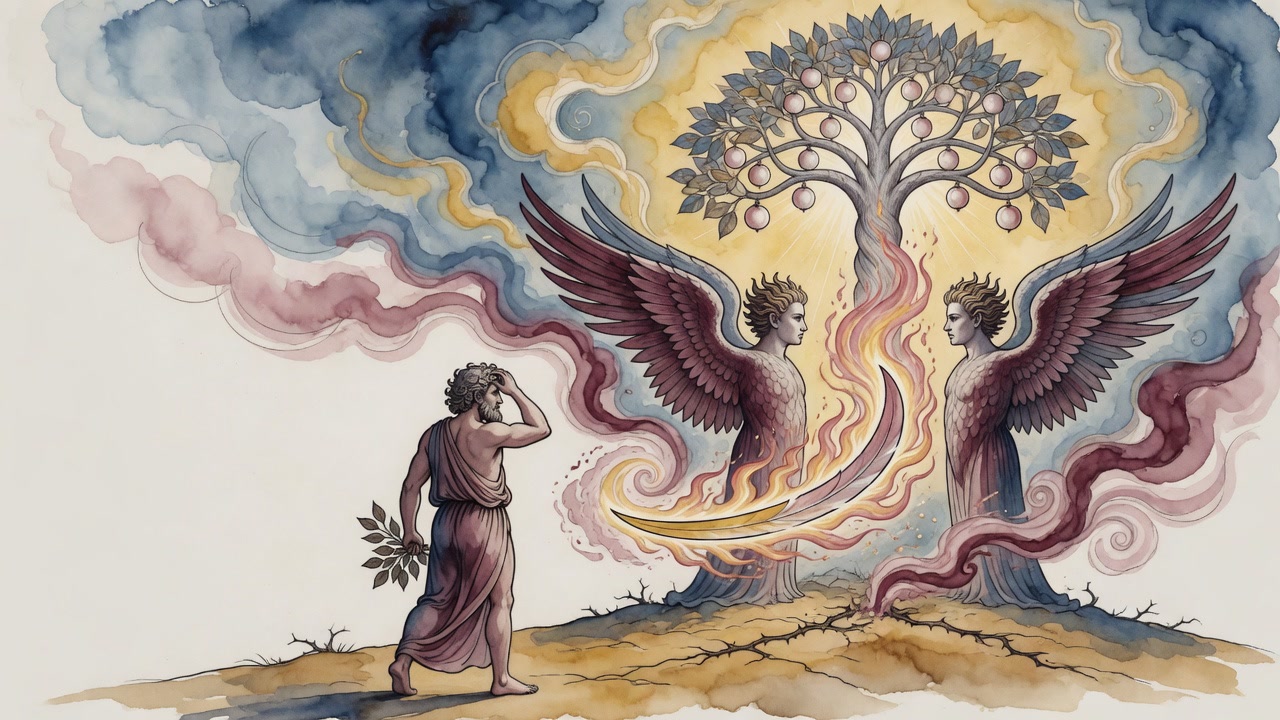
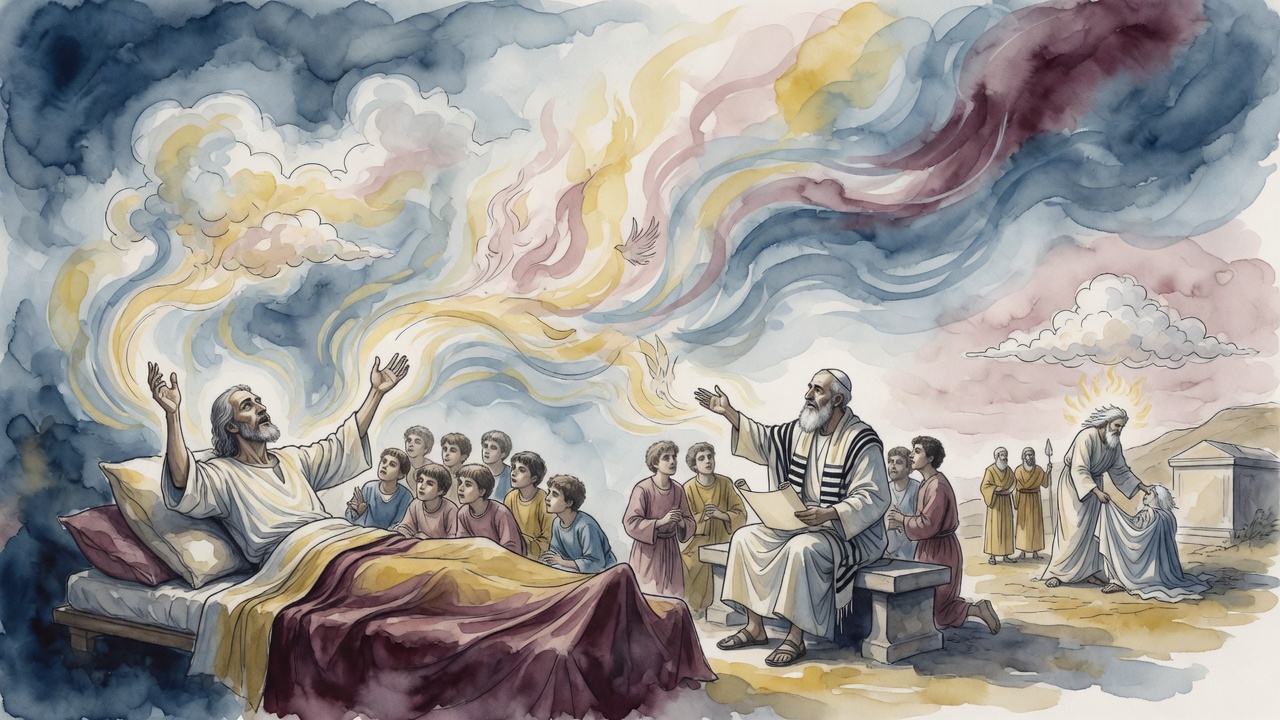
Adam stood in a garden still wet with first light and felt the shape of a letter behind his ribs. Aleph is a silent leader, a structure of strokes that hold a small Yod like a spark in a gate. As long as that jot stayed seated, speech could rise clean from dust. Breath had somewhere to hang. Animals waited for names with a patience that was not yet fear.
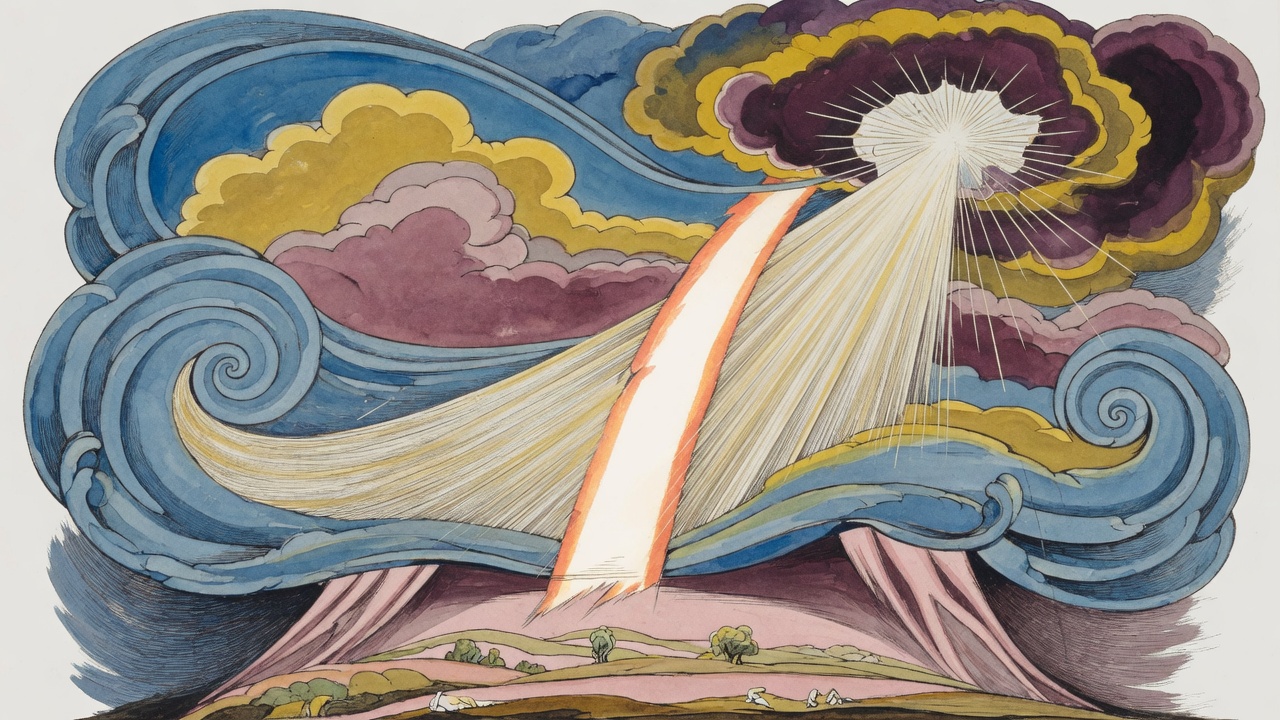
Then the jot shifted. Not a thunderclap. A slip no louder than a pen leaving paper. The tiny Yod left its post in the Aleph of his making, and something in the world of names went thin. Woe, the mystics say, entered through a hole no larger than a point of ink. Adam put a hand to his chest as if he could press the spark back into its seat by force of flesh. Flesh is not a scribe. The seat stayed empty.
He could still speak. That was the cruelty and the mercy. Almost-language is worse than silence when you remember what full language felt like for an hour of paradise time.
Desire Written in Vowels
The Name the repair texts vocalize with shva, holem, and qametz ties mercy and desire, ḥashaq, to the way God leans toward the fathers who are not yet born. Adam was the first field of that desire. When the Yod held, desire stayed ordered: toward the command, toward the other who was bone of bone, toward the work of naming without grabbing. When the Yod slipped, desire ran without a seat, and the fruit looked like wisdom instead of like a test with teeth.
He ate. She ate. The garden did not collapse as stone collapses. It collapsed as grammar collapses when a letter drops: still almost a sentence, suddenly not the sentence that was meant, and every listener hears the draft where meaning used to sit.
Leaves became clothing because shame is what speech does when it can no longer say the body is simple. The Yod's absence was not a costume change. It was a change in what words could cover and what they could no longer bless without strain.
Angels Over a Future City
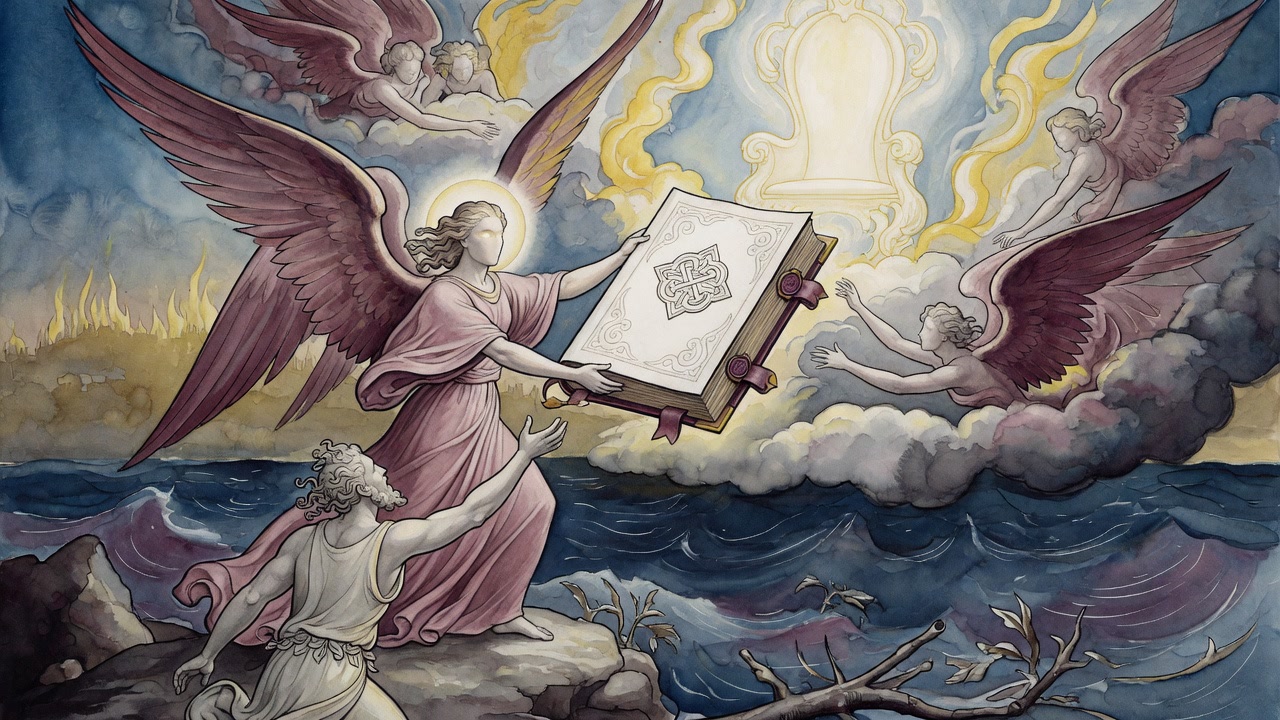
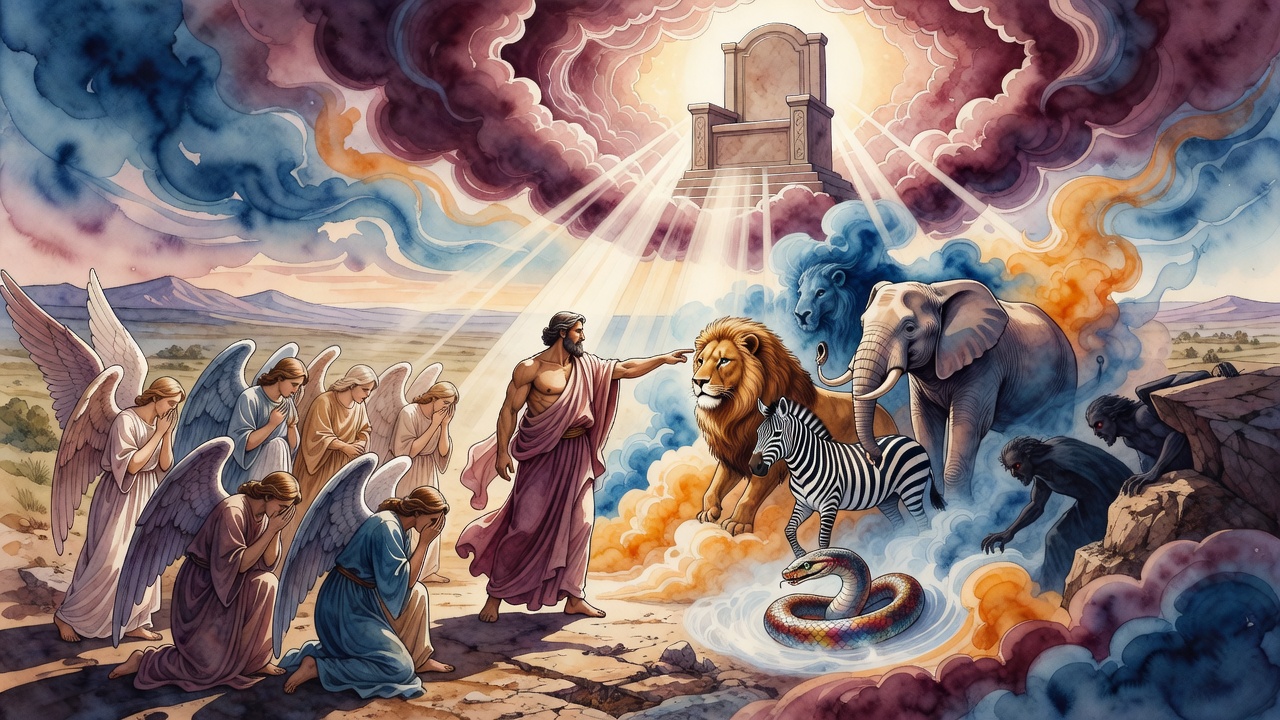
Angels who would one day throng Jerusalem's heights already moved in the pattern of that first failure. Adam and the angels of the holy place share a file in the repair books: the human who was Aleph's first reading, and the messengers who guard the city where the Name is meant to dwell in full stone and full song. When the jot fell, their watch grew heavier. A city of peace would have to be built by descendants of a man who misread his own letter and taught death to a world that had not yet scheduled it.
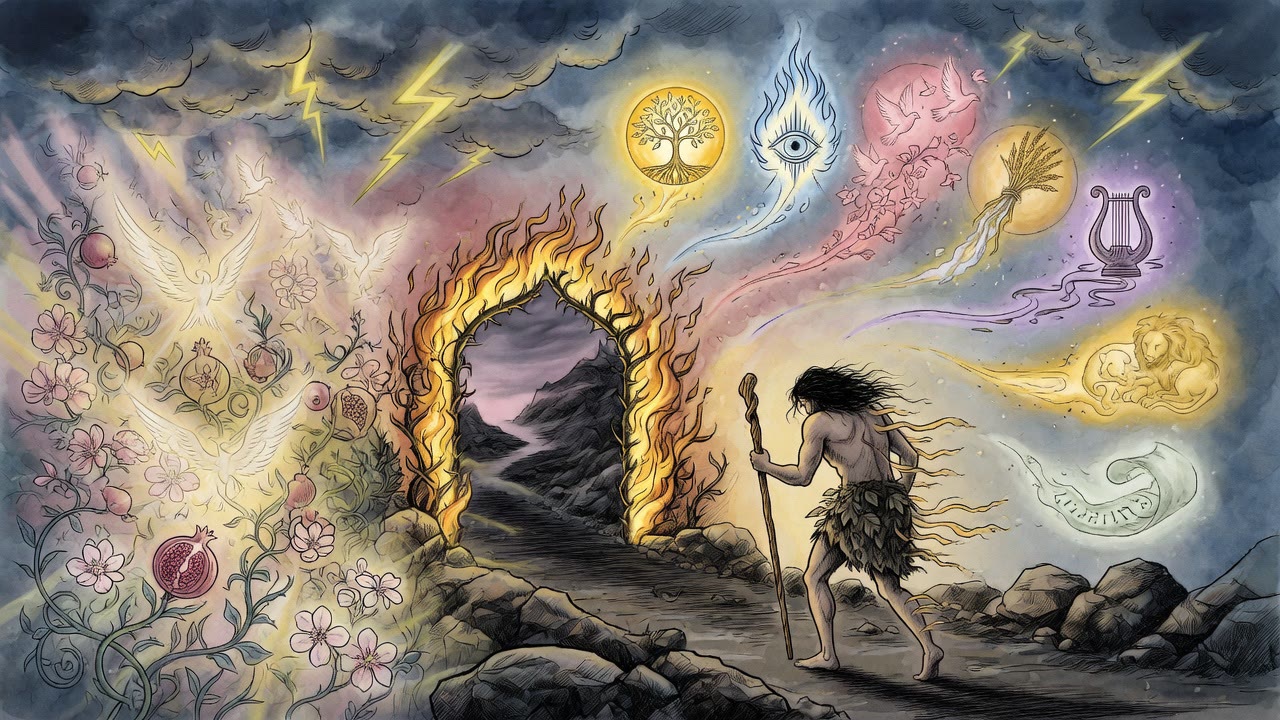
Adam named animals with a tongue still almost whole. After the slip, naming hurt. Each word carried a draft. Lions still came when called, but the call felt like borrowing credit. Angels watched the east of the garden take a sword's appointment and did not pretend the sword was theater.
Jerusalem was not yet a name on a map. It was already a pressure in the pattern: a place that would one day try to seat the Yod again in communal speech, temple, and psalm, while the first human's failure remained the template of how small a vacancy can be and still unmake a day.
Woe in a Point
Cosmic woe from a removed Yod is not melodrama for mystical books. It is a claim about scale that any scribe understands. The highest damage can enter through the smallest vacancy. Adam did not need a second sun to fall from the sky. He needed one stroke to leave its chair. Generations would invent larger disasters with armies and floods. The template was a missing jot in the letter that made him readable to himself.
Eve's hand, the serpent's speech, the exit east: all of it rode the draft of that vacancy. Angels wept or argued according to their offices. Dust learned sweat. Thorns learned their job. The Aleph of the human remained, cracked at the point where the spark had sat, still able to begin words, no longer able to guarantee they would end where heaven intended.
He looked at his hands. They still worked. That was not comfort. Working hands after a broken letter are how exile learns to farm.
What Could Still Be Spoken
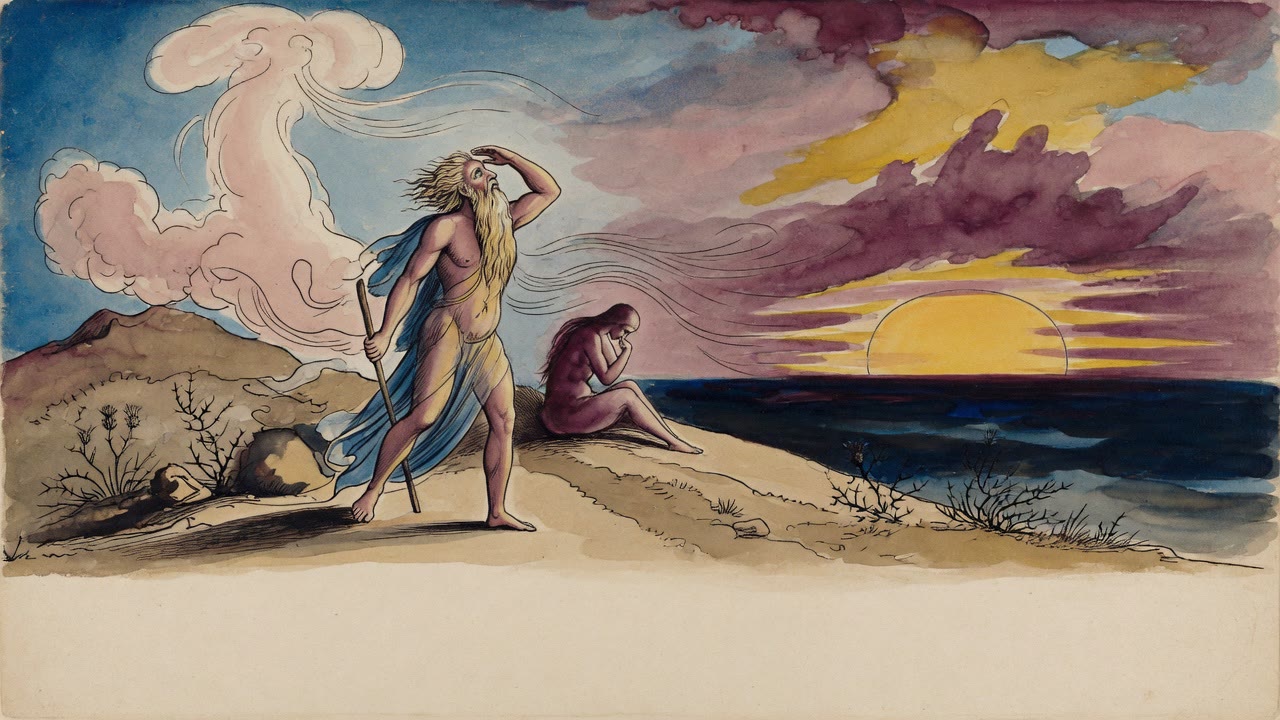
Even after, prayer could aim at restoring the seat of the Yod: not by magic letters scratched for private power, but by return, by speech that refuses to pretend the hole is design, by offerings and later by Torah that puts every jot under watch. Adam lived long enough to see sons and graves. He never again mistook the garden for a place where grammar could be casual.
The first human of Aleph became the first human of repair, which is slower work than making and less glamorous than naming animals under a perfect sky. He spoke to God from outside the gate. The conversation continued with a limp in every syllable. Somewhere the tiny Yod waited to be seated again in a people who would treat letters as life and life as something that can be lost through a point no larger than a tear.
← All myths