5 min read

The Widow Never Reached the Bribed Judges Bench

A woman found her stolen kettle warming on the judge's own stove. By the time a widow heard what the court cost, she had stopped walking toward it.

Curated by Arthur · Told by Maggid ·
Table of Contents
  1. The Kettle on the Judge's Stove
  2. The Colt Overturned the Lamp
  3. Wood, Water, and an Empty Purse
  4. She Turned Around on the Road
  5. They Sent for the Guardians
  6. The Field Kept Its Sheaves
The Widow Never Reached the Bribed Judges Bench Click for full size

The Kettle on the Judge's Stove

A woman in Jerusalem had her kettle stolen, and she did what a person does. She went to the judge.
It was sitting on his stove. Her kettle, on his fire, with water in it already going warm for his meal. She stood in the doorway of a house where the man paid to recover stolen property was heating his dinner in it.

A man from the same city lost his cloak and made the same walk. He found it spread flat across the judge's bed, the folds falling exactly the way they had fallen off his own shoulders.

Neither of them said anything worth recording. There was nothing to argue. The evidence and the bench were in the same room, and they went home.

The Colt Overturned the Lamp

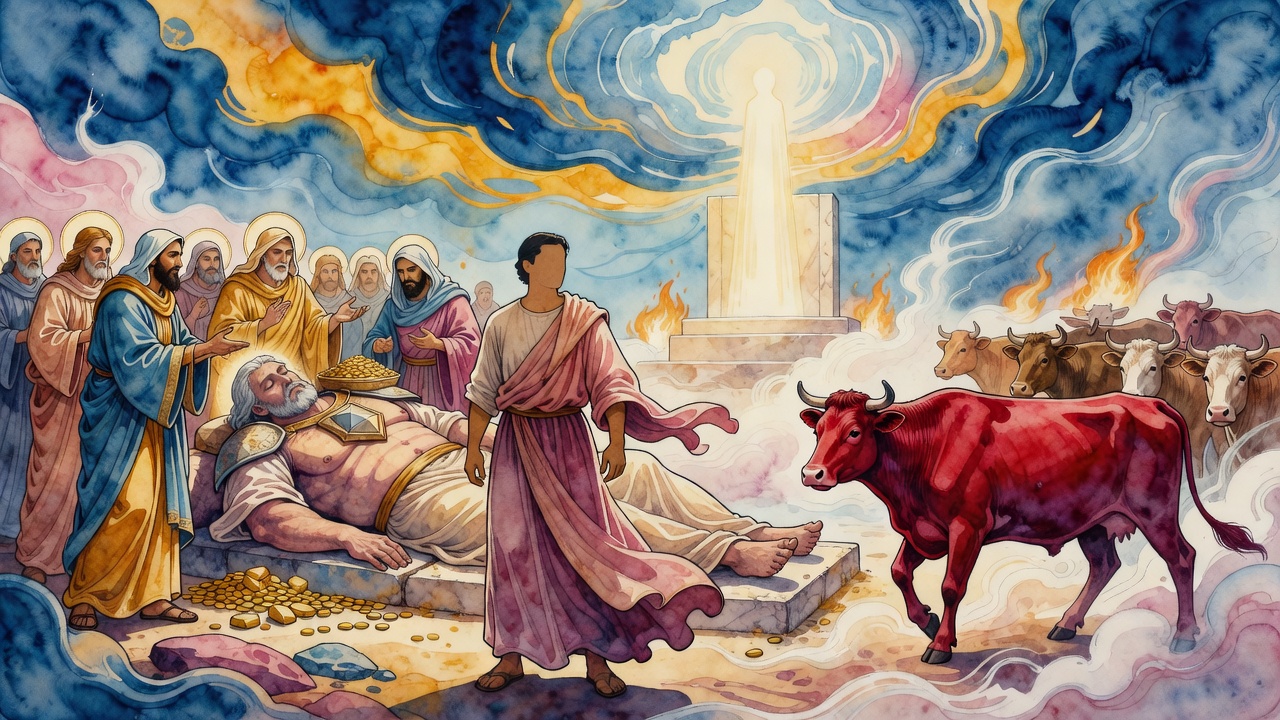
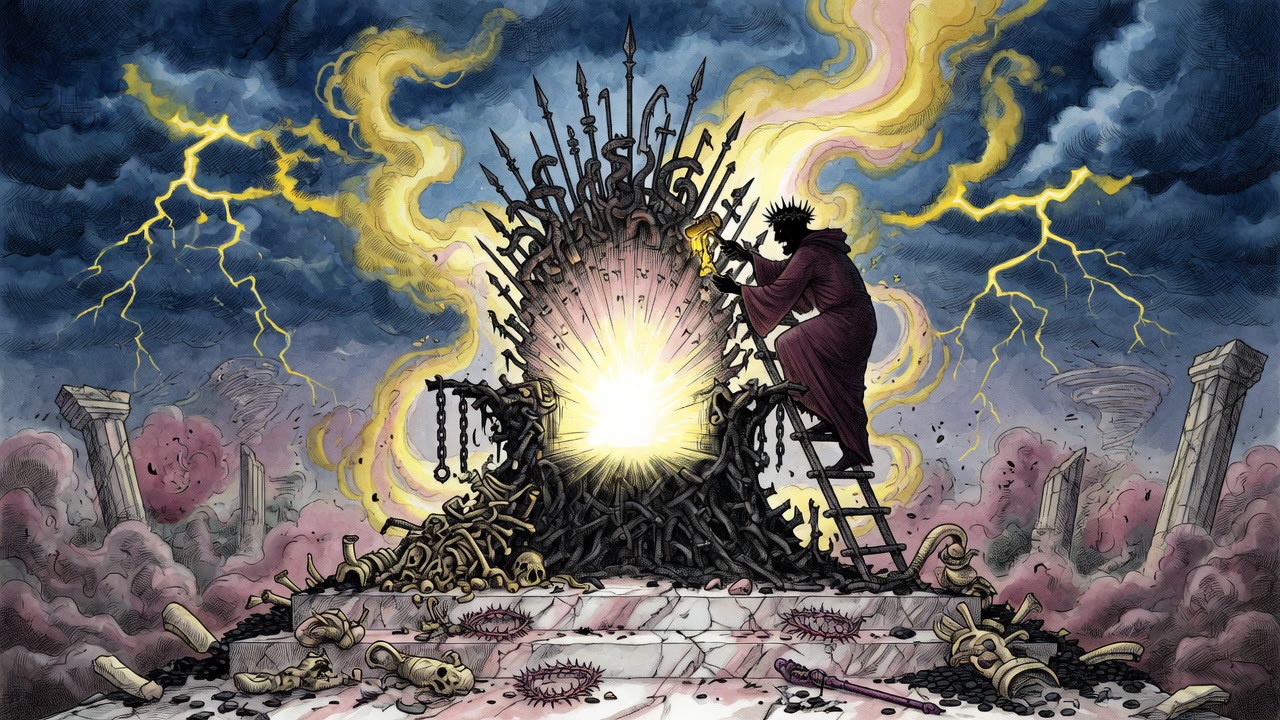
Another woman took no chances. Before her case was heard she sent the judge a lamp of solid silver, and she went to bed certain of the verdict.

Her opponent sent a colt of gold.

In the morning the ruling came down against her and she could not keep quiet. My lord, she said, let my case shine before you the way that silver lamp shone.

He did not even pretend to be embarrassed. What can I do for you, he told her. The colt has overturned the lamp.

Wood, Water, and an Empty Purse

The poor did not get the courtesy of an auction. A man came up to Jerusalem to have his case heard, and the judge looked at him and gave him an errand instead. Split me two loads of wood. Fill me two jars of water.

He split the wood. He carried the water. He came back and was sent out again, and the days ran on, and the money he had brought for the journey ran down to nothing. Then he went home with his hands cracked and his case exactly where he had left it.

She Turned Around on the Road

A widow met him coming out.

What happened with your case, she asked him. He told her the truth. I spent everything I had and got nothing.

She stood on the road and did the arithmetic out loud. If this is what they do to a man, what will they do to me?

Then she turned around. She kept the last coin in her hand for bread instead of spending it on a bribe that would lose to a larger bribe, and she never reached the bench at all. That is how the prophet's sentence about Jerusalem came true in the flesh. The orphan's case went unheard. The widow's plea never came before the bribed judges, because she stopped walking toward their door.

They Sent for the Guardians

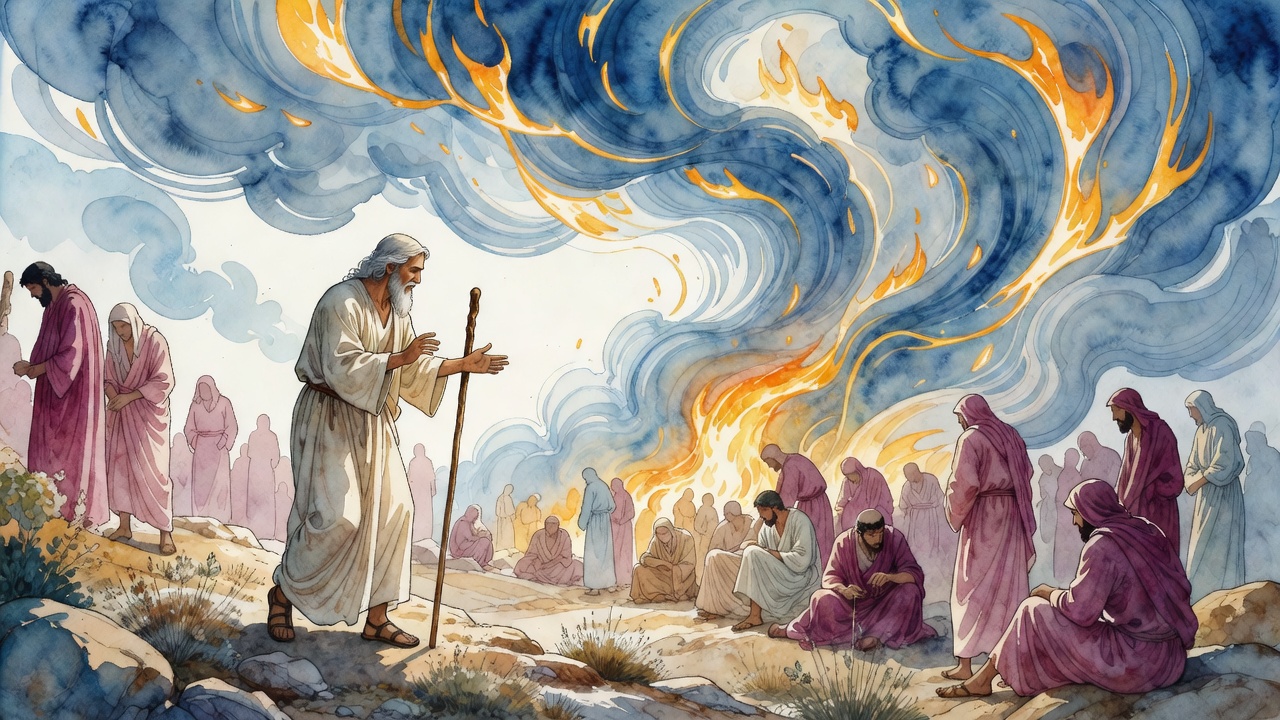
Years later two rabbis were sent out to inspect the towns of the land. They came into a town and asked the people to bring out the guardians.

The townsmen went and fetched the captain of the night watch and the constable, both of them carrying spears.

These are not the guardians of the town, the rabbis told them. These are the ones destroying it. The guardians of a town are the ones who keep watch over it day and night, the men who teach the children their letters and their Mishnah, and a town that will not pay them is a town already being pulled up by the roots.

The nations understood this better than the towns did. When they came to the philosopher Avnimos and asked whether they could take Israel on, he did not talk about armies. Go around to their synagogues and their study halls, he said. If you hear children chirping their lessons in there, you cannot touch them. If the rooms are quiet, they are yours. The voice is the voice of Jacob, and the hands only get their turn when the voice stops.

The Field Kept Its Sheaves

The land played its own game with them.

You think you are flattering it with your labor, and all the while it is flattering you. It shows you standing grain and does not show you the sheaf. It shows you the sheaf and hides the threshing floor. It shows you the floor and keeps back the heap. A farmer can walk his rows in a good year and still come home to nothing at the end of the count.

Three things had been broken to earn that. The written Torah and the oral Torah, both transgressed. The statute of the tenth, changed. And the covenant of the fathers, snapped like a cord.

The night watch went on making its rounds with the spears. The threshing floors stayed swept and empty. And somewhere on the road out of the city a woman kept walking with one coin in her fist, no case, and nowhere to bring it.


← All myths
From the tradition

Sources

3 sources

The texts behind this telling. Some cards carry a translation of the source; others are our own retelling of it, and each card says which. Every card links out to the original.

Pesikta DeRav Kahana 15:9Pesikta de-Rav Kahana

Translation of the source text.Pesikta de Rav Kahana according to an Oxford manuscript, Dov Mandelbaum ed., N.Y. 1987 · CC-BY

"Your princes are rebellious and companions of thieves" (Isaiah 1:23). Bar Kappara said: chiefs of doves who armed thieves. "Your princes are rebellious" (ibid.) -- for they all loved robbery. "Companions of thieves" (ibid.) -- for they all associated with thieves.

Rabbi Berekhyah said: It happened that a woman's kettle was stolen, and she went to the judge to lodge a complaint about it, and found it set upon his stove. It happened that a man's cloak was stolen, and he came to lodge a complaint about it before the judge, and found it spread upon his bed.

Rabbi Levi said: It happened that a woman honored a judge with a silver lamp, and her adversary went and honored him with a colt of gold. The next day she came and found her case reversed. She said to him, "My lord, let my case shine before you like that silver lamp." He said to her, "What can I do for you? The colt has overturned the lamp." This is what is written, "Everyone loves bribes" (Isaiah 1:23) -- for they all loved robbery -- "and pursues rewards" (ibid.) -- pay me and I will pay you.

"They do not judge the orphan, and the cause of the widow does not come before them" (Isaiah 1:23). Rabbi Eleazar and Rabbi Yochanan differed. Rabbi Eleazar said: At first, when a man would die in Jerusalem, they would appoint guardians over the orphans, and a widow would claim her marriage settlement from the orphans, and they would go to the judge and find him in collusion with the guardians. Rabbi Yochanan said: At first, when a man came up to plead his case in Jerusalem, the judge would say to him, "Split me two logs of wood, fill me two jars of water," and his resources would be used up, and he would leave there crushed in spirit. The widow would meet him on the road and say to him, "What was done with your case?" And he would say to her, "My resources are spent and I gained nothing." And she would say, "If this man, who is a man, gained nothing, how much more so I, who am a widow," to fulfill what is said, "They do not judge the orphan, and the cause of the widow does not come before them" (Isaiah 1:23).

Full source
Pesikta DeRav Kahana 15:5Pesikta de-Rav Kahana

Translation of the source text.Pesikta de Rav Kahana according to an Oxford manuscript, Dov Mandelbaum ed., N.Y. 1987 · CC-BY

Rabbi Abba bar Kahana opened: "Who is the wise man that may understand this, and to whom the mouth of the LORD has spoken, that he may declare it: For what cause is the land perished?" (Jeremiah 9:11). Rabbi Shimon ben Yochai taught: If you see towns uprooted from their places in the land of Israel, know that they did not uphold the wages of the Scripture teachers and the wages of the Mishnah teachers. What is the reason? "For what cause is the land perished and laid waste like a wilderness?" (ibid.). What is written after it? "And the LORD said: Because they have forsaken My Torah" (ibid.).

Rabbi [the Patriarch] sent Rabbi Yasa and Rabbi Ami to go out and inspect the towns of the land of Israel. They would enter a town and say, "Bring us the guardians of the town," and the people would bring the captain of the watch and the patrolman. They said to them, "These are the guardians of the town? These are the destroyers of the town. And who are the guardians of the town? The Scripture teachers and the Mishnah teachers, who keep watch by day and by night," as it says, "You shall meditate on it day and night" (Joshua 1:8), and it says, "Unless the LORD builds the house, its builders labor in vain" (Psalms 127:1).

Rabbi Huna and Rabbi Yirmeyah in the name of Rabbi Shmuel bar Rav Yitzchak said: We find that the Holy One overlooked idolatry, sexual transgression, and bloodshed, but did not overlook the rejection of Torah, as it says, "And the LORD said: For what cause is the land perished?" It does not say "because of idolatry, sexual transgression, and bloodshed," but "because they have forsaken My Torah" (Jeremiah 9:12).

Rabbi Huna and Rabbi Yirmeyah in the name of Rabbi Chiyya bar Abba: It is written, "They have forsaken Me" (Jeremiah 16:11), as if to say, perhaps they kept My Torah. Would that they had forsaken Me but kept My Torah, for if they had forsaken Me yet kept My Torah, the leaven within it would have brought them back to Me. Rav Huna said: Study Torah even not for its own sake, for from studying it not for its own sake, once you are occupied with it, you will come back and do it for its own sake.

Rabbi Yehoshua ben Levi said: Every single day a heavenly voice goes out from Mount Horeb and proclaims, "Woe to the creatures for the insult to the Torah."

Rabbi Abba bar Kahana said: No philosophers arose among the nations of the world like Balaam son of Beor and Avnimos the Gardite. The nations of the world came to Avnimos the Gardite and said, "Can we contend with this nation?" He said to them, "Go and make your rounds of their synagogues and study houses. If you find children chirping aloud there, you cannot contend with them; if not, you can contend with them. For thus their father assured them and said, 'The voice is the voice of Jacob' (Genesis 27:22). As long as Jacob's voice chirps in the synagogues and study houses, the hands are not the hands of Esau, but whenever Jacob's voice does not chirp in the synagogues and study houses, the hands are the hands of Esau."

Shmuel said: "And a host was given over to it against the daily offering through transgression" (Daniel 8:12) [means] through the transgression against Torah. As long as Israel casts the words of Torah to the ground, this wicked kingdom decrees and succeeds. What is the reason? "And it cast truth to the ground" (ibid.), and truth is nothing other than the words of Torah, as it says, "Buy truth and do not sell it" (Proverbs 23:23).

Rabbi Yudah bar Pazzi said: "Israel has rejected the good; the enemy shall pursue him" (Hosea 8:3), and good is nothing other than the words of Torah, as it says, "For I have given you good doctrine; do not forsake My Torah" (Proverbs 4:2). And so it says, "Therefore as the tongue of fire devours the stubble" (Isaiah 5:24). Is there stubble that devours fire? Surely the way of fire is to devour stubble. So why does it say "as the tongue of fire devours the stubble"? Rather, "stubble" is the house of Esau, who is likened to stubble, as it is written, "and the house of Esau shall be stubble" (Obadiah 1:18); "tongue of fire" is the house of Jacob, who is likened to fire, as it is written, "and the house of Jacob shall be a fire, and the house of Joseph a flame" (ibid.). "Their root shall be as rottenness" (Isaiah 5:24) refers to the patriarchs, who are the roots of Israel; "and their blossom shall go up as dust" (ibid.) refers to the tribes, who are the blossoms of Israel. Why? "Because they have rejected the Torah of the LORD of hosts" (ibid.). Rabbi Yudan said: "Because they have rejected the Torah of the LORD of hosts" refers to the Written Torah, and "and despised the word of the Holy One of Israel" (ibid.) refers to the Oral Torah.

Full source
Pesikta DeRav Kahana 10:5Pesikta de-Rav Kahana

Translation of the source text.Pesikta de Rav Kahana according to an Oxford manuscript, Dov Mandelbaum ed., N.Y. 1987 · CC-BY

[5] "The land is defiled beneath its inhabitants" and so forth (Isaiah 24:5). Rabbi Yitzchak said: you suppose you flatter it, but it flatters you. It shows you standing grain but does not show you the sheaf; it shows you the sheaf but does not show you the threshing floor; it shows you the threshing floor but does not show you the heap. Why? "Because they transgressed the laws [torot]" (ibid.): because they transgressed two Torahs, the Written Torah and the Oral Torah. "They changed the statute [chok]" (ibid.): they changed the statute of tithes. "They broke the everlasting covenant" (ibid.): they broke the covenant of the fathers. Therefore Moses warns Israel and says to them, "You shall surely tithe" and so forth (Deuteronomy 14:22).

Full source