Parshat Shemot4 min read

The Women Who Kept Israel Alive in Pharaohs Fields

Pharaoh broke the men with labor, but the women carried fish, oil, warmth, and courage into the fields until Israel lived.

Curated by Arthur · Told by Maggid ·
Table of Contents
  1. The Men Had Stopped Hoping
  2. Fish Came Up in the Pitchers
  3. Birth Under the Apple Trees
  4. The Plows Passed Over Them
  5. The Children Knew the Face at the Sea

Pharaoh thought exhaustion could end a people.

He had advisers, decrees, overseers, bricks, and mud. He had learned to speak softly before the chains tightened. He could swap men's work with women's work, turn labor into confusion, and make every day heavy enough to crush hope before evening.

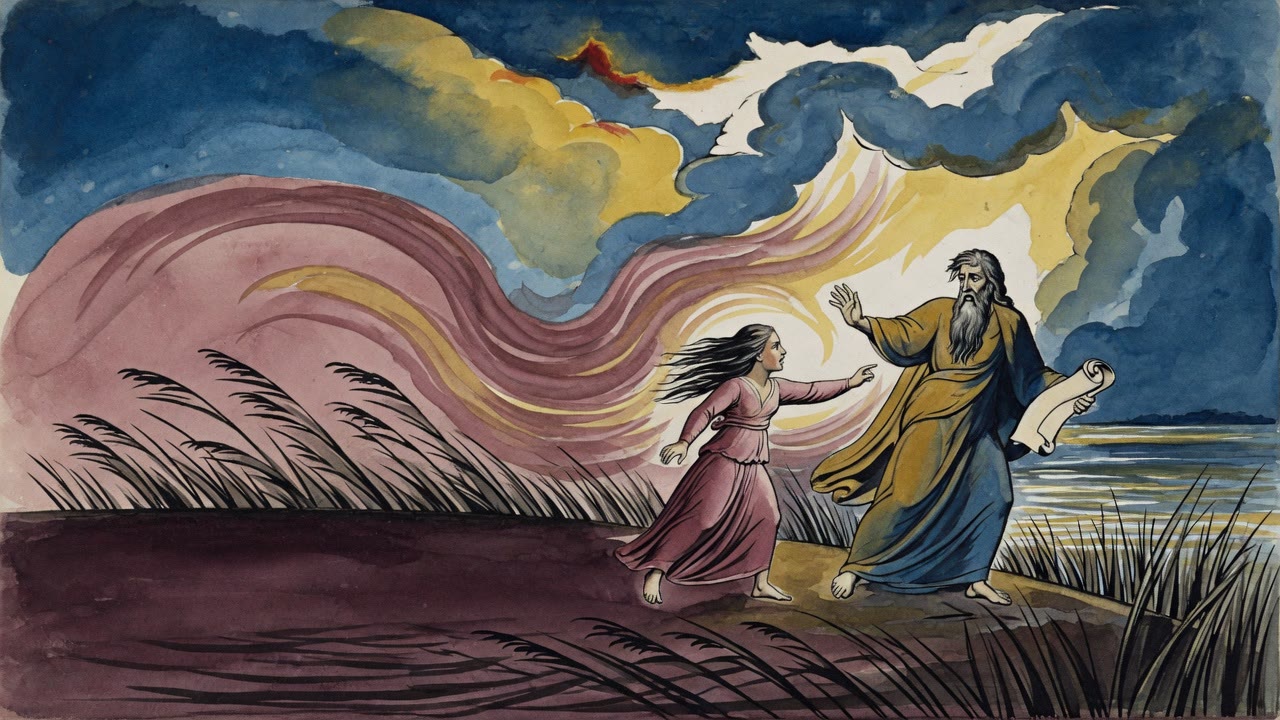
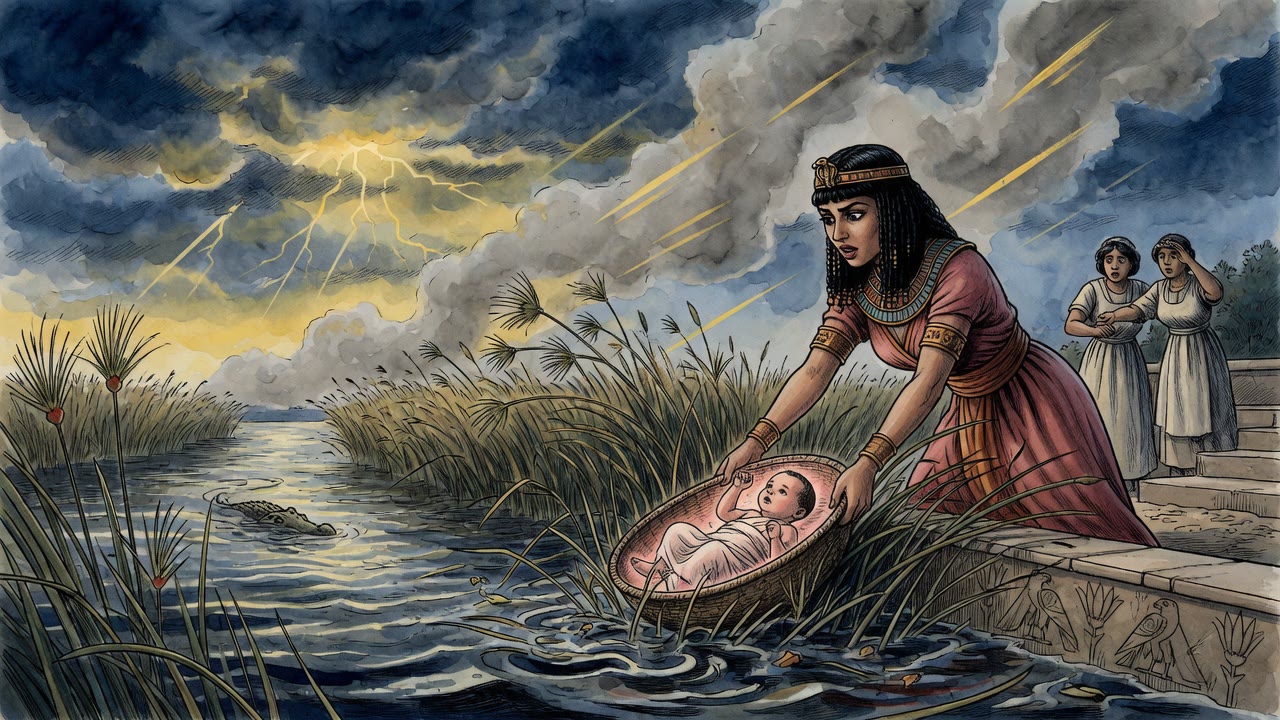
But he had not counted the women walking to the river.

The Men Had Stopped Hoping

The fields swallowed the men before dawn.

They bent under work meant to empty them of desire, speech, song, and future. A man beaten all day can begin to believe Pharaoh's plan for him. He can stop imagining children. He can stop returning home as a husband and arrive only as a body that must sleep before another day of mud.

Egypt wanted exactly that. Not only dead infants in the Nile, but fathers who would give up before infants were conceived. A nation can be murdered by decree. It can also be thinned by despair.

The women refused the quieter death.

Fish Came Up in the Pitchers

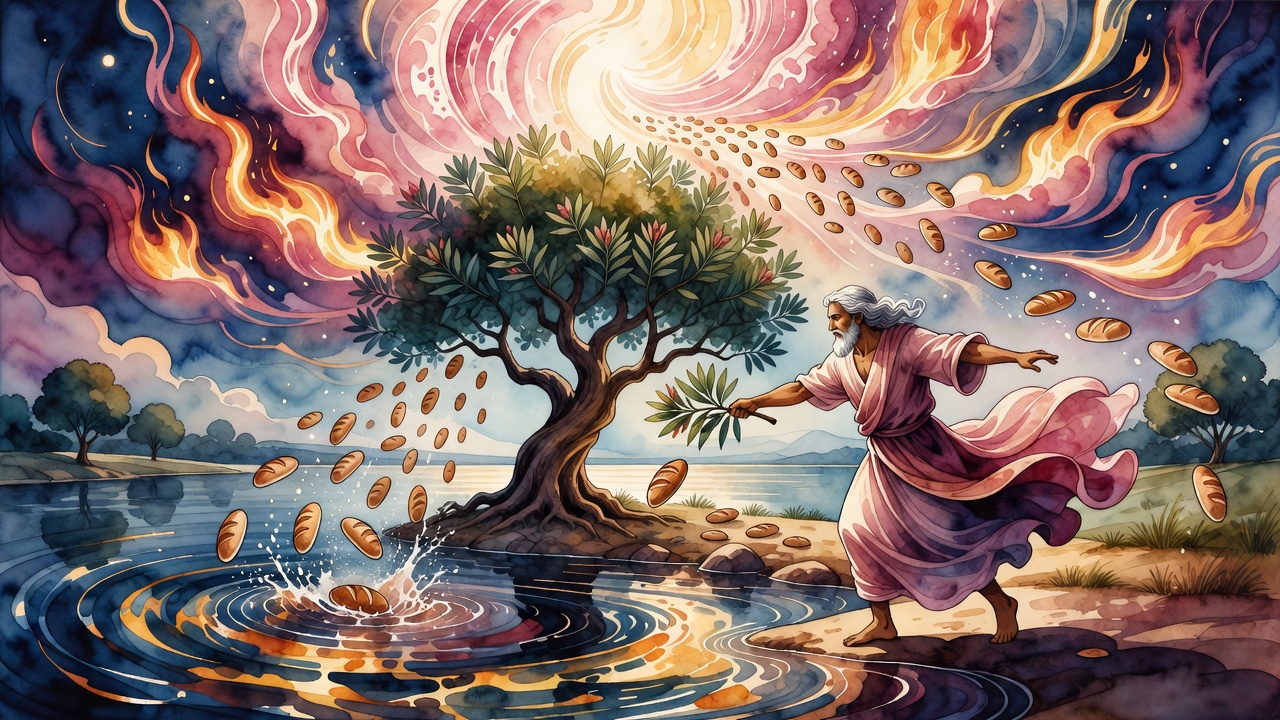
They went to draw water, and God filled the pitchers with more than water.

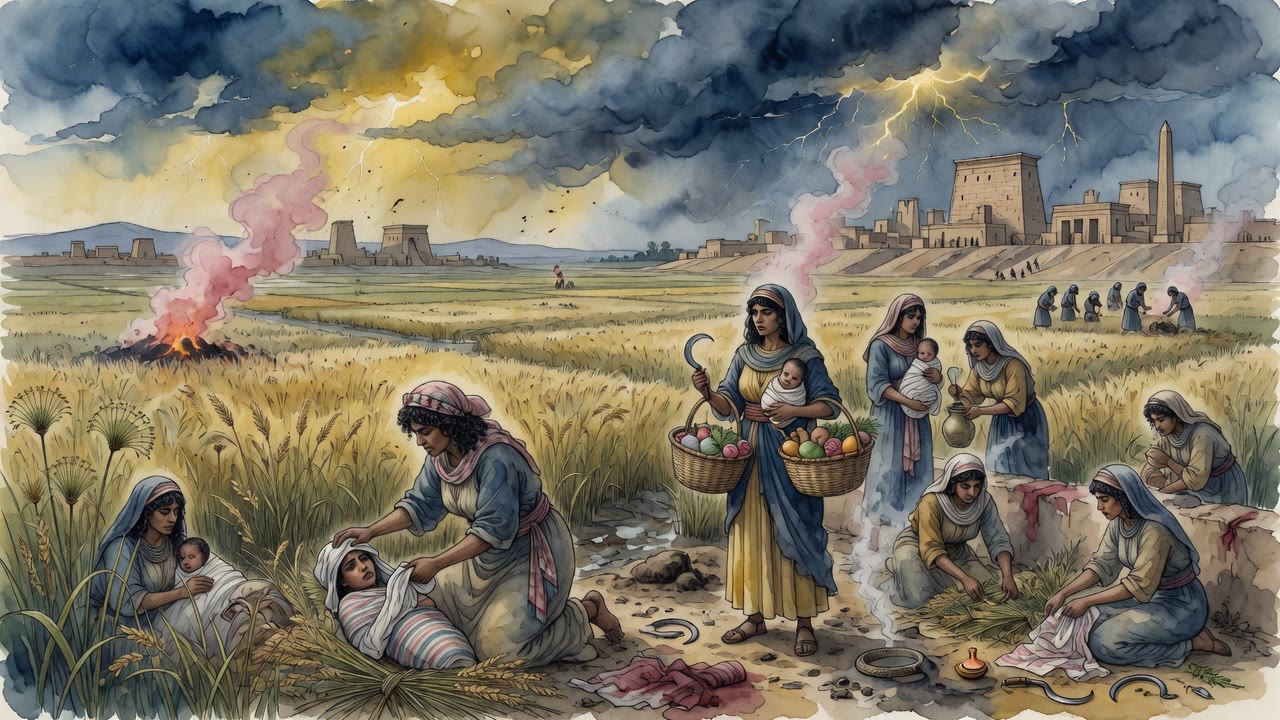
Small fish flashed inside the jars, half water and half food. The women carried the catch home and made two pots. One held warm water. One held fish. Then they walked out to the fields where their husbands labored under Egyptian eyes.

They washed the dust from the men's bodies. They anointed them with oil. They fed them fish from the river that Pharaoh had tried to make a grave. Between the borders of the fields, between sheepfolds and rough edges where overseers were not looking, husband and wife found each other again.

Pharaoh had made the field a place of slavery. The women made it a place where Israel could still be born.

Birth Under the Apple Trees

When pregnancy came, the danger grew.

A house could be watched. A cry could betray mother and child. So when the time came, the women went out to the fields and gave birth beneath apple trees. No midwife's room. No cradle waiting beside a wall. Earth beneath them. Branches overhead. Egypt nearby with plows and soldiers.

The babies came into the world where Pharaoh thought only labor belonged.

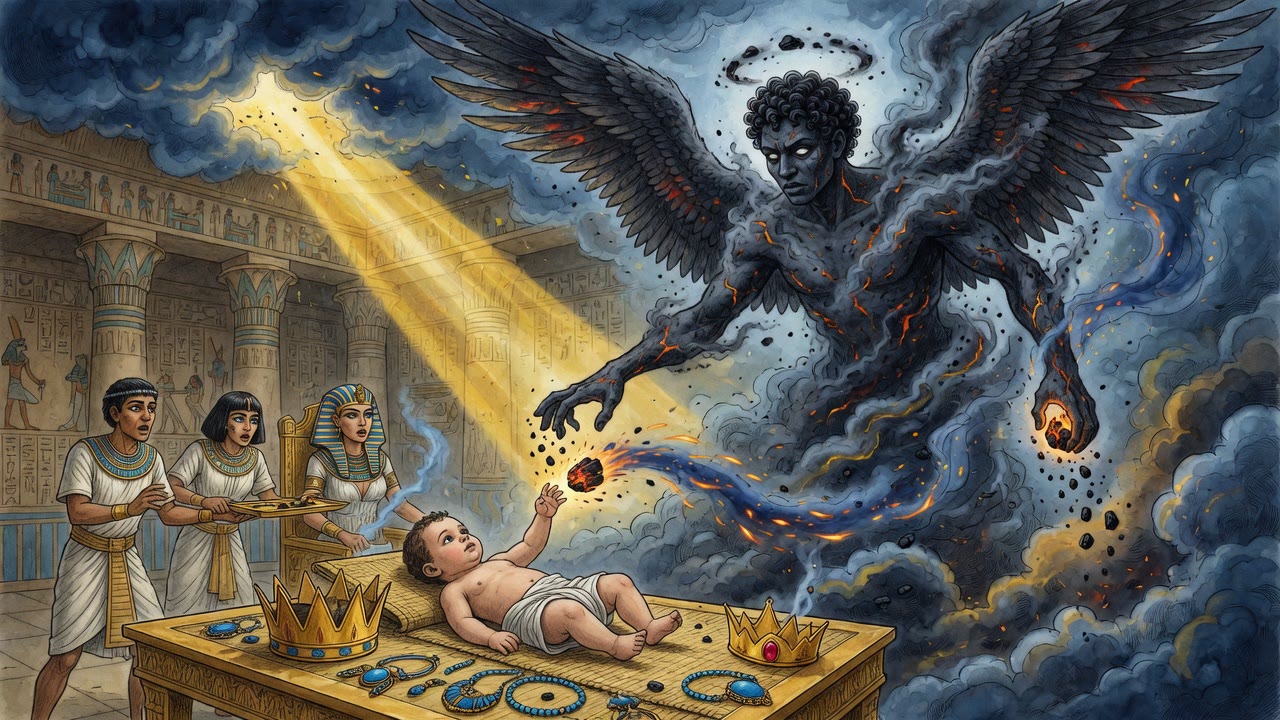
Then heaven took the place of the missing human help. Angels washed the newborns. Angels smoothed oil over their skin. Honey came from rock. Oil came from flint. The children of slaves were fed from stones as if the earth itself had been commanded to nurse them.

The Plows Passed Over Them

The Egyptians found out.

They came to the fields with oxen and plows, not only swords. They meant to tear the earth open and kill what the women had hidden. Furrows cut across the ground where infants had been born. Iron and wood dragged over the place of life.

But God hid the children deeper.

The babies sank into the earth before the blades reached them. Egypt plowed over empty ground. When the soldiers left, the children rose again like grass after rain. They grew in flocks and returned home to the mothers who had risked everything under the trees.

The Children Knew the Face at the Sea

Years later, those children stood before the split sea.

The water opened. Egypt thundered behind them. Israel passed between walls that should not have stood. When God revealed Himself there, these children recognized Him first. This is my God, they sang.

They knew because they had met mercy before memory. They had been washed by angels in the dirt. They had tasted honey from rock and oil from flint. Before Moses lifted his song, before the nation understood what freedom would demand, the children hidden in the fields knew the One who had kept them alive.

Pharaoh had built his power on the labor of men. Israel survived because women walked into those fields with food, water, warmth, and a refusal stronger than Egypt's decree.

The men still labored. The bricks still had to be made. The decree still hunted every male child. No palace announcement cancelled Pharaoh's plan because women had carried fish to the fields. The victory was smaller and more stubborn. One exhausted husband ate. One hidden child breathed. One mother returned from an apple tree alive. Egypt kept counting bodies for labor, and the women kept making Israel larger than the count, child by child.


← All myths

From the tradition

Sources

5 sources

The texts this telling draws on, in full. Open a card to read inline, or expand it for a wider, quieter read.

Sotah 11bTalmud Bavli, Sotah

with rigor [befarekh]” (Exodus 1:13). Rabbi Elazar says: The word befarekh is a conjugation of the words: With a soft mouth [bifeh rakh], as the Egyptians enticed the Jewish people into slavery, gradually subjugating them until they had lost their freedom completely. Rabbi Shmuel bar Naḥmani says: The word befarekh should be understood as: With crushing [bifrikha], as the Egyptians subjugated Israel with backbreaking labor.

The next verse states: “And they made their lives bitter through hard service, with mortar and brick, and with every laborious service in the field” (Exodus 1:14). Rava says: The verse mentions specifically mortar and brick and then all forms of labor, as initially the Egyptians had them work with mortar and bricks, and ultimately they subjugated them “and with every laborious service in the field.”

The verse concludes: “In all their service, wherein they made them serve with rigor” (Exodus 1:14). Rabbi Shmuel bar Naḥmani says that Rabbi Yonatan says: The meaning of befarekh is that the Egyptians would exchange the responsibilities of men and women, giving men’s work to women and women’s work to men, requiring everyone to do work to which they were unaccustomed. And even according to the one who says that there, in the previous verse, bifarekh indicates that the Egyptians enslaved the Jews with a soft mouth, here, in this verse, which describes the physical hardship of the labor, the word befarekh certainly means with crushing labor. § Rav Avira taught: In the merit of the righteous women that were in that generation, the Jewish people were redeemed from Egypt.

He tells of their righteous actions: At the time when these women would go to the river to draw water, the Holy One, Blessed be He, would materialize for them small fish that would enter into their pitchers, and they would therefore draw pitchers that were half filled with water and half filled with fish. And they would then come and place two pots on the fire, one pot of hot water for washing their husbands and one pot of fish with which to feed them.

And they would then take what they prepared to their husbands, to the field, and would bathe their husbands and anoint them with oil and feed them the fish and give them to drink and bond with them in sexual intercourse between the sheepfolds, i.e., between the borders and fences of the fields, as it is stated: “When you lie among the sheepfolds, the wings of the dove are covered with silver, and her pinions with the shimmer of gold” (Psalms 68:14), which is interpreted to mean that as a reward for “when you lie among the sheepfolds,” the Jewish people merited to receive the plunder of Egypt, as it is stated in the continuation of the verse, as a reference to the Jewish people: “The wings of the dove are covered with silver, and her pinions with the shimmer of gold” (Psalms 68:14).

And when these women would become pregnant, they would come back to their homes, and when the time for them to give birth would arrive they would go and give birth in the field under the apple tree, as it is stated: “Under the apple tree I awakened you; there your mother was in travail with you; there was she in travail and brought you forth” (Song of Songs 8:5). And the Holy One, Blessed be He, would send from the heavens above an angel who would clean and prepare the newborns, just as a midwife prepares the newborn, as it is stated: “And as for your birth, on the day you were born, your navel was not cut nor were you washed with water for cleansing; you were not salted at all, nor swaddled at all” (Ezekiel 16:4).

This indicates that there were no midwives to take care of the Jews born in Egypt. And then, the angel would gather for them two round stones from the field and the babies would nurse from that which would flow out of them. One of the stones flowed with oil and one of the stones flowed with honey, as it is stated: “And He would suckle them with honey from a crag and oil from a flinty rock” (Deuteronomy 32:13).

And once the Egyptians would notice them, realizing that they were Jewish babies, they would come to kill them. But a miracle would occur for them and they would be absorbed by the earth. And the Egyptians would then bring oxen and would plow upon them, as it is stated: “The plowers plowed upon my back; they made long their furrows” (Psalms 129:3). After the Egyptians would leave, the babies would emerge and exit the ground like grass of the field, as it is stated: “I caused you to increase even as the growth of the field” (Ezekiel 16:7).

And once the babies would grow, they would come like many flocks of sheep to their homes, as it is stated in the continuation of the verse: “And you did increase and grow up and you came with excellent beauty [ba’adi adayim]” (Ezekiel 16:7). Do not read the verse as: “Ba’adi adayim,” “with excellent beauty.” Rather, read it as: Be’edrei adarim, meaning: As many flocks. And when the Holy One, Blessed be He, revealed Himself at the Red Sea, these children recognized Him first, as it is stated: “This is my God, and I will glorify Him” (Exodus 15:2).

They recognized Him from the previous time that He revealed Himself to them in their infancy, enabling them to say: “This is my God.” § The verse states: “And the king of Egypt spoke to the Hebrew midwives, of whom the name of the one was Shiphrah, and the name of the other Puah” (Exodus 1:15). Rav and Shmuel disagree as to the proper interpretation of this verse. One says that these midwives were a woman and her daughter, and one says that they were a daughter-in-law and her mother-in-law.

According to the one who says that they were a woman and her daughter, the women were Jochebed, the mother of Moses and Aaron, and her daughter, Miriam. And according to the one who says that they were a daughter-in-law and her mother-in-law, the verse is referring to Jochebed and her daughter-in-law Elisheba, the wife of Aaron. It is taught in a baraita according to the one who says that they were a woman and her daughter, because it is taught in a baraita: With regard to Shiphrah, who is referred to in the verse, this is really a reference to Jochebed.

And why was she called Shiphrah? Because she would prepare [mishapperet] the newborn. Alternatively, she is referred to as Shiphrah because the Jewish people increased and multiplied [shepparu verabbu] in her days, due to her assistance. The baraita continues: With regard to Puah, who is referred to in the verse, this is really a reference to Miriam.

And why was she called Puah? Because she would make a comforting sound [po’a] as she would remove the child from the womb of the mother. Alternatively, the word Puah is related to one of the verbs that describe speaking, as she would speak [po’a] through divine inspiration and say: In the future, my mother will give birth to a son who will save the Jewish people. The next verse relates the instructions of Pharaoh to the midwives: “And he said: When you deliver the Hebrew women, and you look upon the stones [ovnayim], if it be a son, then you shall kill him; but if it be a daughter, then she shall live” (Exodus 1:16).

The Gemara asks: What is the meaning of “stones”? Rabbi Ḥanan says: Pharaoh transmitted a great sign to them. He said to them: At the time when a woman crouches to give birth, her thighs become as cold as stones, and, therefore, this shall be for you a sign that the woman is about to give birth. And there are those who say an alternative explanation for ovnayim: As it is written: “So I went down to the potter’s shop, and behold, he was at his work on the wheels [ovnayim]” (Jeremiah 18:3).

Just as this potter sits so that one thigh is here and one thigh is there and the block upon which he works is in the middle, so too, a woman giving birth also has one thigh here and one thigh there and the newborn is in the middle. The verse continues: “If it be a son, then you shall kill him; but if it be a daughter, then she shall live” (Exodus 1:16). Rabbi Ḥanina says: Pharaoh transmitted to them a great sign to enable them to know the gender of the infant from the beginning of the birth process: A boy is born with his face downward; a girl is born with her face upward.

Pharaoh provided them with this sign so that they could kill the boys secretly even before the mother realized what was happening. The next verse states: “But the midwives feared God, and did not as the king of Egypt spoke about them [aleihen], but they kept the male children alive” (Exodus 1:17). The Gemara comments: It should have stated: “Spoke to them [lahen].” Rabbi Yosei, son of Rabbi Ḥanina, says: This teaches that Pharaoh proposed to them to engage in a sinful act, i.e., sexual intercourse, with him, but they did not accept his overtures.

The word aleihen is often used in reference to sexual intercourse, for example: “And brought her to him; and he consorted with her [eileha]” (Genesis 29:23), and that is its connotation here as well. The verse concludes: “But they kept the male children alive” (Exodus 1:17). A Sage teaches: It is not only that they did not kill the children as Pharaoh had commanded them, but that they would even provide for them water and food, as the phrase “But they kept the male children alive” indicates.

After being questioned by Pharaoh concerning their failure to obey his command, the midwives responded, as it is written: “And the midwives said to Pharaoh: Because the Hebrew women are not as the Egyptian women, for they are lively [ḥayot], and are delivered before the midwife comes to them” (Exodus 1:19). The Gemara asks: What is the meaning of “ḥayot”? If we say that the Hebrew women are like ḥayot, meaning actual midwives for themselves, and therefore they do not need assistance from others, is that to say that a midwife does not need the assistance of another midwife in order to help her give birth?

Rather, the midwives said to Pharaoh: This nation is compared to an animal [ḥayya], and animals give birth without a midwife. For example, with regard to Judah it is written: “Judah is a lion’s whelp” (Genesis 49:9); with regard to Dan it is written: “Dan shall be a serpent in the way” (Genesis 49:17); with regard to Naphtali it is written: “A hind let loose” (Genesis 49:21); with regard to Issachar it is written: “A large-boned donkey” (Genesis 49:14); with regard to Joseph it is written: “His first bullock” (Deuteronomy 33:17); with regard to Benjamin it is written: “A ravenous wolf” (Genesis 49:27).

The Gemara comments: Concerning those individuals where a comparison to an animal is written with regard to him, it is already written with regard to him. And concerning those where no specific metaphor comparing them to an animal is written with regard to him explicitly, in any case a general comparison is written about the Jewish people: “How your mother was a lioness; among lions she crouched, in the midst of the young lions she reared her whelps” (Ezekiel 19:2), indicating that all the Jewish people are compared to animals.

The verse relates the midwives’ reward: “And it came to pass, because the midwives feared God, that He made them houses” (Exodus 1:21). Rav and Shmuel disagree as to the precise interpretation of these houses: One says that God made the houses of the priesthood and the Levites descend from the midwives, and one says that God made the houses of royalty descend from them. The one who says that it is referring to the houses of the priesthood and the Levites is referring to Aaron and Moses, who were sons of Jochebed.

And the one who says that it is referring to houses of royalty is referring to David, who also comes from Miriam, as it is written: “And Azubah,” the wife of Caleb, “died, and Caleb took to him Ephrath, who bore him Hur” (I Chronicles 2:19) and, as will be explained further, Ephrath is Miriam. And it is written: “David was the son of that Ephrathite of Bethlehem in Judah” (I Samuel 17:12). Therefore, he was a descendant of Miriam.

The Gemara discusses the family of Caleb: In Chronicles it says: “And Caleb, the son of Hezron, begot children of Azubah his wife, and of Jerioth, and these were her sons: Jesher, and Shobab, and Ardon” (I Chronicles 2:18). The Gemara asks: Was Caleb actually the son of Hezron? Wasn’t he the son of Jephunneh, as the verse states in Numbers 13:6? The Gemara answers: He was the son of Hezron, but he is called “son of Jephunneh” as an appellation indicating that he was a son who turned away [sheppana] from the counsel of the spies.

The Gemara asks: But it is still difficult. Hezron could not be his father, as Caleb was the son of Kenaz, as it is written: “And Othniel, the son of Kenaz, Caleb’s younger brother, took it” (Judges 1:13). This would mean that Caleb was also a son of Kenaz. Rava said: Caleb was the stepson of Kenaz, as he and Othniel shared a mother but had different fathers.

Full source
Sotah 11aTalmud Bavli, Sotah

This is as it is written there: “Thus said the Lord: Behold, I will raise up evil against you out of your own house” (II Samuel 12:11), and this prophecy was fulfilled through Absalom. Similarly, you can say about Joseph, who was sent by his father to inquire as to the well-being of his brothers, where the verse states: “And he sent him from the valley [emek] of Hebron” (Genesis 37:14). Rabbi Ḥanina bar Pappa says: From the deep [amukka] counsel of that righteous individual who is interred in Hebron, i.e., Abraham, as it is written: “And He said unto Abram: Know that your seed shall be a stranger in a land that is not theirs, and shall serve them; and they shall afflict them four hundred years” (Genesis 15:13).

The journey Joseph took to his brothers set in motion the descent of the Jewish people to Egypt. The Gemara continues its discussion of Absalom. The verse states concerning Absalom: “For he said: I have no son to keep my name in remembrance; and he called the pillar after his own name; and it is called Absalom’s monument to this day” (II Samuel 18:18). The Gemara asks: And did Absalom not have sons?

But isn’t it written: “And to Absalom there were born three sons, and one daughter” (II Samuel 14:27)? Rav Yitzḥak bar Avdimi says: He meant that he did not have a son worthy for royalty. Rav Ḥisda said: It is learned as a tradition: Anyone who burns the produce of another does not leave a son to inherit from him, and he, Absalom, burned the produce of Joab, as it is written: “Therefore he said to his servants: See, Joab’s field is near mine, and he has barley there; go and set it on fire.

And Absalom’s servants set the field on fire” (II Samuel 14:30). § The mishna teaches: And the same is so with regard to the reward for good deeds. Miriam waited for the baby Moses for one hour at the shore of the Nile; therefore, the Jewish people delayed their travels in the desert for seven days to wait for her when she was smitten with leprosy. The Gemara asks: Are these matters comparable? There, Miriam waited one hour, while here, the Jewish people waited for her for seven days.

Abaye said: Say this with a slight change: And with regard to the repaying of good it is not so, as a person is not rewarded precisely measure for measure, as the reward may be greater than the good deed. Rava said to him: But the tanna taught in the mishna: And the same is so with regard to the reward of good deeds. Rather, Rava said: This is what the mishna is teaching: And the same is so with regard to the reward of good deeds.

It is rewarded with the same measure, i.e., a person is rewarded in the same manner as the good deed, but the measure of good is always greater than the measure of punishment. Therefore, Miriam was rewarded in the same manner as, but in a greater measure than, her deed. With regard to Miriam’s deed the verse states: “And his sister stood afar off, to know what would be done to him” (Exodus 2:4). Rabbi Yitzḥak says: This entire verse is stated in reference to the Divine Presence, i.e., each phrase alludes to the Divine Presence watching over Moses.

“And his sister stood”; as it is written: “And the Lord came, and stood” (I Samuel 3:10). “His sister”; as it is written: “Say to wisdom: You are my sister” (Proverbs 7:4). “Afar off”; as it is written: “From afar the Lord appeared to me” (Jeremiah 31:2). “To know”; as it is written: “For the Lord is a God of knowledge” (I Samuel 2:3).

“What”; as it is written: “What does the Lord God require of you” (Deuteronomy 10:12). “Would be done”; as it is written: “For the Lord God will do nothing” (Amos 3:7). “To him”; as it is written: “And the Lord said to him: Peace be with you” (Judges 6:23). § The Gemara proceeds to discuss the sojourn of the Jewish people in Egypt. The verse states: “And there arose a new king over Egypt, who knew not Joseph” (Exodus 1:8).

Rav and Shmuel disagree about the interpretation of this verse. One says that this means he was actually a new king, and one says that this means that his decrees were transformed as if he were a new king. The one who says that he was actually a new king holds that it is because it is written “new.” And the one who says that his decrees were transformed holds that it is because it is not written: “And the previous king of Egypt died and a new king reigned.”

This indicates that the same king remained. According to this interpretation, the words: “Who knew not Joseph” (Exodus 1:8), mean that he was like someone who did not know him at all. Although he certainly knew Joseph and his accomplishments, he acted as if he didn’t. The next verse states: “And he said to his people: Behold, the people of the children of Israel are too many and too mighty for us” (Exodus 1:9).

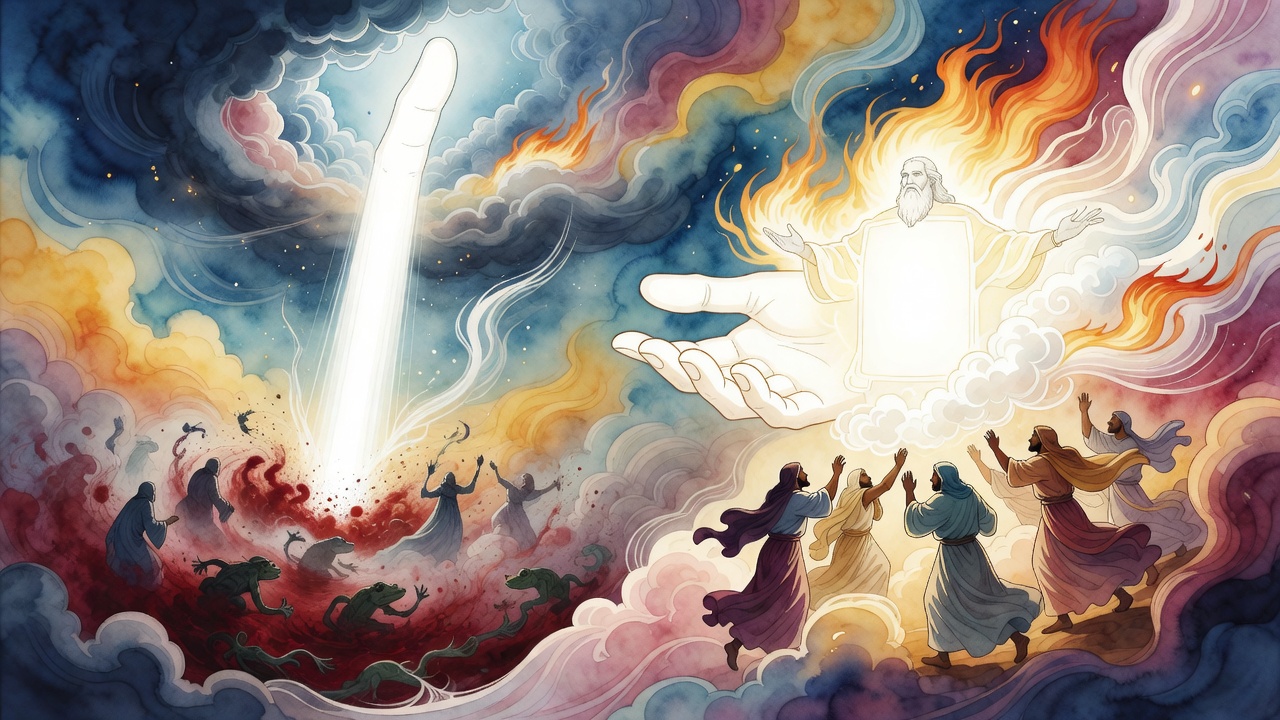
It was taught (Tosefta 4:11): He, Pharaoh, initiated the proposal. Therefore, of his people, he was stricken first. He initiated the proposal, as it is written: “And he said to his people.” Therefore, he was stricken first, as it is written: “And the frogs shall come up both upon you, and upon your people, and upon all your servants” (Exodus 7:29).

The next verse states that Pharaoh said: “Come, let us deal wisely with him [lo], lest he multiply, and it come to pass that when there befalls us any war, he will also join our enemies, and fight against us” (Exodus 1:10). The Gemara comments: He should have said in plural: With them [lahem], rather than the singular: “With him.” Rabbi Ḥama, son of Rabbi Ḥanina, says that Pharaoh was saying: Come, let us deal wisely with regard to the savior of Israel, referring to God.

His advisors asked: With what form of death shall we judge and decree upon them? If we shall judge them with fire, perhaps we will be punished measure for measure by fire, as it is written: “For behold, the Lord will come in fire” (Isaiah 66:15), and it is written in the verse that follows it: “For by fire will the Lord contend” (Isaiah 66:16). Similarly, we cannot judge them with the sword, as it is written in the continuation of that verse: “And by His sword with all flesh” (Isaiah 66:16).

Rather, let us come and judge them with water, by drowning the Jewish babies. God will not punish us with water, for the Holy One, Blessed be He, already took an oath that He will not bring a flood upon the world, as it is stated: “For this is as the waters of Noah unto Me; for as I have sworn that the waters of Noah should no more go over the earth” (Isaiah 54:9). The Gemara comments: And Pharaoh’s advisors did not know that He will not bring a flood upon all the world, but He may bring destruction by water upon one nation.

Alternatively, there is an additional way to punish the Egyptians with water: He does not bring a flood upon them, but they may come and fall into water, and so it says: “And the sea returned to its strength when the morning appeared; and the Egyptians fled toward it; and the Lord overthrew the Egyptians in the midst of the sea” (Exodus 14:27), indicating that the Egyptians fell into the water. And this is what Rabbi Elazar says: What is the meaning of that which is written: “Now I know that the Lord is greater than all gods, for in that which they conspired [zadu] against them” (Exodus 18:11)?

The phrase means: In the pot in which they cooked, they themselves were cooked, as they were punished through drowning, measure for measure, for drowning the Jewish babies. The Gemara asks: From where may it be inferred that this word “zadu” is a term meaning a pot? The Gemara answers: As it is written: “And Jacob simmered a pot [vayyazed Ya’akov nazid]” (Genesis 25:29). Rabbi Ḥiyya bar Abba says that Rabbi Simai says: Three noteworthy people were consulted by Pharaoh in that counsel where Pharaoh questioned what should be done with the Jewish people.

They were Balaam, and Job, and Yitro. Rabbi Ḥiyya bar Abba teaches what occurred to each of them: Balaam, who advised Pharaoh to kill all sons born to the Jewish people, was punished by being killed in the war with Midian (see Numbers 31:8). Job, who was silent and neither advised nor protested, was punished by suffering, as detailed in the eponymous book in the Bible. Yitro, who ran away as a sign of protest, merited that some of his children’s children sat in the Sanhedrin in the Chamber of Hewn Stone, as it is stated: “And the families of scribes who dwelt at Jabez, Tirathites, Shimeathites, and Sucathites, these were the Kenites who descended from Hammath, the father of the house of Rechab” (I Chronicles 2:55).

And it is written: “The children of the Kenite, Moses’ father-in-law” (Judges 1:16). This teaches that the Kenites, descendants of Yitro, the father-in-law of Moses, dwelt at Jabez [Yabetz], referring to the place where the Jewish people go for advice [eitza], i.e., the Chamber of Hewn Stone. The verse states: “Come, let us deal wisely with him, lest he multiply, and it come to pass that when there befalls us any war, he will also join our enemies, and fight against us, and get him up out of the land” (Exodus 1:10).

The Gemara comments: He should have said: And get us up, as Pharaoh’s fear was that the Jewish people would join the enemies of Egypt and drive Pharaoh and the Egyptians out of Egypt. Rabbi Abba bar Kahana says: By stating this, Pharaoh is like a person who curses himself but applies his curse to another. The next verse states: “Therefore they did set over him taskmasters in order to afflict him with their burdens” (Exodus 1:11).

The Gemara comments: It should have stated: Over them, in the plural. The school of Rabbi Elazar, son of Rabbi Shimon, taught: This teaches that at first they brought a brick mold and they hung it on the neck of Pharaoh to create the appearance that he was also participating in the labor. And with regard to each and every Jew who said to the Egyptians: I am a delicate person [istenis] and I cannot participate in the labor, they said to him: Are you at all more of a delicate person than Pharaoh, and he is participating.

Therefore, the verse states: “They did set over him,” as they first placed the burden on Pharaoh as an artifice to enslave the Jewish people. The term “Taskmasters [sarei missim]” is formed from the term: A matter that compels [shemesim] the manufacture of bricks, as the Jewish people were forced into labor when these taskmasters were assigned to them. The verse continues: “In order to afflict him with their burdens” (Exodus1:11).

The Gemara comments: It should have stated: “In order to afflict them,” in the plural. Rather, the intention is, as mentioned previously, in order to afflict Pharaoh, with the result of causing the burdens of the Jewish people. The verse concludes: “And they built for Pharaoh storage cities [miskenot], Pithom and Raamses” (Exodus 1:11). Rav and Shmuel disagree as to the precise interpretation of the word miskenot.

One says that they are called this because they were the type of structures that endanger [mesakenot] their owners, as it is dangerous to work in cities with tall buildings. And one says that they are called this because this is the type of property that impoverishes [memaskenot] their owners, as the Master said: All who engage in construction become poor. The verse states that the names of the cities they built were “Pithom and Raamses” (Exodus 1:11).

Rav and Shmuel disagree as to the precise interpretation of this verse, both assuming that only one city was built, which had primary and secondary names. One says that Pithom was its real name, and why was it called Raamses? It is an appellation indicating that as the buildings were constructed they collapsed [mitroses] one by one and needed to be rebuilt. And one says that Raamses was its real name, and why was it called Pithom?

Because the opening of the abyss [pi tehom] swallowed each building they constructed one by one, and it sunk into the ground. The next verse states: “But the more they afflicted him, the more he would multiply and the more he would spread about” (Exodus 1:12). The Gemara comments: It should have stated: The more they multiplied and the more they spread about, in the past tense. Reish Lakish says: Divine inspiration proclaimed to the Egyptians: As long as this nation is afflicted, the more he will multiply and the more he will spread about.

As the verse states: “And they became disgusted [vayyakutzu] due to the children of Israel.” The Gemara explains: This teaches that the Jewish people appeared in their eyes like thorns [kotzim]. The next verse states: “And the Egyptians made the children of Israel work

Full source
Shemot Rabbah 23:8Shemot Rabbah

Rabbi Yehudah says: Who recited praise to the Holy One, blessed be He? The little children, those whom Pharaoh sought to cast into the Nile, for they recognized the Holy One, blessed be He. How so? When Israel was in Egypt, and a woman among the daughters of Israel sought to give birth, she would go out into the field and give birth there. And once she had given birth, she would leave the child and hand him over to the Holy One, blessed be He, and say: Master of the world, I have done my part, and You do Your part. Rabbi Yochanan said: Immediately the Holy One, blessed be He, would come down in His glory, as it were, and cut their navel cords and wash them and anoint them. And so Ezekiel said (Ezekiel 16:5): "And you were cast out into the open field in the loathing of your soul"; and it is written (Ezekiel 16:4): "And as for your birth, on the day you were born your cord was not cut"; and it is written (Ezekiel 16:10): "And I clothed you with embroidered cloth"; and it is written (Ezekiel 16:9): "And I washed you with water." And He would place two pebbles in his hand, one nursing him with oil and one nursing him with honey, as it is said (Deuteronomy 32:13): "And He made him suck honey from the rock." And they would grow up in the field, as it is said (Ezekiel 16:7): "I made you as numerous as the plants of the field." And once they had grown, they would enter their houses to their fathers, and they would ask them: Who attended to you? And they would say to them: One handsome and praiseworthy young man would come down and do for us all our needs, as it is said (Song of Songs 5:10): "My beloved is radiant and ruddy, distinguished among ten thousand." And when Israel came to the sea, those children were there, and they saw the Holy One, blessed be He, at the sea. They began to say to their fathers: This is the very one who did for us all those things when we were in Egypt, as it is said: "This is my God, and I will glorify Him" (Exodus 15:2).

Full source
Yalkut Shimoni on Torah 164:1Yalkut Shimoni on Torah

Rabbi Akiva expounded: By the reward of the righteous women of that generation, Israel was redeemed from Egypt. When they went out to draw water, the Holy One, blessed be He, would arrange for small fish to be inside their jars, and they would draw up half fish and half water. They would come and set two pots on the fire, one of hot water and one of fish, and carry them out to their husbands in the fields. They would wash them and anoint them and feed them and give them drink and join with them between the embankments, as it is said, "Though you lie among the sheepfolds" (Psalms 68:14), and so on. When they conceived, they would return to their homes, and when the time of birth arrived, they would go and give birth in the field under the apple tree, as it is said, "Under the apple tree I awakened you; there your mother was in labor with you" (Song of Songs 8:5). The Holy One, blessed be He, would send from the highest heavens one to clean them and beautify them, like a midwife who tends the newborn, as it is said, "And as for your birth, on the day you were born your navel cord was not cut" (Ezekiel 16:4). And He would gather for them two cakes, one of oil and one of honey, as it is written, "He made him suck honey out of the rock, and oil out of the flinty stone" (Deuteronomy 32:13). When the Egyptians noticed them and came to kill them, a miracle was performed for them and they were swallowed into the ground, and the Egyptians brought oxen and plowed over them, as it is said, "The plowers plowed upon my back; they made long their furrows" (Psalms 129:3). After the Egyptians left, the children would sprout up and emerge like the grass of the field, as it is said, "I caused you to multiply like the growth of the field" (Ezekiel 16:7). When they grew, they came in flocks upon flocks to their homes, as it is said, "And you increased and grew and came with finest ornaments [ba'adi adayim]" (Ezekiel 16:7). Do not read "with finest ornaments" but "in flocks upon flocks [be'eder adarim]." And when the Holy One, blessed be He, revealed Himself at the sea, they recognized Him first, as it is said, "This is my God, and I will glorify Him" (Exodus 15:2).

Full source
Targum Pseudo-Jonathan on Exodus 15:2Targum Pseudo-Jonathan on Exodus

The Targum Pseudo-Jonathan on (Exodus 15:2) turns a line from the Song at the Sea into a vision of impossible witnesses. "This is our God, who nourished us with honey from the rock, and with oil from the stone of clay". And who said it? The Targum says: the infants.

It tells an extraordinary back-story. During the years of Egyptian persecution, Hebrew women went out "upon the face of the field to give birth" so the Egyptians would not kill their babies. They delivered alone, and left the newborns there. But God did not leave them. "He sent an angel who washed us and enwrapped us." The rock beneath the babies yielded honey; the stone of clay yielded oil. The infants survived in the field, fed by miracles, guarded by an angel.

Years later, those same children, now at the Sea of Reeds, remember. They recognize the God of the honey-rock and the oil-stone. "From their mothers' breasts even the children have given signs with their fingers to their fathers, and said: This is our God."

The image is exquisite. The adults might forget. The adults might complain. The adults might want to turn back. But the children, the ones who were nursed by a miracle before they had words, point their fingers and say: I know this God. He fed me in the dirt. He is the same one now.

The Targum is claiming that the deepest faith at the Sea belonged to those who could not speak.

Takeaway: the Targum teaches that memory sometimes lives in infants before it can be said in words, and that the first theology is recognition.

Full source