Torah Argued Before Adam Drew His First Breath
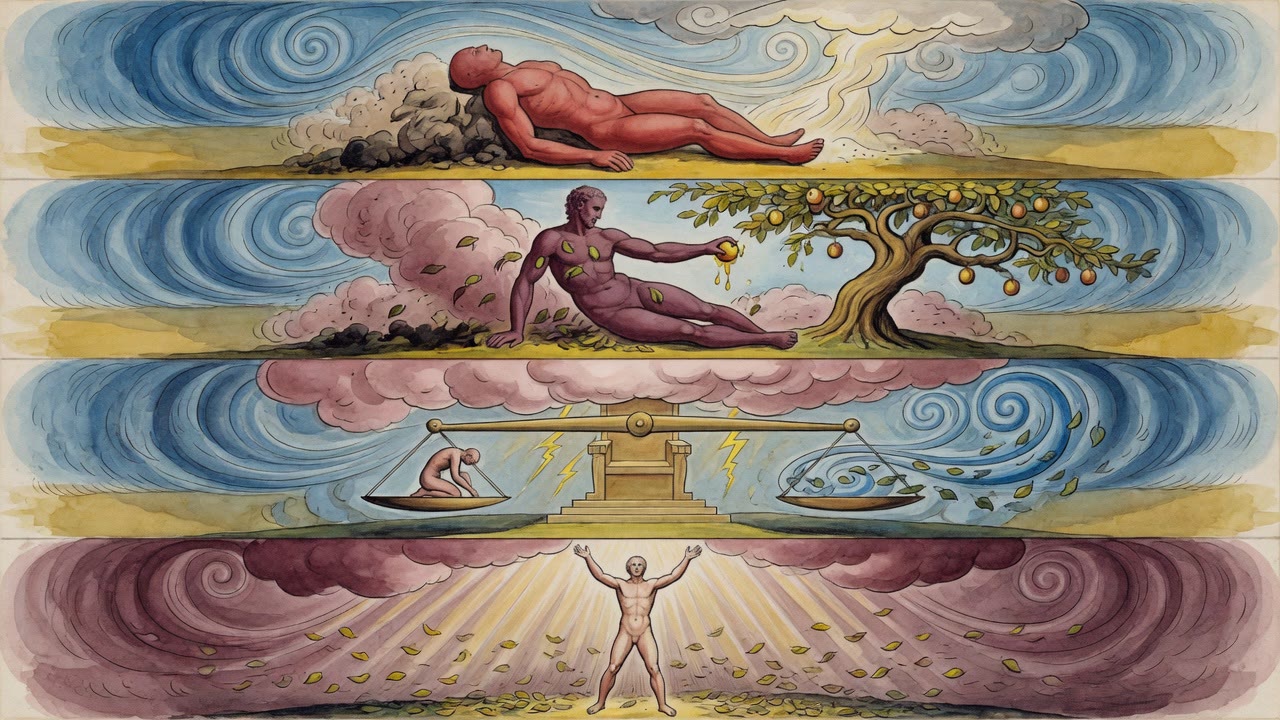
God reached for dust to make a man. Torah blocked His hand. Short days, it said, and a life of trouble, unless mercy came first.
Table of Contents
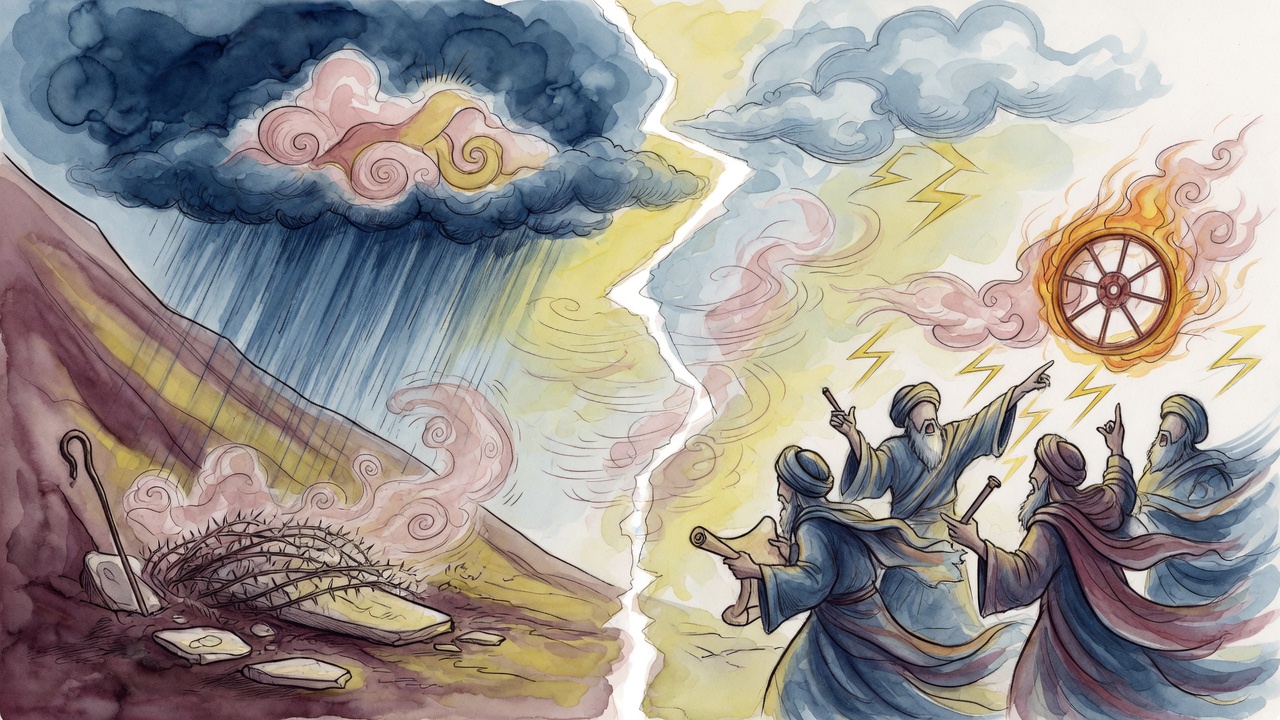
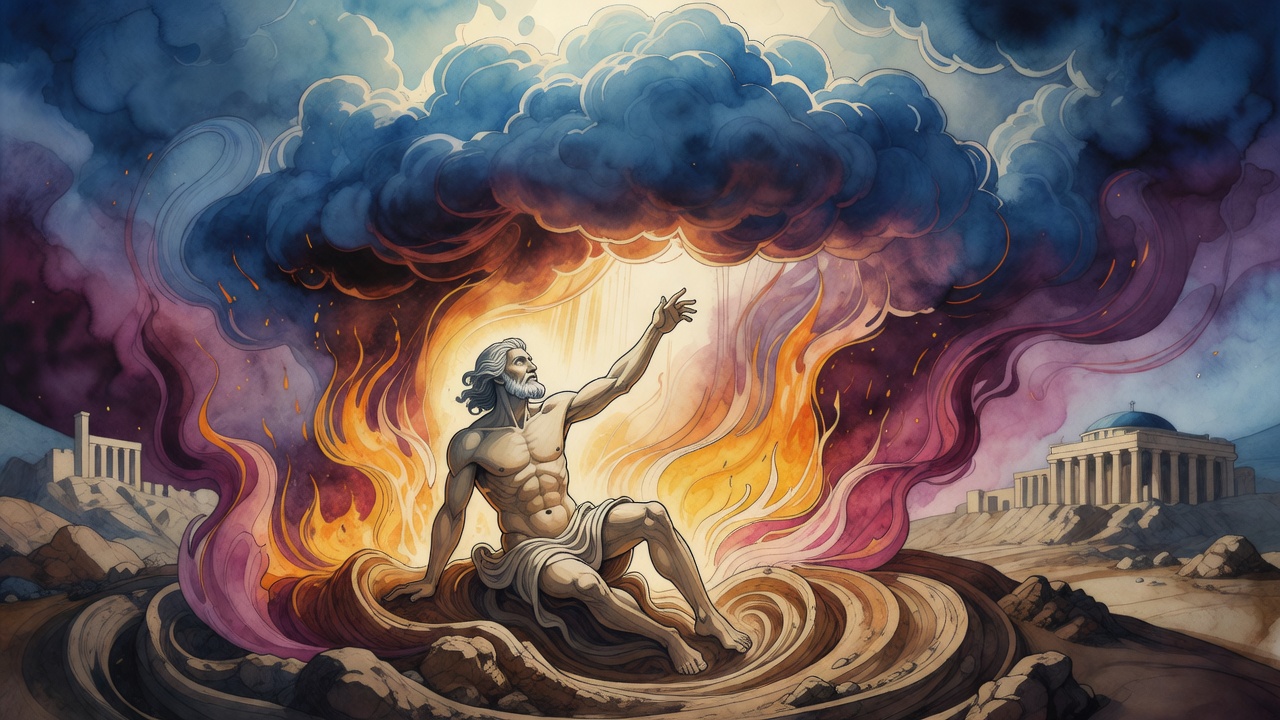
God pressed the east until heaven touched earth. He pressed the west. He pressed the south. The north He left a gap, a job waiting for any man who would announce himself a god and then fail to finish the sky.
 Click for full size
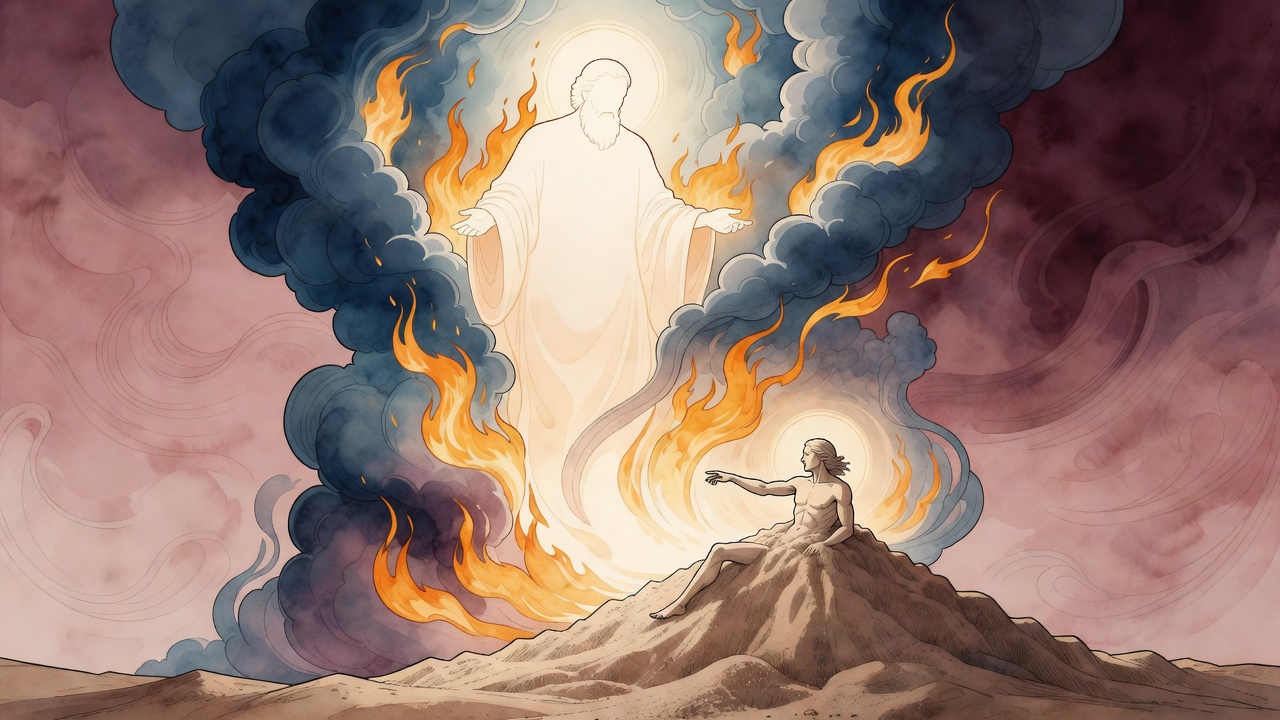
Then He reached for dust.
Torah Stood in the Path
Before the first breath, before a foot touched earth, Torah itself spoke. Not a scroll on a shelf. The instruction personified, the blueprint of the universe standing in the path of the next act.
"O Lord of the world! The world is Thine, Thou canst do with it as seemeth good in Thine eyes. But the man Thou art now creating will be few of days and full of trouble and sin. If it be not Thy purpose to have forbearance and patience with him, it were better not to call him into being."
The warning was not rebellion. It was care with open eyes. Free will would mean mess. Short days. Long trouble. Sin as a habit of dust that thinks. Torah asked whether creation without patience would be cruelty dressed as power.
God still had the dust in His hand. He did not close the fist. He did not drop it. He waited on His own Name.
The Name That Answered
The reply was short enough to carry a world. "Is it for naught I am called long-suffering and merciful?"
The attributes were not ornaments. They were the condition under which a man could exist at all. Mercy was not an afterthought for later prophets. It was the permission for the first pulse.
Torah had named the risk. God named the capacity that would meet the risk. Forbearance first. Then breath. The sequence mattered. A world that makes man without mercy is a trap. A world that makes man with mercy is a wager the Holy One chose to take.
The unfinished north would later shame pretenders. This exchange shamed despair. Man would fail. God had already declared the stance that would outlast the failure.
Dust from the Place of Atonement
When the forming began, lovingkindness chose the material. God took one spoonful of dust from the spot where, in time to come, the altar of the Temple would stand. "I shall take man from the place of atonement, that he may endure."
Body and forgiveness shared an address before any sacrifice smoked. The first human frame was mixed from the geography of return. Sin was foreseeable. So was the place that would teach how to come back. Endurance went into the recipe, not into a slogan afterward.
He worked the dust with His hands. The spoonful held more than clay. It held a schedule. First the body. Later the Temple. Later still the knowledge that endurance had been baked in from the start.
The North Left Open
While the clay took shape, the north still gaped. East, west, and south had already touched. The heavens had stretched as if they wanted to go on forever, and God had called a halt to their reach. He left that one edge unfinished on purpose.
Any man who later announced himself a god would be set the task of supplying the deficiency. He would stand there with his hands in the gap and be convicted as a pretender. The creature now being formed might one day try. The gap would still be waiting.
Center and limit sat in the same work. The foundation stone of the world, the Eben Shetiyah (אבן השתייה), the stone from which the earth was begun, lay at the place that would become the Temple. From there the first ray of light had already pierced. Man's dust came from that same center, the future altar, so that the one who might claim the north would still be made of atonement's soil.
Adam Opened His Eyes
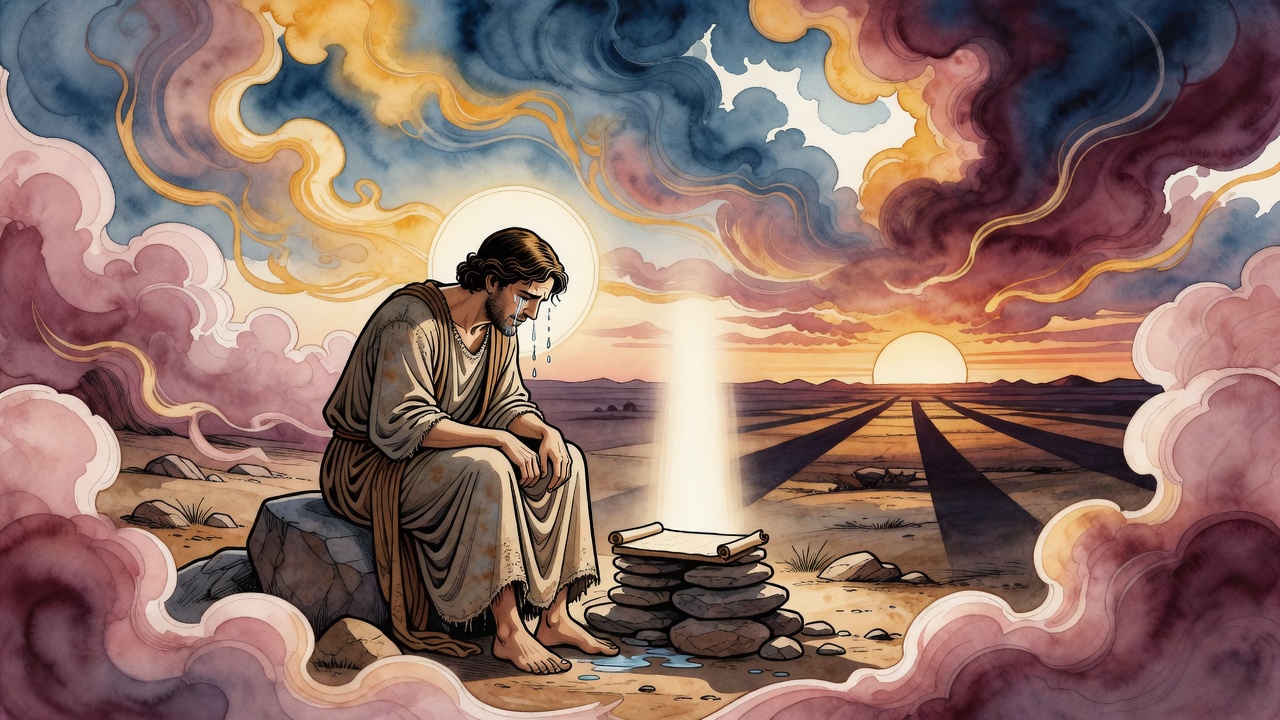
Torah's forecast stood. Few of days. Full of trouble. Full of sin. The altar-dust man walked into that forecast with a hidden advantage. The place of his making would one day teach the practice of repair. He was not made from random roadside dirt. He was made from the future grammar of teshuvah (תשובה), turning back.
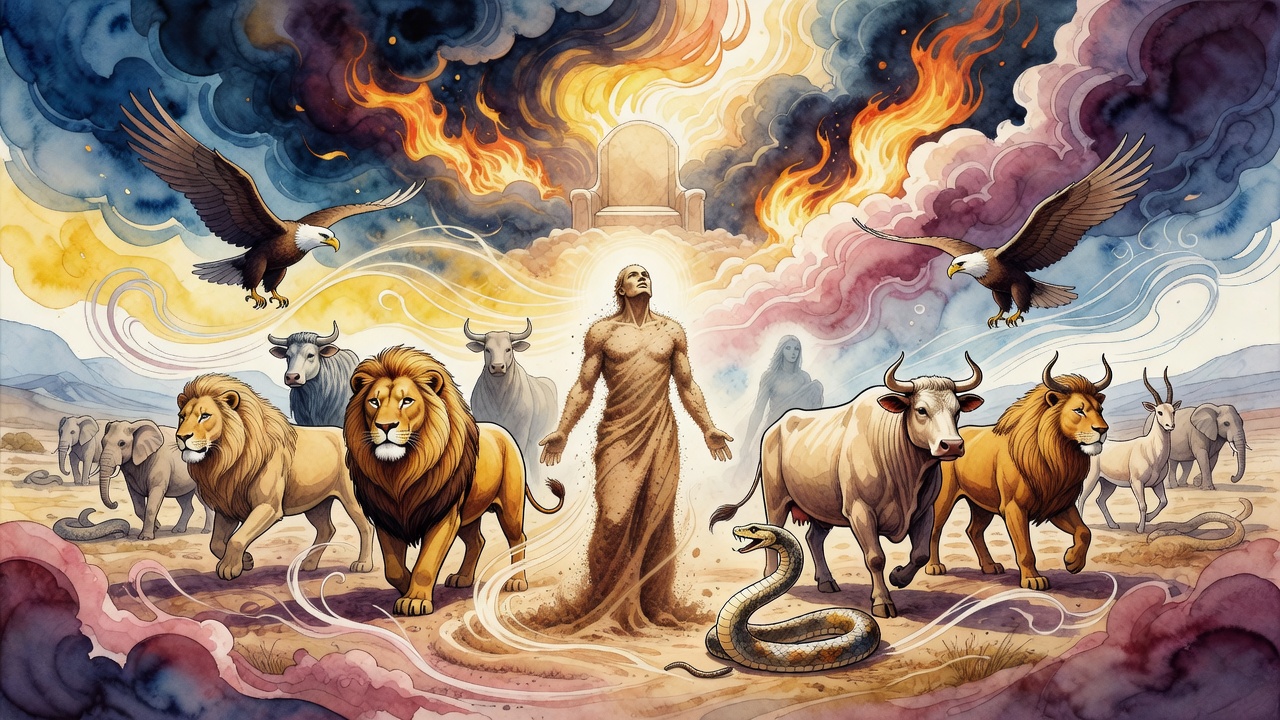
When Adam finally opened his eyes, full-grown into color and sound, he did not know the debate that had preceded him. He only inherited its outcome. Life, short. World, hard. God, already committed to patience. Altar dust in his bones, waiting for centuries of smoke and song.
He stood. The north still hung unfinished. Pretenders would still fail that gap. His children would still need the place of atonement. Torah, which had nearly stopped his arrival, would remain the map by which he learned how to live.
Long-suffering was not naive. It heard Torah's full warning and created anyway. The blueprint spoke first. Mercy answered. Dust from the altar site took form. Then, and only then, a man stood up into a world designed to outlast his worst day.
Few of days need not mean few of chances. The place of atonement had already lent its soil. Between Torah's realism and God's patience stood a creature who could be judged without being discarded, because the Judge had already named mercy as the reason for breathing at all.
← All myths