The Torah Opened With the Making of the World
A student said a law book should start with law. R. Isaac waited until the benches went quiet. Then he asked who owned the land before any command was given.
Table of Contents
R. Isaac did not blush. A student had said it out loud, the way a person says a thing he thinks is obvious. If this is a book of commandments, why open with (Genesis 1:1) instead of (Exodus 12:2)? "This month shall be for you the beginning of months." From that verse the whole calendar hangs. Passover. Shavuot. The Day of Atonement.
 Click for full size
Someone on the bench muttered that a law book should start with law. Students shifted. A scroll of the new moon sat nearer the door of practice than any verse about star and sea.
R. Isaac waited until the room quieted. Then he asked the question back. Why the six days of making first? Why sky and water before a single command to a people?
The Benches Wanted a Law Book
He did not give them a prettier calendar. He gave them a claim that landed like a stone on a map. Genesis is not there to satisfy curiosity about beginnings. It is there to declare who owns the earth.
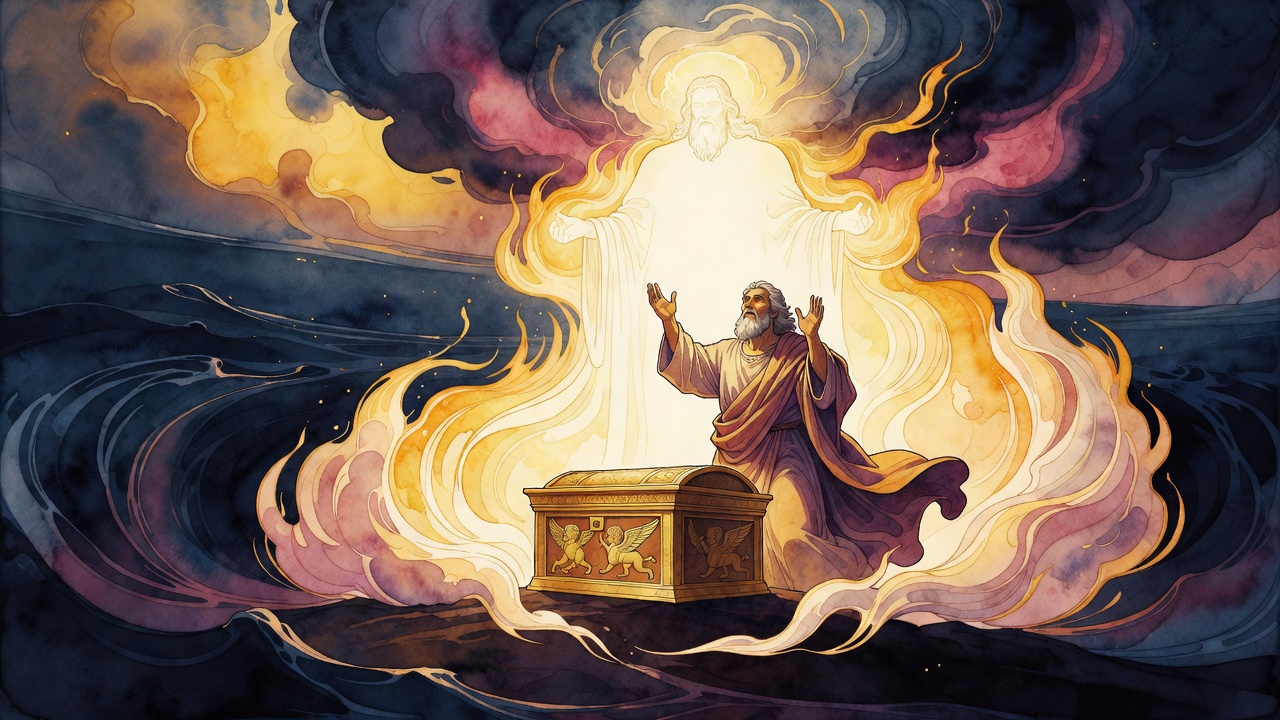
"He has declared to His people the power of His works in giving them the heritage of the nations" (Psalm 111:6). The Maker assigns territories. He gave Canaan for a time, then to Abraham's line. When the nations later call Israel a thief of land, the first chapter is already the brief. The world has an Owner, and the Owner allots.
A young man in the hall had heard that charge in the market. Thief. Occupier. He had wanted a sword-answer. R. Isaac gave him a page instead. Open to the first verse. The field has a Master before Israel has a month to count.
The Owner Allotted the Field
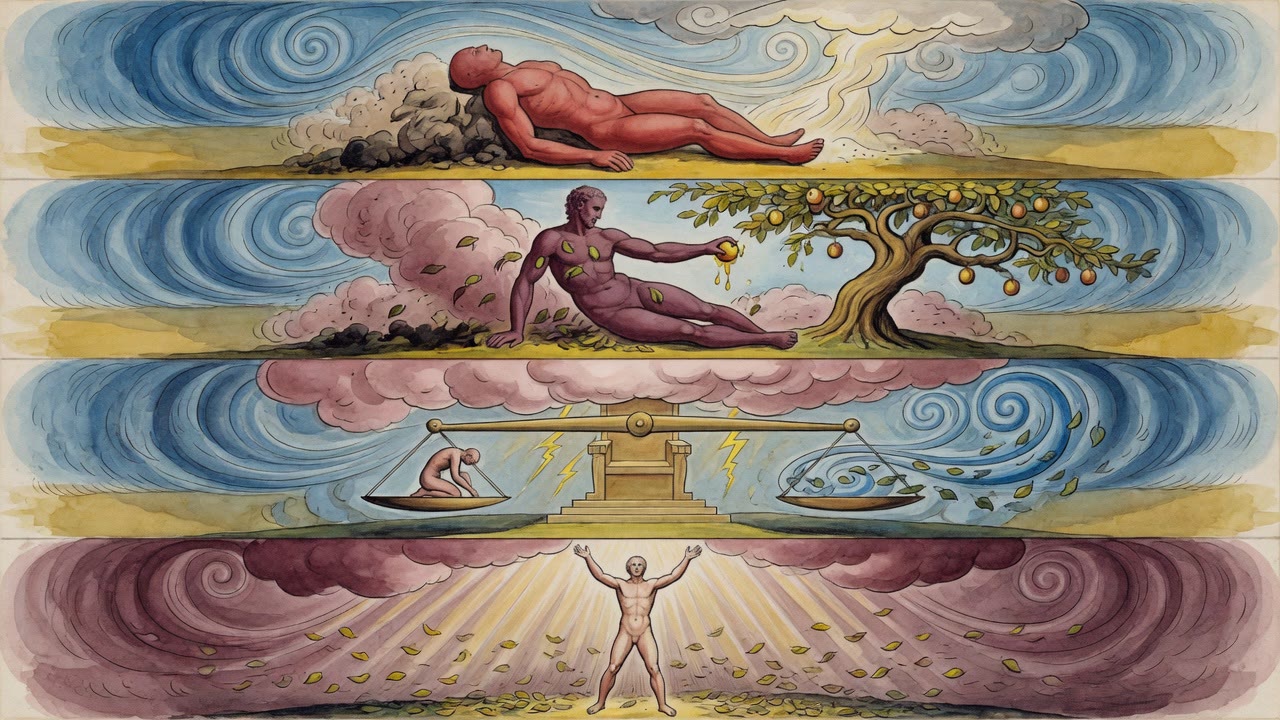
Ritual time sits inside cosmic time. The same voice that said "Let there be light" later said "This month shall be for you." Law does not float free of creation. It is written on the foundation of who spoke the world into being.
A calendar without a Creator is only a clock. A commandment without a Maker is only a rule. R. Isaac would not hang the new moon in empty air. He hung it on the first morning.
Without Genesis, the commandment of the month has nowhere to stand. With Genesis, every later mitzvah stands on ground the Creator already claimed. The nations may invent charges about conquest. The hall answers with cosmology before it answers with swords.
Rabbi Simon Counted Light Five Times
In another hall Rabbi Simon bent over the first day and counted the word "light." Five times. He set them against the five books of the Torah the way a jeweler sets stones, each facet catching the same fire from a different angle.
"God said, Let there be light" is Genesis, the opening of everything. "And there was light" is Exodus, a people pulled from slavery's dark. "God saw the light, that it was good" is Leviticus, thick with law until light and goodness double. "God distinguished between the light and the darkness" is Numbers, the hard cut between those who left Egypt and those who entered the land. "God called the light Day" is Deuteronomy, another book heavy with command, answered by a second word of praise.
He tapped the page as he spoke. Students leaned in. The first day was still burning in five mouths.
Students Pushed Back on the Fifth Book
A student shoved the pairing. Leviticus gets "light" and "good." Deuteronomy is also packed with law. Why does the fifth book not receive the same double praise?
Rabbi Simon pointed to the verse that matches Deuteronomy. The pairing is already there. A second word of praise sits in the naming of Day. The objection did not kill the map. It made the hall look closer.
The debate itself kept the first day's fire in human mouths. Argument as another way light still works after the sun has been named.
A Child Learned the Deed by Heart
Years later a child learned the first verse by heart. He was not only reciting a beginning. He was learning that the world has an Owner before Israel has a calendar. When that same child counted five books and heard Rabbi Simon's five lights, the page became a map: slavery's dark, law's density, the cut between generations, the last speeches under a sky that was lit on day one.
Enemies of Israel still invent charges about land and theft. The midrash does not reach for a sword first. It reaches for a cosmology. Nations may mock a people that opens its law book with starlight and seas. The sages answer that without that starlight the new moon has no throne to stand on, and without the five lights the five books are only paper, not fire that still names Day.
Open the book. The first page is already a verdict and a lamp. The last of the five is still that same light, named Day, traveling with a people who count months under a Maker's claim.
← All myths