Two Kings Fight for the Body at Midnight
His hand was already on the bread. The left side of his chest pulled harder, and the skull answered with a cold no.
Table of Contents
His fingers closed on the loaf. No thief in the room. No voice from the doorway. Only the left side of his chest pulling harder than hunger, and the skull answering with a cold refusal that still had no words.
 Click for full size
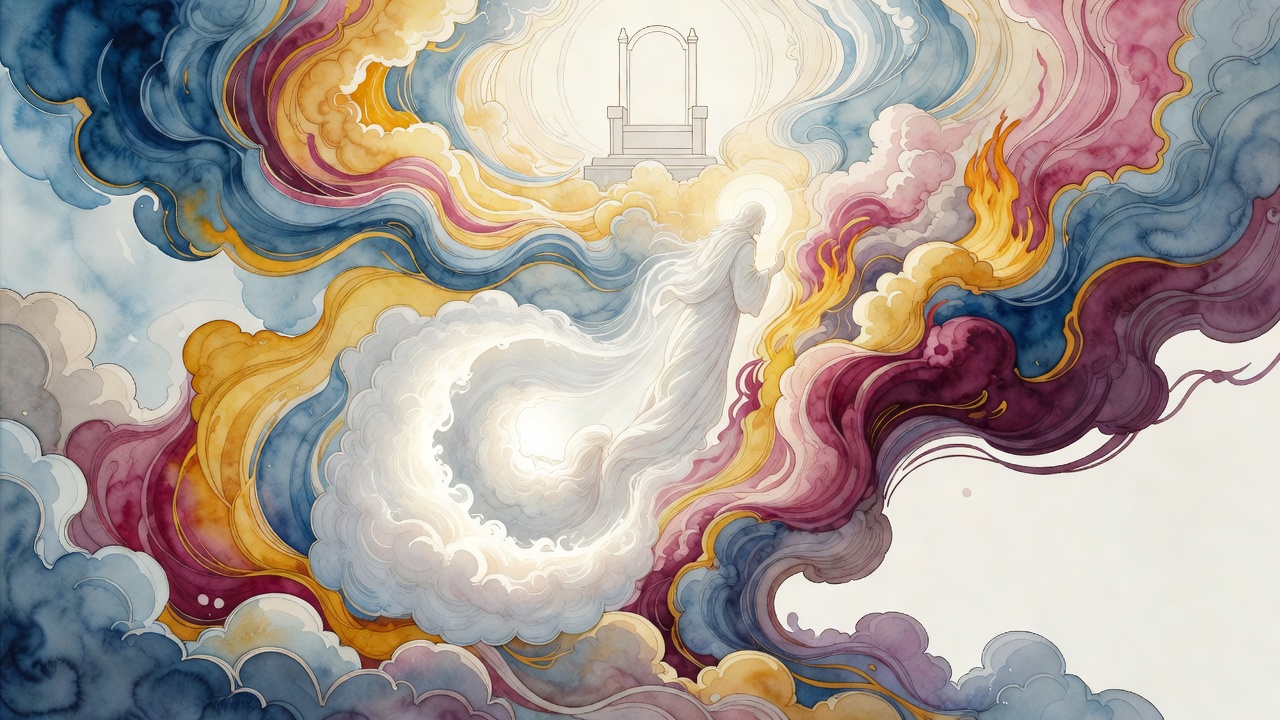
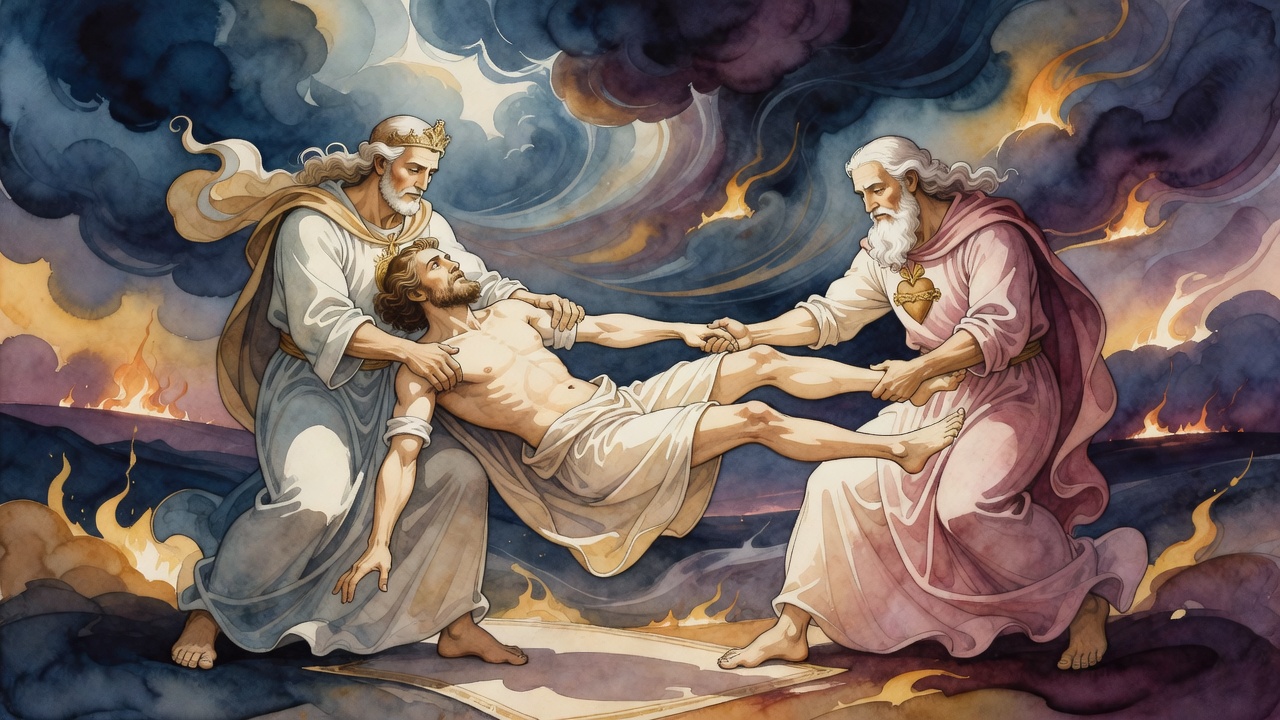
The room was ordinary. A table. A lamp burned low. Outside, midnight air pressed the shutters. Inside him two kings had begun the night's campaign for the same small city: eyes, mouth, hands, feet. One nation shall prevail over the other (Genesis 25:23). He felt the verse before he remembered it.
The King in the Left Heart
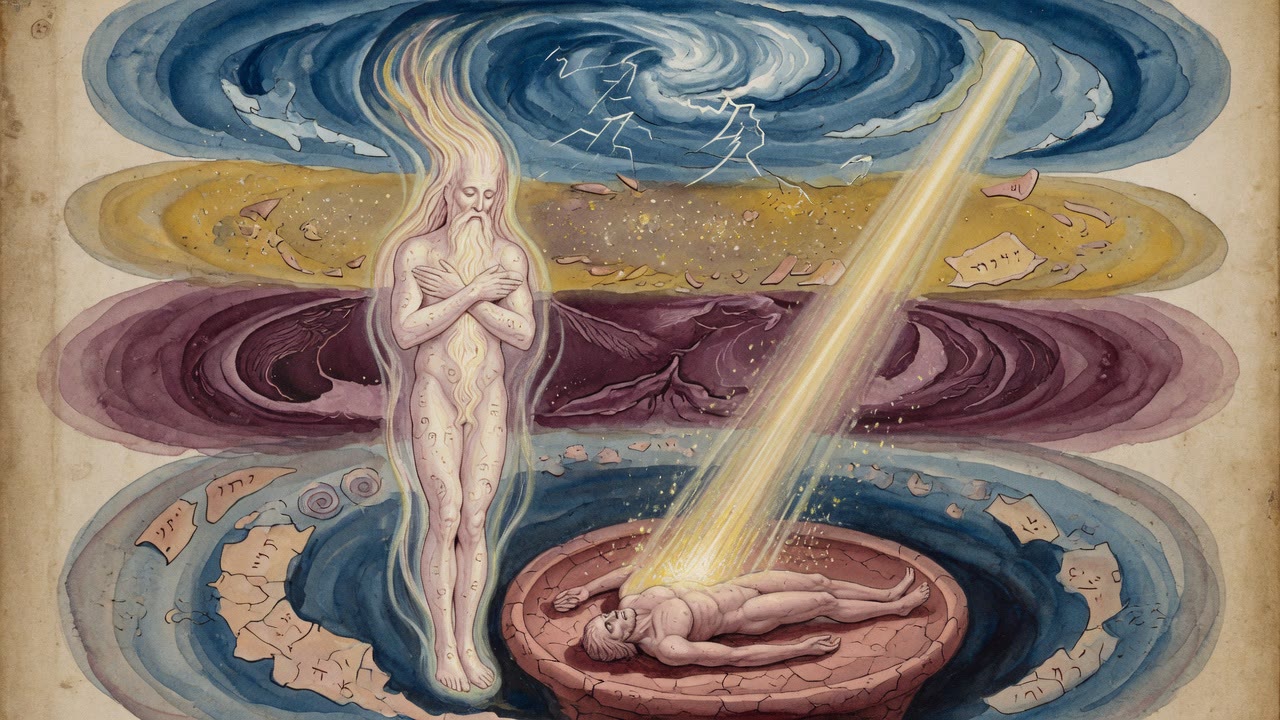
The animal soul, the nefesh habehamit (נפש הבהמית), does not announce itself as a monster. It lives in the left ventricle and spreads warmth that pretends to be need. Lust rises as urgency. Pride rises as dignity. Anger rises as justice. From the heart it climbs into the brain and hires thought as a clerk. The mind, leased this way, reasons backward from appetite. It builds a case after the want has already signed the warrant.
He watched his own mind do it. The bread would help him sleep. The harsh word tomorrow would be honesty. The glance he planned for a neighbor's window would be harmless curiosity. Each plan arrived dressed as wisdom. He pulled his hand back an inch. The left heart shoved it forward again.
Thought, speech, and action are coats. The animal soul can wear them as cleanly as any scholar wears a coat to a wedding he plans to spoil. He almost spoke the excuse aloud. He almost walked to the shutter. The hand on the loaf was already action begun. He set the bread down. The king in the left heart did not leave the chair.
The King in the Brain
Opposite him sits the divine soul, the nefesh ha'elokit (נפש האלוקית), rooted in the brain. From there it reaches the right heart as love that burns without asking for payment: love of God, hunger for cleaving, the ache to turn limbs into mitzvot (commandments). Its intellect is not a clerk. It is a mother. Chochmah flashes. Binah develops. Da'at binds knowing until feeling is born from thought rather than appetite.
He felt that king too. Not as comfort. As pressure from above the eyes, a demand that the mouth stay shut, that the hand leave the shelf, that the night become study instead of scheme. The divine soul wants the body for Torah, prayer, commandments, and the long contemplation of God's greatness. It does not negotiate a half city or a timed lease.
Two kings cannot co-rule a single set of limbs. Ecclesiastes called the body a small city (Ecclesiastes 9:14). Siege is the natural weather. When the divine soul wins an hour, the animal soul does not die. When the animal soul wins an hour, the divine soul does not leave. Victory is temporary occupation of mouth and hand. He stood. He sat. He stood again. The floorboards took both weights.
The Oath Before Birth
Before he ever opened eyes in this world, a voice made him swear: be righteous and do not be wicked, and even if the whole world calls you righteous, regard yourself as wicked. Another teaching forbids a person from considering himself wicked. He sat on the edge of the bed and held both sentences in the same hour. The contradiction was not a clerical error. It was the map of a war that never ends in flags or parade music.
There are not only two kinds of people. There are five, and the one who lives this night is the benoni (בינוני), the intermediate one. He may never complete a sin in deed, speech, or sustained thought, and still feel the full force of the evil inclination raging like a living rival who knows every alley of the ribs. Righteousness that has swallowed all evil is rare. Wickedness that has silenced all good is real. Most nights belong to the middle field, where the city changes hands by the hour.
He sat on the edge of the bed and did not take the bread. That was not sainthood. That was one skirmish. The left heart kept arguing. The brain kept counting the cost of answering. Sweat cooled on his neck. The lamp spit once and steadied.
Garments at the Door
He spoke one line of a psalm under his breath. The mouth changed owners for a moment. Then pride tried to praise him for the line. The war moved one inch and stayed war. He put both feet on the floor, washed, and opened a book because opening is how the brain king takes gates. The left heart waited with tomorrow already drafted in soft ink that would harden if he slept on it.
Even permitted food can dress the wrong king if the heart never lifts it above the plate. He left the loaf where it was. He read. The letters blurred. He kept the place with his finger and read again.
Midnight did not resolve. Kings do not sign treaties because a lamp burns low. He read until dawn could share the watch. Outside a cart rolled past. Inside, two thrones scraped the same floorboards and refused to leave.
← All myths