The Valley at Shechem Where Israel Answered Amen Twelve Times
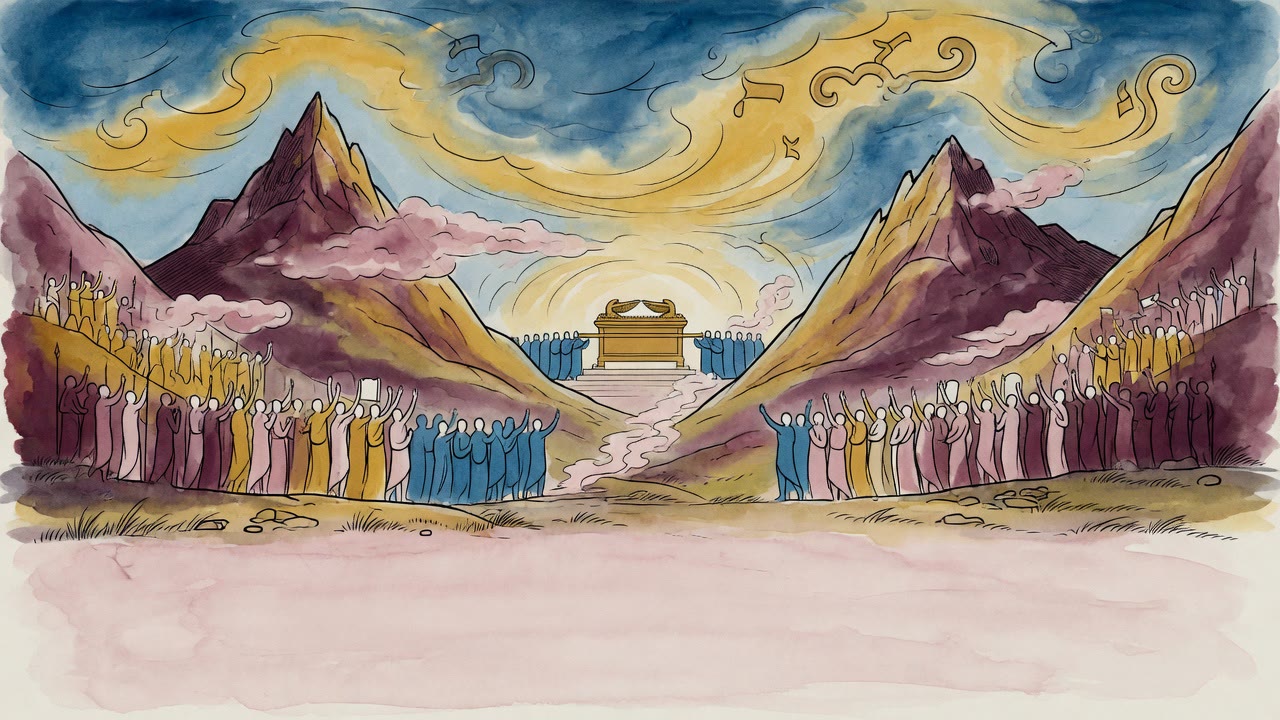
Six tribes climbed Gerizim, six climbed Ebal, the Ark stood in the valley, and Israel had to shout Amen twelve times across the gap.
Table of Contents
The climb left their legs shaking before a single word was spoken. Half the nation went up the southern slope, half went up the northern one, and the dust they kicked loose drifted down into the gap between the two peaks and hung there in the morning light. They were weary. They had walked a long way to reach this place, and now they stood on rock instead of resting on it, looking across a valley at the backs and faces of their own brothers on the far mountain.
 Click for full size
Six Tribes Climb the Mountain of Blessing
Six tribes took Mount Gerizim, the mountain set aside for blessing. Six tribes took Mount Ebal, the mountain set aside for the curse. No one chose his own slope. The arrangement had been handed down already, every tribe assigned its standing place, and so each man climbed where his fathers belonged and not where he wished he belonged.
From either height the valley looked small, a thin green seam of ground far below. A man on Gerizim could see figures moving on Ebal, but he could not read their faces. He could only watch the small bright shapes of them and know that those were Reuben, those were Gad, those Zebulun, men he had eaten beside in the wilderness, now made strangers by the width of a valley.
The Ark Waits in the Valley
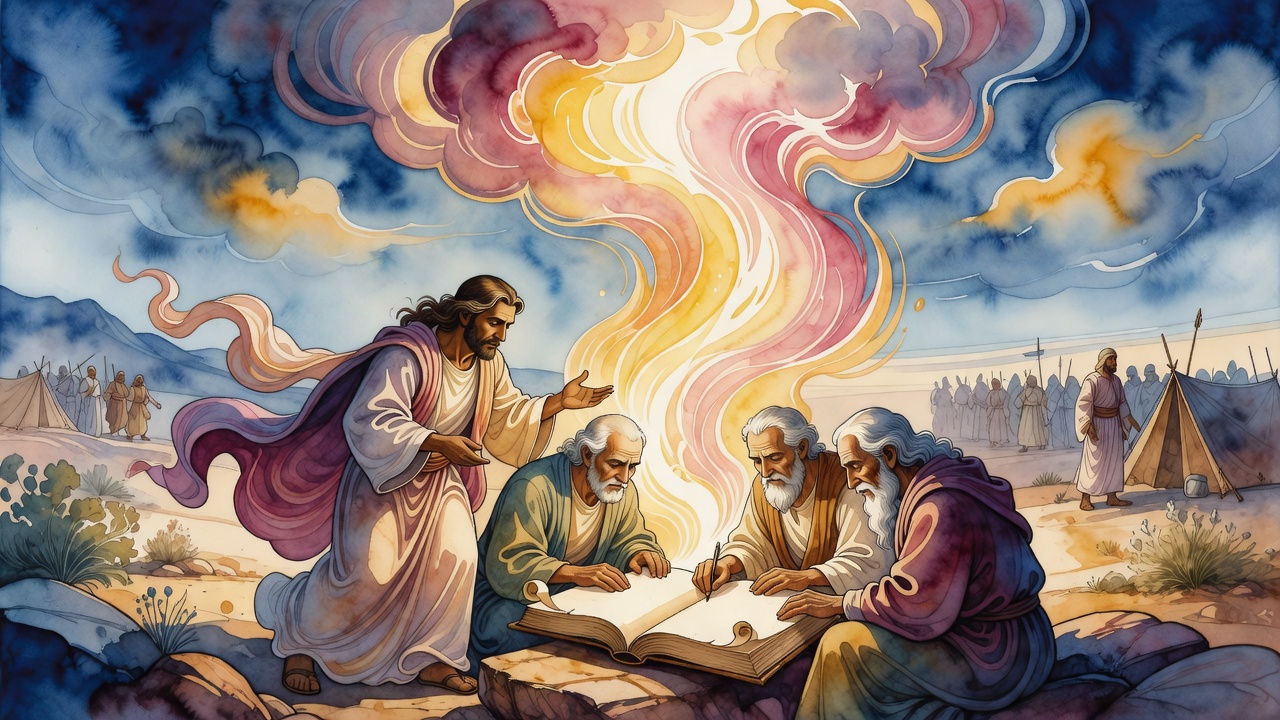
Down in the seam between the mountains the priests and the Levites gathered, and with them came the Ark. They set it in the lowest place, the carried thing at the bottom of the world that morning, with mountains rising on both sides of it. Everything that was about to be said would rise out of that hollow and climb the slopes to reach the people.
So the ground itself took the shape of the moment. The presence of God rested at the bottom, in the valley, and the whole assembly stood above it on either side, looking down toward the Ark and across toward each other. No man stood higher than the others by accident. The high ground was given. The low ground held the holy thing.
The Levites Turn Toward Gerizim
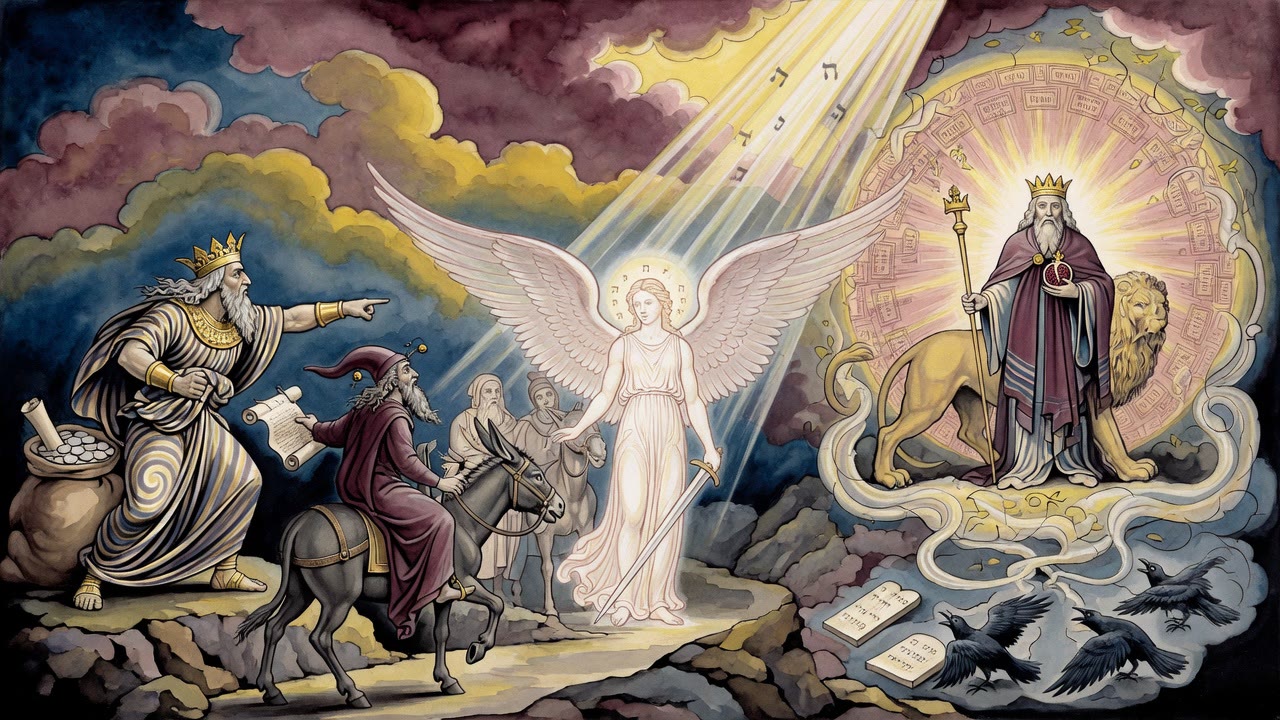
The Levites turned first toward the mountain of blessing. They faced Gerizim, and they lifted their voices, and the words went up: Happy is the man that maketh no idol, an abomination unto the Lord. The blessing came before the curse, because the blessing was always meant to come first, the good word spoken before the hard one.
The voices struck the slope and the slope threw them back. A blessing called into a valley does not stay in the valley. It climbs. The men on Gerizim felt the words arrive at their feet and rise past them, and for a breath the air was full of nothing but the single sentence about the man who builds no idol, hanging over the dust that still had not settled.
Israel Shouts the First Amen
Then the valley waited for an answer, and the answer came. Amen. Not a few voices but thousands, the whole nation on both mountains opening their mouths at once, and the word broke against Gerizim and against Ebal and rolled back and forth between them until the two slopes seemed to be speaking to each other through the people standing on them.
That word was not applause. It was a binding. Amen, meaning so be it, meaning I take this on myself, meaning the spoken thing is now mine to keep. A man who shouts Amen into a valley cannot later say he was only a spectator on a mountain. He has lent his own voice to the thing. He has signed it with breath.
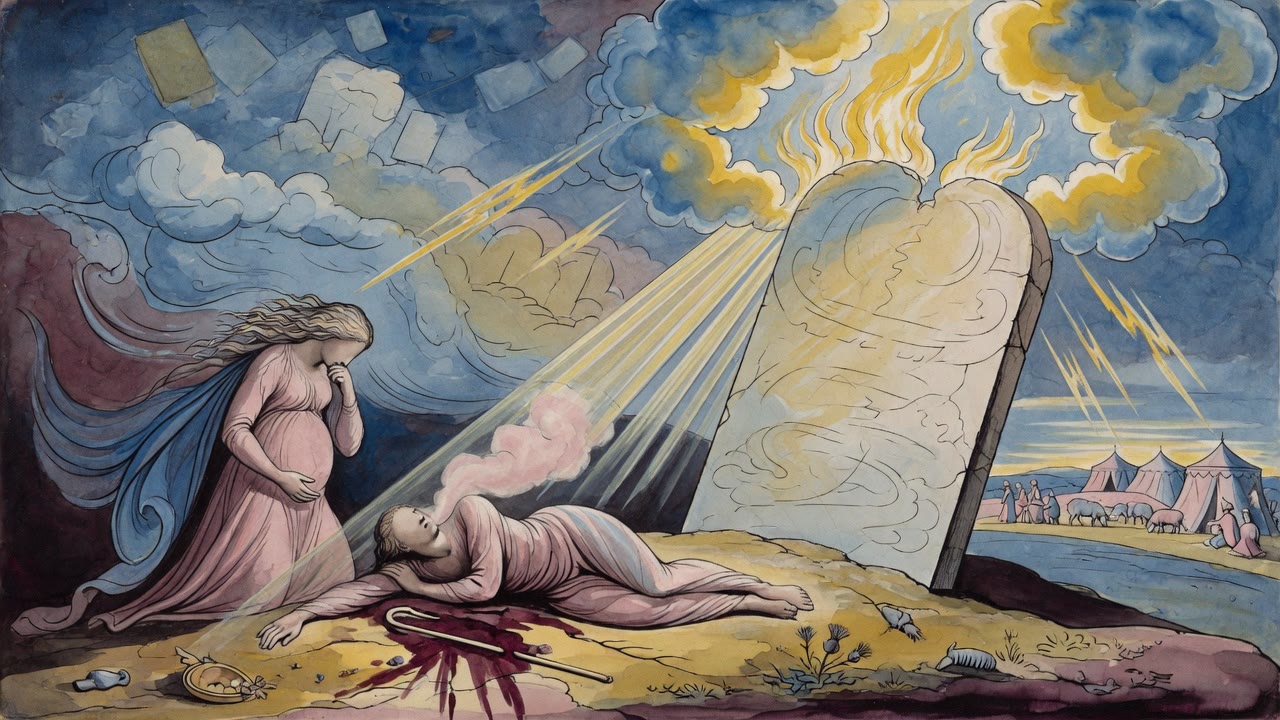
The Levites turned again. They spoke again. The people answered again. Twelve times the words rose out of the hollow, twelve times the slopes flung them back, twelve times the nation shouted itself into agreement until no tribe on either mountain could claim it had stood silent. Each Amen folded another tribe into the covenant and made each man answerable for what had been said over the Ark below him.
The Old Promise at the Terebinths of Moreh
The place was not chosen for its echo alone. This was Shechem, near the terebinths of Moreh, and these were old trees with an older memory. Long before there were twelve tribes, before there was a nation to stand on a mountain, one man had walked through this very ground and heard a promise about it (Genesis 12:6). The land would belong to his children.
Now the children stood on the hills above the spot, shouting their consent back to heaven where their father had once only listened. The promise had not arrived on its own. The word at the start was that they would inherit the land, but the inheriting was tied to the doing. Take the commandment on yourself, act, engage, and then you come and possess. So they did not stand on Gerizim and Ebal to receive a gift. They stood there to take a weight, twelve times over, in their own voices, in the valley where it had all been promised before any of them were born.
← All myths