Parshat Bereshit5 min read

Beasts Rehearse Scripture Until the Vulture Announces the Messiah

Creatures recite verses of strength and justice. A grounded vulture will one day announce redemption with a line from Zechariah.

Curated by Arthur · Told by Maggid ·
Table of Contents
  1. Grasses Choose Their Kinds
  2. The Vulture's Verse
  3. Lion and Fox Add Their Lines
  4. Messiah Stands Inside a World Already Singing
  5. The Grounded Hour
Beasts Rehearse Scripture Until the Vulture Announces the Messiah Click for full size

Grasses Choose Their Kinds

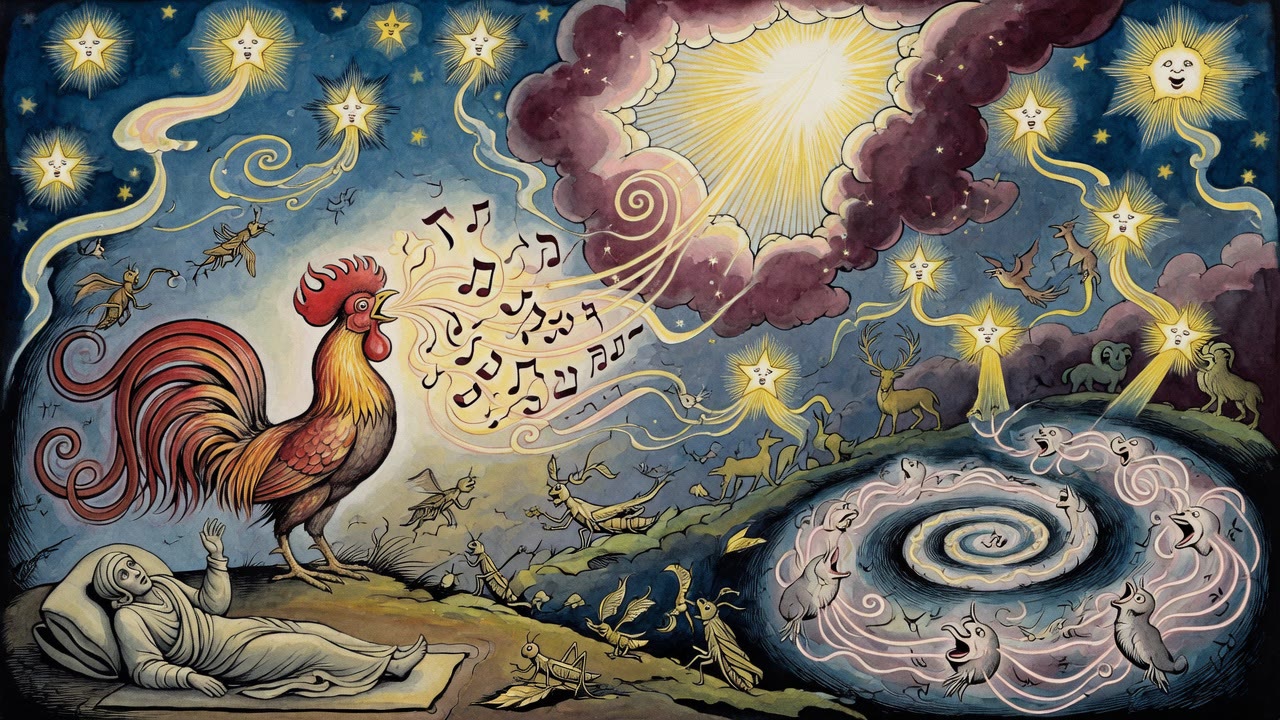
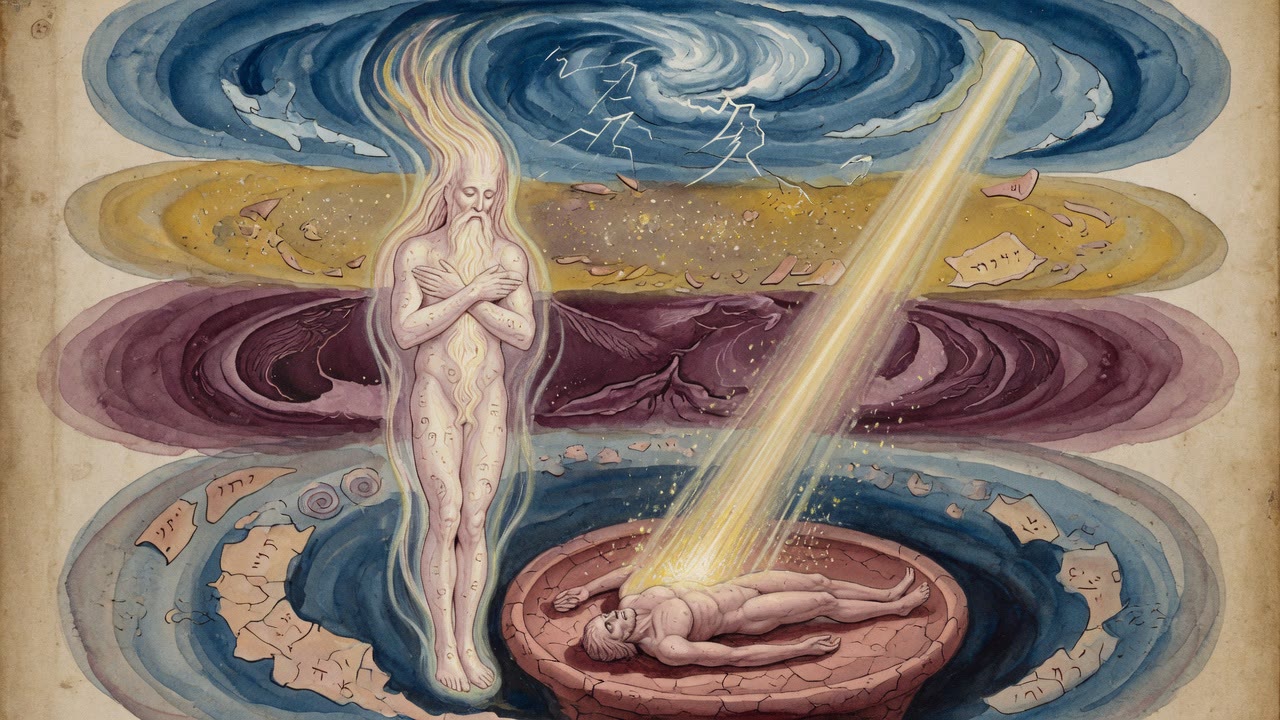
When God ordered trees to fruit after their kinds, the grasses held a quieter counsel. They reasoned that if classes mattered for trees, they mattered for blades as well. They divided and multiplied after their kinds without a separate shouted command.

The Prince of the World cried out, "Let the glory of the Lord endure forever; let the Lord rejoice in His works." Small green obedience drew down a cosmic cheer. Creation was not only thunder. It was also a field deciding to stay ordered.

From that early yes, the world learned that even low things can answer intention. The habit of praise did not stay with grass alone.

The Vulture's Verse

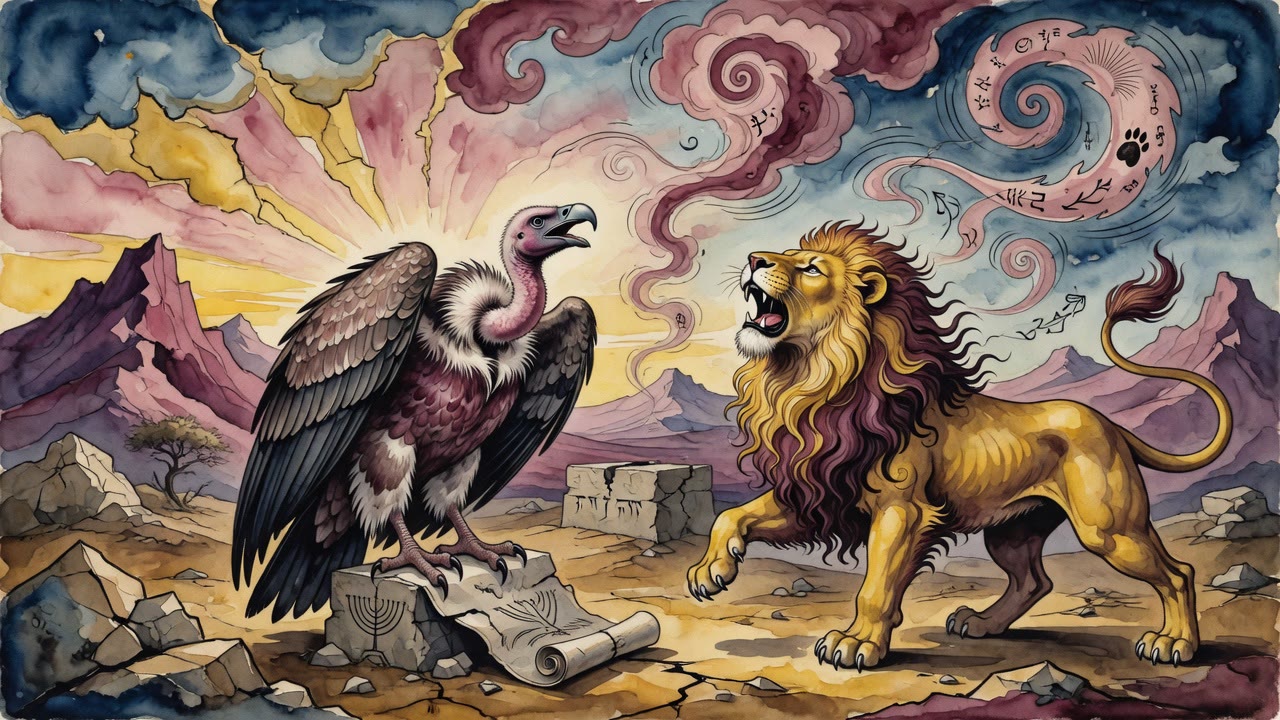
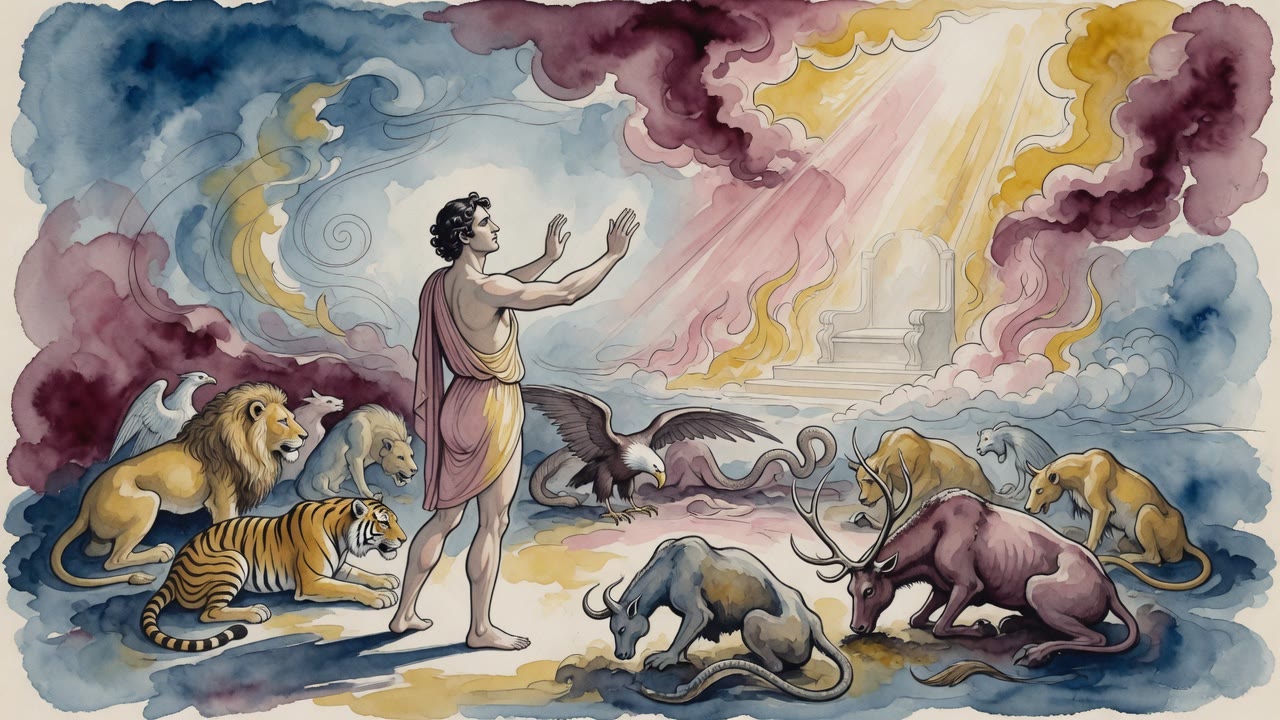
A vulture carries scripture in its throat, the legends say. Its song is a line of gathering and redemption. "I will hiss for them, and gather them; for I have redeemed them, and they shall increase as they have increased."

One day that same verse will announce the Messiah. The difference will be posture. The bird will sit on the ground to sing it, not perched high as usual. Humility of place will mark the hour. A scavenger grounded will become a herald.

Until then the verse is rehearsal. Wings still find thermals. The words wait for their appointment like grain under ash, preserved for a lean or a longed-for year.

Lion and Fox Add Their Lines

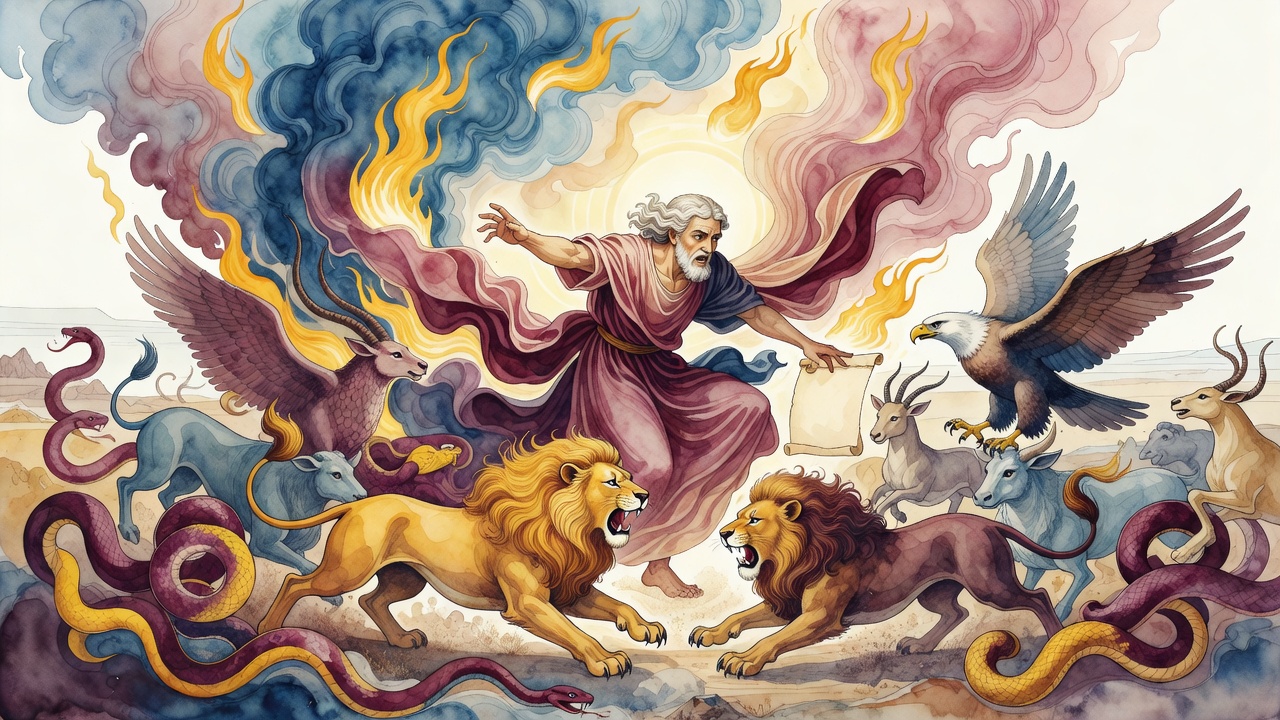
The lion roars a verse of divine war strength. "The Lord shall go forth as a mighty man; He shall stir up jealousy like a man of war; He shall cry, yea, He shall shout aloud; He shall do mightily against his enemies."

The fox, sly in every proverb, cries justice against stolen labor. "Woe unto him that buildeth his house by unrighteousness, and his chambers by injustice; that useth his neighbor's service without wages, and giveth him not his hire."

Fierce and cunning both aim their voices past themselves. Power praises Power. Trickster names wage theft. The choir of beasts is not cute. It is a court in fur and feather where scripture is the only music allowed.

Messiah Stands Inside a World Already Singing

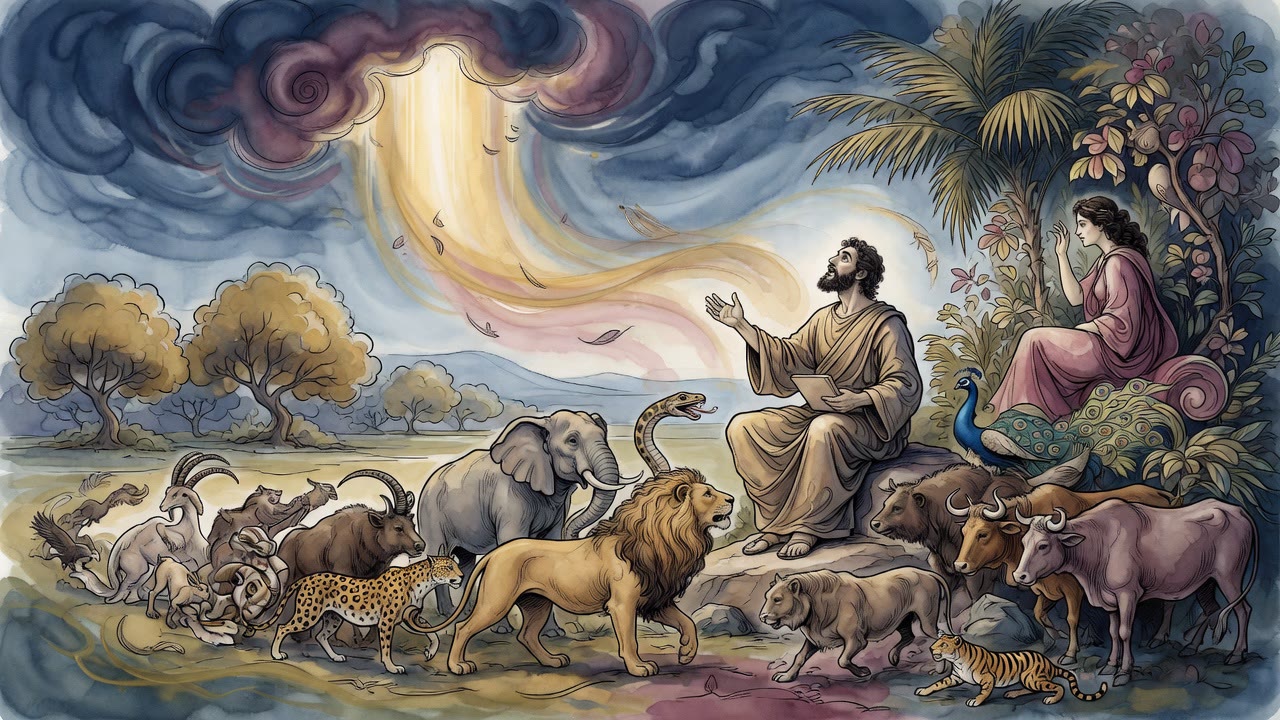
People imagine redemption as a sudden silence broken by one horn. The legends sketch a world that has been humming the right texts all along. Messiah enters a choir already warmed up by vulture, lion, fox, and the old shout over obedient grass.

Prayer is not only human posture. When the herald bird finally grounds itself, the line it sings will fit a creation trained to answer. Gathering. Increase. Strength. Fair wages. The themes were never private property of temples alone.

A man hearing a lion at dusk might shiver and call it only hunger. Under the shiver runs Isaiah's cadence if the ear is midrash-trained. Nature is not a second god. Nature is a crowd of mouths quoting the First.

The Grounded Hour

When the vulture's feet take dust instead of branch, someone will know the script has reached its cue. Until that hour, every ordinary scavenger circling a carcass is also, secretly, a understudy for redemption's announcement.

The Prince of the World's joy over grass and the Messiah's future bird-song share a logic. Small compliance and low posture draw heaven's attention. Height is not the only holiness. Ground can be holy when the right verse lands there.

Children chase foxes and fear lions and wrinkle noses at vultures. The legends ask them to hear verses under the noise. Strength without injustice. Gathering without empire's hiss alone. A God who rejoices in works that keep their kinds and a God who will gather a scattered people under a grounded wing.

Night settles on fields that still grow after their kinds because long ago grass refused confusion. Stars wheel. Somewhere a lion coughs a roar that midrash hears as war-song for the Lord. Somewhere a fox slips past a wrongly built house and the verse of woe hangs in the air like a smell.

The Messiah's calendar is not published on that sky. The rehearsal is. Humans who want a pure silence before redemption may be waiting for the wrong signal. The signal may be a bird that finally prefers dust to perch, singing a line already known to anyone who watched the scavenger years before.

Praise, then, is older than any single generation's prayer book. It started when green things ordered themselves and a prince of the world shouted joy. It continues whenever a beast's cry aligns with a prophet's sentence. It will crest when the grounded vulture gathers the air for a people ready to be gathered.

Until the crest, the work is to keep kinds clear, wages fair, and ears open. The choir does not need human permission to practice. It needs human lives that will not shame the lyrics when the herald finally sits on the earth and sings.

In a wadi a shepherd boy heard a fox and threw a stone from habit. The fox vanished. The verse about unpaid wages did not vanish. It hung where the animal had been, waiting for a human ear willing to be less quick with stones and more quick with justice.


← All myths
From the tradition

Sources

2 sources

The texts behind this telling. Some cards carry a translation of the source; others are our own retelling of it, and each card says which. Every card links out to the original.

Legends of the Jews 1:77Legends of the Jews

Retold in our words. Read the original at the link below.The Legends of the Jews by Louis Ginzberg (1909) · Public Domain

One that’s deeply rooted in Jewish tradition. readers often see the natural world as separate from the spiritual, but what if they're intertwined in ways we barely understand? The Legends of the Jews, that incredible collection of lore compiled by Louis Ginzberg, gives us a glimpse into just such a world.

Ginzberg tells us of the vulture, not just any old scavenger, but a creature with a song. And this song isn't just a random squawk. It’s a verse from scripture: "I will hiss for them, and gather them; for I have redeemed them, and they shall increase as they have increased." (Zechariah 10:8)

Here’s the really fascinating part. This same verse, according to the legend, will be used to announce the coming of the Messiah! The only difference? When the vulture heralds the Messiah, he’ll be sitting on the ground to sing it, instead of perched somewhere else, as he usually does. Imagine the scene: a humble bird, grounded, announcing the world’s redemption.

It doesn't stop with the vulture. All creatures, even the fiercest among them, offer their own unique form of praise.

The lion, king of the jungle, roars out a verse of strength and divine power: "The Lord shall go forth as a mighty man; He shall stir up jealousy like a man of war; He shall cry, yea, He shall shout aloud; He shall do mightily against his enemies." (Isaiah The lion, a symbol of might, proclaiming God's strength.

And even the fox, often seen as cunning and sly, offers a call for justice. He cries out, "Woe unto him that buildeth his house by unrighteousness, and his chambers by injustice; that useth his neighbor's service without wages, and giveth him not his hire." (Jeremiah 22:13). Even this wily creature understands the importance of fairness and ethical dealings.

What does this all mean? Perhaps it's a reminder that praise and wisdom can be found in the most unexpected places. That the entire world, from the smallest bird to the largest beast, is constantly, in its own way, acknowledging the Divine. It challenges us to listen more closely, not just to the words of our sacred texts, but to the songs of the world around us. What are the animals around you saying? And more importantly, are you listening?

Full source
Legends of the Jews 1:37Legends of the Jews

Retold in our words. Read the original at the link below.The Legends of the Jews by Louis Ginzberg (1909) · Public Domain

In the interplay of Jewish legend, even the proliferation of grass becomes a moment of profound theological significance. the Torah tells us that God commanded the trees to bear fruit, "after their kind, with the seed thereof in it" (Genesis 1:11). Seems straightforward. Each tree reproduces according to its species. But what about the grasses? They weren’t explicitly told to do the same.

The Legends of the Jews says a monumental work by Rabbi Louis Ginzberg, the grasses had a bit of a… philosophical debate amongst themselves. They reasoned that if God hadn't wanted divisions according to classes, He wouldn't have been so specific with the trees. The trees, after all, already naturally tend to divide themselves into species. So, the grasses concluded, they should also reproduce after their own kinds.

It suggests a world where even plants possess a kind of rudimentary reasoning, an innate understanding of God's will. They took the initiative, interpreting divine intention and acting accordingly.

What was the result of this botanical deliberation? Well that this act of independent understanding and obedience prompted the exclamation of the Prince of the World – not exactly a character we hear about every day. He cried out, "Let the glory of the Lord endure forever; let the Lord rejoice in His works." It's a moment of pure, unadulterated praise.

Why this exclamation at this moment? Because the grasses, in their own way, had mirrored God's creative act. They had taken a cue from the larger world and brought forth diversity and order. They demonstrated that even in the seemingly insignificant, God's intention could be discerned and brought to fruition.

Consider this: we often think of divine commands as direct, unambiguous instructions. But maybe, just maybe, God also leaves room for interpretation, for participation, for the kind of reasoned obedience that even the grasses could muster. And perhaps, in those moments of independent understanding and action, we, like the Prince of the World, can find ourselves moved to exclaim: "Let the glory of the Lord endure forever; let the Lord rejoice in His works."

Full source