Parshat Bereshit7 min read

Every Creature From Gnat to Star Sings Its Secret Verse

A sleeper wakes at midnight to a rooster crowing seven verses and learns the earth, the sea, the fox, and the frog each carry a praise of their own.

Curated by Arthur · Told by Maggid ·
Table of Contents
  1. The Hour Before the First Crowing
  2. At Midnight the Trees of the Garden Broke Open
  3. The Cock Crowed Seven Verses Into the Dark
  4. Every Throat Had Its Verse
  5. Nothing Was Made Without a Use
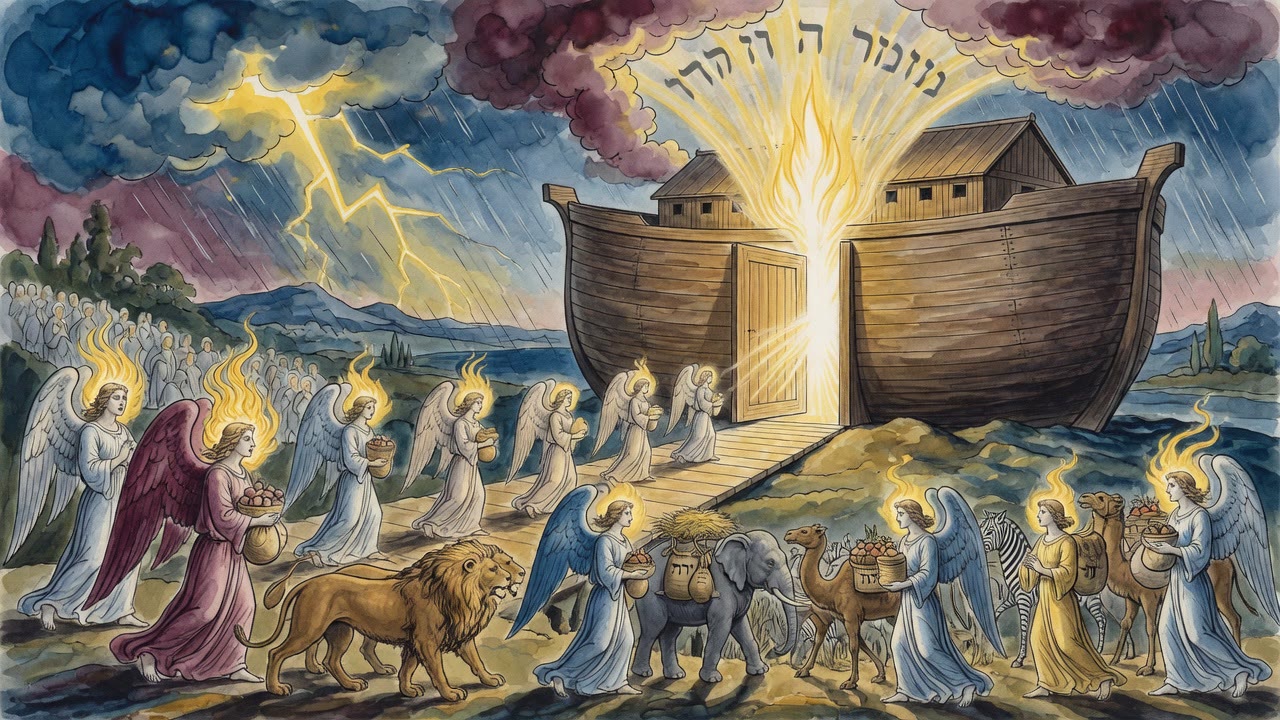
Every Creature From Gnat to Star Sings Its Secret Verse Click for full size

The Hour Before the First Crowing

Long after the lamps had gone out, a man lay on his mat and heard nothing at all. No wind at the shutters. No voice in the lane. The village had folded itself into sleep, and the dark pressed down on him like a lid. He turned his face to the wall and told himself the world was only this. Mud and straw. A cold house in a cold field, under stars that hung there and said nothing back.

He was wrong. He did not know it yet.

At Midnight the Trees of the Garden Broke Open

Far off, in a garden no living foot has crossed since the first man was driven from it, the hour turned to exactly midnight. God came to walk among the righteous where they rest, and the moment His nearness touched the leaves, every tree there bent toward Him and sang. The fruit trees lifted their branches and cried, "Then shall all the trees of the wood sing for joy before the Lord, for He cometh to judge the earth." The heavy stalks in the field beyond took up the sound, "The valleys are covered over with corn. They shout for joy, they also sing."

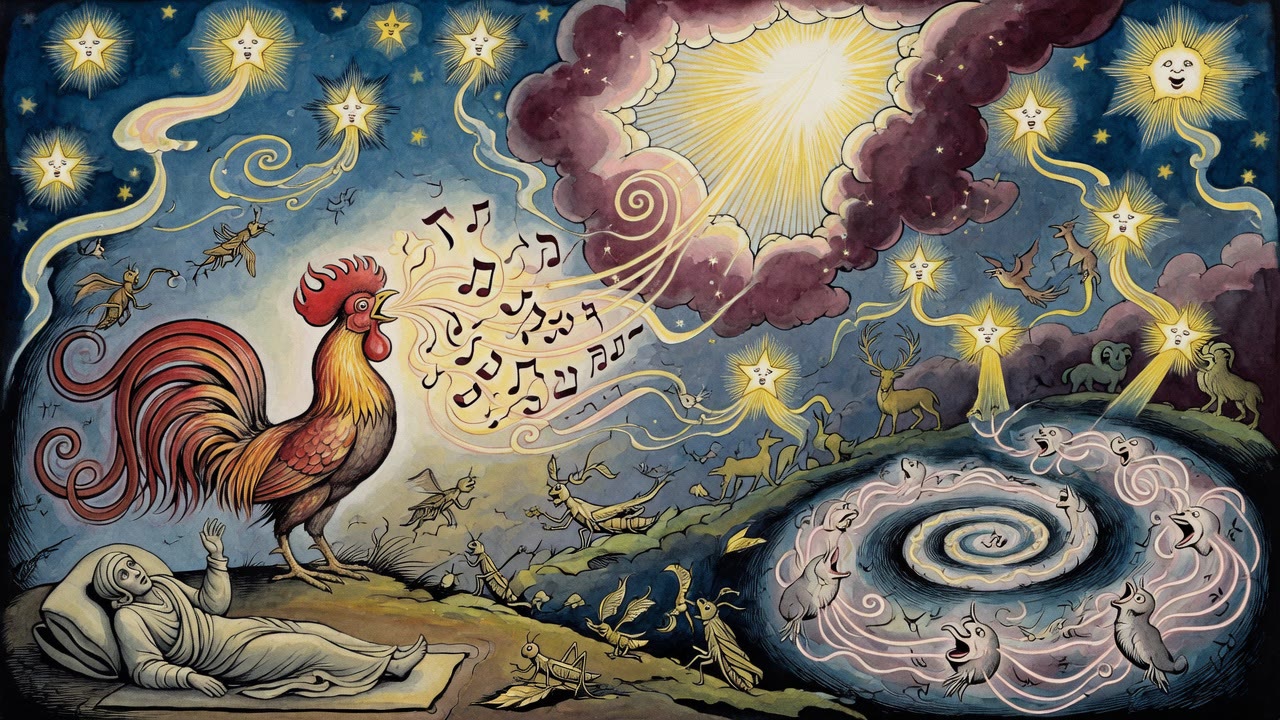
The song did not stay in the garden. It ran out along the edge of the world and struck the roofs of sleeping men, and on one low roof it found a cock.

The Cock Crowed Seven Verses Into the Dark

The bird woke, shook itself, and began. Seven times it crowed, and each cry was a verse. First it flung open the gates of heaven with its voice, "Lift up your heads, O ye gates, and be ye lift up, ye everlasting doors, and the King of glory shall come in." Then it turned on the men below and summoned them to study, "Arise, ye righteous, and occupy yourselves with the Torah, that your reward may be abundant in the world to come."

The man on the mat heard the next cry come straight through the wall and land on him. "How long wilt thou sleep, O sluggard? When wilt thou arise out of thy sleep?" And then, sharper, "Love not sleep, lest thou come to poverty. Open thine eyes, and thou shalt be satisfied with bread." He lay very still. The bird crowed its last, "It is time to work for the Lord," and would not stop.

He sat up in the dark. He was listening now, and once a man begins to listen, the silence he trusted is gone.

Every Throat Had Its Verse

The ground beneath the house was singing. "From the uttermost part of the earth have we heard songs, glory to the Righteous," said the earth, low, in the man's own floor. From past the fields came the sea, thundering its one line, "Above the voices of many waters, the mighty breakers of the sea, the Lord on high is mighty." Overhead the stars he had cursed for their silence turned out to have been singing the whole time. "Thou art the Lord, even Thou alone. Thou hast made heaven, the heaven of heavens, with all their host, and Thou preservest them all."

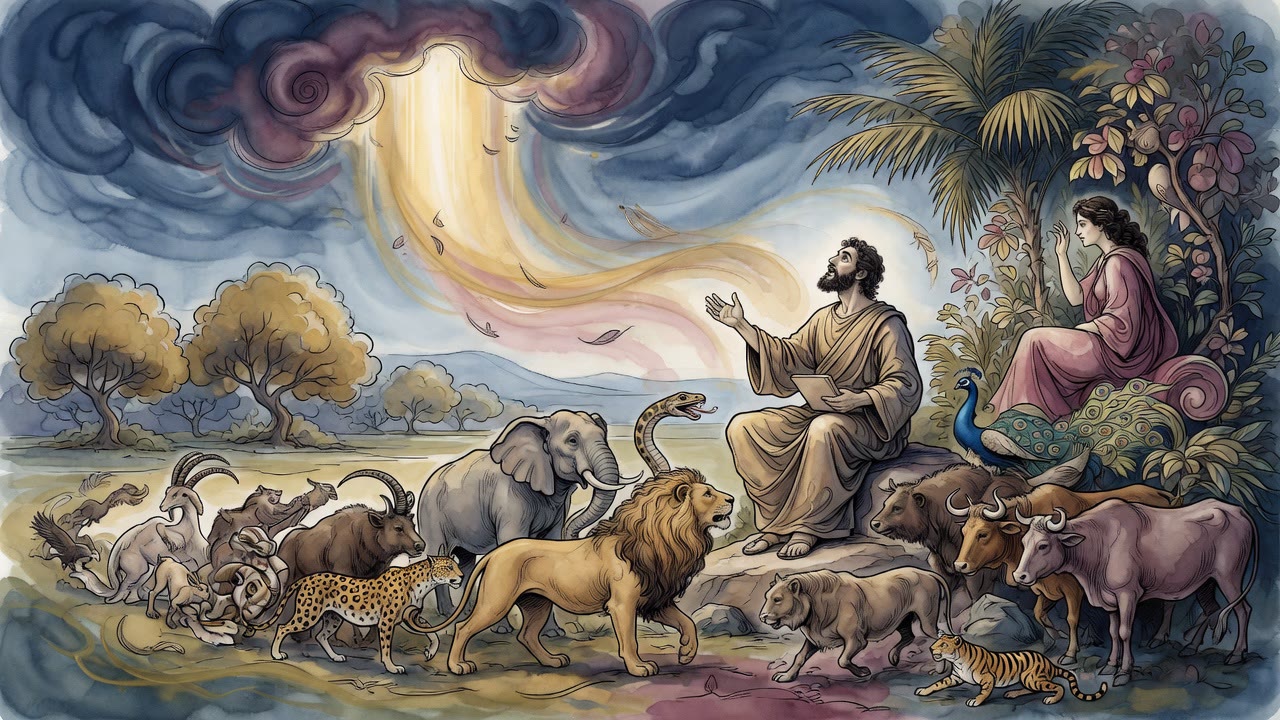
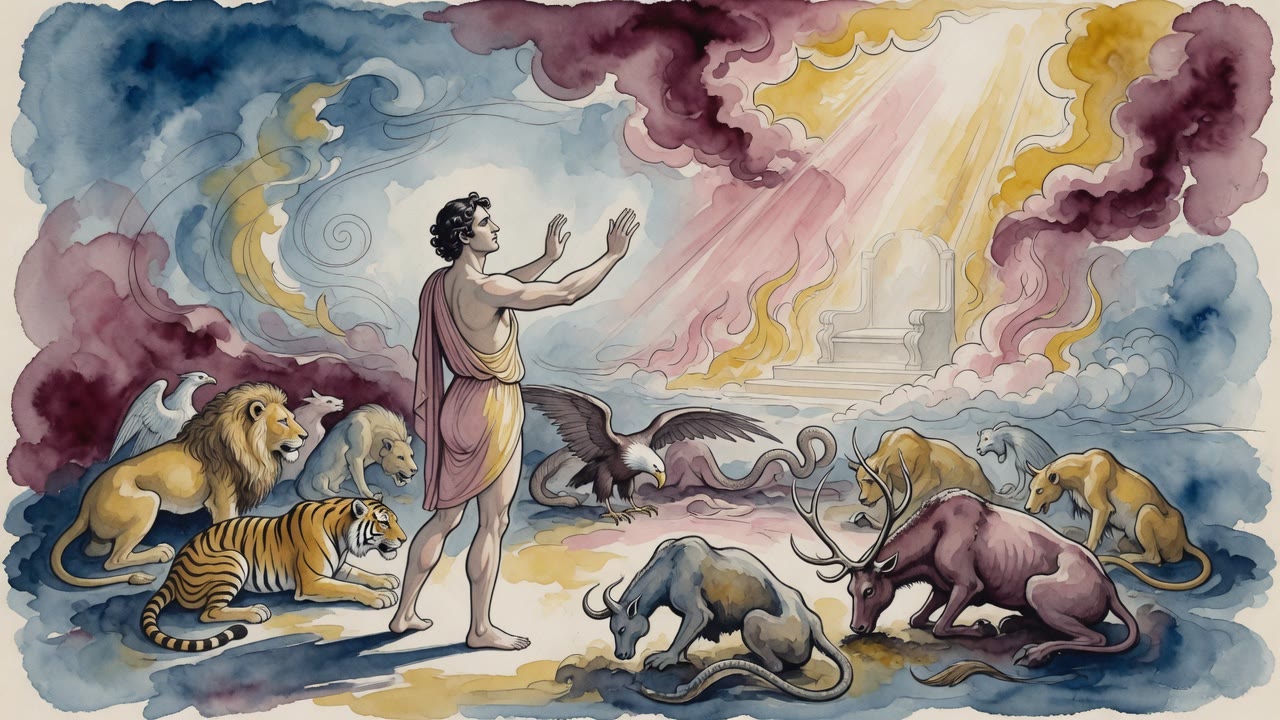
Then the animals. Somewhere a lion opened its chest and roared a psalm, "The Lord shall go forth as a mighty man. He shall stir up jealousy like a man of war." A fox, thin and quick along a wall, cried out for justice against every cheat, "Woe unto him that buildeth his house by unrighteousness, and giveth his neighbor not his hire." In the river the fishes, the ones men call dumb, said, "The voice of the Lord is upon the waters, the God of glory thundereth." A frog in the reeds answered with the words the man knew from his own prayers, "Blessed be the name of the glory of His kingdom forever and ever." Even a mouse in the wall confessed, "Thou art just in all that is come upon me, for Thou hast dealt truly, but I have done wickedly." And the cat that slept by the hearth lifted its head and sang the plainest verse of all, "Let everything that hath breath praise the Lord."

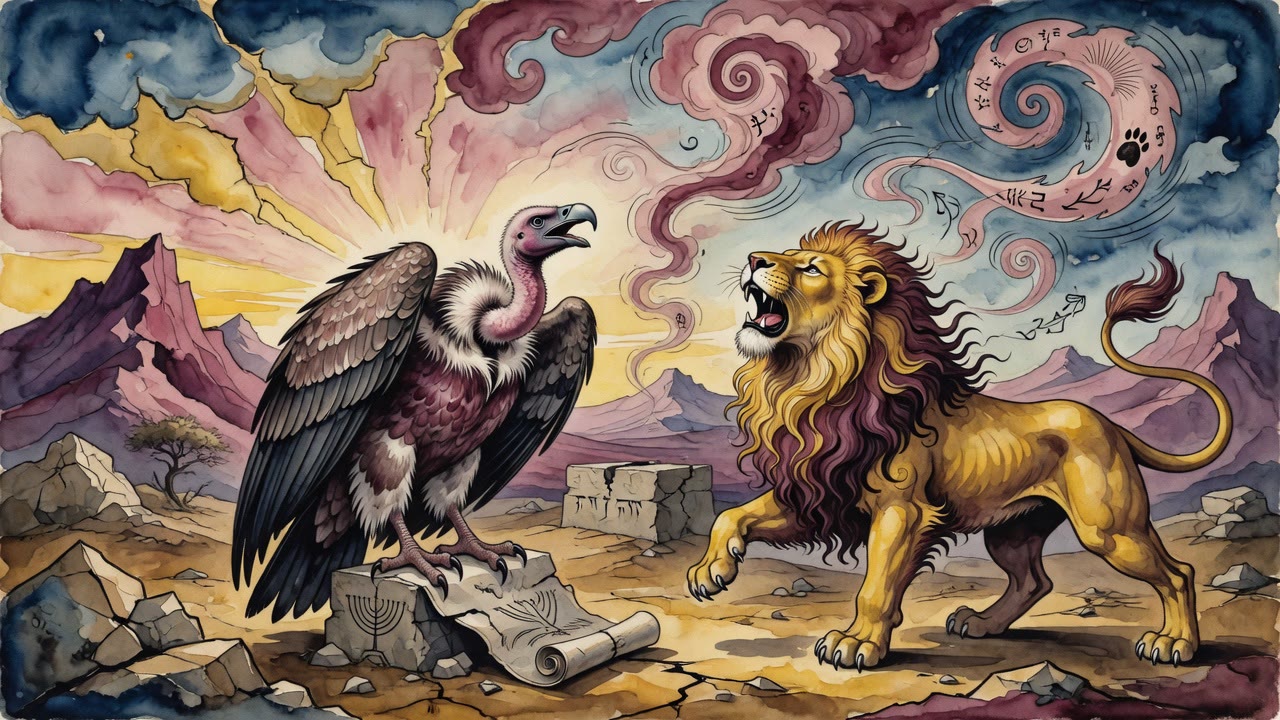
Only one bird held its tongue. The vulture kept its verse folded away, saving the single line it will one day scream over the whole earth, when it announces that the redeemer has come.

Nothing Was Made Without a Use

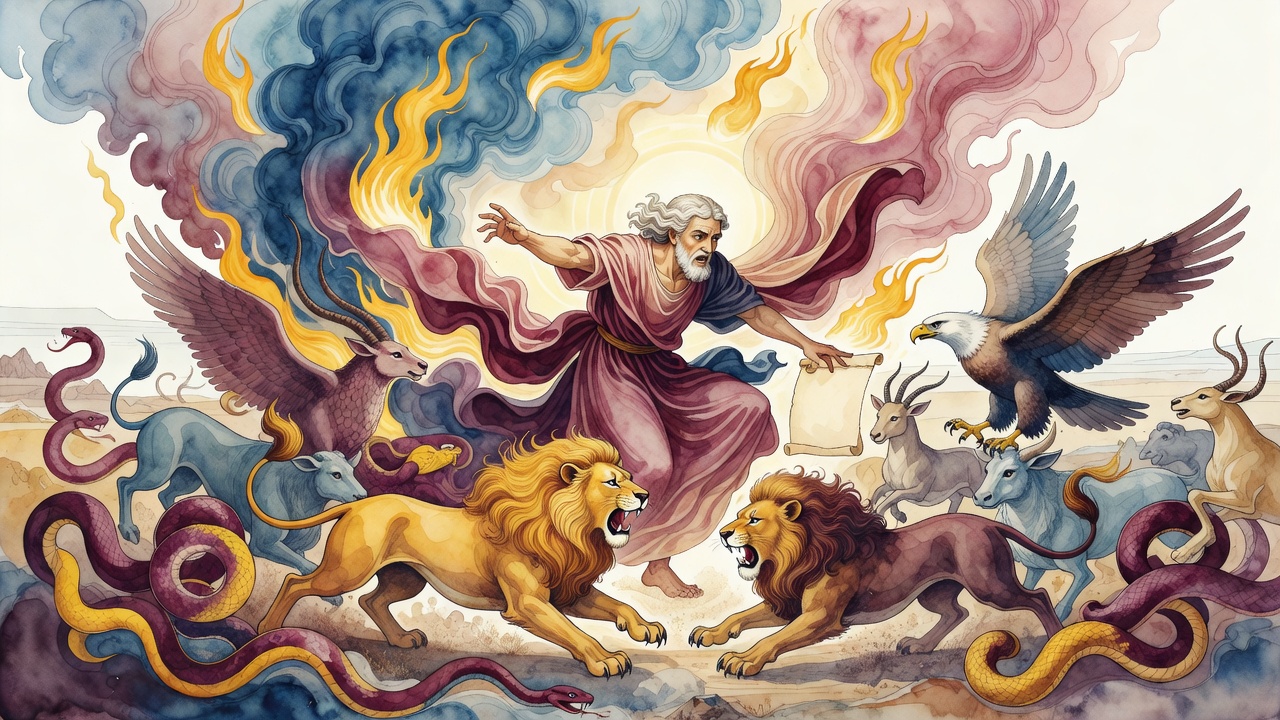
The man rose and stood in his doorway, and the thing that had frightened him folded over into something else. He had thought the frog worthless, the gnat a nuisance, the snail a slow smear across a stone. Now he knew each singer carried a gift hidden in its body. The slime the snail leaves behind heals a man's boils. Crush a common housefly and it soothes the burn of a hornet's sting. The gnat, which only ever takes food in and gives nothing back, is the very cure for the bite of a viper, and the viper's own flesh answers eruptions of the skin, and the lizard undoes the poison of the scorpion. Whatever crawls or stings, God had bent it toward some healing.

And every one of them, he saw, was also a teacher. The cat buries its own filth for shame, and no man taught it modesty. The ants keep a whole city and never once rob one another. The rooster on his roof promises his hen a cloak before he takes her, and swears he will bring it when he can. The grasshopper sings until it bursts its own body and dies mid-song, because a duty is a duty whatever it costs. The stork keeps faith with its mate and feeds its young. And the frog he had scorned, when it sees a hungry creature by the water, offers up its own soft body to be eaten, so that the words come true, "If thine enemy be hungry, give him bread to eat."

The sky at the field's edge had gone the color of ash going pale. The cock was still crowing. The man stood in the door of the house he had called a cold and silent place, and found that his own throat was not silent either, and that it had been waiting all his life for a verse of its own.


← All myths
From the tradition

Sources

3 sources

The texts behind this telling. Some cards carry a translation of the source; others are our own retelling of it, and each card says which. Every card links out to the original.

Legends of the Jews 1:75Legends of the Jews

Retold in our words. Read the original at the link below.The Legends of the Jews by Louis Ginzberg (1909) · Public Domain

Praise is often remembered as something reserved for humans, something we consciously offer up. But what if everything around us, every living thing, is constantly singing God's praises?

Jewish tradition certainly suggests so. According to the Legends of the Jews, every plant has its own unique song. The fruitful tree bursts forth with the words, "Then shall all the trees of the wood sing for joy, before the Lord, for He cometh; for He cometh to judge the earth" (Psalm 96:12-13). The fields of grain, heavy with bounty, sing, "The pastures are covered with flocks; the valleys also are covered over with corn; they shout for joy, they also sing" (Psalm 65:13).

What about the birds? They're practically synonymous with song, aren't they? And within that chorus, one voice stands out: the cock. Now, you might be thinking, "A rooster? Really?" But consider this: in Jewish lore, the rooster plays a vital role in awakening the world to prayer.

In Legends of the Jews, when God visits the righteous in Paradise at midnight, all the trees there erupt in adoration. Their songs, in turn, awaken the rooster, who then begins his own series of praises to God. Imagine that, a celestial harmony triggering the dawn's first call to prayer!

This isn't just any crowing, either. The rooster's song is actually a series of seven verses, each a powerful reminder of faith and purpose.

The first two verses are a call to open the gates for God: "Lift up your heads, O ye gates; and be ye lift up, ye everlasting doors, and the King of glory shall come in. Who is the King of glory? The Lord strong and mighty, the Lord mighty in battle." And then repeated, "Lift up your heads, O ye gates; yea, lift them up, ye everlasting doors, and the King of glory shall come in. Who is this King of glory? The Lord of hosts, He is the King of glory" (Psalm 24:7-10). A powerful image of welcoming the Divine into our lives.

The third verse urges the righteous to engage with Torah: "Arise, ye righteous, and occupy yourselves with the Torah, that your reward may be abundant in the world hereafter." It's a reminder that learning and engaging with our tradition bring blessings in this world and the next.

Then comes a verse of hope: "I have waited for Thy salvation, O Lord!" (Genesis 49:18). A cry of longing and trust in God's promise.

The next two verses serve as a wake-up call, literally and figuratively: "How long wilt thou sleep, O sluggard? When wilt thou arise out of thy sleep?" (Proverbs 6:9). Followed by, "Love not sleep, lest thou come to poverty; open thine eyes, and thou shalt be satisfied with bread" (Proverbs 20:13). A reminder not to waste our time, and to seize the opportunities each day brings.

Finally, the seventh verse is a call to action: "It is time to work for the Lord, for they have made void Thy law" (Psalm 119:126). A stirring reminder that when divine law is neglected, it's our duty to actively work to restore it.

So, the next time you hear a rooster crow, remember this ancient legend. It's more than just a farmyard sound; it's a powerful call to awaken our spirits, engage with our faith, and actively work to bring more holiness into the world. It's a reminder that even the simplest creatures can sing praises to the Divine, and that we, too, can find our own song of praise in the everyday. What will your song be today?

Full source
Legends of the Jews 1:73Legends of the Jews

Retold in our words. Read the original at the link below.The Legends of the Jews by Louis Ginzberg (1909) · Public Domain

Not literally, of course. But according to Jewish tradition, everything – absolutely everything – is constantly offering praise to the Creator.

That the universe isn't just a silent, cold expanse, but a chorus of voices, each with its own unique way of glorifying God.

The Legends of the Jews (Ginzberg) tells us that all of creation was brought into existence specifically for God’s glory. And that includes every single creature, from the smallest insect to the most distant star. Each has its own special hymn. Heaven and earth, Paradise and, yes, even hell. The stark beauty of the desert, the bounty of a field, the rushing rivers, and the vast, mysterious seas – they all participate in this cosmic harmony, each offering its own form of homage.

The earth itself, the very ground beneath our feet, sings out, "From the uttermost part of the earth have we heard songs, glory to the Righteous." It’s a snippet from Isaiah (24:16), evidence of the earth's inherent connection to the divine.

And the sea? Oh, the sea has a voice that thunders. "Above the voices of many waters, the mighty breakers of the sea, the Lord on high is mighty," it proclaims, echoing the words of (Psalm 93:4). The sheer power and immensity of the ocean become evidence of God's own power.

But it’s not just the grand and imposing aspects of creation that offer praise. Even the celestial bodies, the very elements themselves – the sun, moon, and stars, the clouds and the winds, lightning and dew – they all join in the chorus.

The sun, a symbol of light and life, declares, "The sun and moon stood still in their habitation, at the light of Thine arrows as they went, at the shining of Thy glittering spear." This comes from Habakkuk (3:11) reminding us of the sun's obedience to the divine will.

And the stars, those distant pinpricks of light that have captivated humanity for millennia? They sing, "Thou art the Lord, even Thou alone; Thou hast made heaven, the heaven of heavens, with all their host, the earth and all things that are thereon, the seas and all that is in them, and Thou preservest them all; and the host of heaven worshippeth Thee." This is taken from Nehemiah (9:6), a powerful affirmation of God's sole dominion over all creation.

If everything around us is constantly singing God's praises, are we listening? Are we participating in the song? Maybe, just maybe, if we open our hearts and minds, we can hear the whispers of creation and join in the eternal hymn.

Full source
Legends of the Jews, I. The Creation Of The World, All Things Praise The LordLegends of the Jews

Retold in our words. Read the original at the link below.Project Gutenberg eBook #1493, The Legends of the Jews, Volume 1 · Public Domain

As retold by Ginzberg, whatever God created has value. That the snail leaving its slimy trail is actually serving a purpose, providing a remedy for boils. That the sting of a hornet can be healed by a crushed housefly. Even the seemingly useless gnat, who only takes in food, becomes an antidote to viper venom! And the venomous viper itself can cure eruptions, while a lizard is the antidote to a scorpion’s sting.

It’s about wisdom. God "teacheth us through the beasts of the earth, and maketh us wise through the fowls of heaven." The natural world becomes our teacher, if we’re willing to learn.

If the Torah hadn't been revealed to us, we could still learn about decency from the cat who buries its waste, about respecting property from ants who never steal from each other, and about decorum from the rooster who promises his hen a cloak before mating, and then reminds her he’ll provide it when he can!

Even the grasshopper, singing its heart out until it literally bursts, teaches us to do our duty regardless of the consequences. And the stork? He becomes a model of family purity and compassion.

Perhaps most surprisingly, even the humble frog can teach us. According to the Legends, some animals by the water live solely off aquatic creatures. When a frog sees one of them hungry, it offers itself as food, fulfilling the commandment, "If thine enemy be hungry, give him bread to eat; and if he be thirsty, give him water to drink." (Proverbs 25:21).

The whole of creation, then, is a harmony of praise. Everything exists to glorify God, each creature with its own unique song. Heaven and earth, paradise and hell, desert and field, rivers and seas – all have their own way of paying homage.

The earth sings, "From the uttermost part of the earth have we heard songs, glory to the Righteous." (Isaiah 24:16). And the sea exclaims, "Above the voices of many waters, the mighty breakers of the sea, the Lord on high is mighty." (Psalm 93:4).

Even the celestial bodies join the chorus. The sun, moon, and stars, the clouds and the winds, lightning and dew – all proclaiming the praise of their Creator. The sun sings, "The sun and moon stood still in their habitation, at the light of Thine arrows as they went, at the shining of Thy glittering spear" (Habakkuk 3:11); and the stars declare, "Thou art the Lord, even Thou alone; Thou hast made heaven, the heaven of heavens, with all their host, the earth and all things that are thereon, the seas and all that is in them, and Thou preservest them all; and the host of heaven worshippeth Thee." (Nehemiah 9:6).

And the plants! The fruitful tree sings, "Then shall all the trees of the wood sing for joy, before the Lord, for He cometh; for He cometh to judge the earth" (Psalm 96:12-13); and the ears of grain sing, "The pastures are covered with flocks; the valleys also are covered over with corn; they shout for joy, they also sing." (Psalm 65:14).

Among the birds, the cock is particularly revered. The Midrash (rabbinic interpretive commentary) tells us that when God visits the pious in Paradise at midnight, the trees break into song, awakening the cock, who then begins his own praise. Seven times he crows, each time reciting a verse. He calls out, "Lift up your heads, O ye gates; and be ye lift up, ye everlasting doors, and the King of glory shall come in. Who is the King of glory? The Lord strong and mighty, the Lord mighty in battle." (Psalm 24:7-8). He urges, “Arise, ye righteous, and occupy yourselves with the Torah, that your reward may be abundant in the world hereafter!” He even scolds the lazy: "How long wilt thou sleep, O sluggard? When wilt thou arise out of thy sleep?" (Proverbs 6:9).

Even the vulture has a song, according to tradition: "I will hiss for them, and gather them; for I have redeemed them, and they shall increase as they have increased" (Zechariah 10:8). It’s said that this is the very verse the bird will use to announce the coming of the Messiah!

The lion proclaims, "The Lord shall go forth as a mighty man; He shall stir up jealousy like a man of war; He shall cry, yea, He shall shout aloud; He shall do mightily against his enemies" (Isaiah 42:13); and the fox exhorts unto justice, saying, "Woe unto him that buildeth his house by unrighteousness, and his chambers by injustice; that useth his neighbor's service without wages, and giveth him not his hire." (Jeremiah 22:13).

Even the "dumb fishes" know how to praise God. "The voice of the Lord is upon the waters," they say, "the God of glory thundereth, even the Lord upon many waters." (Psalm 29:3) And the frog? He exclaims, "Blessed be the name of the glory of His kingdom forever and ever" – a phrase central to Jewish prayer and devotion.

Even the reptiles join the chorus. The mouse extols God with the words: "Howbeit Thou art just in all that is come upon me; for Thou hast dealt truly, but I have done wickedly" (Nehemiah 9:33). And the cat, finally, sings: "Let everything that hath breath praise the Lord. Praise ye the Lord." (Psalm 150:6).

So, what does this all mean? Perhaps it’s an invitation to look at the world with new eyes. To see purpose and value in everything, even the things we don't understand. To recognize that we are all part of a greater whole, a magnificent harmony of praise to the Creator. And to remember, as we go about our day, that even we have a unique song to sing.

Full source