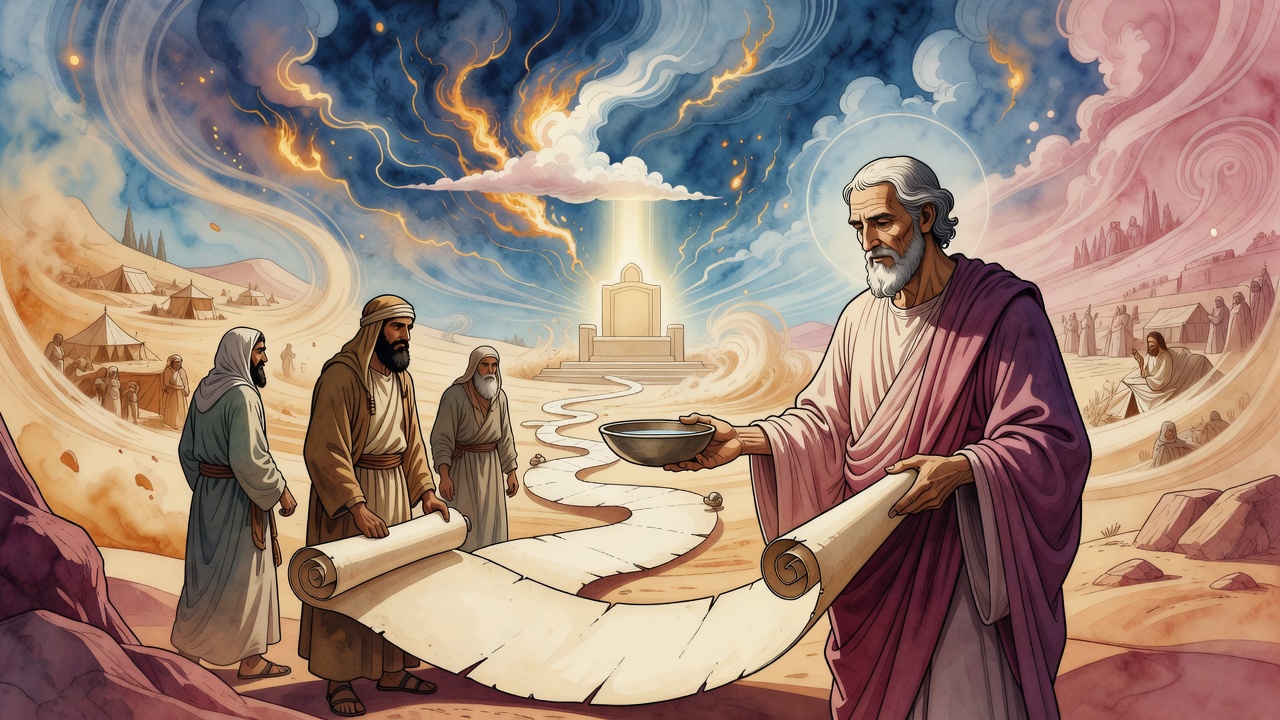
God Asked Abraham to Choose Between Gehenna and Exile
God shook the sea so Moses could see the crocodile, and shook the fire so he could see the salamander. Four things needed a finger pointed at them.
Table of Contents
 Click for full size
God Shook the Sea So Moses Could See
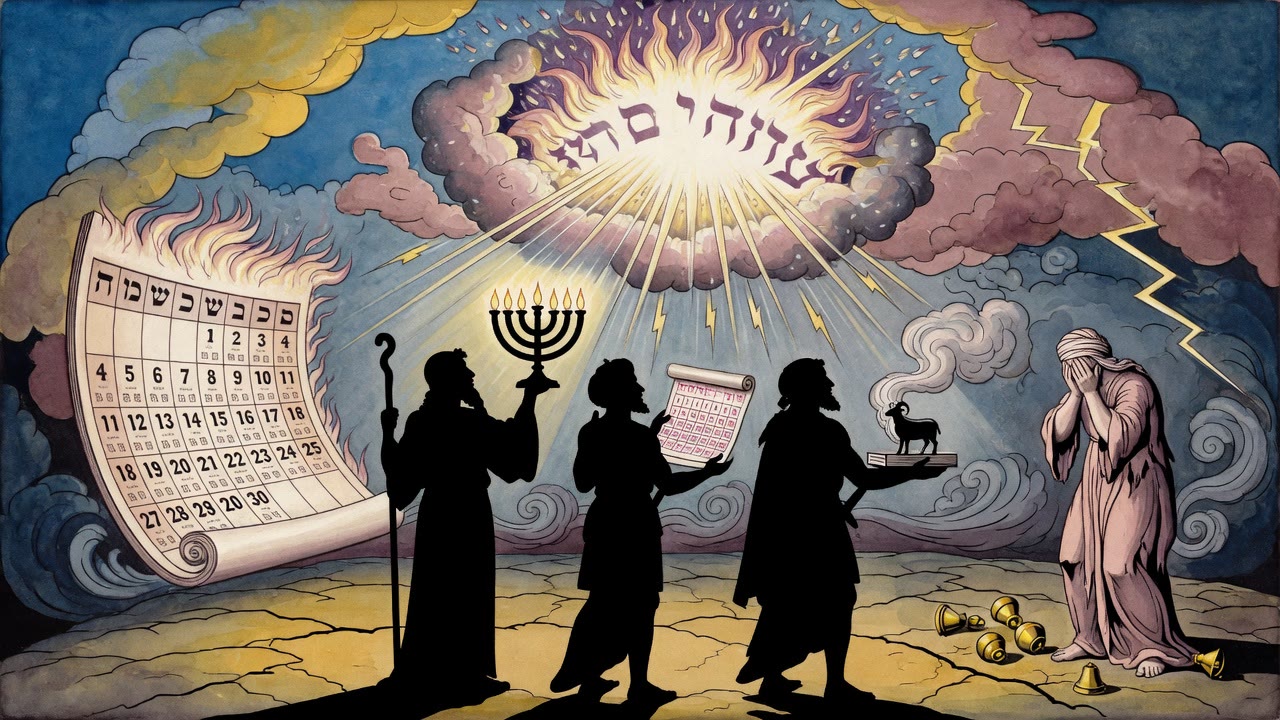
There were four things Moses could not get hold of, and for each one a finger came out and pointed.
This is the recipe for the anointing oil. This is how the lampstand is beaten out of one piece. This is the creeping thing that makes you unclean. This month is yours, and it starts here, at this exact sliver of moon.
The last one is the reason the other three are on the list. Moses stood under an open sky with the crescent somewhere in it and could not find the moment the month turned over, so God put a finger up next to it.
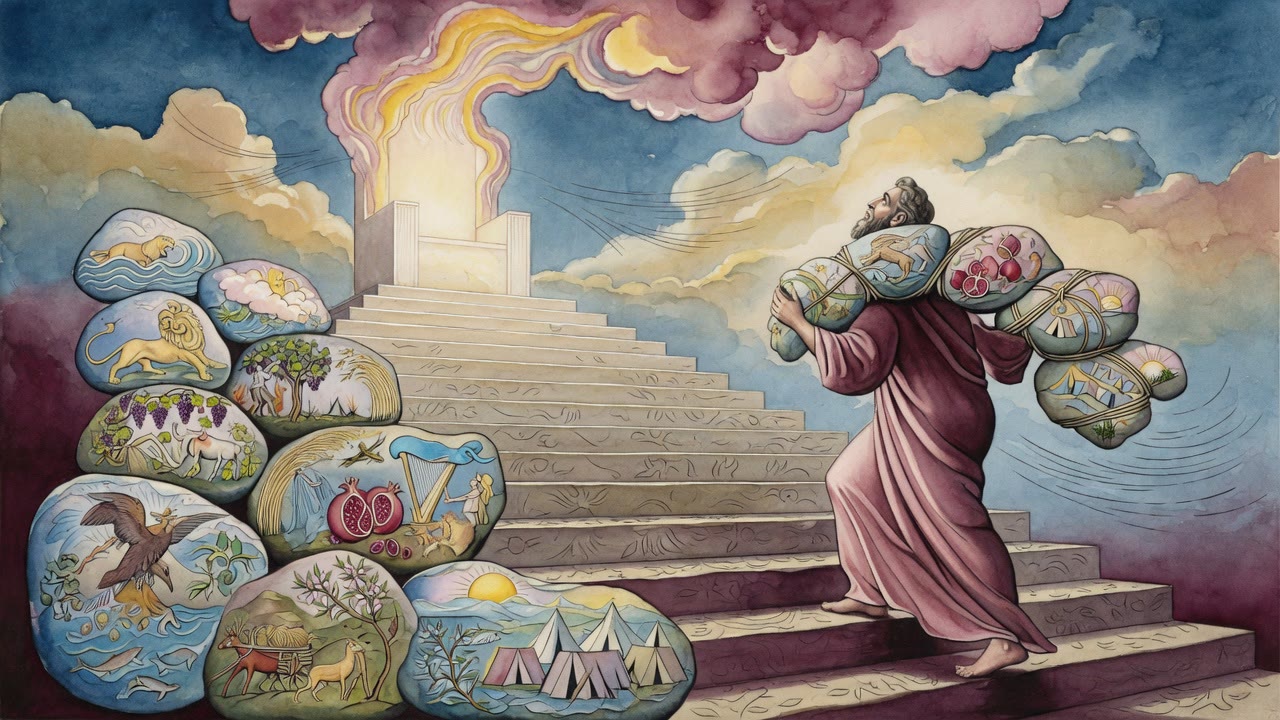
The swarming creatures took more work than that. To teach one list of unclean animals, God shook the sea and brought the crocodile up out of the water where it had been lying flat and invisible. He shook the settled country and the turtle came out of hiding. He shook the wilderness and up came the du'ar, the desert poison that the old teachers said was born when a snake mated with a turtle. Then He shook the fire itself, and the salamander crawled out of the flames it lives in, and Moses looked at it.
The One who set the constellations in place spent an afternoon rattling the world's four hiding places so that one man could learn a list.
The Lamp God Did Not Need
Bring Me pure beaten olive oil, God said, and keep a lamp burning in the tent.
Israel pushed back. It is You who lights my lamp, they said, quoting their own psalm at Him. And now You want us to light one for You?
The answer came as a story about two men on a road. One could see and one could not, and the sighted one took the blind one's arm and walked him the whole way home. When they got inside, the sighted man said, go and light the lamp for me. Not because he needed it. Because the blind man had been carried the entire journey, and would go on being the man who was carried, unless he was given one thing to do for the other.
God is the man with eyes, whose gaze runs over the whole earth. Israel is the other one, groping along a wall at noon like a blind man in the dark, which is what they were doing at the sixth hour of the day the calf was made. He had gone in front of them the whole way out of Egypt in a pillar of fire. Then He asked them for a lamp, so the nations would say that Israel gives light to the One who gives light to everyone.
The Friend Who Insulted the King in Public
A man once stood up in the open and criticized the king to his face, in front of everybody.
The king did not have him removed. He took him into the household instead, made him his own protégé, gave him a place he was never to leave, and fed him from what came back off the royal table.
That is what happened to Aaron. He had stood in the middle of the camp while the gold went into the fire and had done what Israel did. Then he was made High Priest, and told he was not to go out of the sanctuary, and given the leftover of the meal offering to eat, which is the portion scraped back from what has already been given to God.
The punishment and the promotion arrived in the same sentence. He never got to leave the room again.
Abraham Stood in the Dark and Could Not Choose
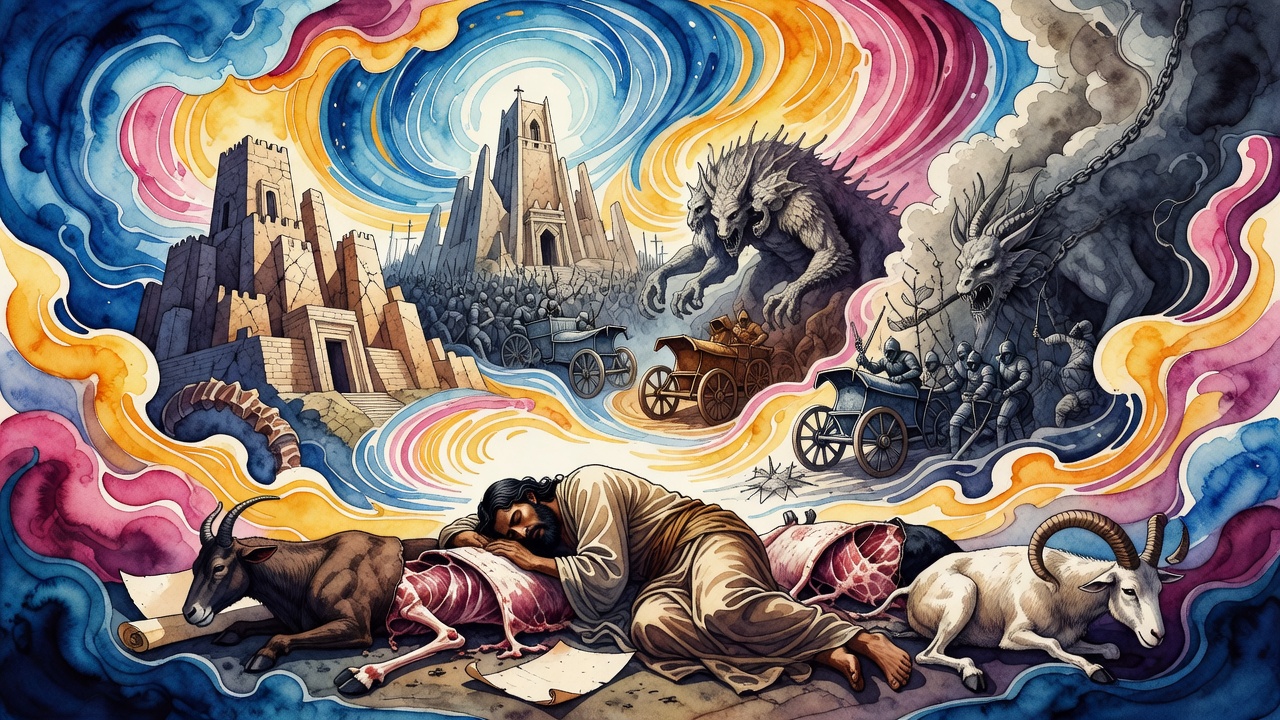
The oldest of these askings happened at night, in a field, between the halves of cut animals.
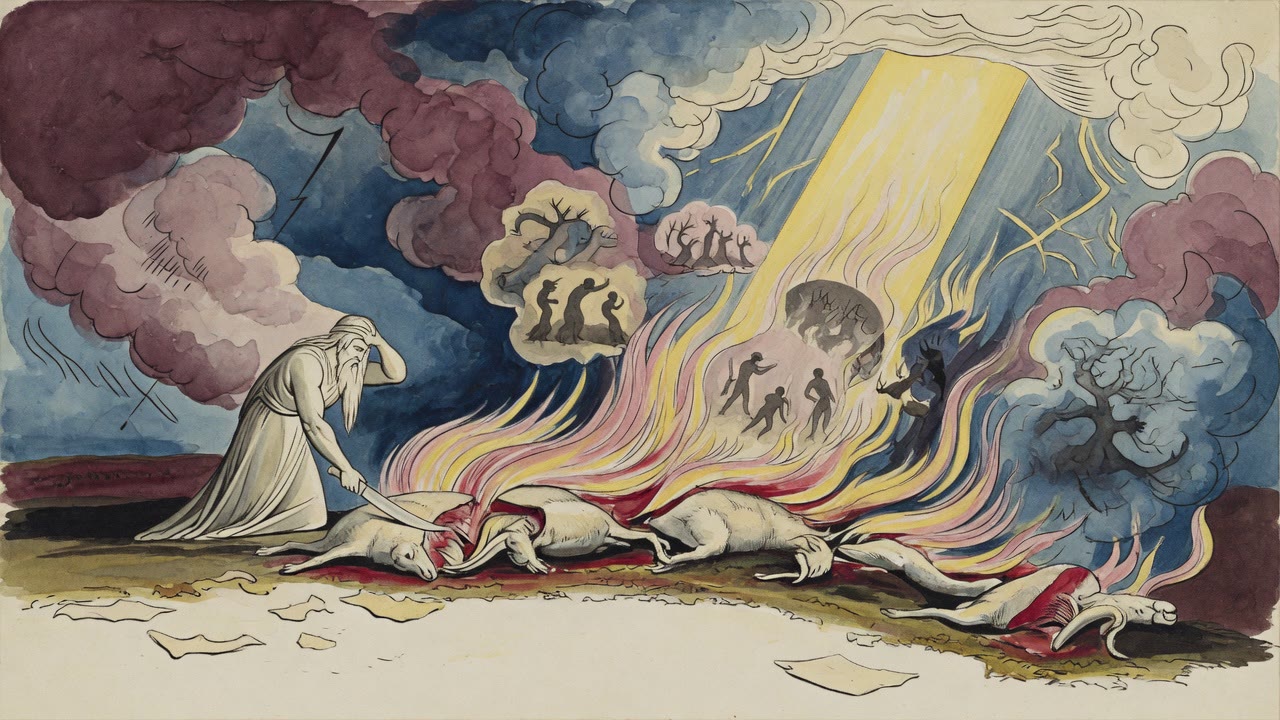
Abraham had split a heifer and a goat and a ram and laid the pieces facing each other, and put a turtledove and a pigeon down whole, and driven off the birds that came for the meat all afternoon. When the sun went down a dread fell on him and a thick darkness. Then a smoking furnace and a burning torch moved down the aisle between the carcasses.
He was being shown four things in that fire. The Torah, which comes with smoke and flame on a mountain. Gehenna, which comes with the same smoke and the same flame. The offerings, which were lying cut open in front of him. And the exiles, packed into the four words of his own terror. Fear, which is Babylon. Darkness, which is Media, that darkened Israel's eyes with its decrees. Great, which is Greece. And fell upon him, which is Edom.
Then came the question. Your descendants will let the offerings lapse, God told him. So choose. Which do you want them subjugated by, Gehenna (the realm of judgment after death) or the kingdoms?
Rabbi Hanina bar Pappa said Abraham chose exile. Rav Huna, in the name of Rav Aha, said something harder to read past. Abraham stood there in the dark turning it over and could not do it. He did not know which one to pick for his own children. He stood and he wondered, and nothing came, until God told him what to choose, and he said it back.
Half of Gehenna is fire and half of it is hail. That was the other option. What Abraham said, standing among the pieces with the torch still moving, was exile.
← All myths