5 min read

When Abraham Bound Isaac, God Bound the Princes of the Nations

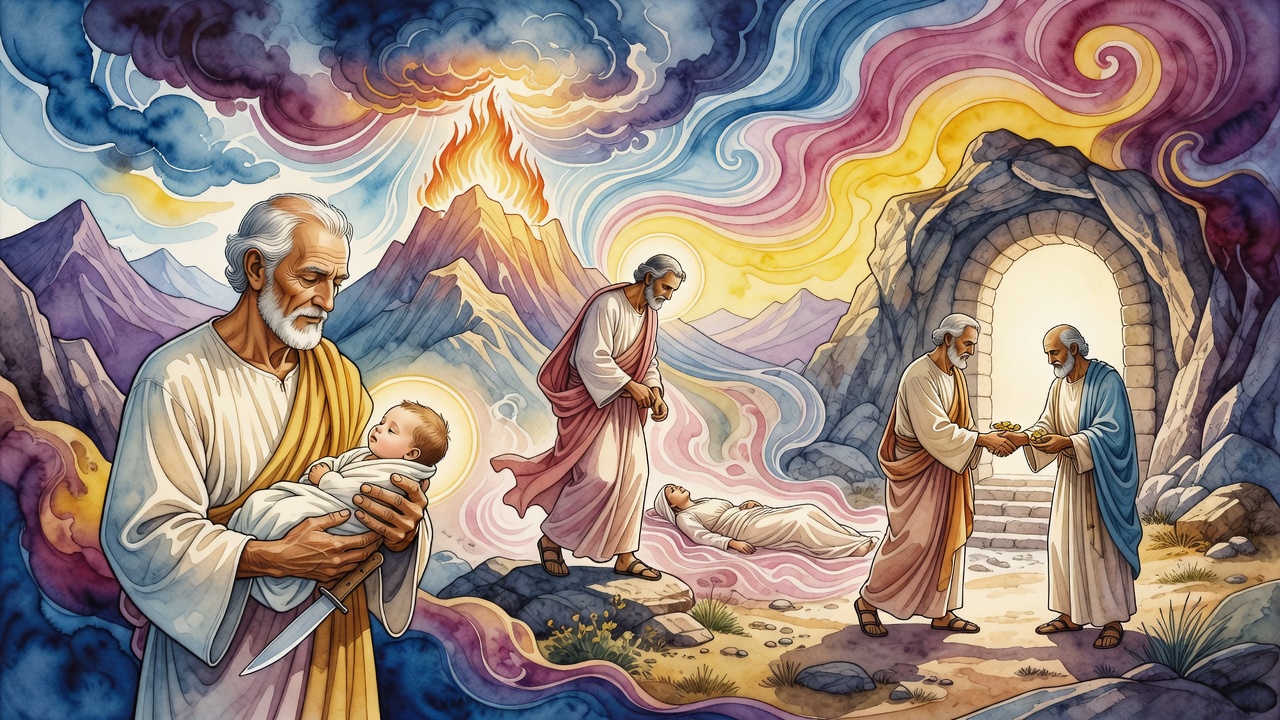
Before he tied the first knot Abraham hid the boy, afraid that someone who had come to stop him would throw a stone and leave a mark on the offering.

Curated by Arthur · Told by Maggid ·
Table of Contents
  1. He Hid the Boy Before He Built the Altar
  2. The Rope Below and the Ropes Above
  3. The Angels Cried Outside
  4. News From Haran While He Was Still on the Mountain
  5. The Day the Bonds Came Loose
When Abraham Bound Isaac, God Bound the Princes of the Nations Click for full size

He Hid the Boy Before He Built the Altar

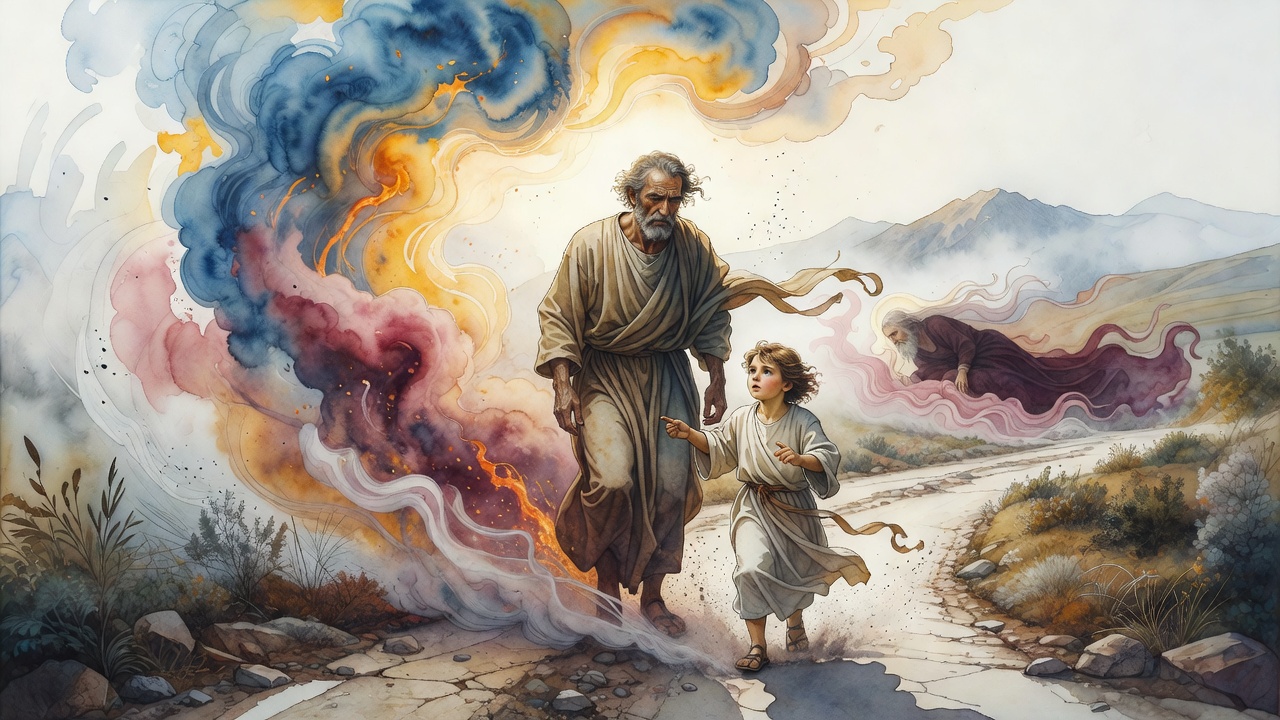
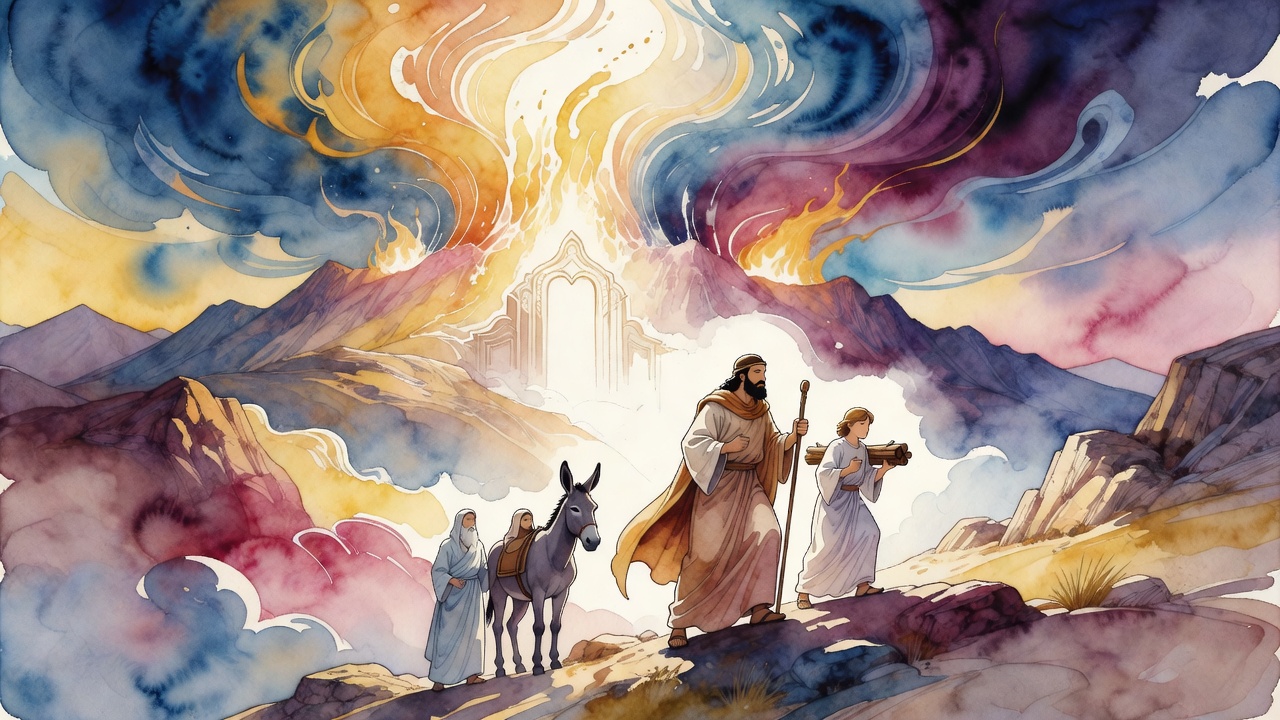
They reached the place and Abraham did something before he touched a single stone. He took Isaac and put him out of sight.

Rabbi Levi knew why. Somebody might come up that mountain to argue him out of it, and an argument on a mountain has a way of ending with a stone in a man's hand. One thrown stone, one bruise, and the boy is blemished and unfit and the whole three days on the road are wasted. So the father hid the son from the people who would have saved him.

Then he built. He set the stones himself, one course and another, and laid the wood in order on top, and the boy stayed where he had been put and did not call out. When the altar was finished Abraham went and brought him back into the open.

The Rope Below and the Ropes Above

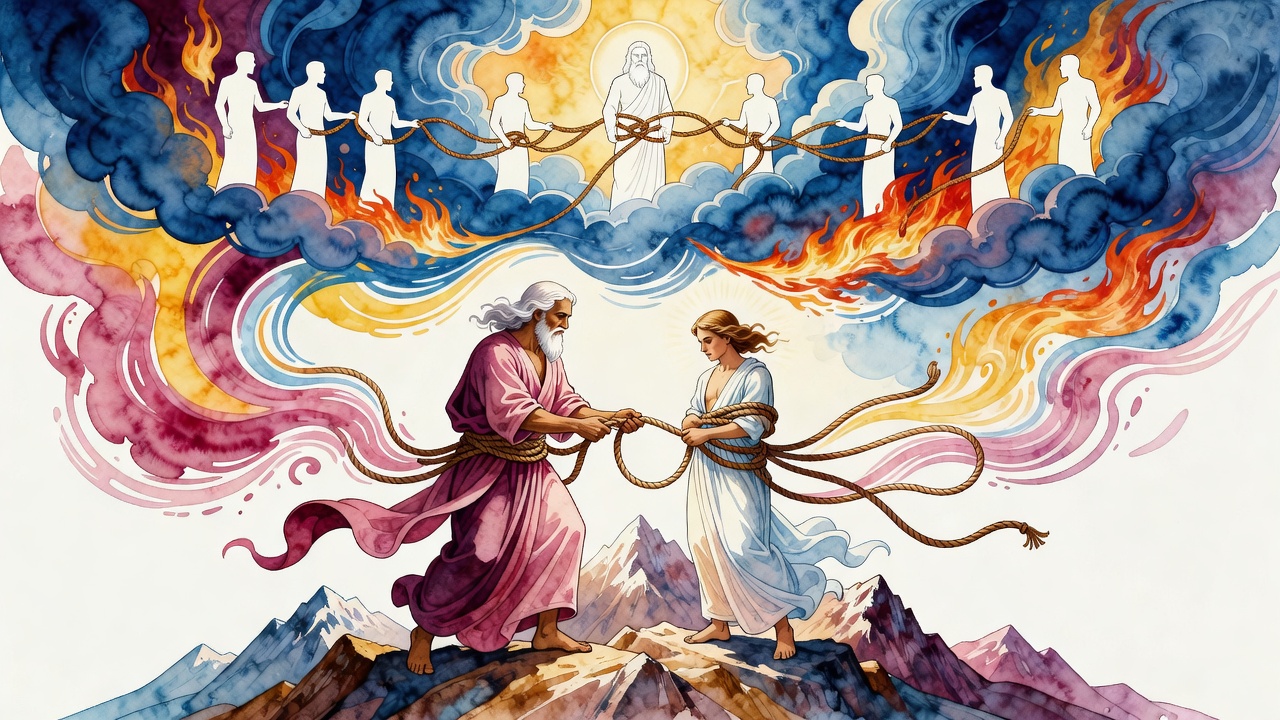
Cord over the wrists. Cord over the ankles. Rabbi Hofni bar Isaac watched the whole length of that binding and said that every turn Abraham took around his son below, the Holy One was taking around somebody else above.

The princes of the nations, the angels set over the kingdoms of the earth, were being bound while nobody on the mountain was looking. Whatever they had been doing, they stopped doing it. Their hands came together behind them. Every kingdom that would ever come at Abraham's children with an army had a patron in the upper world, and one by one those patrons went quiet and stayed quiet, and no army below understood why its luck had changed.

Isaac lay on the wood. Nothing in his ears but wind and his father's breathing.

The Angels Cried Outside

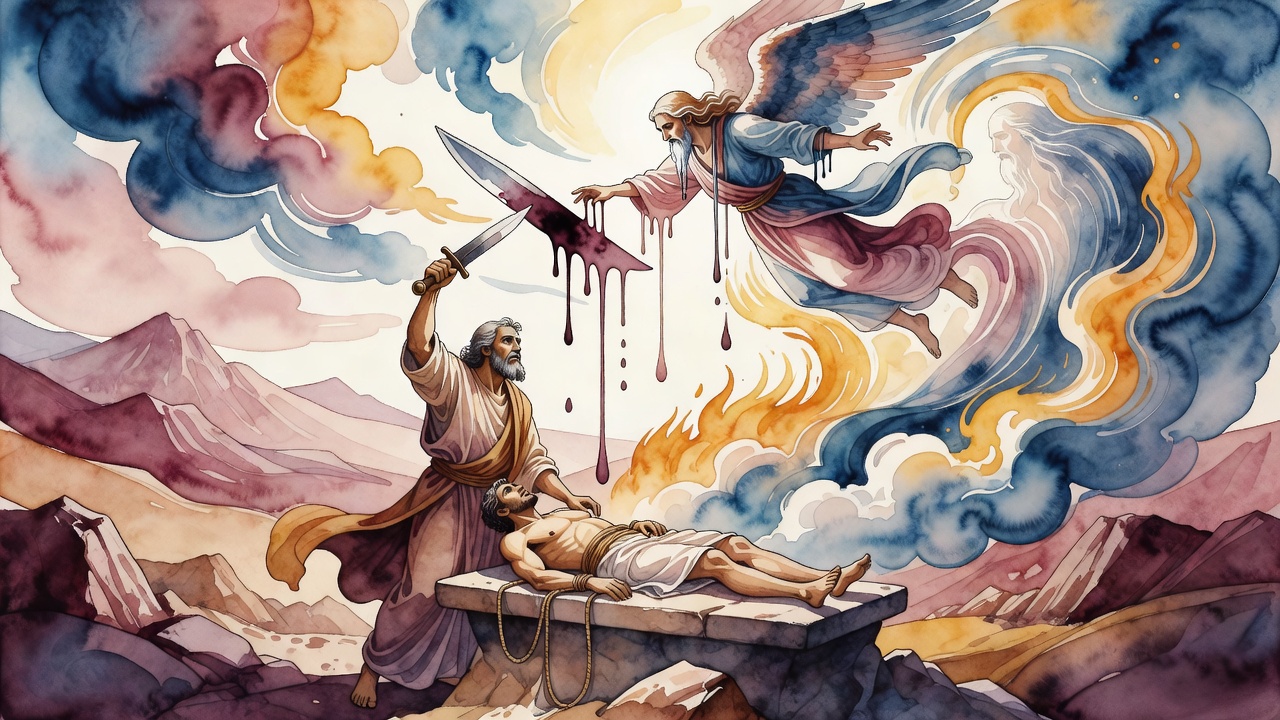
Abraham put out his hand and took the knife.

Then the ministering angels broke. They cried out, and they cried out on the outside, in the open air, where the whole household of heaven could hear them, because Rabbi Azariah heard in that word for outside a second word, that a creature was doing a thing outside nature, slaughtering his own son.

And they had a case, and they shouted it.

"The highways are waste." Nobody stops at his tent any more. The traveler who used to be fed and watered and sent on comes down that road now and finds a man on a mountain with a knife.

"The covenant is broken." He said, with Isaac I will establish it. There is no covenant without the boy on the wood.

"He regards no man." Does Abraham's own merit count for nothing here?

The angels wept while they argued, which is not how a court usually behaves. Then the voice came from heaven and stopped the hand, and Abraham looked up and saw the ram with its horns caught in the thicket, and the knife went into an animal instead. He untied his son on an altar built for him.

News From Haran While He Was Still on the Mountain

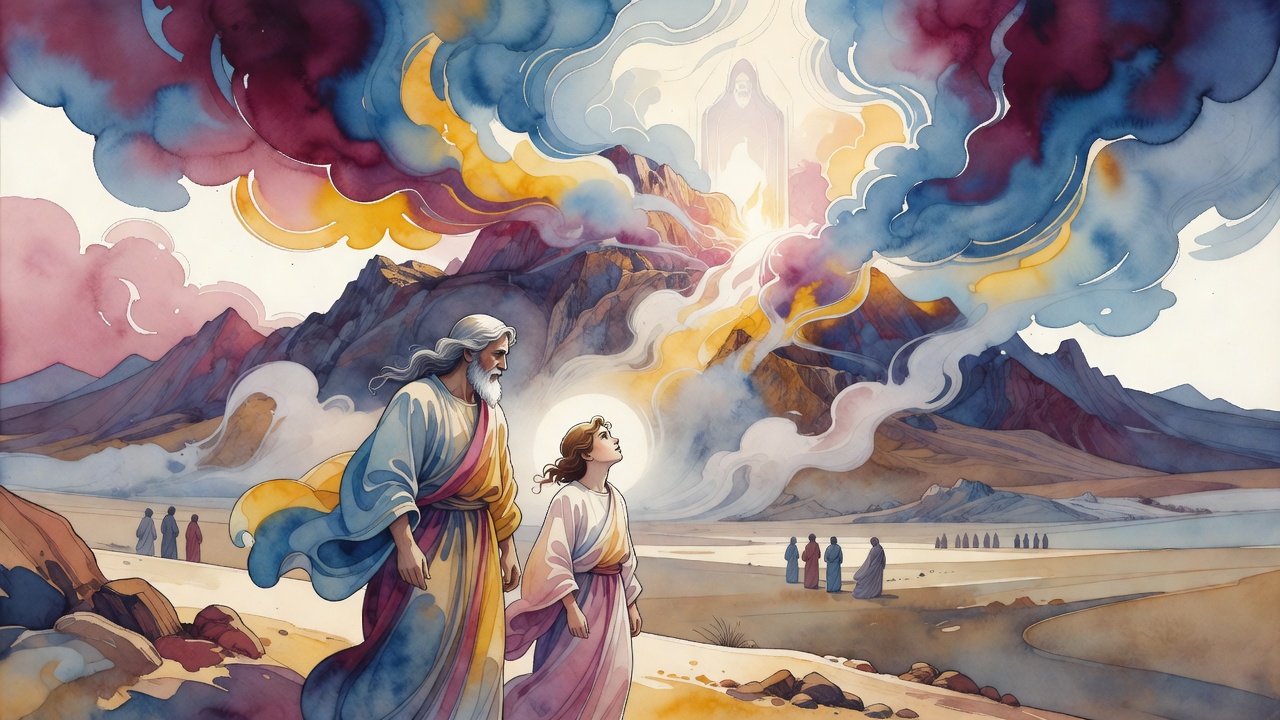
Before he had come down off Moriah a messenger reached him with word from his brother's house far to the north.

Milcah had borne children. The names were read out to a man who had spent three days walking toward the end of his line, and among them, at the bottom of the list, was a granddaughter. The girl who would marry Isaac had been born while the wood was being cut.

Cold water on a parched throat is what good news out of a far country does to a man. He had come up that mountain to close his future with his own hand. He went down it with the boy walking beside him and a bride growing up in Aram.

The Day the Bonds Came Loose

The knots above held for centuries and then they did not.

In the days of Jeremiah, when Israel pulled away, God said the cold thing out loud. What do you think, that those bonds stand forever? Tangled like thorns, and drunk on their own drink, and then the ropes fall off them and they burn through the world like dry stubble.

The princes shook their hands free. Armies that had been losing their nerve for generations found it again. Nobody in Babylon knew that a rope had come off in a place they could not see, and nobody in Jerusalem could point to the hour it happened, but the hour had happened, and the walls came down after it.

What one old man tied on a mountain with his hands shaking, his children's children untied without noticing.


← All myths
From the tradition

Sources

2 sources

The texts behind this telling. Some cards carry a translation of the source; others are our own retelling of it, and each card says which. Every card links out to the original.

Bereshit Rabbah 56:5Bereshit Rabbah

Translation of the source text.Midrash Rabbah -- TE · Public Domain

"And they came to the place that God had told him, and Abraham built there the altar" (Genesis 22:9). And Isaac, where was he? Rabbi Levi said: He took him and hid him, saying, "Lest that one who reviled him cast a stone and disqualify him from the offering." "And Abraham built there the altar, and bound Isaac his son." Rabbi Chofni bar Yitzchak said: All the while our father Abraham was binding Isaac his son below, the Holy One, blessed be He, was subduing the princes of the worshipers of stars above. But did He do so? Rather, when Israel acted recklessly in the days of Jeremiah, the Holy One, blessed be He, said to them, "What do you suppose, that these bound ones stand fast?" as it is said, "For while entangled like thorns, and drunken as with their drink" (Nahum 1:10). [Read not "while entangled like thorns" (ad sirim sevukhim) but rather] "while the princes are entangled" (ad sarim sevukhim), "and drunken as with their drink" (ki-sav'am sevuim) [meaning] those bound ones were loosed, as it is written, "They shall be consumed like fully dry stubble" (Nahum 1:10). At the hour when our father Abraham stretched out his hand to take the knife to slaughter his son, the ministering angels wept. This is what is written, "Behold, their valiant ones cry outside" (Isaiah 33:7). What is "outside" (chutzah)? Rabbi Azaryah said: "Outside" [is to be understood as] "It is strange (chitzah hu) for the creature to slaughter his son." And what were they saying? "The highways are desolate" (Isaiah 33:8): Abraham no longer receives the passersby and the wayfarers.

"The wayfarer has ceased" (Isaiah 33:8), just as you say, "It had ceased to be with Sarah" (Genesis 18:11). "He has broken the covenant" (Isaiah 33:8), "And My covenant I will establish with Isaac" (Genesis 17:21). "He has despised the cities" (Isaiah 33:8), "And he dwelt between Kadesh" (Genesis 20:1). "He has not regarded man" (Isaiah 33:8): The merit of Abraham did not avail, [which is] astonishing!

And who shall tell you that the verse speaks of none but the ministering angels? "Above" (mi-maal) is said here, and "above" is said elsewhere, "Seraphim were standing above Him" (Isaiah 6:2).

Full source
Bereshit Rabbah 57:2Bereshit Rabbah

Retold in our words. Read the original at the link below.The Sefaria Midrash Rabbah, 2022 · CC-BY

What does it really mean?

Our sages, confronting this very verse, connected it to something we say every day: a blessing. Specifically, the blessing "Barukh… HaTov veHaMetiv", "Blessed are You…Who is good and Who bestows good." We recite this blessing upon hearing good news, and when it rains. Seems a bit odd. What's the connection between a downpour and a piece of good news?

Rabbi Berekhya, quoting Rabbi Levi, offers a fascinating insight in Bereshit Rabbah 57. The verse itself, “Like cold water on a weary soul is good tidings from a distant land," is the key! Just like we say the HaTov veHaMetiv blessing over good tidings, so too should we say it over cold water. or, in our case, rainfall. The refreshing, life-giving quality of water mirrors the joy of hearing welcome news. It's all about recognizing the goodness that sustains us, whether it comes from the heavens above or a messenger from afar.

Wait, there's more! Bereshit Rabbah offers another, even deeper interpretation. This "good tidings from a distant land"…it’s not just any news. It refers to Abraham, poised at Mount Moriah, ready to offer his beloved son, Isaac, as a sacrifice. The anguish?

And then, in that very moment of agonizing trial, what news does he receive? "Behold, Milka, she too has borne children to your brother Nahor…" (Genesis 22:20). Genealogy in the midst of a near-sacrifice?

But the sages understood. This wasn’t just idle family gossip. This was the crucial news that Rebecca, the future wife of Isaac, had been born. The continuation of the Abrahamic lineage, the promise of the future, was assured.

Talk about cold water on a weary soul!

Abraham, standing on the precipice of unimaginable loss, received word that life, love, and legacy would continue. The future bride was born! The covenant would endure! In that moment, the “good tidings from a distant land” weren’t just news; they were a lifeline.

Remember the power of hope, the promise of renewal, and the profound blessing of HaTov veHaMetiv, recognizing the One who is good and bestows good in every drop and every word.

What "good tidings from a distant land" might be on its way to you right now, even in your most challenging moments?

Full source