When Angels Took Wives the Earth Ate Itself
A father counted suitors by cattle and character. Then a shadow fell at dusk no matchmaker could name, and the child outgrew the house.
Table of Contents
 Click for full size
They Looked Down and Chose
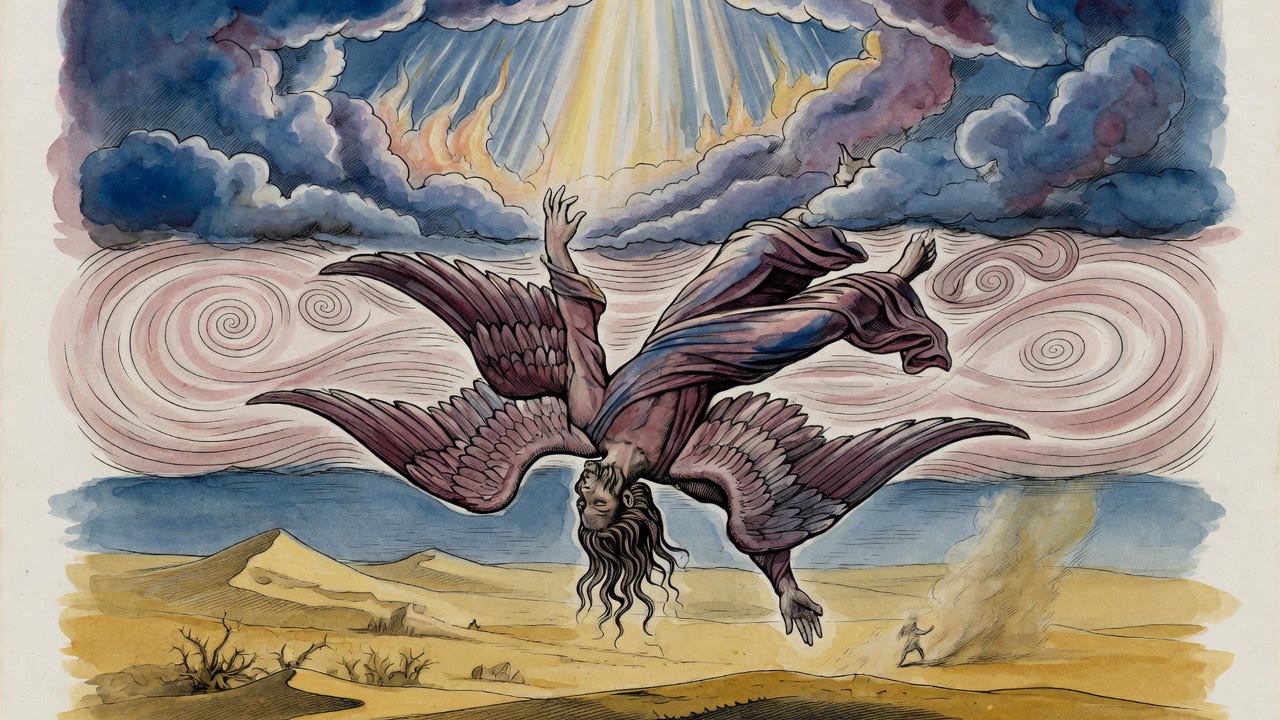
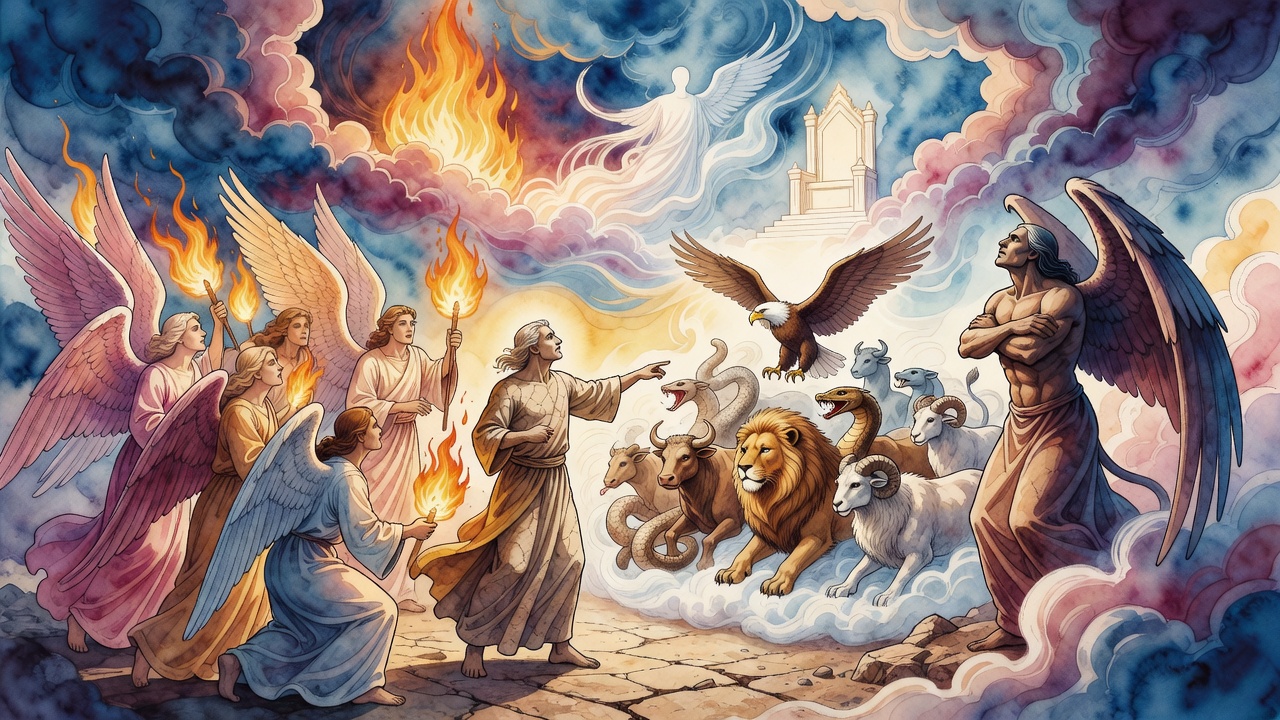
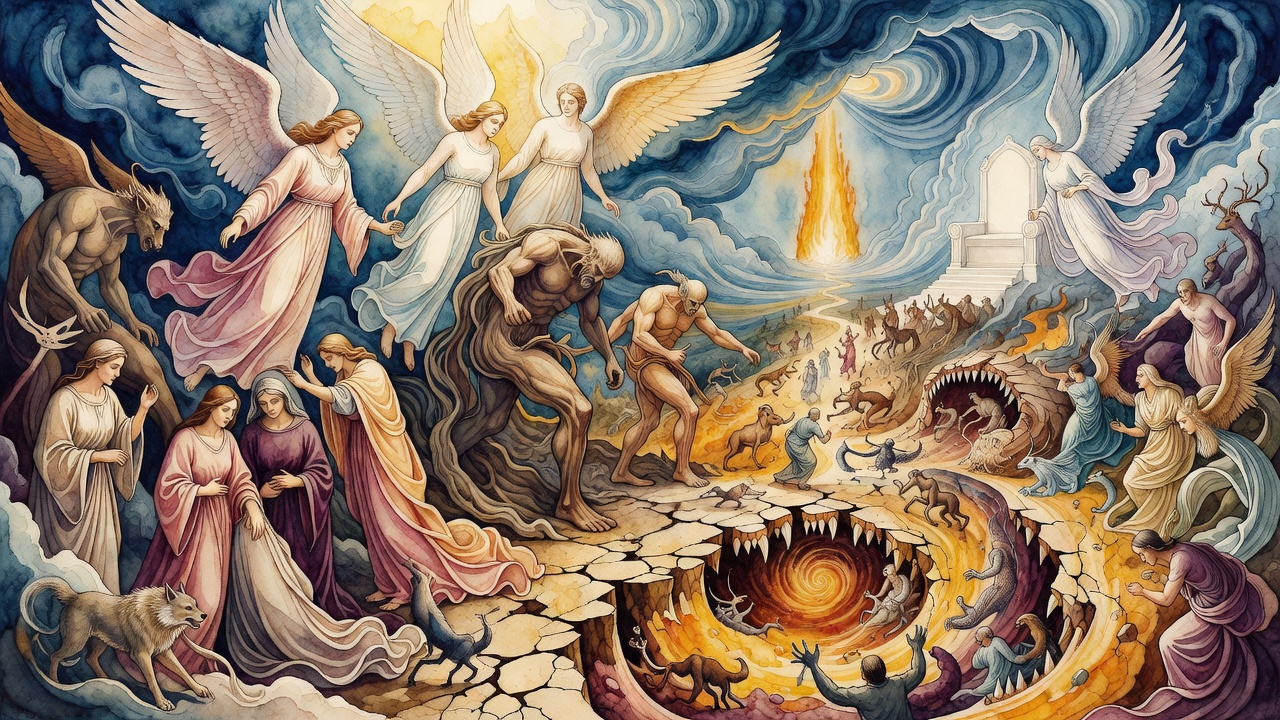
The angels of God stood above the earth in a year inside a jubilee, and they looked. The daughters of men moved through the fields and the doorways. The watchers found them beautiful. Not beautiful the way light is beautiful. Beautiful the way a boundary goes soft when no one is watching it.
They did not ask for leave. They took wives from all whom they chose. Heaven had ranks and orders. Earth had fathers and houses. Between those two worlds the watchers stepped as if the air were theirs to claim.
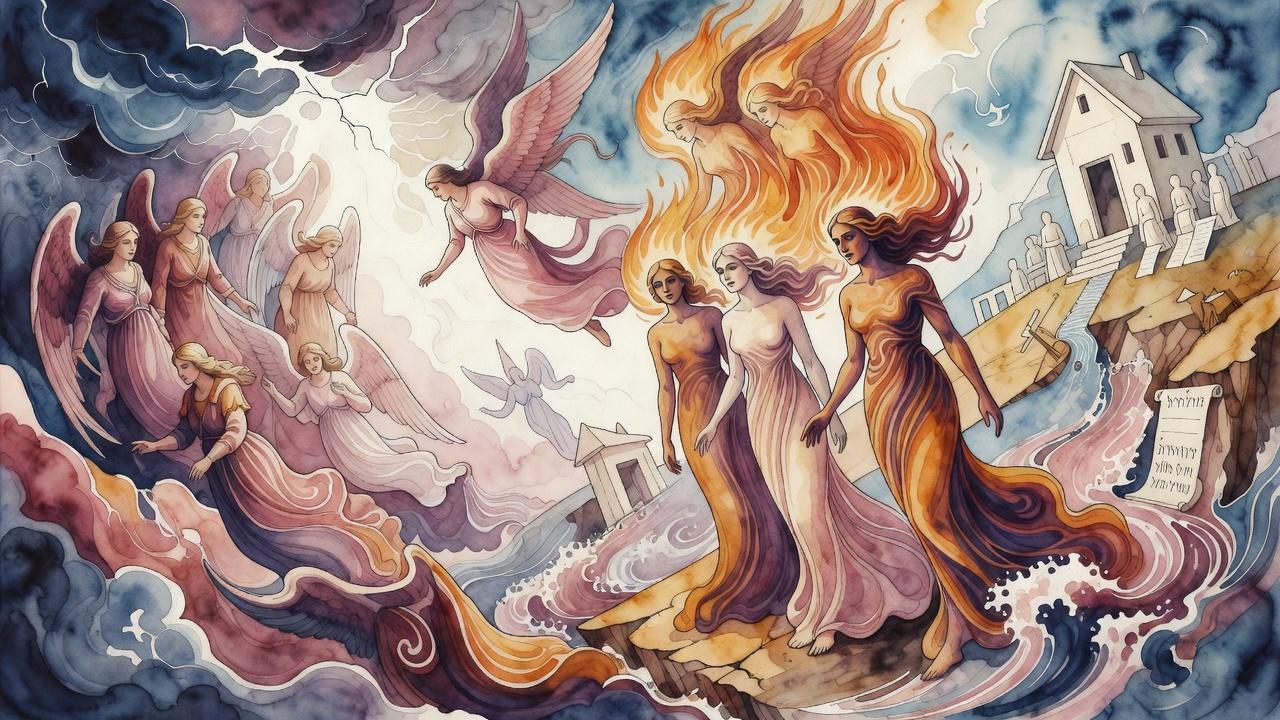
A woman grinding grain at dusk took a shadow that did not belong to any man of her village. The millstone kept turning. Her hands did not. A father who had counted suitors by cattle and character found the count useless by morning. Desire that crossed the border of kind does not bargain with matchmakers.
One house after another lost its old arithmetic. A door that had opened for a neighbor now opened for something taller than the lintel. The women did not run to the elders. The elders had no language for a suitor who had come down, not along the road.
The Children Who Would Not Fit
Children came from those unions. Not ordinary children. Giants. Bodies that did not fit the scale of the villages that fed them. Hunger that did not fit the scale of any field.
A crib could not hold them. A barn could not feed them for long. Mothers who had wrapped infants in linen found the cloth split by morning. Fathers who had stacked grain for a winter now counted whether the winter would last a week.
A giant on the ridge was not a wonder. It was a mouth that had to be filled, and the fields were already thin. Boys who had herded goats learned to hide the goats. Girls who had carried water learned to carry it after dark, when the large feet were somewhere else.
The harvest still came in, for a while. Then the math broke. What had been enough for a village was a meal. What had been a meal was a joke. People stopped asking how the children had grown so fast. They asked who would be eaten next.
When Flesh Ate Flesh
Lawlessness did not arrive as a single crime. It arrived as appetite without measure. Men corrupted their ways. Cattle and beasts and birds corrupted their ways. Everything that walked on the earth began to turn against the order written into its bones.
They began to devour each other.
A bird that should have hunted insects tore at another bird. A beast that should have grazed pushed its teeth into its own kind. The thoughts of men ran evil all day, and the thoughts did not tire. What the watchers had opened in the air, the ground learned in blood.
Neighbors stopped trusting the sound of footsteps after dark. Mothers pulled children inside before the light failed. The market still opened, but people bought with one eye on the road. The earth was no longer a floor under their feet. It became a throat.
Not only humans behaved badly. All flesh corrupted its way, alike men and cattle and beasts and birds. The watchers' trespass did not stay in bedrooms. It rewrote hunger itself. A dog that had slept on a threshold turned on the household. A flock wheeled and fell on its own. The order that had kept kind from kind went slack, then tore.
The Garden That Flooded
Before that age, good and evil had not yet drawn clean borders in the world of form. There was raw potential, like a garden where seeds are only beginning. Some growth would become fruit. Some would become weed. Some would become a force that exists only to oppose what is whole.
A man could still choose a smaller wrong, a private greed, a quiet lie. He could also join the open feast of violence. Paths opened. Feet took them. In the days of the giants, both paths walked the roads in daylight, and no one could pretend they were still seeds.
The first pair's failure had already opened a place for repair. The sin was not a private sorrow locked in Eden. It made room for a long work: light trying to mend what density had cracked. When angels married flesh, that place flooded. The work of repair had to face not only human choice but hunger that was half heaven and half earth, hunger no ordinary repentance could shrink overnight.
Every giant was a demand the world could not answer. Food ran short. Fear ran long. A child on a roof watched a giant take a ridge and learned without books. Power is not the same as holiness. Size is not the same as right. The watchers had been near the throne and still chose badly. Height does not guarantee loyalty.
What the Earth Remembered
When judgment finally rose, it did not come as a footnote. Water and decree and the shutting of windows belong to other nights. This night of mouths stops earlier, at the moment the earth itself became a witness. Every order broken. Every appetite unbound. Angels who should have guarded boundaries becoming the first to erase them.
The daughters of men had been looked upon. The giants had grown. Flesh had eaten flesh. Somewhere above the mess, the long work of mending still waited for bodies strong enough to hold light without cracking again.
That waiting is not soft comfort. Even after the world learns to devour, the plan of repair keeps a claim on dust, blood, and the next choice a free creature makes when the giants are gone and the smaller hungers remain.
← All myths