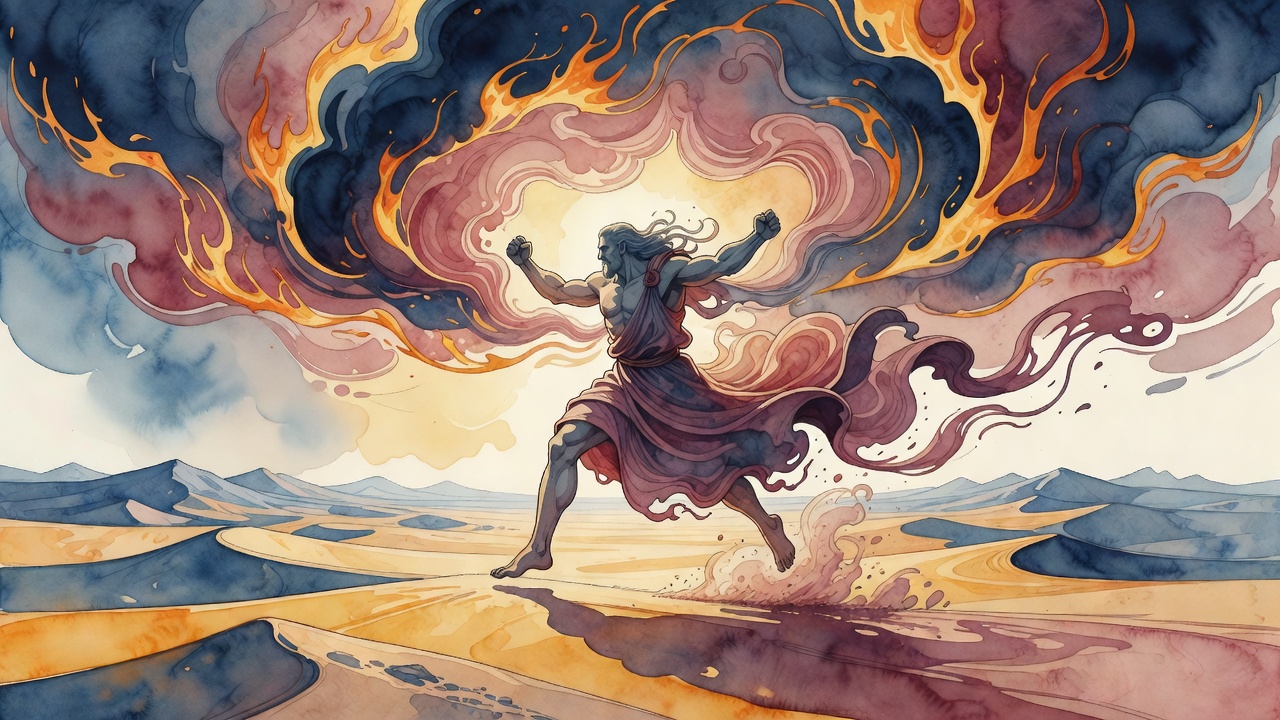
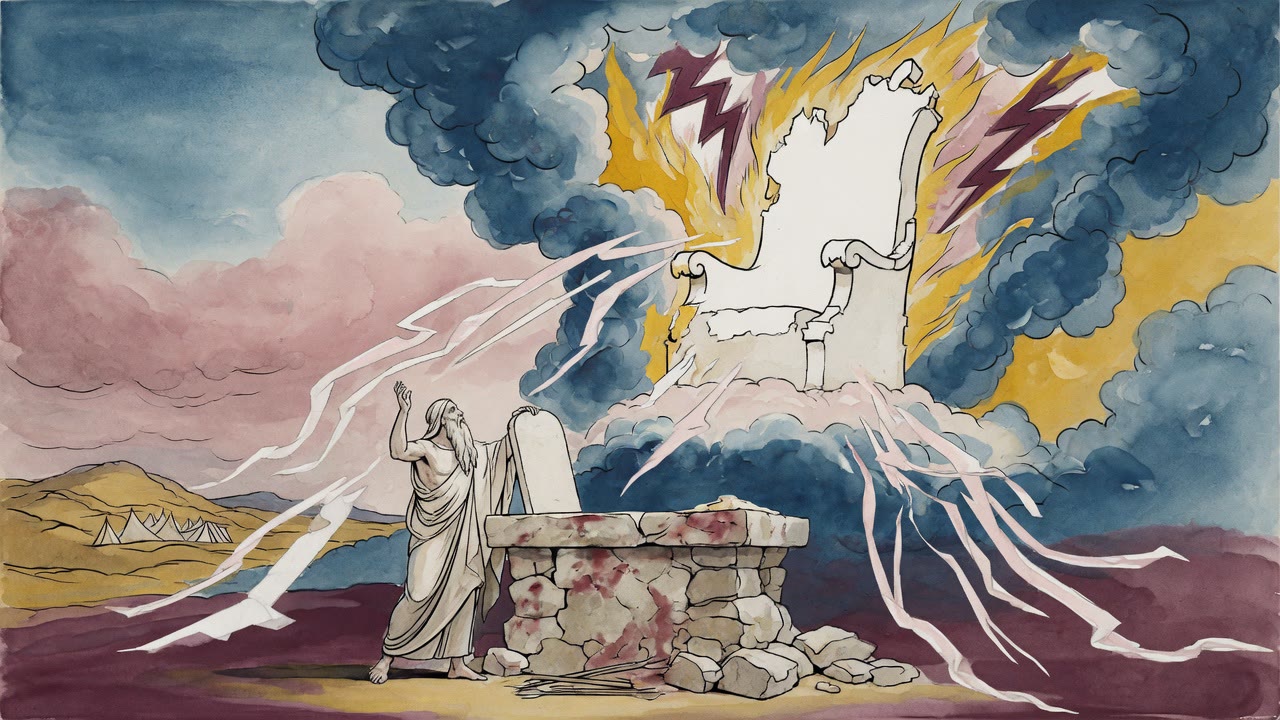
When David Begged God for the Madness He Once Mocked
Goliath's brothers asked Achish for the throne. David would not say the word. He asked heaven for a little of that thing.
Table of Contents
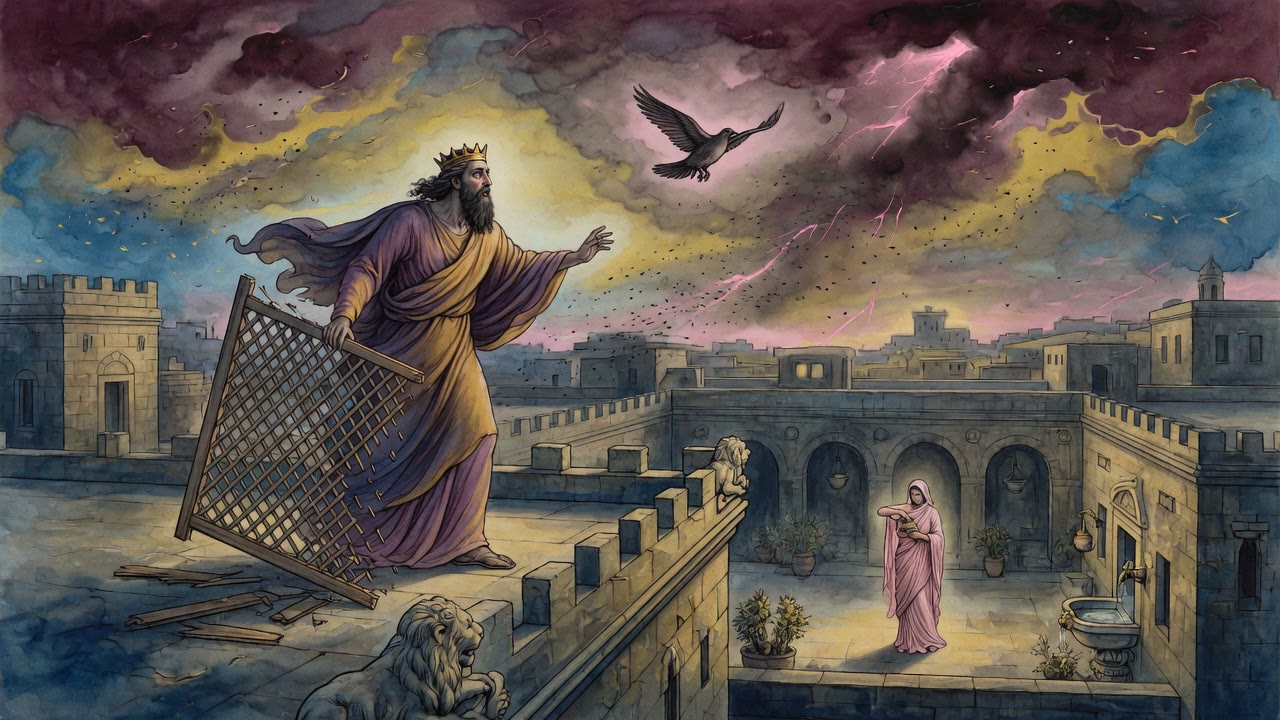
David had a complaint and he brought it upstairs. He had been working through the line that everything God made is beautiful in its time (Ecclesiastes 3:11). Most of it he could take. Then he pictured the man in the marketplace tearing the clothes off his own back.
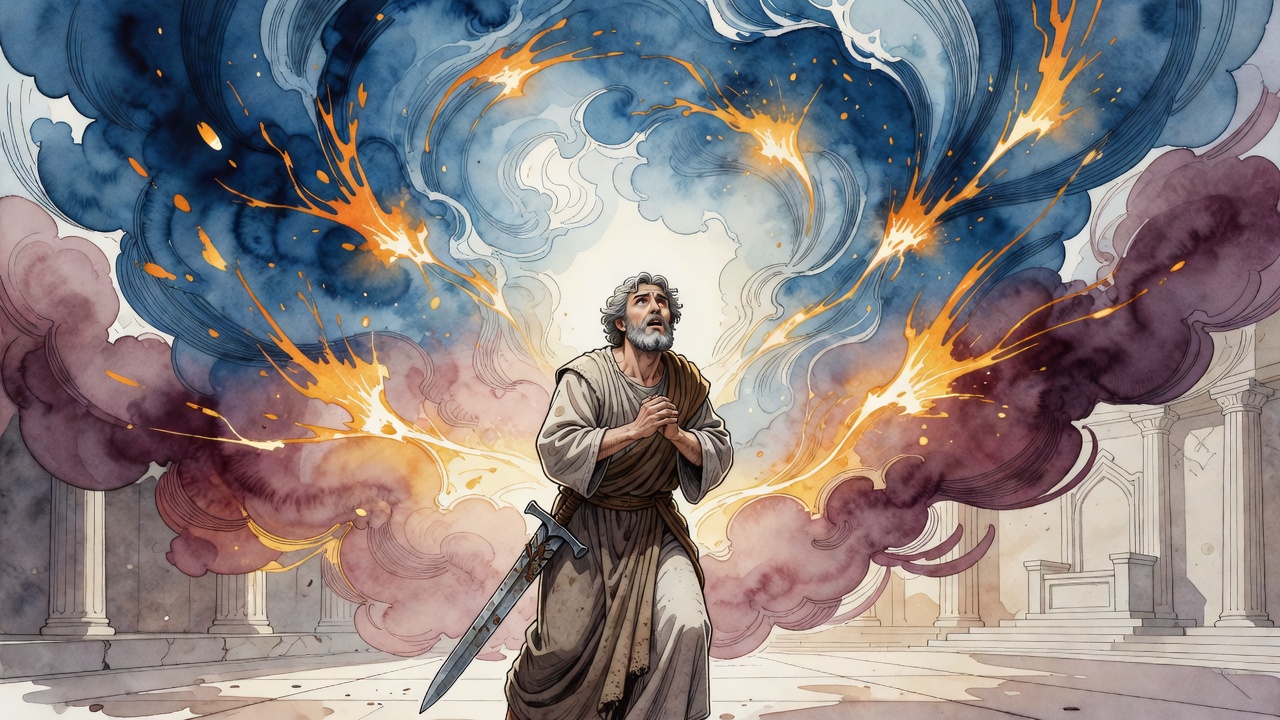 Click for full size
He Complained About the Madman in the Market
Children ran behind that man throwing things. Adults stood in the shade and laughed. Wisdom, David thought, was the beautiful thing. What was a madman for?
"Master of the world," he said. "Everything You have made is beautiful except that one. He rips his clothes in the market. The children chase him. The people laugh. Is that beautiful in front of You?"
"David," God said. "Are you picking a fight with foolishness?"
David did not answer that.
"By your life. One day you are going to need it. A man who despises a thing gets pawned to it, the way a coat gets left with a lender, and a pawn has to be redeemed. You will suffer. You will pray for this thing. And you will keep praying until it is given to you."
David went out. He was young. He had killed a giant. He did not think about the conversation again for years.
He Walked Into Gath With Goliath's Sword
Saul was hunting him through the hill country with an army, so David ran, and the place he ran to was Gath. Gath was Goliath's town. The weapon on David's hip, the only one he had been able to lay hands on, was Goliath's own sword, which the priests at Nob had kept wrapped in a cloth behind the ephod because there was nothing else like it in Israel.
"David," God said on the road south. "Yesterday you killed Goliath. Today you are walking to his brothers with his sword in your hand. His brothers are the bodyguards of Achish. His blood is not dry yet."
David kept walking. There was an army behind him.
The Brothers Asked for the Throne
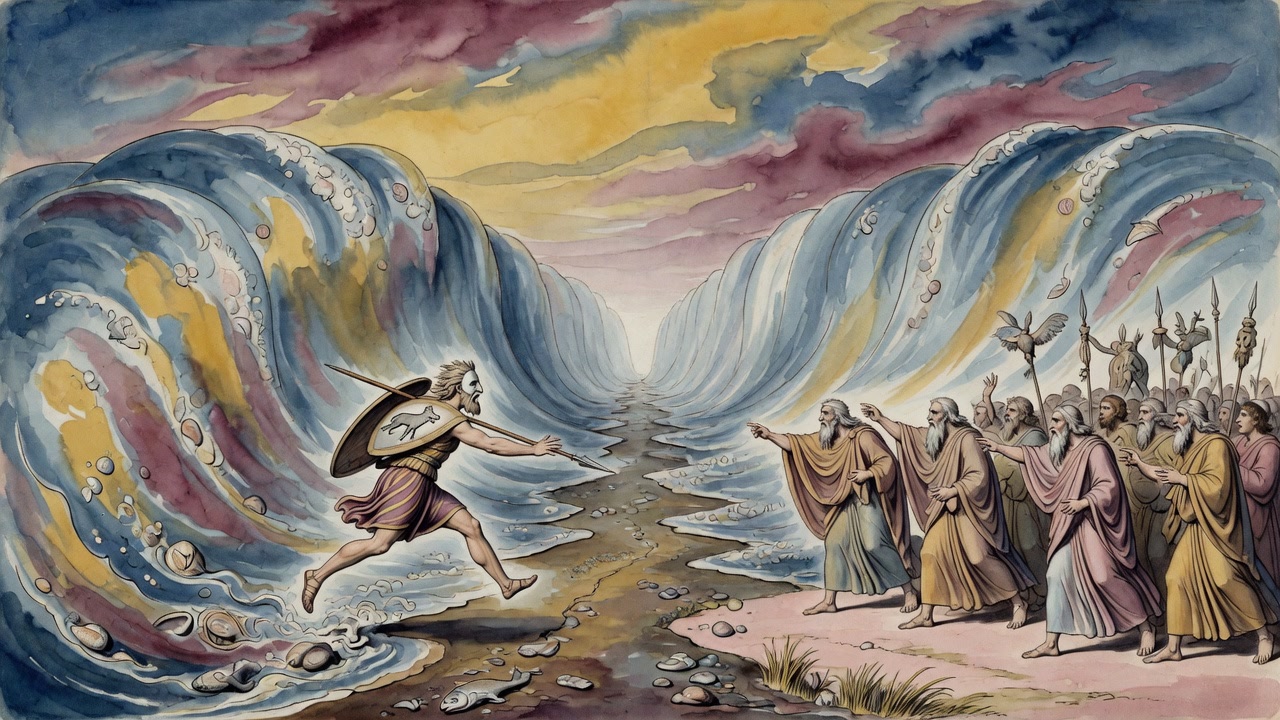
They knew his face at the gate. Goliath's brothers went straight into the hall and asked their king for permission.
"We will kill the man who killed our brother."
Achish would not give it to them. "It was a war," he said. "It happened in battle. If your brother had won, he would have killed the boy in battle and not one of you would be standing here asking me anything. And your brother set the terms himself, out loud, in front of both armies. If he is able to fight me and defeat me, then we will be your servants."
The hall went quiet while the brothers worked that through.
"Then get off the throne," they said. "By our brother's own words the kingdom belongs to him. This is David, the king of the land. We will be his servants."
David stood in the middle of the room with the sword on his hip and understood that in this city, being David was the thing that would kill him.
Give Me a Little of That Thing
"In the day of my fear I will trust in You," he said, mostly to himself (Psalms 56:4). Then he prayed properly. "Master of the worlds. Answer me at this hour."
"What is it you want?"
"Give me a little of that thing."
He would not say the word. God said it for him. "Did I not tell you that a man who despises a thing is pawned to it? And here you are, asking Me for foolishness."
Then He gave it to him.
Two Madmen in One House
David turned to the doors of the gate and began writing on them with his hands. Achish king of Gath owes me one hundred thousand. His wife owes me fifty thousand. He wrote it big and he wrote it where the whole city walked past, an invoice from nobody, for money nobody owed, scratched into the doors of a foreign king.
He let the spit run down into his beard.
Inside the house, Achish had a daughter who was mad. She heard the carrying-on at the gate and started up herself, and then the two of them went at it through the stonework, her shrieking on the inside of the wall and David shrieking on the outside, while Goliath's brothers stood in the hall holding an argument about who owned the throne.
Achish turned on his servants. "Am I short of madmen? Do I not have enough crazy people in this house already? You bring me this one to carry on in front of me? Get him out."
They put him out of the gate. Nobody drew a sword. The man who had killed their champion walked out of Gath drooling into his own beard, and not one Philistine in that city could hold the thought that a king was in there.
He got clear of the walls and rejoiced with a very great joy. Then the madness lifted off him. And when it lifted, the joy died with it. He had pawned himself to the thing he mocked, redeemed the pawn in spit and invoices, and learned that even the blessing of a gift can leave when the gift does.
← All myths