Parshat Vayishlach5 min read

When Dinah Went Out and Shechem Seized Her

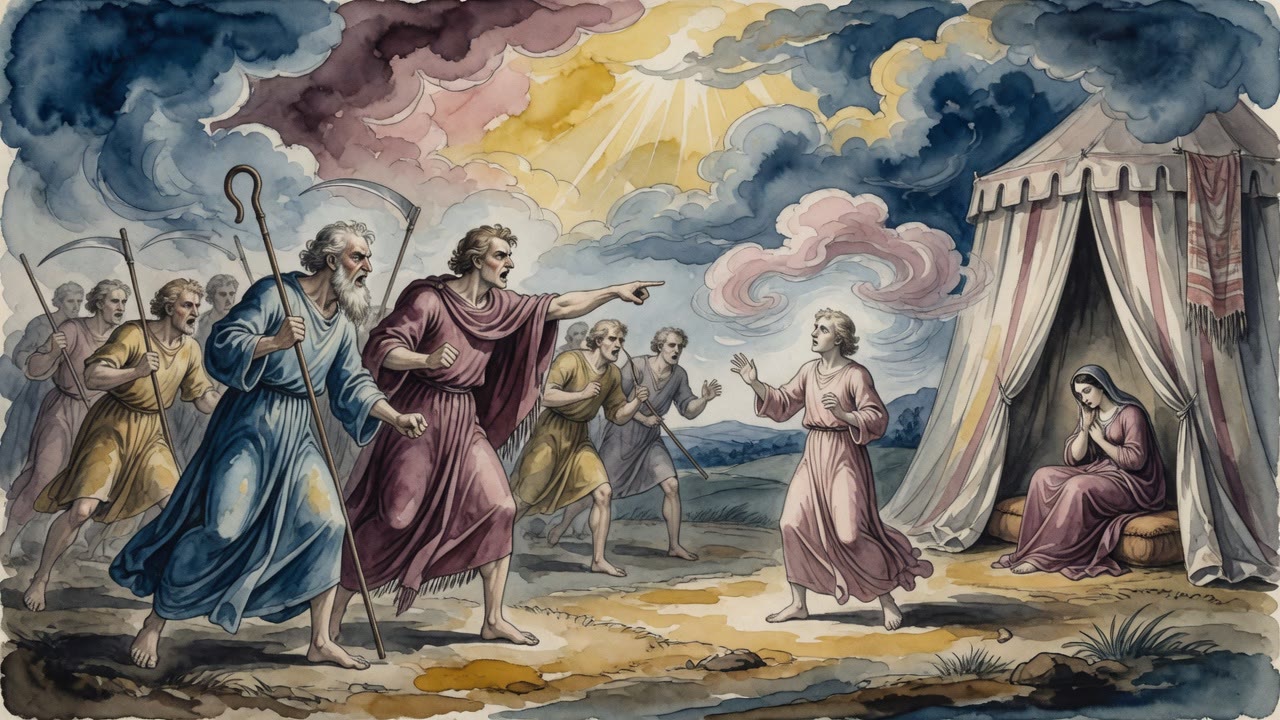
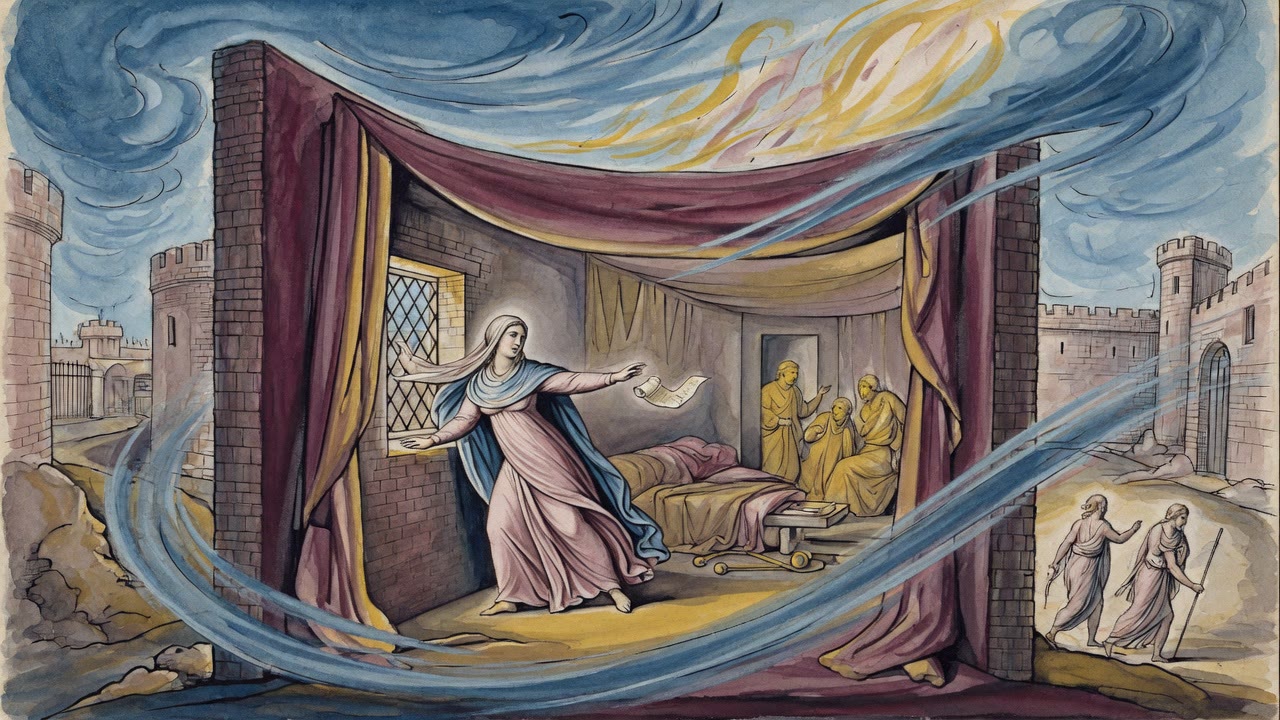
Dinah steps beyond the tents to see the daughters of the land. Midrash hears she went out to be seen, and Shechem seizes what his eyes claim as spoil.

Curated by Arthur · Told by Maggid ·
Table of Contents
  1. Meat in an Open Hand
  2. Marriage Talk After Violence
  3. Third-Day Swords
  4. The Chain the Law Remembered

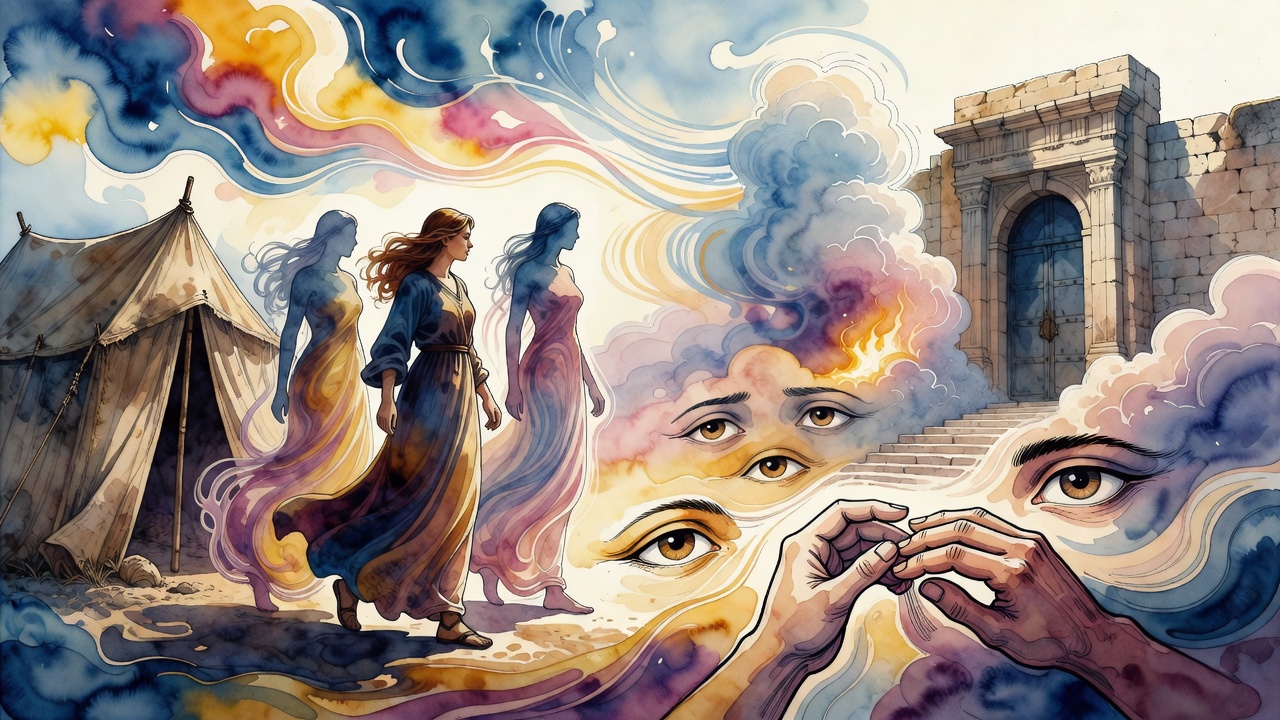
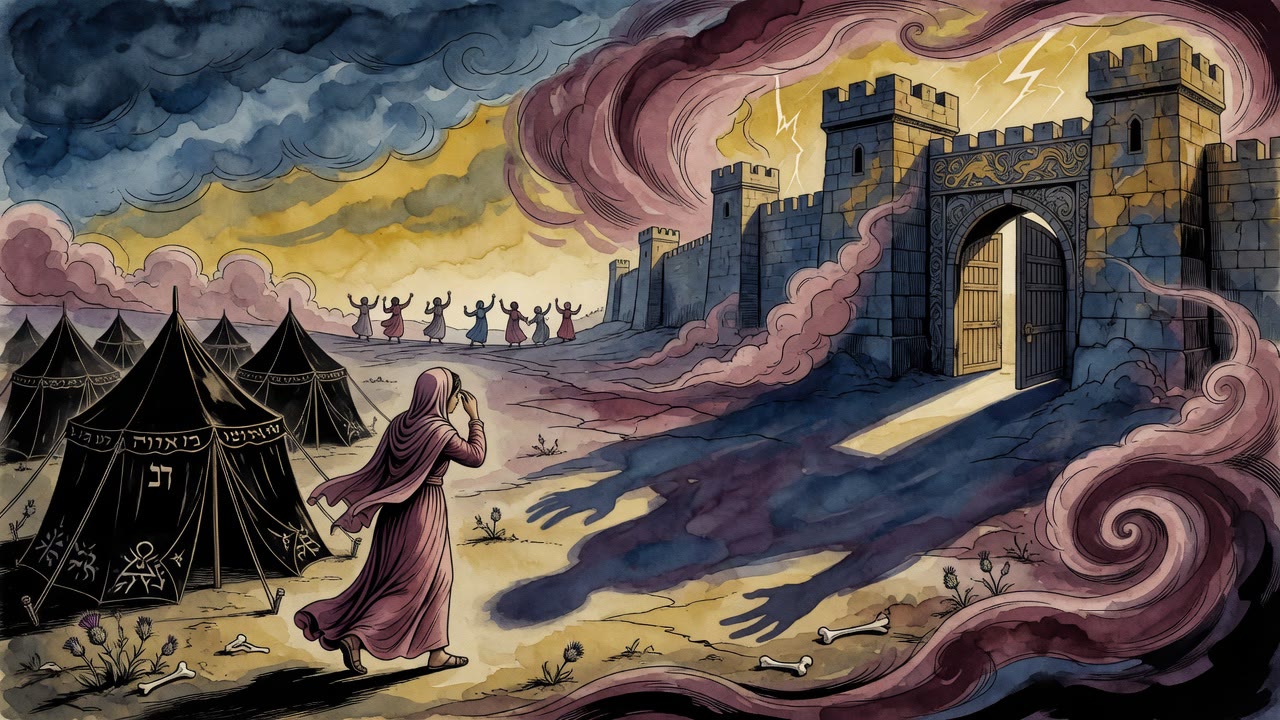
Dust rose from the path that left Jacob's camp. Dinah, daughter of Leah, walked it with her head up, curious for faces that were not her brothers' faces. She went out "to see the daughters of the land" (Genesis 34:1). The sages, reading the bare letters, heard a second meaning underneath: to see, and to be seen.
When Dinah Went Out and Shechem Seized Her Click for full size

Shechem ben Hamor, prince of the place, saw her. It is always the wicked who see in that hungry way, the midrash notes. Haman saw. Esau saw. Shechem saw. Against such eyes David would later pray that his enemies' eyes be darkened. No such prayer had been written yet. Hands were faster.

Meat in an Open Hand

To what may the matter be compared? To a man strolling through the marketplace with a piece of meat in his open hand. A stray dog spots it, trots behind him, and snatches it away.

The parable is harsh on the girl who walks, and harsher on the eyes that treat a person as food. Jacob's household had entered the land showing its strength, its wealth, its beauty: swords in the sons' belts, stalls and booths at Succoth, and a daughter lovely enough to draw a prince's stare. The sages who told the parable were arguing about display, not excusing the crime. Job had made a covenant with his eyes not to gaze at a maiden (Job 31:1). Shechem made no covenant with anything. He seized what his eyes claimed.

Marriage Talk After Violence

Only after the seizing did Shechem speak of love. He asked Hamor his father to get him this girl as a wife. Violence first, negotiation second, and the order stained every later word of bride-price.

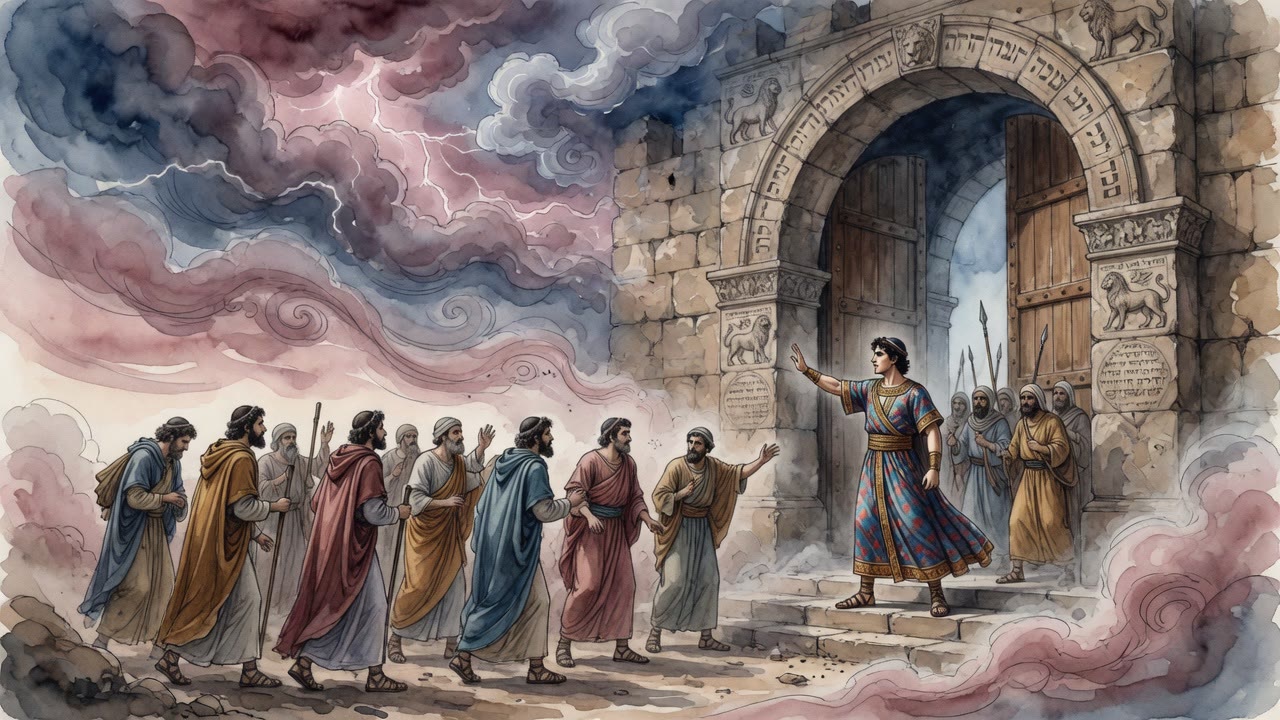
Hamor came to Jacob's tents talking of intermarriage, trade, and shared land. Jacob's sons listened with grief still raw and answered with cunning dressed as religion: circumcise every male of your city, and we will give our sister and become one people. Shechem and Hamor carried the terms back to the city gate, where promises of wealth and marriage alliances glittered brighter than caution, and the men of Shechem accepted the mark of Abraham's covenant as a business fee.

Third-Day Swords

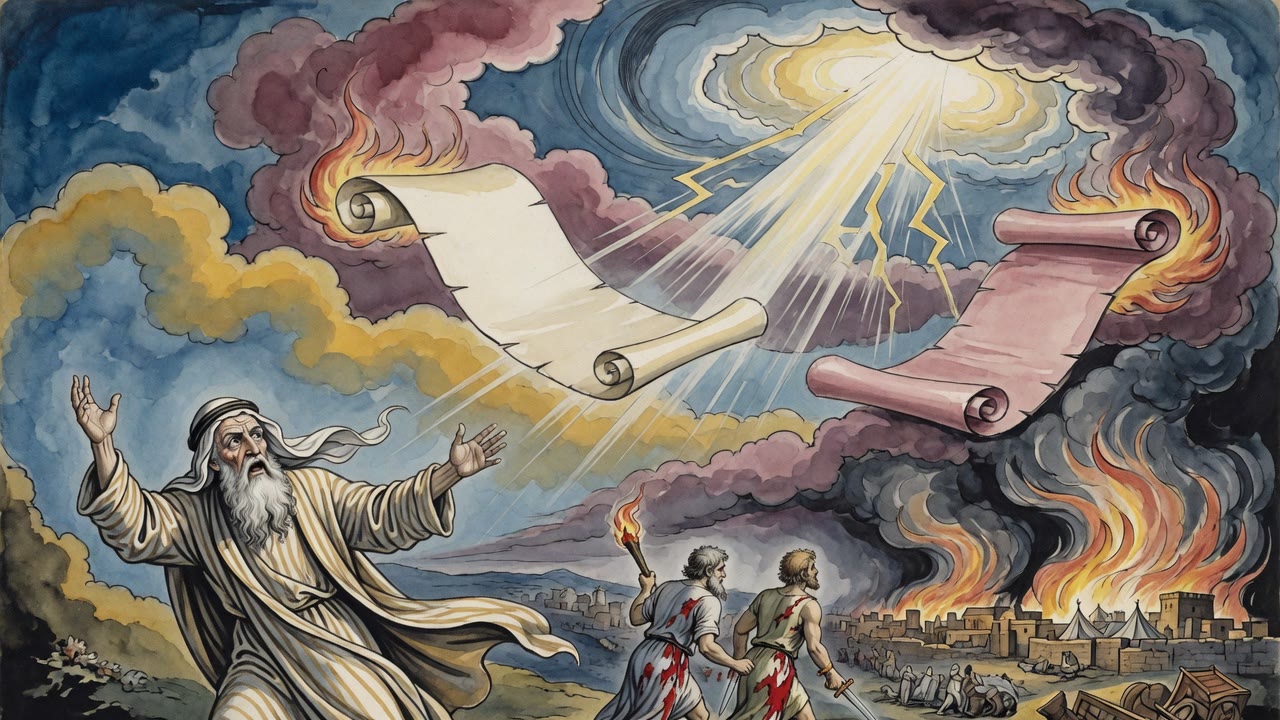
On the third day, when the pain of the cutting laid the city low, Simeon and Levi took their swords and came upon the men. Shechem died. Hamor died. The brothers brought Dinah out of Shechem's house and looted the city that had trusted a false peace.

Jacob did not celebrate. "I being few in number, they will gather themselves against me" (Genesis 34:30). His sons answered with the logic of violated honor. Honor and horror shared the same blades, and the road Dinah had walked out on became a road of corpses.

The camp moved. Jacob buried the household's foreign gods and earrings under the oak near Shechem, and the family went up to Bethel under a dread from God that kept the neighboring towns from pursuit. Fear was the only wall a small camp had while blood was still wet on a city's stones.

The Chain the Law Remembered

Centuries of readers set Dinah's road beside a law about eyes at war. "When you go out to war against your enemies... and you see among the captives a woman of pretty form" (Deuteronomy 21:10-11). The Torah does not celebrate that desire. It slows it. Shave her head, pare her nails, let the glamour cool in the house until the heat proves itself or fades.

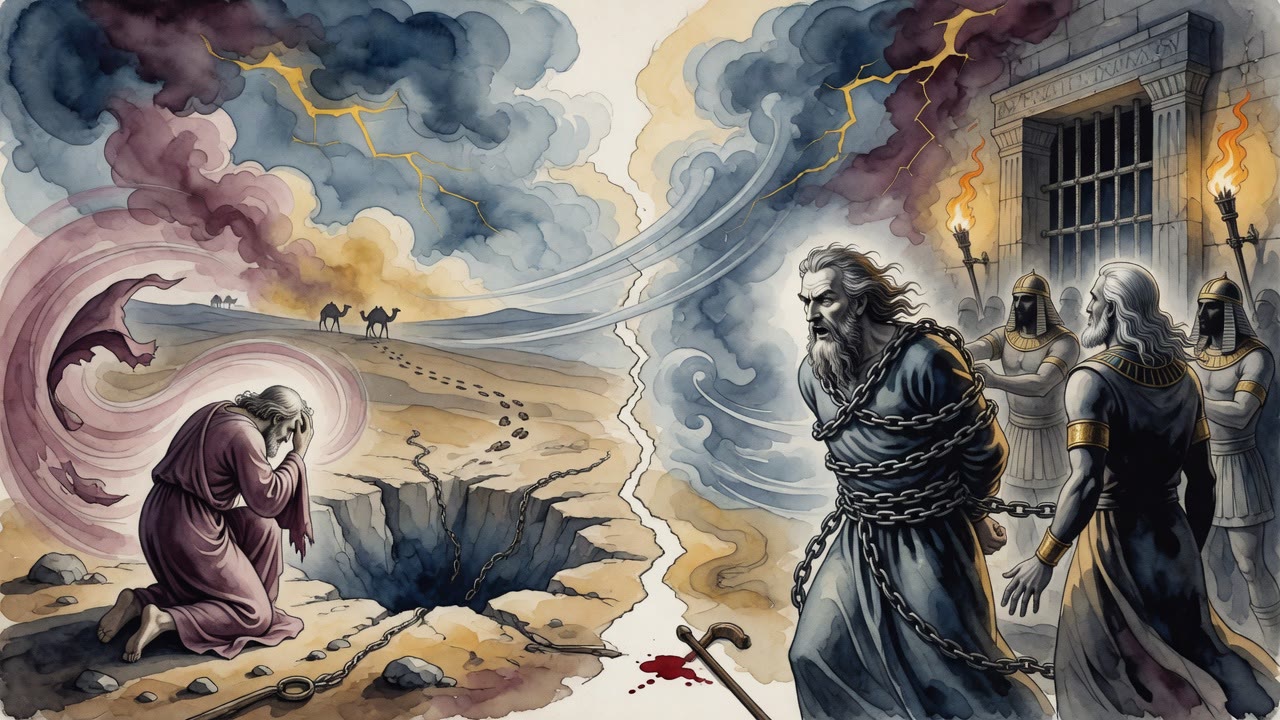
Why the delay? Because one transgression drags the next behind it. The sages counted the falling stones in David's own house: a king desired Maacah bat Talmai while at war, and from that union came Absalom, who chased his father, took his concubines in the sight of Israel, and tore the kingdom until thousands died. The captive-woman law and Dinah's road teach from opposite directions. Eyes that take without asking set off chains no one can call back.

Dinah returned to the tents with a story her mouth may never have fully told. The Torah tells enough. A going out. A seeing that became a seizing. A cruel bargain, a third day, a father counting his few sons like a wall. And every time the verse is read, the daughter of Leah walks out of the tent again, and the road is still watching.


← All myths

From the tradition

Sources

5 sources

The texts behind this telling. Some cards carry a translation of the source; others are our own retelling of it, and each card says which. Every card links out to the original.

Midrash Tanchuma, Vayishlach 5Midrash Tanchuma

Retold in our words. Read the original at the link below.Townsend 1989 translation of Midrash Tanhuma, S. Buber Recension · CC-BY

And Dinah, the daughter of Leah, whom she had borne unto Jacob, went out (Gen. 34:1). May it please our master to teach us whether a woman is permitted to walk about on the Sabbath while adorned with jewelry (gold medallions)? Thus do our masters teach us: A woman is prohibited from walking about on the Sabbath with a gold medallion suspended about her neck, with a signet ring upon her finger, or wearing an eyeless hairpin in her hair. If she wears any of these adornments in the public thoroughfare, she must bring a sin offering. In the courtyard of her home, however, she is permitted to wear them.

Our sages maintain that she is forbidden to wear them in public even on a weekday, for people would stare at her if she did so, and that is discreditable to a woman. Ornaments were given to woman to wear only inside her home. After all, if one must not tempt a righteous person, how much less should one not tempt a thief. R. Samuel the son of Nahmani said: Observe what is written concerning Job: I have made a covenant with my eyes; how then shall I look upon a maid? (Job 31:1). Here indeed is evidence of Job’s righteousness. If (he would not look at) an unmarried woman, whom a man is permitted to look at, as he might marry her himself or match her with his son or his brothers, (then) all the more so would Job not look at a married woman. Hence a woman must remain in her home and not promenade about in the street lest she sin herself and cause men to sin through tempting them to look at the wife of another man. R. Judah the son of Shalum said: You know this to be so, as well, from the scriptural verse: And God blessed them and said to them: “Be fruitful and multiply, and replenish the earth, and subdue her (Gen. 1:39). The word subdue her is written (without a vav) as a singular imperative, for it is the male that subdues the female, while the female does not subdue the male. Similarly, the male subdues the earth and the female does not. Hence, a woman must not meander about lest tragedy befall her. That is what happened to Dinah, Jacob’s daughter. She wandered about alone and was disgraced. Whence do we know this? We know it from what we read in the portion And Dinah went out.

Full source
Midrash Tanchuma, Vayishlach 6Midrash Tanchuma

Retold in our words. Read the original at the link below.Townsend 1989 translation of Midrash Tanhuma, S. Buber Recension · CC-BY

And Dinah, the daughter of Leah, went out (Gen. 34:1). Scripture states elsewhere in allusion to this verse: All honor to the king’s daughter within the palace (Ps. 45:14). R. Yosé asserted: If a woman conducts herself modestly in her home, she is worthy of marrying a high priest, and of rearing high priests, as is written: All honor to the king’s daughter, etc. If she behaves honorably in her home, Her raiment is of chequer work (ibid.); that is, she will marry a man about whom Scripture says: And thou shalt weave a tunic in chequer work (Exod. 28:39).

R. Phinehas the priest, the son of Hama, declared: A woman who is modest in her home atones for her household, just as the altar brings atonement, as it is said: Thy wife shall be a fruitful vine in the innermost parts of thy house (Ps. 128:3). The word innermost refers here to the altar, as is stated: And he shall kill it on the innermost side of the altar (Lev. 1:11).

Another comment on Thy wife shall be a fruitful vine. When is a wife considered a fruitful vine? When she remains secluded in the innermost parts of thy house (Ps. 128:3). If she does so, Thy children shall be like olive plants about thy table (ibid.), that is, she will rear children who will be anointed with the oil of installation.

Full source
Legends of the Jews 6:219Legends of the Jews

Retold in our words. Read the original at the link below.The Legends of the Jews by Louis Ginzberg (1909) · Public Domain

Our story today dives right into that murky territory, exploring the story of Shechem, the son of Hamor, and his burning desire for Dinah, Jacob's daughter.

We last left off with Shechem having… well, let’s just say he wasn’t exactly on his best behavior. He desired Dinah, and after the act was done, he wanted to make things right. He wanted to marry her. And his father, Hamor, went to Jacob and his sons with a proposition: let’s intermarry, let’s live together, and let’s prosper together!

Jacob’s sons, well, they weren’t exactly thrilled. They saw what happened as a deep violation. And they responded with… trickery. in the story in Legends of the Jews, they said they couldn’t possibly agree to such a union unless all the men of Shechem's city were circumcised, adopting the covenant of Abraham. A big ask. Shechem, madly in love (or perhaps obsessed), was all in. He and his father, wasted no time. They were eager to make this happen. They went back to their city and persuaded the men to agree. The text emphasizes that Shechem and Hamor were highly regarded – “the princes of the land.” So, their influence was considerable. for a second. What kind of sway did they hold to convince an entire city of men to undergo such a procedure? It speaks volumes about their power, and perhaps also about the perceived benefits of aligning with Jacob and his family. Maybe they thought it was a good deal for the city's future.

So, the next day, bright and early, Shechem and his father gathered all the men. They summoned Jacob's sons. And then… the mass circumcision began. Legends of the Jews specifies the numbers: six hundred and forty-five men and two hundred and seventy-six lads. That's a lot of people putting their faith (and their bodies) in Shechem’s decision.

But not everyone was on board. We learn that Haddakum, Shechem's grandfather, along with his six brothers, refused to be circumcised. And they were furious with the rest of the city for going along with it! A divided populace, some willing to go to great lengths for peace (or profit), others staunchly opposed to the whole idea.

This sets the stage for the next act in this… complicated family drama. What happens when an entire city is recovering from a painful procedure? And what will Jacob’s sons do with the opportunity that presents itself? We'll have to wait and see, but one thing is clear: this story is far from over, and the consequences of Shechem's desire and the city's acquiescence will be significant.

Full source
Midrash Tanchuma Buber, Vayishlach 19:1Midrash Tanchuma Buber, Vayishlach

Translation of the source text.Midrash Tanchuma (Buber), Public Domain, on Sefaria · CC-BY-SA

"To see the daughters of the land" (Genesis 34:1), "to see" implies "to be seen." To what is the matter comparable? To one who was walking through the marketplace with a piece of meat in his hand. A certain dog saw it, went after it, and snatched it from him. So too was Dinah going out to see, and Shechem saw her and snatched her.

Another interpretation of "to see the daughters of the land": When the sons of Jacob came to the Land of Israel, they began to display their strength, their wealth, and their beauty. They displayed their strength, as it is written, "and two of the sons of Jacob took, [each man his sword … and they killed every male]" (Genesis 34:25). They displayed their wealth, as it is written, "And Jacob journeyed to Succoth, and built himself a house, and for his cattle he made booths" (Genesis 33:17), he began to open stalls. And their beauty, from where? "And Dinah the daughter of Leah went out", to see and to be seen.

"And Shechem the son of Hamor the Hivite, the prince of the land, saw her" (Genesis 34:2). The wicked "see": "And Haman saw" (Esther 3:5); "And Esau saw" (Genesis 28:6); "And Shechem the son of Hamor saw them" (Genesis 34:2). David said, "Let their eyes be darkened that they see not" (Psalms 69:24).

Full source
Midrash Tanchuma, Ki Teitzei 1Midrash Tanchuma

Retold in our words. Read the original at the link below.Townsend 1989 translation of Midrash Tanhuma, S. Buber Recension · CC-BY

(Deut. 21:10:) “When you go out to war [against your enemies, and the Lord your God gives them into your hand and you take them captive].” Our masters have taught (Avot 4:2), “[One] good deed/commandment brings about [another] good deed/commandment, and [one] transgression brings about [another] transgression.” (Deut. 21:11-12:) “And when you see among the captives a woman of pretty form [whom you desire to take for a wife. And you shall bring her into your house,] where she shall shave her head and do her nails,” so that she will not find favor in his eyes. What is written after that (in vs. 15), “When a man has two wives.” Two [wives] in [one] house [means] strife in the house. And moreover (ibid., cont.) “one loved and the other hated,” or both of them hated. What is written after that (in vs. 18)? “If one has a defiant and rebellious son.” Whenever anyone marries a “woman of pretty form,” there results from it a defiant and rebellious son. Thus we find it so in the case of David, because (as suggested by II Sam. 3:3) he had desired Maacah bat Talmai king of Geshur, while he had gone to war; so Absalom came out of him [in this union. The latter] wanted to kill him and (according to II Sam. 16:22) slept with his ten concubines before the eyes of all Israel and in broad daylight. Also because of him several myriads from Israel were killed. And he created discord in Israel, [through which] were killed Shimei ben Gera (in I (Kings 2:4)6), Sheba ben Bichri (in II Sam. 20:22), Ahithophel (in II Sam. 17:23). And he killed Mephibosheth, and had Ziba rule over the whole house of Saul (II Sam. 16:4; cf. II Sam. 9:9). It is taught: R. Jose says, “Is it because a defiant and rebellious son ate half a pound of meat and drank half a log of undiluted wine that the Torah says for him to go out to the court and be [executed by] stoning (cf. Deut. 21:18-21)? It is simply that Torah has foreseen the end of the thinking of a defiant and rebellious son. As in the end he will squander his father's assets with wastrels with whom he eats and drinks, until he seeks what he has been accustomed to and does not find it. Then he goes out to the crossroads, where he kills people and robs them. So the Torah is saying, ‘Let him die innocent and not die guilty,’ for the death of the wicked benefits them and benefits the world.” And what is written after that (in vs. 22)? “And when someone is guilty of a crime punishable by death and is put to death.” If he is delivered from the one, he is not delivered from the other. [Hence] we have learned “[One] transgression brings about [another] transgression.” [But that one] good deed/commandment brings about [another] good deed/commandment, where is it shown (in Scripture)? Where it is stated (in Deut. 22:6-7), “When you come across a bird nest…. You must surely let [the mother] go …, in order that it may be well with you and you may lengthen your life.” What is written after that (in vs. 8)? “When you build a new house, [you shall make a parapet for your roof].]” You will merit to build a house and make a parapet. What is written after that (in vs. 9)? “You shall not sow your vineyard with two kinds of seed.” You will merit to [possess] a vineyard and to sow a field. What is written after that (in vs. 10)? “You shall not plow with an ox and an ass [together].” You will merit to [possess] oxen and asses. What is written after that (in vs. 11)? “You shall not wear interwoven stuff, [wool and flax together].” You will merit to [possess] nice clothes of wool and of linen. What is written after that (in vs. 12)? “You shall make yourselves tassels.” You shall merit the commandment of tassels. What is written after that (in vs. 13)? “When a man takes a wife.” You shsll merit to [have] a wife and children. Behold, we have learned that [one] good deed/commandment brings about [another] good deed/commandment and one] transgression brings about [another] transgression. Therefore these sections of the Torah are adjacent to one another.

Full source