6 min read

When the Accuser Counted Doves at Abraham's Feast

Tables groan for Isaac's weaning while Heaven hears a prosecutor's complaint. No dove for the altar, he says. God answers with a test that names the son.

Curated by Arthur · Told by Maggid ·
Table of Contents
  1. After These Words
  2. Patience Elsewhere, Knife Here
  3. The Road That Refuses Speeches
  4. Bound and Unbound
  5. What the Feast Meant Afterward

Abraham laughed with his mouth full of feast-bread. Isaac, weaned and alive, sat among the guests like a proof that old age can still be surprised by joy. Servants carried trays. Somewhere a lamb turned on a spit for human hunger, not for the altar. Music found the spaces between conversations. For one afternoon the tent felt wider than fear.
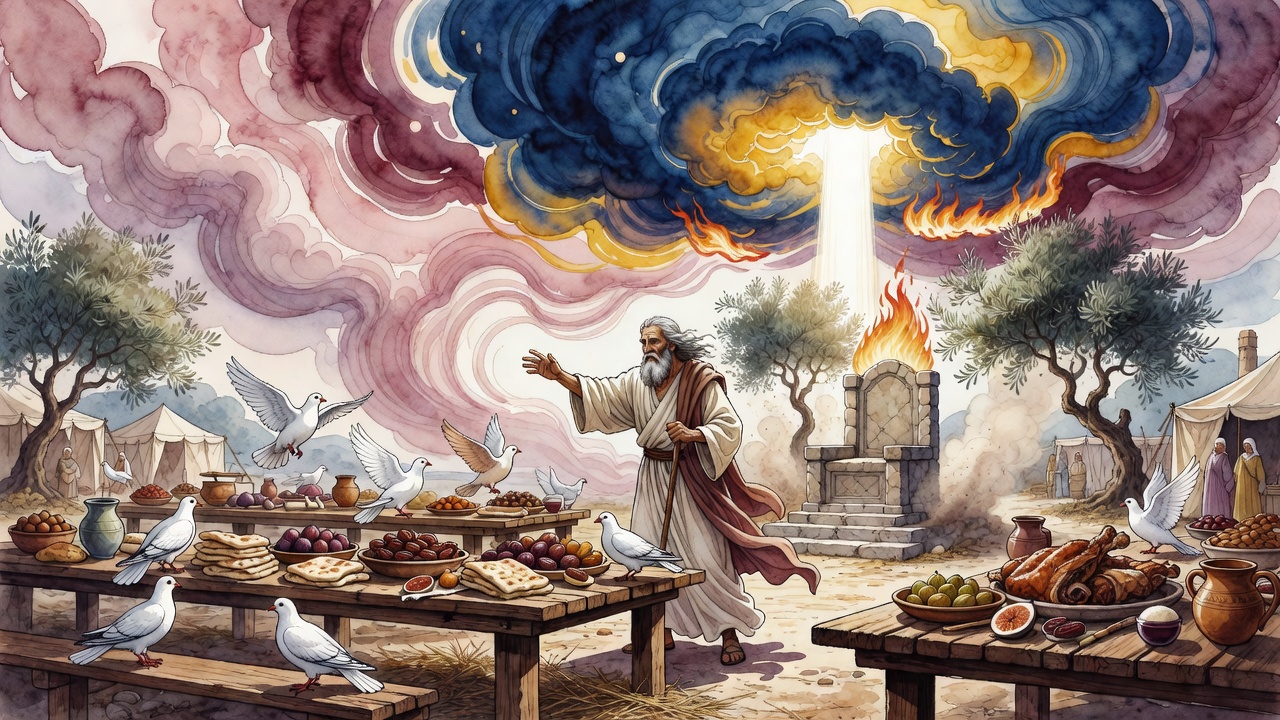
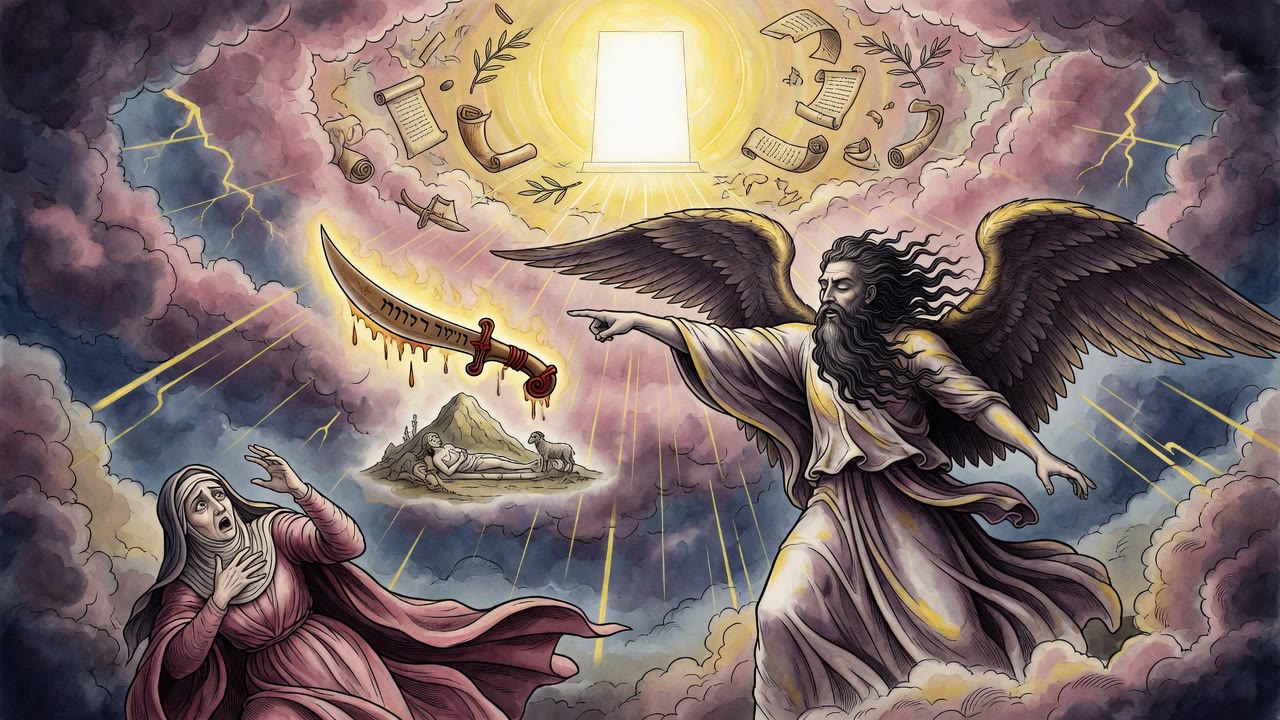
When the Accuser Counted Doves at Abraham's Feast Click for full size

Above the music, in a court without wine, Ha-Satan the Accuser stood with a tally stick and the patience of an accountant who enjoys his work.

"Master of the Universe," he said, "You gave this man a son at a hundred years, and at the weaning feast he did not spare You even one dove."

The charge was small on purpose. Small charges are hard to dismiss without looking careless. Feasts are loud. Offerings are quiet. The Accuser prefers to weigh the quiet thing a man forgot while celebrating the loud thing God gave him.

After These Words

"After these things God tested Abraham" (Genesis 22:1). Rabbi Yochanan in the name of Rabbi Yossi ben Zimra asks: after what things? After the Accuser's words. The prosecutor's job is not cosmic rebellion against Heaven. It is hard questions pressed in the heavenly court, the way a state's advocate presses a file. He measures feasts against offerings the way a creditor measures ledgers. He is Ha-Satan, the Accuser, an angel who works for the court's rigor, not a rival god.

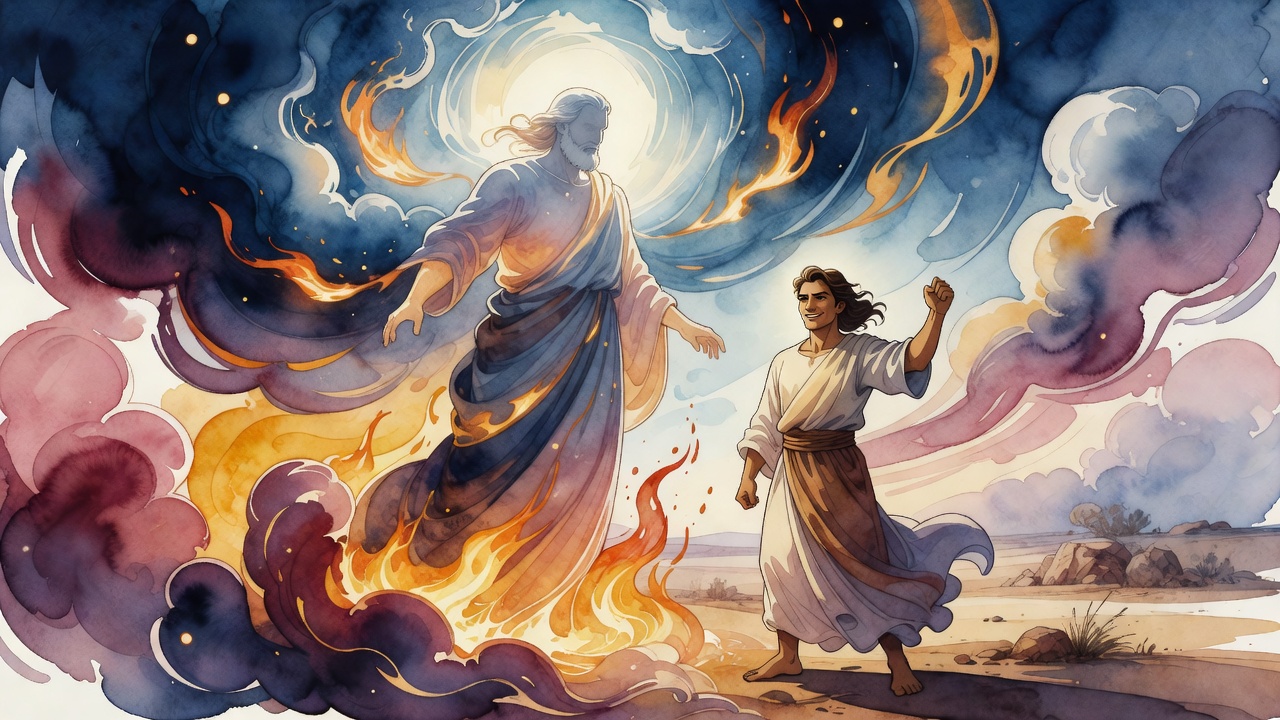
God answered without shouting. "He made the feast for his son's sake, and I know he would not refuse to offer that very son at My command."

The test began not as cruelty for sport, but as a verdict already trusted in advance of the proof. Trust is a terrible honor when it arrives as a road to Moriah.

Patience Elsewhere, Knife Here

Heaven knows how to wait. Before the Flood, seven days of open chance were given while humanity still could turn. Markets still opened. Weddings still happened. Power showed itself as patience, the glory of a right hand that can afford delay. Here the patience runs the other direction: not delay of punishment on the wicked, but delay of explanation for the righteous. Abraham is not told why the road leads upward with wood and fire. He is told to walk.

"Take now your son."

"I have two sons."

"Your only son."

"Each is the only son of his mother."

"Whom you love."

"I love both."

"Isaac."

Name by name the knife finds its true handle. Abraham's body learns the full weight only when the last word lands. The Accuser listens for hesitation. Hesitation would be a new line in the ledger.

The Road That Refuses Speeches

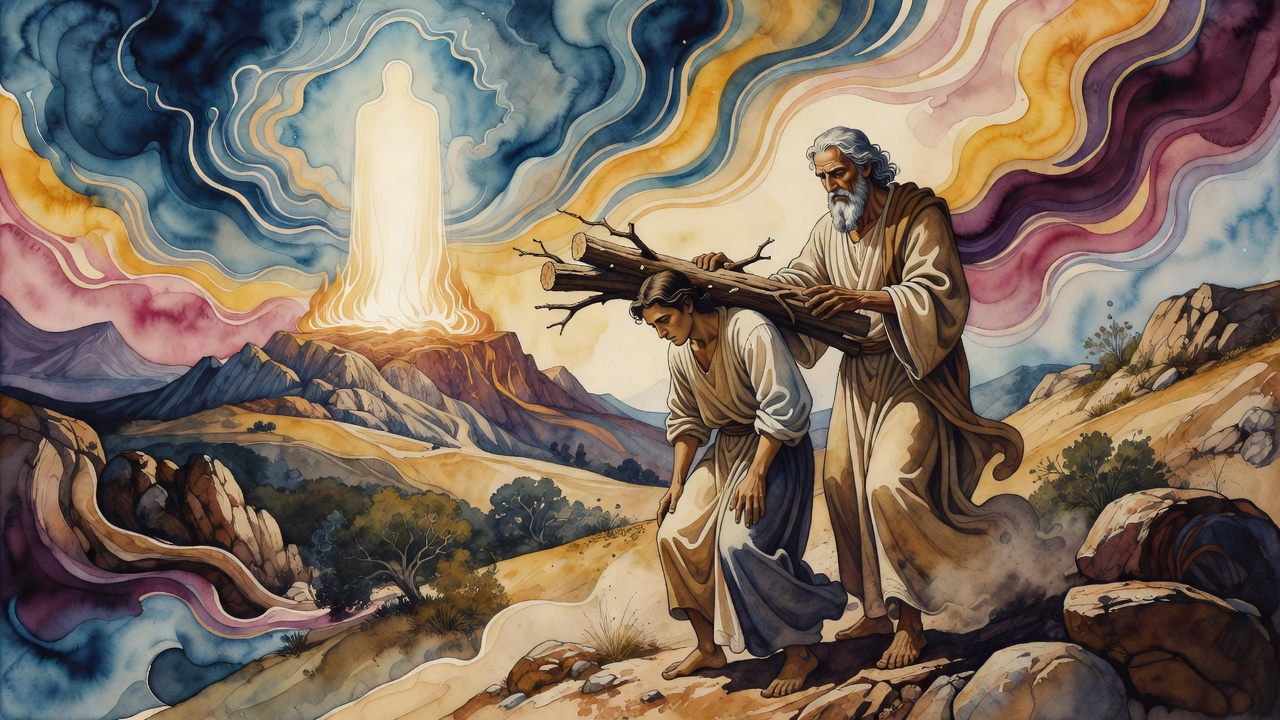
He rose early. He saddled the donkey. He split wood with hands that still smelled of feast-smoke and lamb fat. Sarah was not told the whole truth; some truths are too sharp for a morning kitchen, and love sometimes protects with incomplete sentences. Isaac walked beside him, asking about the lamb for the burnt offering, and Abraham answered with a sentence that held more faith than information: God will see to the lamb for Himself.

The Accuser followed the way a shadow follows a man at noon, thin but attached. Every step without complaint was another answer to the charge about the missing dove. The feast had been loud with gratitude. The road was quiet with obedience. Both can be true in one life; the Accuser had pretended they could not.

On the third day Abraham lifted his eyes and saw the place afar off. He did not run. He did not bargain the way he once bargained for Sodom, counting down from fifty righteous. The feast had been for a living son. This climb asked whether the living son was a gift held open-handed or a treasure clutched shut.

Bound and Unbound

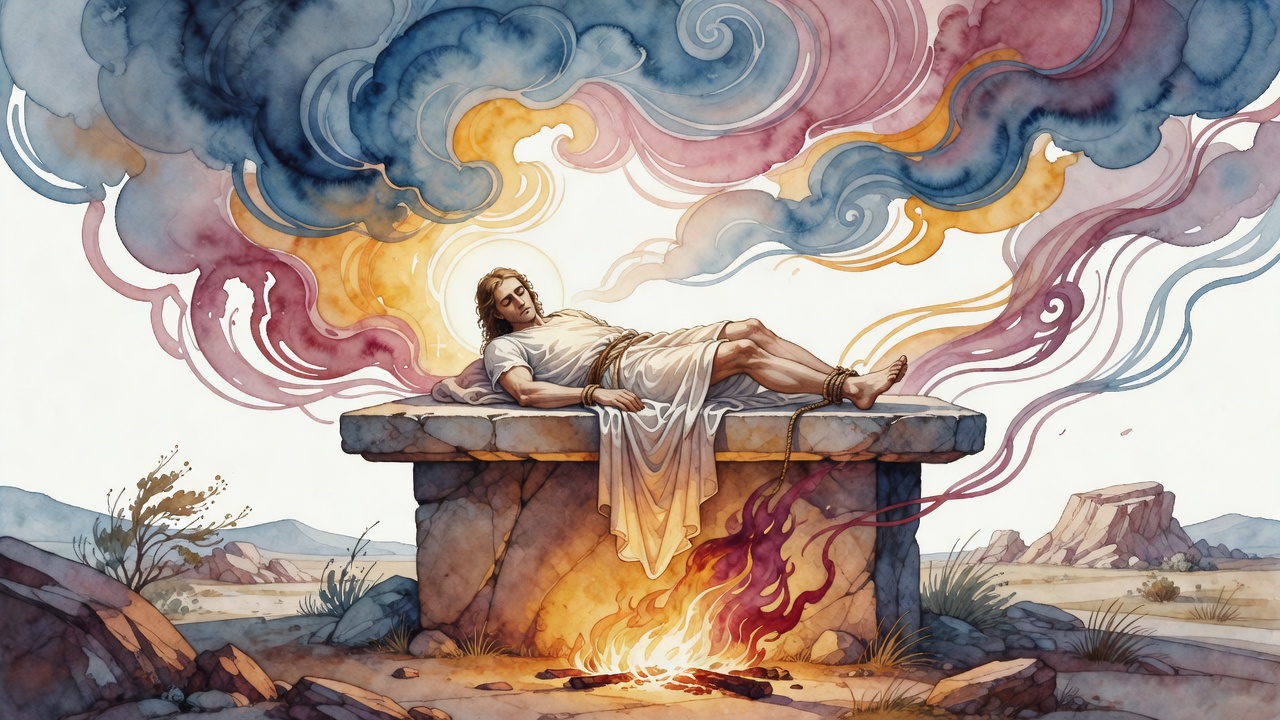
Isaac allowed the cords. That detail matters. A strong youth can refuse an old father. He did not refuse. The altar was built. The wood arranged. The knife rose in a hand that had broken bread for guests three days earlier.

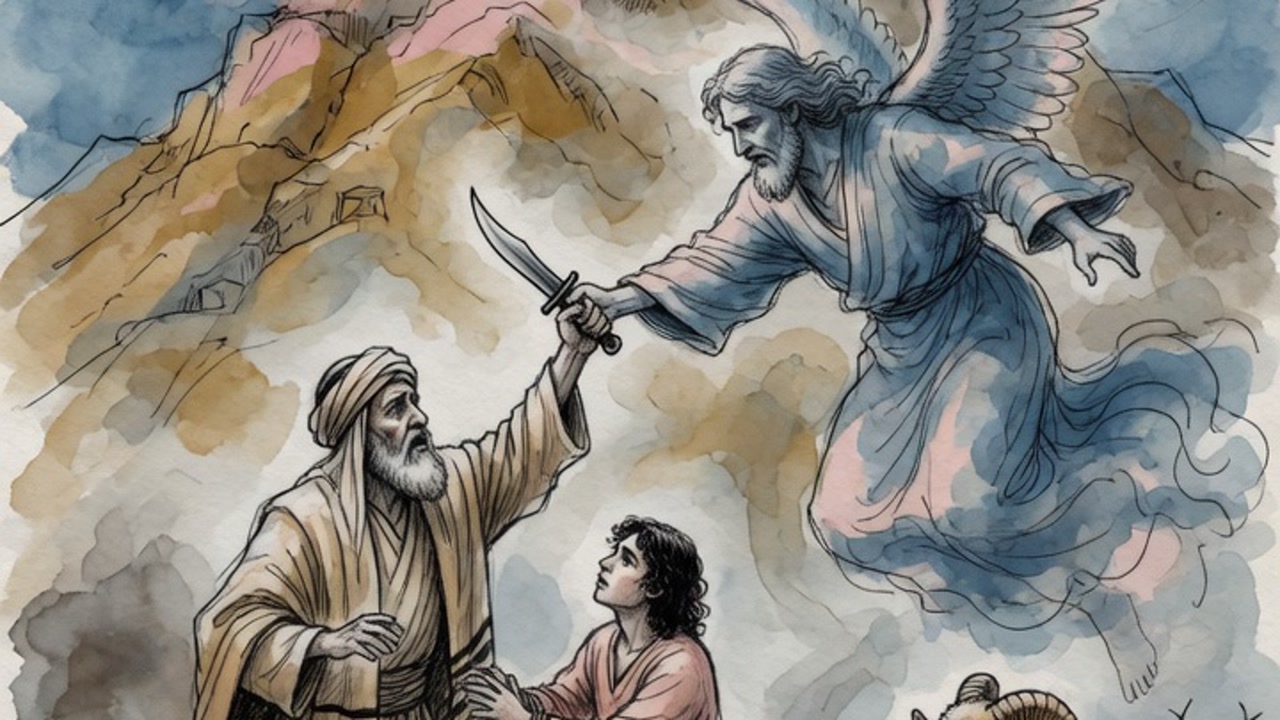
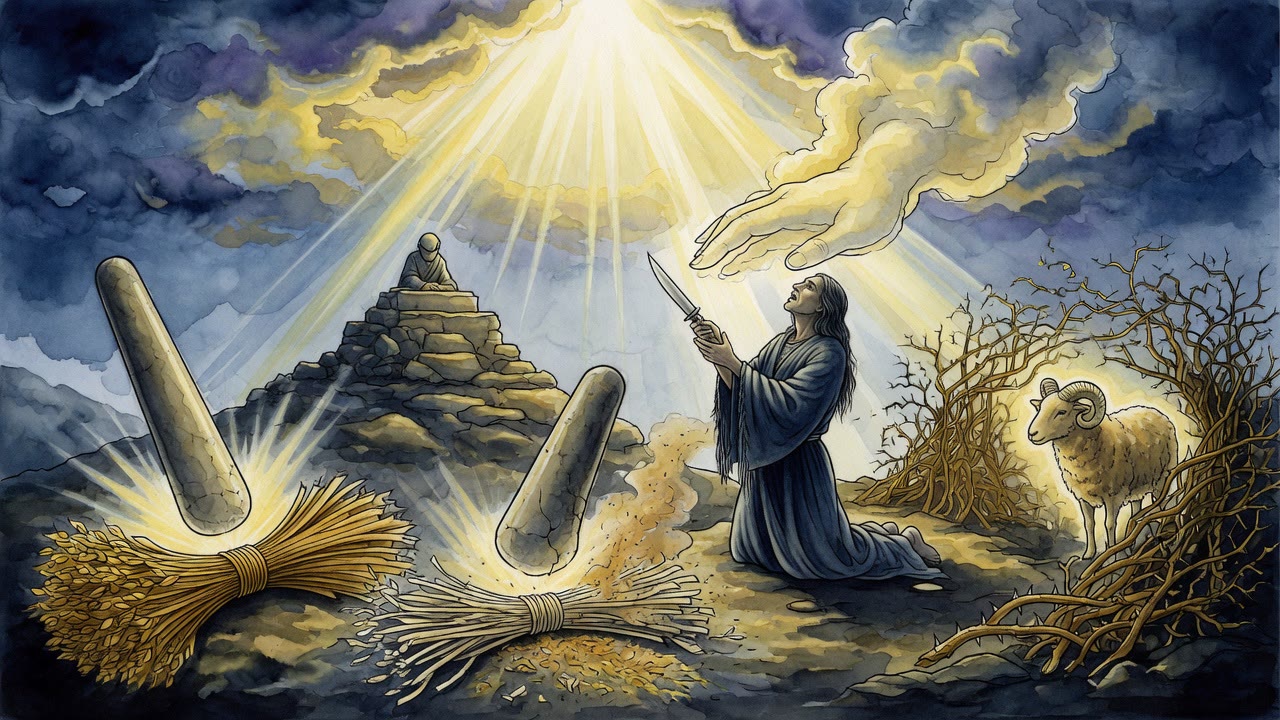
Then the voice that stops a universe arrived, and the ram waited in the thicket like a sentence rewritten at the last consonant. Abraham had not withheld. The Accuser's claim about a stingy feast lay broken under a willingness that cost more than birds. Heaven's rigor had its answer without needing Isaac's blood.

Below, in later ages, penitents would kneel and say: Eternal One, God of Abraham, Isaac, and Jacob, my sins are as sand along the shore You bounded, bind me with Your mercy, accept return offered with an upright heart. The names in that prayer are not decoration. They are the men who already stood bound, or nearly bound, before any of us borrowed their language for our smaller altars.

What the Feast Meant Afterward

Abraham came down the mountain with Isaac still breathing. The memory of trays and music did not become shame; it became the ordinary love that the Accuser had tried to weaponize. A man may feed his child and still belong wholly to God. The test did not cancel the feast. It revealed what the feast never had to prove until a prosecutor forced the question with a missing dove.

In the camp that night Isaac slept the heavy sleep of the spared. Abraham sat awake and did not count doves. He counted breaths that were still available to count. That was offering enough for the dark hours. The Accuser, for once, had nothing left to enter in the ledger that would stick. Somewhere a future prayer was already learning these names, so that ordinary sinners could stand at the throne of mercy and say them without having walked Moriah themselves.


← All myths

From the tradition

Sources

3 sources

The texts behind this telling. Some cards carry a translation of the source; others are our own retelling of it, and each card says which. Every card links out to the original.

Sanhedrin 89bHebraic Literature (1901)

Retold in our words. Read the original at the link below.Project Gutenberg eBook #14368, Hebraic Literature · PD-US-pre-1929

And it came to pass after these things that God tested Abraham (Genesis 22:1). Rabbi Yochanan, speaking in the name of Rabbi Yossi ben Zimra, asks in Sanhedrin 89b: after what things?

After the words of the Accuser. The Accuser, Ha-Satan, the angel whose task is to press Heaven's hard questions, stood before God and said, "Master of the Universe, You gave this old man a son at a hundred, and at the feast of the child's weaning he did not even spare a single dove to sacrifice to You." God answered, "He made the feast for his son's sake, and yet I know he would not refuse to offer that very son at My command."

So the test began. But notice how God phrased it. Not "take him" and be done. "Take now thy son." Abraham says, "I have two sons." "Thine only son." "Each is the only son of his mother." "Whom thou lovest." "I love both." "Isaac." Step by step, God walks Abraham into the full weight of what is being asked, the way a general might say to his most decorated warrior, "Fight this one battle hardest of all, so that no one can call your earlier victories luck."

Then, on the road to Moriah, the Accuser comes in person. He twists the words of Job against Abraham. "Shouldn't such trials be beneath a man like you? You have instructed many and strengthened weak hands. And now this?" Abraham answers with words the Psalmist will later speak (Psalms 26:11): "I will walk in my integrity."

Every step is a chance to turn back. Abraham walks on. The test was never whether he would sacrifice Isaac. The test was whether, question by question, he would keep walking.

Full source
Targum Jonathan on Genesis 7Targum Jonathan

Retold in our words. Read the original at the link below.The Targum of Jonathan ben Uzziel, trans. J. W. Etheridge, London, 1862 · Public Domain

The Hebrew Bible says God told Noah to enter the ark, and that rain would begin in seven days (Genesis 7:4). It does not explain why seven days. The Targum Jonathan does, and the explanation transforms the entire Flood story from divine wrath into a last-ditch act of mercy.

"Behold, I give you space of seven days," God says in the Targum. "If they will be converted, it shall be forgiven them; but if they will not be converted, after a time of days yet seven, I will cause rain to come down." This is not in the Hebrew at all. The translators invented a final ultimatum, seven days of open repentance where the entire Flood could have been called off. Humanity failed the test.

The Targum also explains what happened during those seven days. It was a mourning period for Methuselah, who had just died: "at the time of seven days after the conclusion of the mourning for Methushelach, the Lord beheld, and, lo, the sons of men had not turned." The oldest man in the Bible served as humanity's last shield. While people mourned him, God waited. When the mourning ended and nobody repented, the waters came.

They came hot. The Hebrew says rain fell for forty days. The Targum says "the waters of the deluge came down hotly from the heavens." This detail appears in rabbinic tradition elsewhere, the idea that the Flood was boiling water, a punishment that matched the sin, since the generation of the Flood had "heated" themselves with sexual immorality.

The Targum names the month as Marchesvan, then pauses to explain that months were previously counted from Tishri, "which was the beginning of the year at the completion of the world." This footnote inside scripture reveals translators wrestling with competing Jewish calendars. Meanwhile, the giants, the Nephilim, "gathered there together with their sons and perturbed" the fountains of the deep, as if they tried to physically fight the Flood. And when the ark's door closed, it was not Noah who shut it. "The Word of the Lord covered over the door of the ark." God Himself, through His Memra, sealed it shut.

Full source
Rabbinical Ana, Penitential PrayersHebraic Literature (1901)

Retold in our words. Read the original at the link below.Project Gutenberg eBook #14368, Hebraic Literature · PD-US-pre-1929

A traditional prayer of personal return, drawn from the anthologies of Jewish rabbinical writings, places the worshiper on his knees before the God of Abraham, Isaac, and Jacob. "Eternal One," the prayer begins, "God of Abraham, Isaac, and Jacob, and their descendants, the heavens and the earth are the work of Your hand. You gave the sea its shore. With a single word You restrained the might of the deep."

The voice then shifts from praise to confession. "You are merciful as You are great. You have promised to accept the teshuvah of those who return to You with an upright heart. My sins are as numerous as the grains of sand along that seashore You commanded. I have done evil before You, acted wickedly in Your presence, committed abominations."

"Bound with fetters I come before You," the penitent continues. "On my knees I plead in the name of Your great attributes of mercy. Have compassion on my suffering and my distress. Pardon me, O Lord. Forgive me. Do not utterly destroy me because of my transgressions. Let not my punishment be eternal."

The prayer ends with a vow and a doxology. "Though I am unworthy of Your goodness, save me in Your mercy. From this day onward I will praise Your Name every day of my life, for all Your creatures delight in praising You, and to You belongs greatness and goodness forever and ever, Selah."

It is a prayer for the moment when a person cannot argue his case and can only throw himself on the thirteen attributes (Exodus 34:6-7). In that moment the only strategy left is the one this prayer models: stop defending, start praising, and beg.

Full source