When the Father Shifted His Son Between Dangers
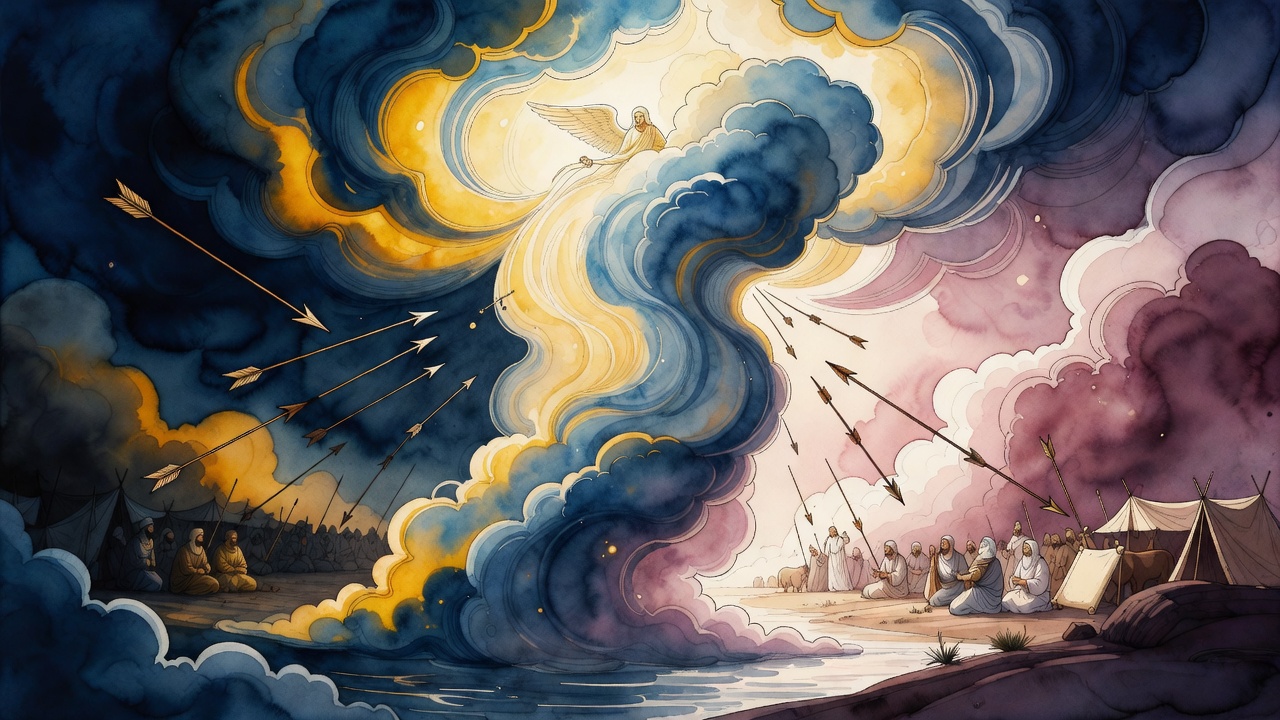
Bandits ahead, a wolf behind, sun on the boy's neck. A father keeps moving the child. Cloud and fire take the same shifts so Israel is never left alone.
Table of Contents
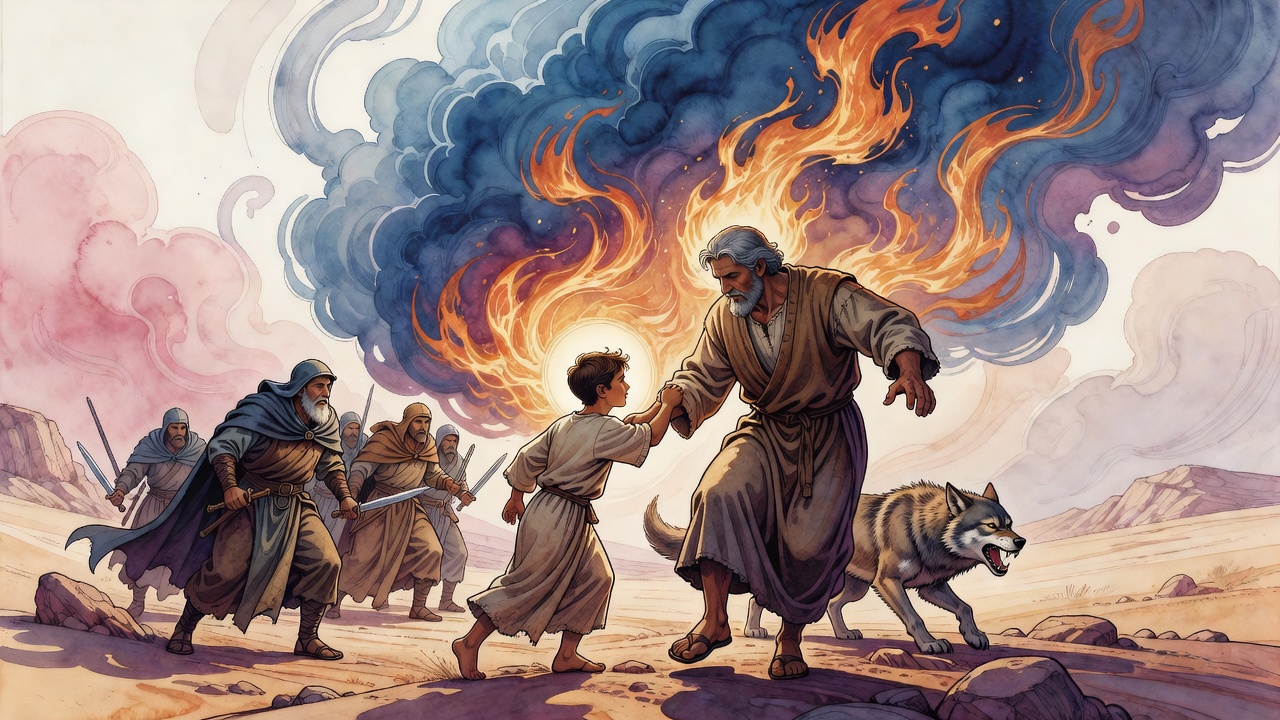
The father felt the boy's weight change before he saw the dust. Ahead, shapes that were not trees. Behind, a low shape that was not a dog. He swung the child from hip to back in one motion and kept walking, sandals grinding grit, throat already dry from a morning without enough water.
 Click for full size
"Hold my neck," he said. Small arms locked. The wilderness road had no mercy for pause and no patience for fathers who explain too much.
The boy whispered, "I am not afraid." His fingers told a different story, tight enough to leave marks.
Bandit, Wolf, and Shoulders
When bandits showed themselves in front, he shifted the boy to his back so any arrow would meet his own body first. When the wolf closed from behind, he swung the child to his chest, face tucked under his chin, the father's heartbeat loud against the boy's ear. When danger pressed from both sides at once, he lifted the boy onto his shoulders, high enough to see the path, high enough that the father's hands were free for the stick and the stones.
This is how Rabbi Judah hears the angel of God moving from before Israel's camp to behind it. Not a cold rearrangement of troops on a map. A parent on a bad road, adjusting the child's place with every new threat, love measured in muscle and timing.
"Are we almost there?" the boy asked from the shoulders.
"We are still being carried," the father said. "That is the answer for now. "
The bandits fell back when they saw he would not drop the child to run. The wolf found easier meat among the scrub. The road continued, ugly and true, heat pooling in the hollows of the path.
Cloud for Shade, Fire for Night
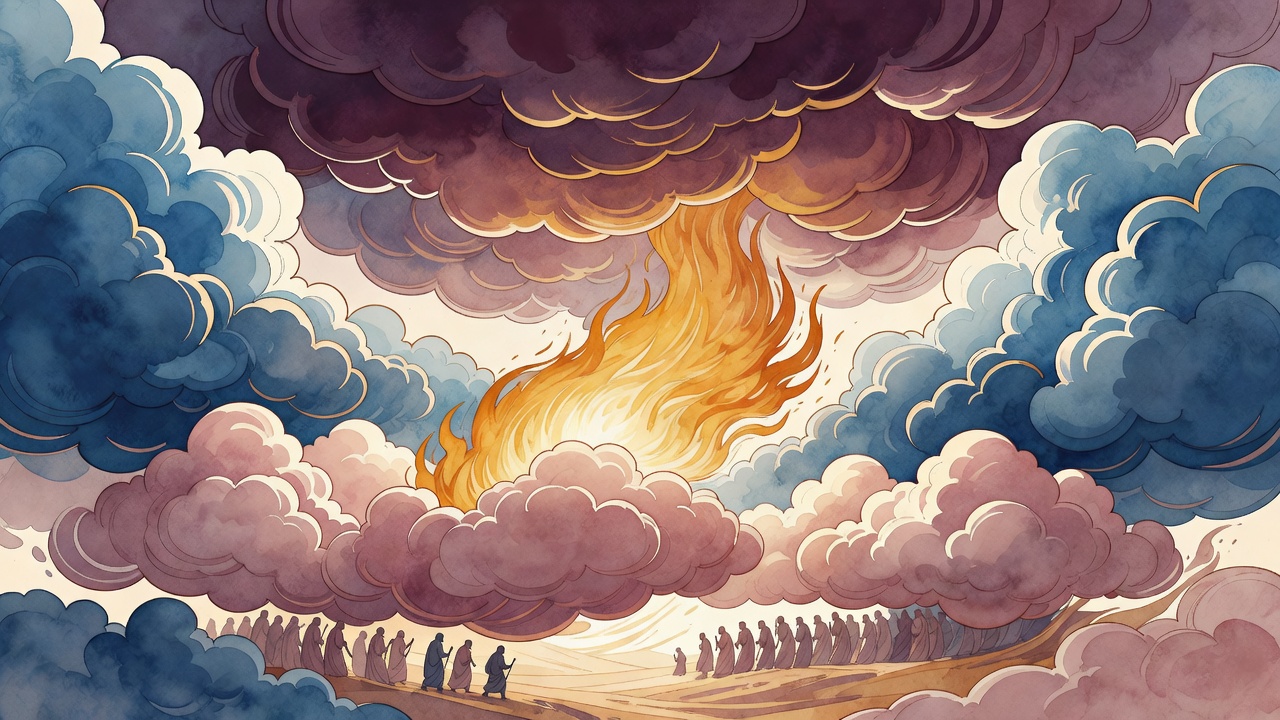
When the sun stood like a hammer, he spread his cloak over the boy's head. In the camp of the nation the same mercy became a pillar of cloud that held its own brightness even against the noon glare, unwashed by the stronger light. When night came and cold found their ankles, fire rose as a second pillar, strong enough that moonlight could not erase it.
The two pillars never left a gap. Before day-cloud faded, night-fire was already glowing into place. Before fire dimmed, cloud returned. A guard that never stood down. Even when the people recoiled twelve mil in fear or stubbornness, the pillars did not abandon them. The vulnerable needed them most: a private marking so the ritually impure would not be shamed in the open, a sky-sign for those who could not fight for a good place in the crowd, a lamp for the ones who walk last.
The father in the parable understood that kind of care. He had once been a boy who needed space to heal without mockery. He had once been the last in line. He kept the cloak steady even when his own scalp burned.
"Will the lights leave if we fail?" the boy asked, watching distant pillar-shapes above the greater camp.
"They stayed through failure before," the father said. "That is the part I still cannot fully understand, and the part that keeps me walking when my pride wants to sit down and die of embarrassment."
Bread, Water, and the Measure
When the child hungered, the father broke bread with hands cracked from wind. In the larger story the bread was manna, measured to an omer a head (a dry measure, about two quarts each) so the prince's heap and the poor family's handful equalized in the jar. Nahshon could scoop like a river; the widow could scoop like a thimble; home poured out the same portion. No one could hoard. No one went short. The wilderness trained a people in the discipline of enough.
When the child thirsted, water came from rock, living and sudden, a gift that made no sense to geology and perfect sense to mercy.
The father feeding his son was not a soft detail added for sentiment. The wilderness taught that a man must take for those in his tent. Provision is not optional poetry. It is the law of the road. A husband and father bears responsibility for the mouths that sleep within the reach of his arms.
The boy chewed and watched ants carry crumbs larger than their heads. "They work together," he said.
"So do we," the father said, "even when only one of us can walk the full day."
Angel of Judgment, Angel of Mercy
Usually Scripture says "angel of the LORD," the Name of mercy. Here it says "angel of God," the Name that can mean strict judgment. Rabbi Nathan pressed Rabbi Shimon ben Yochai on the wording. The answer is weight, not ornament: even judgment can move like a father when the child's life is the point of the journey. Severity without care is a wolf. Care without severity cannot survive bandits.
The man on the road felt that double edge in his own temper. He was tired enough to snap at the boy for shifting his weight. He was fierce enough to kill for him. Love and severity shared the same pair of hands, the same sore shoulders, the same stick cut from a thorn tree.
He chose not to snap. He adjusted the boy again and kept the stick ready.
What the Child Learned on the Shoulders
Years later the boy would walk on his own feet and still look up when heat rose, expecting a cloak. He would still listen for a handoff between cloud and fire in his own seasons of fear. He would learn that God's care in the wilderness was not a single rescue but a hundred small shifts: arms, back, shoulders, shade, bread, water, a pillar that refused to quit even when the camp's mood turned sour.
On that first hard night he slept against his father's neck. The father's shoulders burned as if the pillar of fire had moved into muscle. He did not set the boy down. Somewhere above the camp the real pillars kept their seamless watch, and the nation, like the child, survived another mile it could not have walked alone.
← All myths