Parshat Noach6 min read

When the Survivors Sold Each Other and Carved Their Gods

The Flood survivors' grandsons sold each other into slavery and hammered gods from metal, and heaven hardened into a sentence that left no road back.

Curated by Arthur · Told by Maggid ·
Table of Contents
  1. The Children of the Survivors Spread Across the Washed Earth
  2. 'Ur Carved His Own Name Into the Stone
  3. The Prince Mastema Put His Spirits to Work
  4. Heaven Drew a Line No Repentance Could Cross
  5. The Sabbath Became a Matter of Life and Death

The Children of the Survivors Spread Across the Washed Earth

The water had gone down, and the ground was clean. Not a single wall stood from the world before. The grandsons of the men who had ridden out the Flood walked over hills that still smelled of silt and looked at an earth that belonged to no one, and they decided it would belong to them.

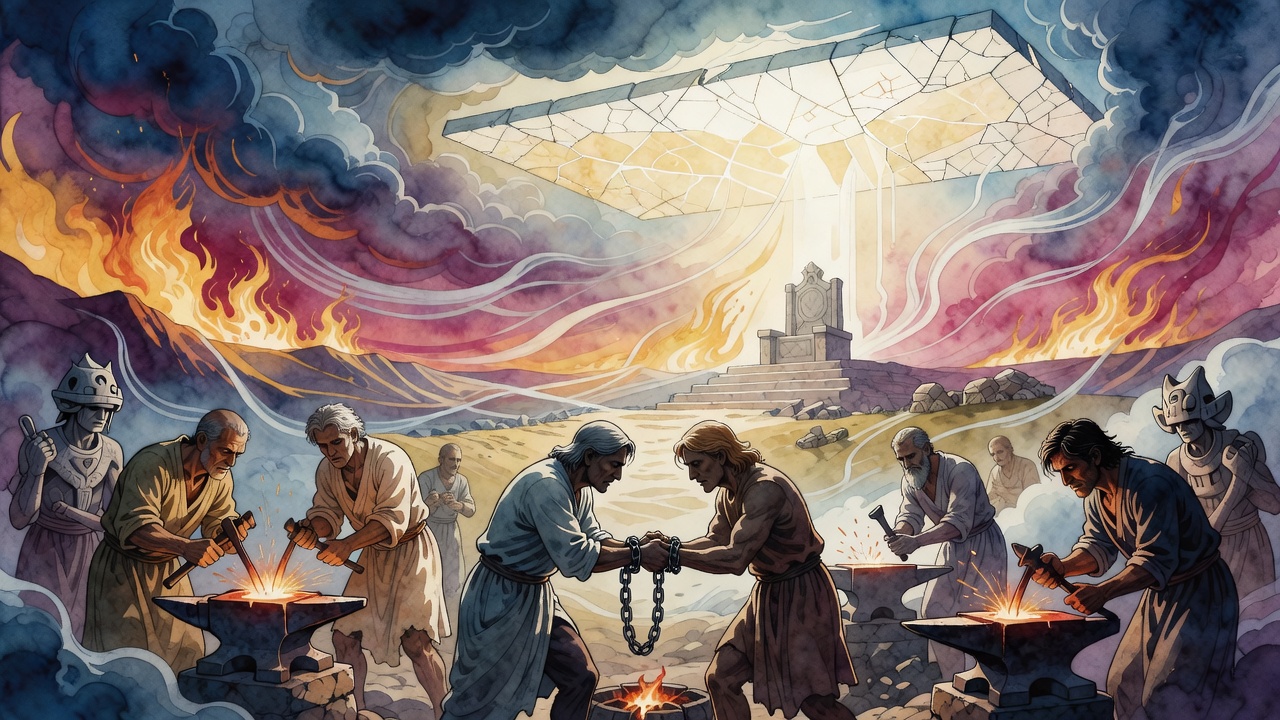
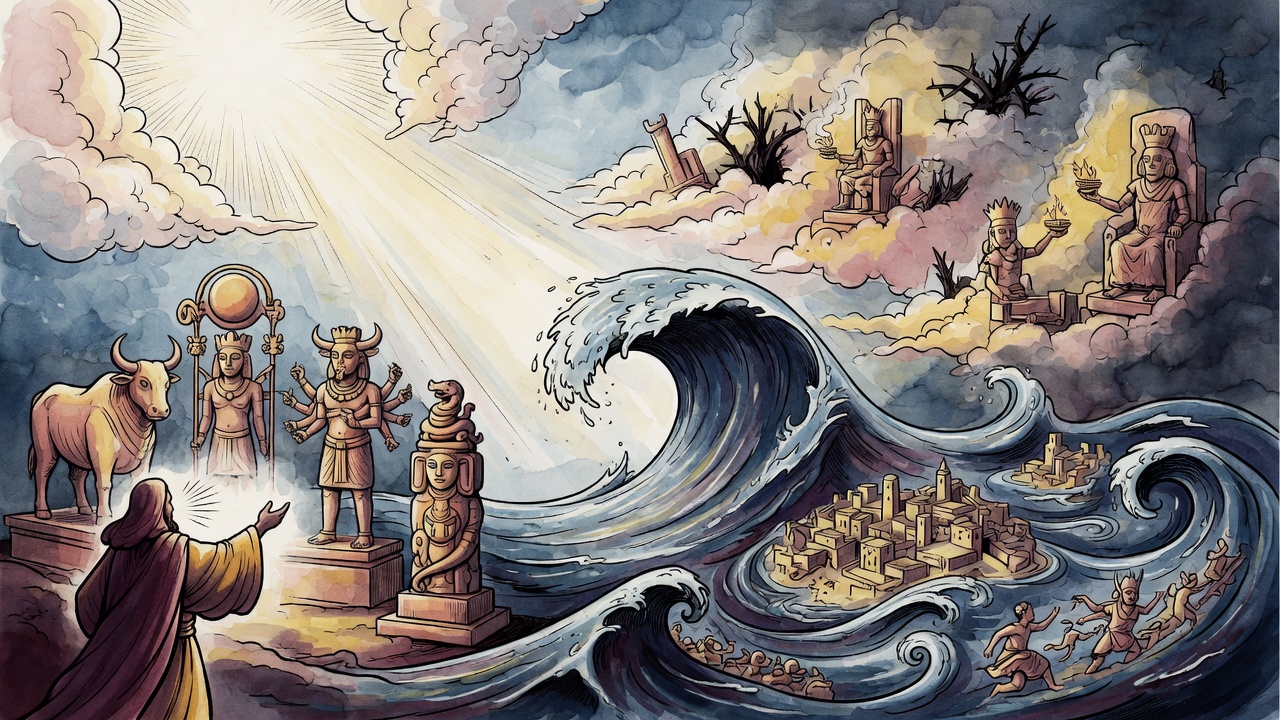
They did not build slowly. They built with hunger. Where two families met at a well, one counted the other and saw labor it did not have to feed. So the strong came down on the weak and took their towns, and what they took they kept by force. A man who had been a neighbor at dawn was a possession by dusk. They began to capture cities, and to sell male and female slaves, and the price of a person became a number a buyer could speak out loud without flinching.

'Ur Carved His Own Name Into the Stone

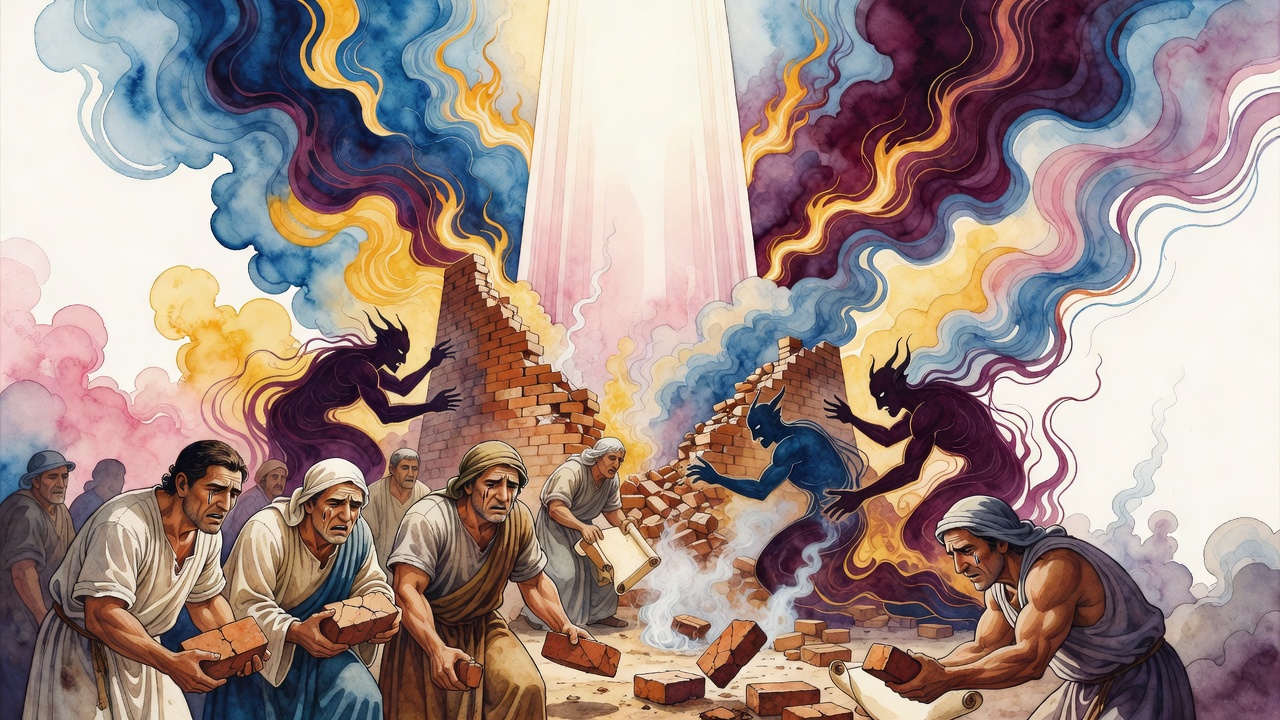
Among the builders was 'Ûr, son of Kêsêd. He raised a city in the land of the Chaldees and would not let it carry the memory of the old world. He called it 'Arâ, after himself and after his father, so that anyone who passed its gate would say his name and the name of the man who had made him. He had crossed a drowned world to stand on dry stone, and the first thing he wanted from it was to be remembered.

From naming the city to making gods was a short walk. They poured metal into molds and let it cool into faces, and each man bowed to the molten image his own hands had shaped. They carved graven things and shaped unclean simulacra and called them lords, and the workshop and the shrine became the same room. They had survived the cleansing of the earth and used their second chance to manufacture masters out of their own forearms.

The Prince Mastema Put His Spirits to Work

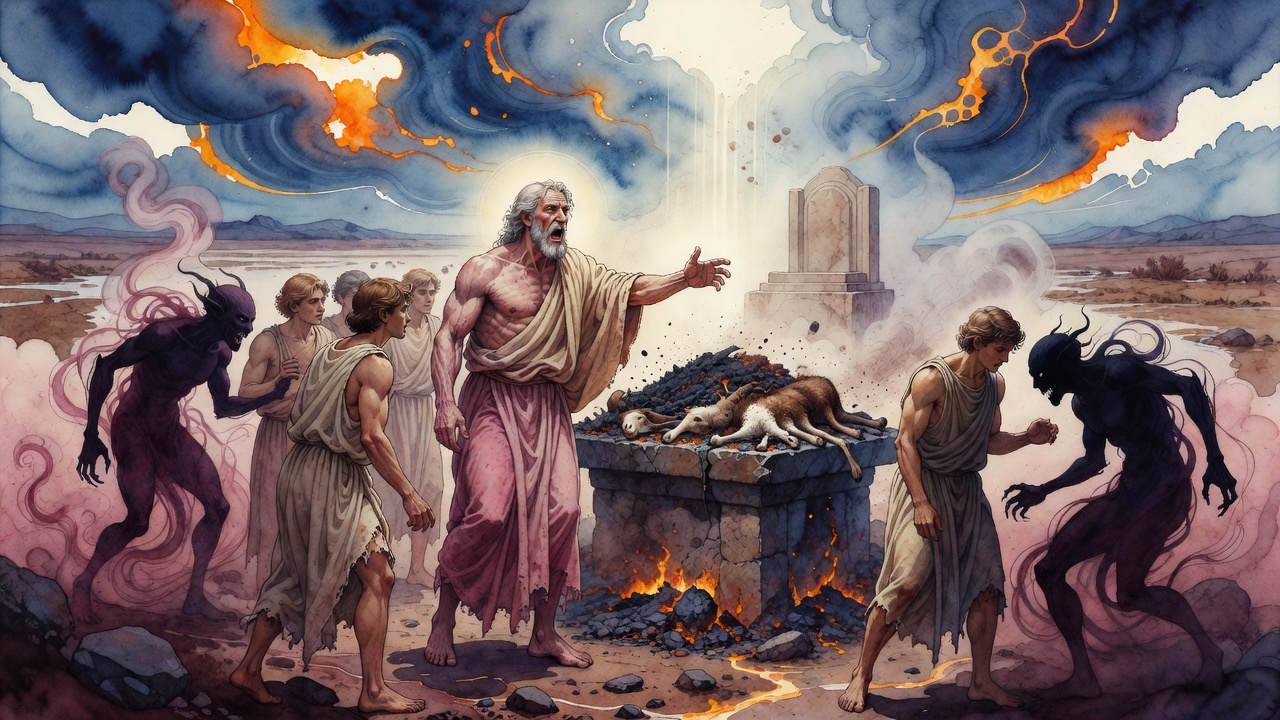
None of this was as lonely as it looked. Around the smoking forges and the new altars moved things the eye could not catch, malignant spirits that leaned close to the workmen and made the wrong choice feel like the easy one. They assisted and they seduced, and the men felt only their own appetites growing teeth.

Behind the spirits stood their prince. Mastêmâ drove the whole descent forward, exerting himself to corrupt what the Flood had spared. He sent out the spirits placed under his hand and gave them a single commission, to work every kind of wrong and sin, to lead into transgression, to corrupt and destroy, and to shed blood upon the earth. The blood ran, the idols multiplied, and the covenant that the survivors should have carried down to their children went unspoken until the children did not know it had ever existed.

Heaven Drew a Line No Repentance Could Cross

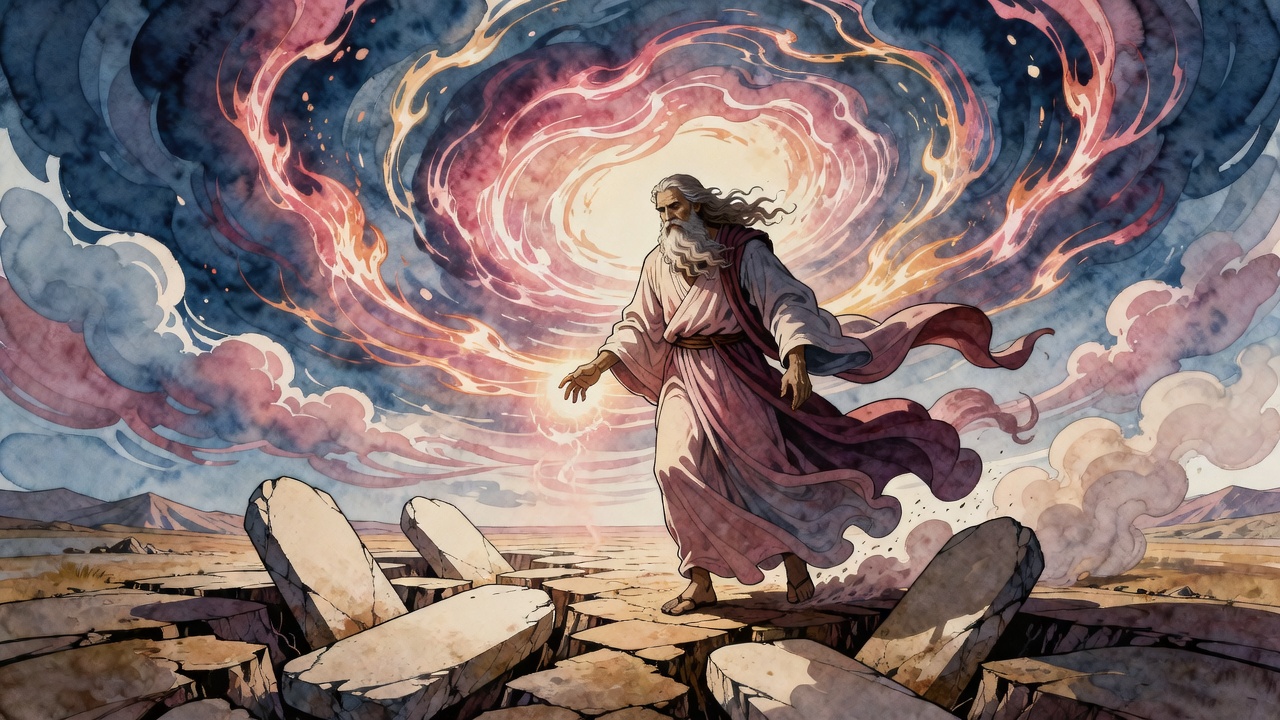
In the high court the verdict took shape, and it did not soften. For the worst of what they did there would be no consummation of days and no atonement. Such men were not to be warned, or fined, or sent away to mend themselves over a long life. They were to be rooted out from the midst of the nation, and on the very day they committed the act they were to be put to death. No waiting. No teshuvah. No second chance bought with time, because for these deeds time itself had been taken off the table.

The reason was spoken plainly. The Lord their God was the judge, and He did not respect persons and did not accept gifts. A rich offender could not buy his way clear and a powerful one could not lean on his name. The words were to be written down for Israel so the people would hear them, observe them, and guard themselves, and not be destroyed and rooted out of the land. A covenant that small communities could survive on left no room for the sins that dissolve trust at the root.

The Sabbath Became a Matter of Life and Death

And the same severity reached all the way into the calendar, down to one day in seven. The Sabbath was not handed over as a soft rest. It was fenced with death. Whoever desecrated that day was to die. Whoever lay with his wife on it, whoever said aloud that he meant to set out on a journey, to buy, or to sell, whoever drew water he had not prepared on the sixth day, whoever lifted a burden to carry it out of his tent or his house, every one of them was to die.

So the work all moved earlier. A man filled his jars on the sixth day, because on the seventh the well was forbidden him. He set out his bread and his drink before the light failed, because on the seventh he could not carry, could not draw, could not deal. Everything had to be ready before the day arrived, and then the day arrived and the world simply stopped. No labor at all, only eating and drinking and rest, and the blessing of the God who had given them a day of festival. The survivors' children had turned freedom into a market for human beings and worship into a thing they hammered out of metal. The day of rest was set against all of it, walled in with a penalty as final as the one waiting for the men who shed blood, a single fixed point where the buying and the selling and the carving had to cease.


← All myths
From the tradition

Sources

3 sources

The texts this telling draws on, in full. Open a card to read inline, or expand it for a wider, quieter read.

Book of Jubilees 11:10Book of Jubilees

Chapter 11 of Jubilees isn't exactly a feel-good story. It describes a rapid descent into moral chaos. The people, newly populating the earth, "began to capture cities, and to sell male and female slaves." Not a great start. It's a harsh reminder that rebuilding isn't just about bricks and mortar; it's about rebuilding character, too.

Then we have ’Ûr, son of Kêsêd, a name that might ring a bell. He built the city of ’Arâ of the Chaldees, and, tellingly, "called its name after his own name and the name of his father.” What does that suggest to you? A desire for legacy? A need for recognition? Or something darker… a kind of self-worship creeping in?

Because it gets worse. Much worse.

The verse reads, "And they made for themselves molten images, and they worshipped each the idol, the molten image which they had made for themselves.” They weren't just worshipping something; they were worshipping themselves, or at least, their own creations. The Book of Jubilees sees this as a pivotal moment, a turning point where humanity lost its way. It wasn't just a matter of misguided faith. It was a deep corruption setting in.

And it wasn't just about idols. They began to make “graven images and unclean simulacra.” The text makes it very clear that the images themselves were considered unclean and impure. And here's where it gets even more interesting. These acts weren't just human failings; they had supernatural assistance.

"Malignant spirits assisted and seduced (them) into committing transgression and uncleanness.”

Now, we’re not just talking about people making bad choices. We're talking about a cosmic battle, a spiritual influence actively pushing humanity towards corruption.

And who's the ringleader? None other than Mastêmâ. This is where the Book of Jubilees offers a particularly striking theological perspective. The text says, "And the prince Mastêmâ exerted himself to do all this, and he sent forth other spirits, those which were put under his hand, to do all manner of wrong and sin, and all manner of transgression, to corrupt and destroy, and to shed blood upon the earth.”

Mastêmâ, often understood as a chief of the evil spirits (similar to Satan in other traditions), is actively working to undermine humanity. He’s not just tempting them; he’s deploying a whole army of malevolent forces to corrupt and destroy. This idea of spiritual forces influencing human behavior is a recurring theme in Jewish mystical thought, as we see echoed in texts like the Zohar.

So, what are we to make of this rather bleak picture? Is it just a historical account of ancient misdeeds? Or is there something more profound at play?

Perhaps the Book of Jubilees is offering a cautionary tale. A reminder that the seeds of destruction can be sown quickly, and that the descent into moral chaos can be a slippery slope. It suggests that we need to be vigilant not only against external threats but also against the internal temptations that can lead us astray. And, maybe, just maybe, it's a reminder that we're not alone in this struggle, that there are forces at work, both good and evil, that are shaping our world and our destinies.

Full source
Book of Jubilees 33:20Book of Jubilees

In it, we find a stark warning, a line drawn in the sand regarding actions so egregious that they warrant the ultimate penalty.

The passage states, “And for this law there is no consummation of days, and no atonement for it, but they must both be rooted out in the midst of the nation: on the day whereon they committed it they shall slay them.”

Whoa. Heavy stuff. This isn't about a simple mistake or a minor transgression. This is about something so fundamentally disruptive to the moral and spiritual fabric of the community that it demands immediate and absolute removal. No second chances. No process of teshuvah (repentance), or repentance. No possibility of reconciliation. As the text emphasizes, the perpetrators “must both be rooted out.”

What exactly constitutes such a heinous act? The Book of Jubilees doesn't explicitly spell it out here, but elsewhere it details various sins punishable by death. Incest, for instance, is mentioned a few chapters later in Jubilees 33:10-13. in a small, tightly knit community, certain actions could be seen as existential threats. They could undermine the very foundations of trust, kinship, and shared belief that held the group together.

The text continues, “And do thou, Moses, write (it) down for Israel that they may observe it, and do according to these words, and not commit a sin unto death; for the Lord our God is judge, who respecteth not persons and accepteth not gifts.”

The instruction to Moses is crucial. This isn't just some suggestion; it's a divine command to codify these laws, to make them known to all of Israel. The reminder that God "respecteth not persons and accepteth not gifts" emphasizes the impartiality of divine justice. No one is above the law, no amount of wealth or status can buy immunity.

It’s a powerful statement about the importance of justice and the consequences of violating sacred boundaries. This emphasizes that adherence to these laws is not merely a matter of personal morality but a matter of communal survival.

Finally, the passage concludes with, "And tell them these words of the covenant, that they may hear and observe, and be on their guard with respect to them, and not be destroyed and rooted out of the land."

The phrase "words of the covenant" is key. This isn't just about avoiding punishment; it's about upholding the sacred agreement between God and the Israelites. It's about ensuring the continued well-being and prosperity of the nation. It's a call to vigilance, a constant reminder that their actions have consequences, not just for themselves but for the entire community.

So, what do we take away from this glimpse into the Book of Jubilees? It’s a stark reminder of the gravity with which ancient societies viewed certain transgressions. It also hints at the delicate balance between individual freedom and communal responsibility, between justice and mercy. It forces us to confront difficult questions about the nature of sin, punishment, and the very foundations of a just society. It's a lot to chew on, isn't it?

Full source
Book of Jubilees 50:11Book of Jubilees

Book of Jubilees turns to Jubilees Takes Sabbath Violations Deadly Seriously.

This ancient text, considered scripture by some but not included in the standard Hebrew Bible, expands on the laws and stories we find in Genesis and Exodus. It offers a glimpse into the religious sensibilities of a particular Jewish community perhaps around the second century BCE. And when it comes to Sabbath, Jubilees pulls no punches.

Chapter 50 lays out some pretty intense rules for observing the Sabbath. It’s not just about avoiding work; it’s about creating a complete separation from the mundane activities of the week.

So, what does that look like, according to Jubilees?

“Whoever desecrateth that day, whoever lieth with (his) wife or whoever saith he will do something on it, that he will set out on a journey thereon in regard to any buying or selling: and whoever draweth water thereon which he had not prepared for himself on the sixth day, and whoever taketh up any burden to carry it out of his tent or out of his house shall die.”

Did you catch that? Death. The punishment for violating the Sabbath in these specific ways is, well, capital.

Now, let's unpack this. What actions were considered so egregious?

First, simply desecrating the day. That’s a broad statement, isn’t it? But in the context of what follows, we get a better idea. It's about violating the sanctity of the day through forbidden actions.

Then, lying with one's wife. This one often raises eyebrows. The implication seems to be that even marital relations were considered a distraction from the complete spiritual focus required on the Sabbath.

Planning to do something on the Sabbath, like setting out on a journey for business, was also forbidden. The focus was to be entirely on rest and spiritual connection, not on worldly pursuits.

Drawing water that hadn't been prepared beforehand? Carrying burdens outside the home? These acts are about the prohibition of work, pushing it to an extreme level of detail. The idea is to prevent any labor that wasn't absolutely essential for preserving life. Pre-planning and preparation were key; you were expected to have everything you needed already in place before the Sabbath began.

The Book of Jubilees continues: "Ye shall do no work whatever on the Sabbath day save that ye have prepared for yourselves on the sixth day, so as to eat, and drink, and rest, and keep Sabbath from all work on that day, and to bless the Lord your God, who has given you a day of festival."

The Sabbath, according to this view, wasn't just a day off; it was a divinely ordained festival, a time to completely detach from the world and immerse oneself in the presence of God.

The extreme penalties described in Jubilees paint a stark picture. It's a reminder of how seriously some ancient Jewish communities took the concept of Sabbath rest, viewing it as a sacred obligation with profound consequences. While these specific interpretations and penalties are not universally accepted within Judaism today, the underlying principle of dedicating the Sabbath to rest, reflection, and spiritual connection remains a central tenet of the faith.

It makes you think, doesn’t it? In our hyper-connected, always-on world, what does it truly mean to rest? What would it look like to create a genuine sanctuary, a space completely set apart from the demands and distractions of everyday life? Perhaps, even without the threat of… well, you know… we can still learn something from the intensity of the Book of Jubilees and its vision of a truly sacred Sabbath.

Full source