When the Temple Gates Sank to Save Their Honor
Eikhah Rabbah reads the Temple's ruin through a garden without water, gates that sank rather than be captured, and a wound as vast as the sea.
Table of Contents
 Click for full size
The Garden Whose Spring Was Removed
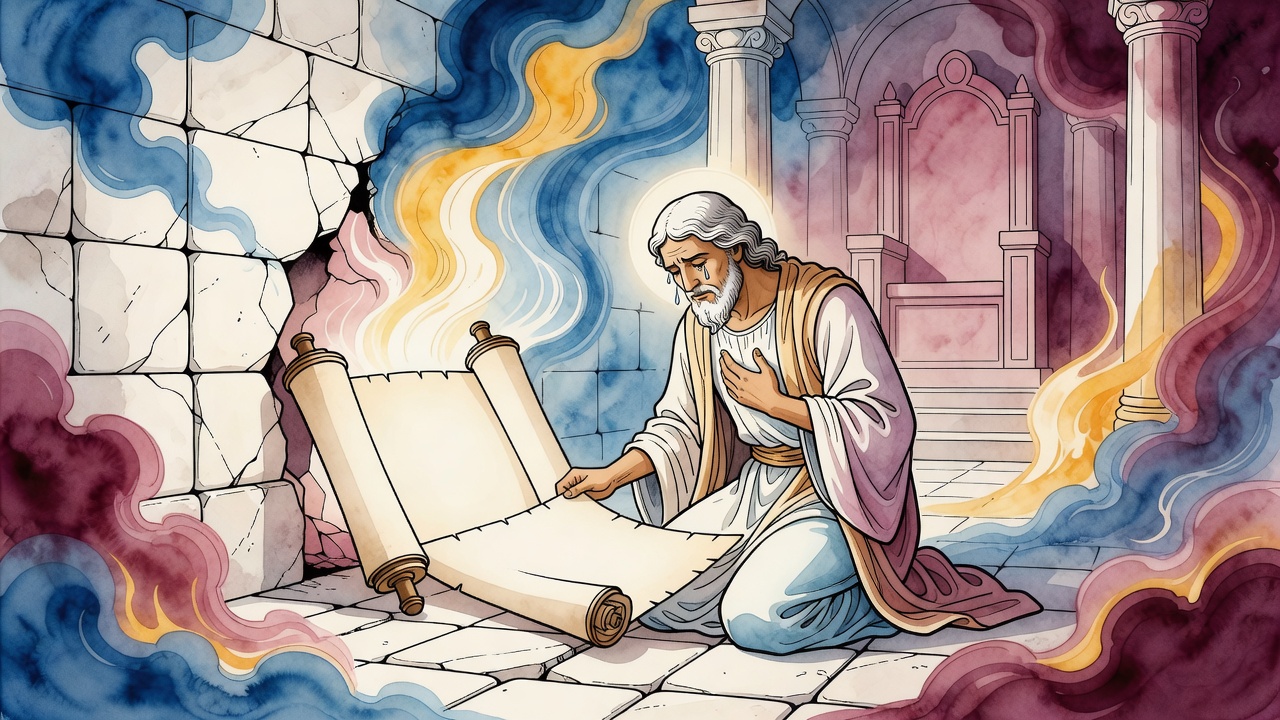
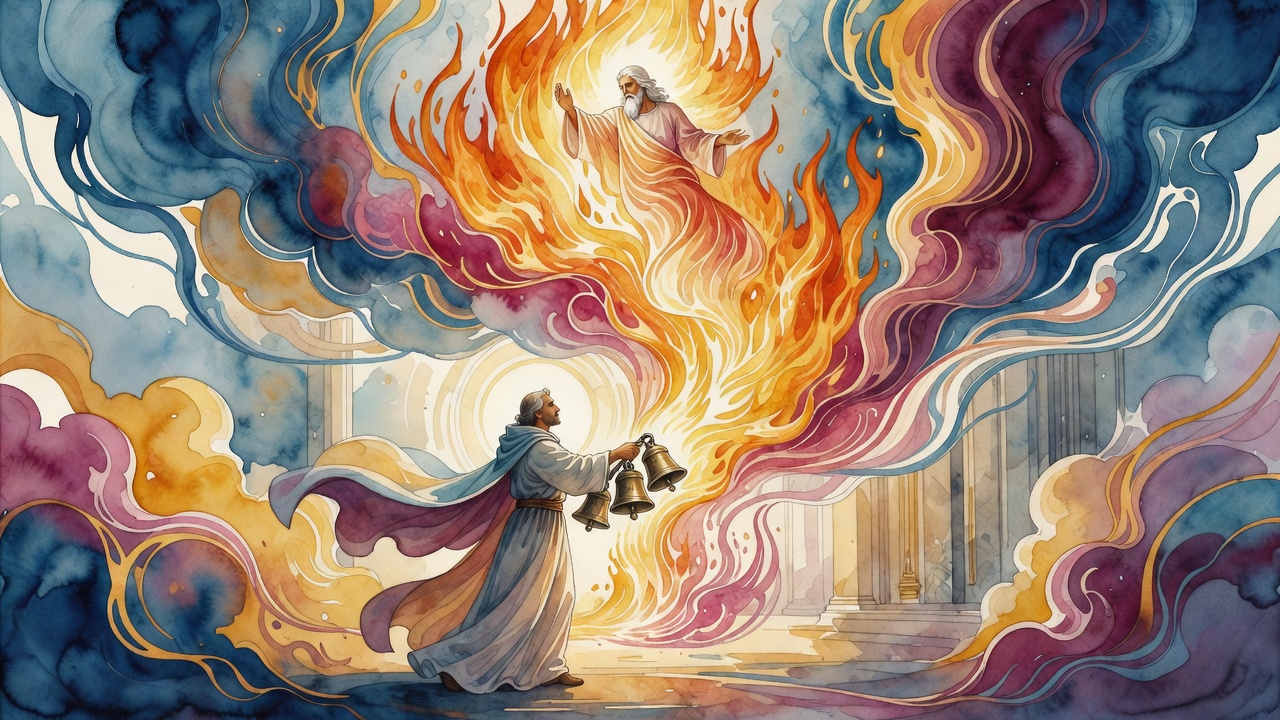
Rabbi Hama bar Rabbi Hanina read Lamentations 2:6, He stripped His shrine like a garden, and saw a garden whose spring had been taken away. No water meant no green. Without the source, the garden turned white, the color of death in summer heat, everything that had been alive curling at the edges and losing color before it fell.
Rabbi Shmuel bar Nahmani pressed the comparison further. He linked the verse to the first exile, the one from Eden. When God banished Adam from the garden, Israel knew the shape of what had happened to them. Jerusalem was not only losing a building. Israel was reliving the first expulsion, only this time the garden had stone courts and altar fire and priests and the scheduled rhythm of Shabbat song. The second exile was the first exile happening again with more to lose.
The Temple was not a fortress being taken. It was a living place being cut from its source. The midrash chose the garden and not the stronghold as its primary image because a garden's failure is slower and more total. A fortress can be rebuilt. A garden whose spring is gone has nothing to water the rebuilding.
The Gates That Chose the Ground
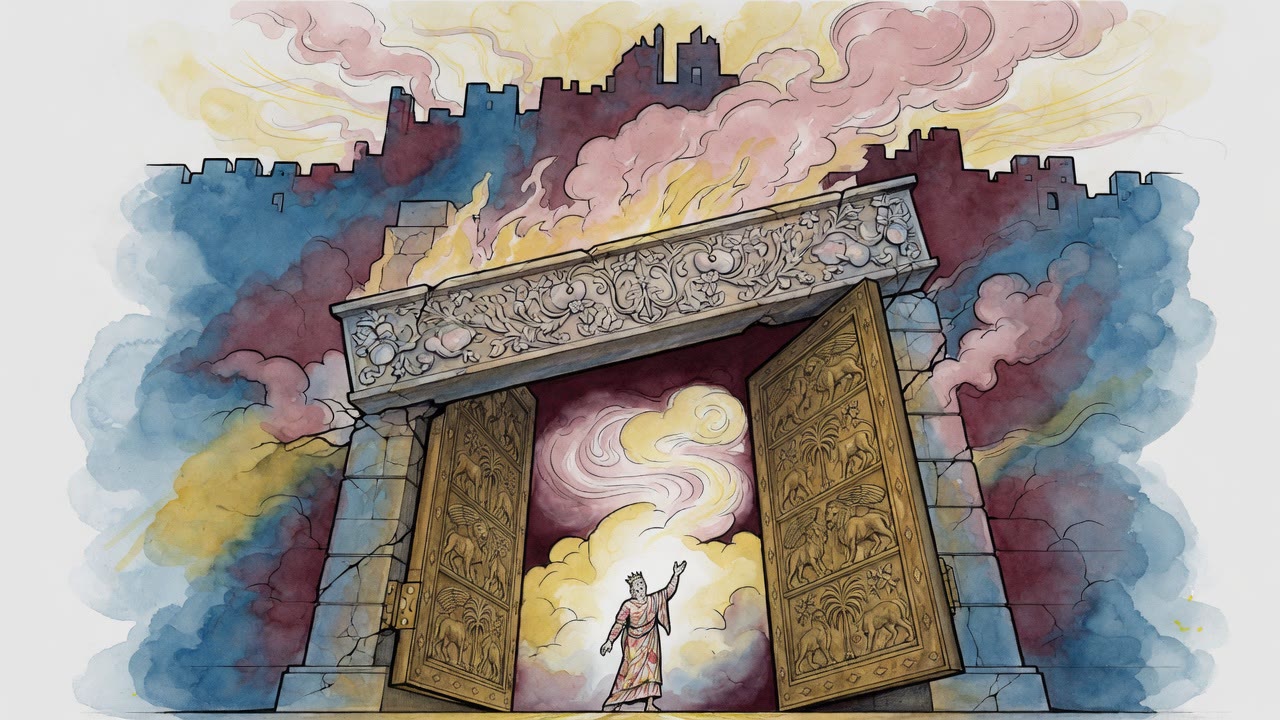
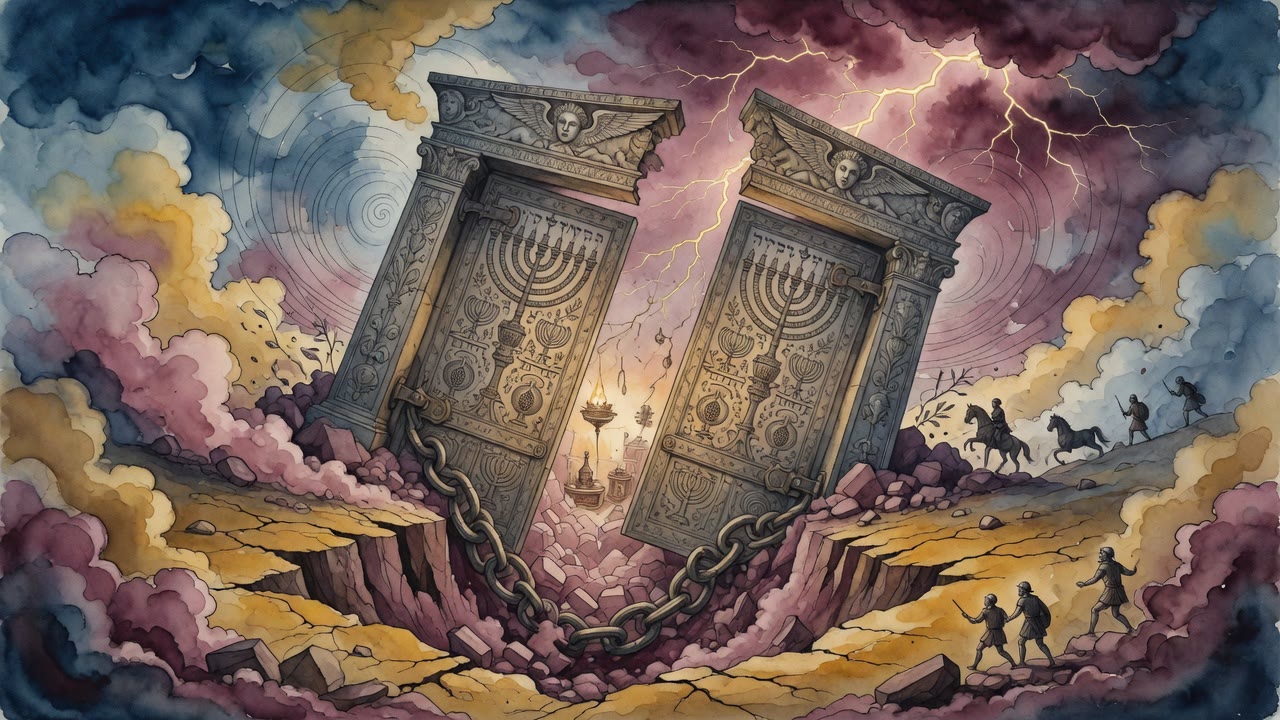
The enemies took the Temple. They burned its chambers and broke its bars. But they did not take the gates.
Rabbi Huna said in the name of Rabbi Yosei: the gates had been accorded honor at the Ark. When Solomon brought the Ark into the Temple, the gates would not open for him until he recited the words of Psalm 24: Lift your heads, gates, and be lifted up, everlasting doors, that the King of glory may come in. The gates had bowed to the Ark in that moment. They had opened for the divine presence.
When the Temple fell, the gates sank into the ground. The text of Lamentations said its gates sank, and the rabbis understood the sinking as honor, not defeat. Gates that had once opened for the Ark would not now be taken as trophies for the hands that burned the sanctuary. They refused to be captured by going down into the earth. They are buried there still, waiting for the day when the Ark returns and the words of Psalm 24 are spoken again over their threshold.
The Prophets Who Had Always Been Too Many
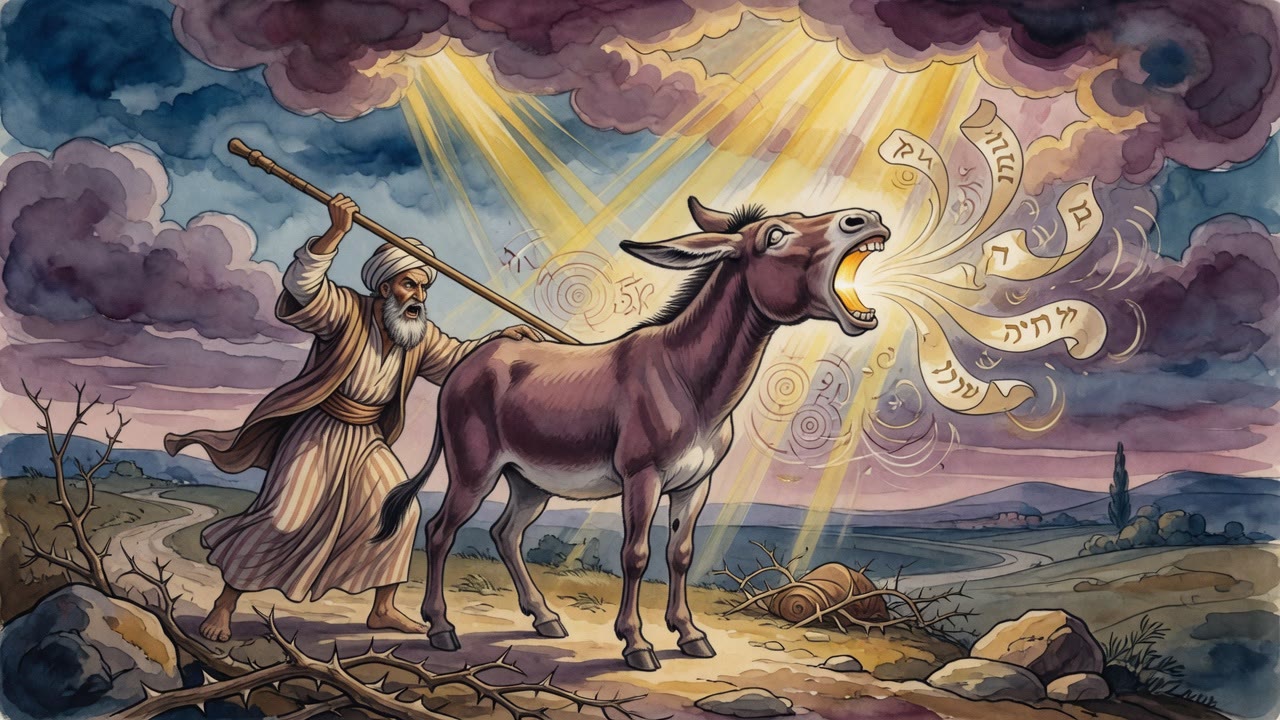
How many prophets had Israel refused? The verse asked what could be attested to, what could comfort a city whose breach was as vast as the sea. Rabbi Yehuda HaNasi said God had sent one prophet in the morning and one at dusk, and they were never enough. Rabbi Natan said two in the morning and two at dusk. The repetition did not produce response. The prophets piled up in the record, morning and evening for generations, and the disaster came anyway because the warnings were heard without being heeded.
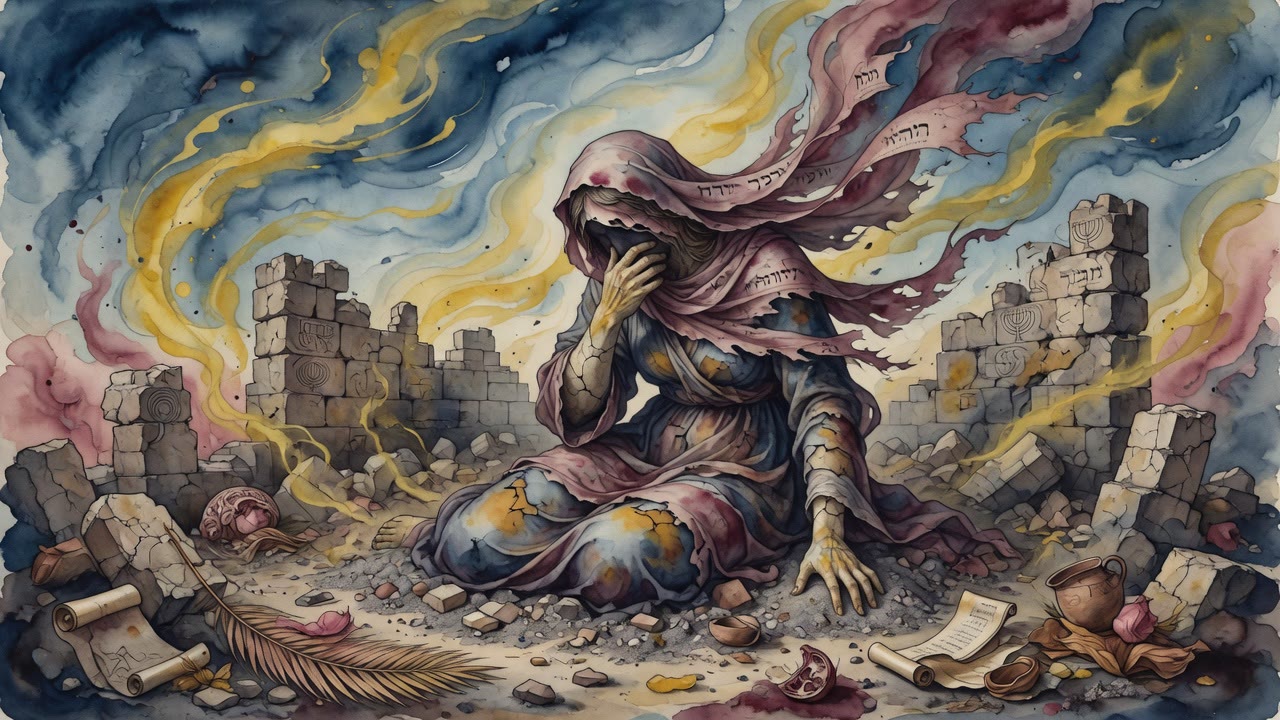
The wound as vast as the sea was the answer to how many prophets had been sent. The sea has no far shore that the eye can reach. The wound was the same. It exceeded the capacity for comparison. Jeremiah asked who could heal it and provided no answer, because the question was not rhetorical despair. It was the honest recognition that a wound that size required something larger than any prophet could deliver.
Four Watches and the Arithmetic of Grief
Arise, cry out at night, at the beginning of the watches. Rabbi Yehuda HaNasi broke the night into four watches and the day into four watches, then divided them further into units so small that the smallest was as quick as the blink of an eye or the time it took to say the word rega, moment, aloud.
The arithmetic was not decoration. It said that every unit of night had a beginning point at which the cry should go up. Grief had a schedule. The watches were not for soldiers protecting walls that had already fallen. They were for mourners marking the night in portions, each portion a new beginning of the crying that Lamentations described as unending and that the midrash was trying to give a shape to. Even grief required structure. Even lamentation needed to know when to start.
← All myths