5 min read

The White and Red Rose Drew from Right and Left

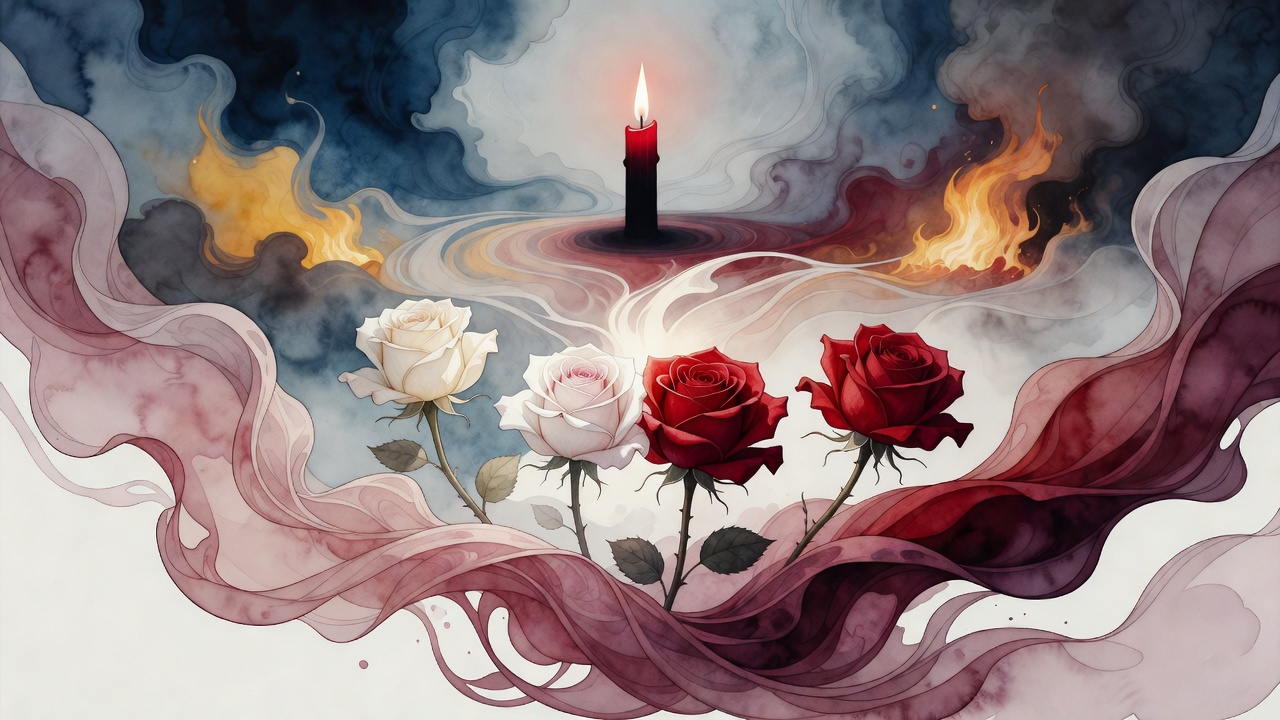
A midnight candle showed white, red, and black while a two-color rose drank from both sides. Humility and holy fear dressed the soul.

Curated by Arthur · Told by Maggid ·
Table of Contents
  1. Garments of Fire on a Wick
  2. Rose of Two Sides
  3. Forty-Nine Facets Before the Gate
  4. What Remains When the Flame Dies

The candle on the table threw three colors a tired eye could miss: pale body, red tongue, black at the edge where smoke begins. The student rubbed his face and forced the page back into focus. A dried rose lay in the margin of the volume, pressed years ago by someone who believed scent could outlast summer. White at the tips. Red toward the heart of the petals.
The White and Red Rose Drew from Right and Left Click for full size

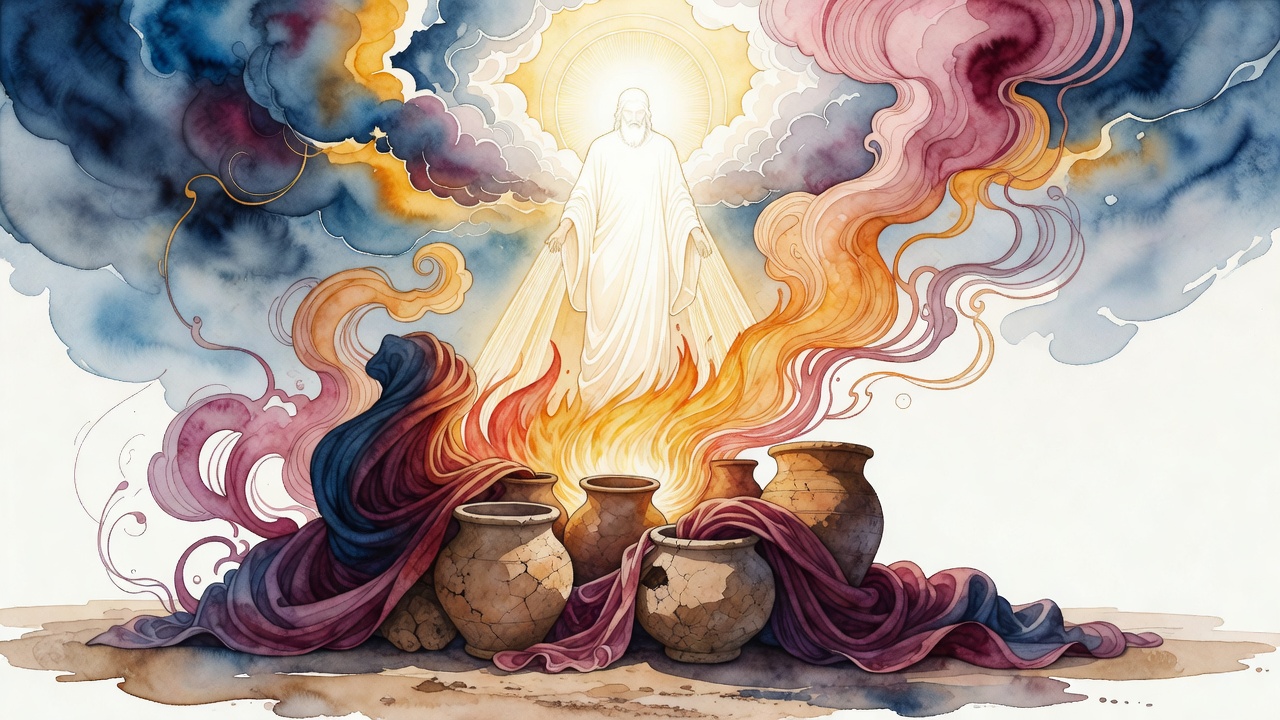
A candle of God is the soul of a human. The colors are garments.

He did not feel dressed. He felt thin. Still the flame kept teaching without waiting for his mood to become worthy of instruction or praise.

Garments of Fire on a Wick

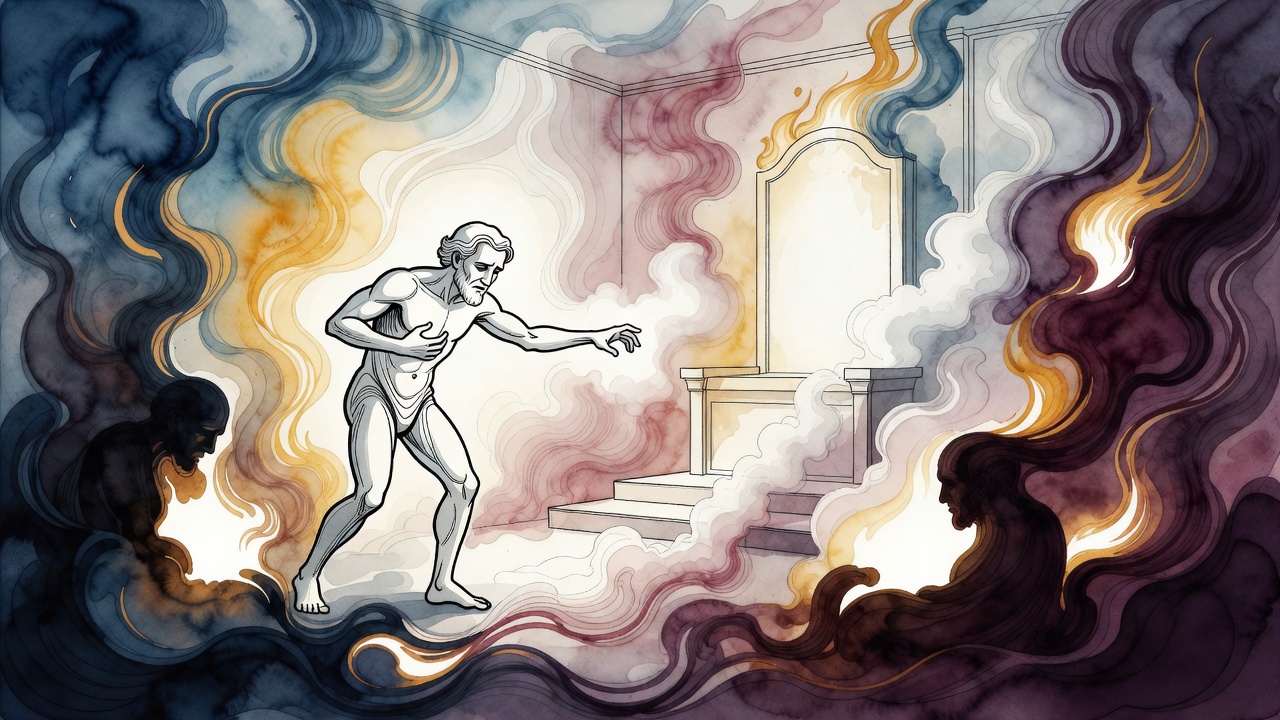
White in the flame is not innocence for children. It is the clarity that comes when ego steps back far enough for light to show its own shape. Red is not only danger. It is the shame of fear, yare boshet, awe that blushes because it knows it stands before the King. Black at the rim is the boundary where fuel becomes ash if the wick is left alone too long without tending.

The soul wears these the way a person wears a coat to court. Thought, speech, and deed are other garments, but the candle image insists the inner weather has color before it has policy. A man can speak correctly and still burn the wrong hue, and heaven reads hue before it applauds vocabulary dressed as virtue.

He watched the red climb and fall. When pride rose in him over a clever reading, the flame seemed to lean. When he admitted he did not understand a line, the white widened. Superstition would make that a trick of air. The teaching makes it a mirror held up to the wick of the self until excuses melt and only fuel remains.

He trimmed nothing. He only sat straighter, as if posture were a small garment the body could offer the flame.

Rose of Two Sides

The rose draws from right and left. White drinks humility from the side of kindness. Red drinks the shame of fear from the side of severity. Forty-nine facets of purity turn around that flower the way the omer (the counted days from Passover to Shavuot) turns around seven weeks. Purity is not a single bleach. It is a field of angles, each night another facet catching what little light the student can bear without lying.

Letters of yare boshet rearrange toward Bereshit, in the beginning. Fear that knows how to blush is not the opposite of creation. It is one of creation's first tools. Without it, beginnings become arrogance with better branding and no root deep enough to survive a real wind.

He lifted the pressed rose. Almost no scent left. Almost is not none. The teaching says scent of the rose opens a path the eyes miss. Fragrance is the soul's rumor moving ahead of the body. Even a weak rumor can still point the room toward Eden when the page has gone dry and pride has gone loud enough to scare quiet truth away.

Forty-Nine Facets Before the Gate

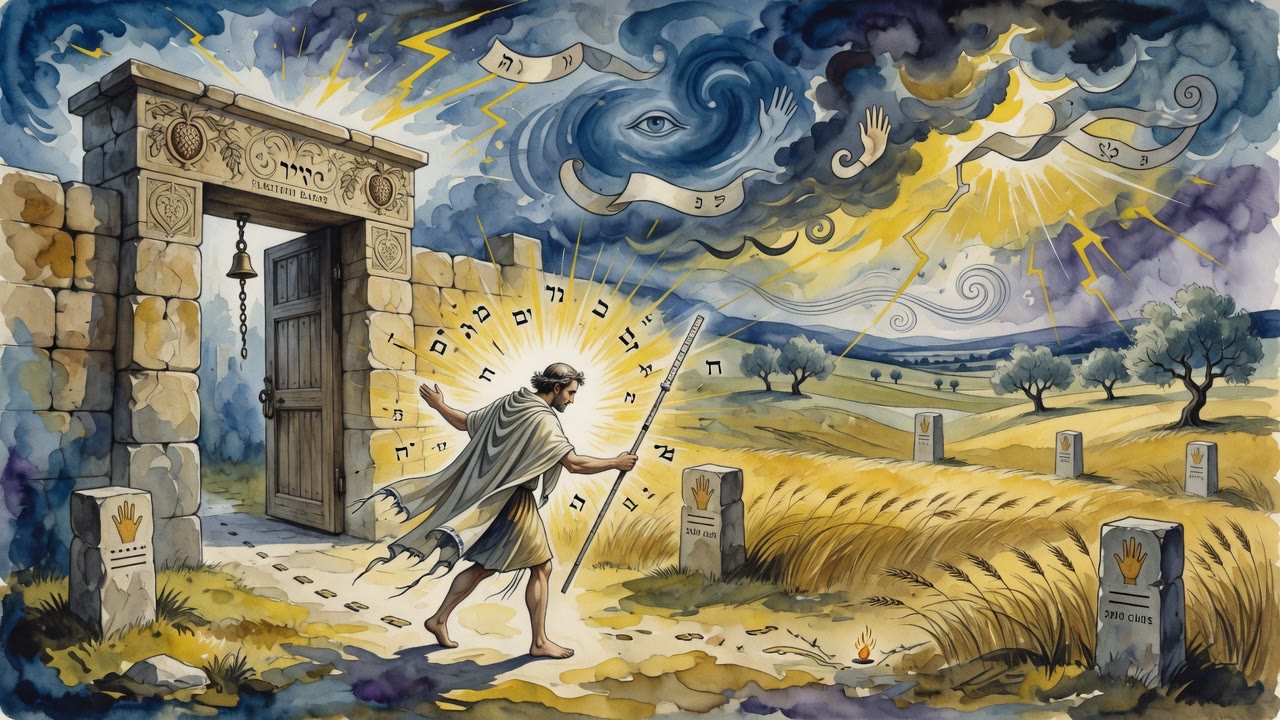
He had been counting days toward a festival without feeling pure. The rose answered that purity has forty-nine rooms, not one locked hall. Enter the room you can enter tonight. White without red becomes soft indifference. Red without white becomes panic that calls itself piety. The flower holds both or it is only decoration for a vase and a story told about someone else's holiness at someone else's table.

Outside, a night cart rattled over stone. Inside, the candle shortened. Garments of the soul do not care about the clock as much as about honesty of fuel. He returned to the page and read slower, as if speed itself were a tear in the cloth he was trying to wear into morning without shame.

One line finally opened. Not glory. A small white flare. He did not congratulate himself. The red stayed near enough to keep the white from lying about how far he still had to walk before the gate would recognize his step.

What Remains When the Flame Dies

Morning would come and the candle would be a stump. The rose would stay pressed and nearly scentless. The colors would move back inside him where no guest could praise them. That is the point. Garments for the court of action must be worn in daylight without a midnight stage and without an audience that claps for spiritual fashion.

He closed the book on the rose and pinched the wick. Smoke wrote a brief black letter in the air and vanished. Somewhere the forty-nine facets kept turning toward a gate he had not yet earned and could still walk toward one facet at a time, right side and left side both feeding the same flower that refused to choose only one color for the sake of simplicity.

The room smelled faintly of wax and old summer. He slept without solving the whole page. The flame had already dressed him for the next attempt, and the rose kept its two colors in the dark like a quiet oath no neighbor needed to hear to make it binding.


← All myths
From the tradition

Sources

3 sources

The texts behind this telling. Some cards carry a translation of the source; others are our own retelling of it, and each card says which. Every card links out to the original.

Tikkunei Zohar 290:2Tikkunei Zohar

Retold in our words. Read the original at the link below.Sefaria-hosted English translation · CC-BY

The image is vivid: a rose, white and red, drawing energy from both the right and left. The white, the Zohar tells us in Tikkunei (spiritual repair) Zohar 290, symbolizes the clarity of humility. The red, the "shame of fear" – yar'e boshet. Isn't it fascinating that the letters of yar'e boshet are also an anagram of Bereshit, "In the beginning?" There's a deep connection here, a hint that the very foundation of creation is intertwined with these qualities.

The face doesn't remain static. When it shifts, becoming golden-green, this signifies the "Groom who has risen up to the sun, who is the Supernal Mother." And from these three colors of the face, white, red, and golden-green, emanate 72 facets of the divine name.

These 72 facets have a numerical value equal to Hesed, or Loving-kindness. This is comprised of 216 letters, which, in turn, has the same numerical value as Gevurah (Severity), Might. What does it mean? It suggests that Loving-kindness and Might are not opposites, but rather two sides of the same coin, balanced and intertwined within the divine.

The Tikkunei Zohar connects this concept to the verse in (Exodus 34:6), "And God passed before" (Vaya'avor Ado-nai). This phrase, Vaya'avor, is itself linked to the mystery of 'Ibbur – impregnation, or intercalation. Both Vaya'avor and 'Ibbur contain letters whose numerical values represent 72 and 216, reinforcing the connection between divine passage and the creative process.

And the illumination doesn’t stop there. It illuminates the Bride with four faces, as (Ezekiel 1:6) says: "Four faces belonging to each one.”

There's a middle column, represented by the letter Vav, which models the additional month added to the leap year. The leap year, with its thirteen months, is alluded to by the initials of Vaho Ani Vaho. Within this Vav, the Tikkunei Zohar reveals something truly evocative: a pregnant woman. This, we're told, is the mystery of the impregnation of Yesod (Foundation), Foundation. It contains a drop – a single drop of semen – without which no impregnation can occur.

This Vav, this drop, is also described as "the mind containing wisdom." It's a powerful image, connecting the physical act of creation with the intellectual and spiritual realms. It suggests that true creation – whether physical or intellectual – requires both a seed and a receptive mind.

So, what are we left with? A rose, vibrant with color and meaning, reflecting the complexities of the divine. A reminder that even the smallest detail, a single drop, can hold the potential for profound creation. It's an invitation to see the world around us with new eyes, to seek out the hidden connections and mysteries that lie just beneath the surface.

Full source
Tikkunei Zohar 98:15Tikkunei Zohar

Retold in our words. Read the original at the link below.Sefaria-hosted English translation · CC-BY

The Tikkunei (spiritual repair) Zohar, a central text of Kabbalah, certainly does. It sees the colors of a candle as nothing less than the garments of the soul. Powerful stuff. "A candle of Ha-Shem is the soul of a human," as it says. Ha-Shem, literally "The Name," is how readers often refer to God, a way of showing reverence. So, if the candle represents the soul, what do the different colors signify?

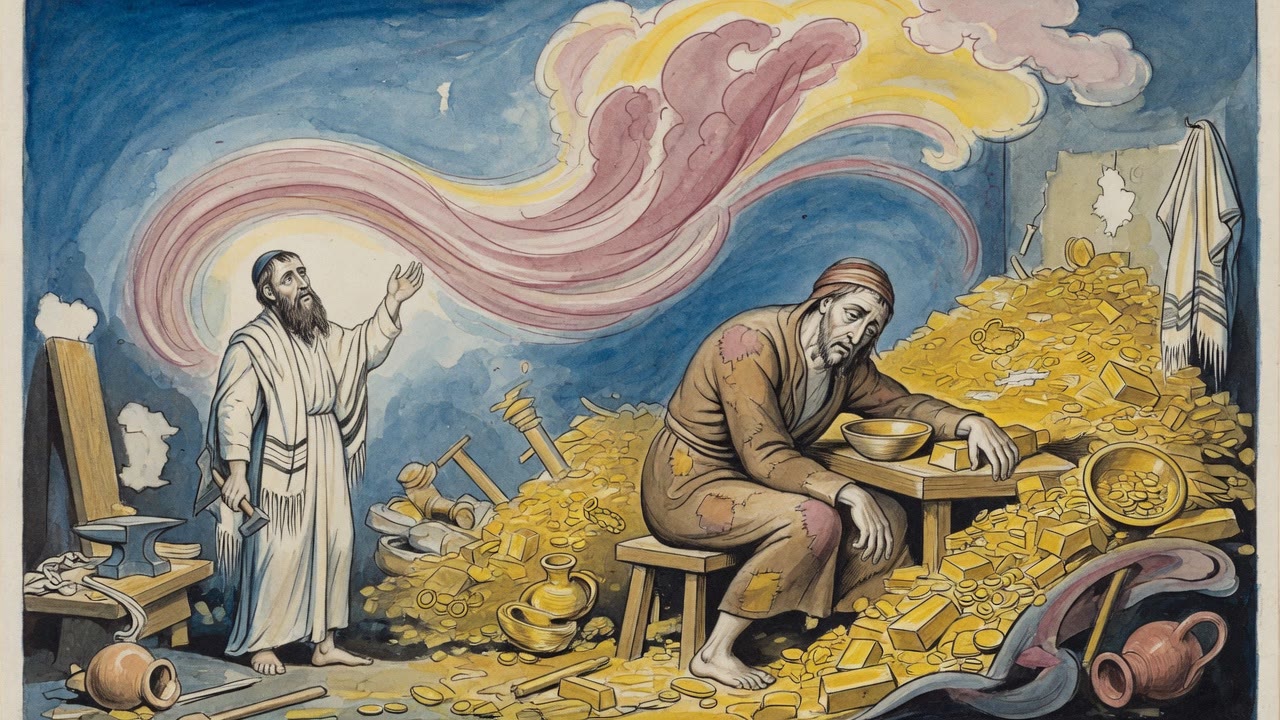
The Tikkunei Zohar goes straight for the shadows, starting with black. Black, it tells us, corresponds to the spleen. Now, why the spleen? In this context, the spleen isn't just an organ; it's a symbolic space where the animating soul can become trapped because of sins.

Ouch.

When the soul finds itself stuck there, weighed down by wrongdoing, the text evokes the Song of Songs: "Do not look upon me for I am blackened..." But it doesn't stop there. The Tikkunei Zohar adds a heartbreaking twist: "...blackened with the darkness of My children, in their oppression, in their poverty."

The darkness isn't just personal sin; it's the collective suffering of the people.

According to the Tikkunei Zohar, darkness, mockery, and poverty all spring forth from this spleen when the soul is imprisoned within it, exiled from its true home. This resonates with the verse from Proverbs: "...and a maidservant when she inherits her mistress." It speaks of a world turned upside down, of things being out of order. And in this state of disarray, the spleen, that place of darkness and confinement, laughs.

Why does the spleen laugh? Is it a laugh of triumph, of the darkness having won? Or is it a more sinister laugh, a mocking reminder of our failings? It's a chilling thought.

This passage from the Tikkunei Zohar isn't just about colors or organs. It's about the heavy burden of sin and suffering and the soul’s potential captivity. It challenges us to look beyond the surface, to recognize the darkness within ourselves and the world, and to strive for something more.

Remember the colors, the soul, and the call to break free from the darkness. What will you do to let your soul shine brighter?

Full source
Tikkunei Zohar 78:12Tikkunei Zohar

Retold in our words. Read the original at the link below.Sefaria-hosted English translation · CC-BY

Jewish mysticism, especially in the Zohar, sees that very human experience of scent as a powerful key to understanding the divine.

This isn't a straightforward read,. We're dealing with رمز (remez), layers of symbolic meaning piled high. But stick with me, and maybe we can catch a glimpse of what it's trying to tell us.

The passage begins with "the scent of the rose." In this context, the rose isn't just a pretty flower. It represents Tiferet (Beauty), often translated as "Beauty" or "Splendor." In the kabbalistic Tree of Life, the Sefirot (the divine emanations), Tiferet is the central point, the Middle Pillar, balancing opposing forces.

Then the text gets even more evocative. "Because She smells it, she says: Support me among barrels.." Who is "She"? Here, "She" refers to the Shekhinah, the Divine Presence, the feminine aspect of God that is closest to us, dwelling in the world. She's overwhelmed, perhaps by the intensity of the divine scent, and asks for support. "Among barrels" is a cryptic phrase, likely referring to the abundance and richness that comes from divine connection.

The text continues, stating that through this scent, "She is made into a segol." Now we're getting into Hebrew grammar as metaphor! A segol (ֶ) is a vowel pointing (nekudot) that looks like three dots arranged in a triangle below a Hebrew letter. These vowels aren't just about pronunciation; in Kabbalah, they are symbols that point toward deeper meanings. The segol suggests a gathering, a collection of energies.

Then comes a quote: "Furnish me with apples." Where does that come from? It's connected to the Song of Songs (2:5), a deeply sensual and symbolic book. But here, the "apples" are identified with Netzach (Eternity) and Hod, "Victory" and "Splendor," two more Sefirot on the Tree of Life. These are "the two pillars of truth," described as white and red, representing different aspects of divine energy. So, the Shekhinah, smelling the rose, now asks for the support of these foundational pillars.

Why apples? Well, apples are often associated with knowledge, with temptation, with a desire to experience the world fully. Remember the Garden of Eden? So, perhaps the Shekhinah is asking for the strength to fully experience and integrate the divine energies represented by Netzach and Hod.

The passage continues: "And because She smells the letter Vav (ו), which is in the covenant, She says:... furnish me with apples." The letter Vav is crucial. It's a connector, a "hook" that links things together. Here, it represents the covenant between God and humanity. By smelling the Vav, the Shekhinah is connecting to that enduring bond, reaffirming the relationship.

Finally, "when She joins with Him, She is made into a segol." The union of the feminine and masculine aspects of the divine, of the Shekhinah with God, creates that concentrated energy signified by the segol. "That which was tzereiy (ֵ), is made into tziyeyr." More vowel pointings! The change from tzereiy to tziyeyr represents a refinement, a deepening of the connection. It’s a subtle shift, but in Kabbalah, even the smallest details hold immense significance.

The passage ends with a reference to (Genesis 2:7): "And Y”Y ELQYM formed (yiytzer) the human, dust from the ground..." The word yiytzer, "formed," is connected to these vowel sounds. It’s an allusion to the very act of creation, to the formation of humanity from the dust. The implication? This whole process of divine interaction, of smelling the rose and the Vav, of transforming vowel points, is ultimately connected to the creation of humanity and our ongoing relationship with the divine.

So, what does it all mean? It's a reminder that even the most seemingly mundane experiences – a scent, a sound, a feeling – can be pathways to deeper understanding. The Kabbalists saw the entire universe as a network of interconnected symbols, and by paying attention to the details, by "smelling the rose," we can catch a glimpse of the divine dance that's happening all around us, and within us.

Full source