5 min read

Why Moses Blessed Judah With a Prayer for Help at the Sea

Moses's blessing for Judah seemed addressed to a future danger. The rabbis traced it to one terrifying moment at the Red Sea when Judah jumped in first.

Curated by Arthur · Told by Maggid ·
Table of Contents
  1. The Words Moses Chose for Judah
  2. What Happened When the Sea Did Not Open
  3. The Debates About What Hear His People Meant
  4. The Blast of Nostrils and the Standing Waters

The Words Moses Chose for Judah

When Moses delivered his final blessings to each tribe before his death, he gave Judah a prayer that sounded like a cry for help rather than a benediction. Hear, O Lord, the voice of Judah, and bring him to his people; let his hands contend for him, and may You be a help against his foes (Deuteronomy 33:7).

Moses chose his words precisely. He had spent forty years watching every syllable land. He was standing at the border of the land he would never enter, giving his people everything he had left to give, and the blessing he chose for Judah sounded like a petition for someone currently in distress: hear the voice, bring him home, be his help. Not a promise of blessing. A request for rescue.

Sifrei Devarim, the tannaitic midrash on Deuteronomy compiled in the 2nd century CE, would not let this peculiar phrasing pass without explanation.

What Happened When the Sea Did Not Open

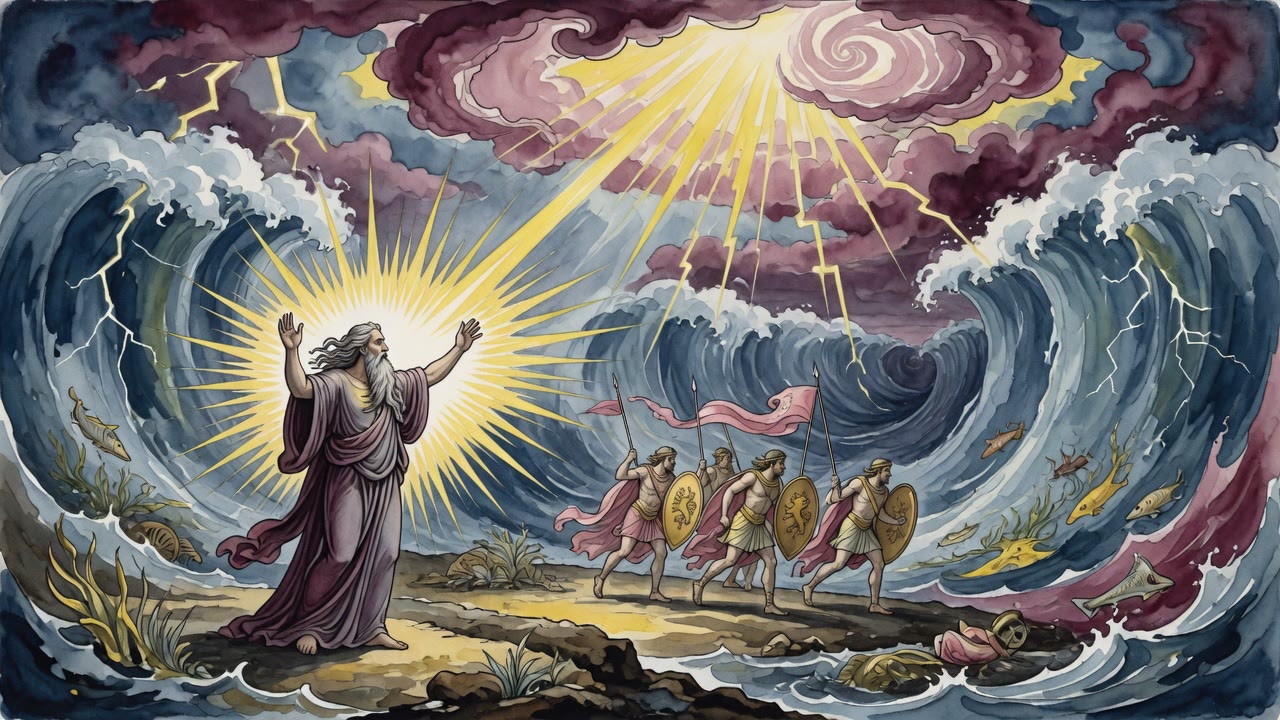
The Midrash Tehillim, the homiletical commentary on Psalms, preserved the tradition that answered the question. It tracked Psalm 106 to the moment at the Red Sea and found that God rebuked the sea and it dried up. Simple enough as a description of the miracle. But the rabbis, drawing on a tradition that appears in multiple midrashic collections, knew what happened before the sea dried.

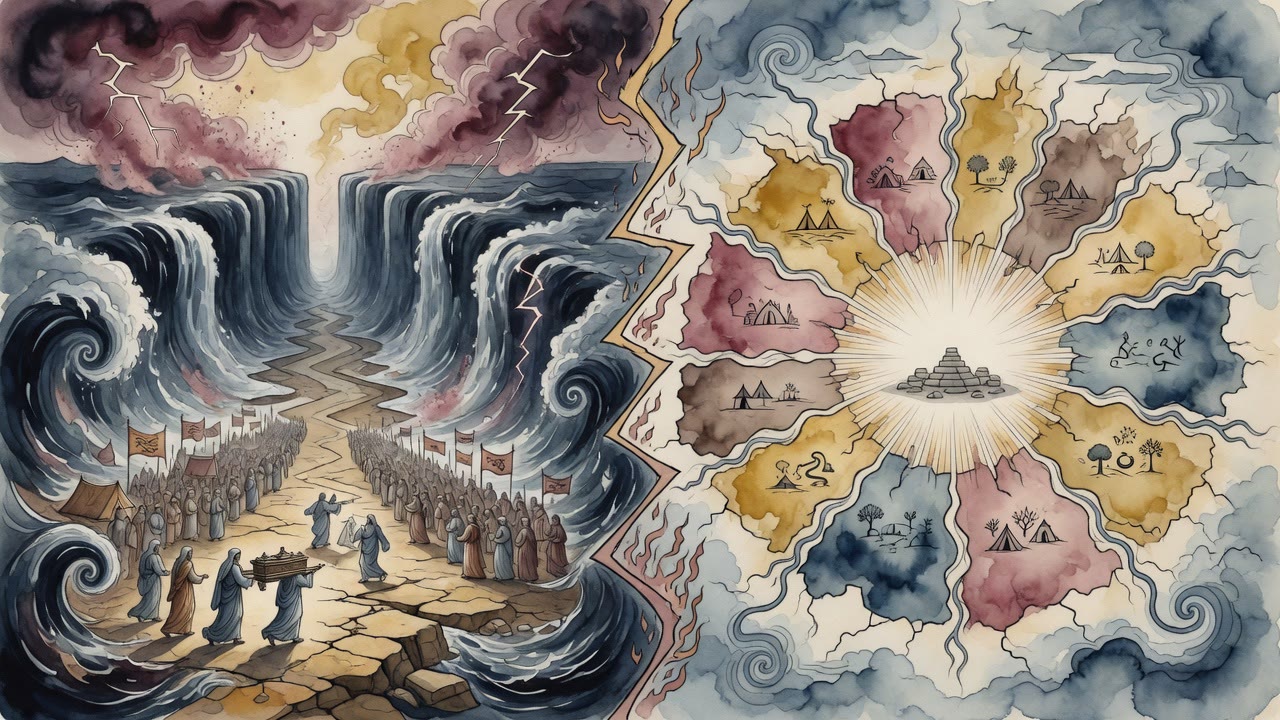
The Israelites stood at the water's edge and nothing moved. Pharaoh's army was behind them. The sea was in front of them. Moses was lifting his staff and praying. And the people stood still.

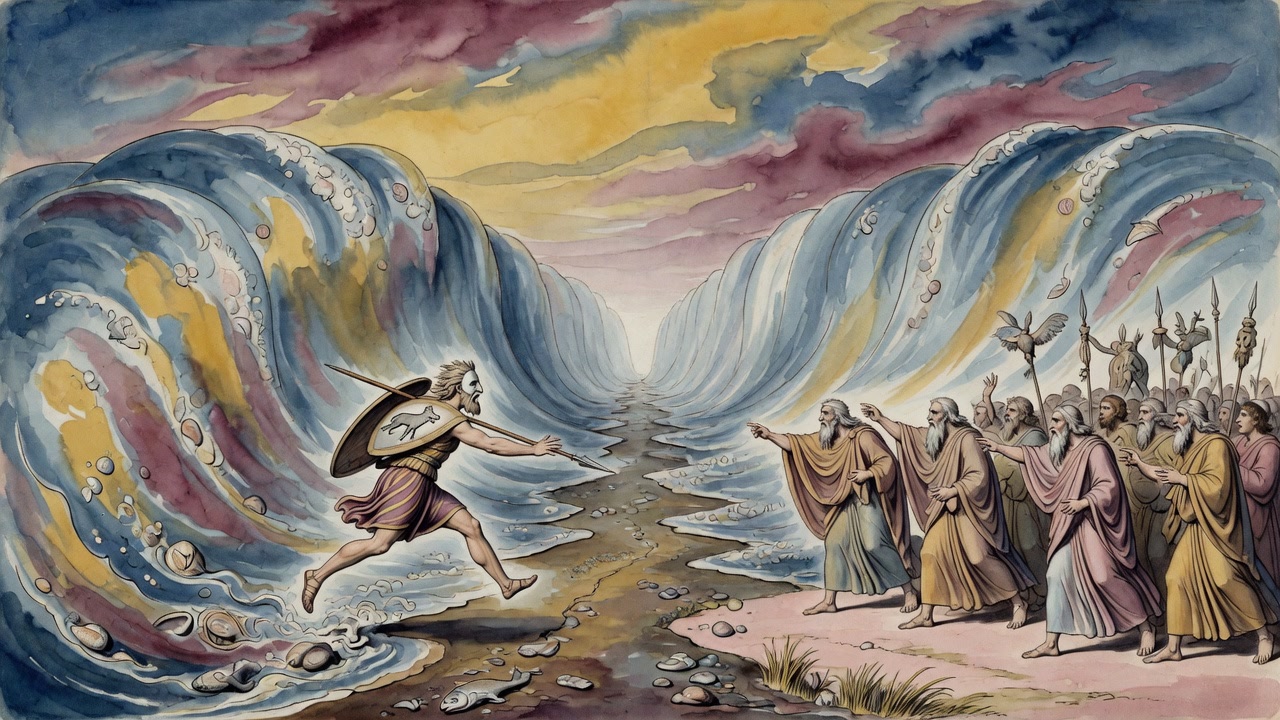
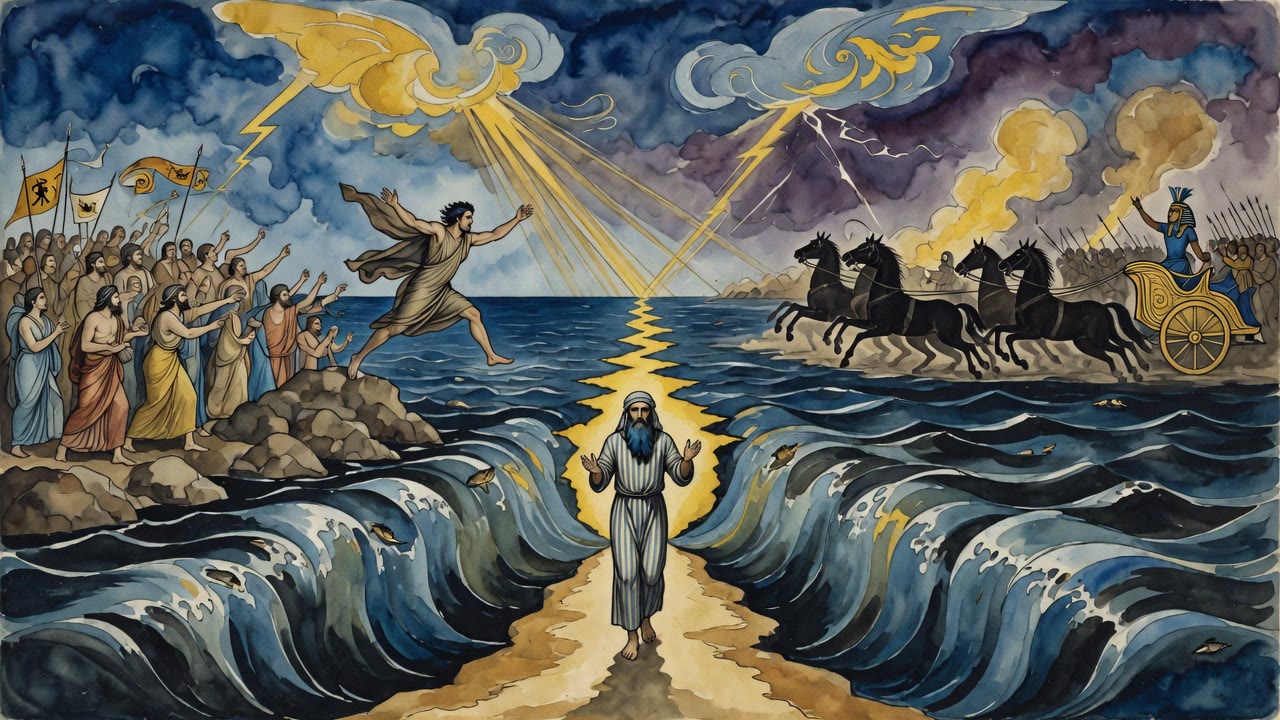
Then Nachshon ben Amminadav, the prince of the tribe of Judah, walked into the sea. Not stepped carefully in. Walked in until the water was at his nose. He was nearly drowning when the sea split.

Moses, watching from the shore, saw the prince of Judah nearly die because Judah acted before the miracle arrived. That moment never left him. Decades later, at the border of the land, when he gave each tribe its final word from him, he gave Judah the blessing that Judah's courage had always been asking for: hear his voice. He went first. He should not have to do it alone.

The Debates About What Hear His People Meant

Sifrei Devarim pressed another phrase in the blessing. And bring him to his people. What people? Moses was speaking to Judah as if Judah had been separated from the rest. Rabbi Yehudah pointed out that all of Jacob's sons had eventually been buried in Canaan, so the return to his people could not simply mean burial in the ancestral land. That did not distinguish Judah from any of the others.

The debate circled around what reunion with the people actually meant. Some read it as a prayer for Judah's reintegration after military campaigns that would separate the tribe from the rest of Israel. Some read it as a reference to the split after Solomon's death, when the kingdom divided and Judah became its own polity, and the blessing was that Judah would eventually be reunited with the northern tribes. The phrase opened into the full length of Israel's future history, and Moses's words, chosen carefully at the end of his life, were already gesturing toward conflicts he would not live to see.

The Blast of Nostrils and the Standing Waters

The Midrash Tehillim brought two rabbinic voices into conversation about how the sea splitting actually worked, and what Moses's prayer at the moment corresponded to. Rabbi Hunah described God parting the sea with the blast of your nostrils, a phrase from the Song of the Sea (Exodus 15:8), evoking divine breath as the force that pushed the waters aside. Rabbi Aha described the waters standing upright like a heap, more architectural than atmospheric, the sea reorganized into walls rather than blown away.

Both readings agreed on what the blast or the standing accomplished: Judah walked through dry ground, and the family of Jacob went with him. The blessing Moses gave Judah at the end of his life was retrospective gratitude and prospective protection at once. He had watched Judah's prince nearly drown while everyone else stood still. He blessed Judah so that the next time Judah went first, heaven would be paying attention.


← All myths
From the tradition

Sources

2 sources

The texts this telling draws on, in full. Open a card to read inline, or expand it for a wider, quieter read.

Sifrei Devarim 348:3Sifrei Devarim

Sifrei Devarim turns to Judah, Moses and the Patriarchs.

Moses, standing before the Almighty, pleading, "L-rd of the world, whenever the tribe of Judah is in distress and prays before You, rescue him from it." Powerful. It speaks to the deep sense of responsibility that Moses felt, not just for the entire Israelite nation, but for each individual tribe within it. It’s a prayer for enduring protection, a promise that the voice of Judah would always be heard.

Then there's the puzzling phrase, "And to his people shall You bring him." What does that even mean? The text wrestles with this. The simplest understanding is that Judah was eventually buried with his ancestors in the land of Canaan. But that sparks a debate.

Rabbi Yehudah raises a great point. Weren't all the sons of Jacob, the heads of all the tribes, brought up from Egypt to be buried in the ancestral land? It wasn't just Judah! So, what makes this verse special?

He suggests that "to his people" implies being buried alongside his forefathers. Okay, makes sense... but the discussion doesn't stop there!

Rabbi Meir then throws another wrench in the works. He quotes Jacob himself from Genesis (Bereshith) 50:5: "In my grave which I dug for myself in the land of Canaan." Jacob explicitly says he dug the grave for himself. So, if that's the case, how could Judah be buried in it?

Rabbi Meir offers a different interpretation. "And to his people shall you bring him" means that Judah should be buried in the land of Canaan just like the forefathers were. It’s not about the specific tomb, but about the land itself – the connection to the ancestral homeland.

So, what do we take away from all this? It's more than just a discussion about burial plots. It's about legacy, about connection, and about the enduring power of prayer. Moses’s plea for Judah, the debate over burial, it all points to a deeper truth: that our actions, our words, and even our final resting places are all part of a larger story, a story that connects us to our past, our present, and our future. And maybe, just maybe, that voice of Judah, that cry for help, still echoes today, reminding us that we are never truly alone.

Full source
Midrash Tehillim 106:5Midrash Tehillim

The familiar story is this: Moses, the Israelites, the desperate flight from Egypt. But the details? Oh, the Rabbis have some thoughts.

The book of Psalms (Tehillim) is a constant source of inspiration, and the Midrash Tehillim, a collection of rabbinic interpretations, dives deep into its verses, uncovering layers of meaning we might otherwise miss. the story turns to Psalm 106, where we find that God "rebuked the Red Sea, and it dried up." Simple enough. Well,

Rabbi Hunah and Rabbi Aha, in their wisdom, offer two slightly different takes on how this actually went down. One says that God parted the sea "with the blast of Your nostrils," evoking a powerful image of divine breath. The other suggests the waters "stood upright like a heap," a more static, almost architectural vision of the miracle. And, of course, the verse goes on to say: "And the waters were a wall to them on their right and on their left." Walls of water!

Here's where it gets really interesting: what happened to Pharaoh?

Rabbi Judah and Rabbi Nehemiah lock horns on this one. Rabbi Judah insists that not a single Egyptian survived the ordeal, pointing to the verse stating, "There was not one of them left." A clean sweep. End of story.

But Rabbi Nehemiah isn't so sure. He argues that Pharaoh himself actually survived! He finds support in the verse, "And yet for this purpose I have spared you." Spared him for what, you ask? Well, presumably to serve as a living evidence of God's power, a walking, talking (or perhaps just shivering and traumatized) reminder of the Exodus.

And then, just to muddy the waters further, "some say" that Pharaoh actually drowned last, bringing up the verse: "And Pharaoh and his army sank in the sea." So, did he survive? Did he drown first? Did he drown last?

Talk about a cliffhanger!

The beauty of midrash (rabbinic interpretive commentary), this rabbinic style of interpretation, isn't necessarily about finding one definitive answer. It's about wrestling with the text, exploring different possibilities, and appreciating the richness and complexity of our tradition. It's about understanding that sometimes, the questions themselves are more important than the answers.

So, what do you think happened to Pharaoh? Perhaps the answer lies not just in the text, but in our own understanding of justice, mercy, and the enduring power of storytelling.

Full source