One Precept Earns One Angel and Tefillin Replaces Nine Thousand Guards
Rabbi Meir taught that angels scale with precepts: one commandment kept earns one guardian. A thousand protect the left side and ten thousand protect the right.
Table of Contents
 Click for full size
The Arithmetic of Angelic Protection
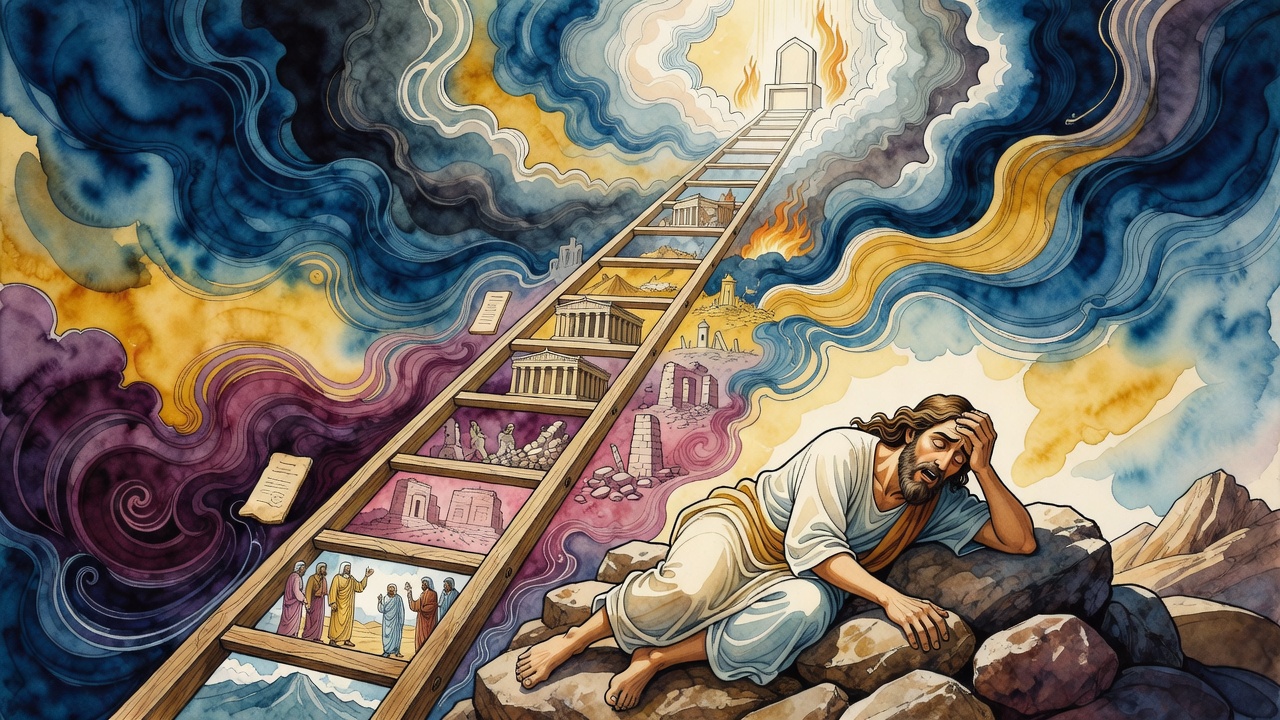
Jacob was leaving home for the first time, walking the road toward Haran with nothing but a staff in his hand, the household of Isaac and Rebekah falling away behind him and an unfamiliar country opening ahead. He carried no escort, no servants, no caravan. He went out alone into the country, and Midrash Tanchuma found in that solitary departure a teaching about how divine protection moves with any person who moves through the world observing commandments. The man walking the empty road is never as alone as he looks.
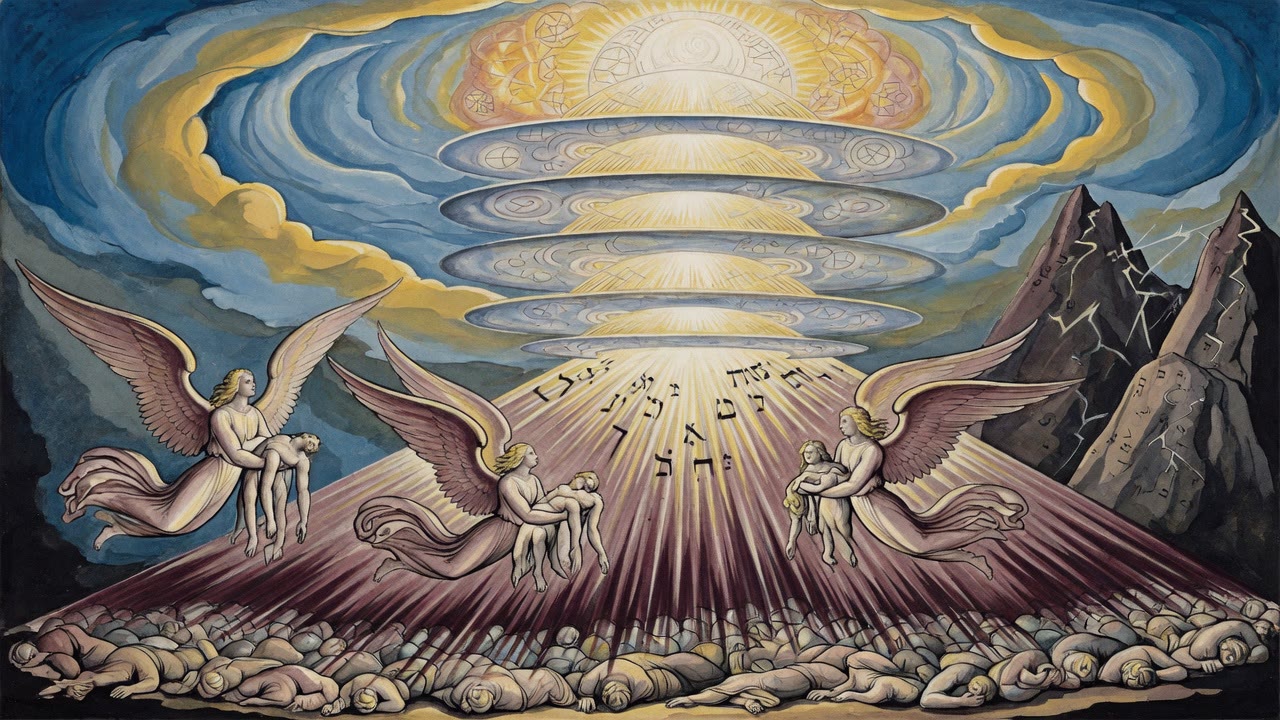
Rabbi Meir was direct about the arithmetic. If a person performs one precept, one angel is assigned to watch over him. Two precepts earn two angels. Many precepts earn many angels. The guardian is not assigned for general virtue or for the quality of the person's soul. It scales with the count of observed commandments, precisely and literally, one for one, like coins counted into a palm. The psalm's promise, For He will give his angels charge over thee, to keep thee in all thy ways, operates through this mechanism. Every commandment a person keeps adds another unseen figure to the company that walks beside him.
The Thousand That Fall Are Not the Slain
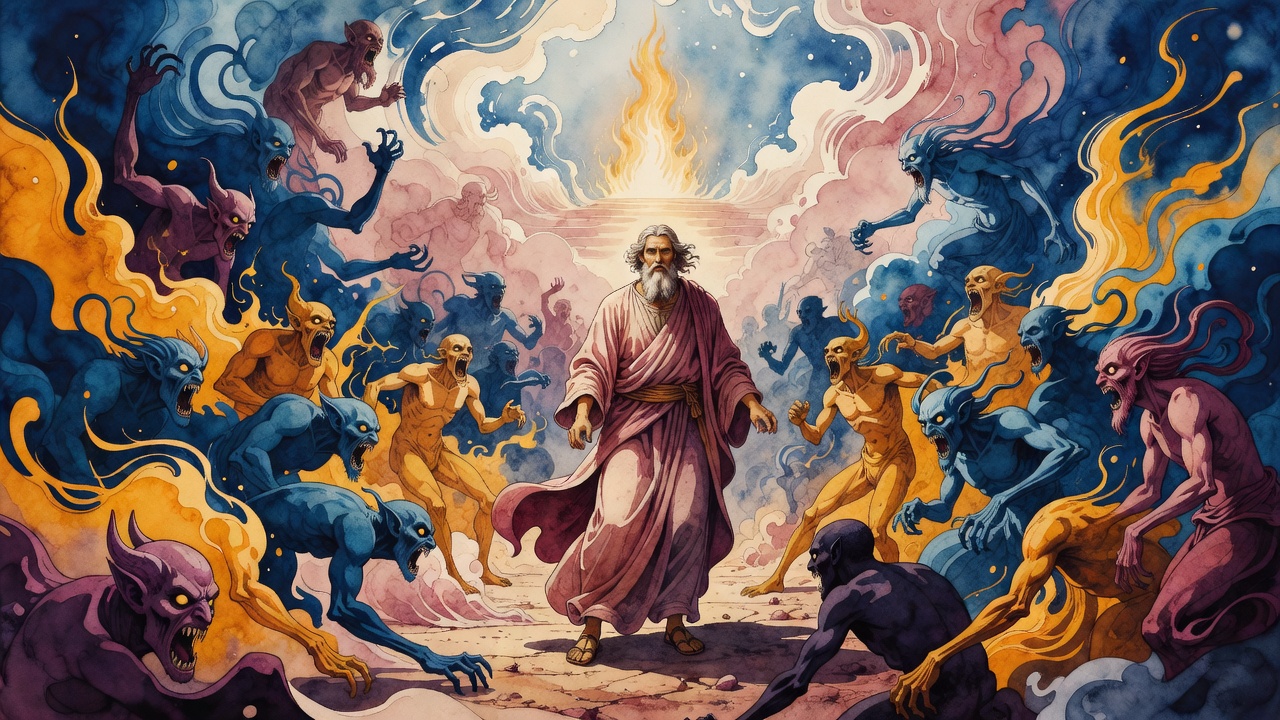
The angels protect against demons. The same psalm supplies the threat: A thousand may fall at your side, and ten thousand at your right hand. Those thousands are not casualties of battle, not bodies left in the dust. They are demons surrendering before the guardian angels, breaking and giving way the way soldiers fall to a general the instant the opposing force appears on the field. The fall in the psalm is a capitulation, Rabbi Meir taught, not a death toll.
The word proves itself out of the text. When Scripture says the tribe of Manasseh fell away to David, it does not mean a battlefield count of the dead. It means they crossed over and joined him, deserting one side for the other. The verb is the verb of surrender, not of slaughter. So the thousand at the side and the ten thousand at the right hand are demons changing their posture before a stronger power, throwing down their threat and yielding, the moment the angelic guard stands between them and the man they meant to harm.
The Right Arm Earns More Than the Left
The psalm's asymmetry, a thousand at the left side and ten thousand at the right, is not decorative. The right arm has ten times the protection of the left because the right arm performs the greater proportion of commandments. Writing, gesturing, lifting, reaching, acting upon the world, the dominant hand does the bulk of the work, and so the dominant hand earns the bulk of the guard. Protection follows labor. The arm that does ten times the doing draws ten times the defenders.
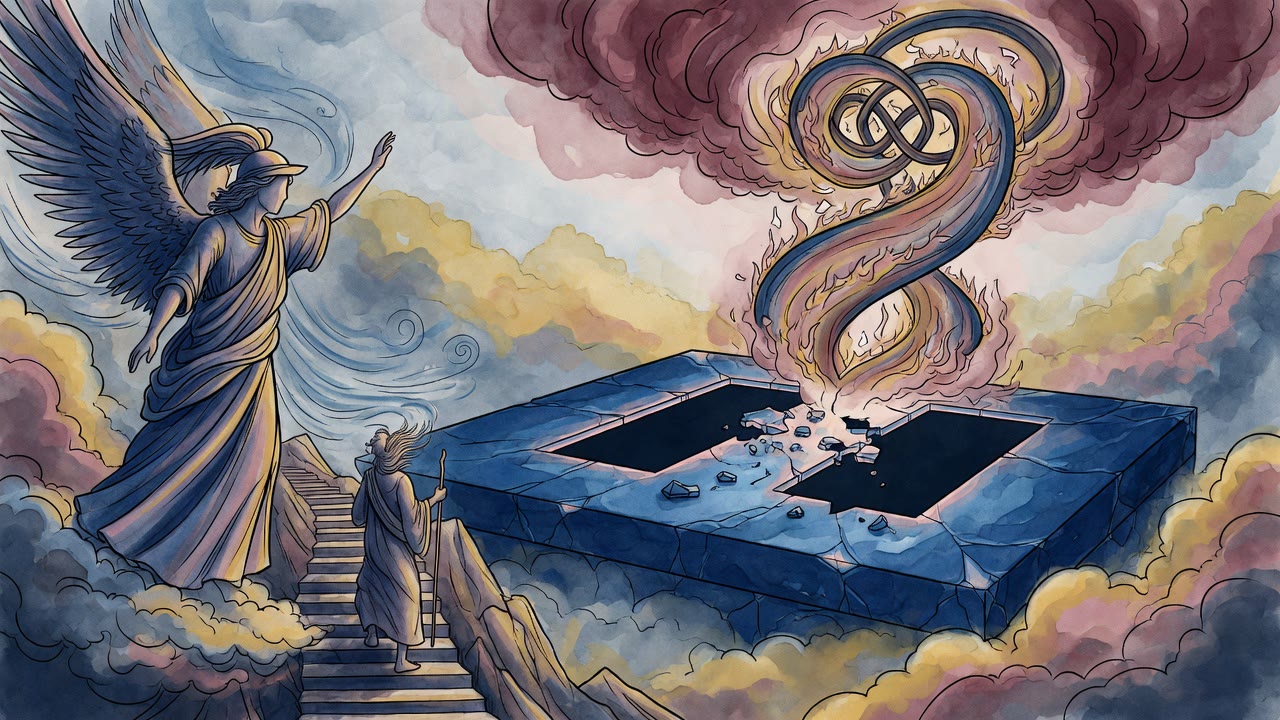
The left arm, though, has its own special case. Tefillin (prayer boxes bound on arm and head) are bound on the left arm during prayer, the strap wound down the forearm and around the fingers. The single act of binding the prayer-box to the left arm substitutes for nine thousand of the missing guards. The left side goes from one thousand to ten thousand in the moment the straps are tightened against the skin. The asymmetry collapses. Both sides stand fully protected, but only because the commandment of tefillin specifically addresses the arm that would otherwise be under-defended, the weaker arm that does the lesser share of the daily commandments.
Planted Twice in the Text
The same teaching appears in two separate places in Midrash Tanchuma. Once in Vayetzei, pegged to Jacob's departure for Haran, the patriarch walking alone toward an uncertain country. Once in Mishpatim, pegged to the verse in Exodus where God sends an angel ahead of Israel after the Sinai revelation, the whole nation moving together toward its inheritance. Both use the same structure, the same arithmetic, and the same asymmetry corrected by tefillin.
The repetition is not accident. The teaching mattered enough to be planted twice in the text, once in the story of a single man and once in the story of an entire people, to show that the mechanism holds at both scales. The lone traveler on the road to Haran and the column of Israel marching out of the wilderness are guarded by the same accounting. One precept, one angel, for the one and for the many alike.
← All myths