5 min read

A Wild Deer Walks Into the Shepherds Fold Alone

God treasures the convert who comes for the Name alone, like a wilderness deer that joins the flock without being raised from birth.

Curated by Arthur · Told by Maggid ·
Table of Contents
  1. Three Kinds of Arrival
  2. This Very Day, Always New
  3. Swear Against the Evil Impulse
  4. Affection That Offends the Entitled

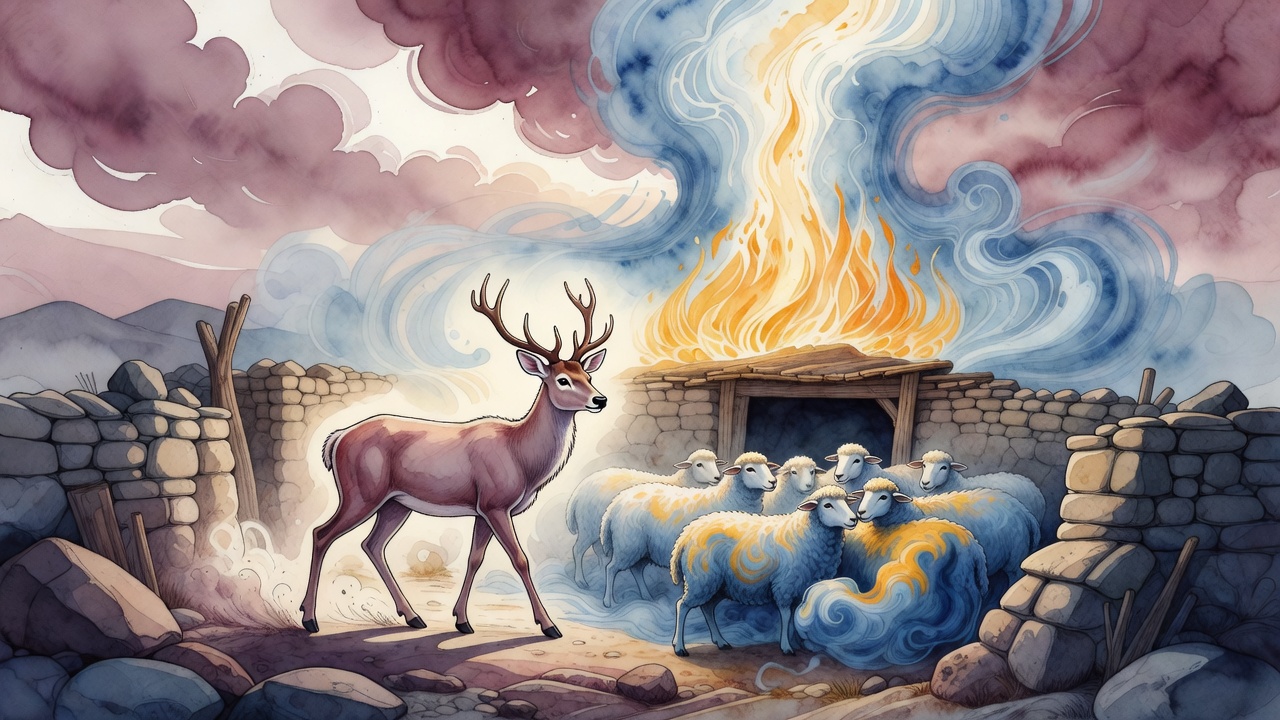
The shepherd finished counting and found one more set of eyes than he had bred. A deer stood among the sheep, dust of open country still on its legs, not born to the fold, not driven by staff. It had simply walked in and stayed. When the regular flock protested the extra affection, the shepherd answered without apology. "My sheep I raised from birth. This one came on its own." The deer's ears flicked at every new sound. Belonging that is chosen stays half alert.

A Wild Deer Walks Into the Shepherds Fold Alone Click for full size

Three Kinds of Arrival

The sages sort converts without romance. One comes to marry a Jewish woman. One comes to eat under Israel's laws of charity and gleanings. One comes for no earthly bargain, only for the sake of God's Name. The first two receive what they sought. The third is weighed before God as one of Israel, even as a Levite, and Moses startles at the rank.

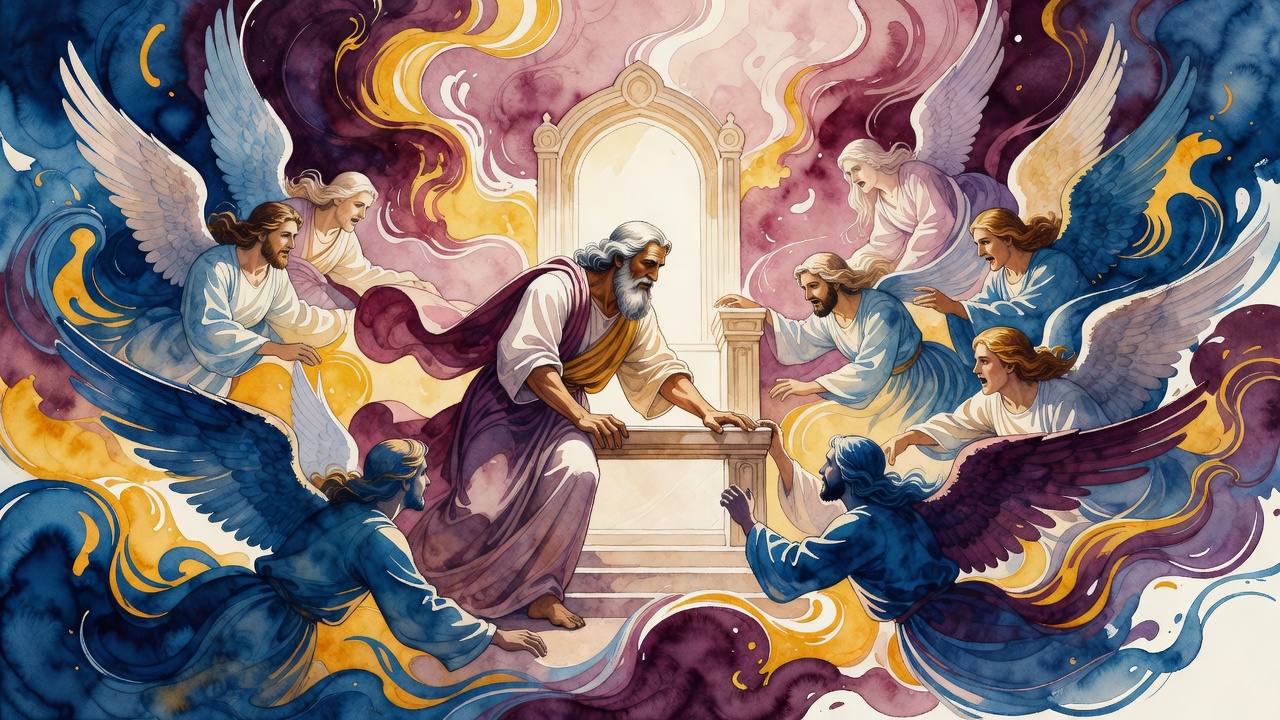
God answers with the deer. Israel was led through Egypt, manna, quail, well, clouds of glory, all the forced curriculum of love. The convert had none of that pressure and still chose the gate. Uncoerced choice is precious beyond measure.

Moses, who had argued for a stiff-necked people more times than he could count, had to learn a new jealousy: heaven's soft spot for the one who was never dragged to Sinai by plagues and still said yes.

This Very Day, Always New

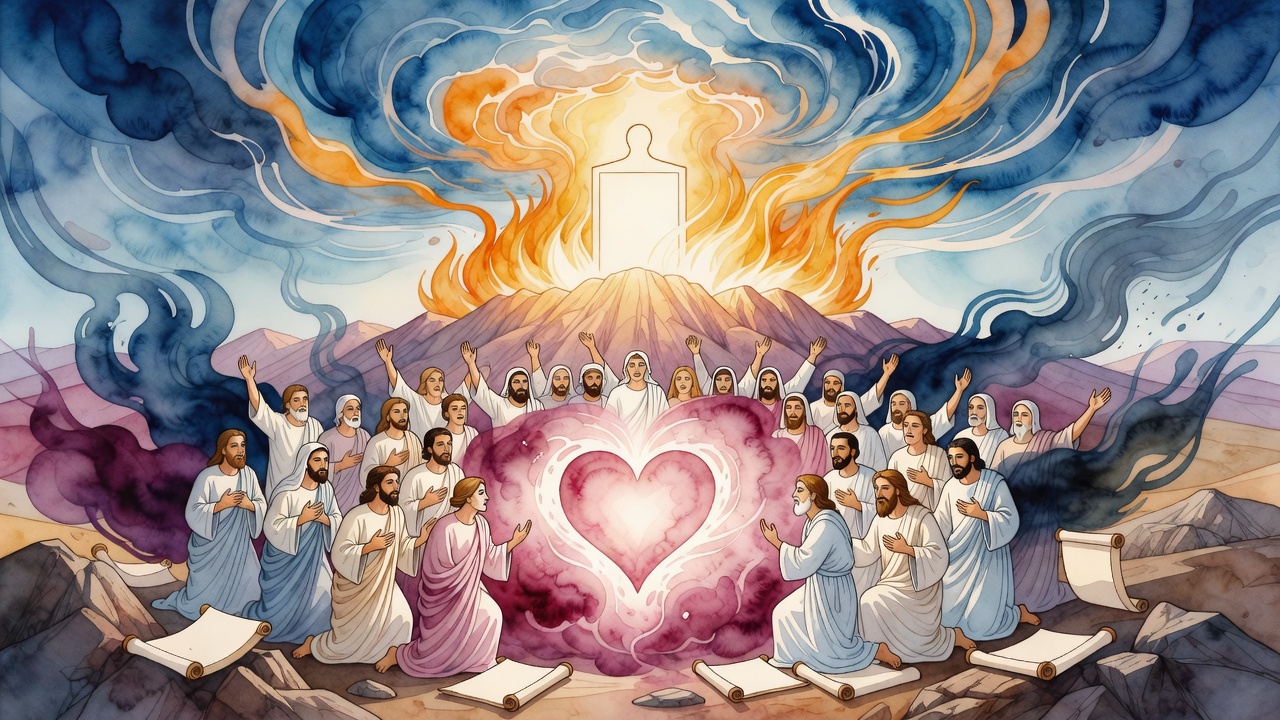
The Torah is not to feel like an old decree yellowing in a chest. "This very day" the words press as newly given, urgent, something a whole people rushes to hear. A convert who enters for the Name steps into that present tense. The commandments do not meet him as antiques. They meet him as today's fire.

An elder teaching a newcomer watches the newcomer's face light at a verse the elder has known for forty years and feels the day renew in his own mouth. The deer teaches the flock how to taste grass as if for the first time.

In the study house the convert's questions sometimes cut sharper than the lifelong student's. Fresh hunger has edges. The teacher who loves Torah more than pride welcomes the cut.

Swear Against the Evil Impulse

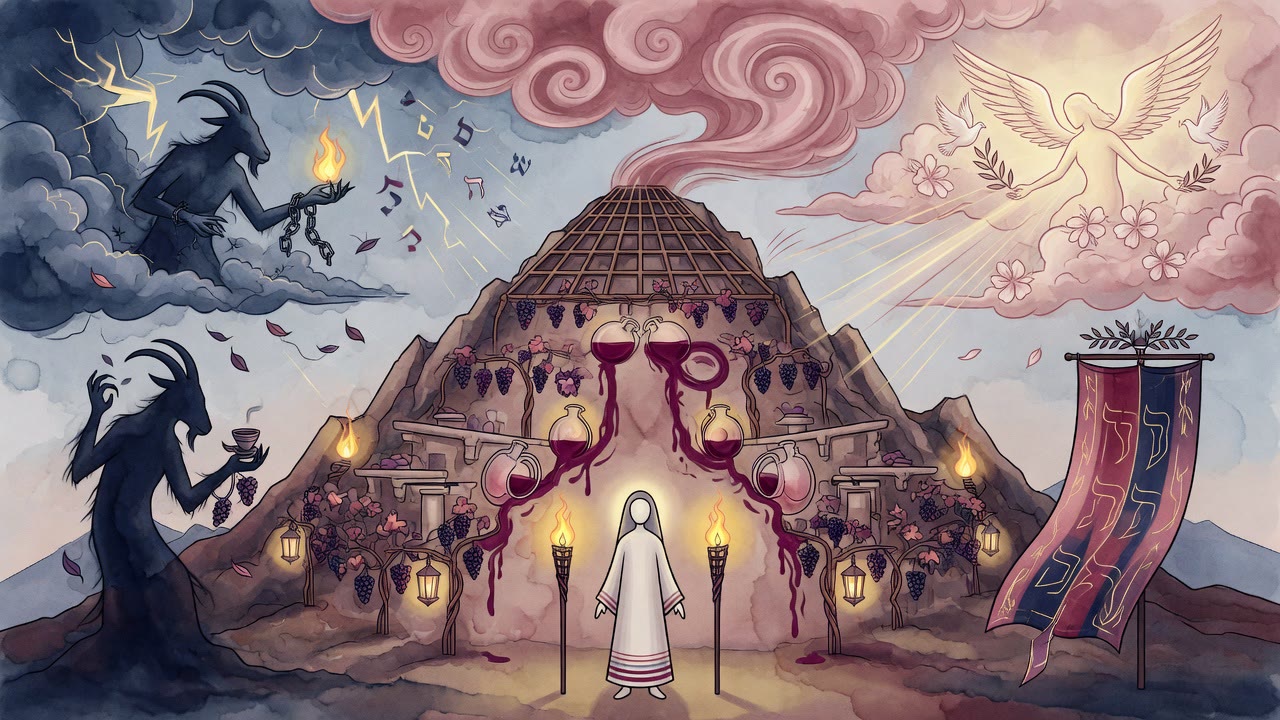
From "upon your heart," Rabbi Yoshiyah taught that a person should beswear his yetzer hara, bind the inner whisper that pulls toward the forbidden. The convert who came for the Name already knows what it costs to turn. The born-Israelite must relearn that turn daily, sometimes with an oath against his own inclination.

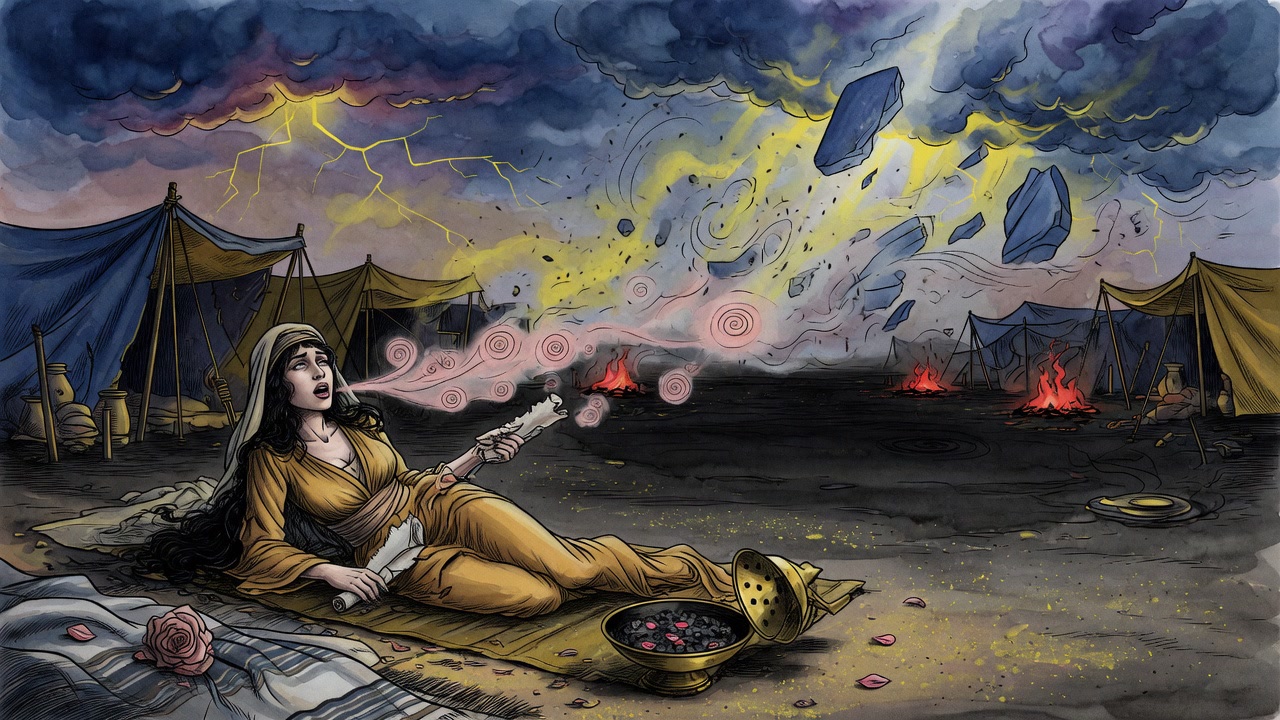
At midnight a man who has always been "inside" feels the old hunger and speaks a vow into the dark. Somewhere a woman who crossed in from another people sleeps lightly, still half listening for whether the fold will keep her. Both are in the same story of choosing again.

The yetzer does not care who has papers of birth. It cares who leaves the gate unlatched. The deer and the sheep both need that latch.

Affection That Offends the Entitled

The sheep's protest is honest and small. Why lavish love on the latecomer? The shepherd's answer does not insult the lifelong flock. It names a different miracle. Being raised is grace. Walking in freely is another grace, rarer because it was not engineered by plagues and split seas.

In the morning the deer is still there. The staff still guides both kinds of life toward water. God, in the parable, is not embarrassed by the extra tenderness. Moses learns to make room. The Name that drew the stranger keeps drawing, and the Torah stays as new as the hour the stranger first said yes.

At the well the sheep drink first from habit. The deer waits, then drinks. The shepherd watches both with a face that has room for two loves that are not the same love and does not apologize for either.

At the fence line a born-Israelite muttered that the deer had not suffered Egypt. The shepherd heard and did not strike him. He only said that suffering is not the only door, and that free walking is rarer than forced marching.

When the yetzer whispered that the fold would never fully want him, the convert answered with the oath Yoshiyah taught, a vow against his own impulse to flee back to the open country of half-belonging.

Heaven's affection for the latecomer does not cancel love for the lifelong flock. It widens the fold until protest softens into water-sharing at the well.


← All myths

From the tradition

Sources

3 sources

The texts behind this telling. Some cards carry a translation of the source; others are our own retelling of it, and each card says which. Every card links out to the original.

Yalkut Shimoni on Torah 213:1Yalkut Shimoni on Torah

Translation of the source text.Torat Emet (Yalkut Shimoni) · CC-BY-NC

"One law shall there be for the native and for the stranger" (Exodus 12:49). There are three kinds of converts. There is a convert who converted for the sake of a woman. The Holy One, blessed be He, said to him: You converted for the sake of forbidden meat, behold, it is given to you, as it is said, "You shall give it to the stranger who is within your gates" (Deuteronomy 14:21). The second convert converted in order to be supported as a poor man, behold, they give to him, as it is said, "And when you reap the harvest" (Leviticus 23:22). The third convert is the one who converted for the sake of the Name of the Holy One, blessed be He. The Holy One, blessed be He, said: He is weighed before Me as one of them [Israel], as it is said, "The assembly, one statute… one law shall there be for the native" (Numbers 15:15-16). And not only that, but he is weighed before Me as a Levite, as it is said, "And the Levite shall come, because he has no portion" (Deuteronomy 14:29). Moses said before the Holy One, blessed be He: Master of the universe, is this convert like a Levite before You? He said to him: He is great before Me, for he converted for My sake. A parable: like a deer that grew up in the wilderness and came of its own accord and mingled with the flock, and the shepherd fed it and gave it drink and loved it more than his own flock. They said to him: This deer you love more than the flock? He said to them: How much labor have I labored over my flock, taking them out in the morning and bringing them in the evening until they were grown; but this one grew up in the wildernesses and the forests and came of its own accord into my flock, therefore I love it. So too the Holy One, blessed be He: How much have I labored over Israel, I brought them out of Egypt, I gave them light before them, I sent down the manna for them, I drove up the quail for them, I raised the well for them, I surrounded them with clouds of glory until they accepted My Torah; but this one came of his own accord, therefore he is weighed before Me as Israel and as a Levite.

Full source
Pesikta DeRav Kahana 12:21Pesikta de-Rav Kahana

Translation of the source text.Pesikta de Rav Kahana according to an Oxford manuscript, Dov Mandelbaum ed., N.Y. 1987 · CC-BY

"On this day they came to the wilderness of Sinai" (Exodus 19:1). But did they come on this very day? Rather, when you study My words, let them not be in your eyes as old, but as though the Torah were given this very day. It is not written "on that day," but "on this day" (ibid.). In this world I gave you the Torah, and individuals toiled in it; but in the World to Come I will teach it to all Israel, and they will learn it and not forget it, as it says, "For this is the covenant that I will make with the house of Israel after those days, says the LORD: I will put My Torah within them, and upon their heart I will write it, and I will be their God, and they shall be My people" (Jeremiah 31:32). And not only that, but I will increase peace among them, as Isaiah said, "And all your children shall be taught of the LORD, and great shall be the peace of your children" (Isaiah 54:13).

Full source
Sifrei Devarim 33:4Sifrei Devarim

Retold in our words. Read the original at the link below.Sifrei by Rabbi Shraga Silverstein · CC-BY

It tells us that the commandments shouldn't feel like an antiquated edict, something ignored and forgotten. Instead, they should feel brand new, urgent, something everyone rushes to understand and embrace. Doesn't that shift your perspective? It’s not about blindly following rules, but about constantly renewing our relationship with these teachings.

Then comes this fascinating idea – the power of taking an oath against our own yetzer hara (the evil inclination), that inner voice of temptation, our "evil inclination." The text continues, "upon your heart": From here R. Yoshiyah was wont to adduce: A man should beswear his (evil) inclination (not to do what is forbidden.)

Think of it like this: we all have that little voice whispering, nudging us towards things we know aren’t good for us. What if we could take a stand, make a promise, a vow to resist? It sounds powerful. The Sifrei Devarim goes on to illustrate this with examples from our most revered figures. We see Abraham, in (Genesis 14:22-23), declaring, "I lift my hand (in oath) to the L-rd, G-d on high, Possessor of heaven and earth: Nothing (shall I take), from a thread until a sandal latchet, nor shall I take anything that is yours." He’s refusing to benefit from his victory in battle, making a public commitment to integrity.

Then there’s Boaz, in ((uth 3:1)3), promising Ruth protection with the words, "(I swear) 'As the L-rd lives, lie (here with me, unmolested) until the morning…'" He's not just making a promise; he's invoking the Divine to guarantee his honorable intentions.

Even David, in (1 (Samuel 26:1)0), as he restrains Avishai from killing Saul, proclaims, "(I swear) as the L-rd lives: The L-rd will strike him with plague, or his day will come and he will die, or he will go forth in battle and he will perish." David is entrusting Saul's fate to God, refusing to take matters into his own hands.

And Elisha, in (2 (Kings 5:1)6), refuses payment, saying "(I swear) as the L-rd lives, before whom I have stood, I shall not take (any emolument, etc.”). He’s maintaining his prophetic integrity by rejecting personal gain.

These weren't just casual promises. They were declarations, oaths sworn with conviction, binding themselves to a higher standard. They were binding their yetzer hara.

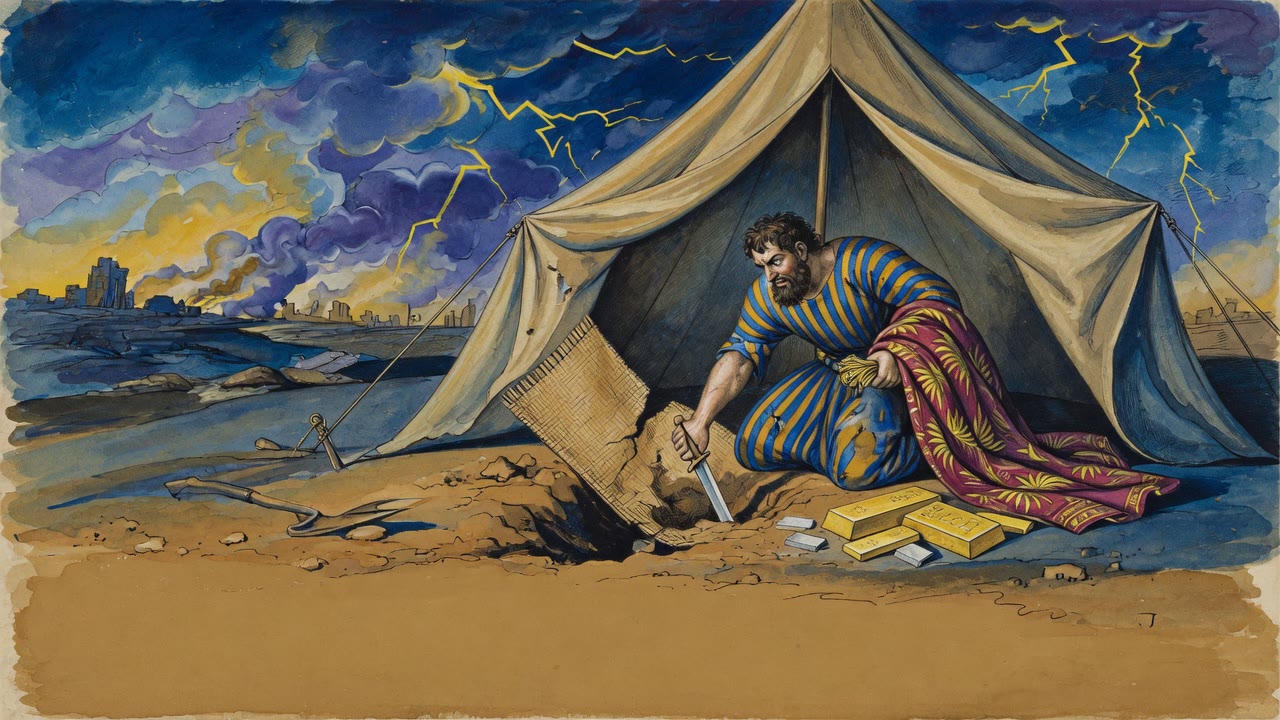
But here's a twist. The text points out that just as the righteous make oaths against their evil inclination, the wicked do the opposite. They swear to indulge it. As we see with Gehazi, Elisha's servant, in (2 (Kings 5:2)0), "As the L-rd lives, I shall run after him and take something from him!" He’s actively vowing to pursue his greed.

It’s a powerful and sobering thought: Our words have immense power. They can bind us to righteousness or to ruin. What are we binding ourselves to? What oaths, spoken or unspoken, are we making every day?

So, the next time you're faced with a difficult choice, maybe consider channeling Abraham, Boaz, David or Elisha. Maybe consider making a conscious, heartfelt oath – a promise to yourself, and to something greater – to choose the path of integrity, of kindness, of righteousness. It might just be the most powerful thing you do all day.

Full source