Worms Crawl From the Heifer to the Killer
Elders break a heifer in a barren valley, and worms rise from the rite to crawl straight toward a living murderer.
Table of Contents
 Click for full size
Blood on a Road Without Witnesses
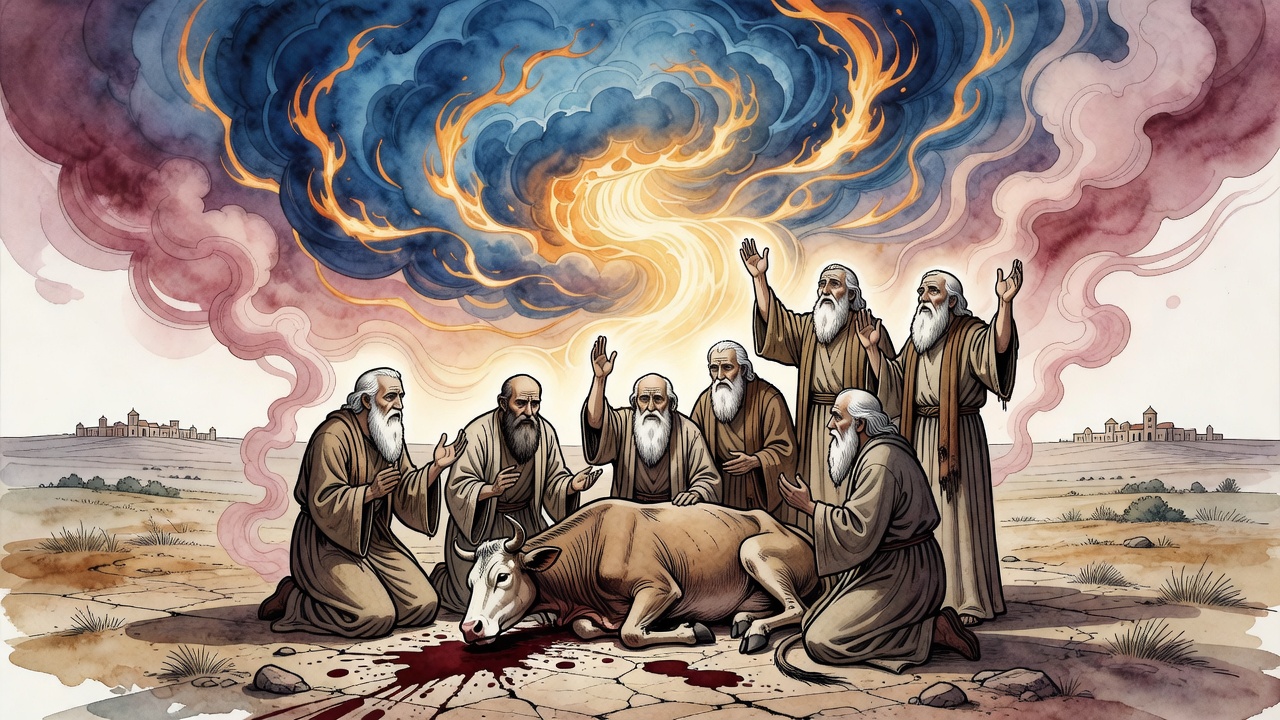
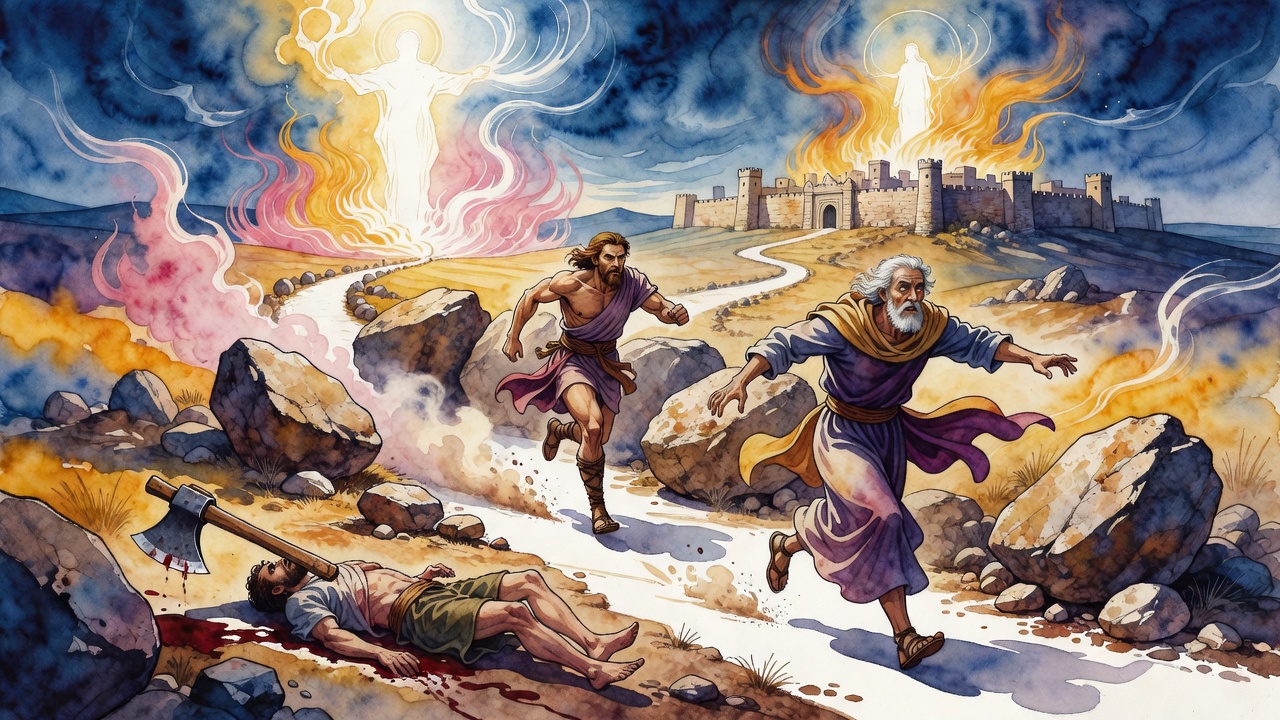
The body lay between two towns, face down in dust that still held the shape of a struggle. No one had seen the blow. No one named a hand. The elders of the nearer city came out with measuring cords and faces set like stone, because an unsolved murder is not only a private grief. It is a stain that travels into the soil and into the people who claim the land.
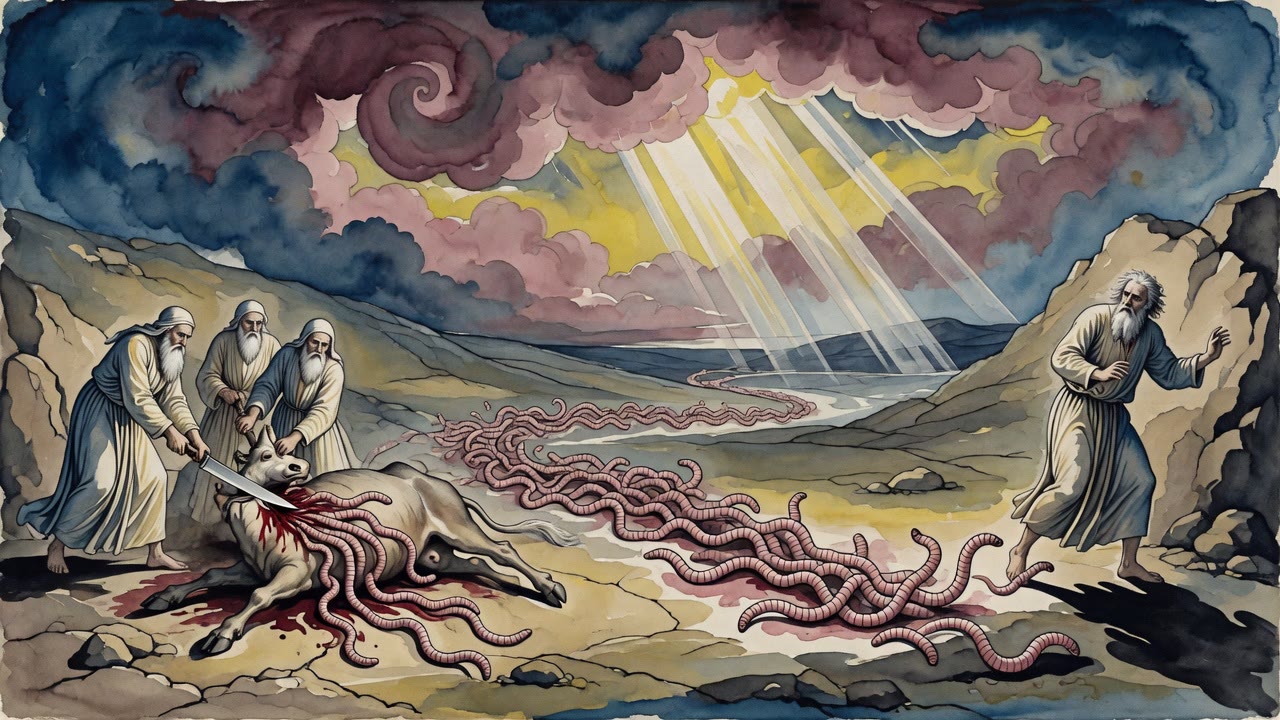
God had already given the strange law for this hour. They were to take a heifer that had never known a yoke, lead it to a hard valley that no one plowed, and break its neck there while the priests spoke the words that refuse blood-guilt. The valley smelled of dry grass and old heat. Men who usually argued over markets stood silent, because the rite made silence feel safer than speech.
They measured to the four quarters. The nearest city was named as the suspected one, not because its streets were proven guilty, but because nearness itself carries responsibility when a life falls without a name.
Seven Sevens Around a Red Statute
The red heifer of the pure ash and this broken heifer of the valley are not the same animal, yet both live under the same kind of exactness. R. Hanan bar Pazzi taught that the chapter of the red heifer is built from sevens stacked upon sevens: seven mentions of the animal, seven things that enter the fire, seven sprinklings, seven ways a body meets the impurity of the dead, seven washings of garments, seven states made clean again.
When someone counted the priests and said the number fell short, Hanan added Moses to the tally. The statute opened through Moses and Aaron together. Even a Levite who was not Aaron's son could be counted among those who served when the word that founded the rite came through him. The hidden statute, the chok that refuses a simple reason, still wears a lattice of order. A deliberate God leaves fingerprints in numbers even when the heart of the law stays closed.
So the men in the barren valley worked with that same precision. Two sages from the chief court. Three judges. Lines pulled taut across dust. The suspected city named out loud. Ritual is not theater when blood has no owner. It is the last map left when human eyes fail.
The Prayer, Then the Swarm
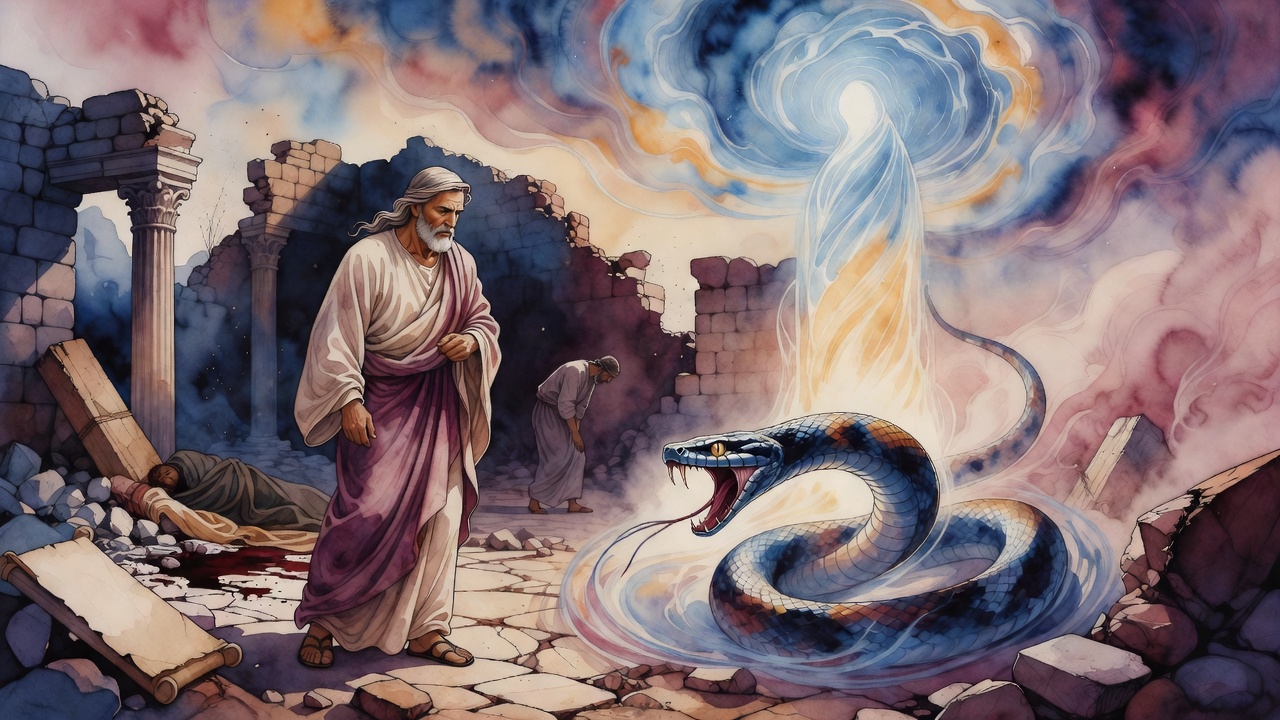
The priests finished the words of atonement. For a breath, nothing moved but wind over the heifer's body. Then the ground itself seemed to answer. From the excrement of the animal a swarm of worms rose, thick and sudden, as if the earth had been holding them under its tongue. They did not scatter into the grass. They gathered, chose a direction, and moved.
Men stepped back. Someone whispered a psalm and then stopped, because prayer can become noise when a sign is already walking. The worms crossed the valley floor, climbed the hard path, and entered the roads of the living. They did not pause at doorways that smelled of oil and bread. They crawled on until they reached a man who still thought secrecy was a kind of wall.
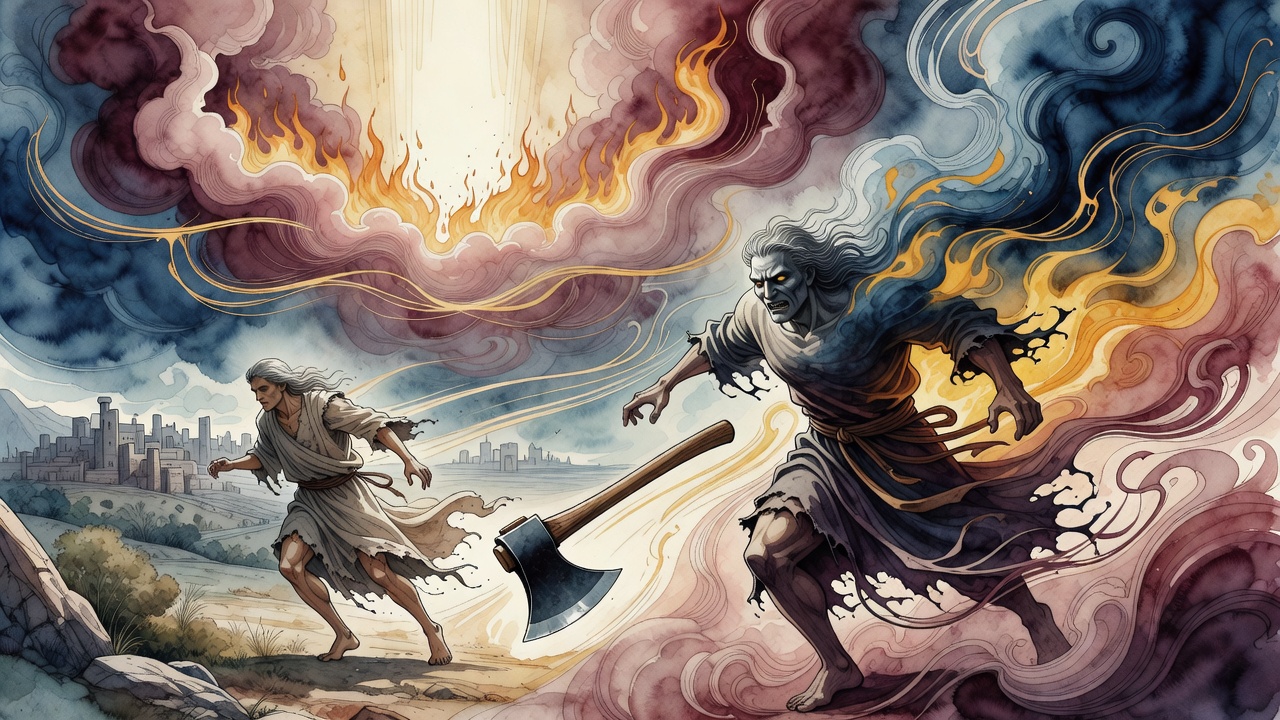
They covered him. They marked him. The hidden killer became a public surface of motion. What the measuring cords could not prove, the swarm placed under every eye.
A Court That Refuses Comfort
The elders did not cheer. Justice that arrives as a crawling miracle is still justice, and it is still terrible. The man who had trusted the silence of the road now had to face the city that had measured its way to him. The Torah's broken-neck rite had always been a confession that some murders leave human courts half-blind. The swarm completed the confession with a sentence the court could finally speak.
In the same stream of teaching, the captive woman is given months before marriage so that no child of war is misread as a child of the house. The rebellious son is given a path of fear and instruction before stones are lifted. Even the body hanged after judgment must come down before night so wild beasts do not finish what the court began. Severity is never allowed to become appetite.
So the worms were not a carnival. They were the land refusing to keep a murderer's secret while the people pretended measurement alone could wash them clean.
What the Valley Still Holds
After the arrest, the valley looked ordinary again: dry stones, a broken animal, tracks of boots and cords. But the people who walked home knew they had stood inside a double statute. One heifer teaches that impurity and purity can trade places under numbers God alone fully understands. Another heifer teaches that blood spilled without witnesses still calls for a public accounting.
The killer had trusted the absence of human eyes. He had not counted the patience of the ground, or the odd mercy that turns a purifying rite into a path of living detectors. Between two towns, under a hard sky, the road remembered what mouths would not say.
← All myths