5 min read

Yochanan Named Every Swindle Under the Sun

Water mixed into wine. Poppy oil into olive oil. A scale beam long on one side and short on the other. Students wrote while their stomachs turned.

Curated by Arthur · Told by Maggid ·
Table of Contents
  1. Woe If I Speak, Woe If I Do Not
  2. The Catalog of Lies in Liquid and Dust
  3. When a Deceitful Man Leads
  4. Straight Paths in a Crooked Bazaar
  5. What Stays Under the Sun
Yochanan Named Every Swindle Under the Sun Click for full size

Woe If I Speak, Woe If I Do Not

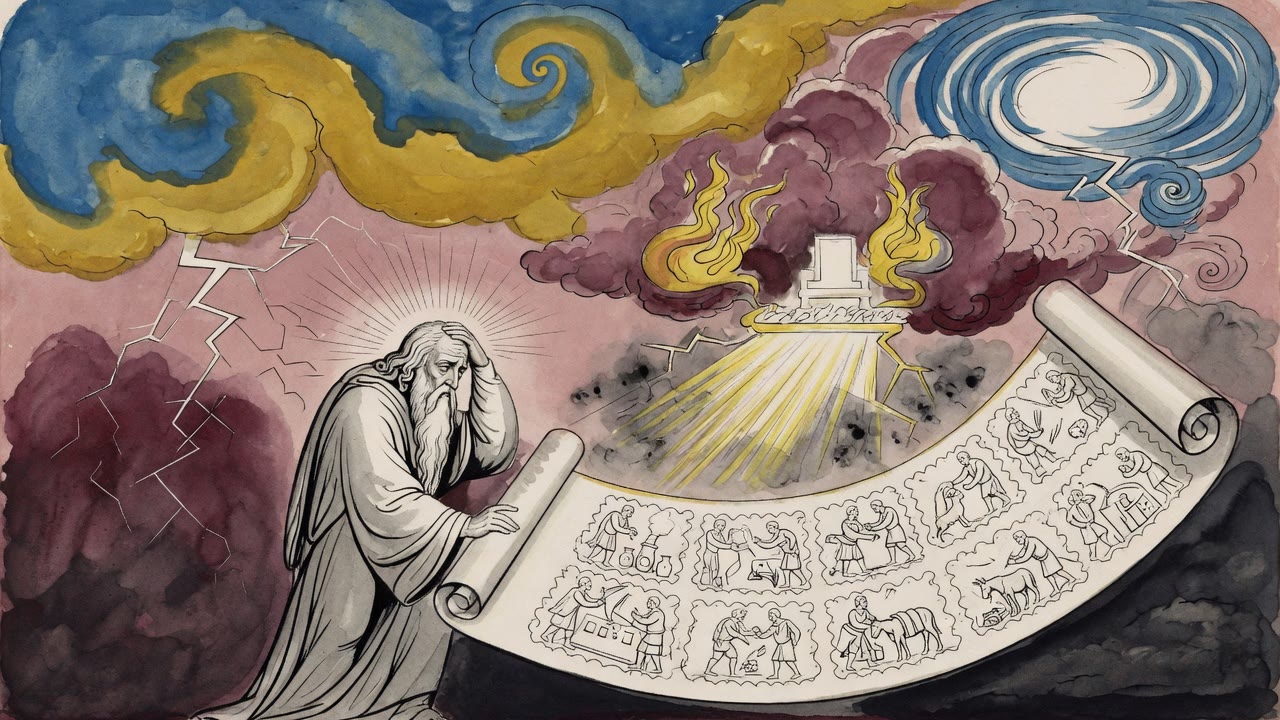
Rabbi Yochanan ben Zakkai stood before a list of market crimes and felt the double edge of knowledge. If I say it, perhaps the swindlers will learn new techniques. If I do not say it, the swindlers will claim the Torah scholars do not know our handiwork, and they will cheat all the more. Woe is me if I say it, and woe is me if I do not say it.

He said it. He chose the risk of teaching thieves over the risk of looking like a blind guardian. Students wrote while their stomachs turned. The ways of the Lord are straight; the righteous walk in them, and transgressors stumble in them (Hosea 14:10). Even a list of crimes can be a straight path if it keeps the weak from falling into every polished lie.

Solomon had already named the disease. There is an evil I have seen under the sun, and it is prevalent among men (Ecclesiastes 6:1). Rabbi Shmuel bar Ami heard in that verse the thought of swindlers.

The Catalog of Lies in Liquid and Dust

Water mixed into wine. Poppy oil into olive oil. Spring water into honey. Donkey milk into balsam. Sap into myrrh. Grape leaves into valuable pollen. Water dyed red into fish brine. Vetch into pepper. A scale beam long on one side and short on the other.

Each trick has a smell, a color, a weight that almost passes. Water in wine thins the joy of a feast. False balsam wounds a medicine. A crooked beam steals from both parties while smiling at both. The midrash lists them the way a prosecutor lists counts, so that honest buyers and honest judges share one language. A widow buying oil for a lamp should not need a laboratory. She should have a court that has heard the names of fraud and a sage who was willing to look dirty for her sake.

Yochanan's mouth made the hidden crafts public. Some cheats may have taken notes. More victims gained eyes.

When a Deceitful Man Leads

The same moral weather hangs over thrones. Job says God prevents a deceitful person from reigning, from setting snares for the people (Job 34:30). Rabbi Yochanan and Reish Lakish argue the stakes. If you see a deceitful and wicked man leading the generation, better the generation fly in the air than make use of him. The snare word, mokeshei, is tied to the bird that falls only when a trap is set (Amos 3:5).

When kings rose over Israel and began to subjugate them, God said, Did you not forsake Me and request a king? Do not trust in princes (Psalms 146:3). Trust misplaced becomes a market of souls. Trust placed in the Holy One makes a person comparable to the One trusted, says Rabbi Simon in the name of Rabbi Yehoshua ben Levi.

Swindlers in stalls and swindlers on seats drink from one cup. Yochanan's list and Job's warning are one campaign.

Straight Paths in a Crooked Bazaar

A young scholar memorizing the catalog felt unclean and necessary, the way a doctor feels listing plagues. Knowledge of evil is not love of evil. It is the price of protection.

In the stalls of a later century the same water still finds the wine, the same short arm still finds the scale. The midrash does not pretend the list emptied the markets. It pretends only that silence helps the thief more than speech does.

Yochanan accepted the woe on both sides and stepped into speech. Leadership, in that choice, is willingness to be misunderstood by cheats and by purists at once.

What Stays Under the Sun

Solomon saw the evil as prevalent, not rare. Prevalence is the wound. The answer is not despair. It is naming, judging, refusing deceitful reign, and keeping the righteous on paths straight enough that the wicked stumble by contrast.

Night after the teaching, a merchant went home and shortened his own tricks because the sages now had vocabulary. Another merchant went home and invented a subtler mix. Both outcomes were inside Yochanan's woe. He spoke anyway.

Under the sun the list remains. So does the courage that published it. Yochanan's woe did not vanish after the lecture. It is the permanent weather of anyone who teaches how evil works in order to limit evil's reach.

Set the market list beside the warning about deceitful rulers and the picture sharpens. A short scale and a wicked king are cousins. Both set snares for people who only wanted oil, grain, or a government that would not hunt them. Better, says the midrashic politics, to fly than to make use of such a leader. Better, says the market teaching, to risk a cheat learning a word than to leave the righteous without vocabulary. Speech is a tool. Yochanan picked it up with open eyes.


← All myths

From the tradition

Sources

2 sources

The texts behind this telling. Some cards carry a translation of the source; others are our own retelling of it, and each card says which. Every card links out to the original.

Kohelet Rabbah 1:1Kohelet Rabbah

Retold in our words. Read the original at the link below.The Sefaria Midrash Rabbah, 2022 · CC-BY

King Solomon, wise beyond measure, certainly did. He saw an "evil under the sun" (Ecclesiastes 6:1), and it wasn't some grand, world-ending catastrophe, but something far more insidious: everyday deception.

Kohelet Rabbah, a rabbinic commentary on the Book of Ecclesiastes, dives right into this. Rabbi Shmuel bar Ami paints a vivid picture of this "evil." Think of the tricks of the trade, the ways people try to cut corners and deceive others for personal gain. It's a long list: watering down wine, adulterating olive oil with poppy oil, or honey with spring water. ), sap in myrrh, or grape leaves passed off as valuable pollen. Even the food we eat isn’t safe! Red-dyed water in fish brine, vetch mixed into pepper, and the classic cheat: a scale rigged to be long on one side and short on the other.

These aren't just ancient problems, are they? We see echoes of these scams in our own world every single day. From misleading advertising to outright fraud, the temptation to deceive seems woven into the human experience.

Here's the dilemma. What do you do when you know about these deceptive practices? Or do you stay silent, letting them think that those who uphold morality are ignorant of their schemes?

This is exactly the predicament faced by Rabbi Yoḥanan ben Zakkai. "Woe is me if I say it, and woe is me if I do not say it," he lamented. He knew that exposing these shady practices could, ironically, lead to even more sophisticated forms of deception. But keeping silent would imply that the wise are ignorant, potentially emboldening the dishonest. What a bind!

Rabbi Yoḥanan ben Zakkai chose to speak out. His reasoning? "For the ways of the Lord are straight, the righteous walk in them [and the transgressors stumble in them]" (Hosea 14:10). As we find in Kohelet Rabbah, this teaches us that truth must be stated, even if it gives sinners more ideas. Sometimes, shining a light on the darkness is the only way to combat it, even if that light also illuminates new paths for the shadows to travel.

One that resonates just as strongly today as it did centuries ago. The world will always have its share of deception, its share of those looking to cut corners. But the responsibility to speak truth, to stand for honesty, remains. Perhaps, by acknowledging the existence of these "evils under the sun," we can become more vigilant, more discerning, and ultimately, more committed to living in the light.

Full source
Devarim Rabbah 5:9Devarim Rabbah

Retold in our words. Read the original at the link below.The Sefaria Midrash Rabbah, 2022 · CC-BY

Devarim Rabbah, a collection of rabbinic teachings on the book of Deuteronomy, dives right into this thorny issue. It all starts with a verse from (Job 34:30): “He prevents a deceitful person from reigning, from setting hindrances [mokeshei] for the people.” The word mokeshei is particularly interesting. It means "hindrances" or "snares," but Rabbi Yoḥanan and Reish Lakish offer a striking interpretation. Rabbi Yoḥanan argues that if you see a wicked person leading the generation, it’d be better if everyone just flew away! The text connects mokeshei to the idea of flying, referencing (Amos 3:5): "Will a bird fall into a trap on the ground, and there is no snare [mokesh] for it?" In other words, a bad leader is a trap, and escape is the only option.

What about trusting in leaders in general? The Rabbis in Devarim Rabbah don't hold back. When the Israelites demanded a king, essentially rejecting God's direct rule, the Holy One, blessed be He, responded, "Did you not forsake Me and request a king for yourselves?" It’s a pointed question, highlighting the inherent risk of placing faith in human leadership. The text then quotes (Psalms 146:3): “Do not trust in princes…” Ouch.

Rabbi Simon, quoting Rabbi Yehoshua ben Levi, takes it a step further. He says that anyone who trusts in God merits to be comparable to Him. They become, in a sense, Godly. The proof? (Jeremiah 17:7): “Blessed is the man who trusts in the Lord, and the Lord is his haven.” But the flip side is also true. Those who trust in idols, in false gods, become like those idols, as (Psalms 115:8) warns: “Those who make them will be like them.” It's a powerful statement about the transformative power of faith – for better or for worse.

What about trusting in regular, flesh-and-blood humans? The Rabbis are blunt: their protection is fleeting because humans are fleeting. (Psalms 146:3) says it plainly: “In man, in whom there is no salvation.” The verse continues, "His spirit departs; he returns to his earth." We are mortal.

The text reveals a divine frustration. God says, "They know that a flesh-and-blood human is nothing, yet they forsake My honor and say: 'Install a king for us.'" It's a cry of disappointment, followed by a chilling prophecy: "By your lives, ultimately you will feel what is destined to befall you under your king." This echoes (Hosea 7:7): “All their kings have fallen; no one among them calls to Me.” They put their faith in flawed humans, and when those humans fail, they have no one to turn to.

So, what are we to make of all this? Are we doomed to a cycle of disappointment in our leaders? Perhaps the message isn't to avoid all leadership, but to be discerning in where we place our trust. To remember that even the most powerful figures are still just human, and that true and lasting support comes from something far greater.

Full source