Zechariah's Two Thirds and the First Murder at the River
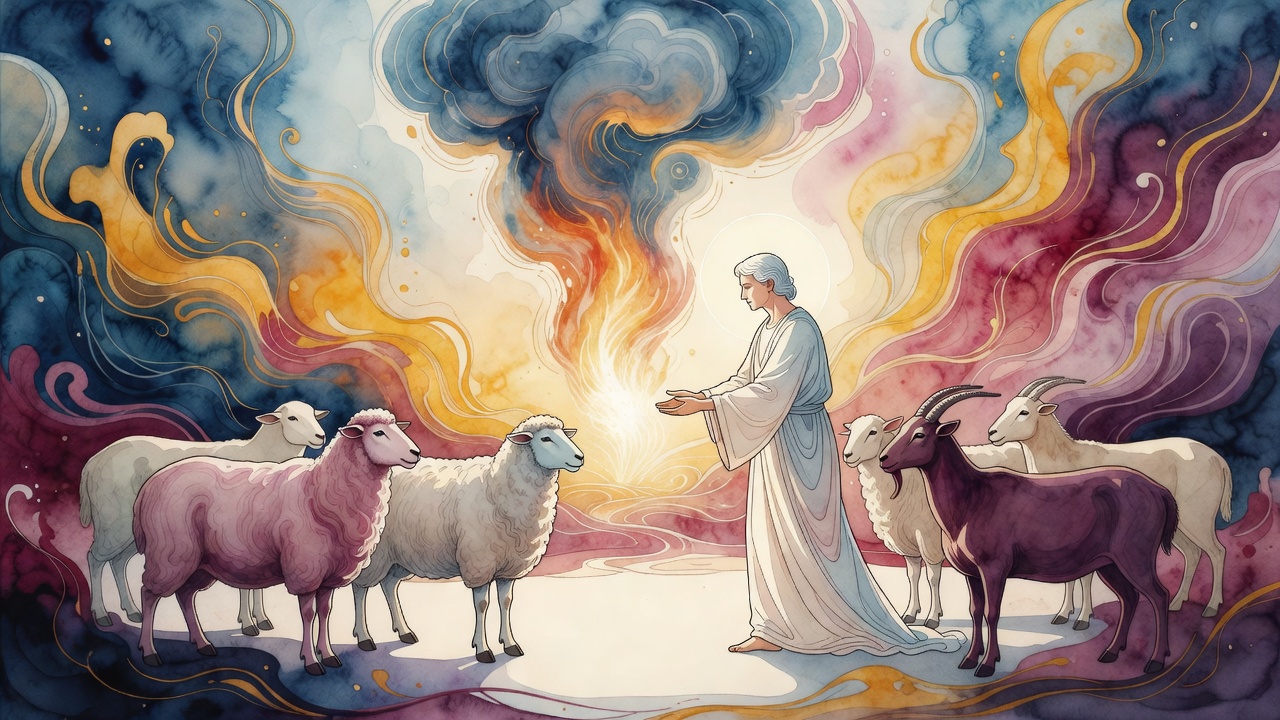
The Levites carried Temple harps to the Euphrates. Nebuchadnezzar wanted psalms with dinner. They looked at their own hands first.
Table of Contents
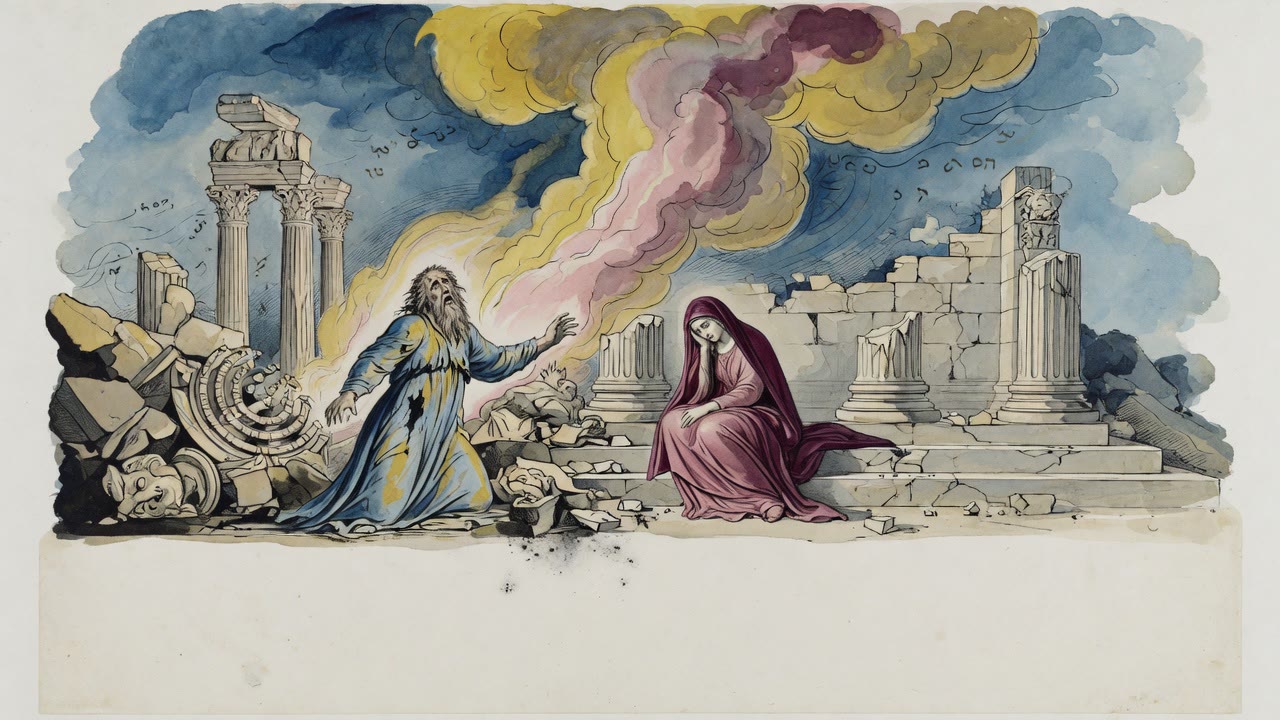
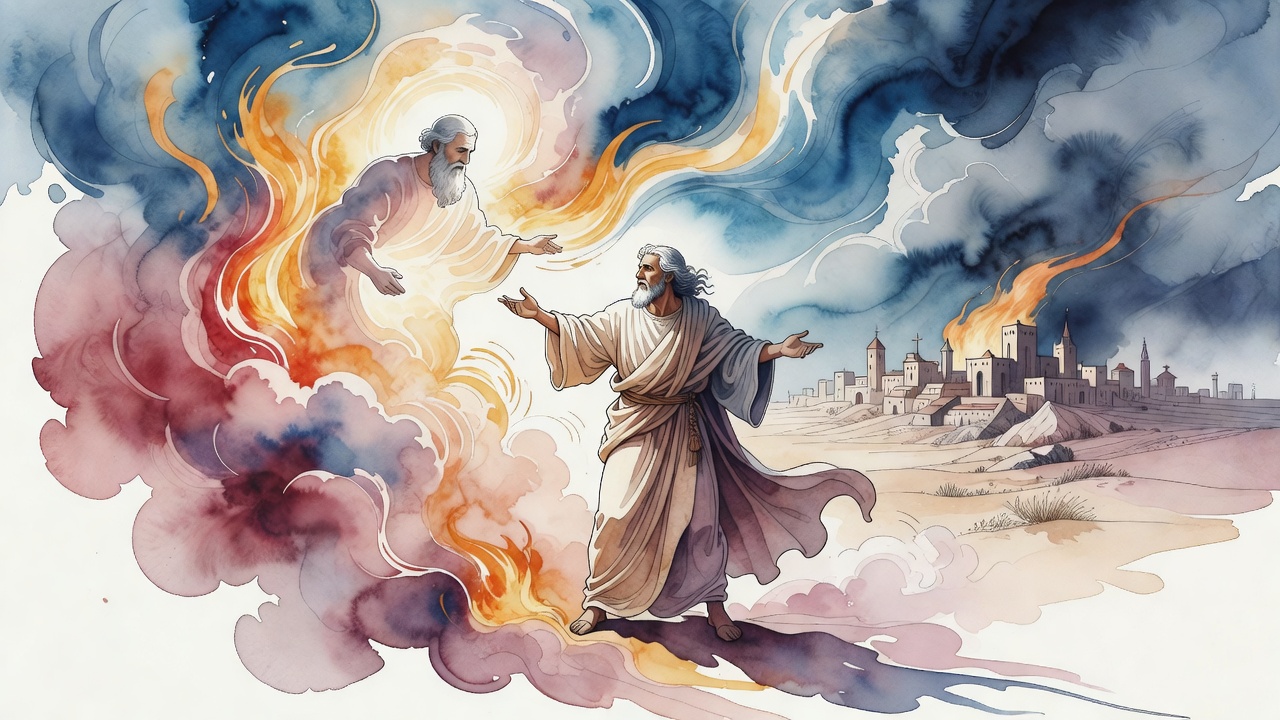
The column stopped at the Euphrates and the crying started. They had held it in the whole way from Jerusalem. Now there was water in front of them and no city behind them, and the noise went up out of the whole camp at once, men and women sitting down in the mud of a foreign riverbank and howling.
 Click for full size
Nebuchadnezzar ordered them to be quiet. When that did not work fast enough he found a better way to shut them up. He sent word for the Levites to bring out their instruments and play for his guests at dinner.
The Harps Came Out of the Baggage
The Temple singers had carried the instruments the whole way. They were the ones who had stood on the steps and sung the psalms of ascent while the smoke went up, and the harps had come out of the burning courts with them. The strings were still in the cases. The psalms were still in the strings.
They put their heads together on the bank while the king's people waited. "It is not enough that the House lies in ashes because of what we did," one of them said. "Now are we supposed to coax music out of these strings in honor of these men, at a table, between courses?"
The king's servants were already setting the lamps out. Guests wanted a song from Zion the way they wanted wine. The Levites looked down at their own hands.
They Bit Through the Joints That Pluck
The Levites refused, and then they made sure the refusal could not be reversed by anyone stronger than they were. Fingers came off at the river. Thumbs bitten through, the exact joints a man needs to pluck a string, ruined by their owners so that no soldier could stand behind them and make the psalms of Zion come out of a harp for a Babylonian banquet.
The soldiers came down the bank and cut them where they stood. They fell in heaps in the mud with their hands already useless. Not one note was played that night. The instruments went into the water or into the dirt. The guests at that dinner ate to silence.
The Levites did not win anything a chronicle would count. Their hands never healed. They never went home. No one alive at that banquet thought they had accomplished a thing. Their harps went into the Euphrates with the psalms still in them, and the mud closed over the whole business.
Cain's Stone Came Back Around
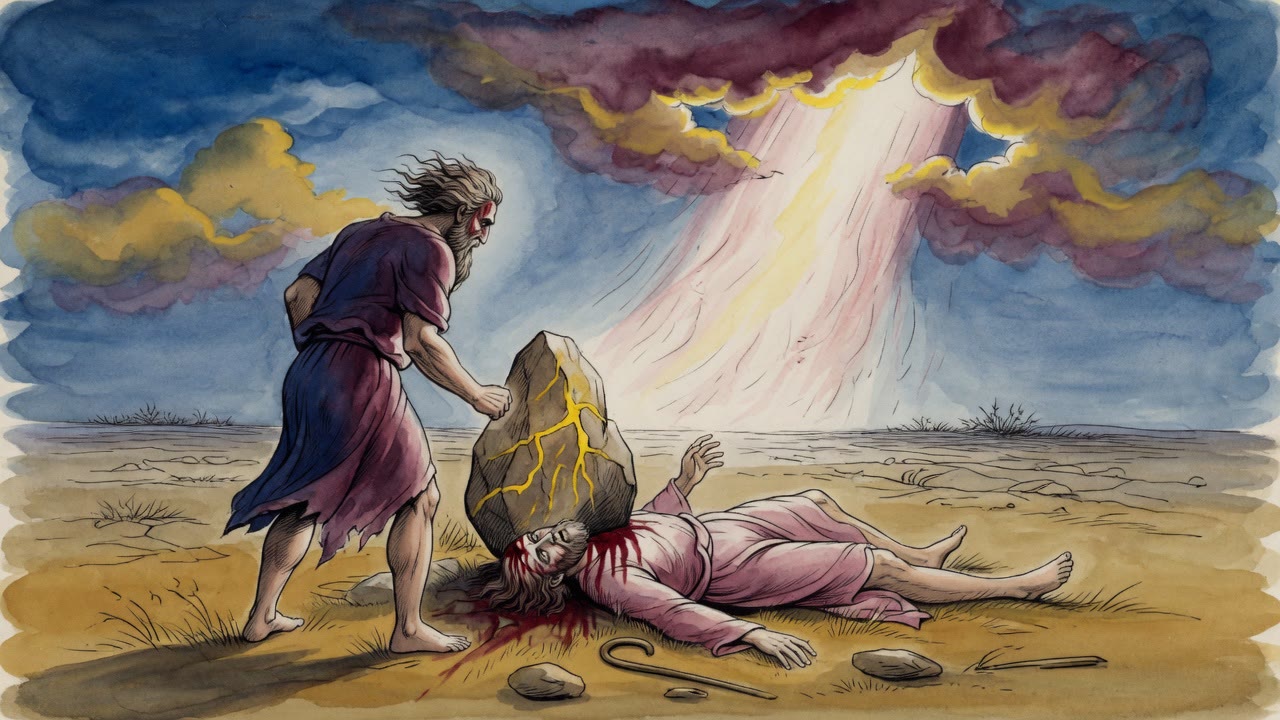
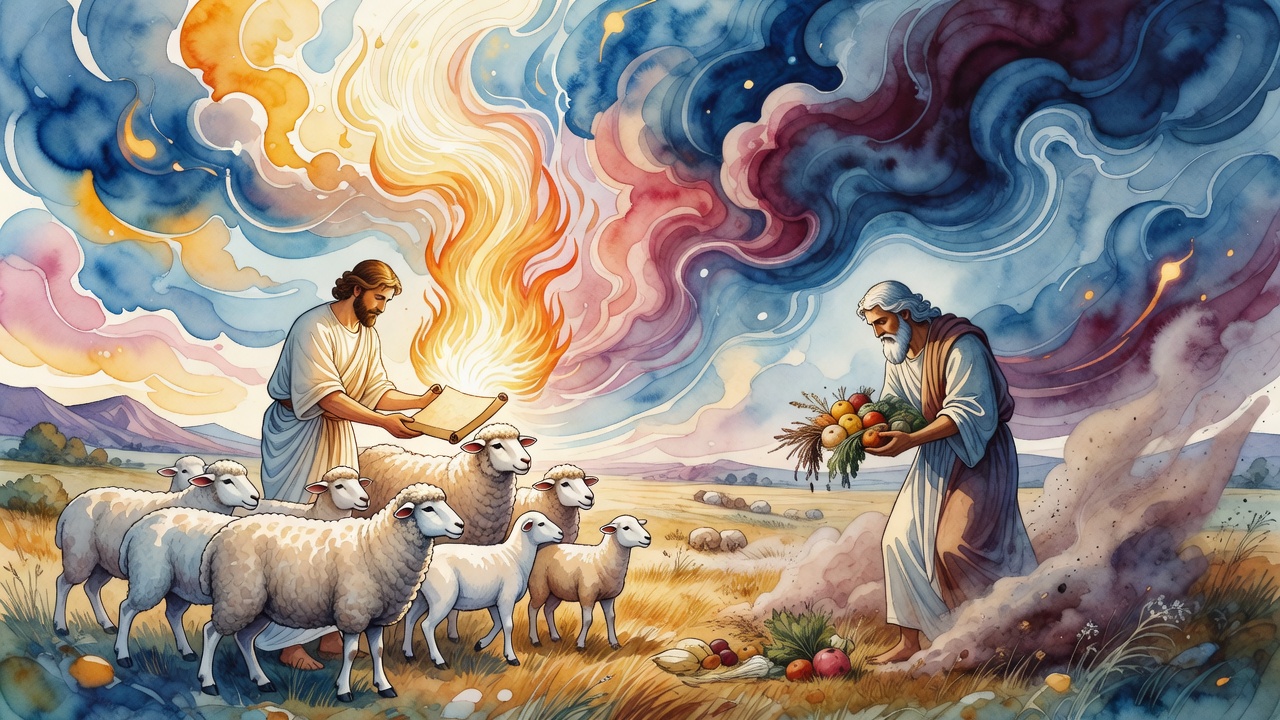
The fire that took them was older than Babylon and older than Jerusalem. It started in an open field before there was a city anywhere on the earth, when one brother stood up against his brother and killed him over an offering. That was the first murder. Cain rose against Abel and struck him with a stone on every organ until he died (Genesis 4:8). Later a stone fell on Cain and killed him. Whoever rolls a stone finds it coming back down on him (Proverbs 26:27).
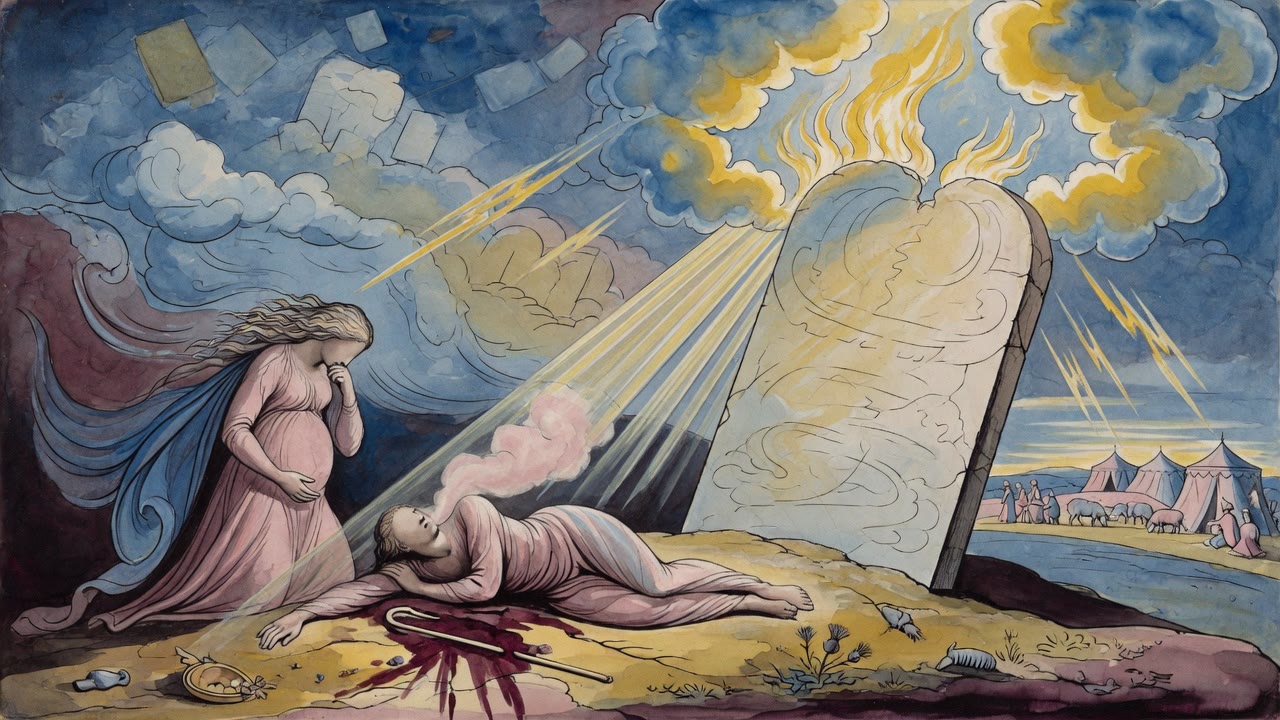
The pattern kept finding new hands. At Shechem, Abimelech son of Gideon killed seventy of his brothers on a single stone to clear his way to a crown. His rule lasted three years and stopped. A woman on a tower dropped an upper millstone on his head and crushed his skull (Judges 9:53). The same stone-logic, returned.
Jehoram came to the throne in Judah, strengthened himself, and put every one of his brothers to the sword along with some of the officers of Israel. Because he killed the sons of his father's belly, his own bowels came out with his sickness. Whoever digs a pit falls into it. The Levites at the river were not killing brothers. They were refusing to make holy sound serve a foreign table. The older fire still ran under the mud. Brother-blood had been teaching heaven how to answer for a long time.
Two Thirds Left the Crucible
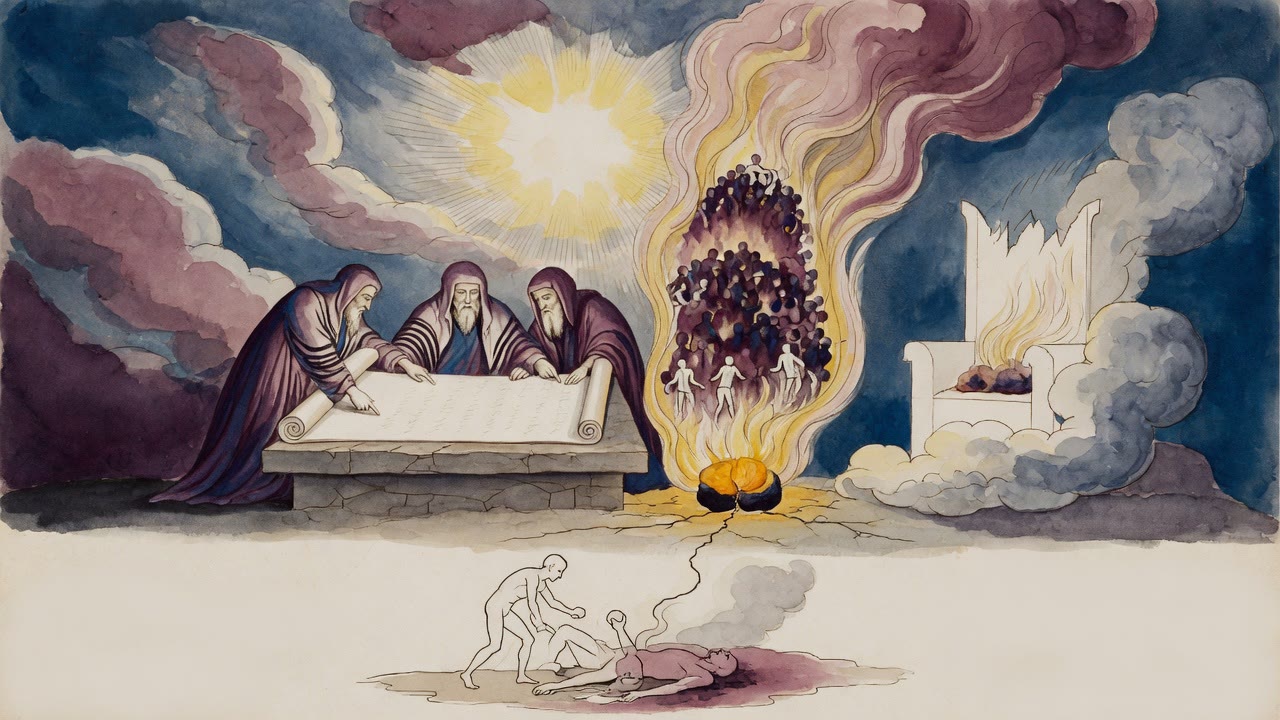
Centuries after the river, in a study house with the exile still running, Rabbi Berachiah read out a line from Zechariah that most people would rather skip. Two-thirds in all the land shall be cut off and perish, and one-third shall be left alive (Zechariah 13:8). Two out of every three. His students sat with that number.
He told them it was not a body count. It was a description of what a smith does. The two-thirds that come off the top are the dross, the scum that rises when the metal goes hot enough, and the third that stays in the crucible is the silver. Nobody is promised a way around the fire. What is promised is that the fire, run long enough and hot enough, leaves something behind that could not have been produced any other way. Then they will call on My name, and I will answer them. I will say, they are My people. And they will say, the Lord is my God.
The Levites at the river did not live to hear that reading. Their hands were already in the mud. Their harps were already under the water. If silver was made that night, it was made of a silence no banquet could buy, and of a refusal that cost the last joints a man needs to play.
← All myths