5 min read

Zion Sighed After the Ninth of Av Closed

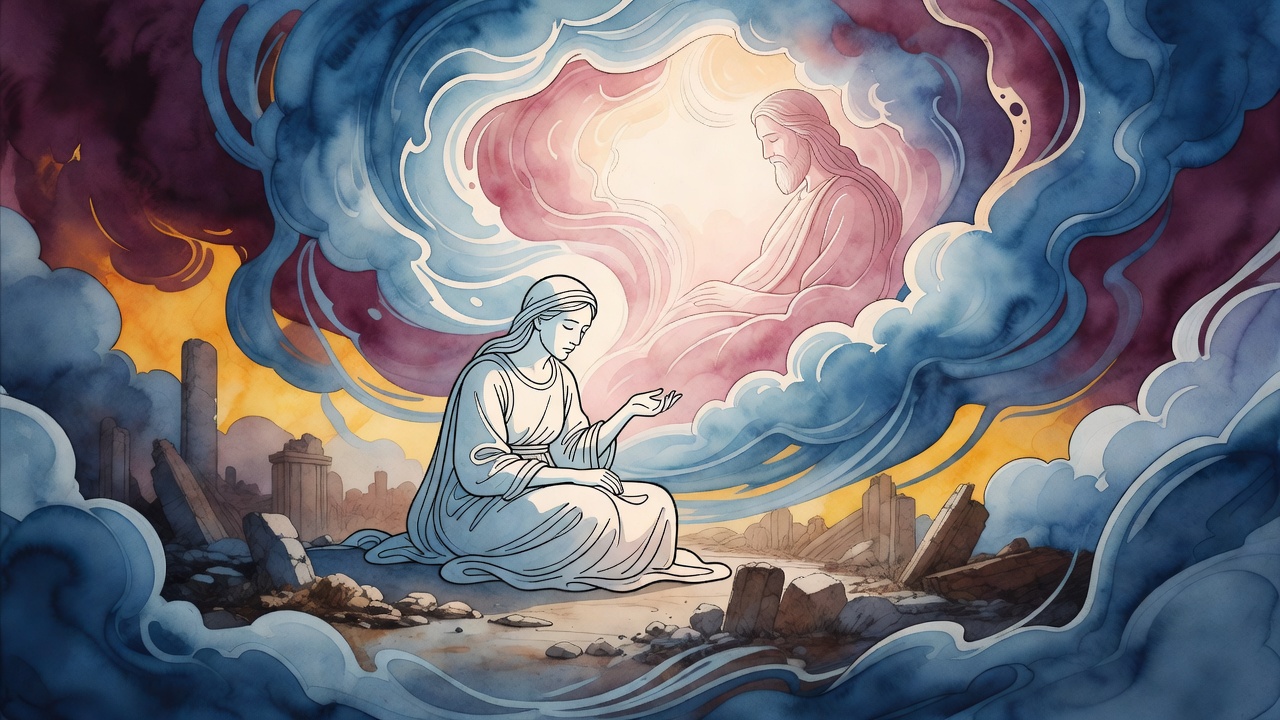
When the fast day closed like a burial ended, Zion still sat counting years, sure she was forgotten until God answered like a nursing mother.

Curated by Arthur · Told by Maggid ·
Table of Contents
  1. When the Fast Ended
  2. I Burned Her
  3. The Bird from the Snare
  4. Shepherd Still

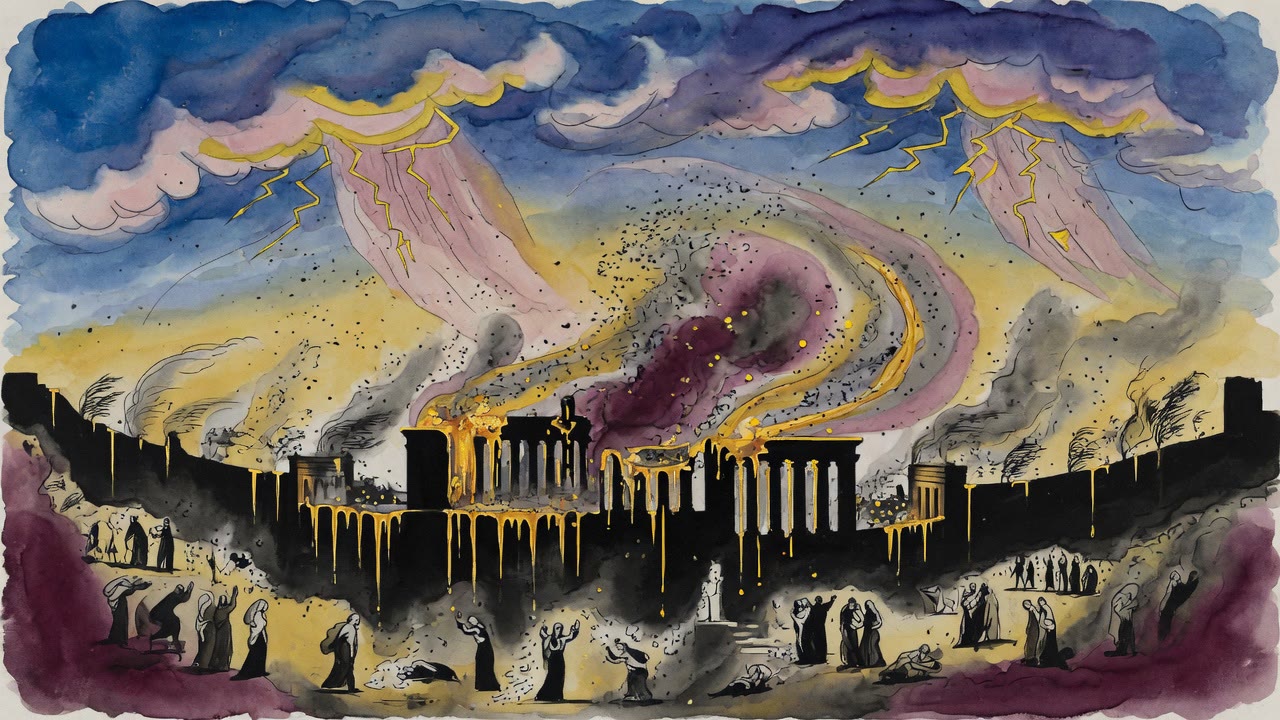
The Ninth of Av ended the way a burial ends. Meat and wine, forbidden while the dead lies before the mourner, become permitted once the body is in the ground. So taught Rabbi Chiyah the Great. Kitchens woke. Cups returned.
Zion Sighed After the Ninth of Av Closed Click for full size

Zion did not move with the calendar. "Even though we are permitted," the teachers said, "we must always have a sigh until the Holy One returns to her."

When the Fast Ended

Permission returned to kitchens. A sigh stayed in the heart. The stones of the ruined house still held heat from an older fire. The sigh was not theater. It was the body's refusal to pretend the burial had finished the love.

Legal mourning can end while love's wound stays open. That is the honest posture after nightfall on the Tenth of Av.

I Burned Her

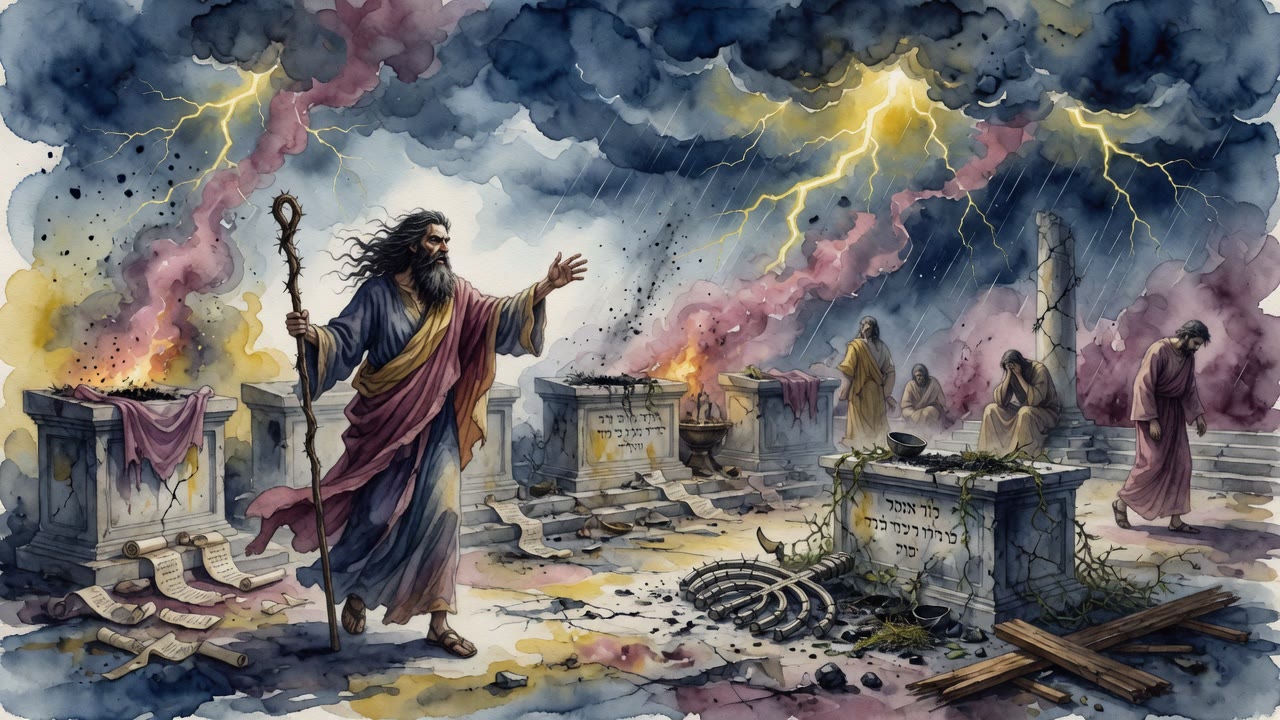
God speaks without softening the first verb. "By your lives, I burnt her." Then, "I will build her." The same mouth owns burning and rebuilding. Zion still counts years with a shaking finger.

"The Lord has forsaken me." The complaint is allowed into Scripture. Abandoned people whose words are erased are more abandoned still. God answers with a nursing mother's impossibility. He will forget her evil and not forget her.

The Bird from the Snare

"If it had not been the Lord who was on our side," let Israel say it twice. Men would have swallowed them alive. Waters would have gone over the soul.

Blessed is the Lord who did not give them as food. The soul escaped like a bird from a fowler's snare. The snare broke. Wings found air. Permission to eat does not erase the memory of wire on the leg.

Shepherd Still

"The Lord is my shepherd; I shall not want." Father and firstborn. Shepherd and sheep. Green pastures are not a denial of burned gates. They are the counter-image promised while ash still sits in the cracks.

Zion still sits, counting, and refuses to call the count finished until the Presence returns to her streets.

The pressure did not lift for those standing inside this hour. Someone swallowed. Someone clenched a fist around cloth or staff or coin. The next breath decided more than any later summary would admit. What looked like a small refusal or a small courage became the hinge the whole house turned on. Neighbors would argue the details by morning, but the people inside the moment carried the exact weight in their bones.

The pressure did not lift for those standing inside this hour. A throat tightened. Someone clenched a fist around cloth or staff or coin. The next breath decided more than any later summary would admit. What looked like a small refusal or a small courage became the hinge the whole house turned on. Neighbors would argue the details by morning, but the people inside the moment carried the exact weight in their bones.

The pressure did not lift for those standing inside this hour. A sandal scraped stone. Someone clenched a fist around cloth or staff or coin. The next breath decided more than any later summary would admit. What looked like a small refusal or a small courage became the hinge the whole house turned on. Neighbors would argue the details by morning, but the people inside the moment carried the exact weight in their bones.

The pressure did not lift for those standing inside this hour. A child went still. Someone clenched a fist around cloth or staff or coin. The next breath decided more than any later summary would admit. What looked like a small refusal or a small courage became the hinge the whole house turned on. Neighbors would argue the details by morning, but the people inside the moment carried the exact weight in their bones.

The pressure did not lift for those standing inside this hour. A door latch clicked. Someone clenched a fist around cloth or staff or coin. The next breath decided more than any later summary would admit. What looked like a small refusal or a small courage became the hinge the whole house turned on. Neighbors would argue the details by morning, but the people inside the moment carried the exact weight in their bones.

The pressure did not lift for those standing inside this hour. Oil smoke stung eyes. Someone clenched a fist around cloth or staff or coin. The next breath decided more than any later summary would admit. What looked like a small refusal or a small courage became the hinge the whole house turned on. Neighbors would argue the details by morning, but the people inside the moment carried the exact weight in their bones.

The pressure did not lift for those standing inside this hour. A coin rolled and stopped. Someone clenched a fist around cloth or staff or coin. The next breath decided more than any later summary would admit. What looked like a small refusal or a small courage became the hinge the whole house turned on. Neighbors would argue the details by morning, but the people inside the moment carried the exact weight in their bones.


← All myths
From the tradition

Sources

3 sources

The texts behind this telling. Some cards carry a translation of the source; others are our own retelling of it, and each card says which. Every card links out to the original.

Pesikta Rabbati 31Pesikta Rabbati

Retold in our words. Read the original at the link below.Rabbi Mike Feuer, Jerusalem Anthology · CC0

Teach us oh, teacher: once the Ninth of Av has ended, is everything permitted? R’ Chiyah the Great taught like this: once the Ninth of Av has ended, one is permitted to do anything. Why? Because it is like the case of a person whose dead is laid out before him, who is forbidden to eat meat or drink wine. Once the dead is buried, the mourner is permitted to do so. So to on the Ninth of Av one is a mourner – once the day has ended one is permitted to do anything. Even though we are permitted, we must always have a sigh in our hearts until the Holy One returns to her. The Holy One said to them: by your lives! I burnt her, as it says “From above He has hurled fire into my bones…” (Lamentations 1:13) I will build her, as it says “Yet again will I rebuild you, then you shall be built, O virgin of Israel…” (Jeremiah 31:3) Zion said to Him: Behold, I have been sitting thus for many years! I have counted the days from old and I have not been redeemed, therefore I have despaired. She said that my master has abandoned me. And from where do we learn that Zion said this? From that which is written regarding it “And Zion said, ‘The Lord has forsaken me, and the Lord has forgotten me.’” (Isaiah 49:14)... Another explanation. “And Zion said, ‘The Lord has forsaken me…” (Isaiah 49:14) What is written before this? “Sing, O heavens, and rejoice, O earth, and mountains burst out in song, for the Lord has consoled His people, and He shall have mercy on His poor.” (Isaiah 49:13) Once Zion saw that the prophet recalled His people and His poor, but did not mention Zion or Jerusalem she said ‘the Lord has forsaken me, and the Lord has forgotten me.’ Immediately the Holy One replied and said to her: just as it is impossible for a woman to forget her sucking child, so to I am not able to forget you, “Shall a woman forget her sucking child, from having mercy on the child of her womb?” (Isaiah 49:15) She said to Him: Master of the world! How is that possible? There is no end to the evils I have done! I caused Your Holy Temple to be destroyed and I killed the prophets. R’ Berachia the Kohen (a priest) said in the name of Rebbe: the Holy One said to her, I will forget your evil but I will not forget your good. “…These too shall forget, but I will not forget you.” (ibid.) I have forgotten “"These are your gods, O Israel…” (Exodus32:4) but “I am the Lord, your God…” (Exodus 20:2) I will not forget.

Full source
Midrash Tehillim 124:1Midrash Tehillim

Retold in our words. Read the original at the link below.Rabbi Mike Feuer, Jerusalem Anthology · CC-BY

Psalm 124, a song from the collection known as Shir Hama'alot, the Songs of Ascent, dives deep into that feeling. It's raw, visceral, and speaks directly to the heart of anyone who's ever felt overwhelmed by adversity.

"If it had not been the LORD who was on our side," the Psalm begins, and then repeats for emphasis, "Let Israel now say, 'If it had not been the LORD who was on our side. It's as if the Psalmist, traditionally believed to be David, is urging us, almost daring us, to acknowledge the role of the divine in our survival. To really think about what it would be like if we were truly alone in the face of overwhelming odds.

The Psalm paints a terrifying picture. "When men rose up against us, Then they would have swallowed us alive, When their wrath was kindled against us." This isn't just a minor disagreement; this is annihilation. It's the kind of rage that consumes everything in its path. And then, the metaphor shifts. It's no longer just about human enemies.

"Then the waters would have overwhelmed us, The stream would have gone over our soul; Then the swollen waters Would have gone over our soul." image for a moment. It’s not just physical danger; it’s the feeling of being utterly consumed, of losing yourself entirely. The nefesh (the vital soul), your soul, drowning in the chaos.

Midrash Tehillim, a collection of rabbinic interpretations of the Psalms, expands on this idea. It sees these "men" and "waters" as symbols of the various threats that have faced the Jewish people throughout history. From physical enemies to spiritual challenges, the Psalm speaks to the constant struggle for survival.

But then, there's a shift. A moment of hope, of profound gratitude. "Blessed be the LORD, Who has not given us as prey to their teeth." The tone changes dramatically. It's a recognition that despite everything, despite the overwhelming odds, they survived. They weren’t devoured.

And the Psalm continues with an image of freedom: "Our soul has escaped as a bird from the snare of the fowlers; The snare is broken, and we have escaped." Can you picture that? The bird, trapped, struggling, and then, suddenly, the cage is open. It's a powerful metaphor for liberation, for the breaking of chains, both literal and metaphorical.

According to Ginzberg's retelling in Legends of the Jews, the image of the bird escaping the snare is a recurring motif in Jewish folklore, often associated with divine intervention and miraculous salvation. It speaks to the idea that even when all seems lost, there is always the possibility of escape.

The Psalm concludes with a declaration of faith: "Our help is in the name of the LORD, Who made heaven and earth." It’s a simple, yet profound statement of trust. It's a declaration that our hope lies in the one who created everything.

So, what does Psalm 124 mean for us today? Perhaps it's a reminder to acknowledge the challenges we face, to feel the weight of the "waters" that threaten to overwhelm us. But it's also a call to recognize the moments of grace, the times when we've been spared, when we've escaped the snare. And most importantly, it's an invitation to place our trust in something larger than ourselves, in the power that created the heavens and the earth. What "waters" are you struggling against today, and where might you find the strength to escape?

Full source
Midrash Tehillim 23:1Midrash Tehillim

Retold in our words. Read the original at the link below.Rabbi Mike Feuer, Jerusalem Anthology · CC-BY

Midrash Tehillim turns to The Lord Is My Shepherd and I Shall Not Want.

Midrash Tehillim, a collection of rabbinic interpretations on the Book of Psalms, unlocks layers of meaning within this beloved Psalm. It explores the intimate relationship between God and the Jewish people. It's not just a shepherd and his sheep, but a tradition of connection woven from love, responsibility, and belonging.

The Psalm itself says, "He makes me lie down in green pastures; He leads me beside quiet waters." The Midrash (rabbinic interpretive commentary) connects this imagery to the passionate words of the Song of Solomon (2:16): "My beloved is mine and I am his." It's not a distant, impersonal deity It's a love affair. A deep, reciprocal bond.

In Midrash, the Assembly of Israel proclaims before God, "Master of the Universe, You are my God and I am Your nation." It's a mutual declaration, a covenant made in love and sustained through faith. We see echoes of this in foundational verses: God declares, “I am the Lord your God” (Exodus 20:2), and the people are told, “Listen to Me, My nation; and My people, give ear to Me” (Isaiah 51:4).

But the intimacy doesn't stop there. It gets even more personal.

He is not just our God, but also our Father! As the prophet Jeremiah (31:9) proclaims, "For I have become a Father to Israel." And if He is our Father, then we, the people Israel, are His firstborn, as we find in Exodus (4:22): "Israel is My firstborn." The implications are profound. A father's love, a father's protection, a father's pride – all directed towards us.

And, of course, there's the central metaphor: "He is my shepherd and I am His sheep." Ezekiel (34:31) reinforces this: "I will give them, your sheep, to be shepherded by men." We are under His care, guided by His hand, protected from harm.

But here's where it gets really surprising. The Midrash pushes the boundaries even further, suggesting a relationship of equals, a bond of siblings. "He is my brother and I am His sister," the Midrash proclaims, referencing the longing expressed in Song of Solomon (8:1): "Who will make you like a brother to me?" And God, in turn, calls out, "Open to me, my sister, my beloved" (Song of Solomon 5:2). This isn't about hierarchy; it's about kinship, shared history, mutual understanding.

The Midrash concludes by returning to the original verse: "The Lord is my shepherd; I shall not want." And God responds, "Your utensils will be full, overflowing" (Proverbs 3:10). It's a promise of abundance, not just material wealth, but spiritual fulfillment, emotional well-being, and a life lived in connection with the Divine.

So, what does it all mean? It means that Psalm 23 isn't just a pretty poem. It's a powerful statement about the many-sided relationship between God and humanity. We are part of something bigger than ourselves, a family bound together by faith, love, and a shared destiny.

Full source