Zipporah Cut Flint While the Angel Swallowed Moses
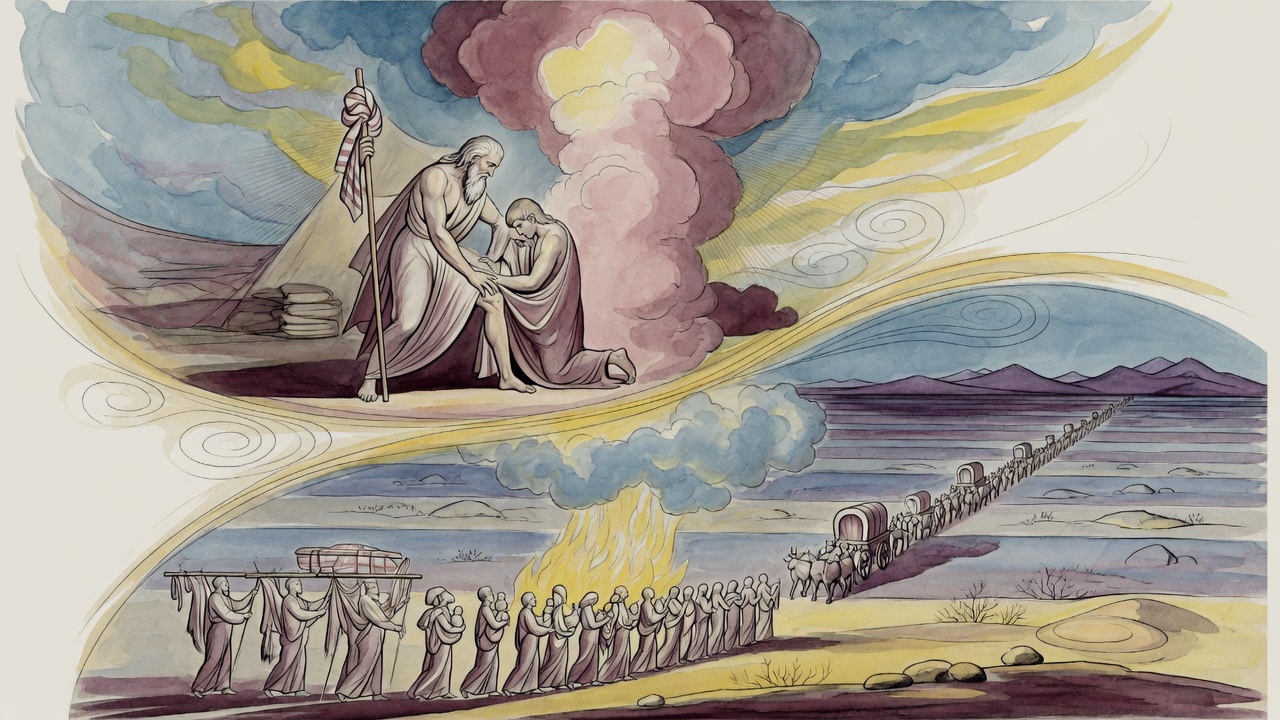
On the road to Egypt, at a lodging, the Lord met Moses and sought to kill him. An angel of mercy began at the crown.
Table of Contents
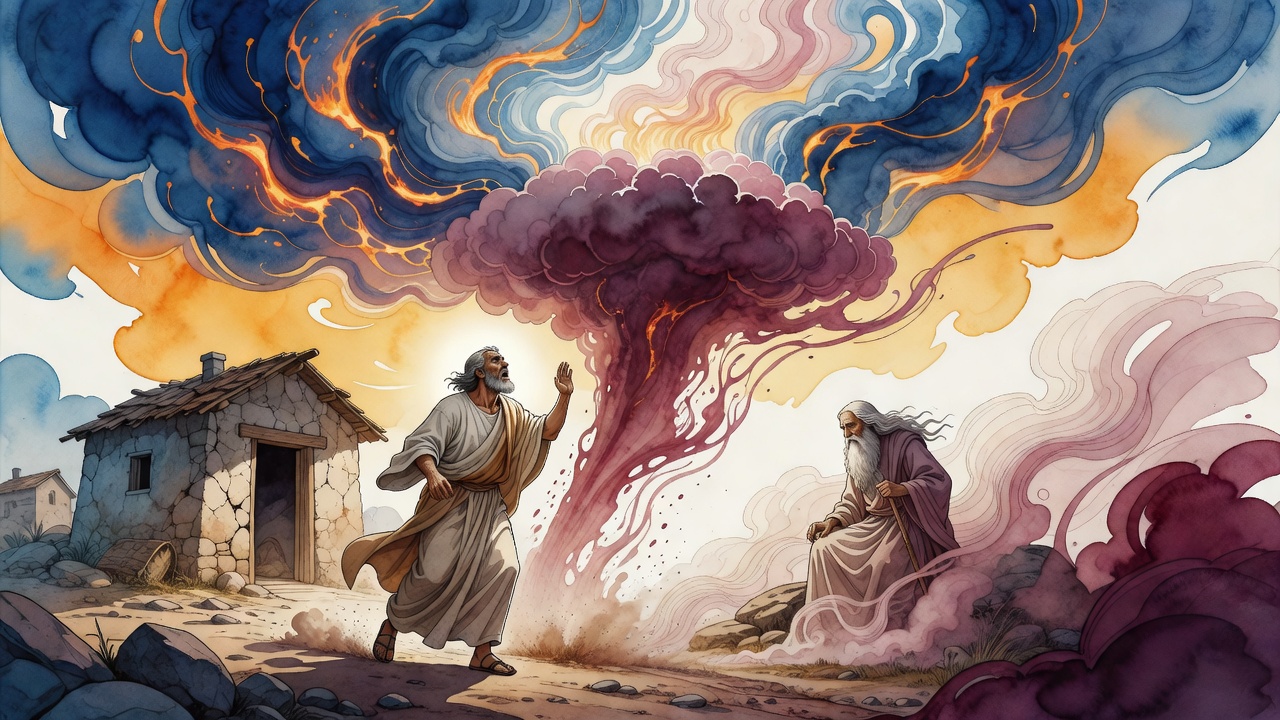
On the road to Egypt, at a lodging, the Lord met Moses and sought to kill him (Exodus 4:24). The mercy-name of God stands in the verse, and still an angel came to swallow the prophet whole.
 Click for full size
The Angel Started at the Crown
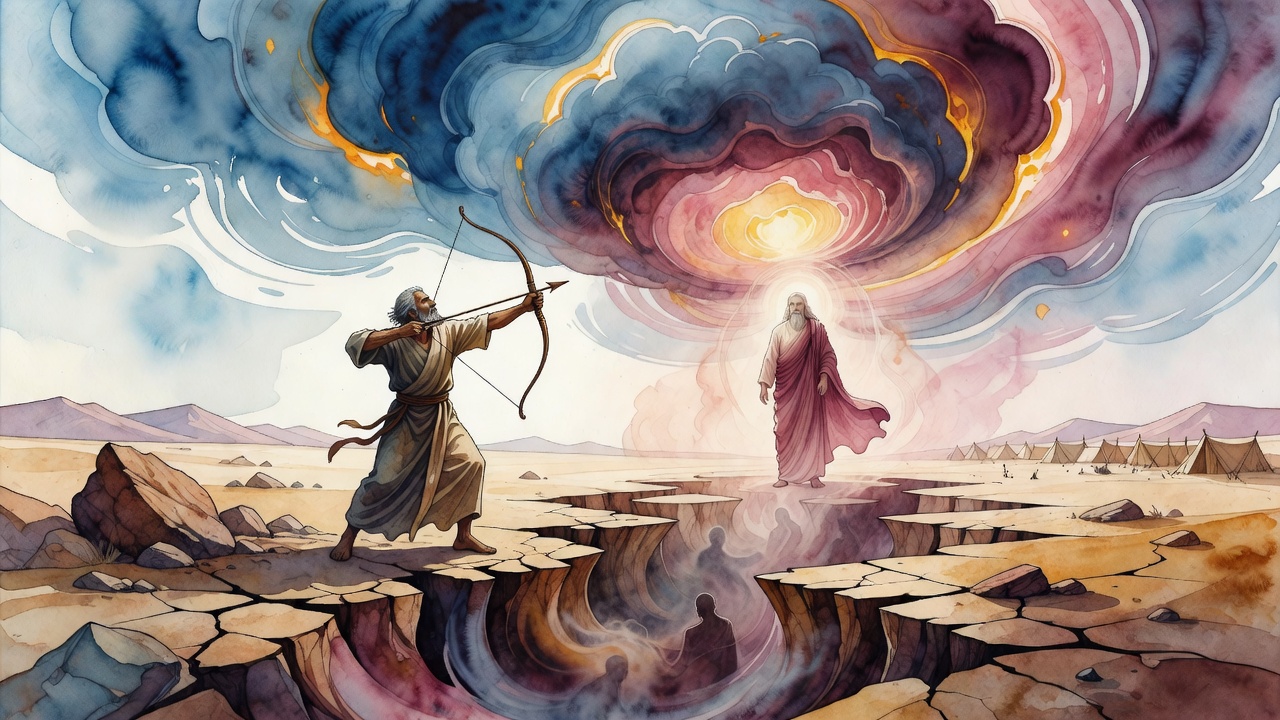
Moses had been indolent about circumcising his son Elazar. The delay could not be tolerated for even one moment. An angel began swallowing him, starting from his head, moving downward. Pack animals stamped in the dark. Dust rose. Tzipporah was already on her feet.
At the place of circumcision the angel stopped. It could not pass that point. Tzipporah looked at the stop and understood at once. The issue was the unperformed mitzvah (מצוה), the commandment. The angel of mercy was eating her husband, and the only thing holding it back was a mark that had not yet been cut.
The Oath for a Firstborn
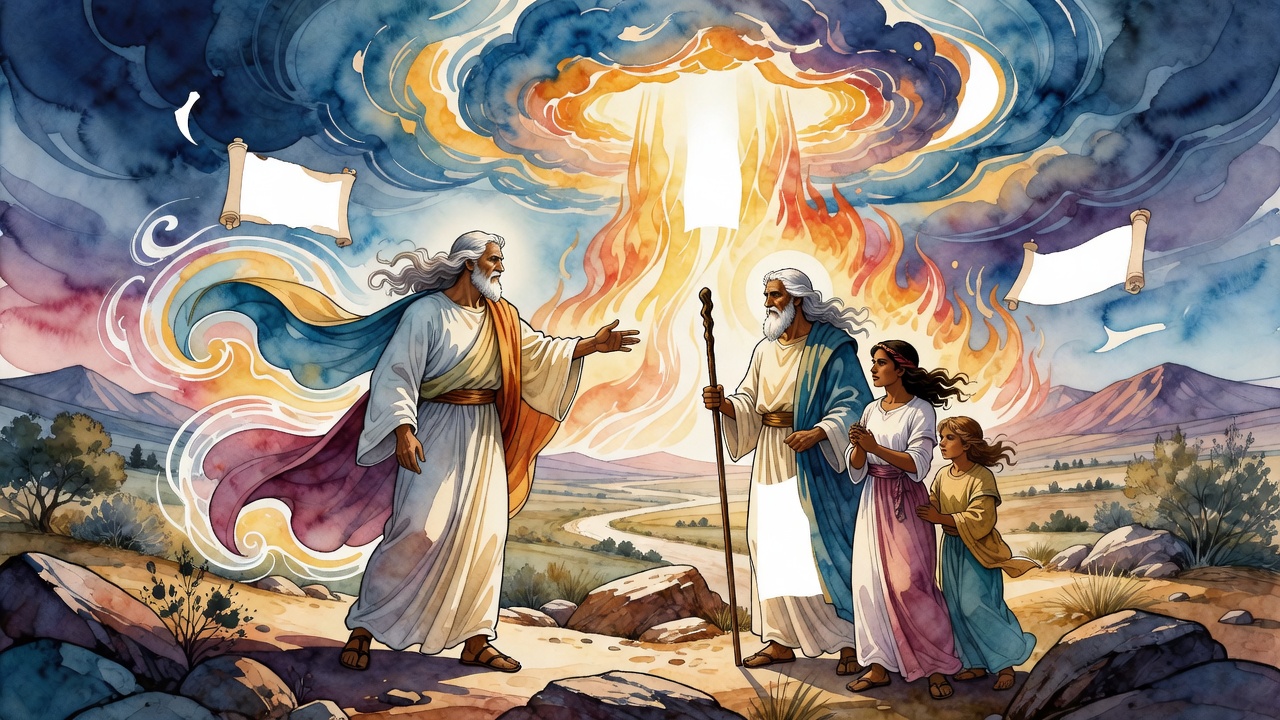
The danger had begun years earlier, in a land of foreign gods. Moses had said that since the whole world served idolatry, he would serve Him who spoke and brought the world into being. When he asked Yitro for Tzipporah as wife, Yitro answered, If you do what I ask, I will give her to you.
What do you ask?
Your first son must serve idolatry. Thenceforward they may serve God in heaven.
Moses accepted. Yitro said, Swear. And he swore, as it is written, "Vayoel Moses" (Exodus 2:21), an expression of oath, the same verb used when Saul beswore the people. A man who would lead Israel out of a house of idols had put his mouth to a bargain that reserved a firstborn for foreign service. Heaven did not forget the clause when the mission began. Therefore the angel came forward to kill Moses on the road. The old swear had come due in blood and breath.
She Cut and Threw the Skin at His Feet
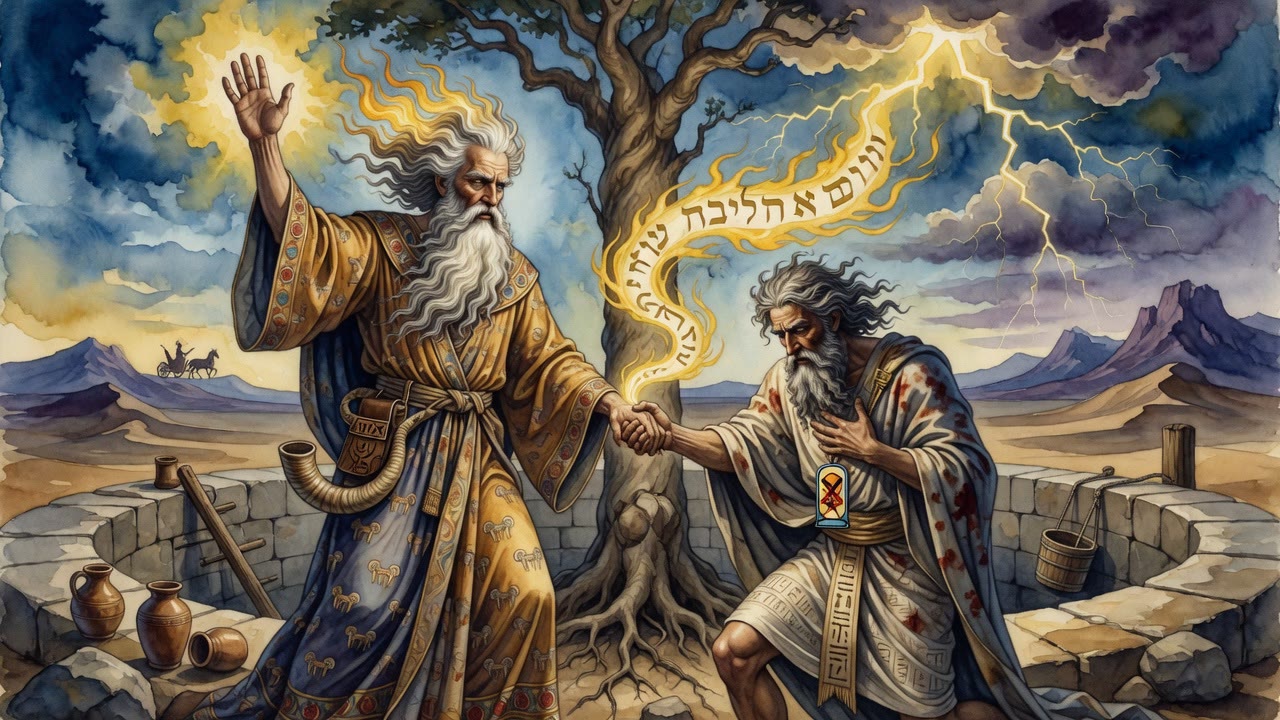
Tzipporah did not wait for Moses to finish an argument with the angel. She took a flint. Flint is not a Temple knife. It is whatever stone will cut in the dark. She cut her son's foreskin and cast it at Moses' feet.
"You are to me a bridegroom of blood" (Exodus 4:25). My bridegroom, may you be given back to me thanks to this blood of circumcision, for I fulfilled the commandment.
And he let him alone.
Even the name of mercy in the verse did not cancel the angel. Obligation stood. The wife from Midian moved faster than the prophet whose mouth had once sworn a softer path for a firstborn. There was no abstract reading of what saved him. Blood on the ground. Skin at his feet. The swallowed head released.
Bridegroom of Blood
Tzipporah's phrase is ransom language. Blood of the covenant for a husband's life. The son who might have been pledged, in Yitro's hard condition, toward idolatry was instead marked for the God of Abraham. The bargain and the circumcision collided on one body. The flint answered the oath. The foreskin at Moses' feet answered the swallow from the head.
"A bridegroom of blood regarding the circumcision." Liable to be killed, he was saved only by the act performed in that instant. Tzipporah said it twice, once while she cut and once after the angel stepped back, so there could be no mistaking which blood had bought him.
Moses rose from the lodging with a wife who had outrun his hesitation and a son sealed for heaven. Egypt still waited. Pharaoh still waited. The angel had stepped back. The road was open only because a Midianite woman refused to let a prophet die unfinished.
The Road Opened Toward Egypt
All the plagues, the sea, the mountain, nearly never happened because of a night at a lodging and a vow made for a marriage. Yitro asked for a firstborn's service. Moses swore. Years later the same household met an angel who swallowed from the crown down and stopped only at the sign of the covenant. Tzipporah read the stop as instruction and acted. The firstborn was marked for God, not for idols.
Israel's redeemer walked into Egypt already owed to a flint and a woman's speed. Before he faced Pharaoh, he had already faced an angel his own past invited, and survived only because Tzipporah would not wait for him to move.
The lodging was ordinary. Then the air changed and Moses was being eaten from the crown down, a prophet disappearing into a judgment his mouth once signed for marriage. Tzipporah did not freeze. She read the angel's pause the way a midwife reads a crisis. Something unfinished was killing him, and the unfinished thing had a body, a son, a sign. She used the stone. The angel let go. The road to Egypt lay open in the dark, with blood on the dust and a firstborn marked for heaven.
← All myths