115 myths · Page 4 of 4
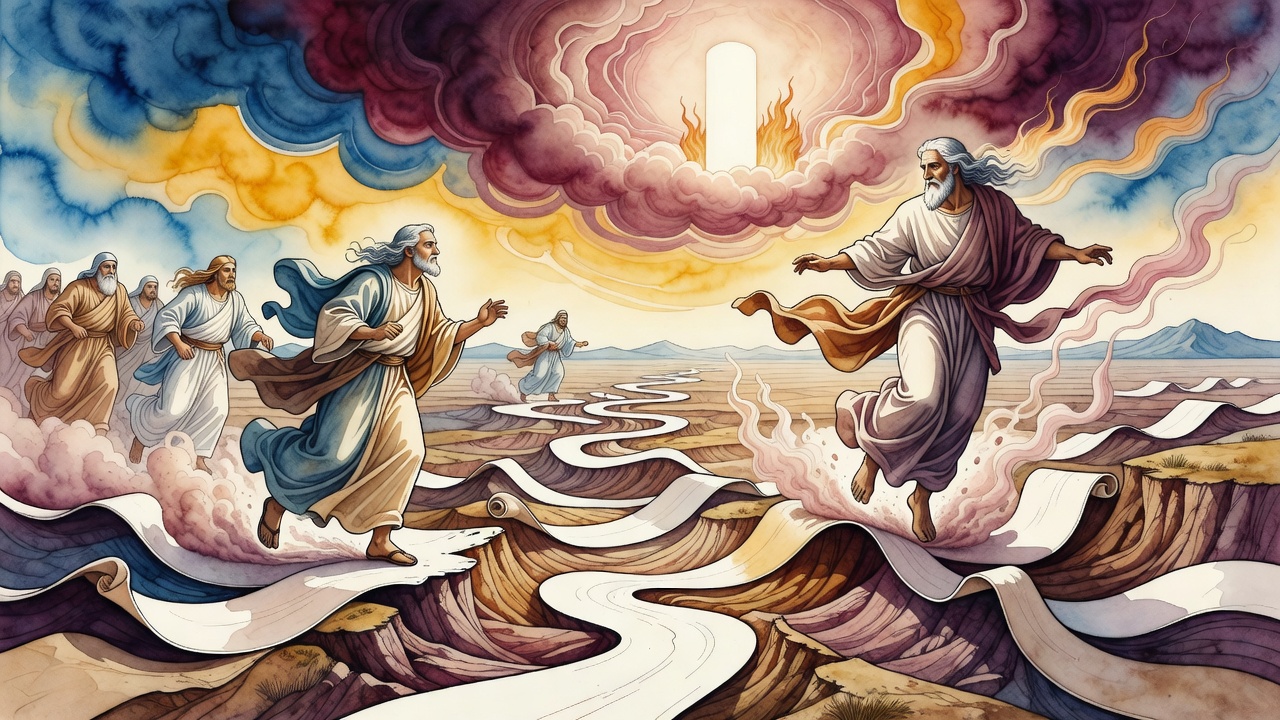
Lot was already gone. Abraham divided his men in the dark. The miles under his sandals shortened before he asked them to.
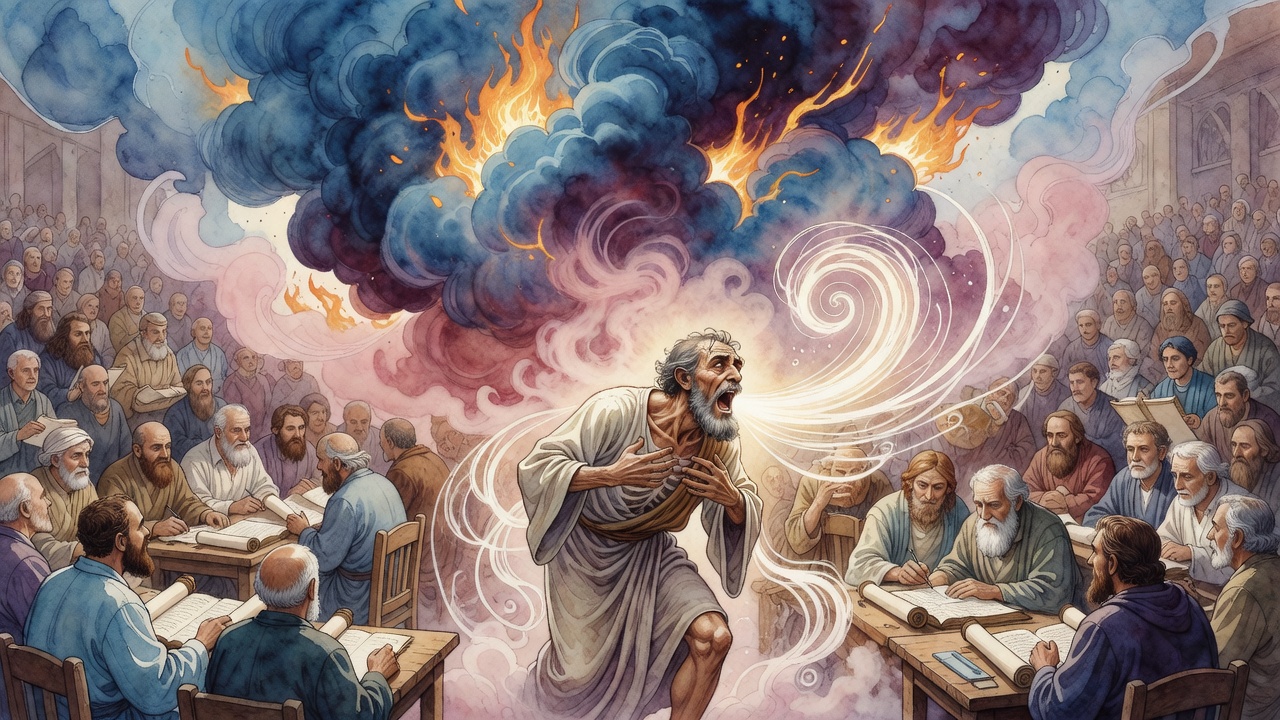
Hired to curse, Balaam found Israel packed in houses of study until his bones felt broken and every curse left his mouth as blessing.
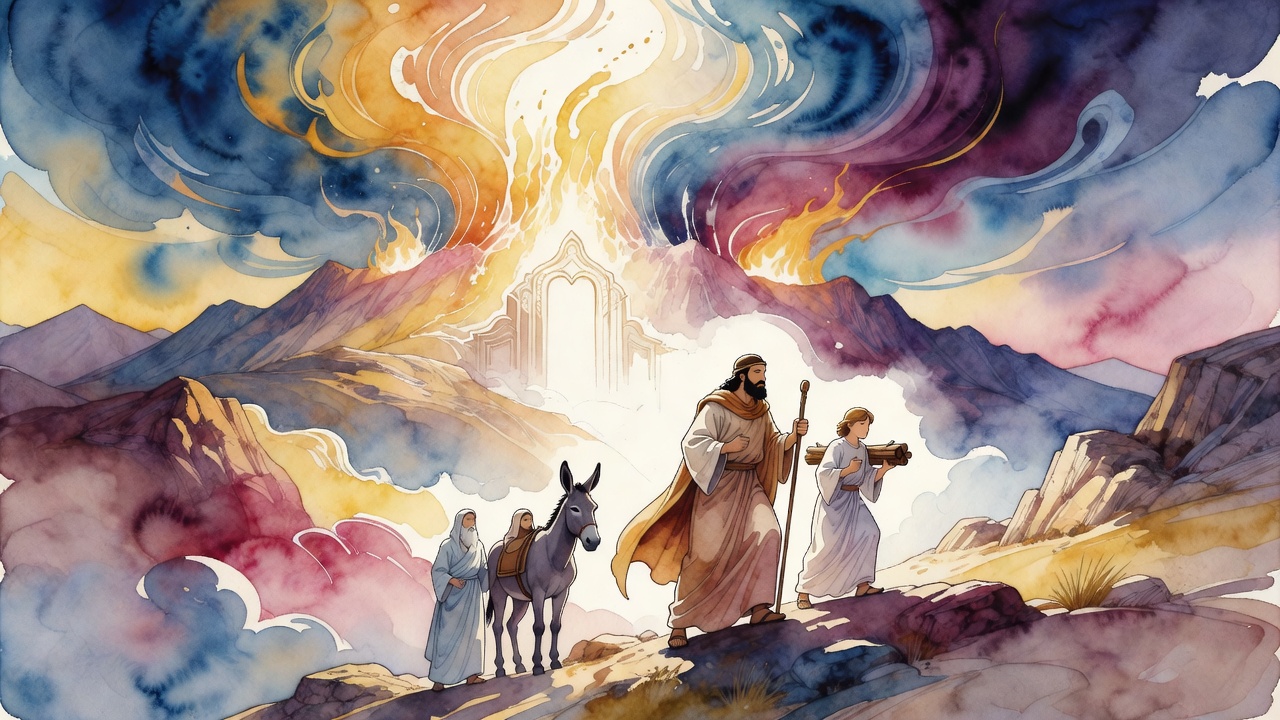
The midrash puts the servants with the animal because they could not see what Abraham saw. Isaac carried the wood up and asked where the lamb was.
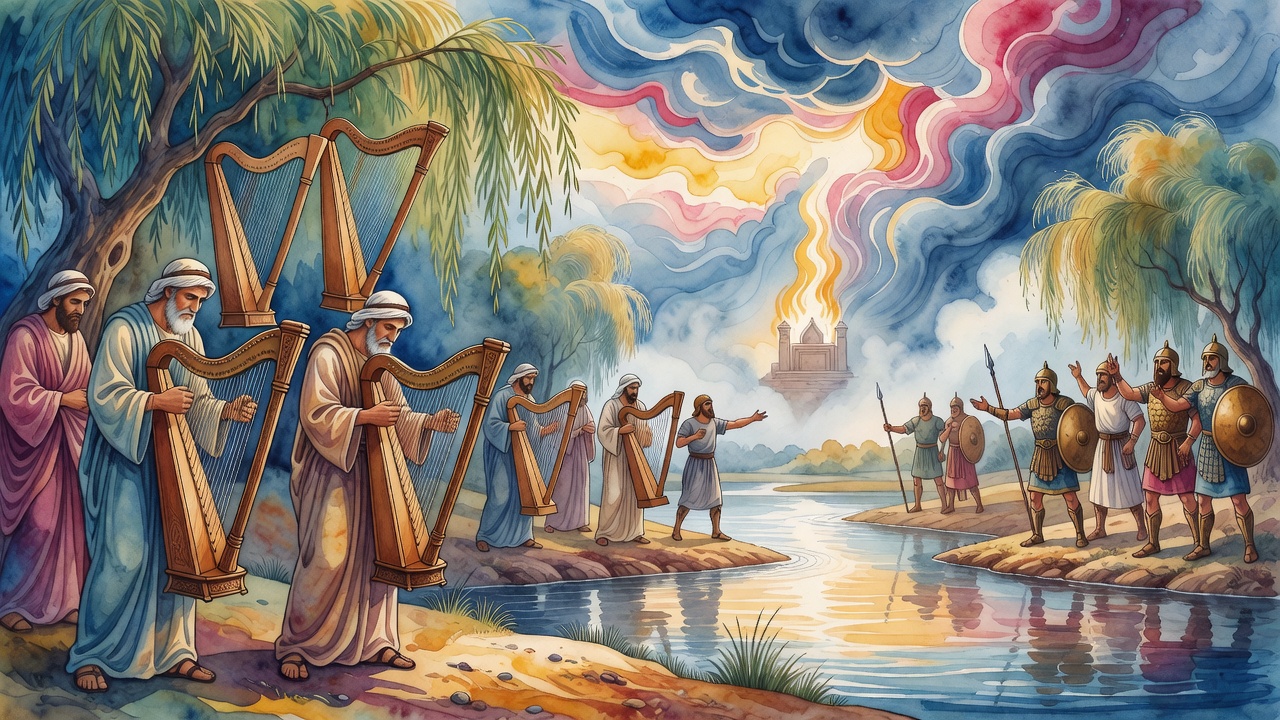
By the rivers of Babylon captors demand Temple songs for idols. Israel hangs its harps, chooses death over that music, and waits for Elijah's hand.
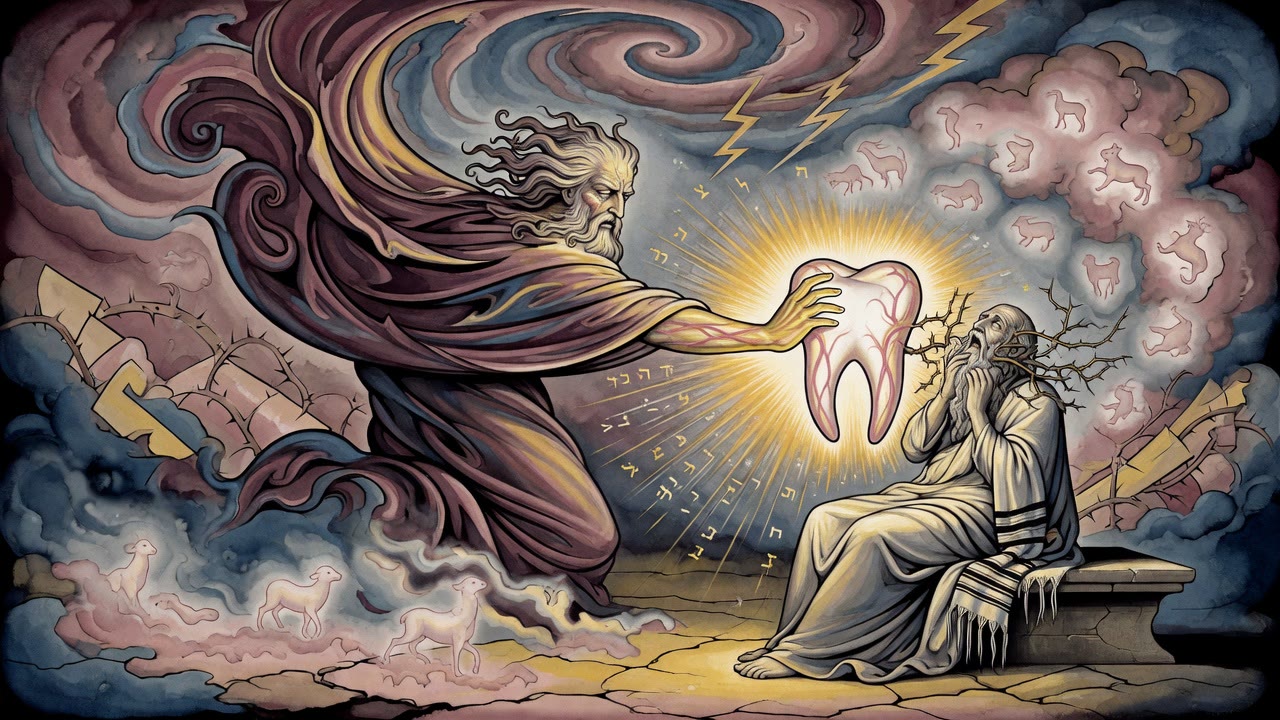
Thirteen years a toothache ruled Judah HaNasi in Sepphoris. Beasts lived. Wombs held. Then a man with Rabbi Hiyya's face touched his jaw.
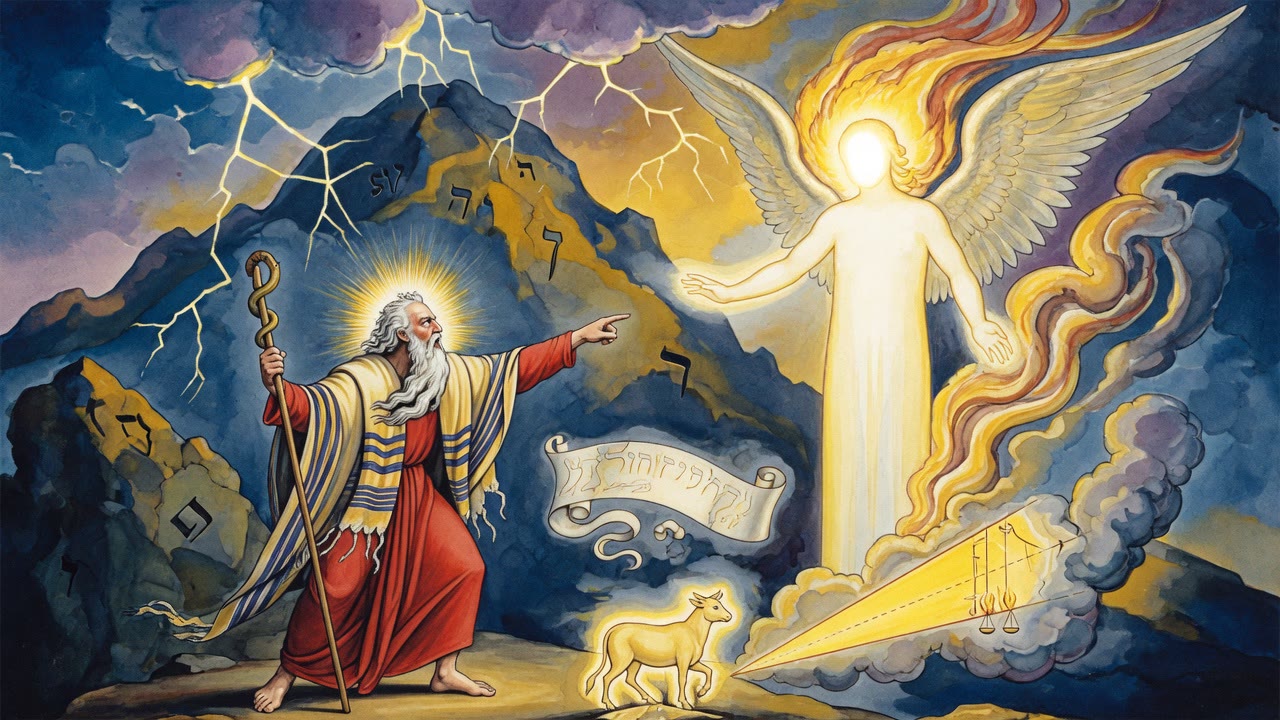
In Potiphars house Joseph prays under his breath. The Egyptian demands to see his God. Joseph points at the sun and asks who can stare at a mere servant.
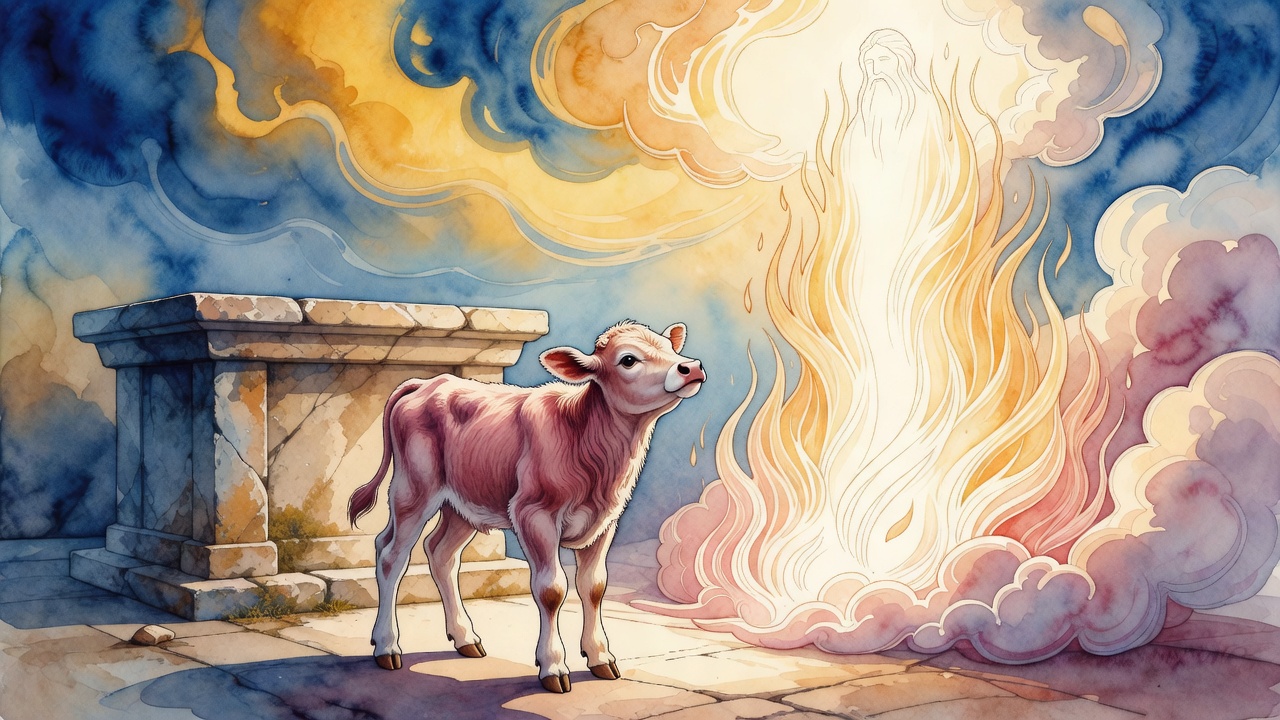
A calf may not climb the altar until Shabbat has passed over it. The king will not see a newcomer before the queen does, and the future is already planted.
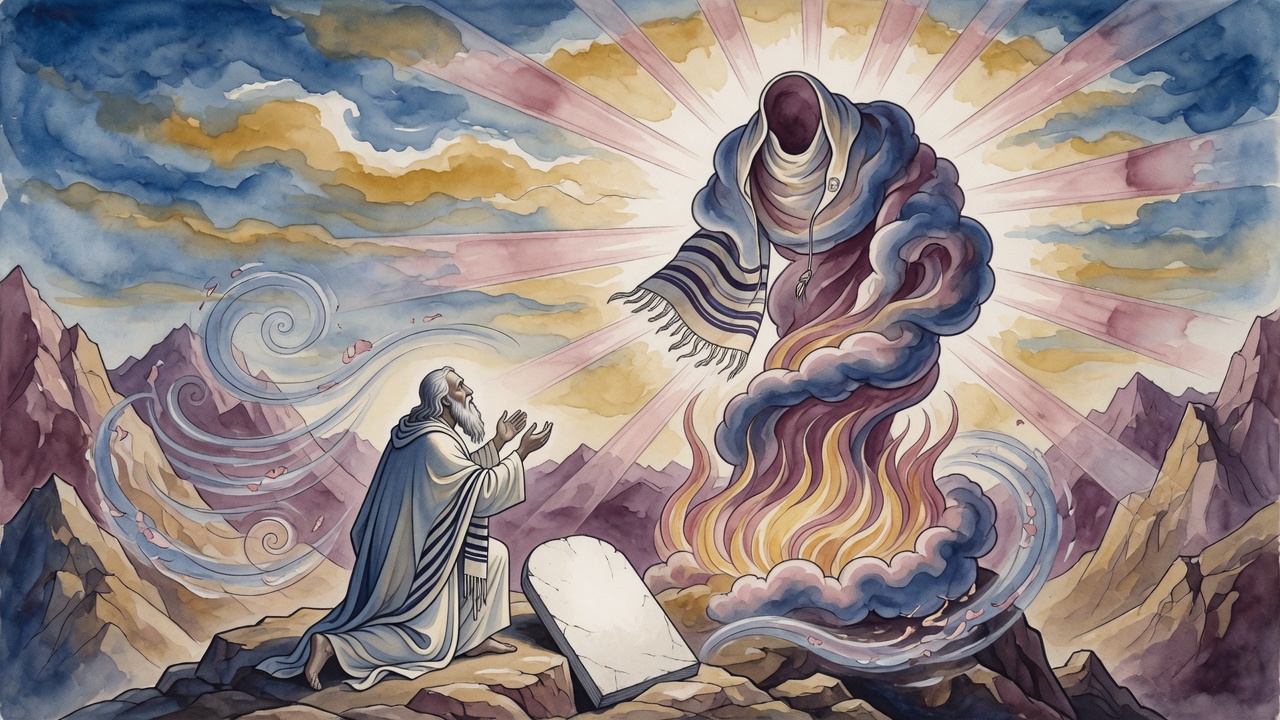
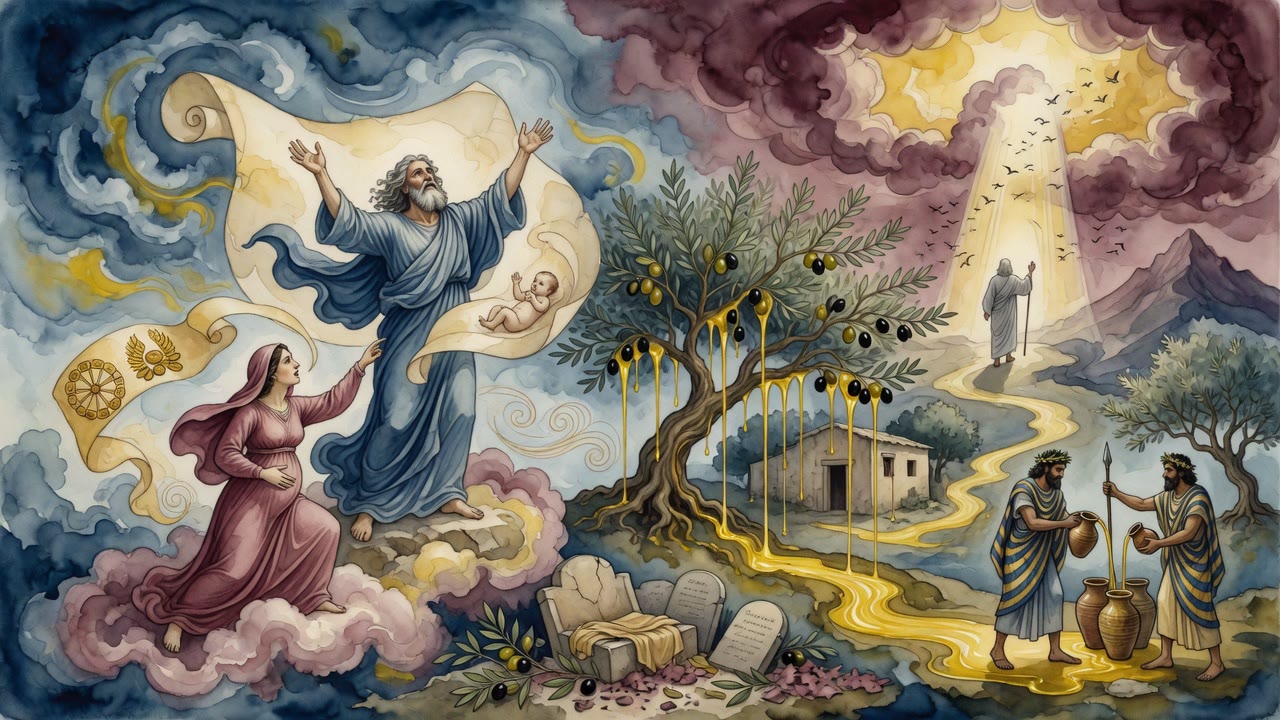
A man left gold with a neighbor who prayed like a righteous person. The neighbor denied it until Elijah put a secret feast on the wife's tongue.
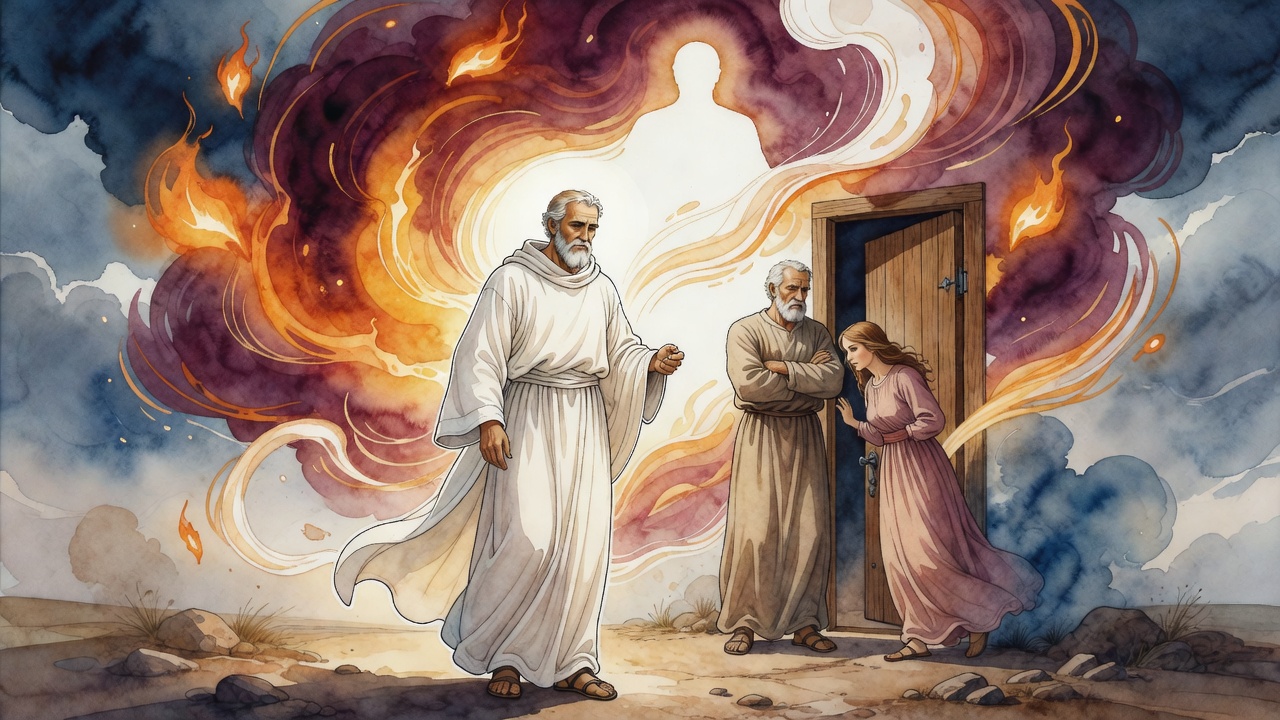
Her husband locked the door unless she spat in Rabbi Meir's face. Meir asked for seven doses, as if his eye were sick.
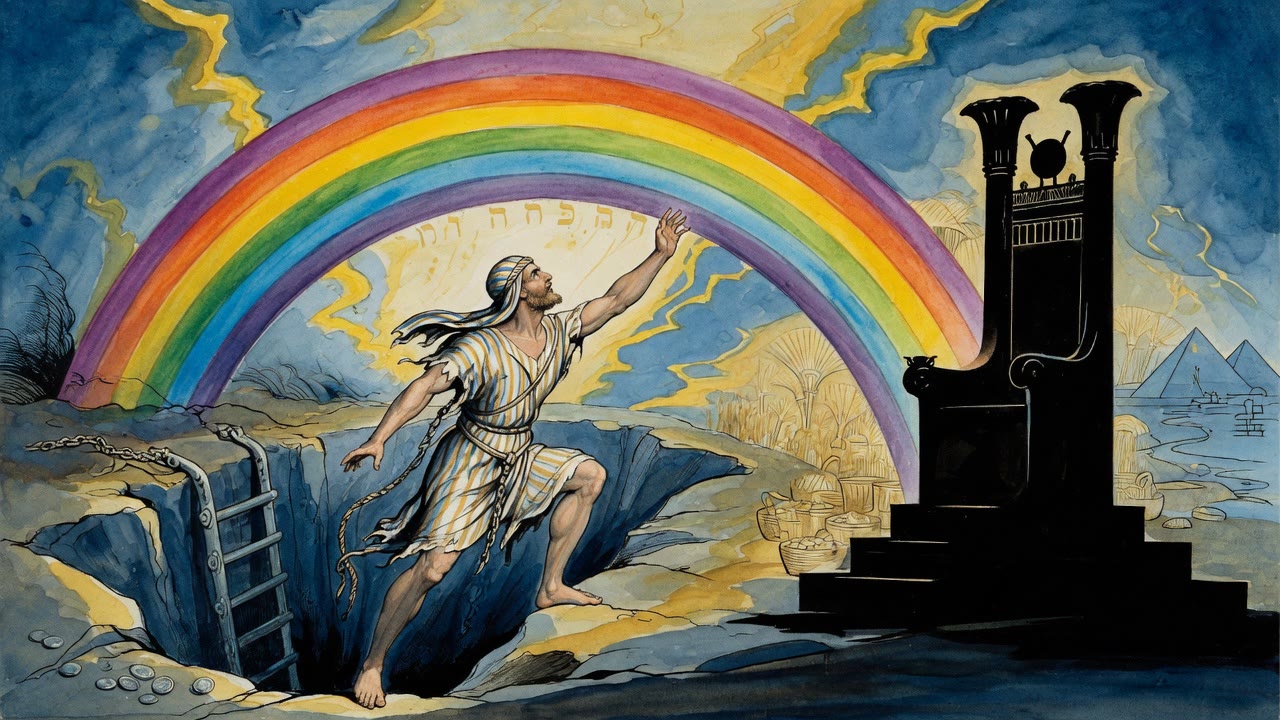
A heretic laughed at bones becoming dust. Ami told of a king who ordered a palace from empty air, then from mud.
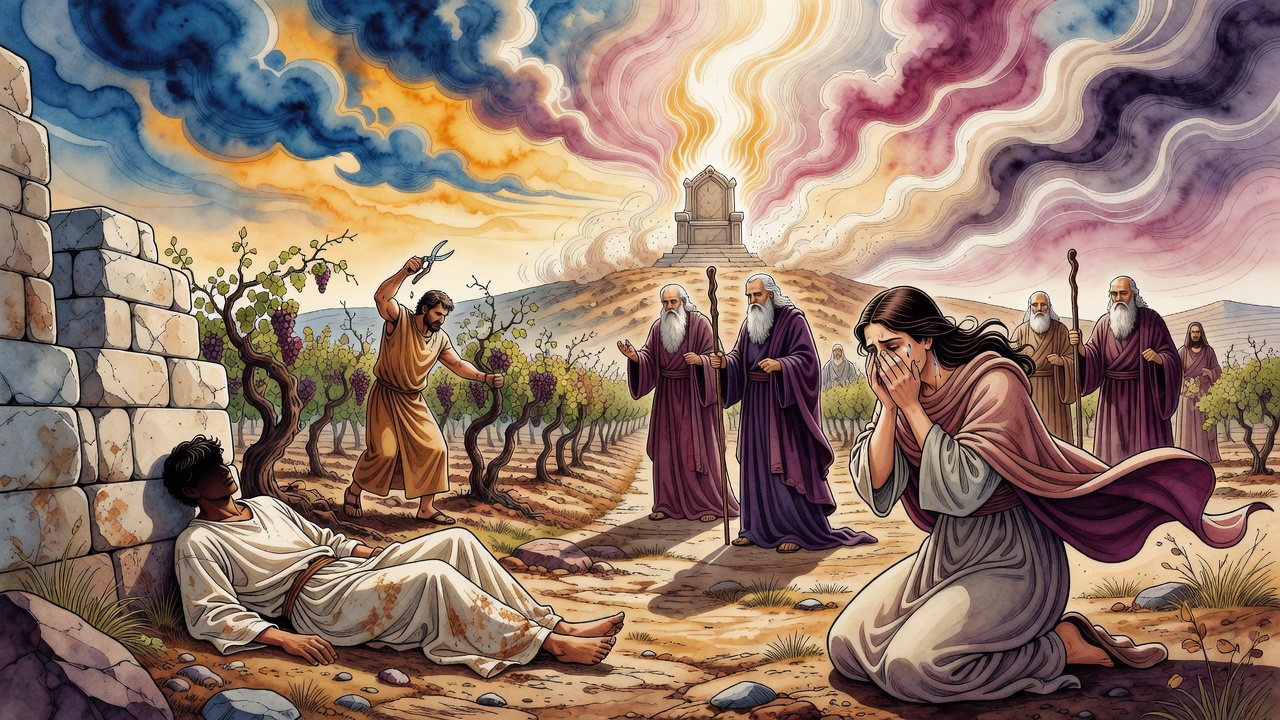
A young scholar died in his prime, his widow wept for fairness, and the sages answered with a vineyard worker paid a full day for two fierce hours.
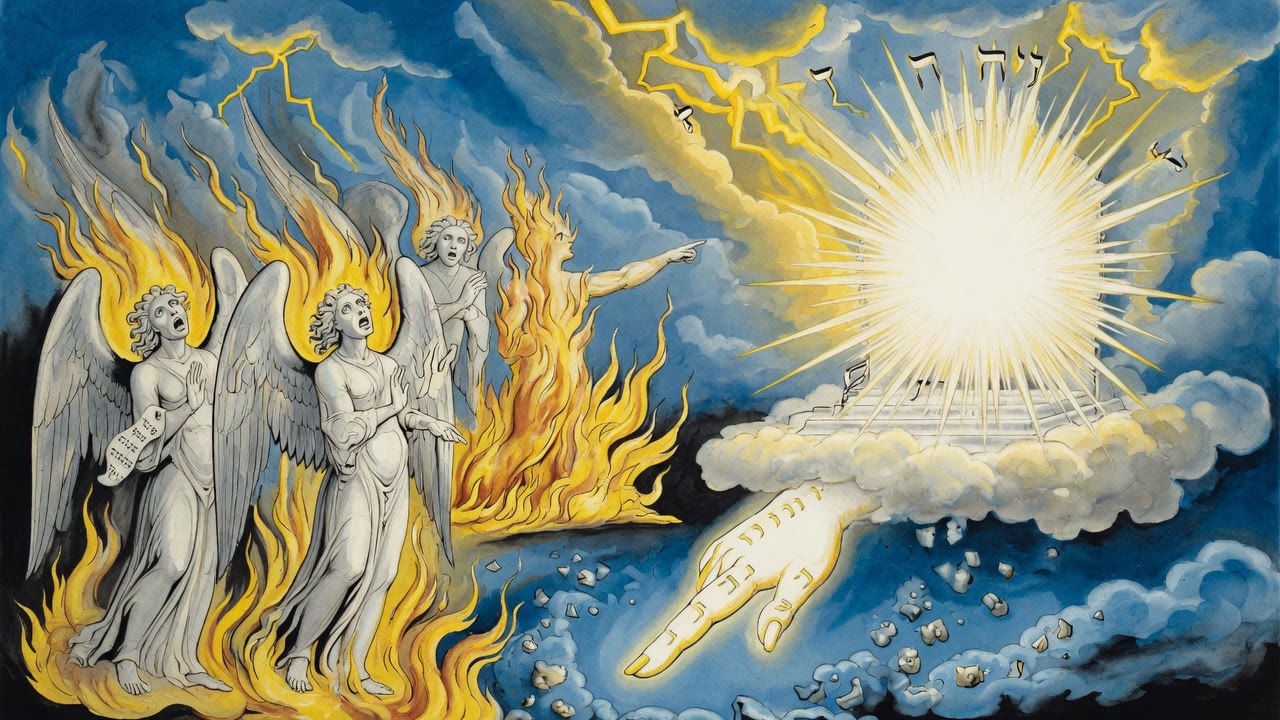
Unlike jealous kings, the King of Glory shared staff, whirlwind, throne, and even name, binding Israel to Heaven through Moses the joiner.
Two books lay open on the table. One named Benjamin. One named Gad. Then Elijah stood in the doorway and asked why they were dividing him.
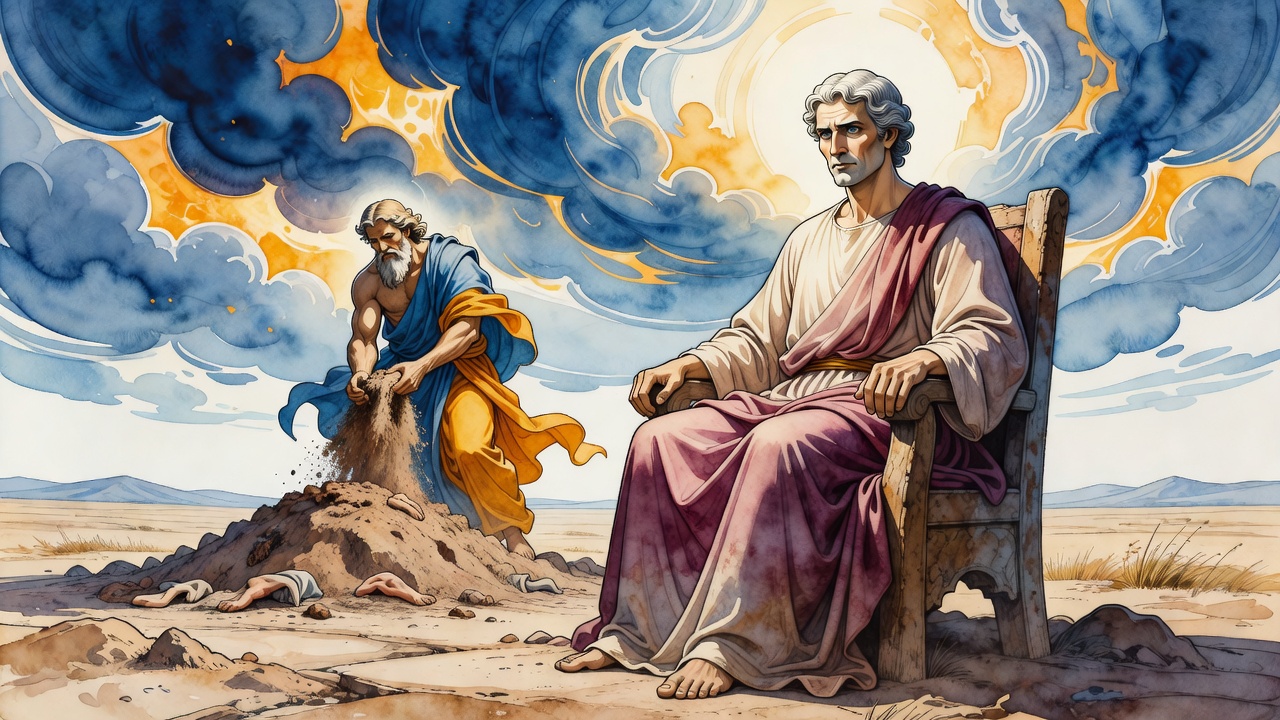
Joshua heaps a hill of foreskins in the dust. Centuries later Elijah is bound to attend every brit, zealous still, seated in a chair of honor.
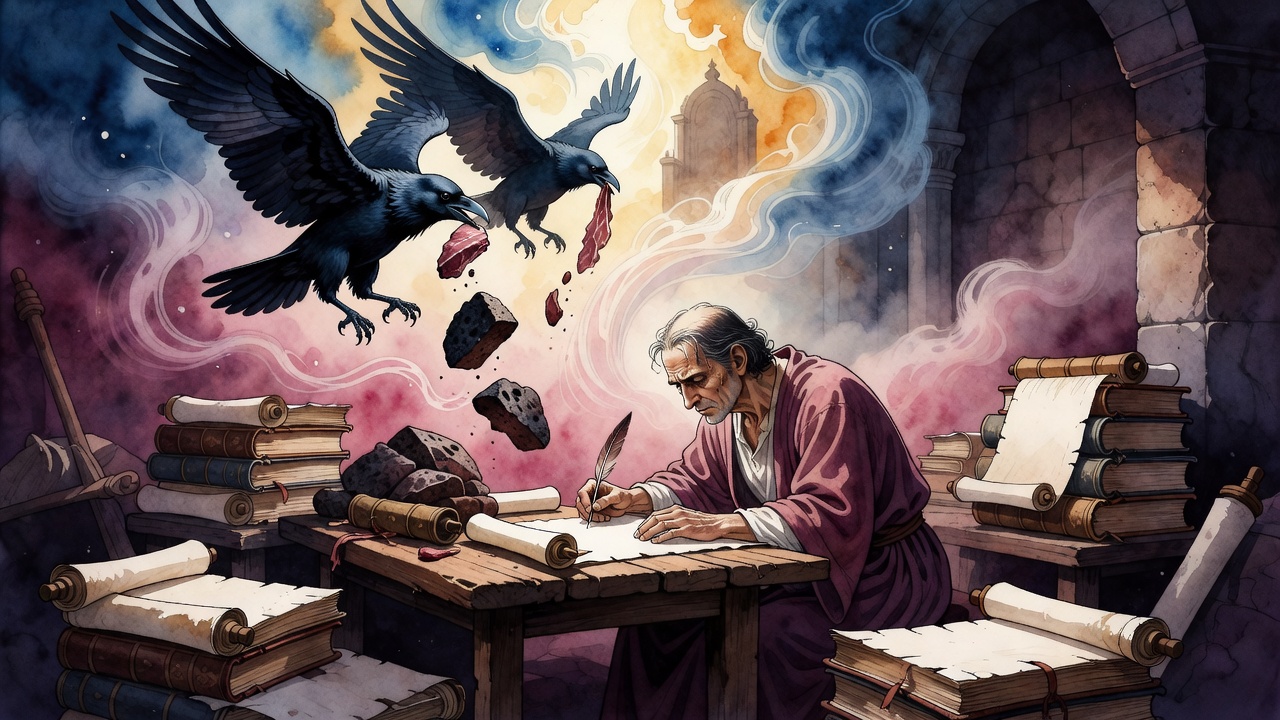
Bread and meat twice a day, delivered in a raven's beak. The sages said the birds were wages for the hours Elijah spent bent over the words.
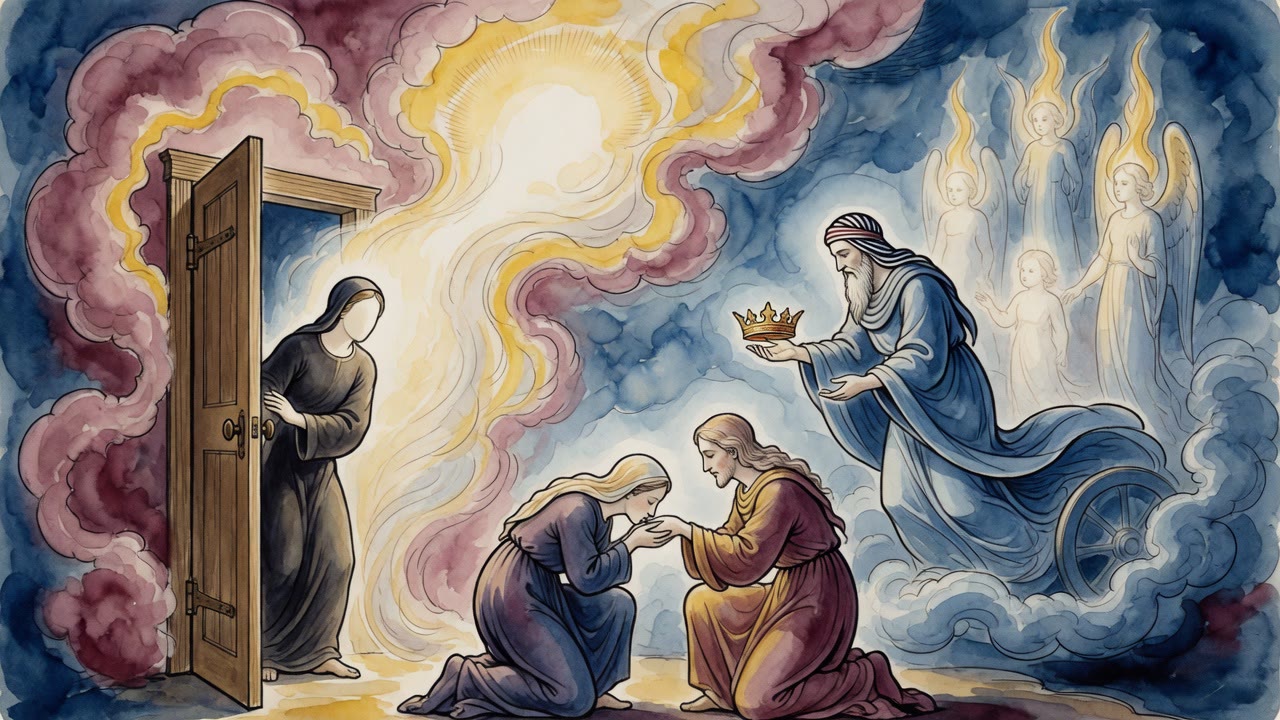
A host opens the door with perfect will and finds more than a traveler. Companions kiss hands. Elijah descends with souls, angels, and a crown.
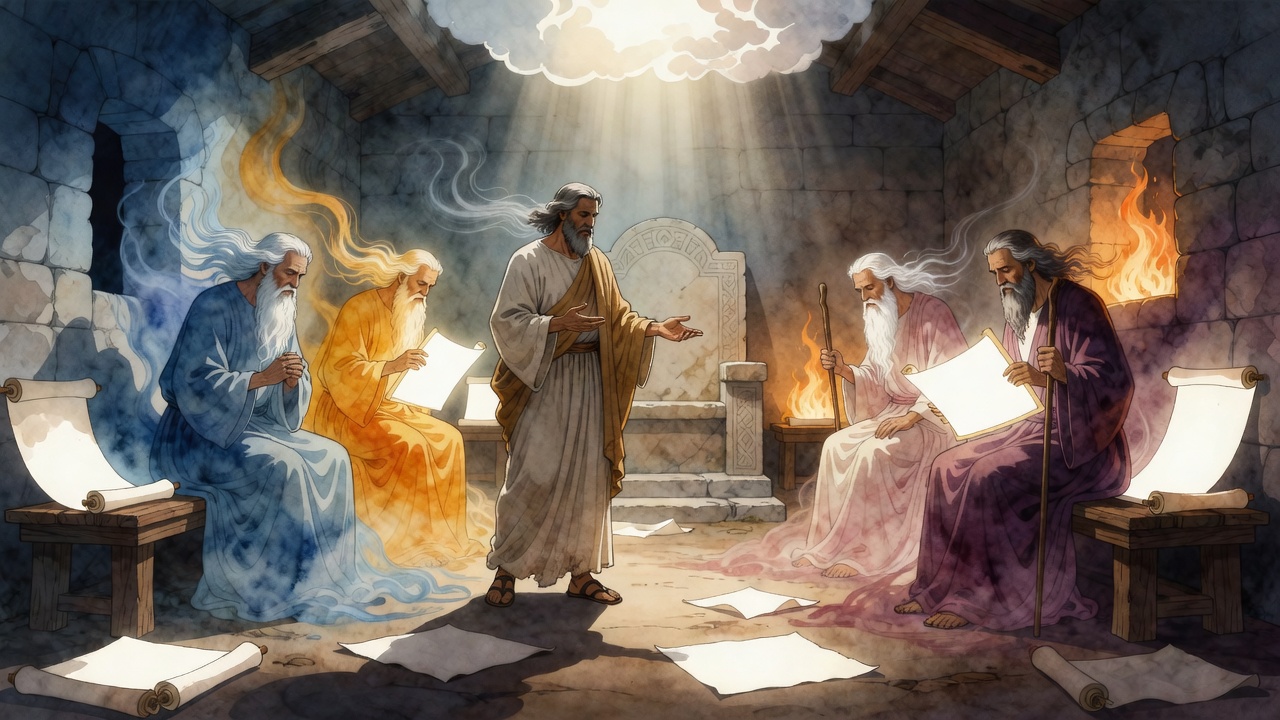
Elijah came late to Rabbi Judah's study house. He had been washing Abraham's hands, then Isaac's, then Jacob's, never all three at once.
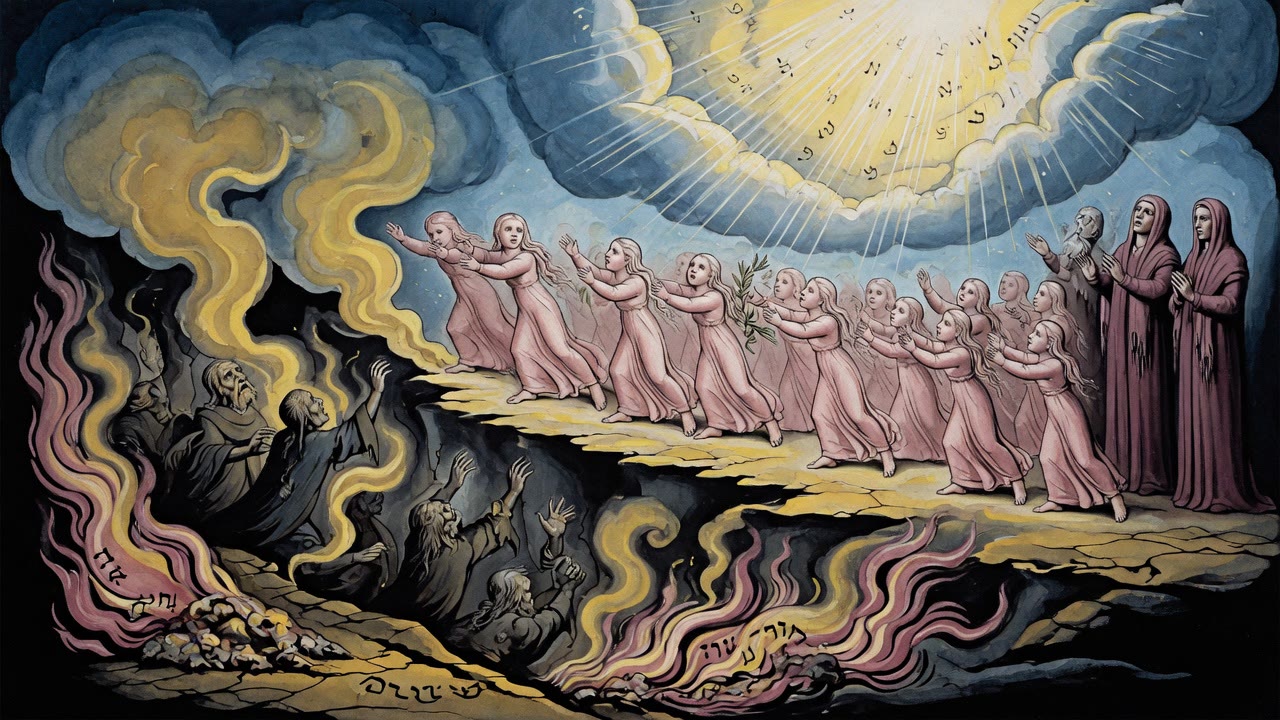
Children who died for their fathers' sins stand among the righteous and plead. Elijah teaches them the plea that pulls the wicked up.
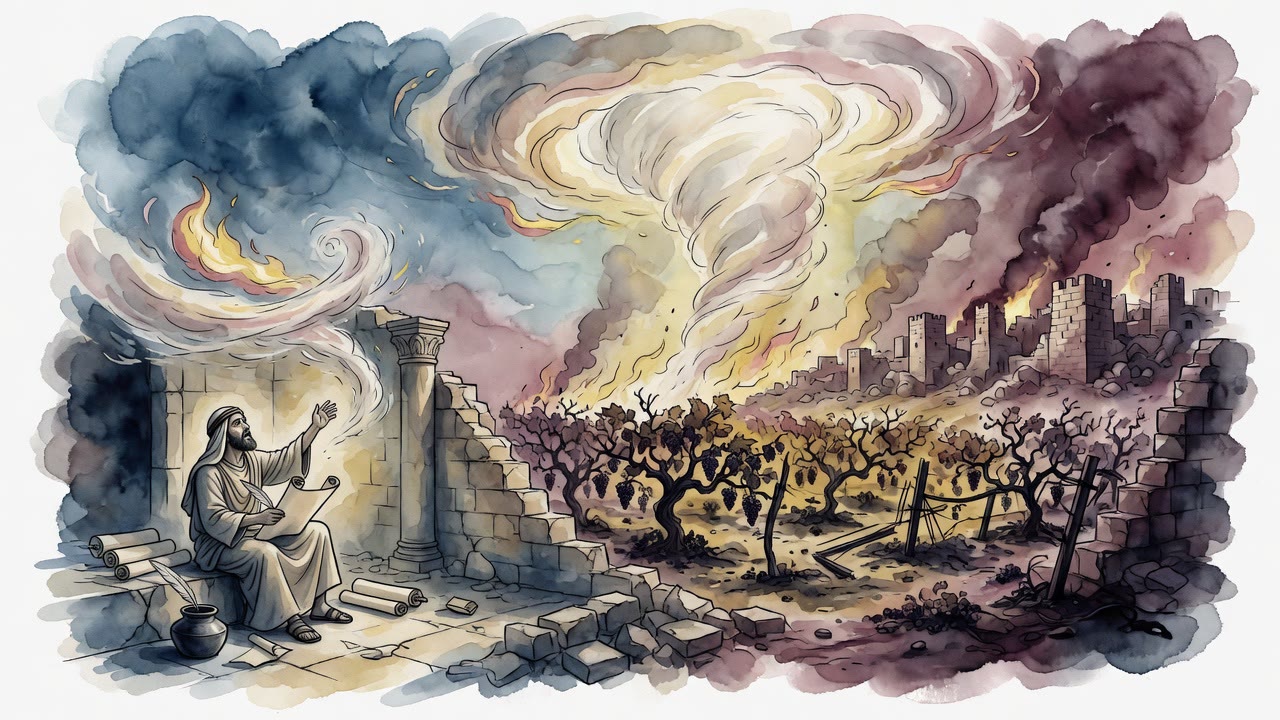
Jeremiah's scribe wants the spirit that rested on Joshua and Elisha. God answers that a ruined vineyard needs no fence, and prophecy is not for him.
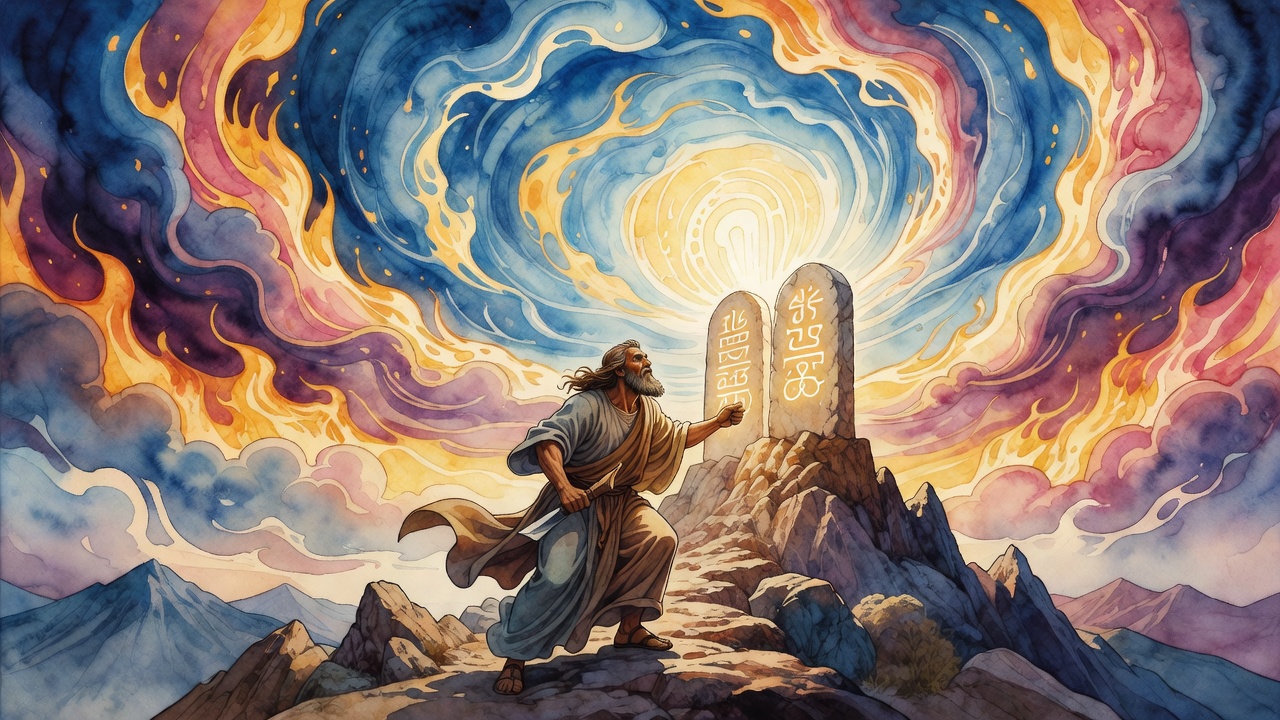
After the Golden Calf, God will not gift new tablets free. Moses climbs with a chisel, pays the cost of reconciliation, and heaven writes again.
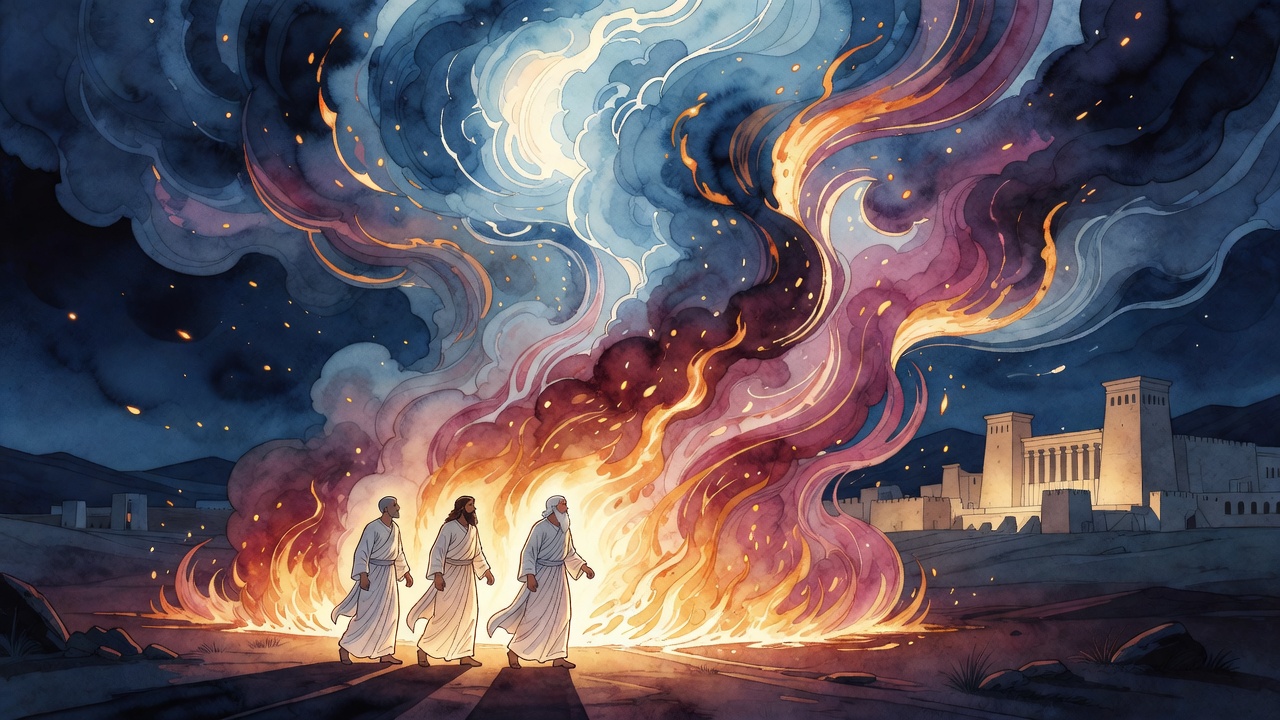
On the night God keeps watch, three friends walk into Nebuchadnezzar's fire while the same vigil that once split Egypt still holds the dark.
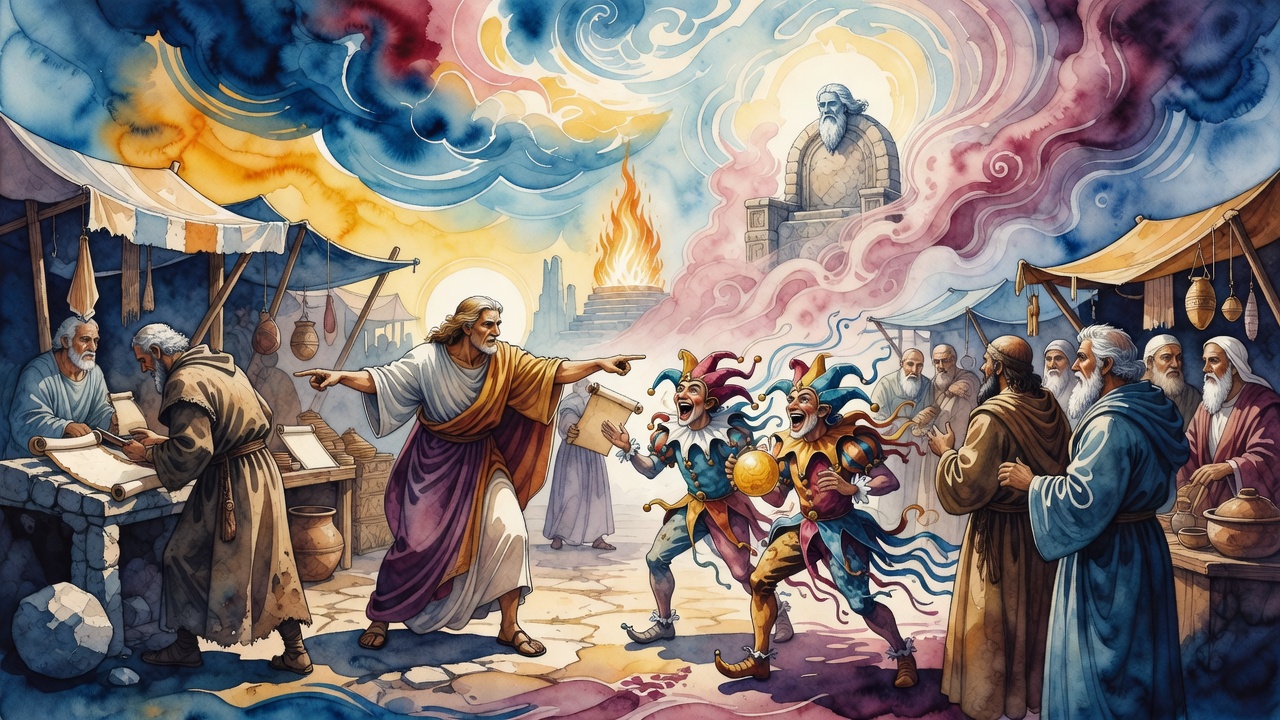
Rabbi Beroka asked who in the roaring market would inherit the World to Come. Elijah's hand rose toward a man in Roman clothes.
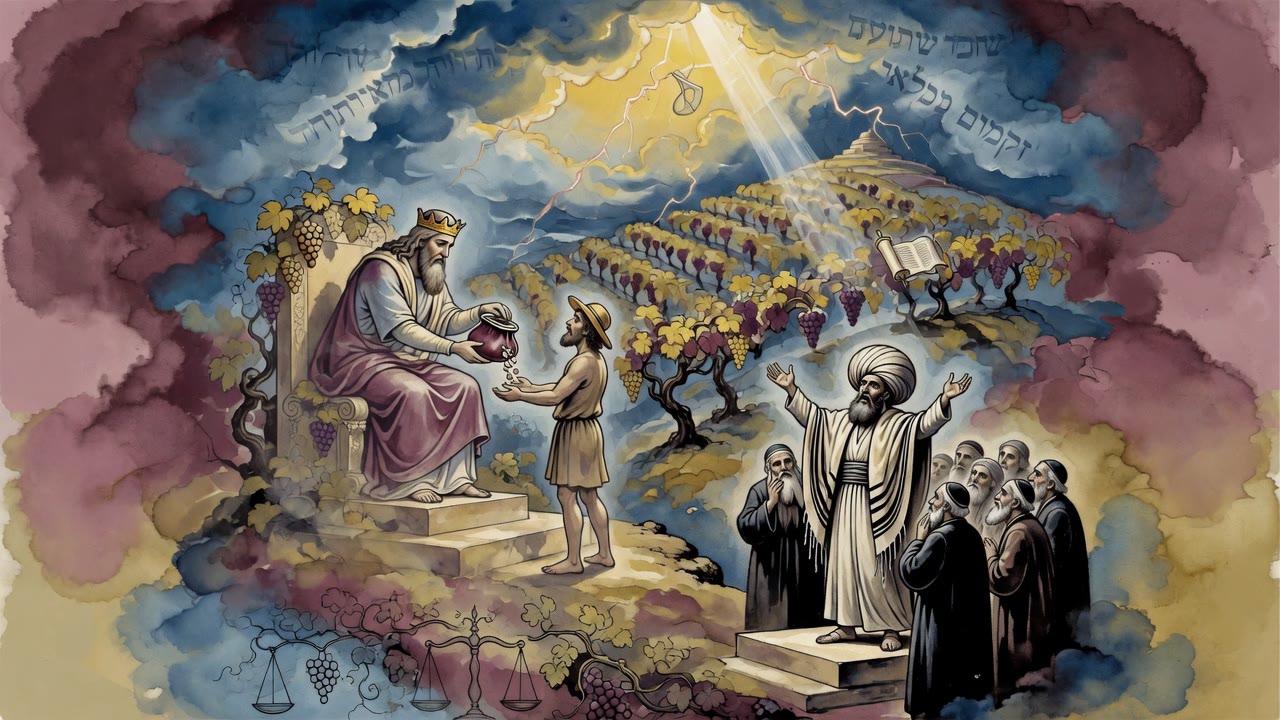
The sages counted the kings and commoners shut out of eternity, and almost wrote Solomon among them, until fire drove them from the benches.
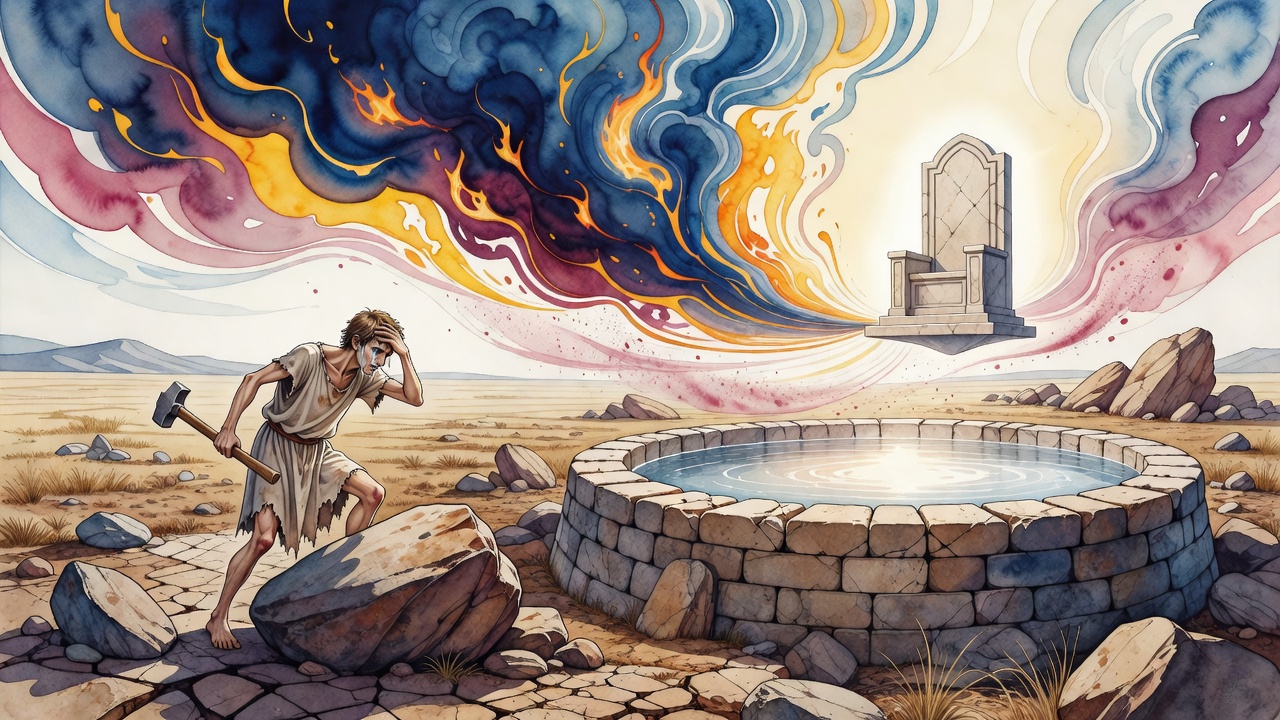
Hyrkanos moved his son off the stony field onto the best soil he owned. Eliezer cut one furrow in it and wept again. He was twenty-eight years old.
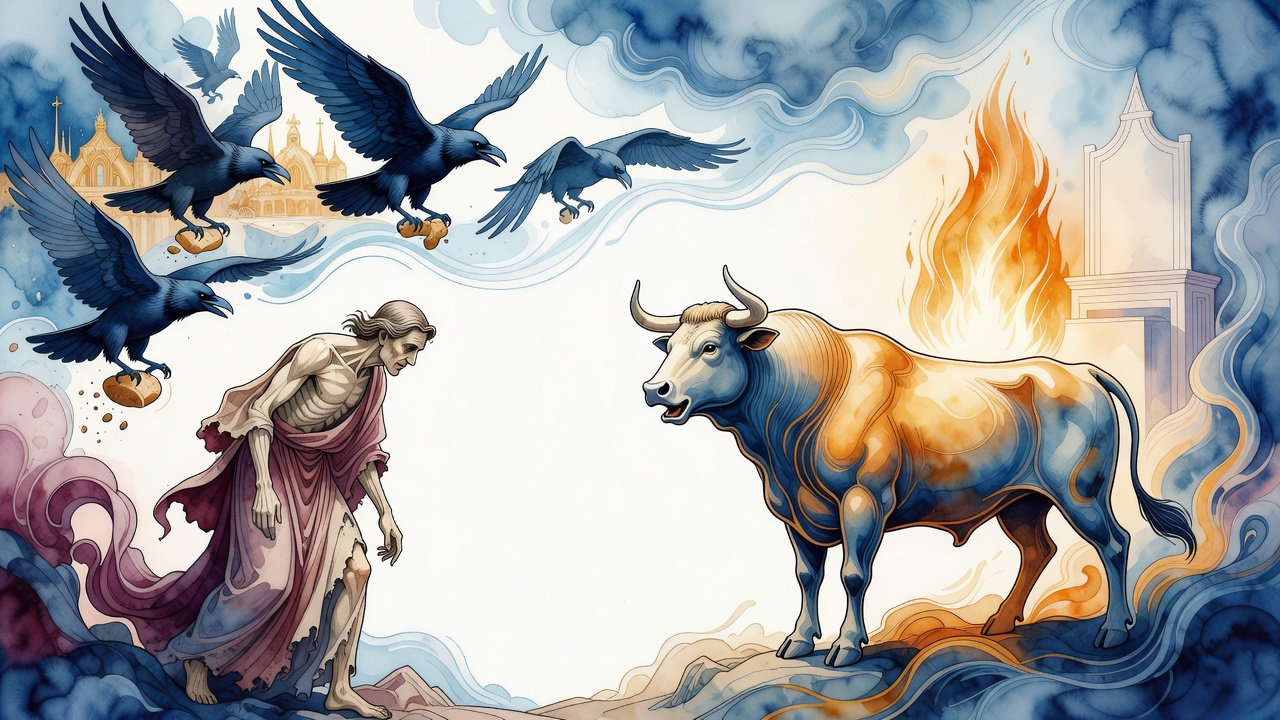
Hunted and starving, Elijah is fed by ravens that rob a wicked king's table, and on Carmel a twin bull speaks and consents to die for the Name.
