114 myths · Page 3 of 4
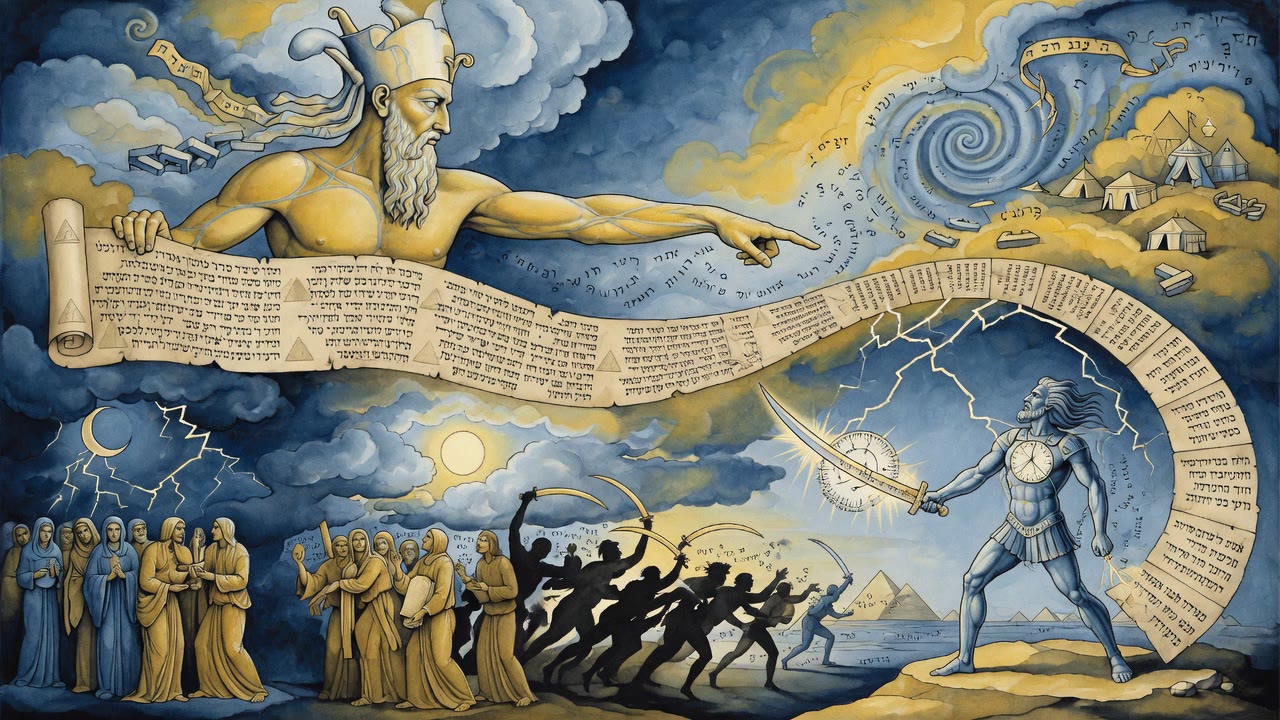
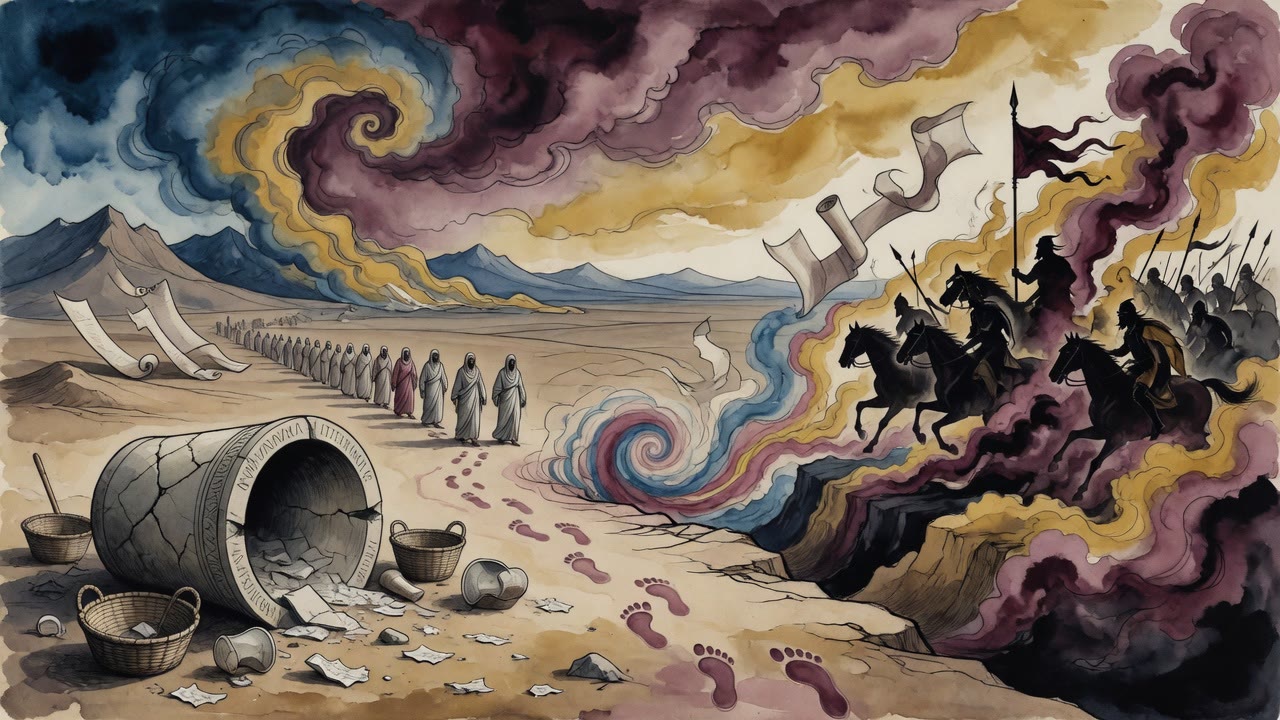
Every Hebrew had marked his name on the bricks of forced labor. Amalek got hold of those lists. Outside the camp he called out: Reuben. Simeon. Levi.
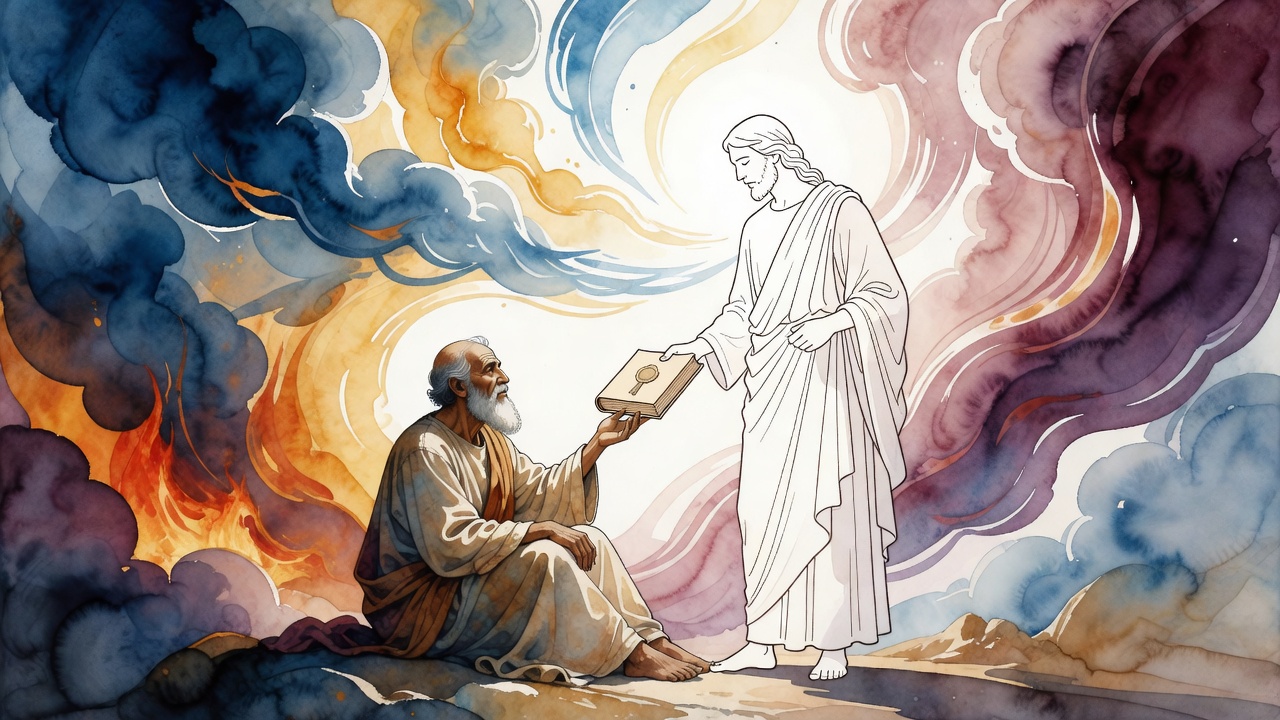
They found Moses standing with his hands folded. Joshua sat in the teacher's place. Then the wisdom left the older mouth.
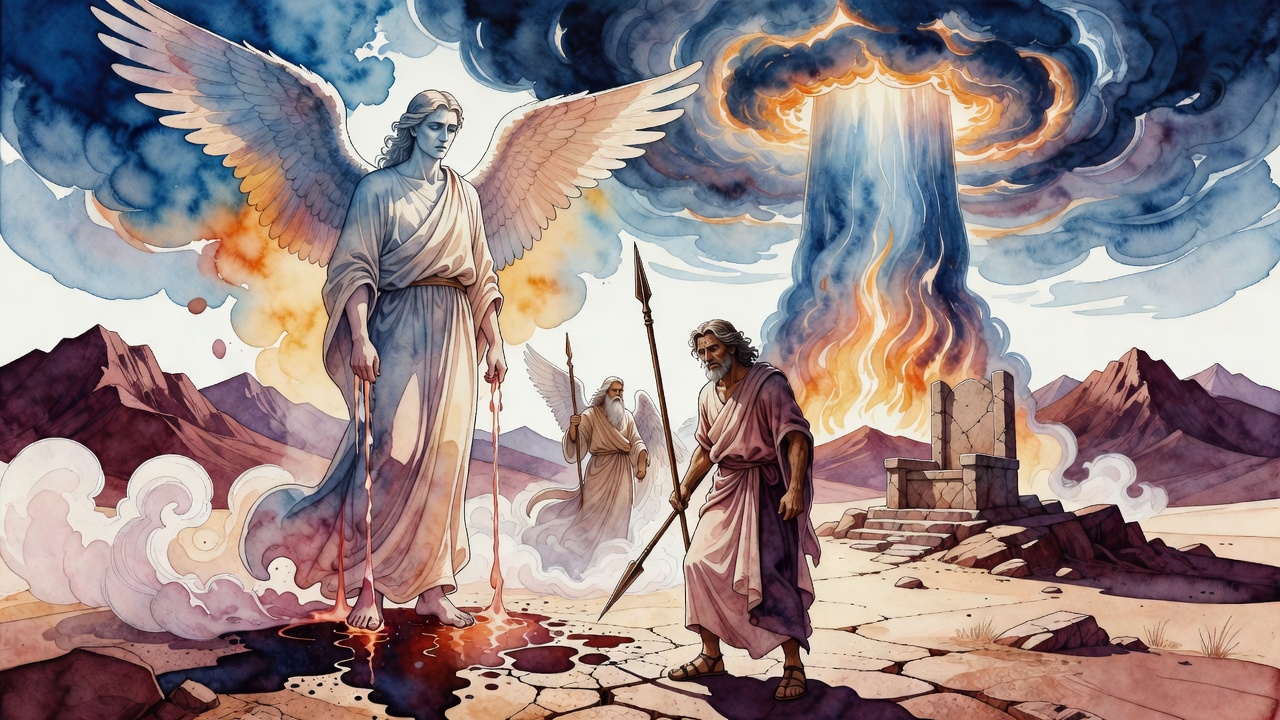
Moses rejected an angel and demanded God walk among Israel. When Joshua later asked the captain whose side he took, the angel wept from his feet.
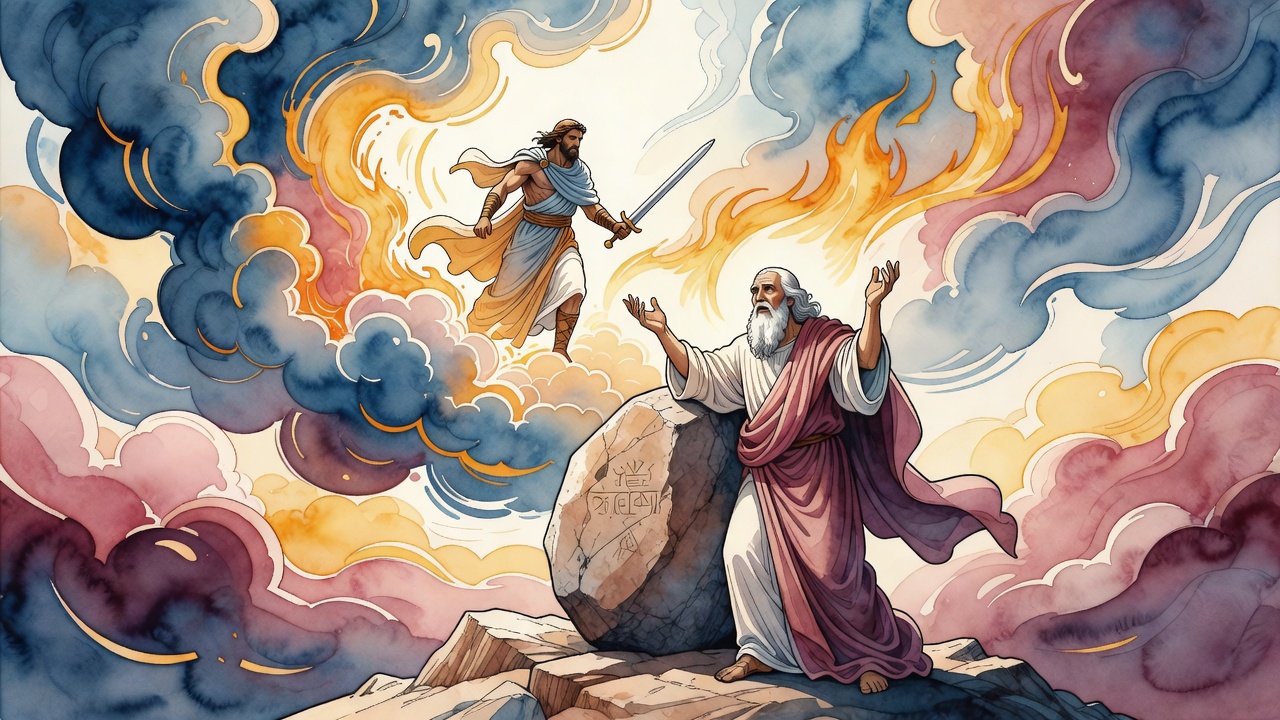
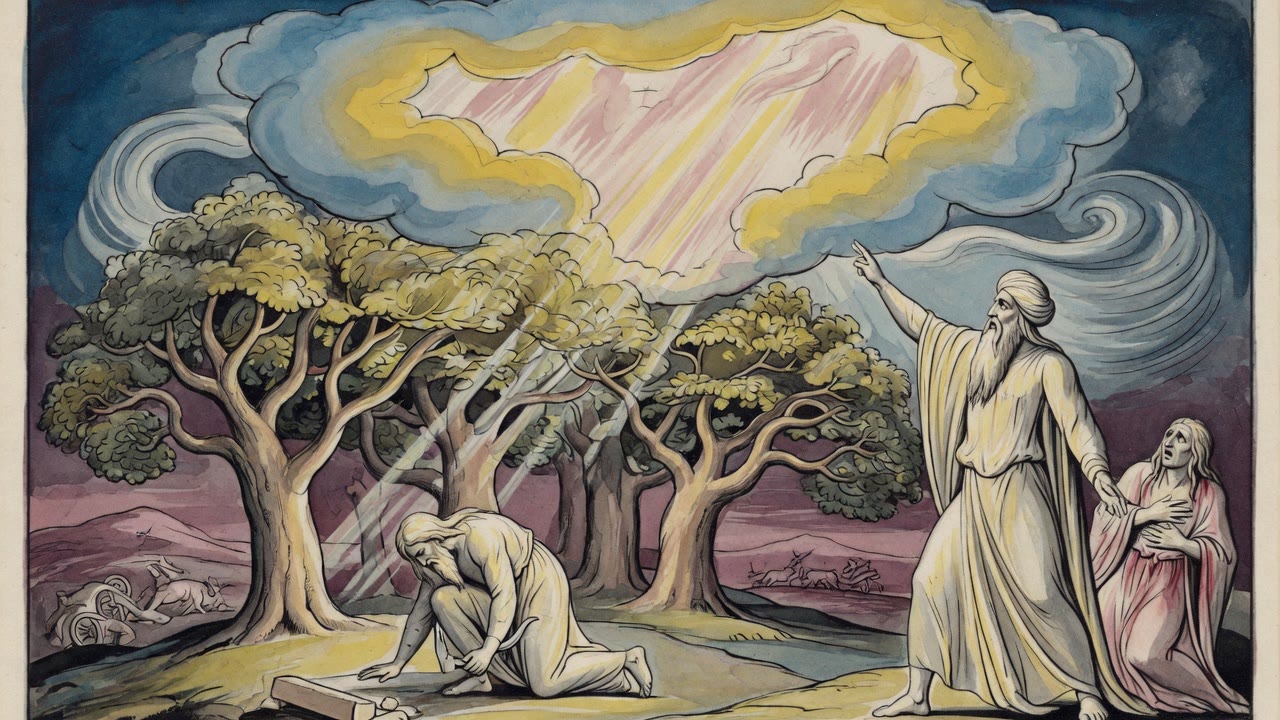
Moses could not hold his own arms in the air. They put a rock under him, and what took his weight was the deeds of Abraham, Isaac, Jacob, and the mothers.
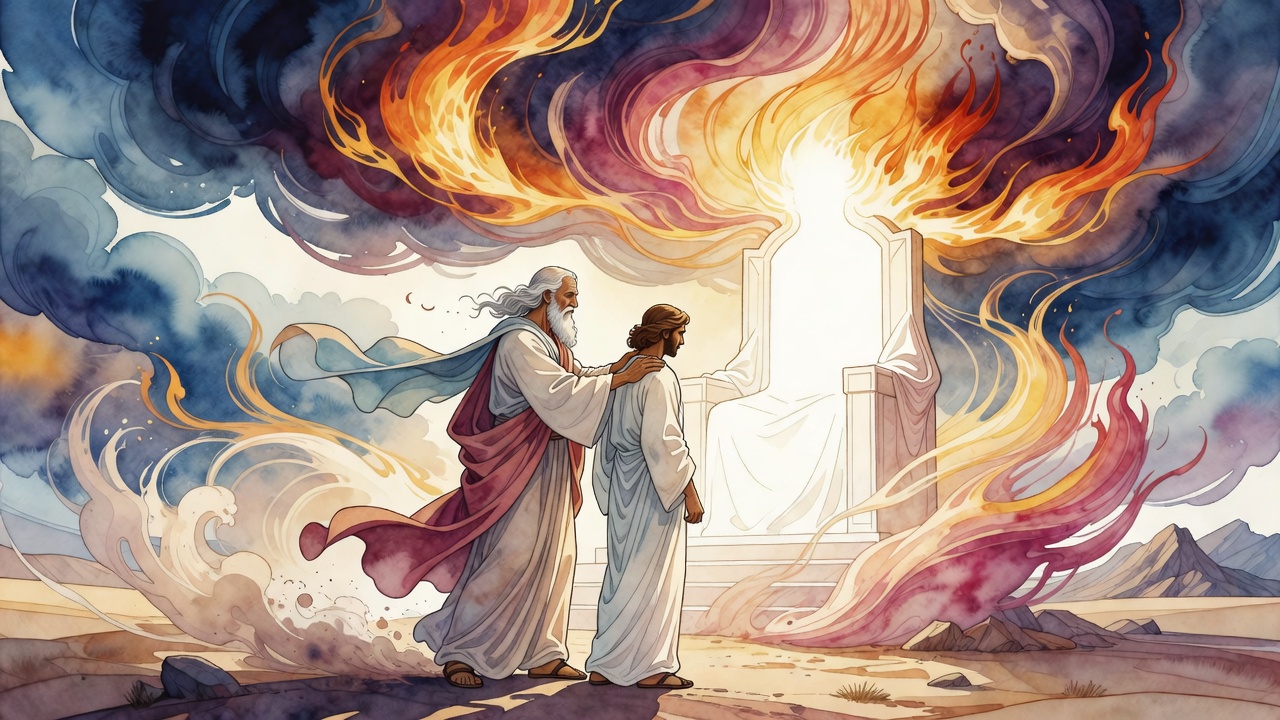
God courted Moses seven days like a king pursuing an orphan bride. When succession came, Moses laid both hands on Joshua beyond the command.
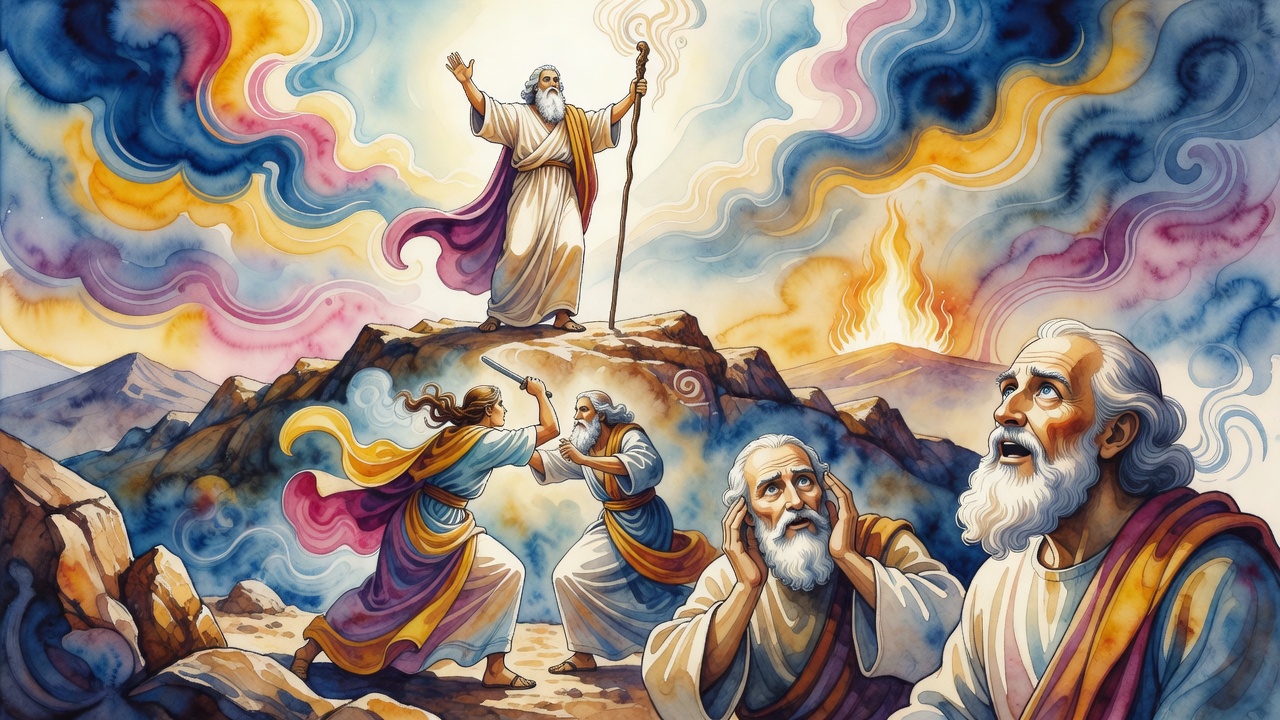
At Refidim, Amalek struck and Moses promised the hill. One sage heard tactics; another heard Abraham, Isaac, and Jacob fighting in the staff.
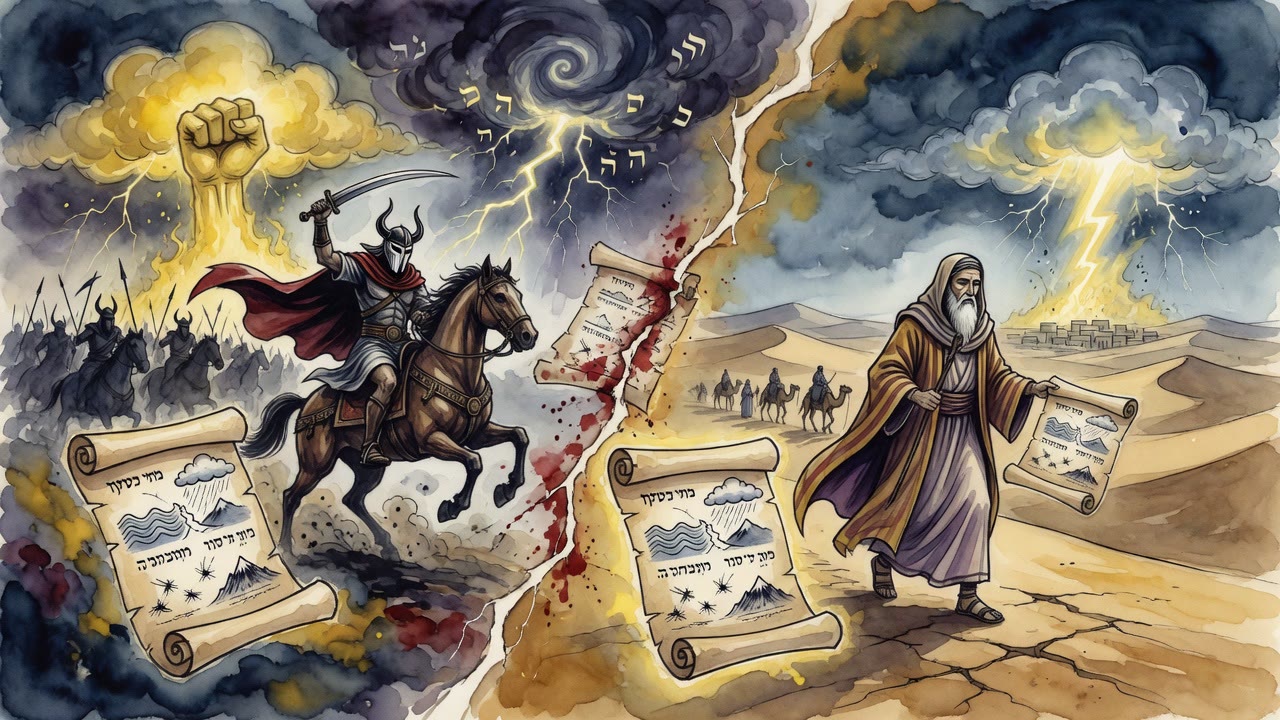
Dust rose on a horizon that should have been empty. The riders had skipped five nations and four hundred parasangs to reach one camp.
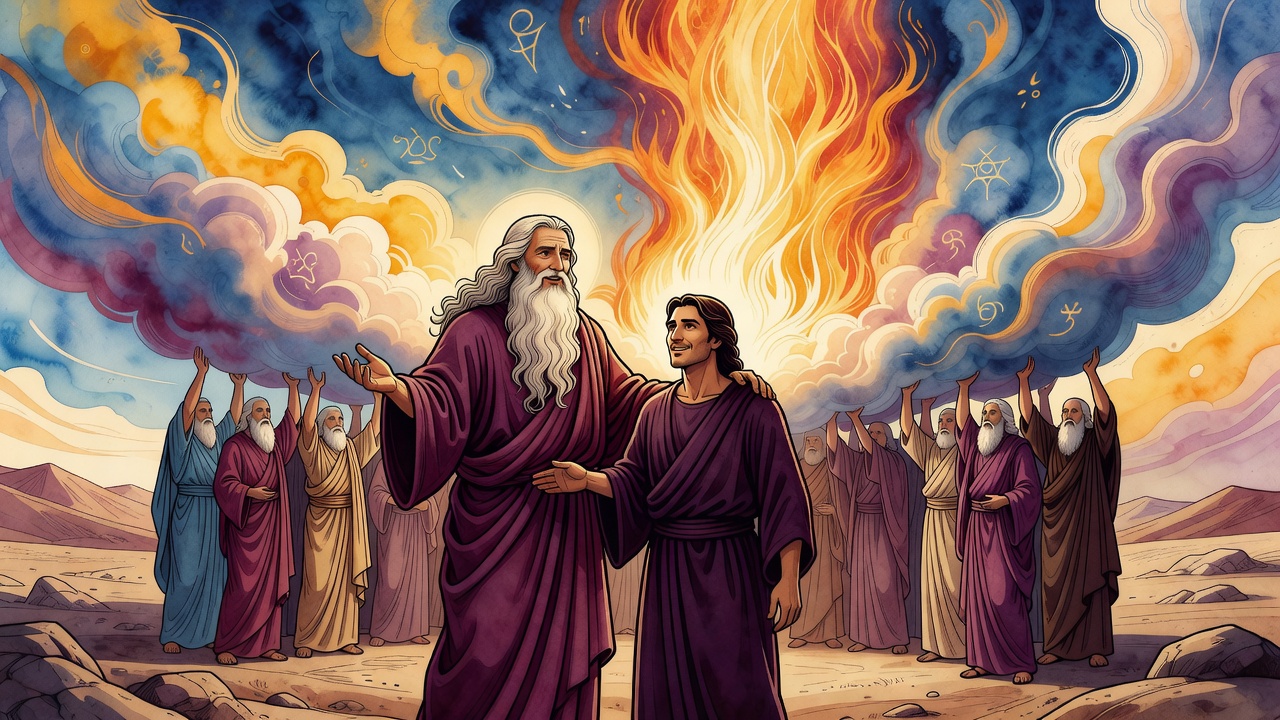
At a hundred and twenty his eye had not dimmed. Moses laid hands on Joshua anyway, with joy, and never asked why the honor missed his own sons.
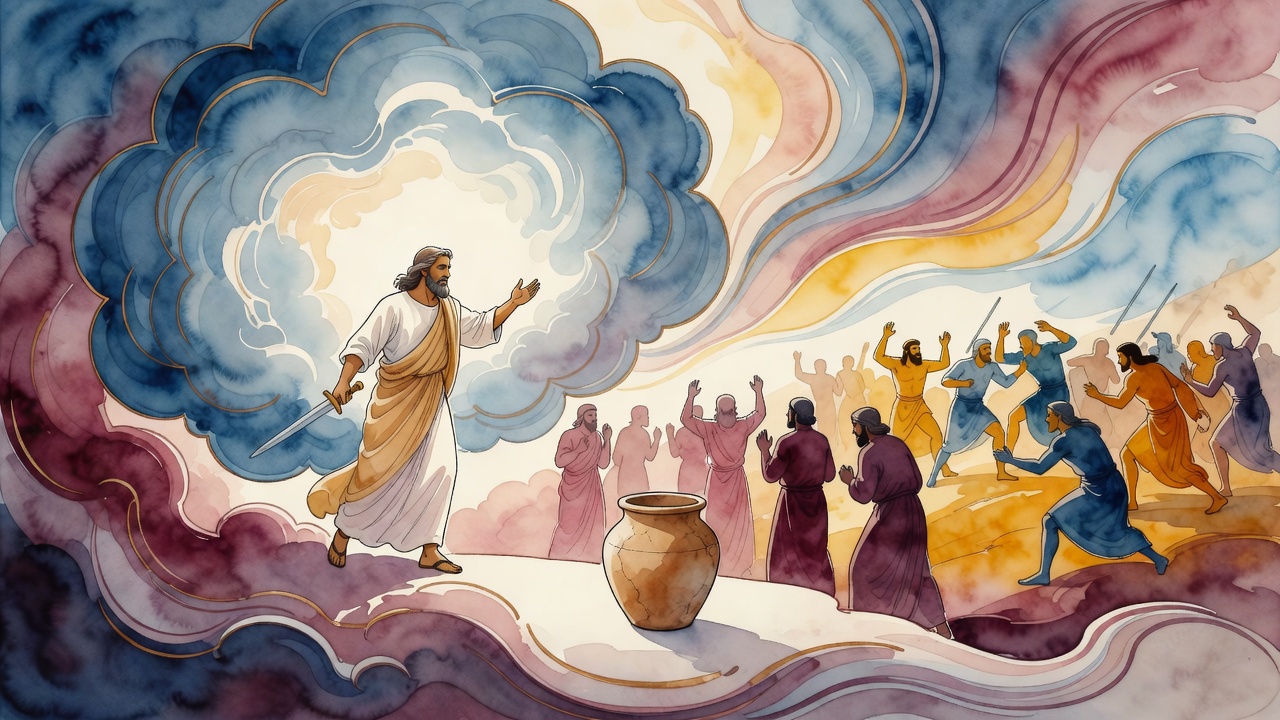
Pharaoh's officers would not chase runaway brickmakers for nothing. He threw open the treasure houses and promised every man an equal share.
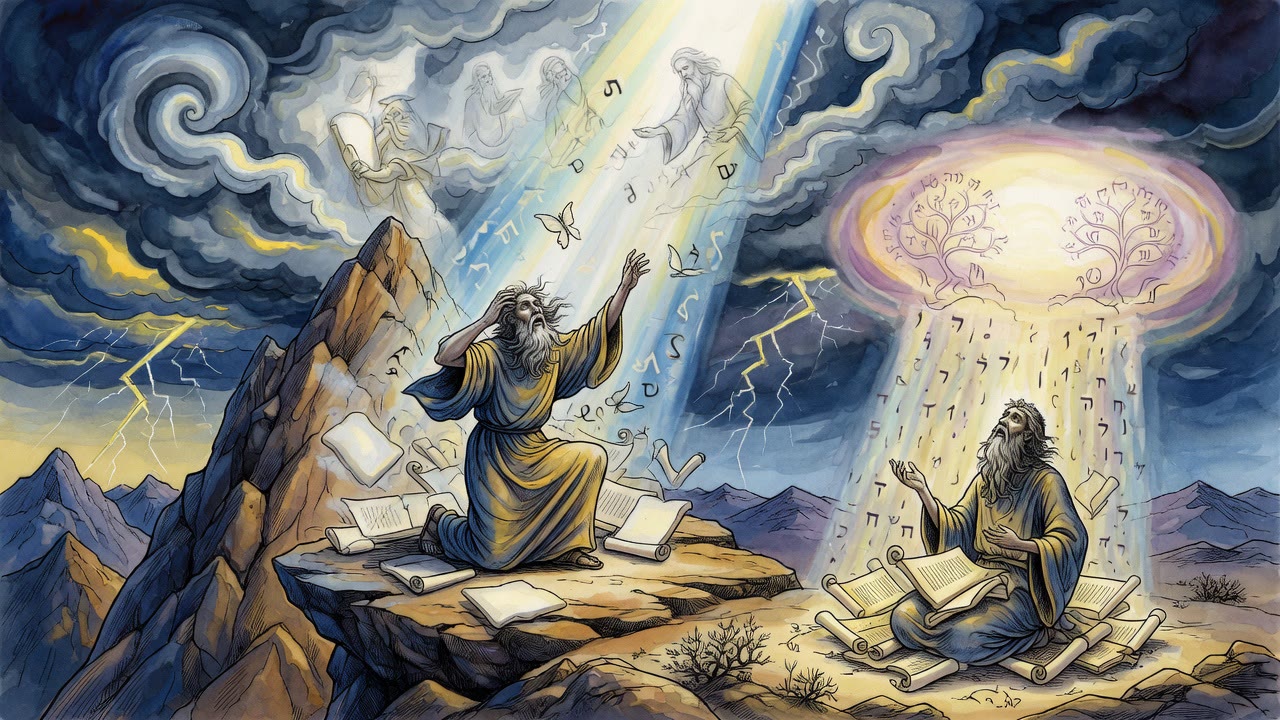
For forty days Moses learned Torah and forgot it. God poured it into him as a gift, and Ha-Satan (the Accuser) hunted the treasure across earth, sea, and death.
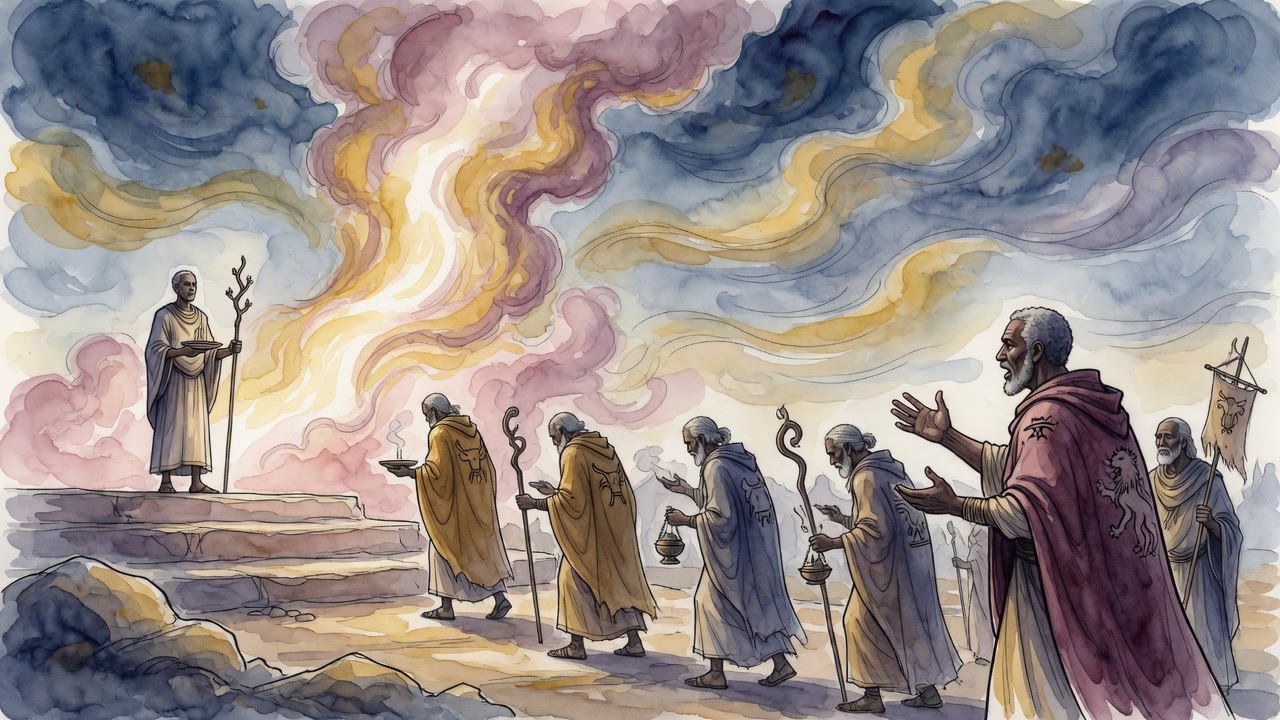
The other ten adjusted their straps. Joshua stood saying the new syllables under his breath, testing whether they would hold.
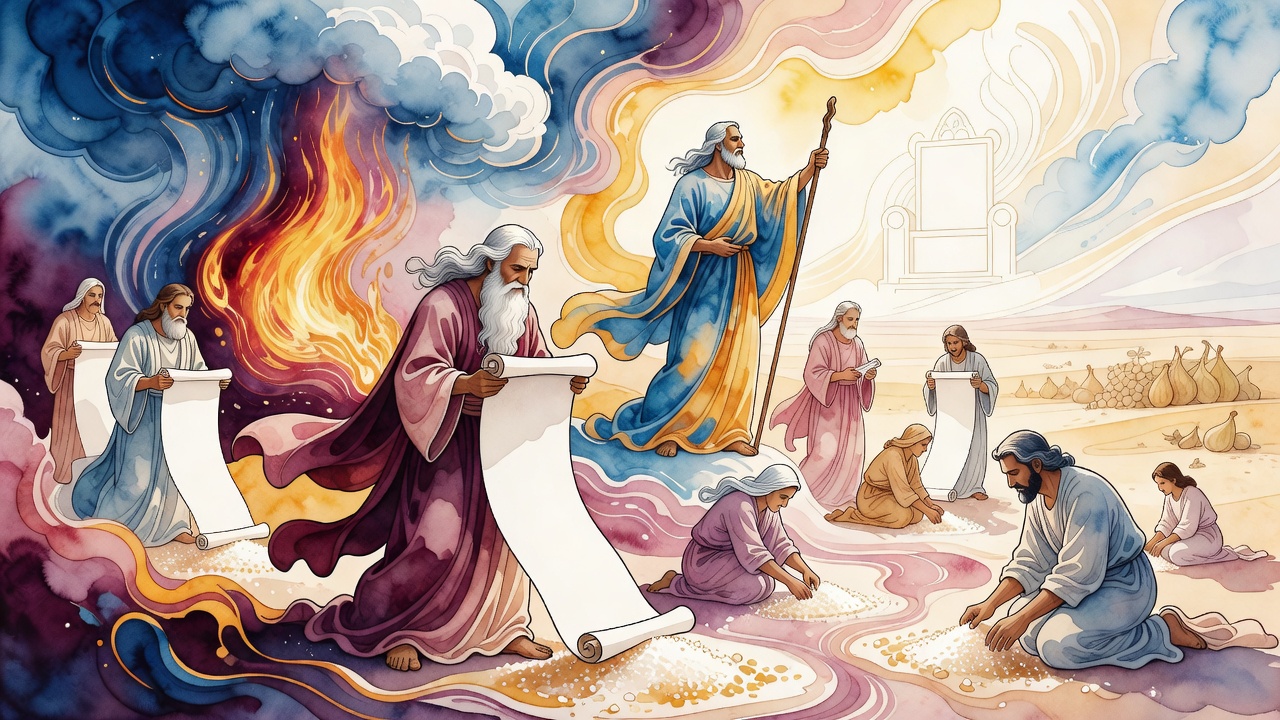
R. Yossi counts forty years of manna under Moses and fourteen more after his death, until Canaan's produce fully replaced heaven's bread.
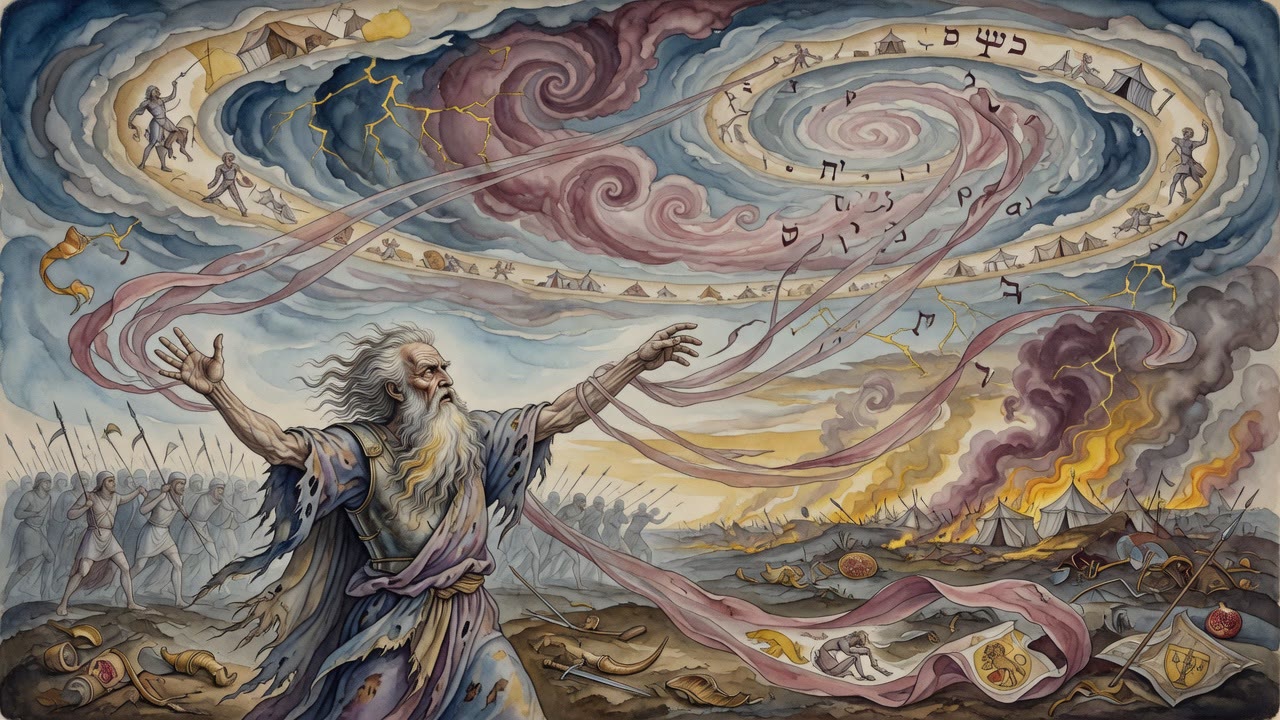
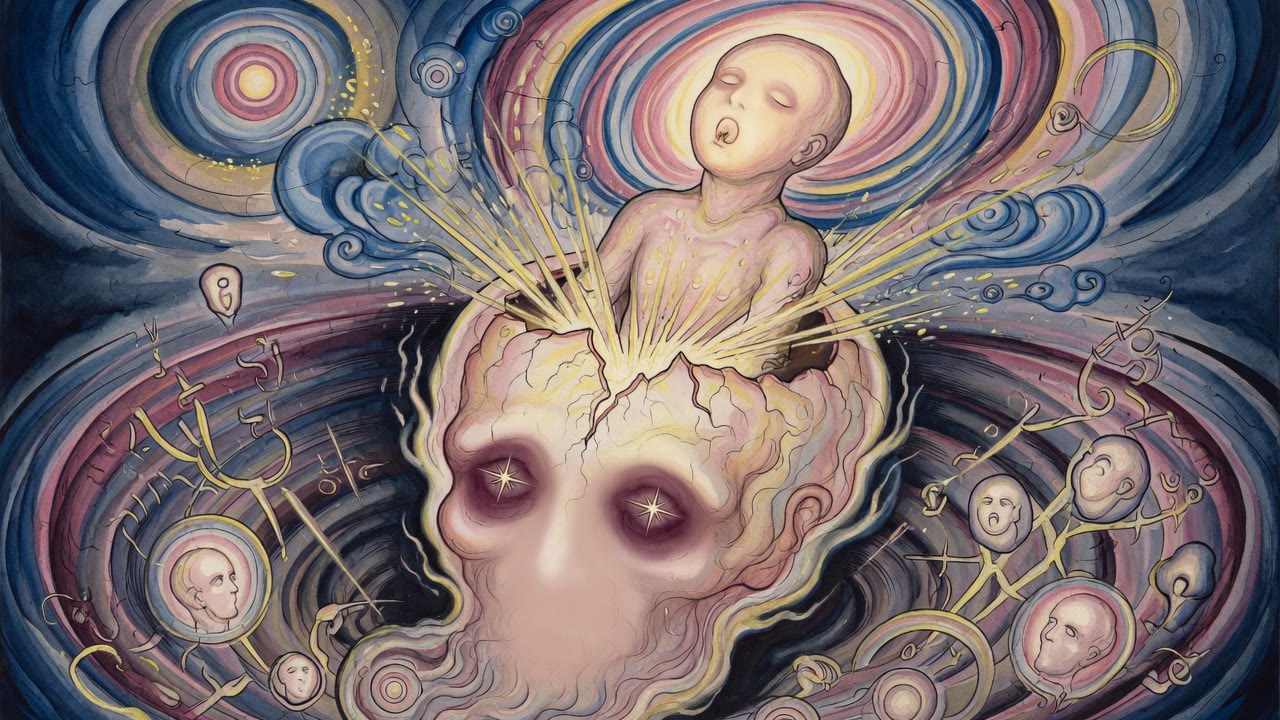
Moses rushes Midian's war knowing death waits after, while Joshua drags thirty-one kings across many years and loses a decade of life.
Joshua cuts Amalek's ranks below while Moses' arms fail on the hill, and Aaron and Hur hold them skyward until the enemy breaks at dusk.
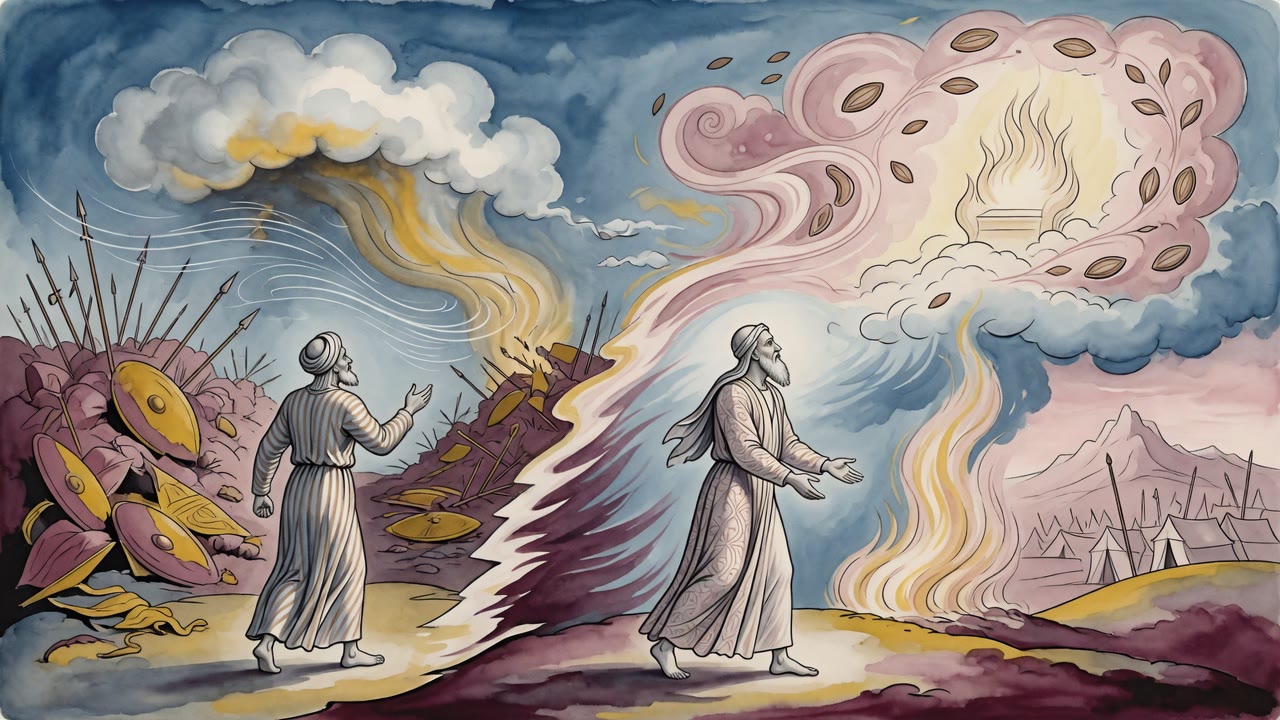
The report of Amalek's fall reached two houses. One hardened. Jethro packed in Midian and walked toward the camp that had just been ambushed.
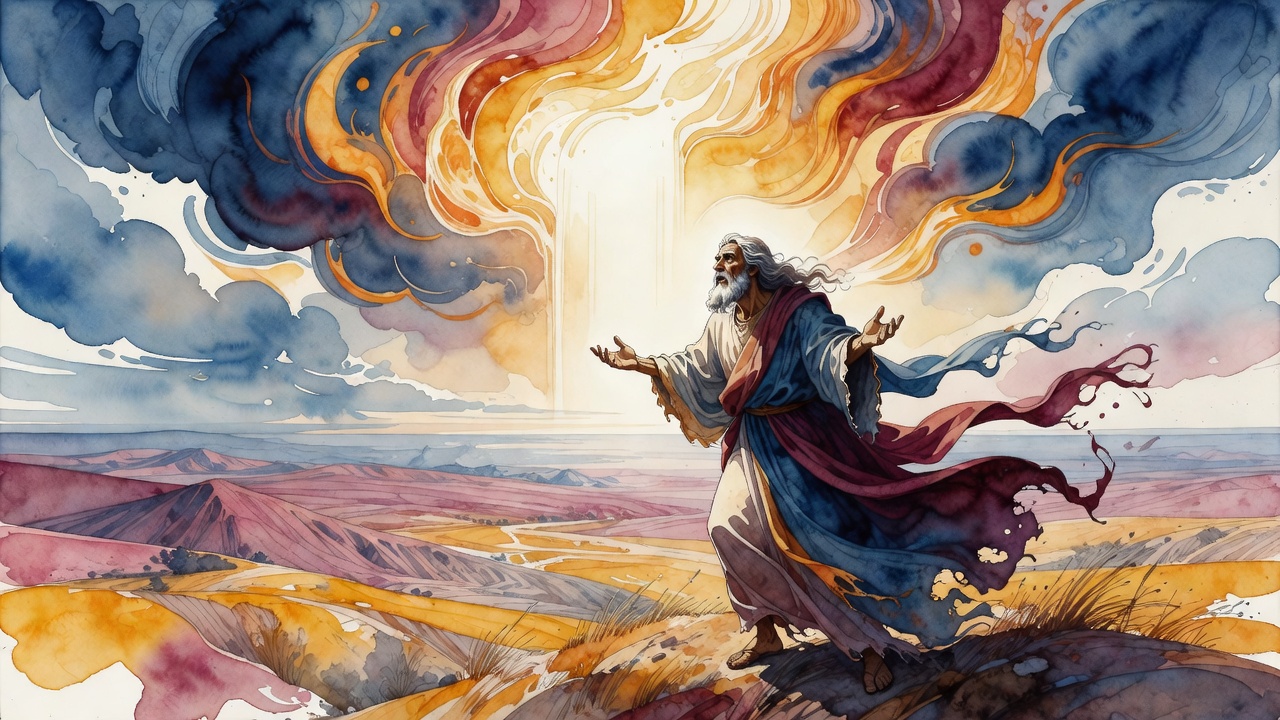
From the ridge Moses sees the whole land and the final day. He bargains to enter as a commoner or as a corpse. Heaven answers no.
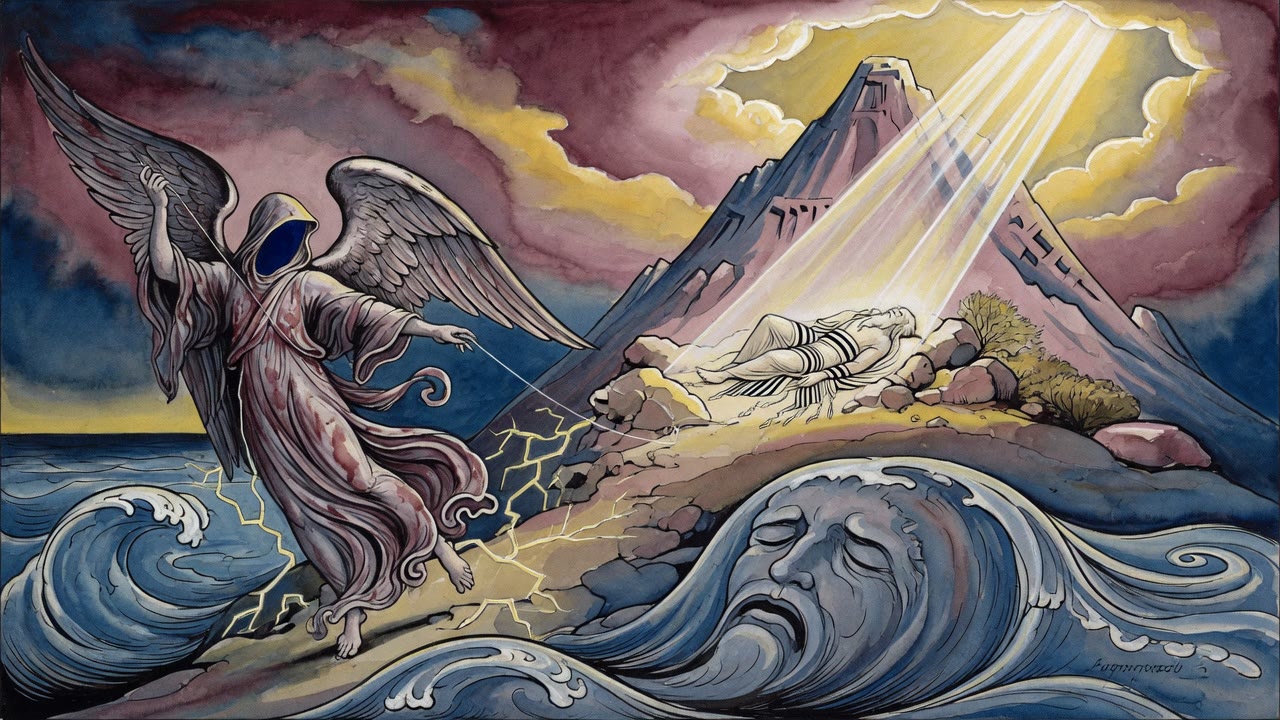
Death climbed Nebo for Moses soul and fled empty-handed. Sea and mountain refused his questions until God hid the grave and buried His servant.
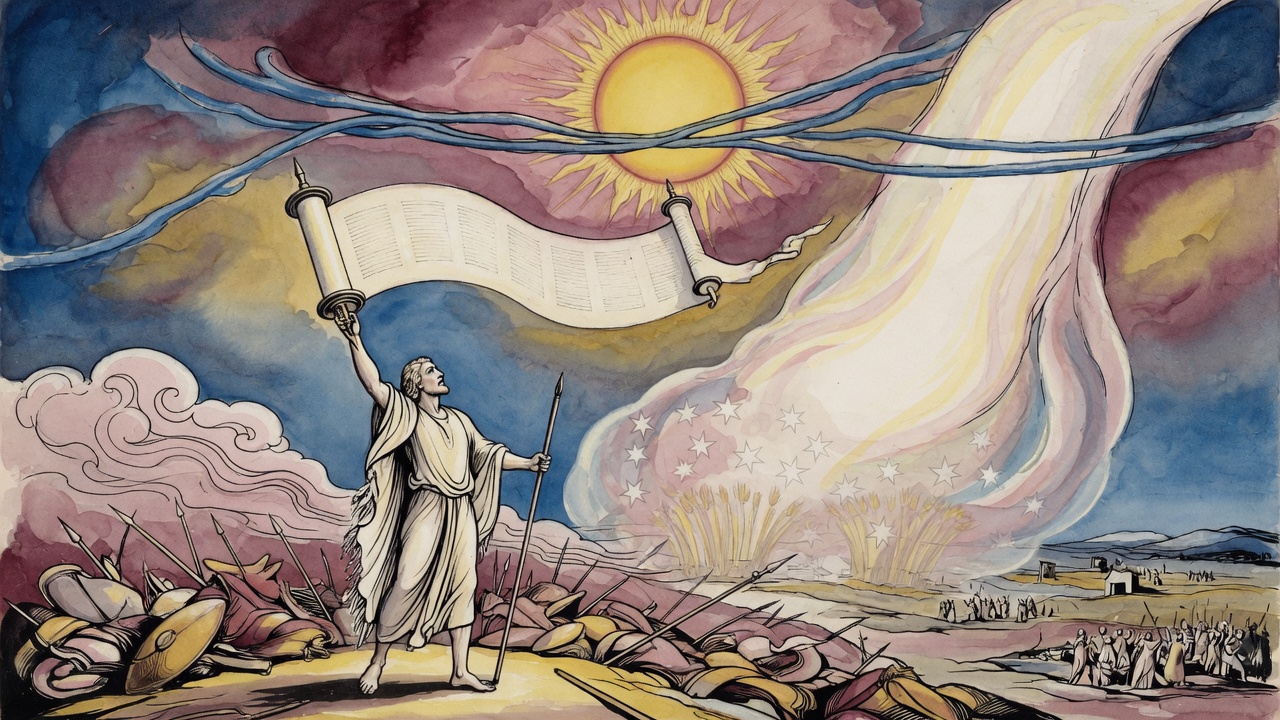
On the field of battle Joshua lifts the scroll he never stopped reading and orders the sun to halt, calling in Joseph's old dream as debt.
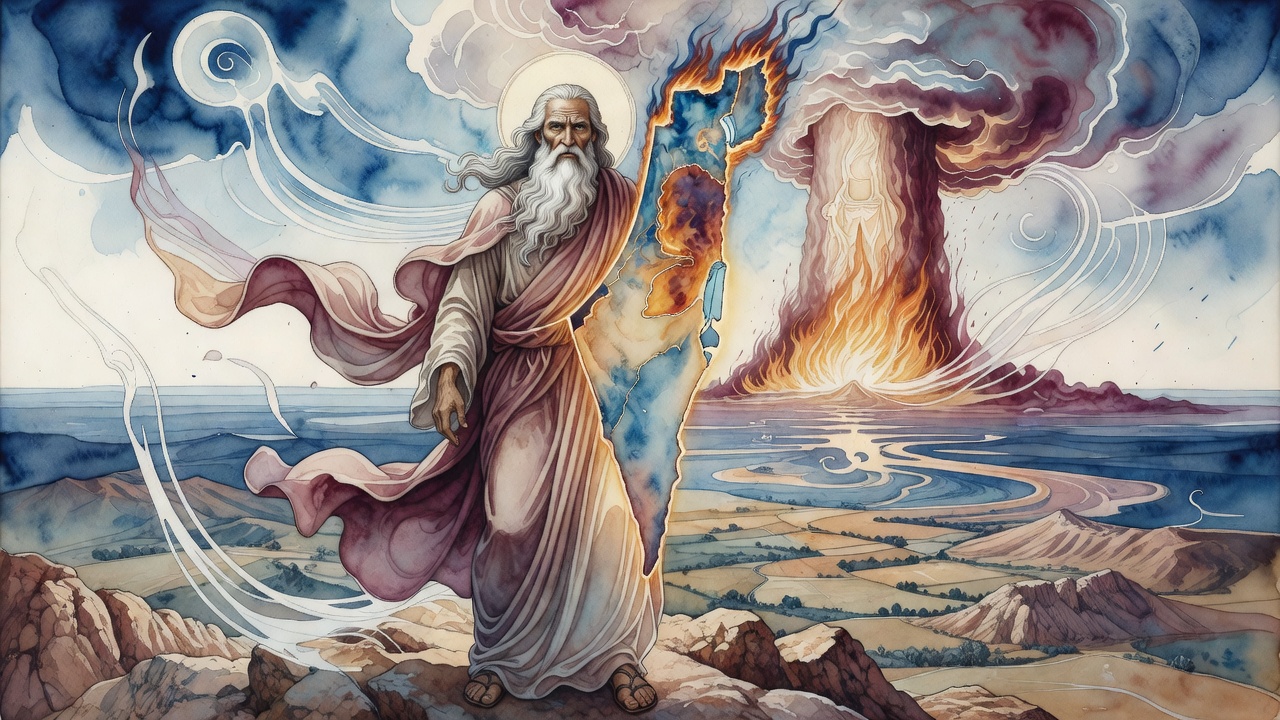
On Nebo, Moses is one hundred twenty and still sharp. God shows him fields and futures. He dies with Israel's map burning behind his eyes.
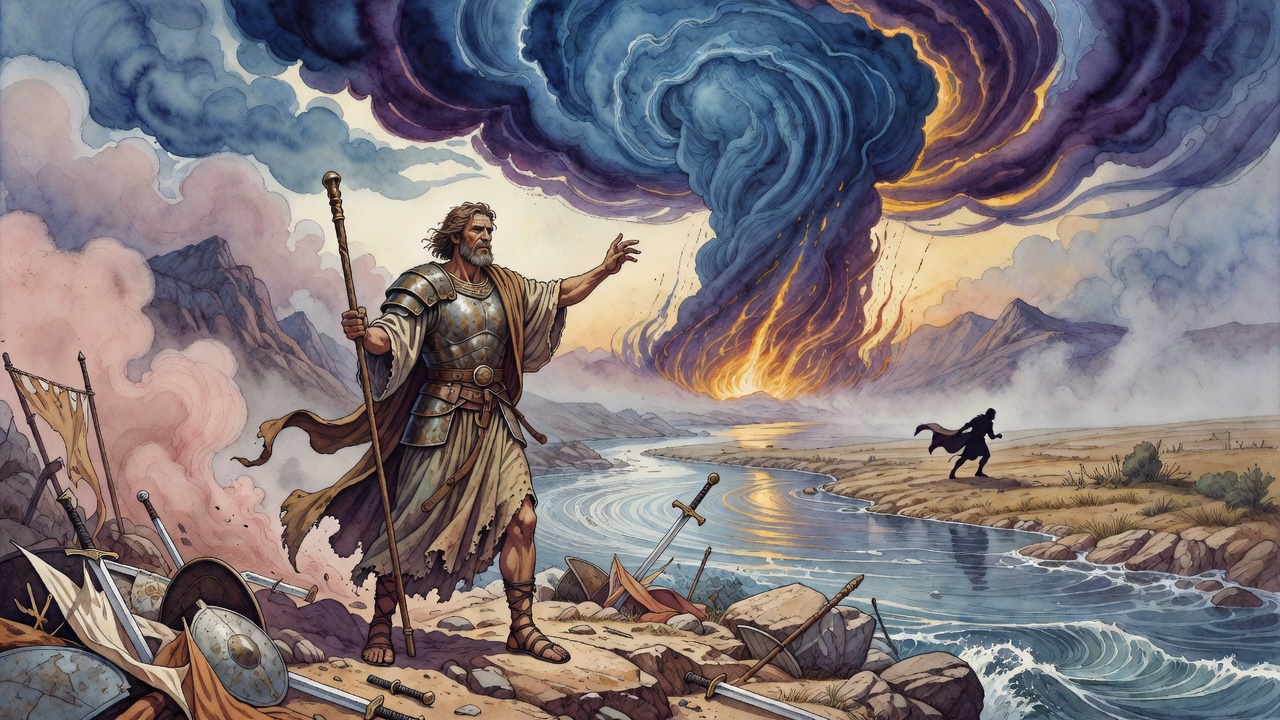
Joshua crossed the Jordan, struck thirty-one kings, and won a loyalty Moses never heard. He still died without a son, while Saul fled a crown that chased him.
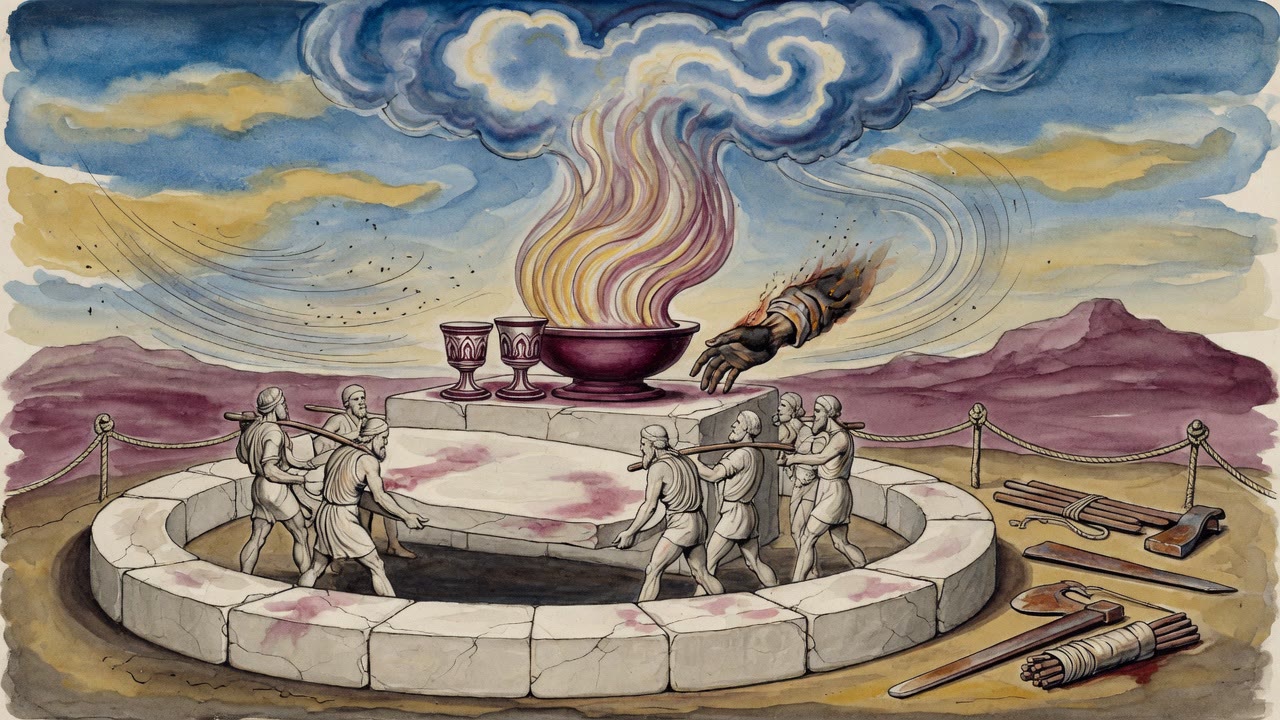
The iron was a leather needle, no longer than a finger. It slipped into a man's throat, and the man holding it ran for the nearest city of refuge.
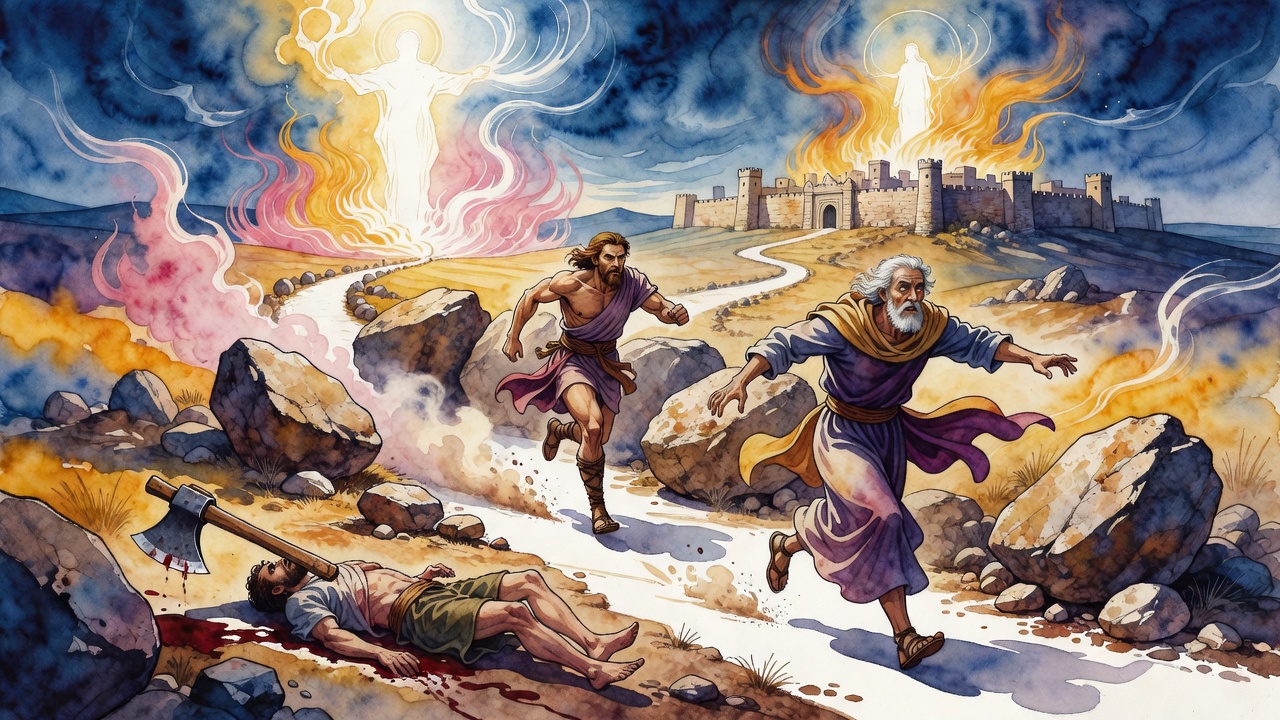
An axe head slipped and a man fell dead. The killer ran for a city of refuge while the goel hadam closed the road behind him.
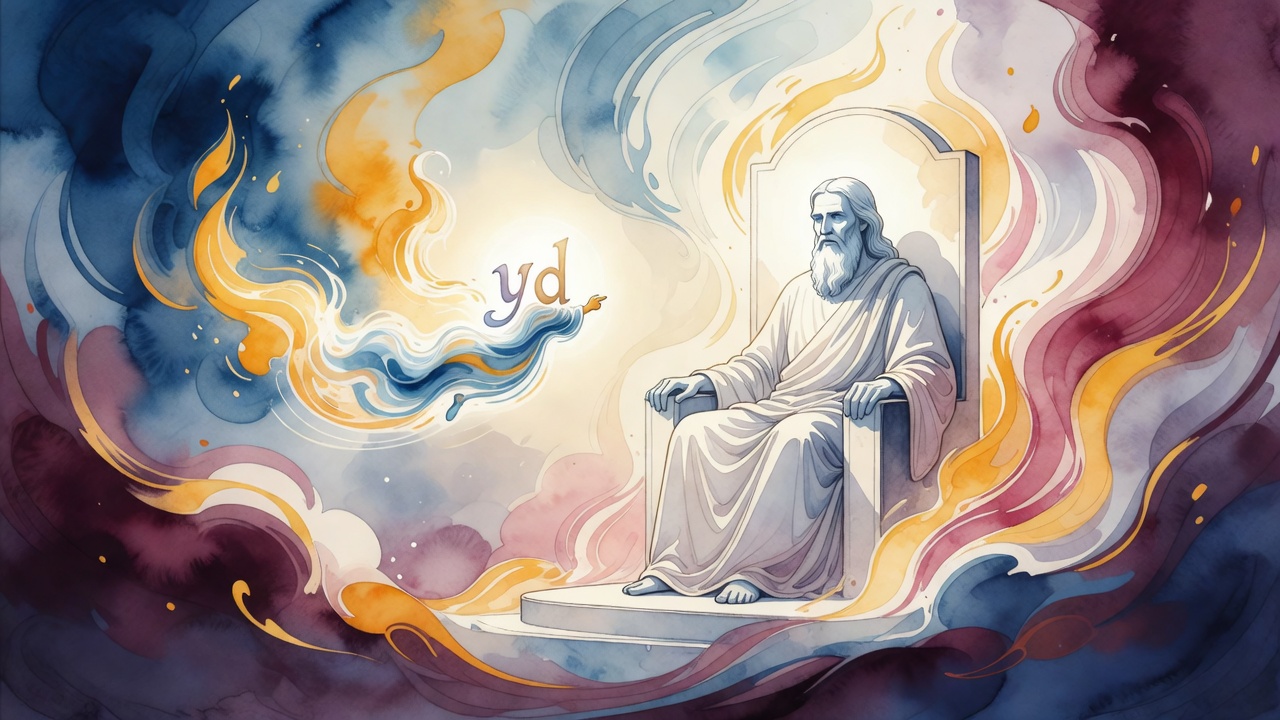
When God renamed Sarai, the tiny letter yod flew to the throne and complained until it was set first in Yehoshua, the name of Moses' heir.
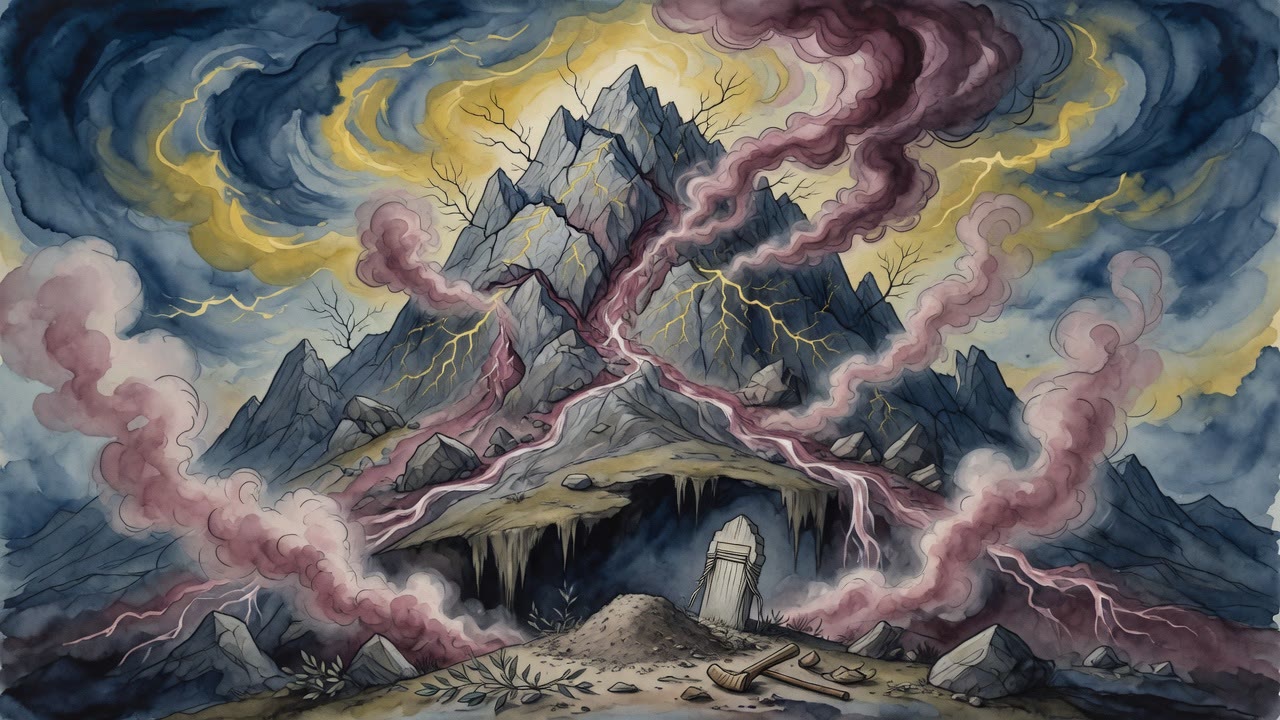
They buried Joshua at Timnath-serah and ran to their new fields. No one spoke over the grave. The hill above him began to move.
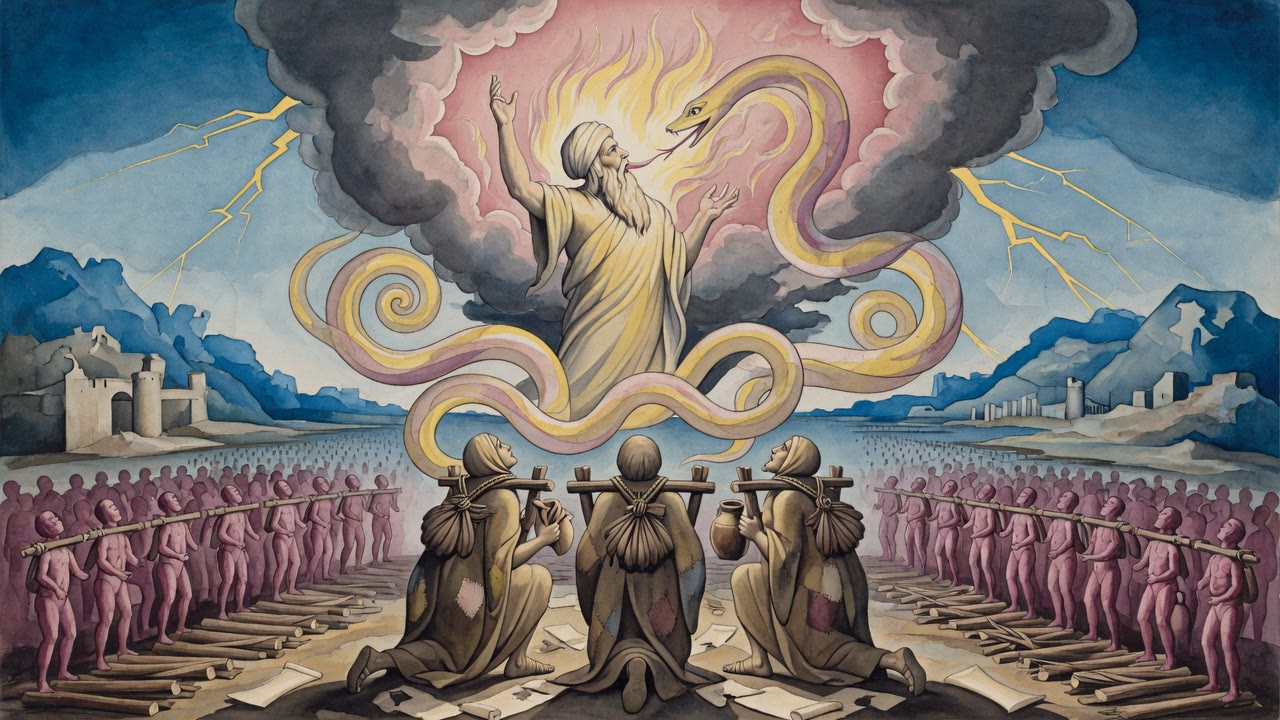
Joshua tasted the dry bread and swore peace. Their city sat three days away, inside the land. The oath was already in heaven's mouth.
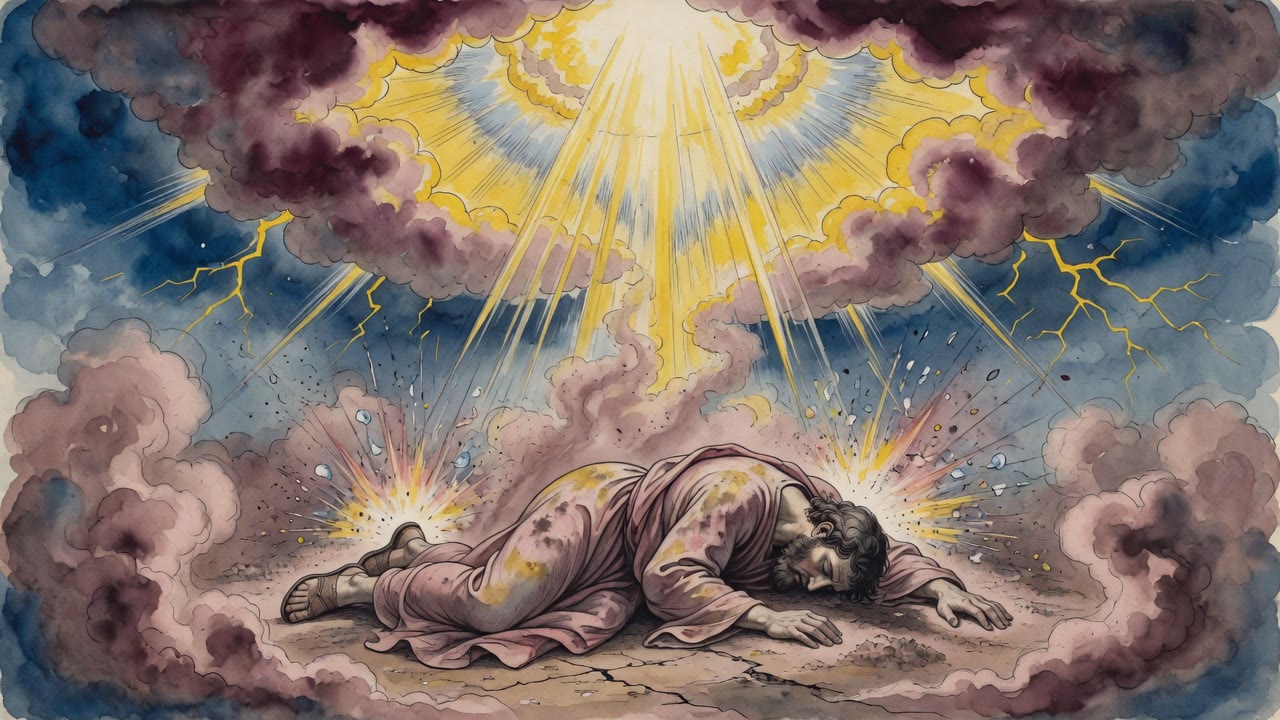
The five kings were still running when the light began to go. Joshua raised the scroll of Deuteronomy toward the sun and told it to be quiet.
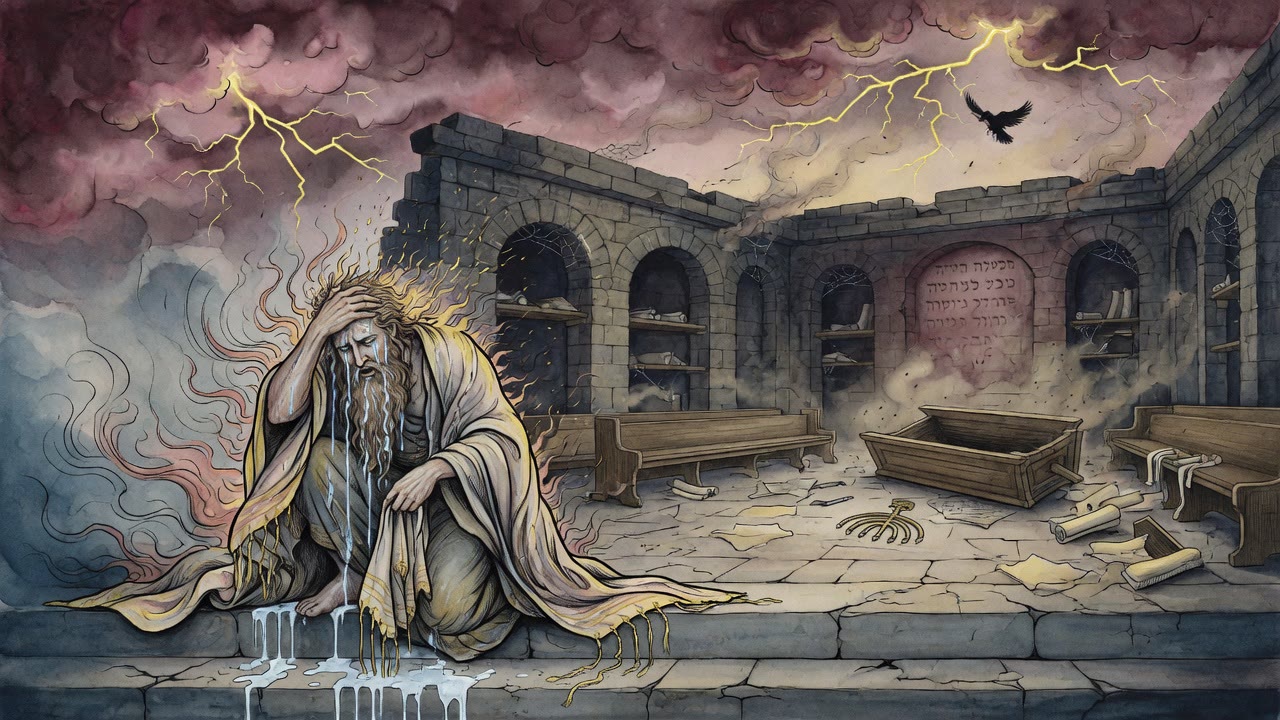
The courtyard still smelled of parchment. Two hundred seats sat empty. Eliyahu wept until an angel told him those students had ruined themselves.
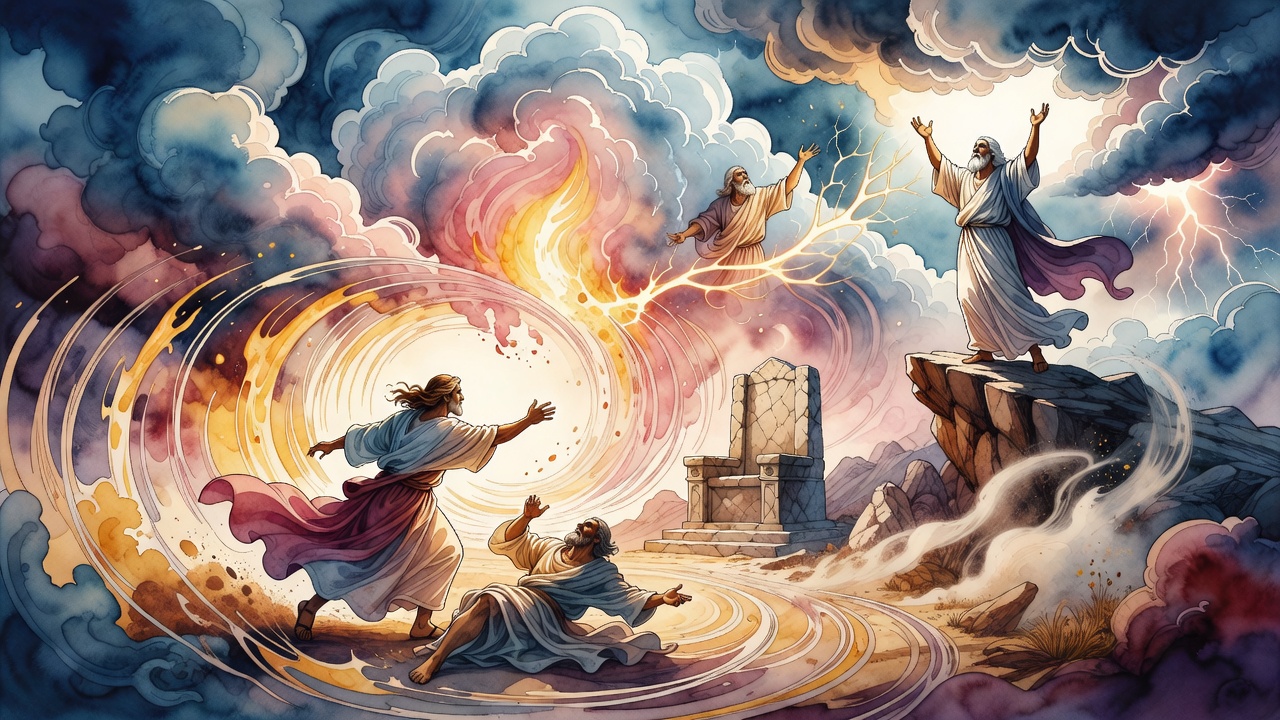
At Rephidim Joshua weakened Amalek while Moses hands held the sky. Rabbi Eliezer later split one verb into king, family, and armies in full.
Pharaoh counted six hundred thousand workers. The midrash answers that only two of that number would finally stand free on the far side of Egypt's night.
The rod Moses carried up the hill had already broken Egypt and split the sea. Below, an army that came to fight found it could not move.
