Aaron Flourished Like a Palm in the Sanctuary
Rabbi Levi had a line for it. Pity the province where the doctor has gout, the lookout has one eye, and the defender prosecutes the capital cases.
Table of Contents
 Click for full size
Seven Days Inside the Door
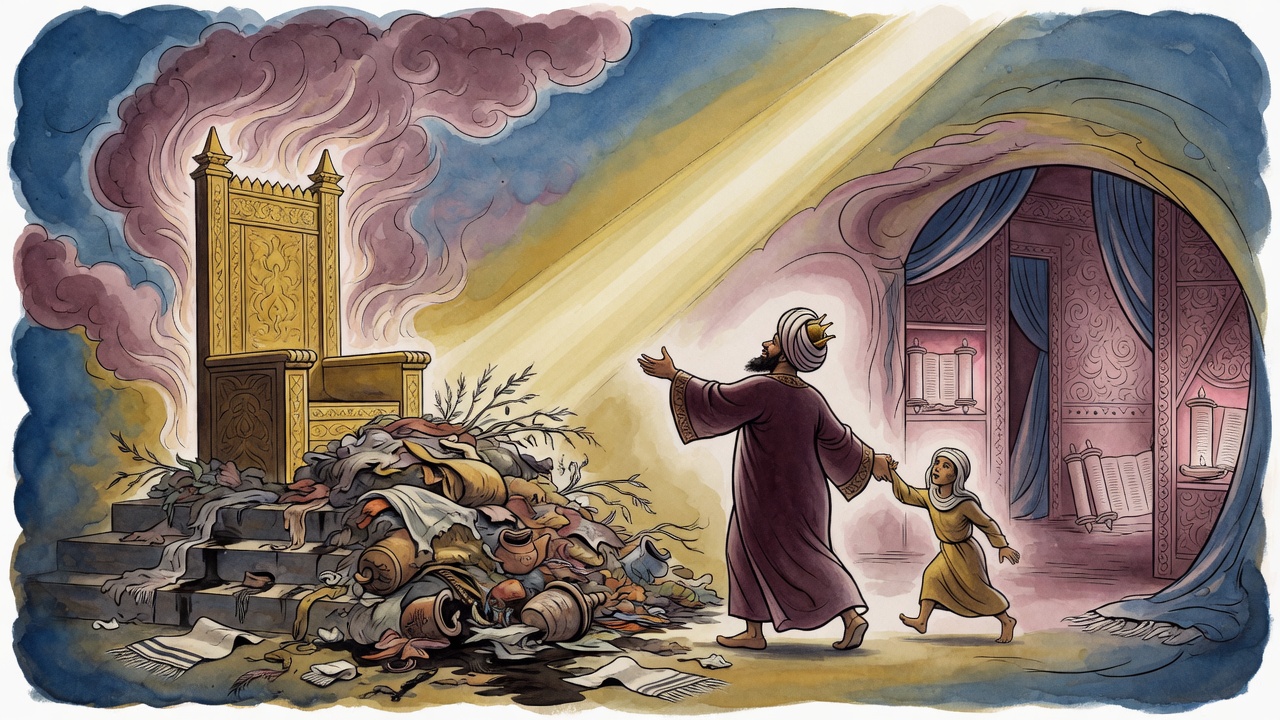
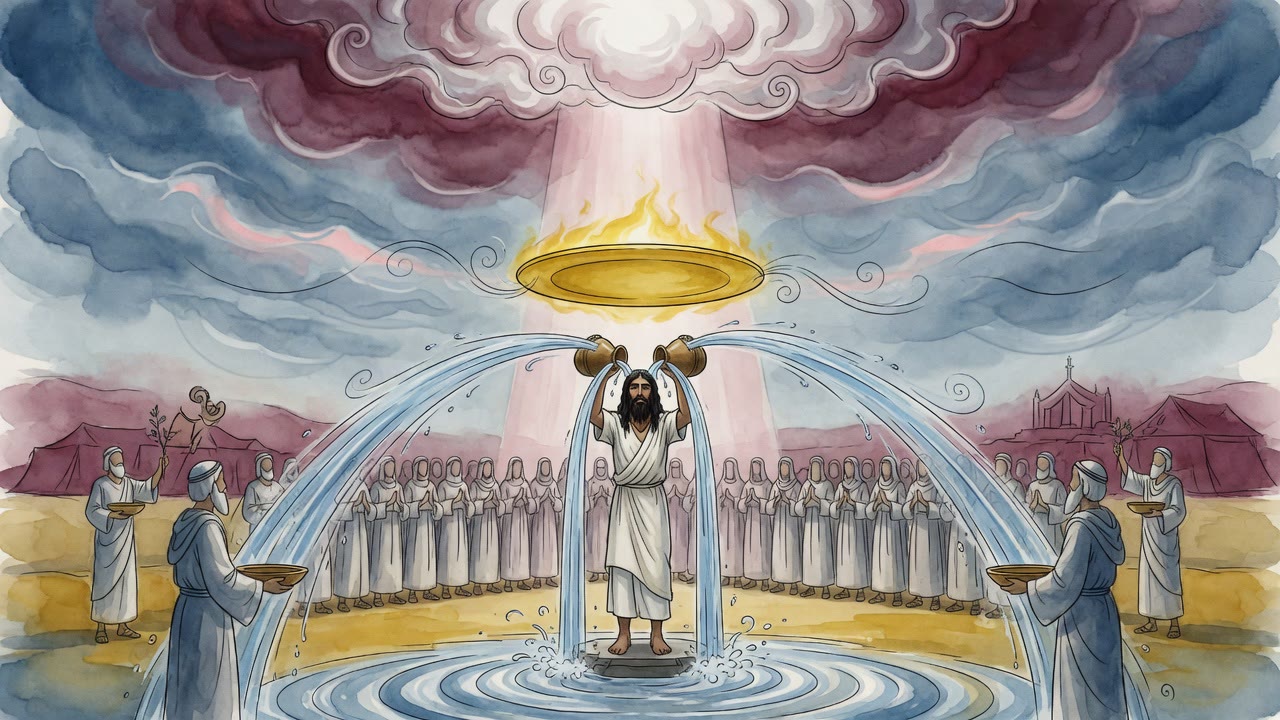
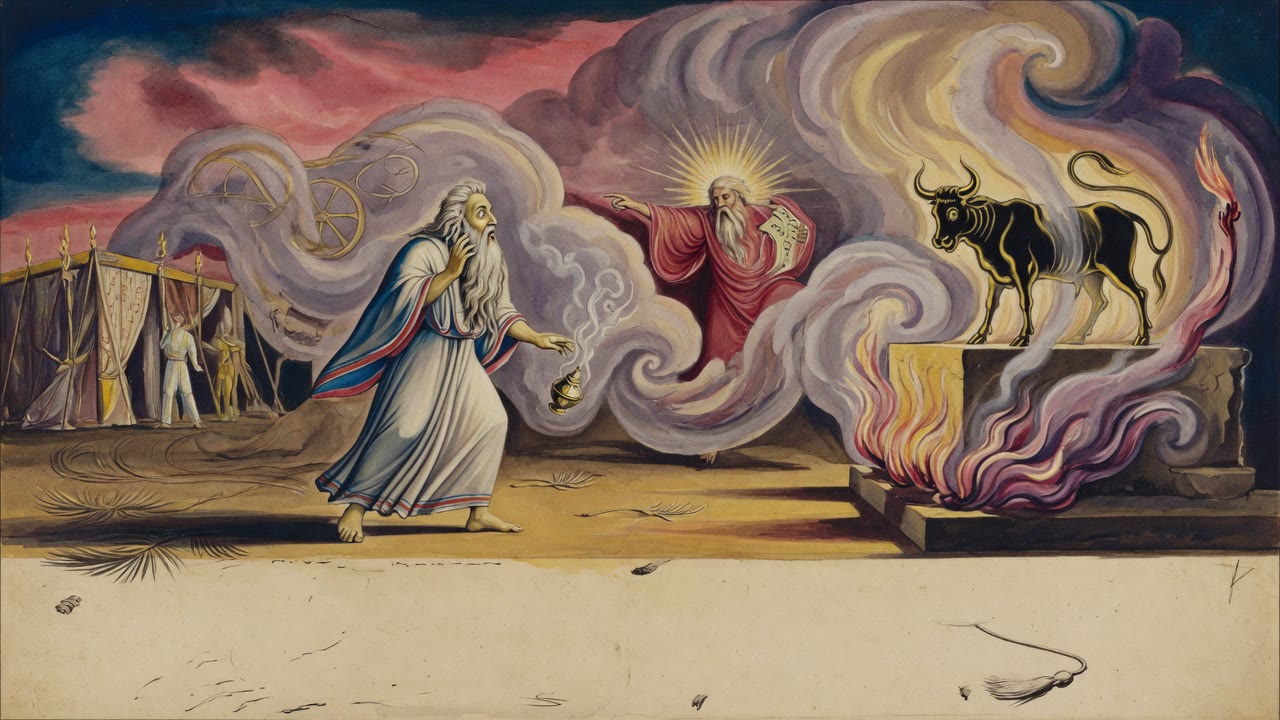
Aaron had not stepped outside the entrance of the Tent of Meeting in seven days. From the door of the Tent you shall not go out, the order had said, and he had not, and neither had his sons. His feet knew that threshold the way a man's feet know one board of his own floor.
Plant an ordinary tree and it comes up alone, one trunk in open ground. Plant a palm and it pushes up shoots from every side of itself until there is a small grove where somebody put one seed. That is why the psalm about the righteous flourishing like a palm was set beside this particular morning. Out of Aaron came Eleazar his son, Phinehas after him, Abishua after him, a line of priests out of one man who did not wander off.
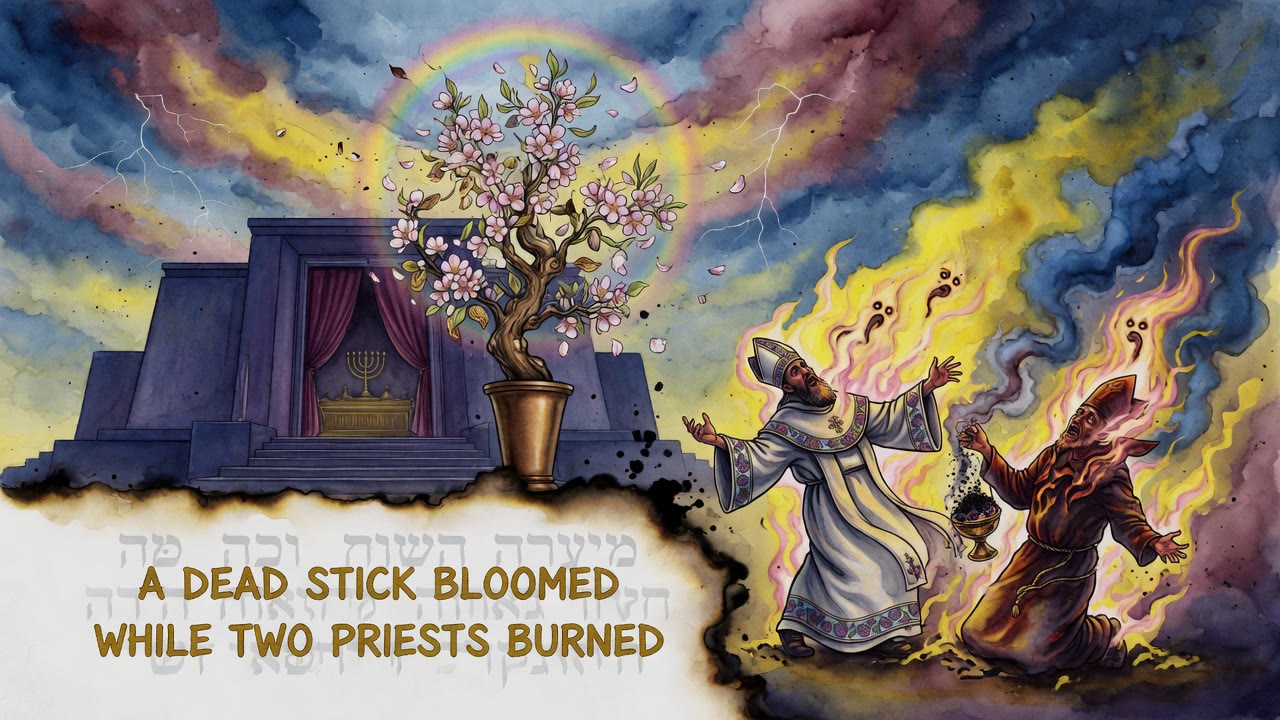
He had a staff that went with the image. When the princes of the tribes disputed his house, twelve rods were laid down overnight, and in the morning his was the one carrying buds and ripe almonds, live wood lying among eleven dead ones. The argument ended there.
On the eighth day the service opened and he was told he could go in.
Twelve Names Cut Like a Ring
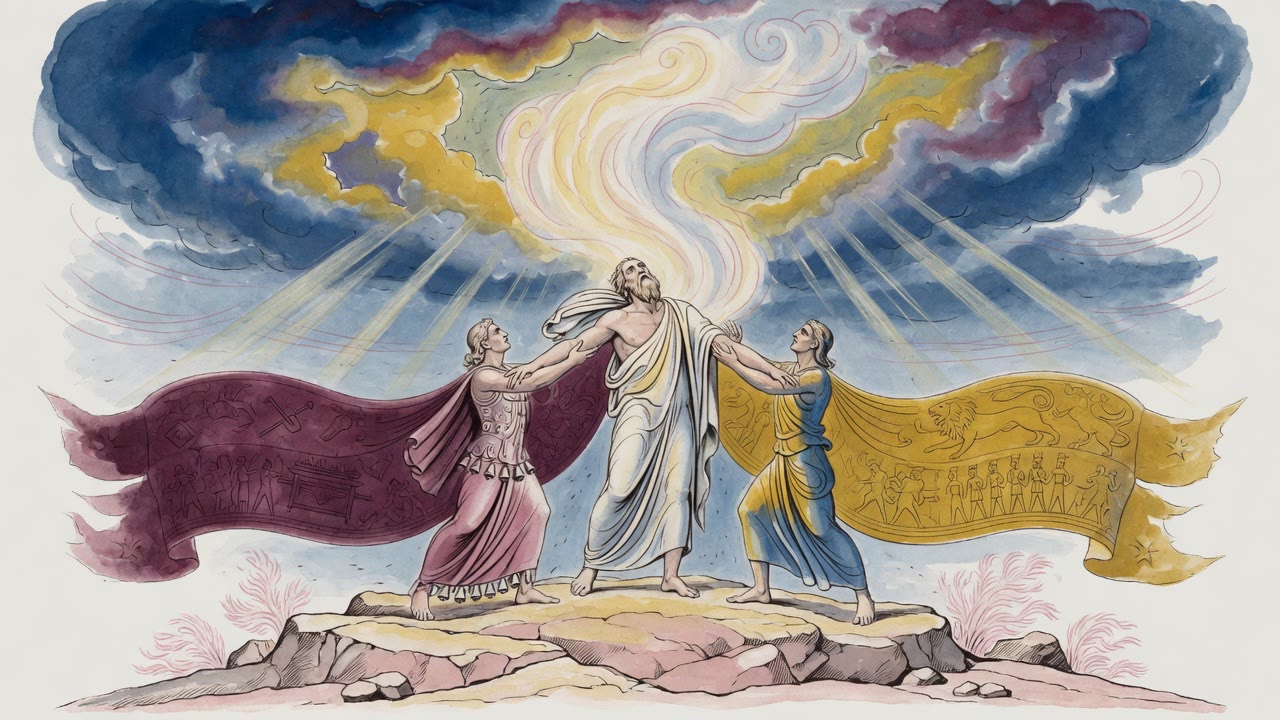
He carried two stones on his shoulders with six tribal names cut into each of them. The engraving was not to be rough work. Every letter had to be cut the way a signet ring is cut, separate and deep enough that if you pressed the stone into wax it would come out readable.
A ring is not an ornament. When a king presses his into soft clay, a document that meant nothing becomes binding on everyone named in it. So the twelve names on Aaron's shoulders were a seal, and every time he lifted his arms inside the sanctuary he pressed a whole nation into the air in front of God.
Stone does not get lighter to be helpful. He felt the weight every time he raised them, which was the arrangement.
Himself First, Then His Wife, Then Everyone
The order of the Day of Atonement started at home. The high priest atones for himself and for his household, and his household means his wife. Then the priests. Then the congregation, all of it, last.
Rabbi Hiyya gave the reason in one line. The one who does the atoning goes ahead of the ones being atoned for. A man cannot clear a nation's account while his own sits open on the table.
Rabbi Levi said what the alternative looks like, and he said it as a joke, the kind that stops being funny halfway through. "Pity the province where the doctor has gout, the lookout has one eye, and the man who should be defending you is prosecuting the capital cases."
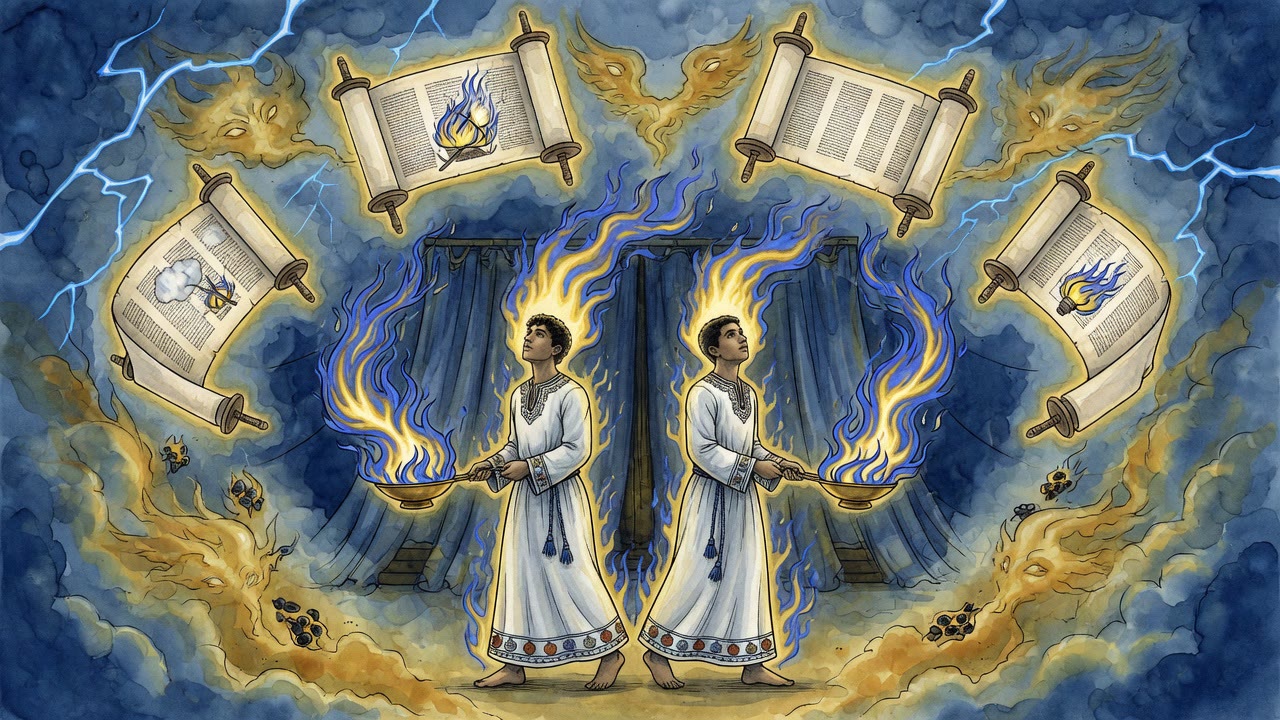
A priest who sins brings guilt down on the people. Rabbi Levi heard fire inside the Hebrew word for that guilt. Because of the fire, the people die.
The Bear Ate What the Keeper Ate
A man was given a bear to keep and provisions to feed it with, and he ate the provisions himself, week after week, while the animal went short.
The king found out. "He has been eating the bear's food," the king said. "Let the bear eat him."
God said the same sentence over a priest who lives off what has been consecrated and betrays it at the same time. He has been feeding on holy things. Let the fire have him.
The Butcher of Tzippori Went Up to His Roof
Rabbi Aivu remembered a real case.
There was a slaughterer in Tzippori who sold Jews the meat of animals that had died on their own and animals that had been torn by beasts. He did it for years, to their faces, in a small town. Everyone bought from him. He was the man with the knife.
On the eve of the Day of Atonement he ate, and drank, and went on drinking until he was drunk. Then he climbed up onto his roof, and he came off it, and he died in the street below.
The dogs found him and began licking his blood.
Men ran to Rabbi Hanina and asked whether they were allowed to move the body away from the dogs, since it was the Day of Atonement and a corpse is not shifted on it. Rabbi Hanina gave them the verse instead: you shall be holy people to Me, and you shall not eat the flesh of a torn animal in the field, you shall throw it to the dog.
"This man robbed the dogs," he said. "He took what was theirs and fed it to Jews. Leave them alone. They are eating what was coming to them."
The dogs stayed until they were finished. The fast went on over the town, and in the morning the men of Tzippori went to hear the shofar (a ram's horn) and to find somewhere else to buy meat.
Long before any of that, on the eighth morning, a man in linen who had not walked out of a doorway in seven days lifted two engraved stones onto his shoulders and carried a nation in with him. He went in for himself first, and for his wife, because he could not carry anyone until he was clean. Then he went in for everybody else.
← All myths