Abraham Split the Wood So the Sea Could Split
Isaac watched the grain open under the blade. At the sea the same split ran through water. In Babylon they asked for pulse and ten days.
Table of Contents
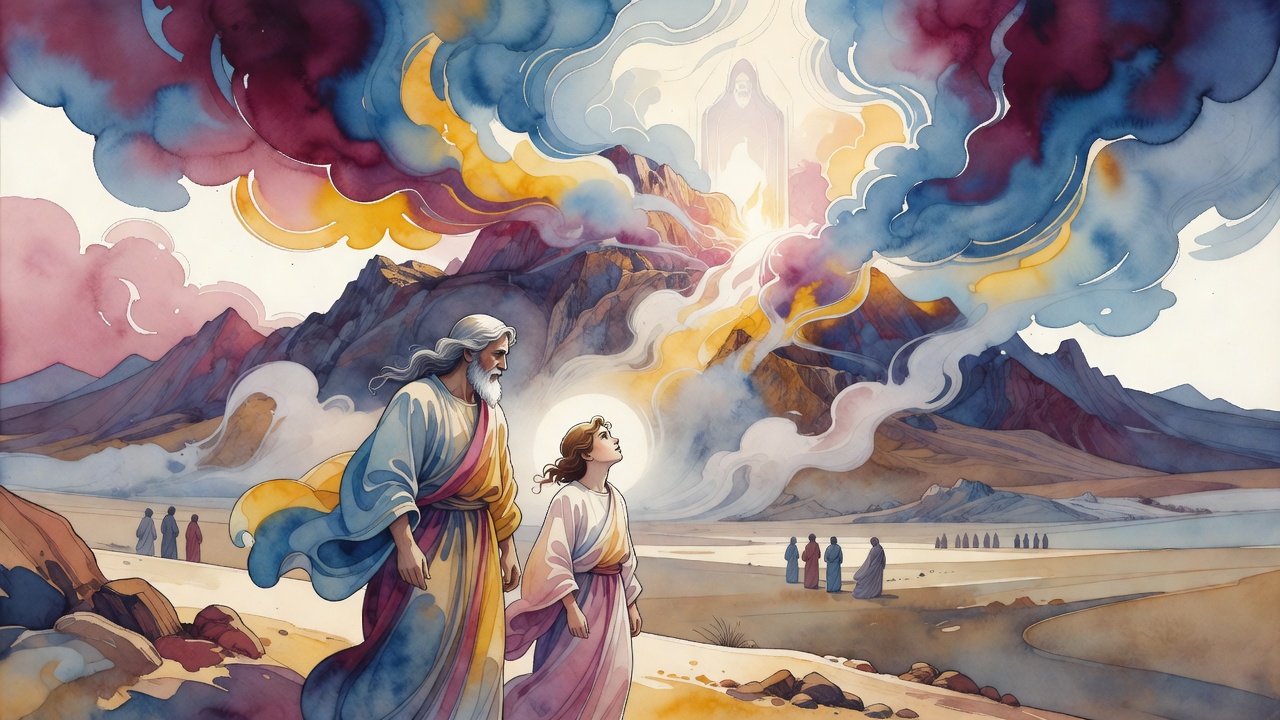
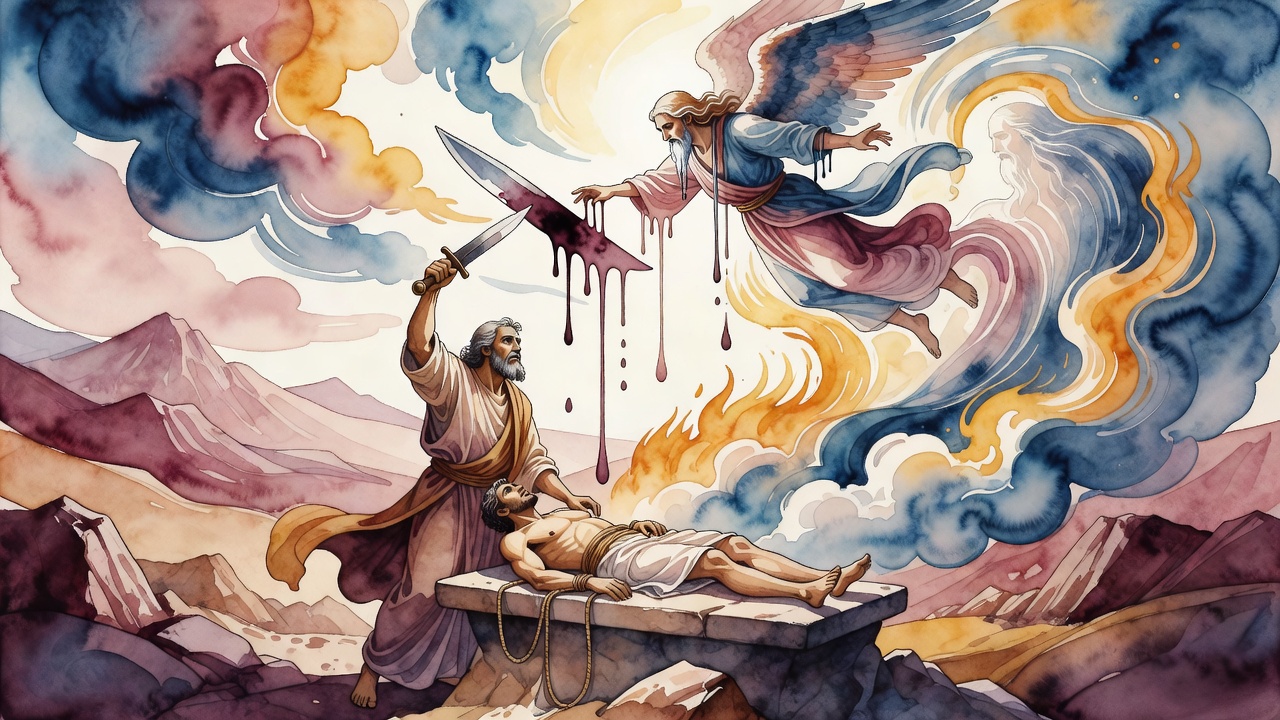
On Moriah, Abraham rose early and split wood for a burnt offering (Genesis 22:3). The grain opened under the blade. Isaac watched the pieces fall. The fire was still unlit. The knife was still in the father's belt. The wood was already ready for a son.
 Click for full size
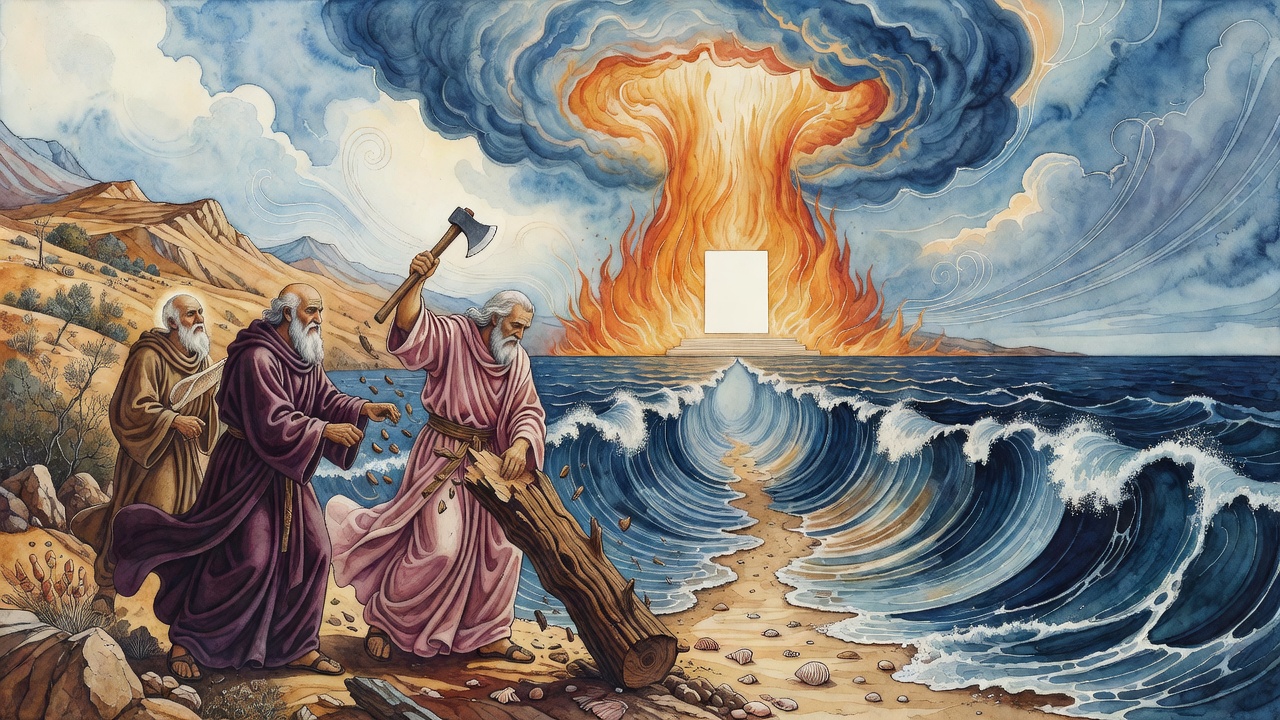
He laid the split sticks on the donkey, then on Isaac's back, then on the altar. Each piece had been opened by his own hand. He did not know, that morning, that the same opening would be asked of water centuries later, when children of that son stood trapped between an army and a sea.
Wood for a Burnt Offering
Isaac asked where the lamb was. Abraham said God would see to the lamb. They walked on. The wood rode with them, split and waiting. On the height Abraham built the altar, laid out the sticks, bound Isaac, and reached for the knife.
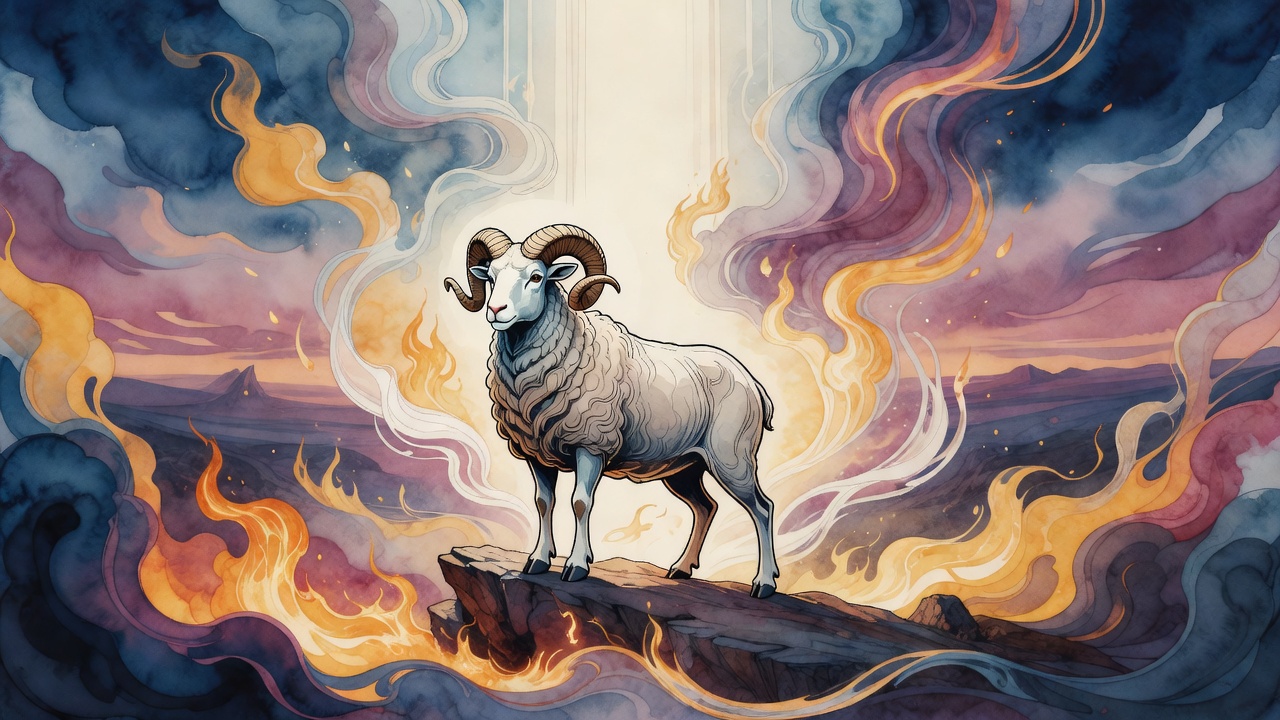
The angel stopped the blade. A ram took the place. The wood still burned. The split had already been done. Heaven kept the deed the way a ledger keeps a debt, not as a charm, as a credit with a name on it.
Abraham came down the mountain with a living son and a pile of ash. The pieces of wood were gone. The act of splitting them was not.
Army Behind, Water Ahead
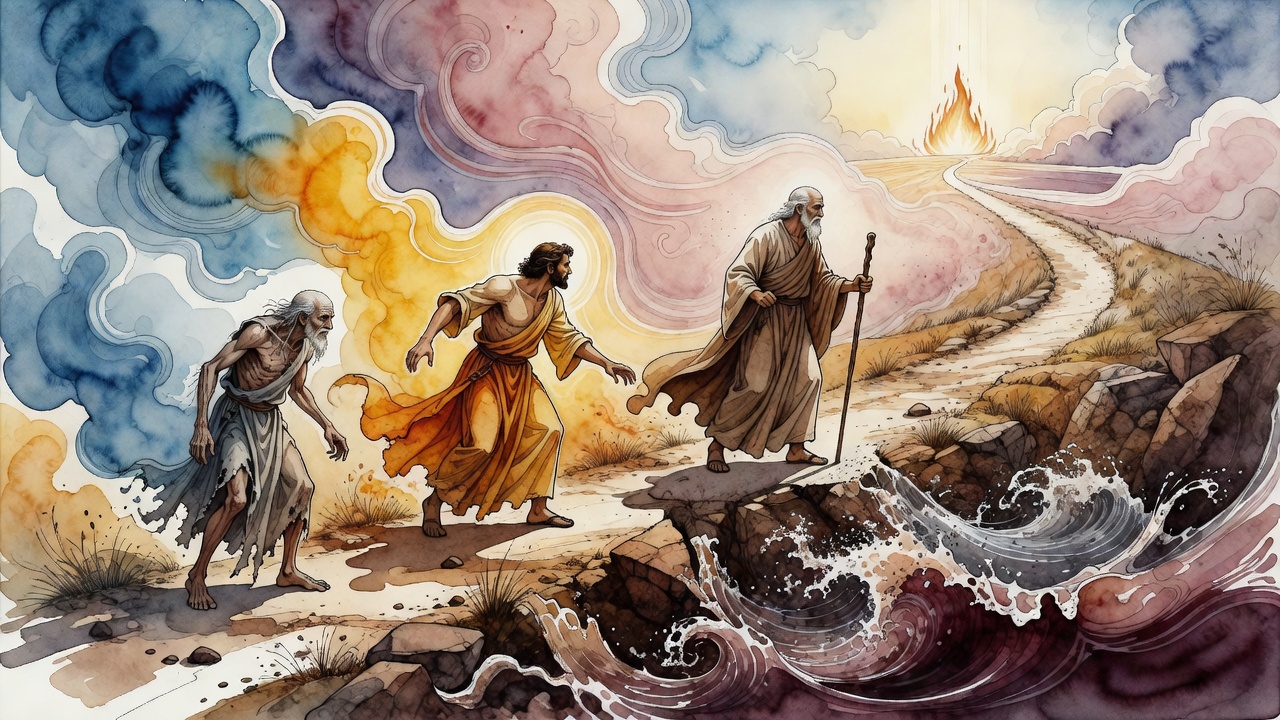
At the sea, Israel stood with Pharaoh's horses at their backs and water at their faces (Exodus 14:21). They had been slaves. Egyptian air was still in their clothes. Their own merits were thin for a miracle of that size. Moses stretched the staff. A wind rose. The waters were split.
The same Hebrew verb that had opened the wood now opened the deep. Walls of water stood while children walked the mud. Behind them the army poured in. The path that had been a gift became a grave for horses and men. Israel came up on the far shore with a song in their mouths and no righteousness of their own large enough to explain the walls.
What carried them was older than the bricks. Abraham had split wood for the most painful offering imaginable. The sea answered that split, measure for measure: a faithful opening on a mountain, a cosmic opening in a gorge of waves. They walked because a father had prepared firewood for a son he loved more than his own future.
He Remembered His Holy Word
The psalm draws the line without apology. "For He remembered His holy word to Abraham His servant. And He led out His people with joy" (Psalms 105:42-43). Redemption was not a last-minute reaction to desperate prayers alone. It was an oath coming due.
God had spoken to Abraham in the night of pieces and in the morning of binding. Brick quotas could not cancel that oath. Pharaoh's horses could not outrun it. The sea itself became a servant of a promise older than Egypt's store-cities. Slaves who had sunk toward idolatry still walked between walls because God does not forget what He swore to one man.
Moses remained the agent. The staff still had to stretch. The people still had to step onto mud that a moment before had been seafloor. Abraham's credit opened a path. It did not walk for them. Joy in the psalm sat beside the terror of the chase. Both were true. The oath produced gladness on the far shore because the near shore had been impossible.
Pulse and Water for Ten Days
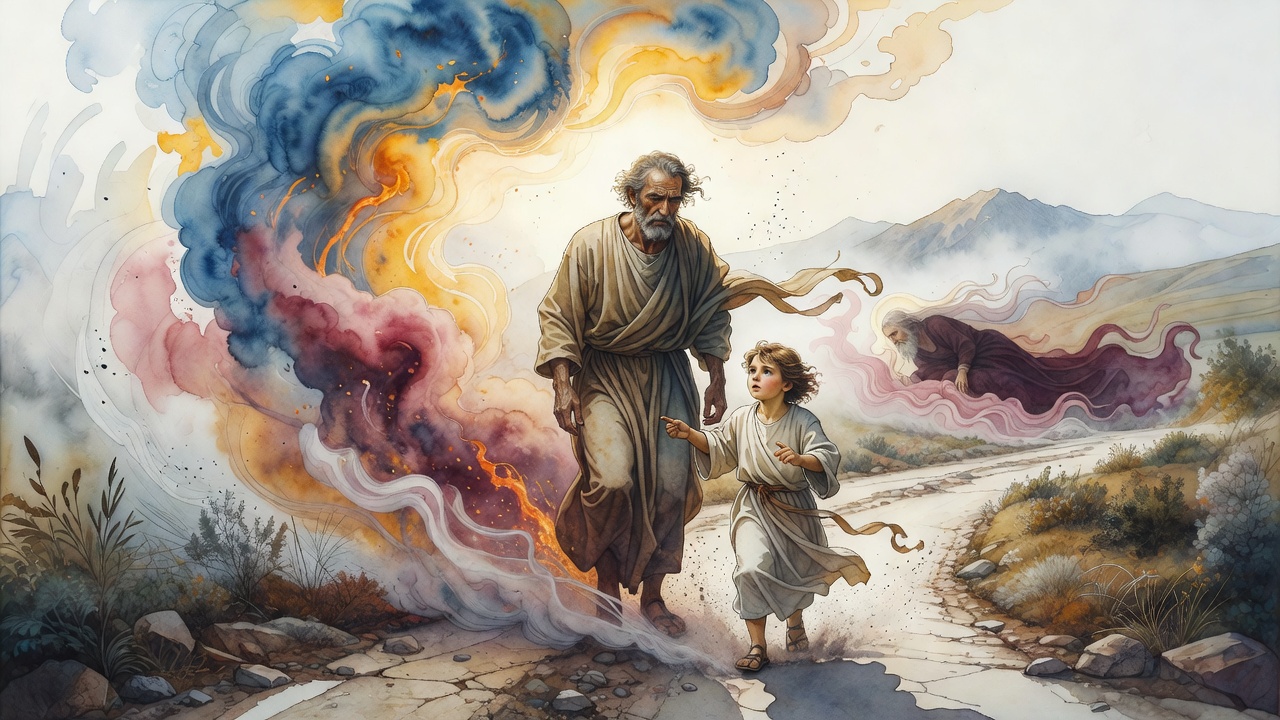
Later still, in Babylon, Nebuchadnezzar appointed a daily portion of the king's food and wine for the young men taken from Jerusalem (Daniel 1:5). Daniel would not eat it. The officers had the king's command. Daniel had a different count.
"Try thy servants, I beseech thee, ten days," he said, "and let them give us pulse to eat, and water to drink. Then let our countenances be looked upon before thee, and the countenance of the youths that eat of the king's food" (Daniel 1:12-13).
The officers scoffed. Are you descended from nobility, that you can last ten days without the royal table? "Yes," they answered. "We are the descendants of that righteous man who was tried ten times. Perhaps his merit will assist us."
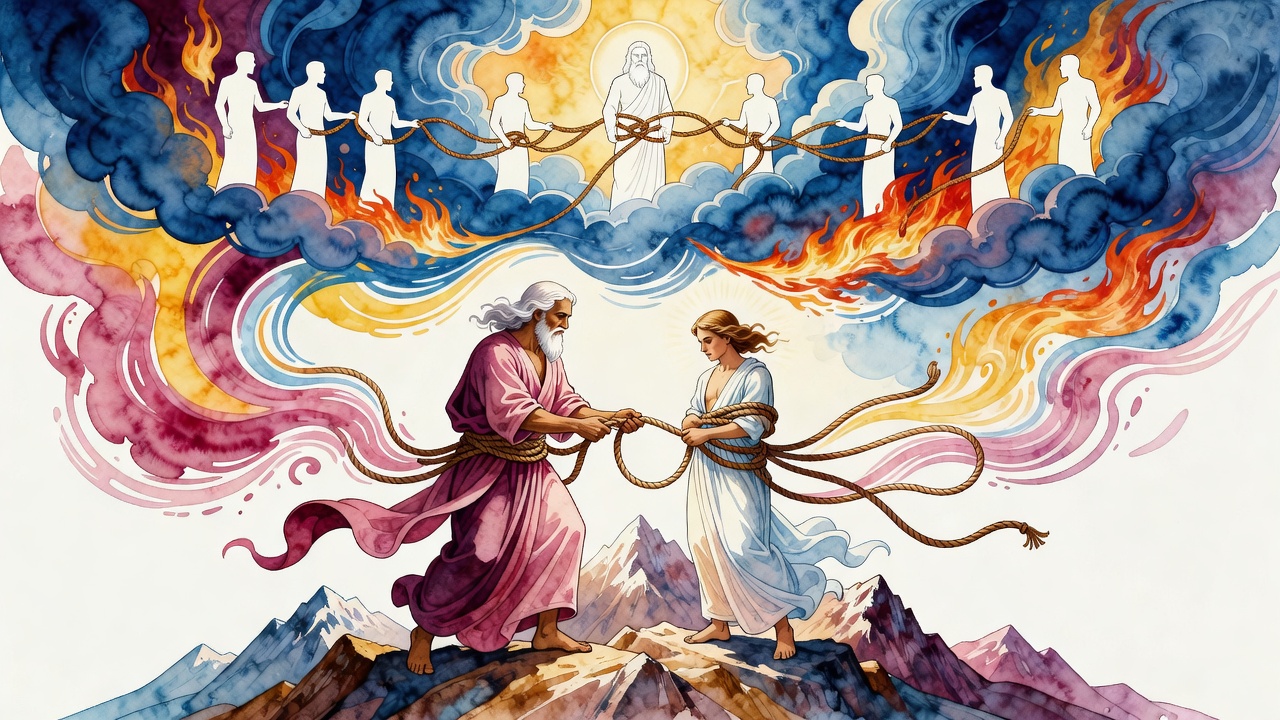
Abraham's ten trials became a storehouse Daniel could draw from in exile, the way the wood-splitting became a storehouse Israel drew from at the water. Testing is not only for the one tested. It is capital placed in the family account. Isaac's binding, the sharpest of those trials, stood silent behind every later escape that arrived for the sake of the fathers.
Fairer Than the King's Table
The officer hearkened. He tried them ten days. At the end their faces were fairer, and they were fatter in flesh, than all the youth that ate the king's food (Daniel 1:14-15). Pulse and water had done what the royal rations could not, because the ten days leaned on ten older tests.
Merit of the ancestors is not a charm that makes sin safe. Israel still needed the command to move. Daniel still needed the refusal. The inheritance is access, not a walk done for you. The cover was bought at Moriah with a knife that stopped only at the last breath of obedience, and spent at a sea, and spent again at a Babylonian table where four young men asked for vegetables and named a grandfather.
Picture Abraham's hands on the wood, grain opening while Isaac watches. Picture Moses' hand over the sea, water opening while children watch. Picture Daniel's bowl of pulse after ten days, a face fairer than the faces at the king's table. Between them runs the same stored split. Empires change. The opening holds.
← All myths